Gear Guides
How to Choose Hunting Binoculars (Buyer's Guide)
Those numbers on every pair of binoculars aren't a secret code. Here's what 8x42 and 10x42 really mean, plus everything else you need to pick a pair as a gift.
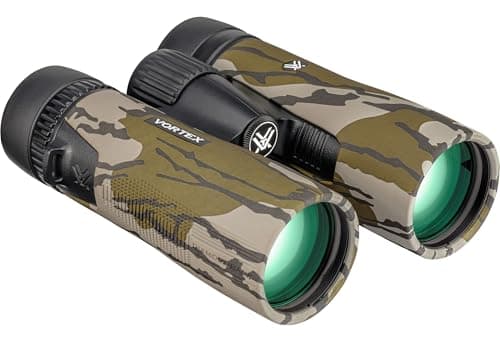
Binoculars make a wonderful gift for a hunter — a good pair gets used every single time out and lasts for years. But shopping for them means staring at labels like 8x42 and 10x42and wondering whether the difference matters. It does, a little, and it's easy to understand once someone explains it plainly. That's what this guide does.
We'll decode the numbers, explain the real trade-off between magnification and field of view, cover why the second number controls brightness, tell you what a bino harness is (and why it's a great add-on gift), and finish with a clear recommendation for gift-givers. No optics degree required.
What the numbers mean
Every pair of binoculars is labeled with two numbers separated by an "x," like 10x42. They're not a model code — each one tells you something useful. The first number is the magnification: a 10x pair makes things look ten times closer than your naked eye, an 8x pair eight times closer. The second number is the objective lens size in millimeters— the diameter of the big lenses at the far end. That number controls how much light the binoculars gather, which decides how bright and clear the view is, especially in the dim light around dawn and dusk when hunters are most active.
So "10x42" simply means ten times magnification, 42mm lenses. Once you read it that way, comparing two pairs becomes easy: you're really just weighing how close you want things to look against how much light and how wide a view you want. For hunting, the two combinations you'll see most are 8x42 and 10x42 — same lens size, different zoom — and choosing between them is the main decision.
8x42 vs. 10x42: the real trade-off
Both are excellent, all-purpose hunting sizes, and neither is a wrong answer. Here's how they stack up on the things that actually matter in the field.
| Spec | 8x42 | 10x42 | Best for |
|---|---|---|---|
| Magnification | 8x — things look eight times closer | 10x — things look ten times closer, more reach | 10x when they glass long distances; 8x when views are closer |
| Field of view | Wider — easier to find and follow moving animals | Narrower — you see less at once | 8x for thick timber and scanning; 10x for open country |
| Low-light brightness | Slightly brighter view for the eye | Bright, but a touch dimmer than 8x at the same lens size | 8x edges it at dawn and dusk |
| Steadiness by hand | Easier to hold rock-steady; less shake | Shows more hand-shake; a rest helps at distance | 8x for new users; 10x if they can brace or rest |
| Best terrain | Woods, close-to-medium range, all-day scanning | Fields, mountains, long-range spotting | Match it to where they hunt |
The pattern is simple: 8x42 is the easygoing all-rounder— wider, steadier, forgiving — while 10x42 trades some of that for extra reach in open country. If you genuinely don't know where the person hunts, either is a confident gift; more on picking between them below.
Magnification vs. field of view
This is the one trade-off worth really understanding, because it's counterintuitive. You might assume more magnification is always better — but more zoom comes at a cost. As magnification goes up, the field of view (how wide a scene you can see at once) gets narrower. Think of it like stepping closer to a window: you see the tree outside in more detail, but you lose the yard around it.
Why does that matter for hunting? A wider field of view makes it far easier to spot an animal in the first place and to follow one that's moving — you're not hunting for it through a straw. That's why many hunters in woods or brushy country prefer 8x: the wider view helps them find game, and the steadier image is easier on the eyes over a long day. In wide-open terrain where animals are far off, the extra reach of 10x earns its narrower view. More power isn't automatically better — it's a trade, and the right side of it depends on the country they hunt.
Objective lens and brightness
That second number — the 42 — is the unsung hero. Bigger objective lenses gather more light, and more light means a brighter, clearer picture when it's dim. Since the best hunting light is often the low light right at dawn and dusk, a 42mm objective is the popular sweet spot: bright enough to perform when it counts, without being so large that the binoculars turn into a heavy brick. You'll see smaller compact models with 32mm or less — lighter to carry, but dimmer in low light — and larger 50mm+ pairs that are brighter but bulkier. For an all-around hunting gift, a 42mm pair is the reliable middle ground, which is exactly why 8x42 and 10x42 are the two you keep seeing.
Two quick, jargon-free tips. First, glass quality matters as much as the numbers — a well-made 42mm pair beats a poorly made one every time, so buying from a respected optics brand counts for a lot. Second, look for the word waterproof; hunting happens in rain, snow, and fog, and sealed, fog-proof binoculars are worth it. You can read how we weigh all of this on our how we choose page.
What's a bino harness?
Here's an insider tip that makes you look like you know exactly what you're doing: a bino harness. Instead of letting binoculars swing from a neck strap — which bounces, bangs around, and strains the neck all day — a harness holds them snug against the chest in a small protective pouch, with elastic straps over the shoulders. Reach down, pop it open, glass, and it tucks right back. Nearly every serious hunter uses one, and a surprising number of casual ones don't own one yet.
That makes a harness a fantastic companion gift — pair it with binoculars and you've given a complete, ready-to-use setup, or give one on its own to a hunter who already has good glass but keeps letting it dangle. It's inexpensive, universally useful, and shows real thought. Browse a few in our hunting gifts under $50.
Which to buy as a gift
Putting it together, a 42mm pair from a respected optics brandis the can't-miss hunting-binocular gift, and between the two common powers, here's the simple rule. If they hunt open country — fields, plains, mountains — or you know they like to reach way out, go 10x42. If they hunt woods and brush, are newer to glassing, or you're just not sure, 8x42is the forgiving, steadier, wider-view choice. When in doubt, a good 10x42 is the more impressive-feeling "real optics" gift and covers the widest range of hunting, which is why it's our default recommendation for gift-givers.
What we like
- A 42mm pair is bright when it counts — at dawn and dusk
- 10x42 offers extra reach and reads as a serious, premium gift
- Sharp, waterproof glass from a trusted brand lasts a decade-plus
- Add a bino harness and you've given a complete, ready-to-use kit
Worth knowing
- 10x shows more hand-shake — a rest or harness helps at long range
- For thick timber or new users, 8x42's wider, steadier view may suit better
- Quality glass is a splurge; set expectations to your budget tier
Not sure binoculars are the right call, or want to see other optics? Browse all our gear guides, compare a trail camera instead, or start from what they hunt with gifts for deer hunters.
Frequently asked questions
What do the numbers on binoculars mean?
The first number is magnification — 10x makes things look ten times closer — and the second is the objective lens diameter in millimeters, which controls how much light the binoculars gather. So 10x42 means ten times magnification with 42mm lenses.
Is 8x42 or 10x42 better for hunting?
Both are excellent. 8x42 has a wider field of view and is steadier and slightly brighter, which suits woods, brush, and newer users. 10x42 offers more reach for open, long-range country. Match the power to where the person hunts.
Does more magnification always mean better binoculars?
No. As magnification rises, the field of view narrows and hand-shake shows more, making it harder to find and follow animals. More power is a trade-off, not a straight upgrade — for many hunters 8x is easier to use than 10x.
Why does the 42mm lens size matter?
The objective lens (the 42) gathers light, so a bigger one gives a brighter, clearer view in the dim light of dawn and dusk when hunters are most active. 42mm is the popular sweet spot — bright when it counts without being too heavy to carry.
What is a bino harness and is it a good gift?
A bino harness holds binoculars snug against the chest in a protective pouch instead of dangling from a neck strap, so they don't bounce or strain the neck. It's an inexpensive, thoughtful companion gift — pair it with binoculars for a complete setup.