Buying Advice
Hunting Gift Mistakes to Avoid (and What to Buy Instead)
It's easy to spend real money on a hunting gift that never gets used. Here are the five most common mistakes non-hunters make, and the safe, can't-go-wrong picks to reach for instead.
Buying a gift for a hunter when you don't hunt yourself can feel like walking into a foreign-language shop. The gear is specialized, the brands are unfamiliar, and it's genuinely easy to spend real money on something that ends up in the back of a closet. The good news is that almost every gift-buying misstep comes down to a handful of predictable mistakes — and once you know them, they're easy to sidestep.
None of this requires you to become an expert. It just means steering away from the few categories that go wrong and toward the safe, well-loved picks that fit any hunter. Here are the five most common mistakes non-hunters make, why they backfire, and exactly what to buy instead. If you want the positive version of this advice, our guide to buying a gift for a hunter walks through the safe categories step by step.
Mistake 1: buying something that has to match their gun or bow
This is the big one. It's tempting to buy something that feels seriously "hunting" — a box of ammunition, a scope, a set of arrows, a release aid — but anything that has to match a specific firearm or bow is a gift you almost can't get right from the outside. Ammunition has to match the exact caliber and often the exact load a hunter prefers. A scope has to fit their rifle, their eyes, and their style of hunting. Arrows are cut and spined to the individual archer. A release aid is a personal-feel item nobody wants chosen for them.
Get any of these slightly wrong and the gift is useless at best and unsafe at worst. Worse, these are exactly the purchases a hunter enjoys making themselves — part of the fun is dialing in their own setup. The fix is simple: leave anything that bolts onto, loads into, or matches a weapon for the hunter to choose. If you want to help with a purchase like that, a gift card to a hunting retailer, or an offer to go along and split the cost, is the thoughtful move.
Mistake 2: guessing on boot or clothing sizes
Warm boots and quality apparel are wonderful hunting gifts — when they fit. The mistake is guessing. Hunting boots in particular are a precise, all-day-comfort item; the wrong size doesn't just disappoint, it can cause blisters that end a hunt. Jackets, bibs, and gloves have the same problem to a lesser degree, and returning bulky cold-weather gear is a hassle nobody enjoys.
If you can confirm a size — by asking discreetly, checking a pair they already own, or enlisting a family member — then boots and outerwear become some of the most appreciated gifts on the list. If you can't, don't force it. Steer that budget toward something size-free instead, or choose apparel where fit is forgiving, like a beanie, a neck gaiter, or a value pack of hand warmers. A merino base layer sits in the middle: sizing matters, but it's more forgiving than boots, so it's a reasonable risk if you know roughly what they wear.
A quick way to find a size without spoiling the surprise: peek at the tongue of a boot they already own, check the tag on a jacket in the closet, or ask a sibling or parent who might know. Hunters also tend to size boots a half-size up to fit heavy socks, so if you do buy, lean toward the larger option and keep the receipt. When the fit is right, warm, waterproof boots from a trusted name are a gift they'll wear hard for years.
Mistake 3: cheap knockoff optics and "tactical" junk
Binoculars, rangefinders, and headlamps make excellent gifts — but the bargain-bin versions are a trap. Cheap optics with no-name glass are dim, foggy, and frustrating, and a hunter will quietly retire them after one season. The same goes for the flood of "tactical" gadgets marketed to look rugged: novelty multi-tools, flimsy flashlights, and gimmicky gear that feels impressive in the box and falls apart in the field.
The fix isn't to spend more — it's to spend on the right names. A mid-priced binocular from a brand like Vortex, backed by a real lifetime warranty, beats an expensive-looking off-brand every time. A headlamp from a known maker will still be working in five years. When it comes to optics and tools, a trusted brand at a fair price is always a better gift than a feature-packed knockoff. If you're not sure which names to trust, stick to the ones hunters recommend to each other rather than whatever has the flashiest listing.
Rangefinders deserve the same caution. A dependable mid-range model is a fantastic gift, but the cheapest ones give inconsistent readings a hunter can't trust when it counts, which defeats the whole point. If binoculars or a rangefinder are the plan, spend where it matters — the glass and the brand — and skip the extra features you don't understand.
Mistake 4: overspending on a beginner
It's a generous instinct to go big for someone who just got into hunting, but overspending on a beginner often misfires. A brand-new hunter doesn't yet know what they prefer, so an expensive, specialized purchase — high-end optics, a premium pack, a top-tier anything — can end up being the wrong version of a thing they'd rather have chosen themselves. The money would land better spread across the basics they actually need first.
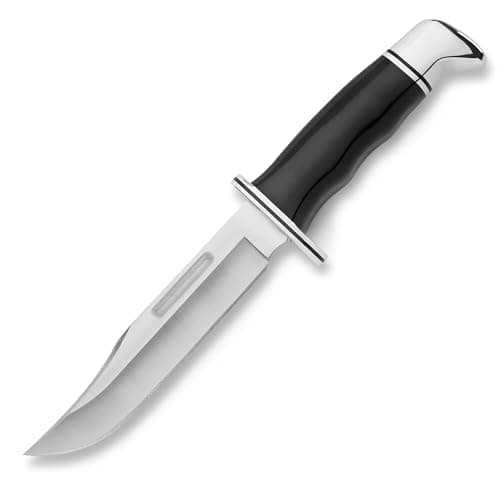
For a beginner, a knife and a sharpener, warm layers, and a few safety essentials make a far better gift than one pricey item. They're used from the very first trip, they don't depend on preferences the hunter hasn't formed yet, and together they feel like a genuine send-off into the hobby. Save the big-ticket gear for when they know exactly what they want — or better yet, offer to help them pick it.
There's a second, quieter reason to hold back: choosing their own first big-ticket gear is part of a new hunter's story. Plenty of hunters remember buying their first rifle or their first good pair of boots the way others remember a first car. Stepping in front of that moment, even with the best intentions, takes a little of the shine off it. Contributing toward it is welcome; deciding it for them usually isn't.
Mistake 5: forgetting the consumables they always run out of
This one is a missed opportunity more than a disaster. Non-hunters tend to reach for a single "impressive" gift and overlook the humble consumables a hunter burns through every season — hand warmers, scent, cleaning supplies, fresh socks. These aren't glamorous, but they're genuinely useful, impossible to duplicate (you can never have too many hand warmers), and they show you actually thought about their day in the field.
Consumables also make brilliant add-ons. Pair a value pack of hand warmers or a fresh bottle of scent with a "real" gift and you've turned one present into a thoughtful little kit. Just steer clear of the one consumable that trips people up — ammunition — unless you know the exact caliber and load, because that circles right back to Mistake 1.
A handy rule of thumb: think about what a hunter throws away and rebuys, not what they keep. Anything that gets used up in a season — warmers, scent, targets, cleaning patches — is fair game and almost never a duplicate, because they were going to buy more anyway. It's the least glamorous aisle in the store and one of the safest to shop.
Put it all together
Notice the pattern behind all five mistakes: trouble comes from gifts that depend on something you can't see from the outside — a caliber, a size, a personal preference — or from chasing flash over quality. Sidestep those, and the safe road is wide open. A quality knife, a multi-tool, a sharpener, warm layers you know the size of, trusted-brand optics, and the consumables they always run low on will make almost any hunter happy. For a specific person to shop for, our gifts for a hunting dadpage turns all of this into a ready-made list. Whatever you choose, buy the best version of a simple, universal thing rather than gambling on something complicated — that single rule prevents nearly every hunting-gift mistake there is.
Frequently asked questions
What should you not buy a hunter as a gift?
Avoid anything that has to match their specific gun or bow — ammunition, a scope, arrows, or a release aid — since those depend on their exact setup and are best chosen by the hunter. Also skip guessed-at boot and clothing sizes and cheap knockoff optics.
Is it okay to buy a hunter ammunition or a scope?
It's risky. Ammunition has to match the exact caliber and often the specific load a hunter prefers, and a scope has to fit their rifle and their eyes. These are best left to the hunter — a gift card to a hunting retailer is a safer way to help.
What's a safe gift for a hunter if I don't know much about hunting?
Stick to universal gear that fits any hunter: a quality knife, a multi-tool, a pocket sharpener, or an insulated tumbler. None of these depend on a specific gun, size, or preference, so you don't need to know the details to get it right.
Should I spend a lot on a gift for a beginner hunter?
Usually no. A new hunter doesn't yet know their preferences, so spreading a modest budget across the basics — a knife, a sharpener, warm layers, safety gear — beats one expensive, specialized item they might have wanted to choose themselves.