Gear Guides
Buck 110 Folding Hunter Review: Is It a Good Gift?
The Buck 110 is arguably the most recognizable folding knife ever made. Here's an honest look at whether it's the right gift for a hunter who prefers a folder — and for the non-hunter trying to get it right.
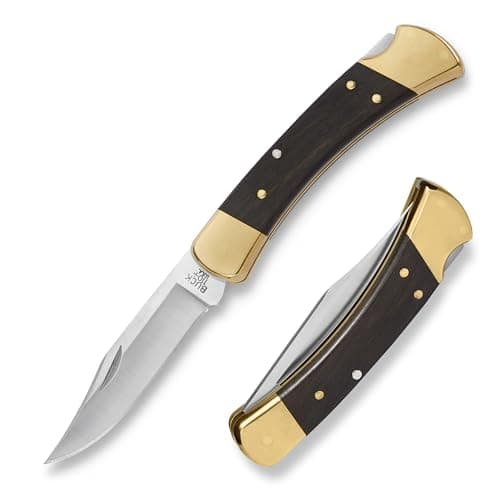
Some gifts need explaining. The Buck 110 Folding Hunter does not. Hand it to almost any hunter — or almost anyone who grew up around them — and they'll know exactly what it is, because the 110 is arguably the most recognizable folding knife ever made. It's the classic lockback that folds safely into a pocket or rides on a belt in its own sheath, and it has been a fixture in hunting camps and glove boxes for generations. If you're shopping for a hunter who prefers a folder over a big fixed blade, this is close to a sure thing.
You don't have to know anything about knives to give this one well, which is exactly why it's such a comfortable pick for a non-hunter gift buyer. Below is an honest, plain-English review: what the Buck 110 is, why it carries so much sentimental weight, what's genuinely great about it, the drawbacks worth knowing, and how it stacks up against its famous fixed-blade sibling, the Buck 119. By the end you'll know whether it's the right gift for your person — and who it suits best.
Buck 110 Folding Hunter
The Buck 110 Folding Hunter is the folding lockback almost everyone recognizes — a handsome, traditional knife that folds safely into a pocket or rides on a belt in its sheath. It's the sort of knife a hunter carries for decades and eventually hands down, which makes it a sentimental, pass-down gift as much as a useful one. The one honest note: it's a substantial, heavier folder, so anyone after the lightest possible everyday carry may find it a bit of a pocket anchor.
#ad · Price as of October 24, 2026. We may earn a commission.
What the Buck 110 actually is
The Buck 110 is a folding lockbackknife — meaning the blade folds down into the handle for safe carry, then locks solidly open when you swing it out, so it won't fold shut on your fingers while you work. That lock is a big part of the appeal: it gives a folder much of the confidence of a fixed blade while staying compact and pocket-friendly. It's a traditional, handsome design that has barely changed in decades, and that's a compliment — Buck got it right early and simply kept making it.
In the hand it feels substantial and well-made, the kind of tool that has real heft and a satisfying, mechanical snapwhen it locks. It typically comes with a belt sheath, so the person you're gifting it to can carry it on a hip in the field or fold it away in a pocket around camp. It's built for the everyday cutting a hunter actually does — opening, trimming, light field work, a hundred small jobs — rather than being a single-purpose specialist. That versatility is part of why it has stayed a favorite for so long.
Why it makes such a good gift
Plenty of knives cut well. What sets the Buck 110 apart as a giftis everything wrapped around the blade: history, recognition, and a genuine heirloom quality. This is a knife a lot of people's fathers and grandfathers carried, so handing one over often lands with a wave of nostalgia the recipient doesn't expect. It doesn't feel like a gadget that'll be forgotten in a drawer by spring; it feels like something to keep.
That heirloom character is the secret ingredient. A Buck 110, looked after, easily lasts decades, and many hunters eventually pass theirs down to a son, daughter, or grandkid. Giving one can start exactly that kind of tradition. Buck's long-standing reputation and famous warranty back that up — this is a knife made to be repaired and kept, not replaced. If you're shopping for an older hunter in particular, that pass-it-down quality is why the 110 shows up again and again on our gifts for a grandpalist. It's a present with a story built in.
What's genuinely great about it
Beyond the sentiment, the 110 earns its reputation on merit. The lockbackis the headline: it snaps open and locks with real authority, giving you the security of a fixed edge in a knife that still folds away safely. For a hunter who's wary of a blade folding on their fingers, that confidence matters.
It's also a knife that takes and holds a keen working edge, and when it does eventually dull, it sharpens up beautifully — it responds well to a simple guided sharpener, so it's easy to keep in top form for years. The fit and finish feel a cut above; it's the sort of object that feels good simply to hold and open, which is a real part of why people love it. And because it's so widely carried, it comes with a deep well of goodwill: mention a Buck 110 to a hunter and you'll usually get a story. As a gift, that instant recognition means your present reads as thoughtful and correct, even if you don't know a lockback from a clip point yourself.
The honest drawbacks
No knife is flawless, and the 110 has a couple of trade-offs worth knowing before you buy — none are dealbreakers, but they're real.
What we like
- Instantly recognizable, with genuine heirloom and pass-down appeal
- Solid lockback gives fixed-blade confidence in a folder
- Folds away safely for pocket or belt carry
- Built to last decades and backed by a long-standing warranty
- Takes a keen edge and sharpens up easily
Worth knowing
- It's a substantial, heavier folder — not the choice for ultralight everyday carry
- Opening it is a two-hand affair, slower than a modern one-hand flipper
- Like any folding knife, the pivot needs an occasional wipe and drop of oil
- A folder is a little harder to clean than a one-piece fixed blade after messy work
The most common gripe is simply weight: the 110 is a beefy folder, so a hunter who wants the lightest possible pocket knife may find it more than they need. And because it's a traditional two-hand folder, it opens more deliberately than a modern quick-deploy knife. For most people neither is a problem — the heft is part of the charm, and a knife you open with intention is no bad thing — but they're worth weighing against the person you have in mind.
Folder or fixed blade? The Buck 110 vs the Buck 119
The obvious question with the 110 is whether to give a folder at all, or reach for its legendary fixed-blade sibling instead. Buck's 119 Special is the full-size, classic clip-point that a great many deer hunters carry, and the two knives solve slightly different problems.
The 110folds, so it's more discreet, easier to carry every day, and pockets away when it's not needed — it's the better pick for a hunter who wants one knife on them at all times, in the field and around town. The 119 is one solid piece of steel: bigger, tougher, easier to clean after a messy field-dressing job, with no pivot to maintain — the choice for someone who does heavier processing and doesn't mind wearing a sheath knife. Neither is "better"; it comes down to whether your person prefers the convenience of a folder or the ruggedness of a fixed blade.
If you're genuinely torn, we break the two down side by side in our Buck 119 vs Buck 110 comparison, and if you want the general principles behind the choice, our fixed vs folding hunting knife guide walks through it in plain terms. The short version: buy the 110 for the hunter who values a folder's pocketable convenience, and the 119 for the one who wants the most knife for hard use.
Who to give the Buck 110 to
The 110 is the near-perfect gift for a hunter who prefers a folder— someone who likes a knife that lives in a pocket or on a belt and disappears when it's not needed. It's equally at home with an older, traditional hunter who appreciates a classic, and it makes an especially meaningful present for a dad or grandpa, precisely because of that pass-it-down history.
It's also a wonderfully safe pick for a non-hunter gift buyerwho's nervous about getting it wrong. Because the 110 is so universally respected, you almost can't miss: even a hunter who already owns knives will be glad to have one, and someone who doesn't will treasure it. About the only person it isn't ideal for is the hunter who specifically wants an ultralight or one-hand-opening modern knife, or someone who does so much heavy field processing that a rugged fixed blade like the 119 simply suits them better. If you want to see how it sits among other blades, our best hunting knives roundup puts it in context.
Frequently asked questions
Is the Buck 110 a good gift for a hunter?
Yes — for a hunter who prefers a folder, it's one of the safest gifts you can give. The Buck 110 is instantly recognizable, superbly built, and carries genuine heirloom appeal, so it reads as thoughtful even if you don't know knives yourself. The main exception is a hunter who specifically wants an ultralight or one-hand-opening modern knife.
Is the Buck 110 too heavy to carry?
It's a substantial folder, and weight is the most common complaint about it. Most owners consider the heft part of its solid, quality feel and don't mind carrying it on a belt or in a pocket. But if the person you're buying for wants the lightest possible everyday knife, the 110 will feel like more than they need.
Should I give the Buck 110 or the Buck 119?
Give the 110 if your person prefers a folder that pockets away and rides with them everywhere. Give the fixed-blade 119 if they want a bigger, tougher knife for heavier field processing and don't mind wearing a sheath knife. Neither is better — it comes down to folder convenience versus fixed-blade ruggedness.
Does the Buck 110 need sharpening and maintenance?
Like any traditional knife, its edge will dull with use and benefit from occasional sharpening, and it responds well to a simple guided pocket sharpener. As a folder, the pivot also appreciates an occasional wipe and a drop of oil to stay clean and smooth. None of it is difficult, and a well-cared-for 110 lasts for decades.
Is the Buck 110 a good gift if I don't hunt myself?
Absolutely. It's one of the most foolproof knife gifts precisely because it's so universally respected — you don't need to understand the details to choose it well. A hunter who already owns knives will still be happy to have one, and its classic, pass-down character makes it feel meaningful rather than generic.