Gear Guides
Buck 119 vs. Buck 110: Which to Gift?
Two legends from the same trusted maker: the full-size 119 fixed blade and the pocket-friendly 110 folder. Here's how they really differ — and a plain answer to which makes the better gift.
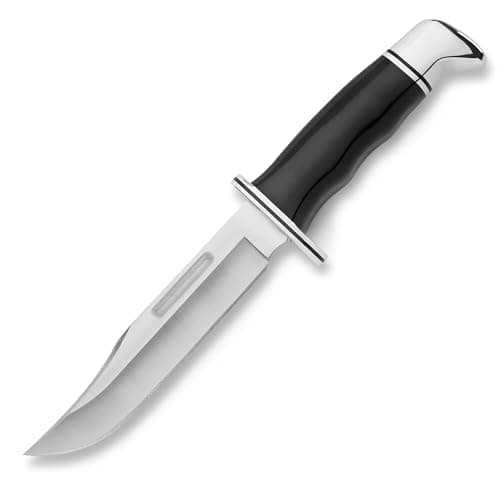
If you've landed on Buck — a smart move, since it's one of the most trusted names in hunting knives — you'll quickly meet its two most famous knives: the Buck 119 Special, a full-size fixed blade, and the Buck 110 Folding Hunter, a folding lockback. Both are American classics, both have been in hunters' hands for generations, and honestly you can't make a bad choice between them. But they lean in different directions, and when you're buying for someone else, knowing which way to lean makes the gift land better.
This is a straight, jargon-free comparison of Buck's two icons — how they carry, how tough they are, how easy they are to clean, and which one plays it safest as a gift — ending with a plain verdict you can act on. Every price below is live from Amazon.
Buck 119 Special Fixed-Blade Knife
The Buck 119 Special is the full-size clip-point fixed blade most people picture when they hear 'hunting knife.' One solid piece of steel, a leather sheath, and a lifetime build make it the most universal, hardest-to-get-wrong gift of the two.
#ad · Price as of October 24, 2026. We may earn a commission.
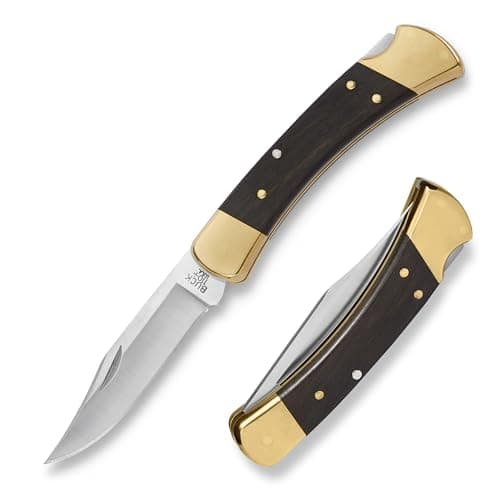
Buck 110 Folding Hunter
The Buck 110 Folding Hunter is the iconic lockback that folds closed to ride in a pocket or on a belt. Same trusted maker, same keepsake quality, in a form that suits a hunter who wants a knife on them at all times.
#ad · Price as of October 24, 2026. We may earn a commission.
The short answer
If you want the one-line version: gift the Buck 119 if you're not sure, and the Buck 110 if the person values carrying a knife everywhere. The 119 is a fixed blade — one solid piece of steel that's stronger, simpler, and easier to clean, which is why it's the classic field-dressing knife. The 110 is a folding lockback that hinges shut so the blade tucks safely into the handle, trading a little raw strength for the convenience of riding in a pocket. Both are built to last a lifetime and carry the same Buck reputation. Everything below is just the detail behind that sentence.
The two knives, side by side
Here's the head-to-head, attribute by attribute, in plain terms.
| Attribute | Buck 119 (fixed) | Buck 110 (folder) |
|---|---|---|
| Type / Carry | One solid fixed blade; rides in a leather sheath on a belt or in a pack | Folding lockback; folds closed to sit in a pocket or clip to a belt |
| Strength | Very strong — one continuous piece with no moving parts to flex | Strong and secure in its lock, though the pivot is a hinge point |
| Cleaning | Wipes down easily; nothing for blood or grit to hide in | Trickier — the pivot and blade slot can trap grime and need care |
| Everyday carry | Bulkier; it's a knife you bring for the hunt, not one you pocket daily | Compact and low-profile; disappears into a pocket for everyday carry |
| As a gift | The safest, most recognizable 'real hunting knife' pick | The pick for someone who wants one knife on them at all times |
Notice there's no loser in that table. Each row is a strength for the right person — the whole game is matching the knife to how the hunter carries and works.
Where the Buck 119 wins
The 119's advantages all flow from one fact: it's a single, solid piece with nothing that moves. That makes it the stronger tool for demanding work and the easier one to clean when the job is messy — a real consideration in field dressing, where you want to wipe the blade down and be done rather than pick grime out of a pivot. Its long clip-point blade and classic leather sheath also make it the more instantly recognizable "hunting knife," the one most people picture, which is exactly what makes it such a dependable gift. There's nothing to learn and nothing to fuss over — just a knife that works, lasts, and looks the part on a shelf or a belt.
What we like
- One solid piece — very strong, nothing to break or wear loose
- Easiest to clean; no pivot to trap blood or grit after field dressing
- Instantly reads as a real hunting knife — the safe, universal gift
- Full-size blade and leather sheath give it a real heirloom feel
Worth knowing
- Bulkier to carry — it lives in a sheath, not a pocket
- Too much knife for everyday, around-town carry
- Needs occasional sharpening, like any fixed edge
Where the Buck 110 wins
The 110 earns its place on convenience and charm. Because it folds to half its length and the edge tucks safely away, it slips into a pocket or clips to a belt and simply comes along — no sheath, no bulk. For a hunter who likes having a blade on them at all times, even on a casual day, that everyday-carry ease is the whole appeal. It's also a beautiful object: the reassuring snap as the lockback opens, the smooth heft of brass and wood in the hand, the sense of a well-made tool that goes everywhere. A good lockback is plenty capable for field work, too; the modern lock is strong and secure. The trade-offs are the mirror image of the 119 — the pivot needs a little cleaning care after a messy job, and it isn't quite as burly for the heaviest tasks. For most hunters, most of the time, neither is a dealbreaker.
There's also the matter of how each one feelsto own, which counts for a lot in a gift. The 119 in its leather sheath has that timeless, hand-it-down quality. The 110 has its own kind of keepsake charm — it's the folder a lot of people remember an uncle or a father carrying, opened one-handed with a satisfying click. Neither is more "serious" than the other; they're just two different kinds of heirloom, and the right one is the one that matches the person's habits and taste. If you're still weighing the broader question of blade styles, our fixed vs. folding hunting knife guide breaks the whole category down.
The verdict: which to gift
If you're unsure, gift the Buck 119. It's the more universal present — recognizable, tough, easy to care for, and right for any kind of hunting. It's the choice that's hardest to get wrong when you don't know every detail of how the person hunts, and its full-size, sheathed presence simply feels like a "real hunting knife" the moment they open the box.
Gift the Buck 110 ifyou know the person values carrying a knife everywhere, prefers something that disappears into a pocket, or has mentioned they like a folder. In that case the 110 isn't a compromise — it's the better-fitting gift, and its everyday-carry convenience means it'll ride along far more often than a sheathed fixed blade would. Either way you're giving a Buck, which means you're giving something built to last. Want to see how both stack up against the wider field, or line up a knife for a specific person? Start with our best hunting knives roundup or browse hunting gifts for Dad.
Frequently asked questions
Buck 119 or Buck 110 — which is the better gift?
The Buck 119 (fixed blade) is the safer, more universal gift: recognizable, tough, and easy to clean, so it suits almost any hunter. Choose the Buck 110 (folder) when you know the person specifically values carrying a knife in their pocket at all times. Both come from the same trusted maker and last a lifetime.
What's the difference between the Buck 119 and Buck 110?
The Buck 119 is a full-size fixed blade — one solid piece of steel that rides in a leather sheath — while the Buck 110 is a folding lockback that hinges shut to fit in a pocket. The 119 is stronger and easier to clean; the 110 is far more convenient to carry every day.
Is the Buck 110 folder strong enough for hunting?
Yes. The Buck 110's lockback is strong and secure, and it's plenty capable for field dressing and general hunting tasks. A fixed blade like the 119 is still the tougher, easier-to-clean tool for the heaviest or messiest jobs, but the 110 handles hunting work well.
Which Buck knife is easier to clean after field dressing?
The Buck 119. Because it's one solid piece with no pivot, there's nowhere for blood or grit to hide — you wipe it down and you're done. The 110's hinge and blade slot can trap grime, so it needs a bit more cleaning care after a messy job.