Gear Guides
Do You Need a Rangefinder for Hunting?
A rangefinder tells a hunter exactly how far away an animal is. Here's who really needs one, why it matters more for bowhunters, and whether it's the right gift.
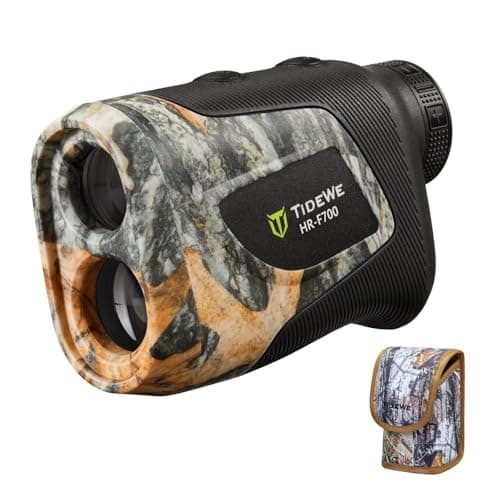
If you've seen "rangefinder" on a hunting wish list, or you're just hunting for a gift that feels genuinely useful, you might be wondering what the thing actually does and whether the hunter on your list truly needs one. Good question — and the answer is refreshingly simple. A rangefinderis a small, one-handed device that a hunter points at an animal (or a tree, or a rock) and clicks. In an instant it shows the exact distance to that target in yards. That's it. But that one number changes how confidently and ethically someone can take a shot.
This guide explains, in plain English, what a rangefinder does, why it matters far more for some hunters than others, the one feature (angle compensation) that quietly makes a huge difference, when it's honestly overkill, and how to choose between a budget and a premium model as a gift. We don't run a test lab, so this is an honest buyer's explainer, not a lab shootout — aimed squarely at helping a non-hunter decide with confidence.
What a rangefinder actually does
A rangefinder works by firing a tiny, invisible, eye-safe laser at whatever the hunter aims it at. The laser bounces off the target and comes back, and the device measures how long that round trip took to calculate the distance — all in a fraction of a second. The hunter looks through it like a small monocular, puts the crosshair on a deer, presses a button, and reads the range. Simple as that.
Why does knowing the exact distance matter so much? Because both arrows and bullets drop as they travel. The farther away the animal, the more the projectile falls on the way there, and the hunter has to aim higher to compensate. Guessing the distance by eye is famously unreliable — open fields and hilly ground fool even experienced eyes — and a bad guess means a missed shot or, worse, a wounded animal. A rangefinder removes the guesswork entirely, which is why so many hunters consider it not a gadget but a core piece of ethical, confident shooting. As a gift, that's a lovely thing to give: something that makes the person better and more responsible at what they love.
Bowhunters vs. rifle hunters: who needs it most
Here's the most useful thing to understand before you buy. Nearly every hunter benefits from a rangefinder, but bowhunters need one most of all, and it's worth knowing why.
| Bowhunter | Rifle hunter | |
|---|---|---|
| Typical shot distance | Close — often within a few dozen yards | Longer — can be well out across a field or canyon |
| Margin for error | Very small — an arrow drops fast, so a few yards changes everything | More forgiving up close, but critical at long range |
| How much it helps | Huge — exact yardage is nearly essential for an ethical shot | Big at distance; less needed for short, familiar shots |
| As a gift | One of the most useful things you can give a bowhunter | A genuinely welcome upgrade, especially for open-country hunters |
The reason comes down to physics. An arrow flies much slower than a bullet and drops steeply, so the difference between, say, a target that's a little closer and one a little farther is enormous — aim for the wrong distance and the arrow sails high or low. Because bowhunters also take shorter shots where small errors are unforgiving, pinning down the exact yardage is close to essential. That's why a rangefinder is one of the most genuinely useful gifts you can give a bowhunter— it's something they'll clip on and use on literally every hunt.
Rifle hunters benefit too, especially anyone hunting open country, plains, or mountains where shots stretch out and a bullet's drop starts to matter. For a rifle hunter who mostly takes short, familiar shots from a known stand, a rangefinder is more of a nice-to-have than a must-have — but for the long-range crowd it's the difference between a confident shot and a hopeful one. If binoculars might suit them better for spotting game first, our best hunting binoculars guide is worth a look alongside this one.
Why angle compensation matters
This is the feature that separates a basic rangefinder from a really useful one, and it's worth understanding because it makes you look like you know exactly what you're buying. It's called angle compensation(you'll see it labeled ARC, or "angle range compensation," or simply "for bow and rifle"), and here's the plain-English version of why it matters.
Picture a bowhunter perched high in a treestand, aiming down at a deer, or a mountain hunter shooting steeply uphill. The straight-linedistance the laser measures isn't the distance that actually affects the shot — because of the steep angle, gravity only pulls the arrow or bullet across the shorter, level (horizontal) distance. Aim for the raw straight-line number on a steep shot and you'll shoot high and miss. A rangefinder with angle compensation does the math automatically and shows the hunter the true shoot-to distanceto aim for. For treestand bowhunters and anyone in hilly or mountainous country, this feature is close to essential — and it's one of the first things to look for when you're choosing one as a gift.
When a rangefinder is overkill
In the spirit of an honest guide, a rangefinder isn't for everyone. If the person hunts only from a fixed blind or stand where they've already stepped off and memorized the key distances — to that stump, to the feeder, to the field edge — they may rarely reach for one. Some traditional or very short-range hunters simply prefer to shoot by practiced instinct. And if the hunter is brand new and still learning the basics, a rangefinder is a fine gift but not the most urgent one; a good knife, binoculars, or warm gear might land better first.
For most active hunters, though — and for essentially every bowhunter — a rangefinder ranges from very useful to nearly essential. If you know the person hunts varied ground, takes shots at different distances, or bowhunts at all, you can buy one with real confidence. If they own everything already, it's also a classic answer for the hunter who has everything, because it's the kind of precise, quality tool people are slow to buy for themselves.
Budget vs. premium: choosing one as a gift
Good news for gift-givers: you can give this present at very different budgets and still get something a hunter will genuinely use. The two things that separate a budget rangefinder from a premium one are maximum range (how far out it can read a distance) and extra smarts like angle compensation, faster and more confident readings on distant or small targets, and crisper glass.
A capable budget rangefinderlike the TIDEWE is the approachable way to give this gift — it covers the ranges most deer and bow hunters actually shoot at and does the core job well, without a premium price. It's the smart pick when you want a thoughtful, useful present that doesn't stretch the budget. Step up to a premium modellike the Vortex Sonora HD 1800 and you get much longer reach (well past a thousand yards), built-in angle compensation, and quicker, more dependable readings — the choice for a serious rifle or western hunter, or when you want the gift to feel like a real splurge. Either tier is a good gift; the right one just depends on how far the person hunts and how much you want to spend.
Frequently asked questions
Does a hunter really need a rangefinder?
Most active hunters benefit from one, and bowhunters need one most — an arrow drops fast, so exact yardage is nearly essential for an ethical shot. Rifle hunters gain the most in open country. It's less urgent for short, familiar shots from a fixed stand.
Why do bowhunters need a rangefinder more than rifle hunters?
An arrow flies slower and drops steeply, so being off by even a few yards can mean a miss. Bowhunters also take shorter shots where small errors are unforgiving. Pinning down the exact distance is close to essential, which makes a rangefinder a top gift for them.
What is angle compensation on a rangefinder?
On steep shots — like a treestand bowhunter aiming down, or a mountain hunter shooting uphill — the true aiming distance is shorter than the straight-line distance. Angle compensation does that math automatically and shows the correct shoot-to distance, so the hunter doesn't shoot high.
Is a budget rangefinder good enough as a gift?
Yes, for most hunters. A capable budget model covers the ranges deer and bow hunters actually shoot at and does the core job well. Step up to a premium model for much longer reach, built-in angle compensation, and faster readings — ideal for serious long-range or western hunters.
When is a rangefinder overkill?
If someone hunts only from a fixed blind where they've already memorized the key distances, or is a traditional short-range shooter, they may rarely use one. For a brand-new hunter, other gear like a knife, binoculars, or warm clothing may be more useful first.