Gear Guides
How to Choose a Rangefinder: A Plain-English Guide for Gift Buyers
A rangefinder tells a hunter exactly how far away the target is — one of the most-used gifts you can give. Here's how to pick the right one without knowing a thing about hunting, explained the way you'd explain it to a friend.
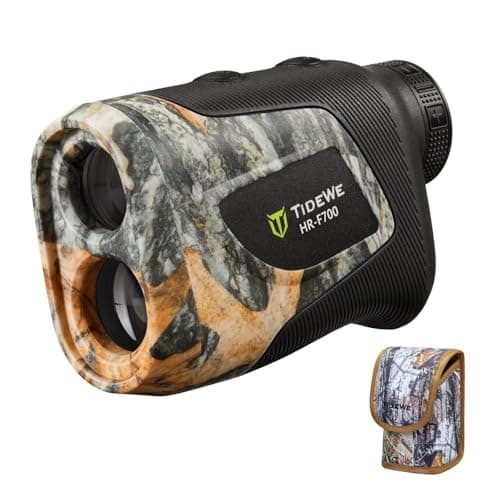
A rangefinder is one of those gifts that sounds technical and turns out to be wonderfully simple. You point it at something — a deer, a tree, a fencepost — press a button, and a number appears telling the hunter exactly how far away it is. That single number is a big deal, because guessing distance is where a lot of shots go wrong. Give a hunter a good rangefinder and you've given them something they'll clip to their pack and use on literally every trip.
The catch is that the choices can look intimidating from the outside: bow models, rifle models, "angle compensation," range numbers that climb into the thousands. The good news is that you only need to understand a few plain ideas to buy the right one with confidence. This guide walks through all of them — whether the hunter shoots a bow or a rifle, the one feature that matters most for bowhunters, why the big range number on the box can be misleading, how much ease of use counts, and how to think about spending a little or a lot. If you're still deciding whether it's the right gift at all, our short read on whether you need a rangefinder for hunting is a good place to start.
What a rangefinder actually does
Before choosing one, it helps to know exactly what the device is for. A rangefinder is a small monocular — you look through it like a tiny spyglass with one eyepiece — that fires an invisible laser at whatever you aim at and measures how long the beam takes to bounce back. From that, it calculates the distance and displays it inside the viewfinder, usually in a fraction of a second. That's the whole magic trick.
Why does a hunter care about an exact distance? Because both arrows and bullets drop as they travel, and they drop more the farther they go. A hunter who knows the target is at a certain distance can aim correctly and take an ethical, accurate shot; a hunter who is guessing might misjudge by enough to miss cleanly or, worse, wound an animal. Knowing the true distance is as much about a responsible, humane shot as it is about success. That's why a rangefinder is one of the most genuinely usedpieces of gear you can gift — it earns its place in the pack every single outing.
First question: does the hunter shoot a bow or a rifle?
This is the most important thing to figure out before you buy, and you can usually learn it just by asking a family member or thinking about how the person hunts. The answer steers everything else.
Bowhuntersshoot at close range — often within a few dozen yards — but they need to be extremely precise, because an arrow drops quickly and even a small distance error matters a lot at those ranges. For them, the feature to prioritize is angle compensation(more on that in a moment), not a huge maximum range. A rangefinder built or marketed for archery is the safe bet here. If you're shopping for someone newer to the sport, our guide to what to buy a new bowhunterputs a rangefinder in context with the other gear they'll want.
Rifle hunters tend to shoot at longer distances, so a longer maximum range can be genuinely useful to them, along with the ability to range a small or distant animal clearly. They still benefit from angle compensation if they hunt hilly country or from elevated stands, but raw reach matters more to them than it does to most bowhunters.
Plenty of rangefinders happily do both jobs, and if you truly don't know which the hunter prefers, a versatile model with angle compensation covers all the bases. But if you can find out, you'll make a sharper choice.
What "angle compensation" means (and why it's the big one)
This is the one piece of jargon worth understanding, because it's the feature that separates a merely okay rangefinder from a great one — especially for bowhunters. Here is the plain-English version.
Many hunters, and almost all bowhunters, shoot from up in a tree — a treestand— looking down at an animal on the ground. When you shoot at a steep downhill (or uphill) angle, gravity affects the arrow or bullet differently than it would on flat ground. What matters for aiming is not the straight-line distance your eye travels to the target, but the horizontaldistance — roughly, the distance as if the ground were flat. A basic rangefinder gives you that straight-line number, which is too long for the angle, and a hunter who trusts it can shoot high and miss over the animal's back.
A rangefinder with angle compensation(you'll also see it called "angle-adjusted" range, or a brand name for the same idea) does the math for you. It measures the angle of the shot and shows the corrected, aim-here distance automatically. For a bowhunter perched fifteen or twenty feet up a tree, that correction is the whole point — it turns a device that could cause a miss into one that makes the shot honest. If you take away one shopping rule from this guide, make it this: for a bowhunter, buy a rangefinder with angle compensation.Nearly every rangefinder worth gifting includes it today, but it's worth confirming on the listing.
Max range vs. realistic range: don't be fooled by the big number
Rangefinder boxes love to shout a maximum range — a headline number of yards. It's eye-catching, and it's also the number most likely to mislead a first-time buyer. Here is what's really going on.
That advertised maximum is typically the distance the laser can reach off a big, bright, highly reflective surface under ideal conditions — think the broad side of a barn or a reflective road sign. Ranging a live animal, which is smaller, duller, and often standing against brush, is a much harder job for the laser, so the realistic range on game is meaningfully shorter than the headline figure. A rangefinder advertised with a very large maximum will range a deer reliably at a good fraction of that number, not the whole thing.
The practical takeaway: don't choose a rangefinder on the biggest yardage number alone, and don't assume a hunter needs the longest-reaching model made. Match the reach to how the person actually hunts. A bowhunter taking close shots needs very little maximum range and should spend their attention on angle compensation and clarity instead. A rifle hunter in open country benefits from more reach, but even they rarely need the extreme long-distance numbers marketed to competition shooters. For the vast majority of hunters, a mid-range, well-reviewed model ranges game far past any distance they'll ever shoot.
Ease of use matters more than a spec sheet
Here's something the spec sheets won't tell you but every hunter feels in the field: a rangefinder lives or dies on how easy it is to use in the moment. Game appears fast and light fades early and late in the day, so the qualities that actually matter are often the unglamorous ones.
Look for a bright, easy-to-read display that stands out against a dark animal and dim surroundings; a fast reading so the number appears the instant the button is pressed; and simple, glove-friendly controls, because a hunter is often wearing gloves in the cold. A rangefinder should also be compact and light enough to hang from a harness or drop in a pocket, and tough enough to shrug off rain and knocks. These day-to-day traits do more for a hunter's experience than an extra few hundred yards of theoretical reach ever will. When you read reviews, weight the comments about clarity, speed, and the display far more heavily than the headline range.
Budget vs. premium: where the extra money goes
Rangefinders span a wide price range, and the honest news is that even affordable models do the core job well: they tell a hunter how far away the target is, and most now include angle compensation. So what does spending more actually buy? Mostly better glass and coatings for a brighter, clearer view in low light; faster and more reliable readings on distant or dull targets; a nicer, easier-to-read display; and sturdier, more weatherproof build quality. None of that changes what the device fundamentally does — it refines how pleasant and dependable it is to use, especially in the tough light at dawn and dusk when hunters are most active.
To make it concrete, it helps to picture two ends of the shelf. A premium option like the Vortex Sonorareaches well past a thousand yards, includes angle compensation, and carries Vortex's no-questions lifetime warranty — the kind of buy-it-once gift a serious hunter keeps for years. A budget option like the TIDEWErangefinder covers the same essential job — accurate ranging with angle compensation — at a far friendlier price, which makes it a smart choice if you want to give this gift without a big spend, or if the hunter is newer to the sport. We put them head to head in our Vortex Sonora vs. TIDEWE rangefinder comparison if you want to see exactly how they differ.
| A budget rangefinder | A premium rangefinder | |
|---|---|---|
| Core job | Ranges game accurately with angle compensation | Ranges game accurately with angle compensation |
| Low-light clarity | Good in decent light; can dim at dawn and dusk | Brighter, clearer glass when the light is poor |
| Reach on distant targets | Plenty for close and mid-range shots | Longer and more reliable on far, dull targets |
| Build and warranty | Solid and weather-resistant for the price | Tougher, and often a strong or lifetime warranty |
| Best gift fit | Newer hunters, bowhunters, budget-conscious buyers | Serious or lifelong hunters, a keep-forever splurge |
Neither end is "wrong." The right pick depends entirely on your budget and how seriously the person hunts. A newer hunter or a close-range bowhunter is beautifully served by an affordable model; a dedicated rifle hunter chasing game in big, low-light country will appreciate every bit of the premium glass.
A quick checklist before you buy
If you remember nothing else, run through these before you click order — the first list is what to prioritize, the second is what not to get talked into.
What we like
- Confirm it has angle compensation — essential for bowhunters and treestand hunters
- Match the reach to how they hunt, not to the biggest number on the box
- Favor a bright, fast, easy-to-read display and simple glove-friendly buttons
- Pick a compact, weather-resistant model that clips to a harness or pack
- Set the budget by how seriously they hunt, not by the flashiest features
Worth knowing
- Chasing the largest advertised maximum range you can find
- Assuming the headline yardage is what it will range a live animal at
- Skipping angle compensation to save a little money on a bow gift
- Overpaying for extreme long-range features a typical hunter never uses
- Buying purely on spec numbers and ignoring reviews about real-world clarity
Get those right and it's genuinely hard to buy a bad rangefinder. The category has matured to the point where even modest models are accurate and easy to live with, so your job is mostly about matching the model to the hunter rather than avoiding a dud.
One of the features above is worth understanding rather than just shopping for. Rangefinder angle compensation, explained shows what the feature does — it multiplies your line-of-sight reading by the cosine of the angle to give the horizontal distance gravity actually acts over — and then does the sum for real stand heights, which is how you find out whether you need to pay for it at all. The short answer: bowhunters taking close, steep shots do, and rifle hunters on flat ground do not.
Frequently asked questions
What is the most important feature in a hunting rangefinder?
Angle compensation. Because many hunters — and nearly all bowhunters — shoot from elevated treestands at a downhill angle, a rangefinder that automatically corrects for that angle gives the true aim-here distance. Without it, the straight-line reading is too long and can cause a shot to sail high over the animal.
Does the person need a different rangefinder for a bow than for a rifle?
Not necessarily, but their priorities differ. Bowhunters shoot close and need precise angle compensation more than long reach. Rifle hunters shoot farther and benefit from more maximum range. Many rangefinders handle both jobs well, so if you're unsure which the hunter shoots, a versatile model with angle compensation is a safe choice.
How much maximum range does a hunting rangefinder really need?
Less than the big number on the box suggests. That advertised maximum is measured off large, reflective surfaces in ideal conditions; ranging a live animal is harder, so the realistic distance is shorter. Most hunters are well served by a mid-range model, since it still ranges game far past any distance they'll actually shoot.
Is an affordable rangefinder good enough as a gift?
Yes, for most people. Even budget rangefinders now range game accurately and usually include angle compensation. Spending more mainly buys brighter low-light glass, faster and more reliable readings, a clearer display, and tougher build quality. A newer hunter or a close-range bowhunter is well served by an affordable model like the TIDEWE.
What does angle compensation actually correct?
When you shoot at a steep uphill or downhill angle, what matters for aiming is the horizontal distance — roughly the distance as if the ground were flat — not the straight-line distance your eye travels. Angle compensation measures the shot angle and displays that corrected distance automatically, which is why it's essential for treestand and bowhunting.