Gear Guides
How to Choose a Hunting Knife (Plain-English Guide)
You don't have to hunt to buy a great hunting knife. Here's every choice you'll face — fixed vs. folding, blade shape, gut hooks, steel — explained the way you'd explain it to a friend.
If you're buying a hunting knife for someone else, the sheer number of options can feel like a wall — different shapes, mystery steel names, a hook on the back of some blades that nobody explains. The good news: you can make a genuinely good choice without knowing any of the jargon. There are really only a handful of decisions that matter, and this guide walks through each one in plain English.
We'll cover the three kinds of hunting knife, what blade length and shape actually do, what that odd little hook is for, the one thing worth knowing about steel, and — the part you probably came here for — what makes a safe, welcome gift. By the end you'll be able to pick one on purpose instead of guessing.
Start with how they hunt
Before any spec, the single most useful thing to know is howthe person hunts. A deer hunter who field dresses their own animals wants something different from someone who mostly hikes, sets up a treestand, and would use the knife for odd jobs around camp. You don't need details — just a rough sense of whether they're hands-on with the whole process or more of a get-outdoors hunter. If you're shopping for a specific type, our gifts for deer hunters page is a good place to see what that crowd actually reaches for.
Keep one thing in mind throughout: almost every hunter already owns a knife, and that's fine. A well-chosen knife is a keepsake, not a duplicate. The goal isn't to find the one knife they're missing — it's to give one that's clearly nice, clearly useful, and clearly chosen with them in mind.
Fixed, folding, or replaceable-blade?
This is the big fork in the road, and it's simpler than it sounds. A fixed bladeis one solid piece of steel from tip to handle — nothing moves, nothing folds. It's the traditional hunting knife, strong and dead easy to clean, which is why it's the classic choice for field dressing. A folding knife(a "folder") hinges shut so the blade tucks safely into the handle, letting it ride in a pocket or on a belt when it's not in use. A replaceable-blade knife is the modern twist: instead of ever sharpening it, you snap out the dull blade and click in a fresh, scalpel-sharp one, so the edge is always perfect.
None of the three is "best" — they're best at different things. Here's the quick version, side by side.
| Type | What it's best at | Upkeep | Good gift for |
|---|---|---|---|
| Fixed blade | Field dressing, camp chores, all-around toughness | Wipe clean, occasional sharpening; nothing to break | Almost anyone — the safe, classic pick |
| Folding knife | Everyday carry and light field work in a pocket-friendly size | Keep the pivot clean; occasional sharpening | Someone who wants one knife on them at all times |
| Replaceable-blade | Skinning and processing with a surgically sharp edge | No sharpening — swap in a fresh blade when it dulls | A hunter who processes their own game |
If you take nothing else from this section: a fixed blade is the most universal gift, a folder suits someone who values carrying it everywhere, and a replaceable-blade knife is the thoughtful upgrade for the hands-on processor. We break the first two down head to head in fixed vs. folding hunting knife.
Blade length and shape, in plain terms
Blade length gets overthought. For a general hunting knife, something in the region of a palm's width to a hand's length of blade covers almost everything — long enough to be useful, short enough to control. Really long blades look impressive but are clumsy for the close, careful work of dressing an animal; really short ones limit what the knife can do. When in doubt, a medium blade is the forgiving choice, and it's what most classic hunting knives already are.
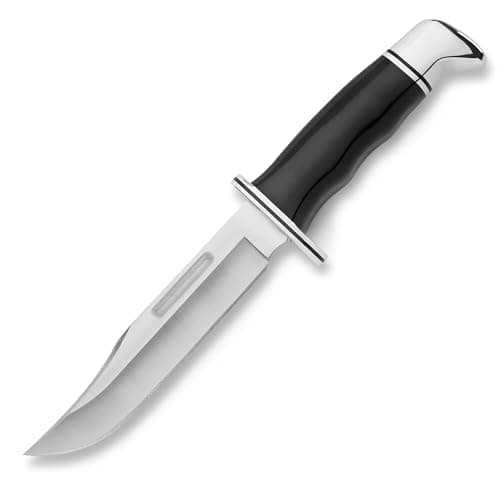
Shape matters more than length, and again it's intuitive once named. A drop pointhas a gently sloping tip that's strong and controllable — the do-everything shape most hunters prefer, and the one that's hardest to go wrong with as a gift. A clip pointhas a finer, more defined tip that's handy for detailed work and gives a knife that classic, recognizable silhouette. A skinner has a wide, sweeping curve built specifically for separating hide from meat. Unless you know they specifically want a skinner, a drop point or clip point is the confident choice.
What's a gut hook?
You'll see some blades with a small, sharpened notch curling off the spine — that's a gut hook. Its one job is to open an animal's belly in a single zip without nicking the innards underneath, which keeps the meat cleaner during field dressing. Hook the point in, pull, and it unzips the hide like a seam ripper on fabric.
Is it worth seeking out? It's genuinely useful to hunters who field dress often, and many appreciate it. But it also adds a feature to keep sharp and clean, and plenty of experienced hunters happily skip it and use the main edge instead. As a gift decision: don't stress about it. A great knife without a gut hook is still a great knife. If the person is a serious deer processor, a gut hook is a nice touch; otherwise it's optional.
Steel, in one plain sentence
Here's the whole truth about knife steel in one sentence: harder steels hold a sharp edge longer but take more effort to sharpen, while softer steels dull a little sooner but are quick and easy to bring back. That's it. The alphabet soup of names you'll see — and there are dozens — are all just different points on that trade-off. A reputable brand pairs its knives with a steel that suits them, so buying from a name hunters trust matters far more than memorizing steel grades. If you ever want the deeper method behind our recommendations, it's on our how we choose page.
One practical follow-through: any knife eventually goes dull, and a dull knife is the most common complaint hunters have about a gift. Tucking a simple pocket sharpener in alongside the knife quietly solves that and makes the present feel complete.
What to buy as a gift
Pulling it together, the safest, most welcome gift for most people is a quality fixed bladein a medium size with a drop-point or clip-point shape, from a brand hunters already respect. It's instantly recognizable as "a real hunting knife," it's built to last a lifetime, and it works for any kind of hunting. That's exactly why the classic clip-point fixed blade is our default recommendation for gift-givers who aren't sure. Here's the honest case for and against going that route.
What we like
- Universally understood as a proper hunting knife — hard to get wrong
- One solid piece: nothing to break, dead simple to clean
- Handles field dressing and everyday camp chores equally well
- A trusted-brand model becomes a keepsake, not a duplicate
Worth knowing
- A sheathed fixed blade is bulkier to carry than a folder
- Will need occasional sharpening — pair it with a small sharpener
- If they mostly want pocket carry, a folder may suit them better
On a tighter budget, you don't have to compromise: a well-made, inexpensive fixed blade can feel like a real gift rather than a cheap one. See our hunting gifts under $50 for options that punch above their price, or browse all our gear guideswhen you're ready to pick a specific model.
Frequently asked questions
What size hunting knife should I buy as a gift?
A medium blade — roughly a palm's width to a hand's length — is the forgiving, do-everything size and what most classic hunting knives already are. Very long blades are clumsy for the close work of field dressing, and very short ones limit what the knife can do.
Fixed blade or folding knife for a gift?
A fixed blade is the more universal gift: stronger, easier to clean, and instantly recognizable as a hunting knife. Choose a folder if the person specifically values carrying a knife in their pocket at all times. See our fixed vs. folding comparison for the full breakdown.
Do I need a knife with a gut hook?
Not necessarily. A gut hook opens an animal's belly cleanly in one pull, which hunters who field dress often appreciate — but many experienced hunters skip it and use the main edge. A great knife without a gut hook is still a great gift.
What kind of steel should a hunting knife have?
In one sentence: harder steels hold an edge longer but are tougher to sharpen, while softer steels dull sooner but are quick to touch up. Buying from a brand hunters trust matters far more than the specific steel name, because reputable makers match the steel to the knife.
What's the safest hunting knife to give if I don't hunt?
A quality fixed blade in a medium size with a drop-point or clip-point shape, from a respected brand. It reads as a real hunting knife, lasts a lifetime, and works for any kind of hunting. Add a small pocket sharpener and the gift feels complete.