Gear Guides
What Is a Binocular Harness? (Bino Harness Guide)
It's the small chest pouch nearly every serious hunter wears — and one of the best-value gifts you can give anyone who owns binoculars. Here's what it does and why it matters.
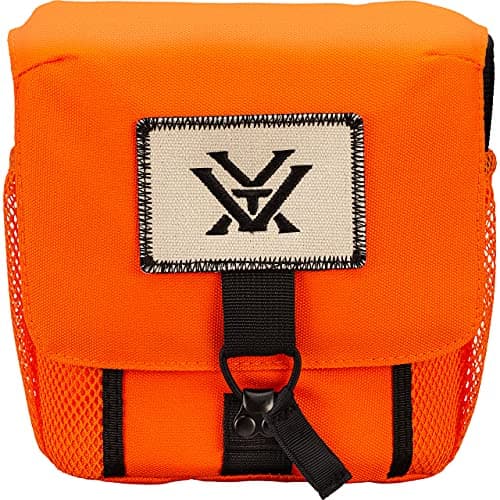
If you've watched hunting videos or flipped through a gear catalog, you've seen it: a small pouch strapped to a hunter's chest, holding their binoculars front and center. That's a binocular harness— a "bino harness" for short — and it's one of those quietly brilliant pieces of gear that nearly every serious hunter owns and a surprising number of casual ones don't.
For a gift buyer, that gap is an opportunity. This guide explains, in plain terms, what a bino harness is, why the old neck strap falls short, why hunters swear by the harness, and why it's one of the best-value, most thoughtful add-on gifts you can give anyone who owns a pair of binoculars.
The short answer
A bino harness is a small pouch worn on the chest, held by elastic straps over the shoulders, that keeps binoculars snug against the body instead of dangling from a neck strap. The payoff is threefold: the binoculars stop swinging and bangingaround as the hunter walks or climbs, they're protectedfrom rain, dust, and knocks inside the pouch, and they're still instantly ready— pop the lid, glass, and tuck them back. It's inexpensive, universally useful, and makes a fantastic add-on gift. Everything below is the detail behind that.
Why the neck strap falls short
Almost every pair of binoculars ships with a simple neck strap, and for a few minutes of casual use it's fine. Out in the field all day, though, it becomes a nuisance. Binoculars are heavy enough that hanging them from your neck for hours strains and aches, and worse, they swing and bouncewith every step — banging against your chest, your rifle, or a rock when you bend down or climb. That swinging is annoying, it's noisy at exactly the wrong moment, and it slowly scratches and dings the very lenses you paid good money for.
Hunters also tend to leave the binoculars fully exposedon a neck strap — open to rain, snow, dust, and the odd faceplant on the trail. You can tuck them inside a jacket to protect them, but then they're slow to reach for, and glassing quickly is the whole point. The neck strap forces an annoying choice between "protected but slow" and "handy but exposed." A harness refuses that trade-off.
How a harness fixes it
A harness solves all of that at once. It holds the binoculars in a padded pouch high and tight on the chest, so the weight rides on your shoulders and back instead of your neck, and there's no swinging — they stay put whether you're walking, crawling, or climbing. Most harnesses have a lid or magnetic flap that closes over the pouchto keep weather and grit off the glass, then opens in a single motion when it's time to look.
The result is the best of both worlds: binoculars that are protected and out of the way, yet ready in half a second. Reach down, flip the lid, glass, and let go — the pouch pulls them right back to your chest. It's no exaggeration to say a harness changes how a hunter uses their optics; because it's so easy, they actually glass more, spot more, and enjoy the binoculars they own. That's why nearly every serious hunter wears one, and why the ones who haven't tried it are missing out. For more on choosing the binoculars themselves, see our how to choose hunting binoculars guide.
Neck strap vs. harness, side by side
Here's the honest head-to-head, in plain terms.
| Attribute | Neck strap | Bino harness |
|---|---|---|
| Comfort | Weight hangs from the neck — aches over a long day | Weight rides on the shoulders and back — comfortable all day |
| Swinging and banging | Binoculars swing, bounce, and bang when you move | Held tight to the chest — no swing, no bounce, no noise |
| Protection | Lenses stay fully exposed to rain, dust, and knocks | Pouch lid shields the glass from weather and bumps |
| Quick access | Handy but exposed, or tucked away but slow to reach | Protected and still ready in half a second |
| As a gift | What comes in the box — nothing special | Inexpensive, thoughtful, and instantly useful to any owner |
What we like
- Stops the swing, bounce, and bang of a dangling neck strap
- Shifts the weight off the neck — comfortable all day
- Protects the lenses from rain, dust, and knocks in a padded pouch
- Keeps binoculars ready in half a second, so hunters glass more
Worth knowing
- Adds a small piece of gear to put on and adjust
- Fit varies — pick a size that matches their binocular's dimensions
- A few bulky or oversized binoculars won't suit compact pouches
Why it's a great, cheap add-on gift
Here's why a bino harness punches so far above its price as a gift. It's inexpensive— comfortably an under-$50 item, and many sit even lower — yet it solves a real, everyday frustration that most binocular owners just put up with. It's universally useful: nearly any hunter, birder, or outdoors person with a pair of binoculars benefits, so you don't need to know the fine details of how they hunt. And it signals real thought— giving one tells the person you understand the gear, which lands far warmer than another generic present.
Two ways to use it as a gift. Give a harness on its ownto a hunter who already owns good glass but keeps letting it dangle — you're fixing a problem they live with. Or pair it with binocularsfor a complete, ready-to-use setup that feels generous and finished. Either way, match the harness roughly to the size of their binoculars so the fit is snug. You'll find harnesses among our hunting gifts under $50 and gifts under $25, and a pair of binoculars is a natural companion gift for a deer hunter. You can see how we weigh value like this on our how we choose page.
Frequently asked questions
What is a binocular harness?
A binocular harness is a small pouch worn on the chest, held by elastic straps over the shoulders, that keeps binoculars snug against the body instead of dangling from a neck strap. It stops the swing, protects the lenses, and keeps them ready in seconds.
Why do hunters use a bino harness instead of the neck strap?
A neck strap lets binoculars swing, bang, and strain the neck all day, and leaves the lenses exposed. A harness holds them tight to the chest, shifts the weight to the shoulders, shields the glass in a pouch, and still opens in half a second to glass.
Is a binocular harness a good gift?
Yes — it's one of the best-value gifts for anyone who owns binoculars. It's inexpensive, solves a real everyday frustration, and works for nearly any hunter or birder, so you don't need to know the details of how they hunt. Giving one signals real thought.
Do I need to match the harness to their binoculars?
Roughly, yes. Harness pouches come in sizes, so match one to the approximate dimensions of their binoculars for a snug fit. A mid-size harness suits the common 42mm pairs; very large or bulky binoculars may need a bigger pouch.
How much does a bino harness cost?
A quality bino harness is an affordable accessory — comfortably an under-$50 item, with many priced lower. That low cost against how useful it is every day out is exactly what makes it such a strong add-on gift.