Gear Guides
What Size Cooler Do You Need for a Deer?
The answer is smaller than people expect for one deer and much larger than they expect for an elk - and the number that catches everyone out is not the meat. It is the ice.
This question gets asked every autumn and answered badly, usually with a single number and no explanation. The honest version has three parts: how much meat there is, how much of the cooler the ice will occupy, and whether one person can still lift the thing once it is full.
That last part is not a joke. A cooler big enough to hold a whole deer and enough ice to keep it cold is not a cooler anyone carries across a field alone, which is why the practical answer to "what size cooler for a deer" is very often two smaller ones rather than one big one.
What to look for before you buy
Cooler shopping goes wrong in the same four ways every time. Decide these before you look at a single product.
Capacity is quoted in quarts, and roughly half of it is ice.This is the thing nobody accounts for. Meat has to be surrounded by cold, not merely sitting next to it, and ice takes real volume. A working rule for planning is to assume you will fill about half the cooler with ice and half with meat — so the cooler has to be about twice the size of the pile you are trying to chill.
Quartered or boned out changes everything.Bone-in quarters are awkward shapes that waste a lot of space around them. The same animal boned out — meat off the bone, into bags — packs down dramatically and often halves the cooler you need. If the hunter has a place to butcher, boning out in the field is the single biggest lever on this question.
Ice retention versus price. A rotomoulded cooler with thick walls and a gasket holds ice for days; a classic thin-walled cooler holds it for a day or so. If the meat is going in a freezer the same evening, you are paying for performance you will not use. If it is a camp in warm weather, that performance is the whole point.
Whether it has wheels, and whether that matters. A full large cooler is genuinely heavy. Wheels are the difference between a one-person job and a two-person job in a parking area, and they are worth more than most people expect.
With those decided, here are four coolers that answer four different versions of the question. Prices are pulled live from Amazon.
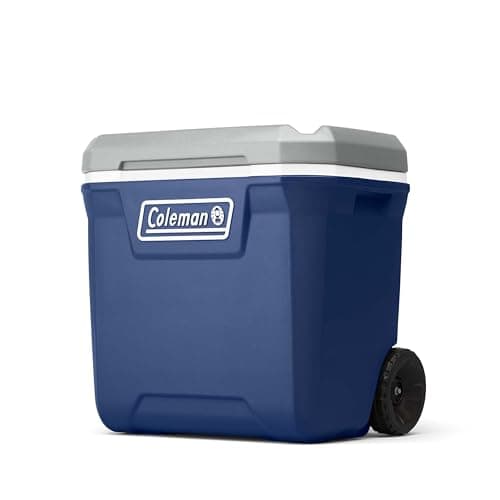
Coleman Classic Series Rolling Cooler (65 QT)
The sensible default for one deer, and the pick we would buy for most people. At 65 quarts it has the room for a boned-out whitetail with ice around it, and the rolling design is the part that matters: a cooler this size, loaded with meat and ice, is a genuinely heavy thing to carry across a field or lift into a truck bed, and wheels turn a two-person job into a one-person one. Coleman is the familiar, unpretentious answer at a price that leaves money for the rest of the season. Honest cons: a classic thin-walled cooler does not hold ice like a rotomoulded one, so this suits a hunter who gets the meat home or to a processor within a day or two rather than one camping for a week; and the latch and hinge hardware is the first thing to wear on any cooler in this class.
#ad · Price as of Sep 17, 2026. We may earn a commission.
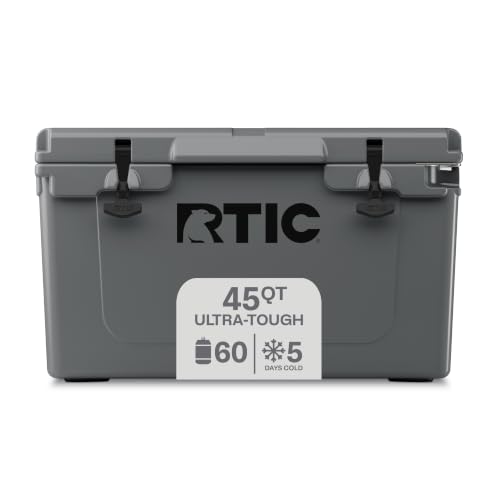
RTIC 45 QT Hard Cooler
The step up for anyone whose meat is not going straight into a freezer. Rotomoulded construction with thick insulated walls and a gasketed lid is what buys days of ice retention rather than hours, which is what a warm-weather hunt, a distant camp or an early-season archery kill actually needs. Forty-five quarts is a sensible size for one boned-out deer with ice, and it is still liftable by two people when full. Honest cons: it is several times the price of the Coleman for a capability that is irrelevant if the freezer is an hour away; rotomoulded coolers are extremely heavy before you put anything in them; and forty-five quarts will not take a bone-in quartered deer with ice - for that you want the larger box below.
#ad · Price as of Sep 17, 2026. We may earn a commission.
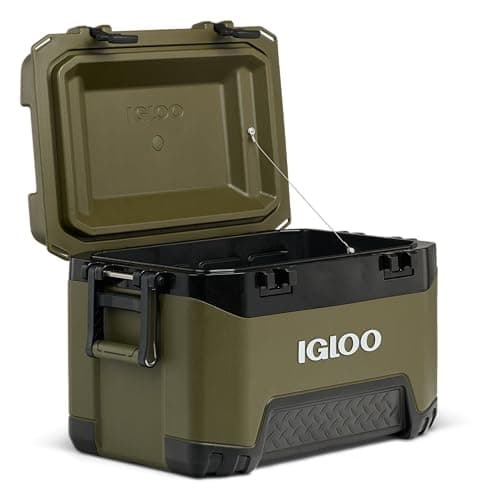
Igloo BMX 52 QT Hard Cooler
The pick for a quartered deer, a warm-weather hunt, or a hunter who wants one cooler to cover most situations. At 52 quarts it has the capacity for bone-in quarters plus ice, with a heavy-duty build, and it sits between the budget and rotomoulded classes on both price and performance. If somebody is buying one cooler that will also do duty for camping and for the drive home from a lease, this is the size that covers the most ground. Honest cons: full, it is a heavy carry with no wheels; it is still not an elk-sized answer; and like any single large cooler, one broken lid latch leaves you with no backup, which is the argument for two smaller boxes.
#ad · Price as of Sep 17, 2026. We may earn a commission.
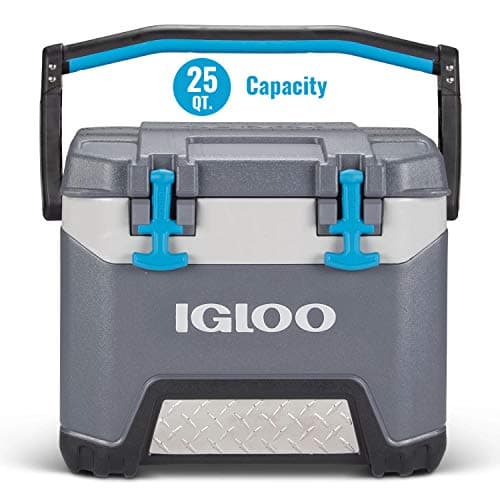
Igloo BMX 25 QT Hard Cooler
The one people do not think of and frequently should: the second cooler. Twenty-five quarts is too small for a whole deer and exactly right as the other half of a two-cooler setup - backstraps and tenderloins in the small box, quarters in the large one, so the prime cuts are not being dug out from under everything else every time the lid opens. It also works on its own for a half share, for hauling meat to a processor, and for every non-hunting use a small cooler ever has. Honest cons: on its own it does not answer the question this page asks; small coolers lose ice faster than large ones because of the surface-area-to-volume ratio; and it is an odd thing to give as a standalone present.
#ad · Price as of Sep 17, 2026. We may earn a commission.
The short answer, by situation
| Situation | Cooler size to plan for |
|---|---|
| One whitetail, boned out, meat in bags | Around 45–65 quarts with ice |
| One whitetail, quartered bone-in | Around 52–65 quarts, or two mid-size coolers |
| One whitetail, warm weather, no freezer for days | Rotomoulded, 45 quarts or larger |
| Backstraps and tenderloins kept separate | A second small cooler, around 25 quarts |
| One elk, boned out | Two large coolers as a minimum |
| Getting meat to a processor the same day | Whatever fits in the vehicle — ice retention barely matters |
Those are planning figures, not laws. How much meat comes off an animal varies a great deal with its size, the season and how closely it is trimmed, so treat any single number you read online — including ours — as a starting point and buy with a little room to spare rather than exactly enough.
Why two coolers beat one big one
Almost everyone's instinct is to buy the biggest cooler they can afford. There are four reasons that is usually the wrong call.
Weight.Meat and ice together get heavy quickly, and a large cooler full of both is awkward as well as heavy — a long box with a shifting load is harder to carry than two compact ones, even at the same total weight.
Cold loss every time the lid opens. A single cooler gets opened constantly, and each opening dumps cold air. Splitting the load means the box holding the prime cuts barely gets touched.
Vehicle fit. Two mid-size coolers slot into a truck bed or a car boot around packs and gear. One enormous box dictates the entire layout.
Redundancy. A cracked lid seal or a failed latch on your only cooler is a problem on the drive home. On one of two, it is an inconvenience.
Bags, blocks and dry ice
Bagged meat versus loose meat. Meat sitting in meltwater takes on water and the result is worse, so get the meat into bags and keep the drain open. Some hunters do pack meat directly on ice and drain constantly; it works, and it takes more attention than most people give it.
Block ice versus cubed.Block ice lasts substantially longer because there is less surface area exposed; cubed ice chills faster and fills gaps better. The usual answer is both — block at the bottom for endurance, cubes packed around the load for contact. Frozen water bottles are the cheap version of block ice and leave no meltwater at all.
Dry ice. Effective and worth knowing the caveats: it needs ventilation because it sublimates into carbon dioxide gas, it can crack the plastic of some coolers if it sits directly against the wall, and it will freeze meat solid rather than chill it. Useful for a long haul, overkill for a drive home.
What changes for an elk
An elk is not a large deer; it is several deer. The practical consequences for this question are worth stating plainly, because people arrive at an elk hunt with whitetail-sized plans.
Plan on two large coolers at an absolute minimum, boned out, and understand that many people doing this seriously use a chest freezer at home or a meat locker rather than trying to solve it with coolers at all. A bone-in elk will not fit into any reasonable number of coolers, which is why boning out in the field is close to standard practice for western hunts.
If you are shopping for an elk hunter, gifts for elk hunters covers what else that hunt actually demands, most of which is about carrying weight a long way.
Buying a cooler as a gift
Coolers are an unusually safe hunting present: there is no size to guess, no taste to misjudge, and they get used for camping, fishing and tailgating for years whether or not the season goes well. Two notes.
First, match the tier to the hunter rather than to your budget. A rotomoulded cooler is a wonderful gift for somebody who camps and hunts away from home, and largely wasted on somebody who drives the deer straight to a processor forty minutes away. Second, a cooler is a bulky thing to wrap and a slightly impersonal thing to open on its own — adding something small and specific, a knife or a sharpener, makes it land better.
Our best hunting coolers roundup ranks the field by size, and RTIC vs Coleman is the head-to-head between the two tiers if you are torn between them.
How we chose the picks above
We do not run a test lab and we are not going to invent one. Capacities and construction details here are the manufacturers' own published figures, cited below. The sizing guidance is conventional practice rather than measured data, and we have said so rather than dressing an estimate up as a test result — yields vary far too much between animals for a single number to be honest. Our method is on the how we choose page, and prices are live and dated.
Frequently asked questions
How big of a cooler do I need for a deer?
For one whitetail boned out and bagged, plan on roughly 45 to 65 quarts once you allow for ice. Quartered bone-in takes more room because the shapes waste space, so budget 52 quarts or more - or, better, use two mid-size coolers instead of one large one. Yields vary a lot between animals, so buy with a little room to spare.
How much of a cooler is taken up by ice?
Plan on about half. Meat has to be surrounded by cold rather than merely sitting beside it, so a useful rule is that the cooler needs to be roughly twice the volume of the pile you are trying to chill. This is the step most people skip, and it is why so many hunters find their cooler is suddenly too small.
Is it better to bone out a deer before putting it in a cooler?
For cooler space, yes, dramatically. Bone-in quarters are awkward shapes that waste the space around them, while boned-out meat in bags packs down and often halves the cooler size needed. It also chills faster, because there is no bone insulating the middle of a thick cut.
Should you put deer meat directly on ice?
Bag it first if you can. Meat sitting in meltwater absorbs water and the result is worse, so most people bag the meat, put it on the bottom, pile ice on top - cold air falls - and leave the drain plug open so meltwater runs out rather than pooling around the load.
What size cooler do you need for an elk?
Two large coolers as an absolute minimum, boned out, and many people who do this regularly use a chest freezer or a meat locker instead of trying to solve it with coolers at all. A bone-in elk will not fit into any reasonable number of coolers, which is why boning out in the field is close to standard on western hunts.
Do you need an expensive cooler for hunting?
Only if the meat is not going into a freezer quickly. A rotomoulded cooler with thick walls and a gasketed lid buys days of ice retention rather than hours, which matters for a warm-weather hunt or a distant camp. If the deer goes to a processor the same afternoon, a classic thin-walled cooler does the job for a fraction of the price.
Sources
- Igloo - BMX hard cooler range, published capacities and construction
- RTIC Outdoors - hard cooler range, published rotomoulded construction and insulation
- Coleman - hard and wheeled cooler range, published capacities
- National Deer Association - published guidance on venison care and cooling harvested deer