Gear Guides
The Best Hunting Flashlight
A hunter who already owns a headlamp still needs a handheld, for one reason most roundups never mention: you cannot rake light across the ground from your forehead - and raking light is how blood is found.
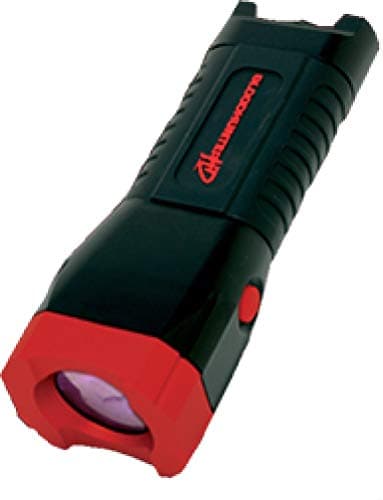
If you are buying one hunting flashlight, buy the Primos Bloodhunter HD. It is built for the job that makes a handheld worth owning at all — following a blood trail after dark — and it is the pick a deer hunter would never think to buy for themselves. If you want a general-duty light instead, the Streamlight ProTac HL-X is the buy-it-once answer at 1,300 published lumens. Both are below, along with the colored-light option for hogs and coyotes, a budget pick at stocking-stuffer money, and the pocket backup every hunter should own.
First, the question this page exists to answer: why own a flashlight when you already have a headlamp? Our best hunting headlamps roundup covers the hands-free light, and for walking in, gutting an animal and reading a map, hands-free wins every time. But a headlamp has one unavoidable flaw, and it is geometric rather than technical.
A headlamp shines along the same axis as your eyes. That is the single worst angle for seeing a dark droplet on dark leaves. Blood on the ground shows up when light crosses it at a low angle and catches the sheen — which means holding a light out to the side, down near the ground, and sweeping it. You cannot do that with a lamp strapped to your forehead, no matter how many lumens it makes. That is the whole case for a handheld, and it is why the blood-tracking pick leads this page.
Prices below are pulled live from Amazon and stamped with the date they were captured.
- 1Primos Bloodhunter HD Blood Tracking LightThe pick, and the only light here designed around a specific hunting problem rather than adapted to one. Primos builds the Bloodhunter HD to filter its output so that blood stands out against leaf litter and grass instead of disappearing into it - which is the difference between recovering an animal and losing one. It is a handheld, so you can hold it low and off to one side and rake the beam across the ground at the shallow angle that makes blood shine, which is the thing a headlamp physically cannot do. Primos is a name already on this site for deer calls and blind stakes, so it is not a marketplace label that appeared last season. Honest cons: this is a single-purpose light and a poor general-duty one - do not expect it to light a field edge or replace a work light; it is the second-most expensive pick here, which is a lot for a tool used a handful of nights a year; and no light finds blood that is not there, so it supports careful trailing rather than replacing it.Best for: Best for blood trailing
- 2
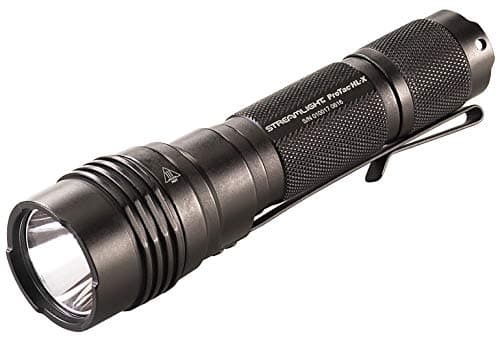 Streamlight ProTac HL-X 1,300-Lumen FlashlightThe general-duty handheld, and the one to buy if you want a single light that will still be working in ten years. Streamlight publishes 1,300 lumens for the 88085 ProTac HL-X, which is genuinely enough to read a field edge, check a treeline, or find the truck across a cut cornfield - jobs where a headlamp's flood beam simply runs out. Streamlight has built duty lights for a long time and the ProTac line is the reason people know the name, so the build is the point as much as the output. Honest cons: 1,300 lumens is far more than anyone needs for walking in, and used at full output in the dark it will wreck your own night vision for several minutes; it is the priciest pick on this page; and it is a white-light tool with no colored mode, so it does nothing for the stealth jobs the other picks here handle.Best for: Best overall, and best reach
 - 3
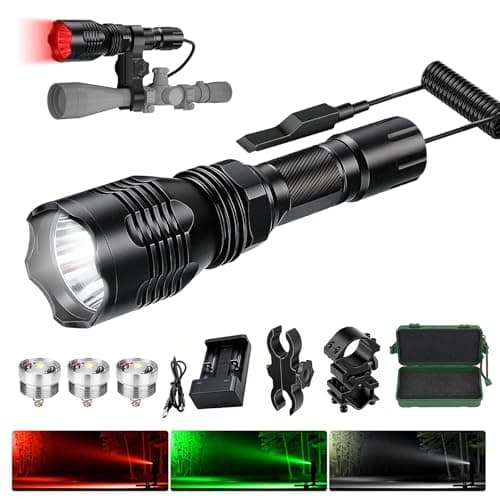 VASTFIRE Interchangeable Red/Green/White Predator LightThe colored-light pick, for hunters whose season happens after sunset. It ships with interchangeable red, green and white LED heads, which covers the whole argument about light color in one purchase instead of making you bet on it - our page on red or green light for hunting explains why that argument is genuinely unsettled for predators. Red and green both preserve human night vision far better than white and are widely used for hogs, coyotes and raccoons. Read the caveat below before you buy this one: night hunting with an artificial light is regulated differently in every state and for different species, and this is the one pick here where the law decides whether it is useful to you. Honest cons: swappable heads are one more small part to lose in the dark; it is a budget-brand light and the build reflects that next to the Streamlight; and it is useless for the species most hunters actually chase, because you cannot legally hunt deer with it in most places.Best for: Best for hogs and coyotes after dark
 - 4
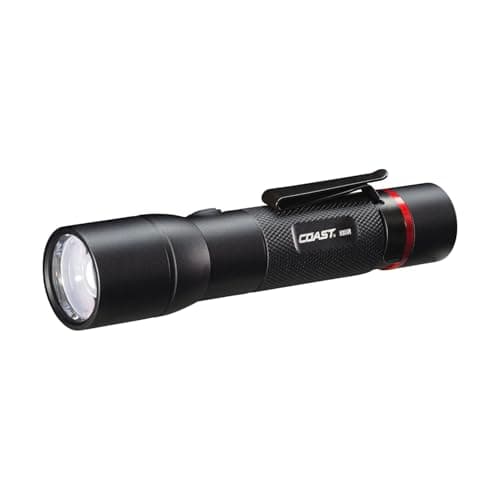 Coast HX6R 800-Lumen Rechargeable FlashlightThe easy gift, and a genuinely capable light rather than a compromise. Coast publishes 800 lumens, four light modes, USB-C recharging, an IP54 water-resistance rating and their slide-focus mechanism, which lets you push the beam from a wide close-up flood to a narrower throw with one hand - that focus range is what makes one cheap light cover two jobs. Coast has been making focusing flashlights for a long time, and at this price it is the pick to buy two of. Honest cons: IP54 is splash-and-rain resistance, not submersion, so this is not the light for a duck hunter standing in water; 800 lumens on a budget emitter will not reach like the Streamlight; and a focusing head is a moving part on something that lives in a pack.Best for: Best budget pick
 - 5
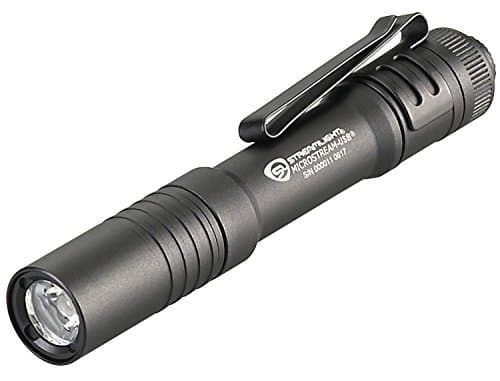 Streamlight MicroStream 250-Lumen Pocket FlashlightNot the best light here and not trying to be - this is the one that is actually with you. Streamlight publishes 250 lumens and 1,150 candela for the 66601 MicroStream, and that candela figure is the interesting one: it is a tight little beam for its size, so a pen-sized light still reaches usefully rather than just glowing. It clips in a pocket, weighs nothing, and solves the most common lighting failure in hunting, which is not a dim light but a dead one. Every hunter should carry a second light and almost none do. Honest cons: 250 lumens is a backup, not a primary; it is white-only with no red mode, so it is the wrong light to walk in to a stand on; and it costs more than the far brighter budget pick above, which only makes sense once you understand you are paying for pocketability and the brand's reliability.Best for: Best pocket backup
| # | Gift | Best for | Price |
|---|---|---|---|
| 1 | Primos Bloodhunter HD Blood Tracking LightThe pick, and the only light here designed around a specific hunting problem rather than adapted to one. Primos builds the Bloodhunter HD to filter its output so that blood stands out against leaf litter and grass instead of disappearing into it - which is the difference between recovering an animal and losing one. It is a handheld, so you can hold it low and off to one side and rake the beam across the ground at the shallow angle that makes blood shine, which is the thing a headlamp physically cannot do. Primos is a name already on this site for deer calls and blind stakes, so it is not a marketplace label that appeared last season. Honest cons: this is a single-purpose light and a poor general-duty one - do not expect it to light a field edge or replace a work light; it is the second-most expensive pick here, which is a lot for a tool used a handful of nights a year; and no light finds blood that is not there, so it supports careful trailing rather than replacing it. | Best for blood trailing | $70.79View on Amazon |
| 2 | Streamlight ProTac HL-X 1,300-Lumen FlashlightThe general-duty handheld, and the one to buy if you want a single light that will still be working in ten years. Streamlight publishes 1,300 lumens for the 88085 ProTac HL-X, which is genuinely enough to read a field edge, check a treeline, or find the truck across a cut cornfield - jobs where a headlamp's flood beam simply runs out. Streamlight has built duty lights for a long time and the ProTac line is the reason people know the name, so the build is the point as much as the output. Honest cons: 1,300 lumens is far more than anyone needs for walking in, and used at full output in the dark it will wreck your own night vision for several minutes; it is the priciest pick on this page; and it is a white-light tool with no colored mode, so it does nothing for the stealth jobs the other picks here handle. | Best overall, and best reach | $108.54View on Amazon |
| 3 | VASTFIRE Interchangeable Red/Green/White Predator LightThe colored-light pick, for hunters whose season happens after sunset. It ships with interchangeable red, green and white LED heads, which covers the whole argument about light color in one purchase instead of making you bet on it - our page on red or green light for hunting explains why that argument is genuinely unsettled for predators. Red and green both preserve human night vision far better than white and are widely used for hogs, coyotes and raccoons. Read the caveat below before you buy this one: night hunting with an artificial light is regulated differently in every state and for different species, and this is the one pick here where the law decides whether it is useful to you. Honest cons: swappable heads are one more small part to lose in the dark; it is a budget-brand light and the build reflects that next to the Streamlight; and it is useless for the species most hunters actually chase, because you cannot legally hunt deer with it in most places. | Best for hogs and coyotes after dark | $45.99View on Amazon |
| 4 | Coast HX6R 800-Lumen Rechargeable FlashlightThe easy gift, and a genuinely capable light rather than a compromise. Coast publishes 800 lumens, four light modes, USB-C recharging, an IP54 water-resistance rating and their slide-focus mechanism, which lets you push the beam from a wide close-up flood to a narrower throw with one hand - that focus range is what makes one cheap light cover two jobs. Coast has been making focusing flashlights for a long time, and at this price it is the pick to buy two of. Honest cons: IP54 is splash-and-rain resistance, not submersion, so this is not the light for a duck hunter standing in water; 800 lumens on a budget emitter will not reach like the Streamlight; and a focusing head is a moving part on something that lives in a pack. | Best budget pick | $20.99View on Amazon |
| 5 | Streamlight MicroStream 250-Lumen Pocket FlashlightNot the best light here and not trying to be - this is the one that is actually with you. Streamlight publishes 250 lumens and 1,150 candela for the 66601 MicroStream, and that candela figure is the interesting one: it is a tight little beam for its size, so a pen-sized light still reaches usefully rather than just glowing. It clips in a pocket, weighs nothing, and solves the most common lighting failure in hunting, which is not a dim light but a dead one. Every hunter should carry a second light and almost none do. Honest cons: 250 lumens is a backup, not a primary; it is white-only with no red mode, so it is the wrong light to walk in to a stand on; and it costs more than the far brighter budget pick above, which only makes sense once you understand you are paying for pocketability and the brand's reliability. | Best pocket backup | $37.53View on Amazon |
Prices from Amazon as of October 6, 2026 and change often — the button always opens the current listing. Some links earn us a commission at no extra cost to you.
Primos Bloodhunter HD Blood Tracking Light
The pick, and the only light here designed around a specific hunting problem rather than adapted to one. Primos builds the Bloodhunter HD to filter its output so that blood stands out against leaf litter and grass instead of disappearing into it - which is the difference between recovering an animal and losing one. It is a handheld, so you can hold it low and off to one side and rake the beam across the ground at the shallow angle that makes blood shine, which is the thing a headlamp physically cannot do. Primos is a name already on this site for deer calls and blind stakes, so it is not a marketplace label that appeared last season. Honest cons: this is a single-purpose light and a poor general-duty one - do not expect it to light a field edge or replace a work light; it is the second-most expensive pick here, which is a lot for a tool used a handful of nights a year; and no light finds blood that is not there, so it supports careful trailing rather than replacing it.
#ad · Price as of October 6, 2026. We may earn a commission.
Streamlight ProTac HL-X 1,300-Lumen Flashlight
The general-duty handheld, and the one to buy if you want a single light that will still be working in ten years. Streamlight publishes 1,300 lumens for the 88085 ProTac HL-X, which is genuinely enough to read a field edge, check a treeline, or find the truck across a cut cornfield - jobs where a headlamp's flood beam simply runs out. Streamlight has built duty lights for a long time and the ProTac line is the reason people know the name, so the build is the point as much as the output. Honest cons: 1,300 lumens is far more than anyone needs for walking in, and used at full output in the dark it will wreck your own night vision for several minutes; it is the priciest pick on this page; and it is a white-light tool with no colored mode, so it does nothing for the stealth jobs the other picks here handle.
#ad · Price as of October 6, 2026. We may earn a commission.
VASTFIRE Interchangeable Red/Green/White Predator Light
The colored-light pick, for hunters whose season happens after sunset. It ships with interchangeable red, green and white LED heads, which covers the whole argument about light color in one purchase instead of making you bet on it - our page on red or green light for hunting explains why that argument is genuinely unsettled for predators. Red and green both preserve human night vision far better than white and are widely used for hogs, coyotes and raccoons. Read the caveat below before you buy this one: night hunting with an artificial light is regulated differently in every state and for different species, and this is the one pick here where the law decides whether it is useful to you. Honest cons: swappable heads are one more small part to lose in the dark; it is a budget-brand light and the build reflects that next to the Streamlight; and it is useless for the species most hunters actually chase, because you cannot legally hunt deer with it in most places.
#ad · Price as of October 6, 2026. We may earn a commission.
Coast HX6R 800-Lumen Rechargeable Flashlight
The easy gift, and a genuinely capable light rather than a compromise. Coast publishes 800 lumens, four light modes, USB-C recharging, an IP54 water-resistance rating and their slide-focus mechanism, which lets you push the beam from a wide close-up flood to a narrower throw with one hand - that focus range is what makes one cheap light cover two jobs. Coast has been making focusing flashlights for a long time, and at this price it is the pick to buy two of. Honest cons: IP54 is splash-and-rain resistance, not submersion, so this is not the light for a duck hunter standing in water; 800 lumens on a budget emitter will not reach like the Streamlight; and a focusing head is a moving part on something that lives in a pack.
#ad · Price as of October 6, 2026. We may earn a commission.
Streamlight MicroStream 250-Lumen Pocket Flashlight
Not the best light here and not trying to be - this is the one that is actually with you. Streamlight publishes 250 lumens and 1,150 candela for the 66601 MicroStream, and that candela figure is the interesting one: it is a tight little beam for its size, so a pen-sized light still reaches usefully rather than just glowing. It clips in a pocket, weighs nothing, and solves the most common lighting failure in hunting, which is not a dim light but a dead one. Every hunter should carry a second light and almost none do. Honest cons: 250 lumens is a backup, not a primary; it is white-only with no red mode, so it is the wrong light to walk in to a stand on; and it costs more than the far brighter budget pick above, which only makes sense once you understand you are paying for pocketability and the brand's reliability.
#ad · Price as of October 6, 2026. We may earn a commission.
What to look for in a hunting flashlight
Five things, and the first two are the ones general flashlight roundups get wrong for hunters.
Candela, not just lumens.Lumens measure total light output in every direction; candela measures beam intensity, which is what decides how far the light actually reaches. A wide 1,000-lumen flood and a tight 1,000-lumen spot behave completely differently in the woods. Manufacturers who publish both are telling you something useful — Streamlight's MicroStream is listed at 250 lumens and 1,150 candela precisely because the second number is why a pen light is worth owning.
A low mode you can actually use. Same rule as headlamps: the brightest setting is a burst, and the setting a hunter lives in is the dimmest one. A light that only does bright destroys your dark adaptation and announces you to everything in the field.
Colored light, if the season calls for it.Red and green preserve night vision and are far less alarming to game than white. For deer, red is the answer on cited biology — deer are dichromats and lack the cone type that gives humans red sensitivity. For hogs and coyotes, hunters genuinely disagree, and red or green light for hunting works through what is settled and what is preference.
A battery plan, not just a battery. Rechargeable is better until it is flat, and cold weather reduces cell capacity exactly when a hunter is out before dawn in November. The honest answer is a good rechargeable light plus a cheap second one.
Water resistance, stated as a rating."Water resistant" means nothing on its own. An IP rating does: IP54, which Coast publishes for the HX6R, is rain and splash protection rather than submersion. If the hunter stands in water, that distinction matters.
Published output, side by side
| Light | Published output | Type | Best for | What it is not |
|---|---|---|---|---|
| Primos Bloodhunter HD | Filtered blood-tracking output | Handheld, purpose-built | Following a blood trail after dark | A general-duty light |
| Streamlight ProTac HL-X | 1,300 lumens | Handheld, white | Reach, durability, one-light-forever | Subtle, or cheap |
| VASTFIRE predator light | Interchangeable red / green / white | Handheld, colored | Hogs and coyotes after dark, where legal | Legal for deer in most states |
| Coast HX6R | 800 lumens, IP54 | Handheld, slide focus | The budget pick, and flood-to-throw range | Submersible |
| Streamlight MicroStream | 250 lumens, 1,150 candela | Pocket, white | The backup that is actually with you | A primary light |
Every figure in that table is the manufacturer's own published specification, cited in the sources below. We have not measured a beam and we have not run a test. Where a manufacturer does not publish a lumen figure — the Bloodhunter is sold on what its output is filtered to do rather than on raw brightness — the cell says that rather than carrying a number we invented.
Blood trailing: how to actually use the light
This is the part worth more than the purchase, and it is free.
Get the light low and off to the side. Crouch, hold the light near the ground, and sweep it across the direction of travel rather than along it. Blood catches light at a shallow angle and vanishes at a steep one. This single habit finds more sign than any upgrade.
Mark every spot you find. Flagging tape on a branch at eye height, every time. A line of markers shows you the direction of travel when the trail runs out, which is the moment the recovery is usually won or lost.
Look up, not just down.Blood wipes onto grass stems, trunks and the undersides of leaves at the animal's body height, and on dry ground that smear is often easier to see than anything on the dirt.
Back out if the sign thins. Judgment, not equipment, and no light changes it. Pushing a wounded animal is the most common way a recoverable animal is lost.
Two people, two lights. One stays on the last confirmed sign while the other searches ahead. This is the practical argument for the cheap second light.
Night hunting and the law — read this before buying a colored light
Using an artificial light to hunt at night is regulated, and the rules differ sharply by state and by species. Some states allow lights for hogs or coyotes and not for other game; some require a permit; some restrict which colors may be used or how a light may be carried; some prohibit it outright. There is no national answer, and we are not going to print one here, because a wrong answer on this costs somebody a citation.
Check your own state wildlife agency's current regulations before you hunt anything after dark, and treat any blanket claim you read online — including a product listing — as unverified. The colored-light pick above is genuinely useful where it is legal and genuinely useless where it is not, and that is a question about your state rather than about the light.
Worth separating from the above: carrying a flashlight to walk in, to field dress an animal, or to trail a deer you shot in legal shooting light is ordinary, universal and not what night-hunting rules are about.
Flashlight or headlamp? Both, and here is the split
| The job | Reach for | Why |
|---|---|---|
| Walking in before dawn | Headlamp, red, lowest mode | Hands free, and dim beats bright |
| Field dressing an animal | Headlamp, wide white flood | Both hands are busy |
| Blood trailing | Handheld | You have to rake the beam low and sideways |
| Checking a field edge or treeline | Handheld with throw | A headlamp flood runs out of reach |
| Hogs or coyotes after dark | Handheld, red or green | Color matters, and so does your state's law |
| The light that did not die | Pocket handheld | Redundancy is the whole point |
Which is why the honest recommendation for most hunters is one good headlamp plus one handheld, rather than two of either. Our how many lumens for a hunting headlamp page covers the other half of that pair, and what to pack in a hunting backpack explains why the second light is the most-forgotten item in hunting.
Buying a flashlight as a gift
Flashlights are one of the best hunting gifts available to a non-hunter, for three boring and decisive reasons: there is no size to guess, there is no taste to get wrong, and the recipient will use it for a flat tire and a power cut as well as for hunting. Three notes on doing it well.
The blood-tracking light is the thoughtful one. It says you understood what they do. A general flashlight is a useful present; a light built for trailing a deer is a present about deer hunting, and that difference is most of what a gift is for.
Add the batteries or the cable. A light that works the moment it is unwrapped beats a light that needs a trip to the store, and for a rechargeable, charging it before you wrap it is a small kindness that gets noticed.
Two cheap lights beat one expensive light, for a hunter who owns none. The budget pick and the pocket pick together cost less than the premium one and cover more ground. Most of this page sits inside hunting gifts under $50, and hunting stocking stuffers is where the pocket light belongs.
How we chose these
We do not run a test lab and we are not going to pretend otherwise. Every lumen figure, candela figure, IP rating and feature above is the manufacturer's own published specification, cited in the sources below, and the rankings are reasoning from those specifications against the jobs described at the top of this page. Nothing here has been given a rating, a score or an award by us, because we have not run a test that would earn one. Every pick was checked as currently purchasable before it was written in. Our method is on the how we choose page, and prices are pulled live from Amazon and stamped with the date they were captured.
Keep browsing
Best hunting headlampscovers the hands-free half of a hunter's lighting, red or green light for hunting settles the color question as far as it can honestly be settled, and how many lumens for a hunting headlamp explains why the lowest mode matters more than the highest. For the rest of the small kit that earns its weight, see best hunting gadgets and tools, and best deer calls covers the other piece of gear a whitetail hunter carries every time out.
Frequently asked questions
What is the best flashlight for hunting?
For most hunters, a light built for blood trailing - the Primos Bloodhunter HD here - because that is the job a headlamp genuinely cannot do. For a general-duty light, the Streamlight ProTac HL-X at a published 1,300 lumens has the reach to check a field edge. If you hunt hogs or coyotes after dark, a red or green light instead, subject to your state's night-hunting rules.
Do I need a flashlight if I already have a headlamp?
Yes, and the reason is geometric rather than technical. A headlamp shines along the same axis as your eyes, which is the worst angle for spotting a dark droplet on dark leaves. Blood shows up when light crosses it at a shallow angle, so you need to hold the light low and off to one side and sweep it - which you cannot do from your forehead.
What color flashlight is best for blood tracking?
A light built and filtered for the job, like the Bloodhunter HD, is the purpose-made answer. Beyond that, hunters disagree: some prefer green for ground contrast, some prefer white for true color, and we are not going to present a preference as a settled finding. Technique matters more than color - get the light low, sweep across the direction of travel, and mark every spot you find.
Is it legal to hunt at night with a flashlight?
It depends entirely on your state and the species, and there is no national answer. Some states permit artificial light for hogs or coyotes but not other game, some require a permit, and some restrict colors or how a light may be carried. Check your state wildlife agency's current rules. Carrying a light to walk in, field dress, or trail a deer shot in legal light is a separate, ordinary matter.
How many lumens do you need in a hunting flashlight?
Fewer than the box sells you, and candela matters more than lumens for reach. Lumens measure total output; candela measures beam intensity, which is what decides how far the light gets. A few hundred lumens covers most hunting jobs, and a usable low mode matters more than the maximum - bright white light destroys your own dark adaptation and carries a long way in open country.
Is a flashlight a good gift for a hunter?
One of the best, because there is no size to guess, no taste to get wrong, and it gets used for flat tires and power cuts as well as hunting. A blood-tracking light is the thoughtful version - it reads as a present about deer hunting rather than a generic tool. Charge it or include batteries so it works the moment it is unwrapped.
What is the difference between lumens and candela?
Lumens measure the total amount of light a lamp puts out in all directions combined. Candela measures the intensity of the beam, which is what determines throw. That is why a pen-sized light at 250 lumens and 1,150 candela can reach usefully while a wide flood at the same lumen count only lights your boots.
Sources
- Primos - published product information for the Bloodhunter HD blood tracking light
- Streamlight - published specifications for the 88085 ProTac HL-X (1,300 lumens)
- Streamlight - published specifications for the 66601 MicroStream (250 lumens, 1,150 candela)
- Coast - published specifications for the HX6R (800 lumens, four modes, USB-C, slide focus, IP54)
- VASTFIRE - published product information for the interchangeable red / green / white predator light
- onX Hunt - hunter orange explainer, covering deer color vision and why deer are less sensitive to red wavelengths
- U.S. Fish & Wildlife Service - hunting overview; hunting regulations, including night hunting and artificial light, are set state by state