Gear Guides
Rubber vs. Leather Hunting Boots: Which to Gift
Rubber boots keep feet dry and scent-free in the marsh; leather boots carry a hunter comfortably over miles. Here's the honest difference — and how to gift boots without getting the size wrong.
Boots are one of the most-wanted gifts a hunter can get and one of the easiest to overthink. The first fork in the road is the material: rubber or leather. It isn't about which is "better" — it's about where and how the person hunts. Rubber boots are built to keep feet dry and scent-free in wet, muddy ground; leather boots are built to support a foot comfortably over long miles. Match the material to the hunter and you've given something they'll wear every season.
This is a straight, jargon-free comparison — waterproofing, scent control, comfort over distance, warmth, terrain, and which one plays it safest as a gift. One heads-up before you buy: boots have to fit, so there's an important note on sizing near the end you'll want to read first.
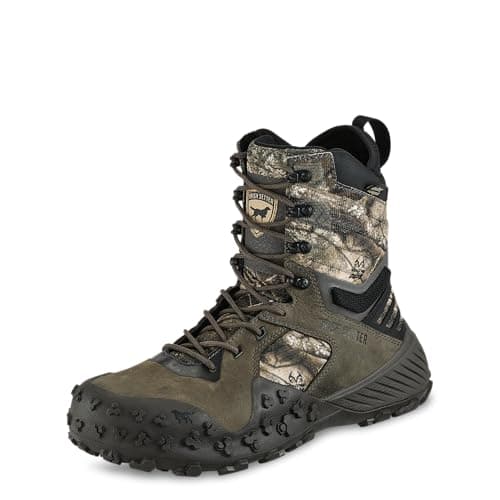
Irish Setter Men's Hunting Boots
The leather pick, and the safer all-around gift for most hunters. Leather boots from a name hunters trust give real ankle support and all-day comfort over miles, plus insulation and waterproofing for cold, dry-to-damp ground. The big catch with any boot is fit — confirm the recipient's size before you order.
#ad · Price as of October 24, 2026. We may earn a commission.
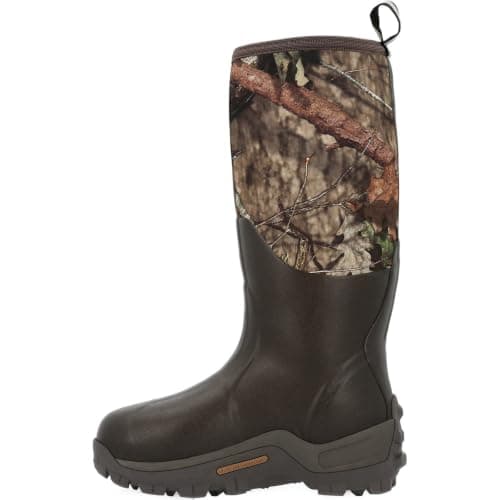
Muck Boot Woody Max Hunting Boot
The rubber pick, and the go-to for anyone who hunts wet ground — duck blinds, flooded timber, muddy field edges. Rubber seals out water and gives off very little human scent, which is exactly what a waterfowl or wet-weather hunter wants. This one shows a 'Check price on Amazon' link rather than a live price, but it's a strong secondary gift for the right hunter.
#ad · Price as of October 24, 2026. We may earn a commission.
The short answer
If you want the one-line version: rubber boots win for wet ground and scent control, and leather boots win for comfort over miles and all-day support. A duck hunter standing in a flooded marsh wants rubber. A hunter hiking uplands or covering ground on a spot-and-stalk wants leather. Plenty of hunters own both for different days. The rest of this page is just the detail behind that sentence — and how to give boots without getting the size wrong.
How they compare
Here's the head-to-head, attribute by attribute, in plain terms.
| Attribute | Rubber (Muck) | Leather (Irish Setter) |
|---|---|---|
| Waterproofing | Fully sealed — the whole boot is waterproof, so feet stay dry standing in water or mud | Waterproof-treated and very water-resistant, but built for damp ground, not standing water |
| Scent control | Gives off very little human scent — a real edge for scent-conscious hunting | Leather carries more odor, though it's rarely a dealbreaker for stand or upland hunting |
| Support / comfort over miles | Softer and less structured — great for standing, less ideal for long hikes | Firm support and a broken-in fit that carries a hunter comfortably over long miles |
| Warmth | Insulated models are warm for standing still in the cold and wet | Insulated leather is warm and breathes better on the move |
| Best terrain | Marsh, flooded timber, mud, wet field edges — anywhere it's soggy | Uplands, hills, dry-to-damp trails — anywhere that means covering ground |
| As a gift | Perfect for a duck or wet-weather hunter you know hunts soggy ground | The safer all-around gift for a hunter who walks and hunts varied terrain |
Notice there's no loser in that table. Each column is a strength for the right hunter — the whole game is matching the boot to where they spend their season.
Where rubber wins
Rubber boots exist for one job and do it beautifully: keeping feet dry in water and mud. The whole boot is sealed, so a hunter can stand ankle- or calf-deep in a flooded blind, wade a muddy field edge, or slog through marsh and come out with dry feet. The second big advantage is scent: rubber gives off very little human odor, which matters to hunters who obsess over staying scent-free as they walk to a stand. Insulated rubber models are also genuinely warm for standing still in the cold and wet. The trade-off is comfort over distance — rubber boots are softer and less structured, so they're fantastic for standing and short walks but wear on the feet over long miles.
What we like
- Fully waterproof — dry feet standing in water, mud or marsh
- Very low human scent, a real edge for scent-conscious hunters
- Easy on and off, and simple to hose clean after a muddy day
- Insulated models are warm for long, still sits in the cold and wet
Worth knowing
- Less foot and ankle support for covering long miles
- Softer, less structured fit that some find tiring on long hikes
- Can run warm and less breathable on the move in mild weather
Where leather wins
Leather boots are built for the hunter who walks. The firmer construction supports the foot and ankle over uneven ground, so a hunter can put on real miles — up hills, through uplands, on a long spot-and-stalk — without their feet paying for it by the end of the day. A quality leather boot is waterproof-treated and very water-resistant, so it handles rain, dew and damp trails comfortably; it just isn't meant for standing in standing water the way rubber is. Leather also breathes better on the move, which keeps feet drier from the inside on an active hunt. That combination — support, all-day comfort, and a name hunters trust — is exactly what makes leather the safer all-around gift when you don't know every detail of how the person hunts.
There's also how each one feelsto own, which counts for a lot in a gift. A good pair of leather hunting boots has a rugged, wear-them-for-years quality — they break in to the wearer's foot and become a favorite. Rubber boots are more of a specialist tool: indispensable to the hunter who needs them, and beside the point to one who never sees a marsh. Neither is more "serious" than the other. They're just built for different days afield.
The most important part: getting the size right
Here's the honest catch with gifting any boot: fit is everything, and the wrong size turns a great present into a return. Boots that pinch or slop around are painful over a long day and simply won't get worn. So before you order, confirm the recipient's size — peek at a pair they already own, or ask a family member. If you can't find out discreetly, treat boots as a "shop-together" gift: give a card with a photo of the pair and let them pick the size, or buy from a seller with easy exchanges and keep the gift receipt. It feels less like a surprise, but it guarantees they end up with boots that actually fit — which is the whole point.
The verdict: which to gift
If you're unsure, gift leather. It's the more universal boot — supportive, comfortable over miles, weather-ready, and right for the way most hunters spend a season. It's the choice that's hardest to get wrong when you don't know exactly where the person hunts.
Gift rubber if you know the person hunts wet ground — a duck hunter, a flooded-timber hunter, or anyone who's forever fighting mud. For them, rubber isn't a compromise; it's the exactly-right gift. Either way, the size note above is the one thing you can't skip. Shopping for a stand-hunter instead? Warm, waterproof boots are a natural fit in our gifts for deer hunterslineup, and if you're buying for the hunter who seems to own everything already, a genuinely good pair of boots is a classic answer in gifts for hunters who have everything.
Frequently asked questions
Are rubber or leather boots better for hunting?
Neither is universally better — it depends on the terrain. Rubber boots win for wet ground and scent control, so they're ideal for duck and marsh hunting. Leather boots win for support and all-day comfort over miles, so they suit uplands, hills, and anyone who covers ground. Many hunters own both.
Which hunting boots make the safer gift?
Leather boots are the safer all-around gift because they suit the way most hunters spend a season — supportive, comfortable over distance, and weather-ready. Choose rubber only when you know the person specifically hunts wet, muddy ground like a duck blind or flooded timber.
Why do duck hunters prefer rubber boots?
Two reasons: rubber boots are fully waterproof, so feet stay dry standing in a flooded blind or wading a marsh, and rubber gives off very little human scent, which helps scent-conscious hunters. Insulated rubber models are also warm for standing still in the cold and wet.
How do I buy hunting boots as a gift without knowing the size?
Fit is critical, so confirm the recipient's size first — check a pair they already own or ask a family member. If you can't find out discreetly, treat boots as a 'shop-together' gift: give a card with a photo and let them pick the size, or buy from a seller with easy exchanges and keep the gift receipt.
Are leather boots waterproof enough for hunting?
Quality leather hunting boots are waterproof-treated and very water-resistant, so they handle rain, dew and damp trails well. What they're not built for is standing in standing water — that's where sealed rubber boots have the edge. For active hunting on dry-to-damp ground, leather is plenty.