Gear Guides
Hunting Boots vs Hiking Boots: Which Does a Hunter Need?
There's a decent pair of hiking boots in almost every closet, and a gift-buyer looking at $200 hunting boots reasonably wonders whether they're necessary. Sometimes they aren't. Here's how to tell.
Nearly everyone owns hiking boots. They're waterproof, they're comfortable, they cost real money, and they're sitting in a closet doing nothing eleven months of the year. So when you're looking at a pair of dedicated hunting boots with a price tag to match, it is a completely fair question: do they actually need these, or is this the outdoor industry selling the same boot twice?
The honest answer is that it depends on how the person hunts, and for a decent slice of hunters the hiking boots really are fine. For another slice they're not just suboptimal — they're the reason that hunter comes home cold and miserable. This comparison lays out what genuinely differs between the two, gives you a straightforward test for which camp the person you're shopping for falls into, and ends with a clear verdict.
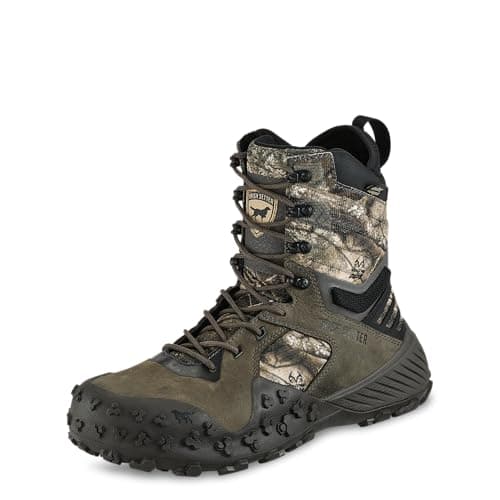
Irish Setter Men's Hunting Boots
The dedicated hunting boot side of the argument: waterproof, built taller and warmer than a hiking boot, and made by a brand that has been putting hunters in boots for a very long time. This is the pair to give when the person sits still in cold weather, hunts wet or brushy ground, or has been making do with hiking boots and quietly regretting it.
#ad · Price as of October 24, 2026. We may earn a commission.
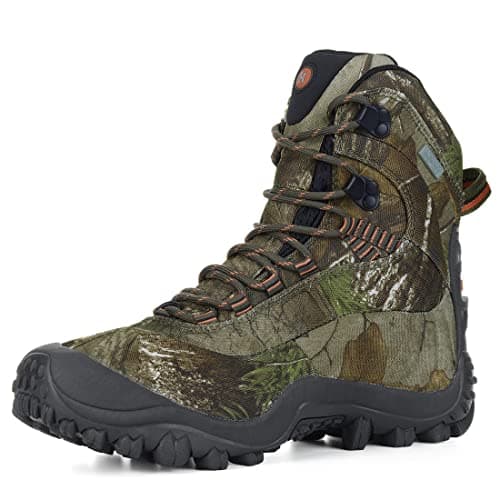
XPETI Thermator Insulated Waterproof Boot
The middle ground, and the reason this comparison isn't a simple win for either side. It's a hiking-boot shape — mid-rise, lighter, comfortable straight out of the box — with waterproofing, modest insulation and a camo finish. For a hunter who covers ground rather than sits, this is genuinely the better tool, and it costs a fraction of a full hunting boot.
#ad · Price as of October 24, 2026. We may earn a commission.
The short answer
If they walk, hiking boots are probably fine. If they sit still in the cold or hunt wet ground, they need hunting boots. That's genuinely most of it. A hiking boot is engineered around a person who is continuously generating body heat by moving, and it does that job beautifully. A hunter in a treestand at first light in November is doing the opposite of moving, and that's where a hiking boot runs out of answers — it has almost no insulation, because insulation would make it terrible at hiking. Add wet ground, tall grass, snow and the need to be quiet, and the gap widens. Everything below is the detail.
How we compared them
This compares two categories rather than two specific models, because that's the decision in front of a gift-buyer — and because a good hiking boot and a bad hunting boot exist, so model-to-model would answer the wrong question. It's built from the published design intent of each type, the conditions hunters actually describe, and honest gift-fit. We've included a boot that sits deliberately between the two categories, because a lot of hunters end up there. Method on the how we choose page.
How they compare
| Attribute | Hunting boots | Hiking boots |
|---|---|---|
| Insulation | Available across a wide range, up to heavy insulation for motionless cold-weather sits | Little or none by design — a hiking boot assumes you're generating heat by moving |
| Height | Often tall, sometimes knee-high, to handle deep mud, tall grass, snow and creek crossings | Usually ankle or mid-rise; fine on a trail, limiting off it |
| Waterproofing | Rubber models are waterproof by construction and can be waded in | Membrane-based waterproofing keeps rain out but isn't meant for standing in water |
| Noise | Quiet fabrics and softer soles chosen so brush and leaf litter stay quiet | Often stiffer with aggressive lugs; noisier on dry leaves and rock |
| Scent | Rubber holds and releases far less human scent than fabric and leather uppers | Fabric uppers hold scent, which matters more to deer hunters than to anyone else |
| Weight and comfort walking | Heavier, especially insulated and rubber models; more tiring over distance | Lighter, more flexible, generally comfortable with far less breaking in |
| Camouflage | Camo or subdued finishes as standard | Frequently bright, which matters less than people think but isn't ideal |
Read that table and the pattern is clear: the hunting boot wins everywhere the hunter is stationary, wet, or trying to be invisible, and the hiking boot wins everywhere the hunter is moving. Neither is a worse boot. They are built around opposite assumptions about what the wearer is doing.
The one test that decides it
Ask yourself a single question about the person you're shopping for: do they sit still, or do they walk?
They sit still. Treestand hunters, ground-blind hunters, anyone waiting out a morning in November or December. A stationary body produces very little heat, and feet are the first thing to go — they're furthest from the core, closest to frozen ground, and entirely uninsulated in a hiking boot. This hunter needs an insulated hunting boot, and it will be one of the best gifts they receive. Our best hunting boots roundup sorts the options by exactly this.
They walk. Spot-and-stalk hunters, public-land scouters, upland bird hunters walking fields all day, anyone covering distance. They're generating plenty of heat, and a heavily insulated boot will make their feet sweat — and damp feet get cold far faster than dry ones. For this hunter, a good waterproof hiking boot is genuinely appropriate, and a camo-finished mid-rise boot is the small upgrade rather than the big one.
Where hiking boots are genuinely fine
What we like
- Early-season hunting in mild weather, where insulation would be a liability
- Spot-and-stalk and any hunting that involves covering real distance on foot
- Upland bird hunting, which is mostly walking through fields and light cover
- Scouting trips, shed hunting and hanging stands in the off-season
- Dry ground with no standing water, mud or deep snow
- A new hunter's first season, before anyone knows how they'll actually hunt
Worth knowing
- Long stationary sits in cold weather — this is where they fail hardest
- Marsh, flooded timber, creek crossings and deep mud
- Deep snow and anything where boot height matters
- Situations where scent control is a priority, particularly close-range deer hunting
That first list is longer than most gear articles will admit, and it's worth saying plainly to a gift-buyer on a budget: if the hunter in your life is an early-season walker with good hiking boots, spend the money on something they don't have instead. A rangefinder, better binoculars, or a proper pack will do more for them than a second pair of boots.
Where a hiking boot will let them down
Three failure modes, and they're all specific rather than vague.
Cold on a stand. This is the big one. Four hours of stillness at freezing point in uninsulated boots is genuinely unpleasant, and it's the most common reason hunters cut a sit short — which means it's costing them the hunt, not just their comfort. Our how to stay warm hunting guide covers the rest of that problem.
Wet. A waterproof membrane keeps rain from getting in through the fabric; it does not make the boot a wader. Step into six inches of water and it comes in over the top, and a wet hiking boot stays wet for a long time. Rubber hunting boots are waterproof because of what they're made of. See rubber vs leather hunting boots.
Scent and noise. This one matters mostly to deer hunters at close range, and it's easy to overstate — plenty of deer are taken by people in ordinary boots. But fabric uppers do hold human scent, and stiff-soled hiking boots are noisier on dry leaves than soft rubber. For a bowhunter working inside thirty yards, those margins are the ones they spend the whole season trying to shave.
The verdict
Buy hunting boots when the person sits still in the cold or hunts wet ground. Those two conditions are where a hiking boot doesn't just underperform, it fails, and a proper insulated or rubber boot will change their season.
Stick with the hiking boots — and buy them something else entirely — when the person hunts early season, walks a lot, or is new enough that nobody yet knows how they'll hunt. And if you want the answer that covers both without overcommitting, a mid-rise waterproof boot with light insulation and a camo finish, like the one above, sits neatly in between and costs a good deal less than a full hunting boot. Whichever way you go, how to choose hunting boots covers the sizing question that ruins more boot gifts than anything else.
Frequently asked questions
Can you use hiking boots for hunting?
Often, yes. Hiking boots are genuinely fine for early-season hunting, spot-and-stalk, upland birds, scouting and any hunting that involves covering ground on dry terrain. They fall down badly on long stationary sits in cold weather, in marsh or deep mud, and in deep snow.
What's the main difference between hunting boots and hiking boots?
Insulation and the assumption behind it. A hiking boot is designed for someone continuously generating body heat by moving, so it has little or no insulation on purpose. Hunting boots are available with heavy insulation for hunters who sit motionless, and they're typically taller, quieter, camo-finished and better at handling standing water.
Do hunting boots really need to be quieter and scent-free?
It matters most for close-range deer hunting. Fabric uppers hold human scent and stiff-soled boots are noisier on dry leaves, and rubber boots are notably better on both counts. For a bowhunter working inside thirty yards these are real margins; for a rifle hunter at longer range they matter far less.
Should I buy hunting boots as a gift if they already have good hiking boots?
Only if they sit still in cold weather or hunt wet ground. If the hunter walks a lot and hunts early season, their hiking boots are appropriate and the money is better spent on something they don't own — a rangefinder, better binoculars or a proper hunting pack.
Are insulated boots always warmer?
Not in practice. A hunter who walks a lot in heavily insulated boots will sweat, and damp feet get cold faster than dry ones — so an over-insulated boot can leave someone colder than a lighter pair would have. Match insulation to how much the person moves, not to how cold it gets.