Gear Guides
YETI Alternatives That Hold Up
YETI earned its reputation honestly, and it is also the most expensive way to buy a cooler. Here is what the brand is actually known for, and the four registry picks that match it on construction or beat it on price.
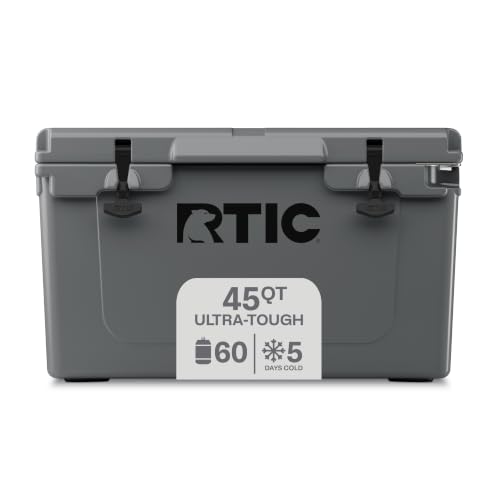
The verdict: the RTIC 45 QT hard cooleris the alternative to buy if what you want is a YETI and not a compromise. It is rotomolded, which is the construction that made the premium cooler category exist, and it is the pick for a hunter who actually needs multi-day ice retention — a deer or elk in a cooler in warm weather, a long drive home, a camp that does not pass a store. The budget pick is the RTIC 20 oz tumbler, which is the cheapest item here by a long way and does the single thing most people buy a YETI for: keeps coffee hot on a cold morning sit.
First, the fair part. YETI is not expensive because of marketing alone. Their hard coolers are rotomolded — moulded as one thick-walled piece with no seams to fail — and the line carries bear-resistant certification, which is a genuine third-party standard rather than a slogan. The Rambler tumblers are double-wall vacuum-insulated stainless with a magnetic slider lid. Those are real engineering choices with real results, and the brand has a service reputation that matters when a latch breaks three years in. Anyone telling you a YETI is just a cooler with a logo has not used one in July.
Second, the honest part. Almost nothing about rotomolding is proprietary, so the question is not whether YETI works — it does — but whether you need to pay the YETI price to get the result. For the hunter whose cooler goes from a garage to a truck bed and back twice a year, the answer is usually no. Below, each pick is matched to the specific YETI strength it does or does not reproduce. Prices come from a live feed and are stamped with the date they were captured; the button always opens the current listing.
- 1RTIC 45 QT Hard CoolerFor the hunter who wants the actual YETI feature set at a lower number. The RTIC 45 is rotomolded, which is the specification that matters: a one-piece thick-walled shell with no seams to split, thick insulation in the walls and lid, and the kind of mass that keeps ice for days rather than hours. That is the same construction approach as a premium YETI hard cooler, which is why this is the pick rather than a cheaper blow-molded box - if you need genuine multi-day retention for meat, the construction is not the place to save money. RTIC sells direct, which is where a meaningful part of the price difference comes from. Honest cons: it is still the most expensive item on this page, because rotomolding costs what it costs; a 45-quart rotomolded cooler is heavy before you put anything in it, which matters if one person loads it alone; and RTIC does not carry the bear-resistant certification YETI's hard cooler line does, which is a real difference if you camp in grizzly country.Best for: Best overall alternative - matches the construction
- 2
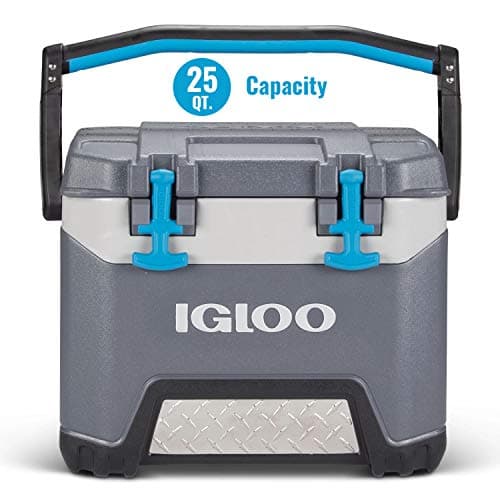 Igloo BMX 25 QT Hard CoolerThe pick for the far more common case: a cooler that lives in a truck, holds drinks and lunch for a day or a weekend, and gets treated roughly. The Igloo BMX 25 QT is blow-molded rather than rotomolded - a different, lighter, cheaper construction - with a reinforced base and heavy-duty hardware, and it is honest about being a hard-working cooler rather than an expedition box. At a fraction of a premium cooler's price it is the one we would buy for day hunts and drive-in camps. Honest cons: blow-molded walls are thinner, so ice retention is measured in a day or two rather than most of a week; the published retention gap between this and a rotomolded cooler is real, not marketing; and if the plan is to keep a deer cold for three days in September, this is the wrong tool.Best for: Best for a truck bed and a day hunt
- 3
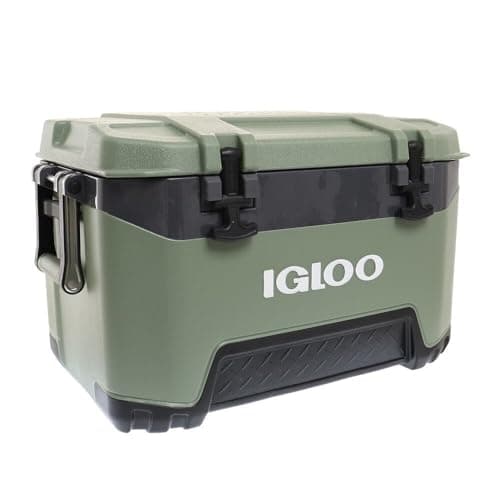 Igloo BMX 52 QT Hard CoolerThe size answer. A quartered deer needs more cooler than most hunters own, and the cheapest way to get there is capacity in a blow-molded shell rather than less capacity in a rotomolded one - because for meat with ice and a drain, volume is the specification that decides whether the job works at all. The BMX 52 QT is the same construction family as the 25 with roughly twice the room, which makes it the practical pick for a hunter who processes their own animals and chills quarters before butchering. Honest cons: same construction trade as the smaller BMX - good retention for a day or two, not a week; a full 52-quart cooler is a two-person lift; and it is physically large enough that storage between seasons becomes a real consideration.Best for: Best capacity per dollar for hauling meat
- 4
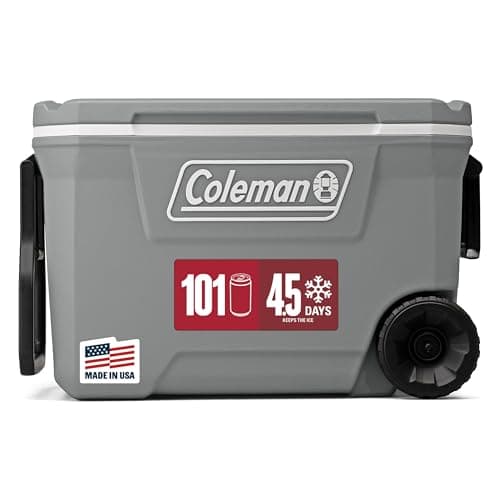 Coleman Classic Series Rolling Cooler (62 QT)The one that stops pretending, and there is a real buyer for it. The Coleman Classic rolling cooler at 62 quarts gives you the most space on this page for the least money, with wheels and a tow handle, which solves a problem no rotomolded cooler solves: getting a loaded cooler from a truck to a camp without carrying it. For deer camp drinks, a tailgate, or anything that will be reloaded with ice daily, this is the sensible purchase and the premium coolers are an indulgence. Honest cons: it is the weakest insulation here and will not hold ice through a hot weekend without topping up; wheels and a telescoping handle are extra parts to break; and it does not have the sealed-gasket construction that makes a premium cooler worth it for meat.Best for: Best value if ice retention is not the point
- 5
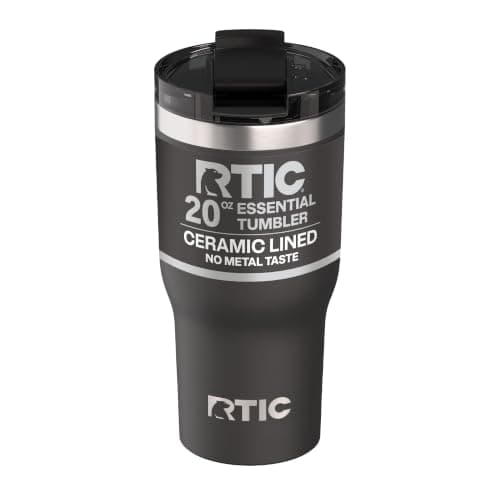 RTIC 20 oz TumblerBuy this and stop thinking about it. For most people the YETI they actually want is the Rambler tumbler, not the cooler, and what a Rambler does - double-wall vacuum-insulated stainless, a sliding lid, coffee still hot two hours into a cold sit - is reproduced closely by the RTIC 20 oz at a fraction of the money. It is the cheapest item on this page and the best value gift on it: a hunter who sits still in the cold will use it every single morning of the season. Honest cons: the lid and finish are where the price difference shows, and RTIC lids have historically been the weaker part of the product; resale and brand cachet are not comparable, which matters if the gift is meant to impress as well as work; and no vacuum tumbler survives being dropped on concrete without a dent.Best for: Budget pick - the tumbler alternative, for a fraction of the price
| # | Gift | Best for | Price |
|---|---|---|---|
| 1 | RTIC 45 QT Hard CoolerFor the hunter who wants the actual YETI feature set at a lower number. The RTIC 45 is rotomolded, which is the specification that matters: a one-piece thick-walled shell with no seams to split, thick insulation in the walls and lid, and the kind of mass that keeps ice for days rather than hours. That is the same construction approach as a premium YETI hard cooler, which is why this is the pick rather than a cheaper blow-molded box - if you need genuine multi-day retention for meat, the construction is not the place to save money. RTIC sells direct, which is where a meaningful part of the price difference comes from. Honest cons: it is still the most expensive item on this page, because rotomolding costs what it costs; a 45-quart rotomolded cooler is heavy before you put anything in it, which matters if one person loads it alone; and RTIC does not carry the bear-resistant certification YETI's hard cooler line does, which is a real difference if you camp in grizzly country. | Best overall alternative - matches the construction | $215.10View on Amazon |
| 2 | Igloo BMX 25 QT Hard CoolerThe pick for the far more common case: a cooler that lives in a truck, holds drinks and lunch for a day or a weekend, and gets treated roughly. The Igloo BMX 25 QT is blow-molded rather than rotomolded - a different, lighter, cheaper construction - with a reinforced base and heavy-duty hardware, and it is honest about being a hard-working cooler rather than an expedition box. At a fraction of a premium cooler's price it is the one we would buy for day hunts and drive-in camps. Honest cons: blow-molded walls are thinner, so ice retention is measured in a day or two rather than most of a week; the published retention gap between this and a rotomolded cooler is real, not marketing; and if the plan is to keep a deer cold for three days in September, this is the wrong tool. | Best for a truck bed and a day hunt | $110.08View on Amazon |
| 3 | Igloo BMX 52 QT Hard CoolerThe size answer. A quartered deer needs more cooler than most hunters own, and the cheapest way to get there is capacity in a blow-molded shell rather than less capacity in a rotomolded one - because for meat with ice and a drain, volume is the specification that decides whether the job works at all. The BMX 52 QT is the same construction family as the 25 with roughly twice the room, which makes it the practical pick for a hunter who processes their own animals and chills quarters before butchering. Honest cons: same construction trade as the smaller BMX - good retention for a day or two, not a week; a full 52-quart cooler is a two-person lift; and it is physically large enough that storage between seasons becomes a real consideration. | Best capacity per dollar for hauling meat | $149.99View on Amazon |
| 4 | Coleman Classic Series Rolling Cooler (62 QT)The one that stops pretending, and there is a real buyer for it. The Coleman Classic rolling cooler at 62 quarts gives you the most space on this page for the least money, with wheels and a tow handle, which solves a problem no rotomolded cooler solves: getting a loaded cooler from a truck to a camp without carrying it. For deer camp drinks, a tailgate, or anything that will be reloaded with ice daily, this is the sensible purchase and the premium coolers are an indulgence. Honest cons: it is the weakest insulation here and will not hold ice through a hot weekend without topping up; wheels and a telescoping handle are extra parts to break; and it does not have the sealed-gasket construction that makes a premium cooler worth it for meat. | Best value if ice retention is not the point | $74.99View on Amazon |
| 5 | RTIC 20 oz TumblerBuy this and stop thinking about it. For most people the YETI they actually want is the Rambler tumbler, not the cooler, and what a Rambler does - double-wall vacuum-insulated stainless, a sliding lid, coffee still hot two hours into a cold sit - is reproduced closely by the RTIC 20 oz at a fraction of the money. It is the cheapest item on this page and the best value gift on it: a hunter who sits still in the cold will use it every single morning of the season. Honest cons: the lid and finish are where the price difference shows, and RTIC lids have historically been the weaker part of the product; resale and brand cachet are not comparable, which matters if the gift is meant to impress as well as work; and no vacuum tumbler survives being dropped on concrete without a dent. | Budget pick - the tumbler alternative, for a fraction of the price | $14.38View on Amazon |
Prices from Amazon as of November 24, 2026 and change often — the button always opens the current listing. Some links earn us a commission at no extra cost to you.
RTIC 45 QT Hard Cooler
For the hunter who wants the actual YETI feature set at a lower number. The RTIC 45 is rotomolded, which is the specification that matters: a one-piece thick-walled shell with no seams to split, thick insulation in the walls and lid, and the kind of mass that keeps ice for days rather than hours. That is the same construction approach as a premium YETI hard cooler, which is why this is the pick rather than a cheaper blow-molded box - if you need genuine multi-day retention for meat, the construction is not the place to save money. RTIC sells direct, which is where a meaningful part of the price difference comes from. Honest cons: it is still the most expensive item on this page, because rotomolding costs what it costs; a 45-quart rotomolded cooler is heavy before you put anything in it, which matters if one person loads it alone; and RTIC does not carry the bear-resistant certification YETI's hard cooler line does, which is a real difference if you camp in grizzly country.
#ad · Price as of November 24, 2026. We may earn a commission.
Igloo BMX 25 QT Hard Cooler
The pick for the far more common case: a cooler that lives in a truck, holds drinks and lunch for a day or a weekend, and gets treated roughly. The Igloo BMX 25 QT is blow-molded rather than rotomolded - a different, lighter, cheaper construction - with a reinforced base and heavy-duty hardware, and it is honest about being a hard-working cooler rather than an expedition box. At a fraction of a premium cooler's price it is the one we would buy for day hunts and drive-in camps. Honest cons: blow-molded walls are thinner, so ice retention is measured in a day or two rather than most of a week; the published retention gap between this and a rotomolded cooler is real, not marketing; and if the plan is to keep a deer cold for three days in September, this is the wrong tool.
#ad · Price as of November 24, 2026. We may earn a commission.
Igloo BMX 52 QT Hard Cooler
The size answer. A quartered deer needs more cooler than most hunters own, and the cheapest way to get there is capacity in a blow-molded shell rather than less capacity in a rotomolded one - because for meat with ice and a drain, volume is the specification that decides whether the job works at all. The BMX 52 QT is the same construction family as the 25 with roughly twice the room, which makes it the practical pick for a hunter who processes their own animals and chills quarters before butchering. Honest cons: same construction trade as the smaller BMX - good retention for a day or two, not a week; a full 52-quart cooler is a two-person lift; and it is physically large enough that storage between seasons becomes a real consideration.
#ad · Price as of November 24, 2026. We may earn a commission.
Coleman Classic Series Rolling Cooler (62 QT)
The one that stops pretending, and there is a real buyer for it. The Coleman Classic rolling cooler at 62 quarts gives you the most space on this page for the least money, with wheels and a tow handle, which solves a problem no rotomolded cooler solves: getting a loaded cooler from a truck to a camp without carrying it. For deer camp drinks, a tailgate, or anything that will be reloaded with ice daily, this is the sensible purchase and the premium coolers are an indulgence. Honest cons: it is the weakest insulation here and will not hold ice through a hot weekend without topping up; wheels and a telescoping handle are extra parts to break; and it does not have the sealed-gasket construction that makes a premium cooler worth it for meat.
#ad · Price as of November 24, 2026. We may earn a commission.
RTIC 20 oz Tumbler
Buy this and stop thinking about it. For most people the YETI they actually want is the Rambler tumbler, not the cooler, and what a Rambler does - double-wall vacuum-insulated stainless, a sliding lid, coffee still hot two hours into a cold sit - is reproduced closely by the RTIC 20 oz at a fraction of the money. It is the cheapest item on this page and the best value gift on it: a hunter who sits still in the cold will use it every single morning of the season. Honest cons: the lid and finish are where the price difference shows, and RTIC lids have historically been the weaker part of the product; resale and brand cachet are not comparable, which matters if the gift is meant to impress as well as work; and no vacuum tumbler survives being dropped on concrete without a dent.
#ad · Price as of November 24, 2026. We may earn a commission.
What YETI is actually known for
Four things, and it is worth separating them because the alternatives reproduce some and not others.
Rotomolded construction. The hard coolers are moulded as a single thick-walled piece, so there are no seams to split and there is room for serious insulation in the walls and lid. This is the engineering behind multi-day ice retention, and it is the one feature that is genuinely worth paying for if you need it.
Bear-resistant certification.YETI's hard cooler line carries third-party bear-resistant certification. That is a tested standard, not a claim, and if you camp where it is required by regulation then no amount of similar-looking plastic substitutes for it.
Double-wall vacuum insulation in the drinkware. The Rambler line is vacuum-insulated stainless with a magnetic slider lid. The physics here are mature and widely licensed, which is exactly why the alternatives compete so well on this one.
A service reputation. Harder to quantify and real: gaskets, latches and lids are the parts that fail on any cooler, and a company that replaces them is worth a premium to anyone who has owned a cooler for a decade.
Rotomolded vs blow-molded, in plain English
This is the only technical distinction you need, and it explains every price on this page.
Rotomoldedmeans the shell is spun in a heated mould so the plastic coats the inside as one continuous piece, then the cavity between the walls is filled with insulation. The result is thick, seamless, extremely strong and heavy — and expensive, because the process is slow.
Blow-molded means the shell is formed by inflating hot plastic into a mould, which is fast and cheap and produces thinner walls with less room for insulation. These are the coolers most people grew up with, and a good one with reinforced hardware is a genuinely useful object.
The practical difference is days of ice, not degrees of quality. A rotomolded cooler holds ice for most of a week in reasonable conditions; a blow-molded one holds it for a day or two. Both are fine. Only one of them is fine for a deer in warm weather. We compare specific models in Igloo BMX vs RTIC cooler and RTIC vs Coleman cooler.
When a YETI is genuinely the right purchase
We are not going to pretend the answer is never. Buy the real thing when:
You need bear-resistant certification. This is a regulatory and safety matter in parts of the West, and a cheaper cooler that merely looks similar does not satisfy it.
The cooler is going to be abused for ten years. At that time horizon, the price difference per season gets small and the service reputation starts to matter more than the sticker.
It is a gift where the brand is part of the gift.Worth saying out loud: part of what a present does is signal thought, and a recognised brand does some of that work for you. If that is the job, buy the brand — our luxury hunting gifts page is built on exactly that logic.
How to size a cooler for game, not for drinks
The most common mistake in this whole category is buying the premium construction and then discovering the cooler is too small for the job. Meat takes more space than people estimate, and it needs ice around it rather than on top of it. Capacity beats construction up to the point where the animal fits, and only then does retention become the deciding feature.
We work through the actual volumes — a whitetail quartered, an elk, what a drain plug is for — in what size cooler do you need for a deer, which is the page to read before spending anything in this category.
How we chose these
No test lab, no ice-melt trials of our own, and no invented comparisons. The construction facts above are each manufacturer's own published description, cited in the sources below, and every pick is matched explicitly to the YETI strength it reproduces or the one it does not. We have not disparaged the original and have no reason to: it is a well-made product that is more expensive than most hunters need. Our method is on the how we choose page. Prices are pulled live and dated, so a number that looks wrong is almost always the market moving rather than a typo.
Match the alternative to the job
They haul their own deer or elk. The RTIC 45, or the Igloo BMX 52 if capacity matters more than days of ice.
It lives in a truck for day hunts. The Igloo BMX 25.
It is for deer camp drinks and a tailgate. The Coleman, and spend the difference on something else.
You want the YETI feeling for twenty dollars. The RTIC tumbler.
You camp in grizzly country. Buy the certified cooler. This is the one case where there is no alternative, and we are not going to pretend otherwise.
Keep browsing
The whole cooler field is in best hunting coolers, with sizing in what size cooler for a deer. The drinkware comparisons are YETI vs RTIC tumbler and the YETI Rambler review, and the cooler-on-cooler head-to-heads are Igloo BMX vs RTIC and RTIC vs Coleman. For gift framing, try hunting gifts under $50 and gifts for outdoorsmen.
Frequently asked questions
What is the best YETI alternative for hunting?
The RTIC 45 QT hard cooler, because it matches the specification that matters: it is rotomolded, meaning a one-piece thick-walled shell with no seams and room for serious insulation, which is the construction behind multi-day ice retention. RTIC sells direct, which is where much of the price difference comes from. The one thing it does not match is YETI's bear-resistant certification.
Are cheaper coolers as good as a YETI?
It depends on which feature you are buying. Rotomolded construction is not proprietary, so a rotomolded alternative holds ice comparably. A blow-molded cooler - thinner walls, less insulation, far cheaper - holds ice for a day or two rather than most of a week, which is fine for drinks on a day hunt and wrong for a deer in warm weather. YETI's bear-resistant certification is a tested third-party standard that similar-looking coolers do not carry.
What is the difference between rotomolded and blow-molded coolers?
Rotomolded shells are spun in a heated mould as one continuous piece and the wall cavity is filled with insulation - thick, seamless, strong, heavy and slow to make, so expensive. Blow-molded shells are formed by inflating hot plastic into a mould, which is fast and cheap but leaves thinner walls with less insulation. The practical difference is days of ice, not degrees of quality.
Is a YETI tumbler worth it, or is a cheaper one fine?
A cheaper one is genuinely fine here, which is why the budget pick on this page is a tumbler. Double-wall vacuum insulation in stainless is mature, widely licensed technology, so an RTIC 20 oz does the thing most people buy a Rambler for - coffee still hot two hours into a cold sit - at a fraction of the price. The difference shows up in lid quality and finish rather than in insulation.
When should you just buy the YETI?
Three cases. If you need bear-resistant certification, which is a regulatory matter in parts of the West and cannot be satisfied by a cooler that merely looks similar. If the cooler will be abused for ten years, where the price per season gets small and the service reputation starts to matter. And if the brand is part of the gift, which is a legitimate reason rather than a silly one.
What size cooler do you need for a deer?
More than most hunters own, and capacity beats construction until the animal actually fits. Meat takes more room than people estimate and needs ice around it rather than piled on top, so a larger blow-molded cooler often beats a smaller rotomolded one for this specific job. We work through the real volumes - a quartered whitetail, an elk, and what the drain plug is for - on our dedicated cooler sizing page.
Sources
- YETI - hard cooler line: published rotomolded construction and bear-resistant certification; Rambler 20 oz double-wall vacuum-insulated stainless tumbler specifications
- RTIC Outdoors - 45 QT rotomolded hard cooler and 20 oz tumbler, published specifications
- Igloo - BMX 25 QT and BMX 52 QT hard coolers, published construction and hardware description
- Coleman - Classic Series 62 QT rolling cooler, published description