Gear Guides
The Best Climbing Sticks for Hunting
Climbing sticks are the half of a mobile hunting setup nobody shops for, and the half that decides whether the climb is quiet. Here is the spec that actually matters, which sets publish it, and what each one gives up.
Read this first if you are buying for someone else. Climbing sticks are the way up a tree: short aluminum sections with one or two steps each, hung one above the next and strapped or roped to the trunk. They are the component that turns a hunting saddleor a hang-on stand from a piece of equipment into a hunt — and almost nothing in either of those categories includes them. If the hunter in your life owns a saddle or a hang-on and has never mentioned sticks, that is probably because they have been climbing on a worn-out set for five seasons.
The verdict: the Kalkal Upgraded Hunting Climbing Sticks four-packis the set to buy for most people, because it is the cheapest set on this page that publishes the two numbers that matter — 6061 aluminum and a 300 lb max load — and it is sold specifically for saddle hunting rather than adapted to it. The budget pick is the Panbofoda fold-up set, which is the least money here for four real aluminum sticks. If the recipient already hunts mobile and you are buying the set they would not buy themselves, the XOP Ride four-pack publishes the most detailed geometry of anything here and is the only set that says outright it is built to take aiders.
The thing to understand before you compare prices: stick count is not climb height. Four 20-inch sticks is not 80 inches of climb, because each stick starts where the last one ends and your feet finish near the top of the top stick, not above it. How high a set gets you is decided by the step-to-step spacing and how aggressively you are willing to stretch for the next step — which is exactly why the sets below are sorted by published geometry rather than by how many pieces are in the box. Prices are pulled live and dated.
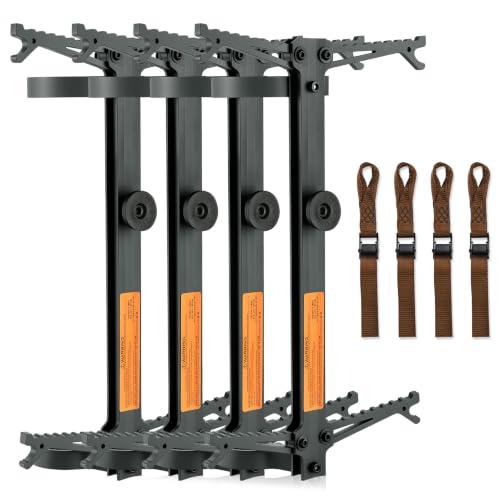
- 1Kalkal Upgraded Hunting Climbing Sticks (4-Pack)The pick for most buyers, and the reason is what Kalkal is willing to print. The listing publishes 6061 aluminum, a portable hollow design, folding non-slip steps and a 300 lb max load, and it says the set is built for saddle hunting rather than leaving you to assume it. Each of those matters for a different reason. 6061 is the aluminum alloy most quality hunting hardware is made from, so naming it is a small signal that someone specified the material rather than ordering whatever extruded. Folding steps are what let four sticks stack flat enough to ride on a pack without clattering, which is the single loudest thing a mobile hunter carries. And a published 300 lb rating gives you a number to check against the rest of a setup, because a system is limited by its lowest-rated part. Honest cons: Kalkal is a direct-to-Amazon brand with nothing like the track record of Hawk or XOP, and this is load-bearing equipment, so you are buying published specifications rather than a reputation. The folding step mechanism is one more moving part per stick to inspect, and it is the part that collects grit. Four sticks is a hunting height in cover, not a record climb. And nothing in the box gets a hunter attached to the tree - a lineman's belt is a separate purchase and it is not optional.Best for: Best overall - the published spec sheet a mobile hunter wants
- 2
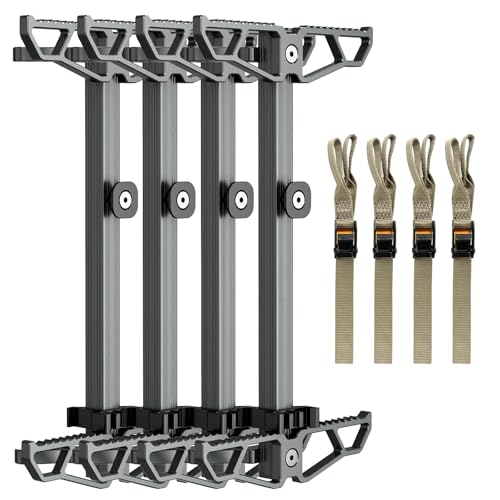 Panbofoda Fold-Up Climbing Sticks (Set of 4)The cheapest complete set of four here, and a defensible one for a specific buyer: someone who is finding out whether they want to hunt mobile at all. Panbofoda publishes it as aluminum with non-slip fold-up steps, set of four, for tree stands. That is the whole specification, and at this price a straightforward aluminum stick with a step that does not ice over is a reasonable thing to buy. It is also the right answer if the sticks are going on a pre-hung stand on private ground, where they get strapped to one tree in September and come down in January - a set that lives on one trunk all season is asked to do far less than a set carried in and out every morning. Honest cons: this is the pick where you are paying the least and therefore guaranteed the least. The listing publishes no weight rating, and the absence of a number is information rather than a neutral blank. There is no stated step-to-step spacing or stand-off, so you cannot plan a climb from the listing - you find out on the tree. Unknown-brand load-bearing gear should get a hard look at the welds, rivets and straps out of the box and again every season. And four short sticks of unstated length may get you noticeably less height than four 20-inch sticks.Best for: Budget pick - the cheapest honest set of four
- 3
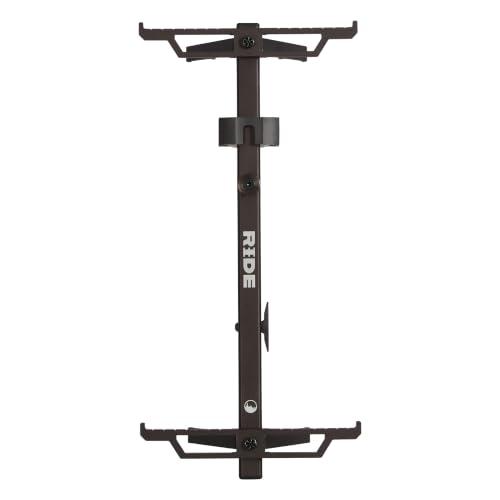 XOP Ride Climbing Sticks (4-Pack)The splurge, and the only set here that tells you enough to plan a climb before you buy it. XOP publishes the Ride as a lightweight aluminum four-pack with a 10-inch double step, 17-inch step-to-step spacing, a 5-inch stand-off, a silent XR2 rope attachment and a 300 lb rating, and says it is aider ready. Read those in order, because together they are the argument. Seventeen inches between steps is a spacing most people can walk up rather than lunge at. A 5-inch stand-off is how far the step sits off the trunk, and it is the specification that decides whether your toes or your knees hit bark on every step - more stand-off is more room to stand flat-footed and to rotate around the tree in a saddle. Rope attachment instead of a ratchet strap is quieter and faster once learned, and 'aider ready' means the set is designed to take the short fabric ladders that let a hunter skip a stick or climb higher with the same four. Honest cons: it is twice the money of the budget sets here and that buys geometry and quietness, not magic. Rope attachment is a technique with a learning curve, not a buckle to crank, and the first few hangs in the dark are slower than a strap. Aiders are a separate purchase and genuinely are not a beginner item - they get you higher on fewer sticks by making each step more committing. And the 300 lb rating is for the sticks, so it is the rest of the setup you now have to check.Best for: Best premium set - published geometry, aider ready
- 4
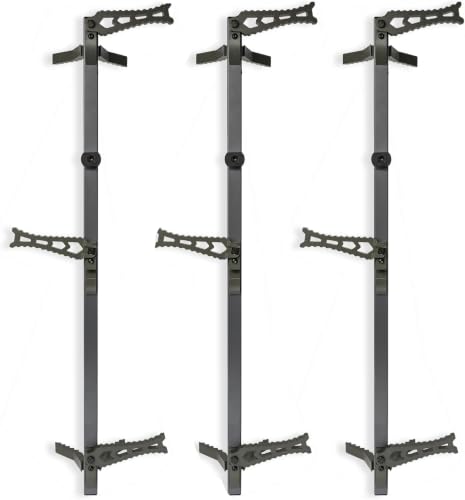 XOP 34-Inch Aluminum Climbing Sticks (3-Pack)The pick for anyone whose problem with climbing sticks is the number of times they have to stop, hang, step up and hang again. XOP publishes this as a three-pack of aluminum sticks 34 inches long, which is a different approach to the same climb: fewer, longer sections rather than more, shorter ones. Every attachment point on a climb is a chance to make noise, drop something, or get it slightly crooked, and three attachments is meaningfully fewer than four or five. Longer sticks also tend to carry more steps per section, which spreads the climb into shorter reaches. For a hunter who hangs and pulls sticks in the dark on public ground, that is a real quality-of-life difference, and the price is the same as the four-packs on this page. Honest cons: a 34-inch stick is a 34-inch thing to carry, and it does not nest as compactly on a pack as a short stick - this is the set that is easier to climb and harder to walk in with. Three sticks is three sticks, so the usable height depends entirely on the step spacing and on how far you are willing to reach for the platform. The listing publishes the length and the pack count but no weight rating or stand-off figure, so two of the three numbers above have to be taken on the brand's reputation instead of its spec sheet. And a longer stick leaning on an irregular trunk has more scope to rock, which means paying more attention to where it sits.Best for: Best for fewer hangs - three long sticks instead of four short
- 5
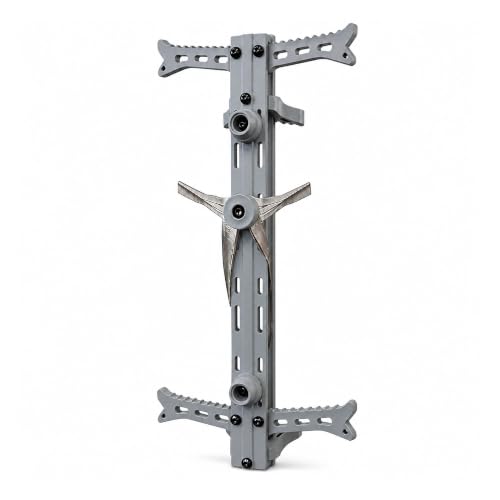 Hawk Helium 20-Inch Climbing Sticks (4-Pack)The pick if brand recognition matters, which for a gift it sometimes does. Hawk's Helium line is one of the sets that made lightweight aluminum sticks normal, and this listing publishes a four-pack of lightweight non-slip aluminum sticks at 20 inches. Twenty inches is the common length for a reason: it is short enough to nest flat against a pack frame, and four of them is the standard answer for a hunting height in cover rather than a dramatic one. If the recipient already owns a mixed, half-broken collection of sticks from three brands, a matched four-pack from a name they know is the version of this gift that gets used rather than stored. Honest cons: it is the most expensive four-pack here and the money is largely going to the name - the published specification on this listing is thinner than XOP's or Kalkal's, with no stated step-to-step spacing, stand-off or weight rating. At the time of writing the listing read 'Only 8 left in stock', which on a gift timeline is worth knowing; we record that rather than hide it, and if it has sold through, the Kalkal set is the straight substitute. Hawk has also sold several generations of Helium stick, so a listing photo is not a guarantee of which revision arrives. And as with every set on this page, sticks do not include a way to stay attached while you hang them.Best for: The name a hunter will recognize
- 6
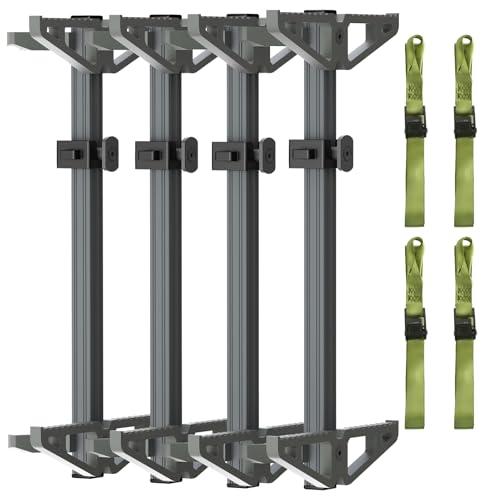 Tomaki Aluminum Hunting Climbing Sticks (4-Pack)The sensible alternative if the Kalkal set is unavailable or the price has moved, and a perfectly reasonable first purchase on its own. Tomaki publishes it simply: aluminum hunting climbing sticks, non-slip tree step, four pack. There is a real argument for a plain stick with nothing clever about it - fewer published features is sometimes fewer things to break, and a non-slip step is the one feature that matters at five in the morning in November when everything metal is wet. For a hunter putting sticks on a hang-on they leave up all season, the plain version is usually the right version. Honest cons: this is the thinnest spec sheet of the four-packs here. No published weight rating, no step spacing, no stand-off, no stated stick length, which means you are buying the category rather than a specific geometry. Tomaki is an Amazon-native brand without a long hunting track record, and that matters more in gear that holds a person up than in gear that keeps coffee warm. It sits within a few dollars of sets that publish considerably more, so the only reason to choose it over the Kalkal is availability or a price swing. Inspect it carefully before the first climb and again every season.Best for: The straightforward four-pack alternative
| # | Gift | Best for | Price |
|---|---|---|---|
| 1 | Kalkal Upgraded Hunting Climbing Sticks (4-Pack)The pick for most buyers, and the reason is what Kalkal is willing to print. The listing publishes 6061 aluminum, a portable hollow design, folding non-slip steps and a 300 lb max load, and it says the set is built for saddle hunting rather than leaving you to assume it. Each of those matters for a different reason. 6061 is the aluminum alloy most quality hunting hardware is made from, so naming it is a small signal that someone specified the material rather than ordering whatever extruded. Folding steps are what let four sticks stack flat enough to ride on a pack without clattering, which is the single loudest thing a mobile hunter carries. And a published 300 lb rating gives you a number to check against the rest of a setup, because a system is limited by its lowest-rated part. Honest cons: Kalkal is a direct-to-Amazon brand with nothing like the track record of Hawk or XOP, and this is load-bearing equipment, so you are buying published specifications rather than a reputation. The folding step mechanism is one more moving part per stick to inspect, and it is the part that collects grit. Four sticks is a hunting height in cover, not a record climb. And nothing in the box gets a hunter attached to the tree - a lineman's belt is a separate purchase and it is not optional. | Best overall - the published spec sheet a mobile hunter wants | $93.85View on Amazon |
| 2 | Panbofoda Fold-Up Climbing Sticks (Set of 4)The cheapest complete set of four here, and a defensible one for a specific buyer: someone who is finding out whether they want to hunt mobile at all. Panbofoda publishes it as aluminum with non-slip fold-up steps, set of four, for tree stands. That is the whole specification, and at this price a straightforward aluminum stick with a step that does not ice over is a reasonable thing to buy. It is also the right answer if the sticks are going on a pre-hung stand on private ground, where they get strapped to one tree in September and come down in January - a set that lives on one trunk all season is asked to do far less than a set carried in and out every morning. Honest cons: this is the pick where you are paying the least and therefore guaranteed the least. The listing publishes no weight rating, and the absence of a number is information rather than a neutral blank. There is no stated step-to-step spacing or stand-off, so you cannot plan a climb from the listing - you find out on the tree. Unknown-brand load-bearing gear should get a hard look at the welds, rivets and straps out of the box and again every season. And four short sticks of unstated length may get you noticeably less height than four 20-inch sticks. | Budget pick - the cheapest honest set of four | $89.00View on Amazon |
| 3 | XOP Ride Climbing Sticks (4-Pack)The splurge, and the only set here that tells you enough to plan a climb before you buy it. XOP publishes the Ride as a lightweight aluminum four-pack with a 10-inch double step, 17-inch step-to-step spacing, a 5-inch stand-off, a silent XR2 rope attachment and a 300 lb rating, and says it is aider ready. Read those in order, because together they are the argument. Seventeen inches between steps is a spacing most people can walk up rather than lunge at. A 5-inch stand-off is how far the step sits off the trunk, and it is the specification that decides whether your toes or your knees hit bark on every step - more stand-off is more room to stand flat-footed and to rotate around the tree in a saddle. Rope attachment instead of a ratchet strap is quieter and faster once learned, and 'aider ready' means the set is designed to take the short fabric ladders that let a hunter skip a stick or climb higher with the same four. Honest cons: it is twice the money of the budget sets here and that buys geometry and quietness, not magic. Rope attachment is a technique with a learning curve, not a buckle to crank, and the first few hangs in the dark are slower than a strap. Aiders are a separate purchase and genuinely are not a beginner item - they get you higher on fewer sticks by making each step more committing. And the 300 lb rating is for the sticks, so it is the rest of the setup you now have to check. | Best premium set - published geometry, aider ready | $199.99View on Amazon |
| 4 | XOP 34-Inch Aluminum Climbing Sticks (3-Pack)The pick for anyone whose problem with climbing sticks is the number of times they have to stop, hang, step up and hang again. XOP publishes this as a three-pack of aluminum sticks 34 inches long, which is a different approach to the same climb: fewer, longer sections rather than more, shorter ones. Every attachment point on a climb is a chance to make noise, drop something, or get it slightly crooked, and three attachments is meaningfully fewer than four or five. Longer sticks also tend to carry more steps per section, which spreads the climb into shorter reaches. For a hunter who hangs and pulls sticks in the dark on public ground, that is a real quality-of-life difference, and the price is the same as the four-packs on this page. Honest cons: a 34-inch stick is a 34-inch thing to carry, and it does not nest as compactly on a pack as a short stick - this is the set that is easier to climb and harder to walk in with. Three sticks is three sticks, so the usable height depends entirely on the step spacing and on how far you are willing to reach for the platform. The listing publishes the length and the pack count but no weight rating or stand-off figure, so two of the three numbers above have to be taken on the brand's reputation instead of its spec sheet. And a longer stick leaning on an irregular trunk has more scope to rock, which means paying more attention to where it sits. | Best for fewer hangs - three long sticks instead of four short | $99.99View on Amazon |
| 5 | Hawk Helium 20-Inch Climbing Sticks (4-Pack)The pick if brand recognition matters, which for a gift it sometimes does. Hawk's Helium line is one of the sets that made lightweight aluminum sticks normal, and this listing publishes a four-pack of lightweight non-slip aluminum sticks at 20 inches. Twenty inches is the common length for a reason: it is short enough to nest flat against a pack frame, and four of them is the standard answer for a hunting height in cover rather than a dramatic one. If the recipient already owns a mixed, half-broken collection of sticks from three brands, a matched four-pack from a name they know is the version of this gift that gets used rather than stored. Honest cons: it is the most expensive four-pack here and the money is largely going to the name - the published specification on this listing is thinner than XOP's or Kalkal's, with no stated step-to-step spacing, stand-off or weight rating. At the time of writing the listing read 'Only 8 left in stock', which on a gift timeline is worth knowing; we record that rather than hide it, and if it has sold through, the Kalkal set is the straight substitute. Hawk has also sold several generations of Helium stick, so a listing photo is not a guarantee of which revision arrives. And as with every set on this page, sticks do not include a way to stay attached while you hang them. | The name a hunter will recognize | $119.99View on Amazon |
| 6 | Tomaki Aluminum Hunting Climbing Sticks (4-Pack)The sensible alternative if the Kalkal set is unavailable or the price has moved, and a perfectly reasonable first purchase on its own. Tomaki publishes it simply: aluminum hunting climbing sticks, non-slip tree step, four pack. There is a real argument for a plain stick with nothing clever about it - fewer published features is sometimes fewer things to break, and a non-slip step is the one feature that matters at five in the morning in November when everything metal is wet. For a hunter putting sticks on a hang-on they leave up all season, the plain version is usually the right version. Honest cons: this is the thinnest spec sheet of the four-packs here. No published weight rating, no step spacing, no stand-off, no stated stick length, which means you are buying the category rather than a specific geometry. Tomaki is an Amazon-native brand without a long hunting track record, and that matters more in gear that holds a person up than in gear that keeps coffee warm. It sits within a few dollars of sets that publish considerably more, so the only reason to choose it over the Kalkal is availability or a price swing. Inspect it carefully before the first climb and again every season. | The straightforward four-pack alternative | $99.99View on Amazon |
Prices from Amazon as of November 24, 2026 and change often — the button always opens the current listing. Some links earn us a commission at no extra cost to you.
Kalkal Upgraded Hunting Climbing Sticks (4-Pack)
The pick for most buyers, and the reason is what Kalkal is willing to print. The listing publishes 6061 aluminum, a portable hollow design, folding non-slip steps and a 300 lb max load, and it says the set is built for saddle hunting rather than leaving you to assume it. Each of those matters for a different reason. 6061 is the aluminum alloy most quality hunting hardware is made from, so naming it is a small signal that someone specified the material rather than ordering whatever extruded. Folding steps are what let four sticks stack flat enough to ride on a pack without clattering, which is the single loudest thing a mobile hunter carries. And a published 300 lb rating gives you a number to check against the rest of a setup, because a system is limited by its lowest-rated part. Honest cons: Kalkal is a direct-to-Amazon brand with nothing like the track record of Hawk or XOP, and this is load-bearing equipment, so you are buying published specifications rather than a reputation. The folding step mechanism is one more moving part per stick to inspect, and it is the part that collects grit. Four sticks is a hunting height in cover, not a record climb. And nothing in the box gets a hunter attached to the tree - a lineman's belt is a separate purchase and it is not optional.
#ad · Price as of November 24, 2026. We may earn a commission.
Panbofoda Fold-Up Climbing Sticks (Set of 4)
The cheapest complete set of four here, and a defensible one for a specific buyer: someone who is finding out whether they want to hunt mobile at all. Panbofoda publishes it as aluminum with non-slip fold-up steps, set of four, for tree stands. That is the whole specification, and at this price a straightforward aluminum stick with a step that does not ice over is a reasonable thing to buy. It is also the right answer if the sticks are going on a pre-hung stand on private ground, where they get strapped to one tree in September and come down in January - a set that lives on one trunk all season is asked to do far less than a set carried in and out every morning. Honest cons: this is the pick where you are paying the least and therefore guaranteed the least. The listing publishes no weight rating, and the absence of a number is information rather than a neutral blank. There is no stated step-to-step spacing or stand-off, so you cannot plan a climb from the listing - you find out on the tree. Unknown-brand load-bearing gear should get a hard look at the welds, rivets and straps out of the box and again every season. And four short sticks of unstated length may get you noticeably less height than four 20-inch sticks.
#ad · Price as of November 24, 2026. We may earn a commission.
XOP Ride Climbing Sticks (4-Pack)
The splurge, and the only set here that tells you enough to plan a climb before you buy it. XOP publishes the Ride as a lightweight aluminum four-pack with a 10-inch double step, 17-inch step-to-step spacing, a 5-inch stand-off, a silent XR2 rope attachment and a 300 lb rating, and says it is aider ready. Read those in order, because together they are the argument. Seventeen inches between steps is a spacing most people can walk up rather than lunge at. A 5-inch stand-off is how far the step sits off the trunk, and it is the specification that decides whether your toes or your knees hit bark on every step - more stand-off is more room to stand flat-footed and to rotate around the tree in a saddle. Rope attachment instead of a ratchet strap is quieter and faster once learned, and 'aider ready' means the set is designed to take the short fabric ladders that let a hunter skip a stick or climb higher with the same four. Honest cons: it is twice the money of the budget sets here and that buys geometry and quietness, not magic. Rope attachment is a technique with a learning curve, not a buckle to crank, and the first few hangs in the dark are slower than a strap. Aiders are a separate purchase and genuinely are not a beginner item - they get you higher on fewer sticks by making each step more committing. And the 300 lb rating is for the sticks, so it is the rest of the setup you now have to check.
#ad · Price as of November 24, 2026. We may earn a commission.
XOP 34-Inch Aluminum Climbing Sticks (3-Pack)
The pick for anyone whose problem with climbing sticks is the number of times they have to stop, hang, step up and hang again. XOP publishes this as a three-pack of aluminum sticks 34 inches long, which is a different approach to the same climb: fewer, longer sections rather than more, shorter ones. Every attachment point on a climb is a chance to make noise, drop something, or get it slightly crooked, and three attachments is meaningfully fewer than four or five. Longer sticks also tend to carry more steps per section, which spreads the climb into shorter reaches. For a hunter who hangs and pulls sticks in the dark on public ground, that is a real quality-of-life difference, and the price is the same as the four-packs on this page. Honest cons: a 34-inch stick is a 34-inch thing to carry, and it does not nest as compactly on a pack as a short stick - this is the set that is easier to climb and harder to walk in with. Three sticks is three sticks, so the usable height depends entirely on the step spacing and on how far you are willing to reach for the platform. The listing publishes the length and the pack count but no weight rating or stand-off figure, so two of the three numbers above have to be taken on the brand's reputation instead of its spec sheet. And a longer stick leaning on an irregular trunk has more scope to rock, which means paying more attention to where it sits.
#ad · Price as of November 24, 2026. We may earn a commission.
Hawk Helium 20-Inch Climbing Sticks (4-Pack)
The pick if brand recognition matters, which for a gift it sometimes does. Hawk's Helium line is one of the sets that made lightweight aluminum sticks normal, and this listing publishes a four-pack of lightweight non-slip aluminum sticks at 20 inches. Twenty inches is the common length for a reason: it is short enough to nest flat against a pack frame, and four of them is the standard answer for a hunting height in cover rather than a dramatic one. If the recipient already owns a mixed, half-broken collection of sticks from three brands, a matched four-pack from a name they know is the version of this gift that gets used rather than stored. Honest cons: it is the most expensive four-pack here and the money is largely going to the name - the published specification on this listing is thinner than XOP's or Kalkal's, with no stated step-to-step spacing, stand-off or weight rating. At the time of writing the listing read 'Only 8 left in stock', which on a gift timeline is worth knowing; we record that rather than hide it, and if it has sold through, the Kalkal set is the straight substitute. Hawk has also sold several generations of Helium stick, so a listing photo is not a guarantee of which revision arrives. And as with every set on this page, sticks do not include a way to stay attached while you hang them.
#ad · Price as of November 24, 2026. We may earn a commission.
Tomaki Aluminum Hunting Climbing Sticks (4-Pack)
The sensible alternative if the Kalkal set is unavailable or the price has moved, and a perfectly reasonable first purchase on its own. Tomaki publishes it simply: aluminum hunting climbing sticks, non-slip tree step, four pack. There is a real argument for a plain stick with nothing clever about it - fewer published features is sometimes fewer things to break, and a non-slip step is the one feature that matters at five in the morning in November when everything metal is wet. For a hunter putting sticks on a hang-on they leave up all season, the plain version is usually the right version. Honest cons: this is the thinnest spec sheet of the four-packs here. No published weight rating, no step spacing, no stand-off, no stated stick length, which means you are buying the category rather than a specific geometry. Tomaki is an Amazon-native brand without a long hunting track record, and that matters more in gear that holds a person up than in gear that keeps coffee warm. It sits within a few dollars of sets that publish considerably more, so the only reason to choose it over the Kalkal is availability or a price swing. Inspect it carefully before the first climb and again every season.
#ad · Price as of November 24, 2026. We may earn a commission.
The two numbers that decide a climb
Almost every listing in this category leads with weight and stick count. Neither is the thing that makes a set good. Two published figures do most of the work, and only some brands print them.
Step-to-step spacing. The vertical distance from one step to the next, both within a stick and across the joint between two sticks. This is the number that decides whether climbing feels like walking up stairs or like doing step-ups with a pack on. Tighter spacing is easier and slower; wider spacing covers the trunk faster and asks more of your hips, knees and confidence. XOP publishes 17 inches on the Ride set; most of the rest of this category publishes nothing at all, which is why that set is the one you can plan a climb from.
Stand-off. How far the step sits out from the trunk. It sounds like a detail and it is the single biggest comfort difference between a cheap stick and a good one. Too little stand-off and your boot cannot sit flat, your toe jams into bark on every step, and in a saddle you cannot rotate around the tree without fighting the trunk. More stand-off is more room, at the cost of a little more leverage on the attachment. XOP publishes a 5-inch stand-off on the Ride; again, most listings here publish none.
And one number to check rather than compare:the published weight rating. A 300 lb rating on a stick is only as useful as the lowest rating in the whole system — the platform, the saddle, the tether and the sticks each carry their own, and the smallest one is the real limit. Where a listing publishes no rating at all, treat the absence as information rather than as a blank.
How many sticks do you actually need?
This is the question every first-time buyer gets wrong, because the arithmetic is not what it looks like. Sticks do not stack end to end into a total. Each one is hung so its base overlaps the top of the one below, you stand on its upper steps rather than above them, and the last step has to leave you in a position to get a foot onto the platform or into the stand. The practical result is that a set of four short sticks puts a hunter at a comfortable height in cover, not at the top of the tree, and that is the height most whitetail hunters are actually trying to reach.
Three things change the answer. The height you want— a hunter tucked into a cedar at modest height needs far less than one trying to get above an open hardwood ridge. The step spacing— a set with wide spacing covers more trunk per stick. Aiders— short fabric ladders that hang off the bottom of a stick and add a step or two below it, which is how mobile hunters climb higher on fewer sticks. Aiders are also the reason "one-sticking" exists, and they belong in a later season, not a first one: each one you add makes the first step off the ground more committing and the whole climb less forgiving.
The honest buying advice is to start with four sticks and no aiders, climb to a height that feels secure, and only then decide whether the problem is the sticks or the hunter's comfort with height.
Sticks, ladder stand, or a climber?
| Climbing sticks | Ladder stand | Climbing stand | |
|---|---|---|---|
| Trees it works in | Crooked, leaning, branchy - nearly anything | Needs a reasonably straight trunk and room to raise it | Needs a straight, limb-free trunk for the whole climb |
| Carry in | Lightest - a stack on the pack | Two people and a truck, realistically | Heavy, but one trip |
| Setup each hunt | Hang on the way up, pull on the way down | Nothing - it lives there | Shimmy up, shimmy down |
| Noise on the climb | The loudest part of mobile hunting until practiced | Silent, because the work happened in summer | Quiet once moving, noisy to set |
| Moves with the sign | Yes - that is the whole point | No | Yes, within the trees it can take |
| What else you must buy | A stand or saddle, plus a lineman's belt and harness | A harness | A harness |
| Right for a gift | Yes, if they already hunt from a saddle or hang-on | Only for a hunter with their own ground | Only if they asked |
Put plainly: sticks are what you buy when the hunting moves. A hunter who sits the same two trees on a family farm every November gets more out of a ladder or hang-on stand left up all season, and a hunter who would rather not climb at all is better served by a ground blind and a decent chair. Sticks earn their keep on public ground, on big tracts, and anywhere the right tree this week is not the right tree next week.
Rope attachment or ratchet strap?
Two ways a stick stays on a tree, and the choice changes the experience more than the price does.
Ratchet or cam straps are intuitive. You wrap, feed, crank, and the stick is solid. They are also the noisiest thing in the woods: a ratchet clicks, webbing slaps, and the excess tail has to go somewhere. For sticks that go up once in summer and stay up, straps are completely fine and arguably better, because they tolerate being ignored for four months.
Rope attachment— the method XOP calls XR2 on the Ride set, and the approach Hawk's Helium line is known for — wraps a short rope around the trunk and locks it with a toggle or cam. It is quieter, faster once learned, and self-tightening under load, which is why nearly every serious mobile hunter ends up there. The honest cost is that it is a skill. The first half-dozen hangs are slower than a strap, the rope has to be set level, and doing it in the dark for the first time on opening morning is the wrong place to learn.
If the sticks are a gift for someone new to mobile hunting, either works. If they are for someone who already hunts this way, rope is what they want.
Safety, stated plainly
The climb is the most dangerous part of hunting from a tree, and climbing sticks are the climb. None of what follows is optional.
A lineman's belt, every time, from the first stick. A harness tether protects you once you are set at hunting height. Hanging sticks happens beforethat, and a lineman's belt — a rope run around the trunk and clipped to both hip attachment points — is the only thing keeping you connected while you do it. It is the single piece most often skipped by hunters teaching themselves from videos, and it is the one that matters most. A full-body harness such as the Hunter Safety System vest is the other half of that; neither replaces the other.
Three points of contact, and no gear in your hands. Everything that has to go up the tree goes up on a rope after you do, not clipped to your arm on the way.
Inspect every season, and throw things away. Aluminum does not quietly fail the way rope and webbing do. Check welds and rivets for cracks, look at the step surfaces for wear through the grip, and replace any strap or rope that is frayed, cut, stiff, glazed or sun-bleached. Soft goods fail from abrasion, UV and age, not from one bad day.
Learn it at knee height. Hanging a stick, setting a rope, stepping up and transferring to a platform can all be practiced a foot off the ground in a yard. None of it should be learned at twenty feet in the dark.
Ice changes everything. A non-slip step is non-slip when it is dry. Late-season steps hold water, freeze, and become glass. That is a reason to climb slowly and a reason gloves with real grip stop being optional in January.
What a complete climb costs
Sticks alone land in the middle two-figure bracket for a plain four-pack and roughly double that for a premium set with published geometry. That is the smaller half of the bill. A set of sticks is only a climb once there is something to climb to — a saddle platformor a hang-on stand — and only a safe climb once there is a harness and a lineman's belt. Budget for all three from the start. The common and expensive mistake is buying the glamorous component first and discovering that the cheap-sounding ones are what the hunt actually depends on.
If the whole setup is being assembled from scratch, the cheapest honest route is a complete saddle kit that includes a platform and ropes, plus a plain four-pack of sticks — covered in best hunting saddles, with the hard-ceiling version in best hunting saddle under $200.
Match the set to the hunter
Hunts mobile, wants the best value. The Kalkal four-pack.
Trying mobile hunting for the first time, or hanging sticks on a season-long stand. The Panbofoda set.
Already a saddle hunter, and you want the upgrade they would not buy themselves. The XOP Ride four-pack.
Hates the hang-and-rehang routine. The XOP 34-inch three-pack.
Wants a name they already trust. The Hawk Helium four-pack.
Needs a plain, no-nonsense set of four. The Tomaki four-pack.
Keep browsing
Sticks are one component of a mobile setup. The thing you stand on at the top is in best saddle hunting platform, the seat is in best hunting saddles, and the fixed alternatives — ladder stands, climbers and hang-ons — are in best tree stands. For carrying all of it, best hunting backpacks and best hunting backpack for deer hunting cover the packs that will take a stack of sticks. And if the climb ends in a long cold sit, best hand warmers for hunting and best hunting gloves for cold weather are the two pages that change how long a hunter can stay up there.
Frequently asked questions
What are the best climbing sticks for hunting?
For most buyers the Kalkal Upgraded four-pack, because it is the cheapest set here that publishes the figures worth checking - 6061 aluminum, folding non-slip steps and a 300 lb max load - and it is sold specifically for saddle hunting. If the hunter already hunts mobile and you want the set they would not buy themselves, the XOP Ride four-pack publishes the most complete geometry of anything on this page: a 17-inch step-to-step spacing, a 5-inch stand-off, a silent rope attachment and an aider-ready design.
How many climbing sticks do I need?
Four short sticks is the usual answer, and it gets a hunter to a comfortable height in cover rather than to the top of the tree. The arithmetic is not additive: each stick overlaps the one below it, you stand on its upper steps rather than above them, and the last step has to leave you able to reach a platform or stand. How high a set actually goes depends on the step-to-step spacing and on whether aiders are used. Start with four and no aiders.
What is stand-off on a climbing stick, and does it matter?
Stand-off is how far the step sits out from the trunk, and it is the specification that decides whether your boot can sit flat or your toe jams into bark on every step. It matters most in a saddle, where you need room to rotate around the tree. XOP publishes a 5-inch stand-off on the Ride set; most listings in this category publish none at all, which is one of the few real reasons to pay more.
Are climbing sticks safe?
They are as safe as the system around them, and the climb is the part that hurts people. A full-body harness protects you once you are set at hunting height; a lineman's belt - a rope around the trunk clipped to both hip points - is what keeps you attached while you are hanging sticks, which is the stretch where the tether is not on yet. Skipping the lineman's belt is the most common mistake made by hunters who taught themselves from videos. Inspect welds, rivets, straps and ropes every season and replace soft goods that are frayed, cut, stiff or sun-bleached.
Rope attachment or ratchet straps - which is better?
Rope is quieter, faster once learned and self-tightening under load, which is why most mobile hunters end up there; the cost is that it is a technique with a real learning curve and should not be learned in the dark on opening morning. Straps are intuitive and tolerate being left on a tree for months, which makes them the better choice for sticks that go up in summer and stay up all season. For a gift to someone new, either works.
What are aiders, and do beginners need them?
Aiders are short fabric ladders that hang below a stick and add a step or two, which is how mobile hunters climb higher on fewer sticks - the basis of 'one-sticking'. They are not a beginner item. Each aider makes the first step off the ground more committing and the whole climb less forgiving, so the sensible path is four sticks with no aiders first, then a decision once the climb itself feels routine.
Do climbing sticks come with a tree stand or saddle?
Almost never, and this is the most common way a mobile hunting purchase goes wrong. Hang-on stands and saddle kits are sold without a way up the tree, so sticks are a separate line in the budget from the start. Complete saddle systems usually include the saddle, a platform and sometimes ropes; the sticks are still on you.
Are climbing sticks a good gift?
Yes, with one condition: the recipient needs to already hunt from a saddle or a hang-on stand. Every mobile hunter wants a better set and very few replace theirs while the old ones still work, so a matched four-pack is a genuinely welcome present. For a hunter who sits a ladder stand on their own ground, sticks are the wrong gift because nothing in their setup needs them. If you are not sure which they are, a pack or a gift in the under-$100 range is the safer choice.
Sources
- Amazon listing - Kalkal Upgraded Hunting Climbing Sticks (4-pack): published 6061 lightweight aluminum, foldable non-slip steps, built for saddle hunting, max load 300 lb
- Amazon listing - Panbofoda Climbing Sticks (set of 4): published aluminum non-slip hunting climbing steps, fold-up steps for tree stand
- Amazon listing - XOP Ride Climbing Sticks (4-pack): published 10 in double step, 17 in step-to-step, 5 in stand-off, silent XR2 rope attachment, aider ready, 300 lb rated
- Amazon listing - XOP 34-Inch Aluminum Climbing Sticks (3-pack): published 34 inches long, aluminum tree steps for hunting treestands
- Amazon listing - Hawk 4-Pack Lightweight Non-Slip Aluminum Climbing Sticks (Helium, 20 in): published lightweight non-slip aluminum construction; availability read "Only 8 left in stock" when checked
- Amazon listing - Tomaki Aluminum Hunting Climbing Sticks (4-pack): published aluminum construction with non-slip tree step