Gear Guides
The Best Tree Stands for Hunting
A tree stand is the only piece of hunting gear you trust with your spine, and the three kinds are not interchangeable. Here is how to tell which one fits the hunter, what each one leaves out of the box, and the harness nobody should skip.
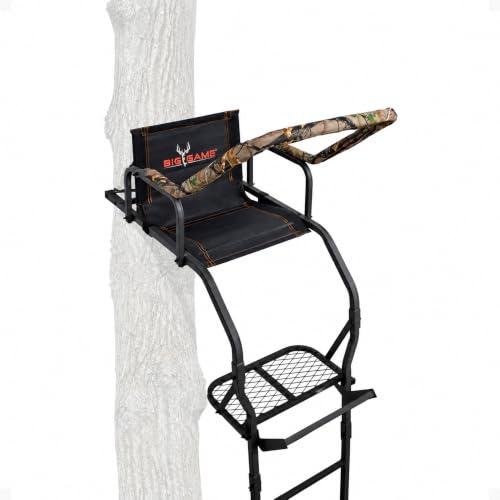
The verdict: for most hunters and almost every gift buyer, the Big Game 1-person ladder tree standis the right purchase. It goes up once on a good tree in late summer, it is the easiest kind of stand to install safely with one helper, the listing includes a safety harness, and it is also the cheapest stand here — which makes it the budget pick as well as the overall one. If the hunter moves with the sign rather than sitting one spot, the Rivers Edge Big Foot Rogue hang-on plus a set of climbing sticks is the real answer, and if they hunt public land where nothing can be left overnight, the Summit Viper SD climber is the stand that walks in and out with them.
Here is the part most tree stand roundups skip, and it is the thing that decides whether the purchase is a success: a tree stand is a system, not a product.A ladder stand arrives nearly complete. A hang-on stand is a seat and a platform with no way to reach it — you buy climbing sticks separately, and they can cost as much as the stand. A climber needs a straight, branch-free tree of the right diameter, which not every property has. Buying the wrong kind is not a matter of taste; it is the difference between hunting in October and arguing with a box in the garage.
And one thing that is not optional. Stand manufacturers themselves — not safety campaigners — instruct that a full-body fall arrest harness be worn from the moment your boots leave the ground until they are back on it, and they publish falls from stands as a leading cause of serious injury among deer hunters. Treestands and harnesses are tested to published ASTM standards through Treestand Manufacturers Association approved labs. Two of the stands below include a harness; if you buy one that does not, buy the harness in the same order. Prices are pulled live and dated.
- 1Big Game 1-Person Ladder Tree Stand (17 ft)The default right answer, and the one to buy if you are buying for someone else. A ladder stand is the kind of stand that goes up on a known tree in late summer, gets strapped tight, and is hunted from October to the end of the season - no climbing gear, no setup in the dark, nothing to carry in. The Amazon listing publishes 17 feet of height, an adjustable design, a Flex-Tek seat and a safety harness included in the box, which is the single most important line item on a stand's spec sheet. At this price it is also the cheapest stand on the page, which is unusual for the pick we would recommend first. Honest cons: it is heavy and awkward to install - treat it as a two-person job and never a solo one, which is how most ladder-stand accidents happen. The listing does not publish a weight capacity, so if the hunter is a big guy in heavy clothes, buy a stand that states its rating. A 17-foot ladder bolted to a tree is visible and permanent, which rules it out on public land and on any ground you do not control. And it commits you to one tree, so scout before you hang rather than after.Best for: Best overall, and the budget pick - set it once, hunt it all season
- 2
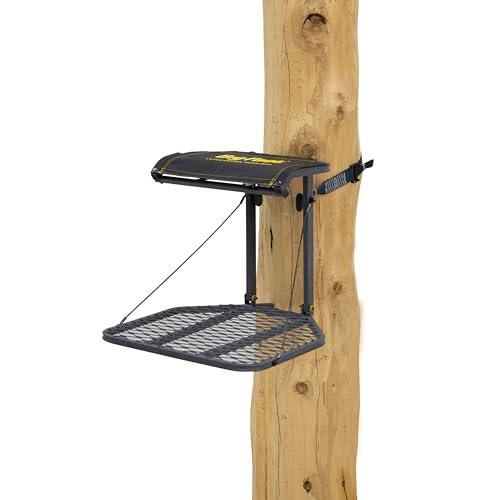 Rivers Edge Big Foot Rogue Hang-On Tree StandThe pick for a hunter who treats stand location as a decision they make weekly rather than once a year. A hang-on is a platform and a seat that straps to the tree and stays there, light enough to carry to a new spot and cheap enough to own two or three so a property can be hunted with the wind instead of against it. Retailers consistently publish a 300 lb capacity and a tree-diameter range of roughly 8 to 20 inches, which covers most mature hardwoods. Honest cons - and the big one first: this stand on its own is unusable. You need climbing sticks to reach it, which is a separate purchase at roughly the same money, and no harness is included. Published figures for this exact model number are also inconsistent across retailers - platform dimensions and stand weight differ by listing, with only the 300 lb rating agreeing everywhere - so we flag that rather than pick the flattering number. And hanging a stand 18 feet up is a real skill: a first-timer should do it with someone experienced, on the ground first, in daylight.Best for: Best hang-on - for the hunter who moves with the sign
- 3
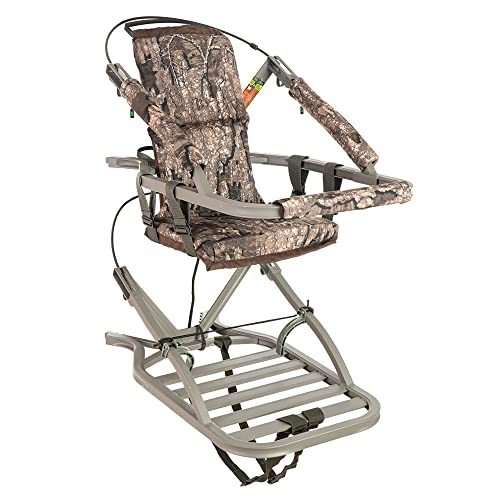 Summit Treestands Viper SD Climbing TreestandThe pick for public land, for leased ground where gear disappears, and for the hunter who wants to decide the tree on the morning of the hunt. A climber goes on the hunter's back, climbs a straight tree by the hunter's own effort, and comes home at the end of the sit - no sticks, nothing left behind, no permanent sign of where you hunt. Summit publishes this one as an aluminum closed-front climber at 20 lb with a 300 lb maximum weight limit, five foot-platform channels, a cable attachment system, a foam-padded suspended seat, and a full-body fall arrest harness system included with the hardware. Honest cons: it is the most expensive stand on this page by a wide margin. It needs a straight, relatively branch-free trunk in the right diameter range - a crooked or heavily limbed tree simply cannot be climbed with it, which rules out a lot of real woods. Published platform dimensions vary between Summit's own listing and retailer listings, so confirm the figure that matters to you before ordering. And climbing is physical work in the dark that gets you warm just before you sit still for four hours.Best for: Best climbing stand - nothing left in the tree overnight
- 4
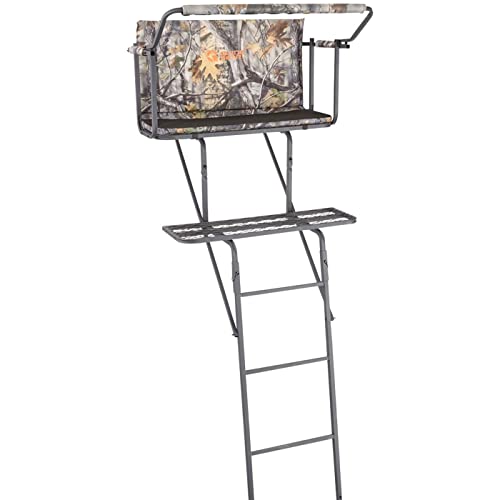 Guide Gear 16.5 ft 2-Man Ladder Tree StandThe one stand on this page that solves a problem no other configuration can: two people in a tree at once. If the point of the season is a first hunt with a kid, a grandchild or a spouse who has never sat in a stand, a two-man ladder is not a luxury - it is the only safe arrangement, because the alternative is an adult and a child sharing a platform built for one. Guide Gear publishes this one at 16.5 feet with a two-person seat in RT APX camo. The practical advantage over a single stand is a wider platform and a bench, which means a youth hunter can fidget, warm their hands and be coached quietly without anyone standing up. Honest cons: two bodies in a tree is twice the movement and twice the noise, so expect it to hunt worse than a single stand on pressured deer - this is a stand you choose for the company, not the odds. It is heavier and more awkward to install than the single-seat stands, genuinely a two-adult job. A harness for each hunter is a separate purchase, including a youth-sized one. And like any ladder stand it is permanent and visible.Best for: Best for two - the only way to take a kid along
- 5
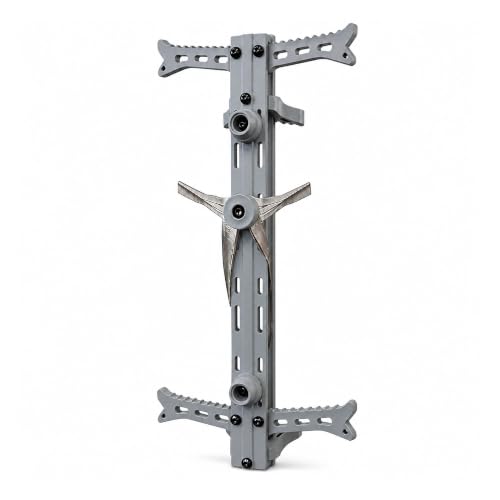 Hawk Helium 20-Inch Climbing Sticks (4-Pack)Included because a hang-on stand without sticks is furniture. These are the climbing sections that get a hunter up to a hang-on platform, and Hawk publishes a four-pack of lightweight non-slip aluminum climbing sticks from its 20-inch Helium line. Sticks strap to whatever shape the trunk is, which is why hang-on-plus-sticks works in woods where a climbing stand simply will not go. Aluminum matters because sticks are carried in and out and steel ones make you feel every rung, and 20 inches matters because four short sticks that stack flat do not clatter on the walk in. Honest cons: four 20-inch sticks is not 20 feet of climb - the sections overlap at the tree, you stand on the top step and your platform sits above it, so do the arithmetic rather than assuming. This listing publishes no step spacing, stand-off or weight rating, so the geometry has to be taken on the brand rather than on a spec sheet. Four sections is a real load on a pack frame and the part of a mobile setup that makes noise if you rush it. And you still need a lifeline or a tether to be attached while you climb; sticks are not a safety system.Best for: The half of a hang-on setup nobody mentions
- 6
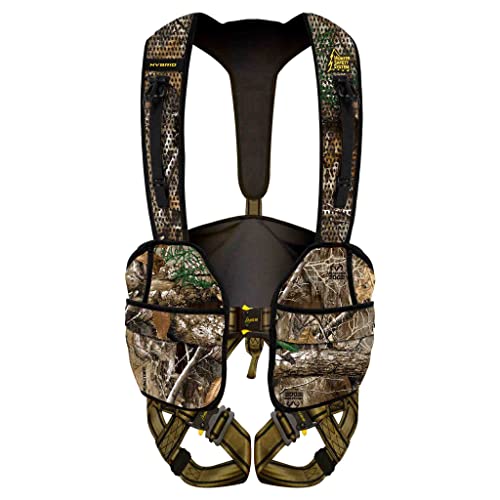 Hunter Safety System Hybrid Tree Stand HarnessThe one item on this page that is not a preference. A full-body fall arrest harness spreads the forces of a fall across the thighs, pelvis, chest and shoulders instead of one attachment point, and manufacturers instruct that it be worn from the moment you leave the ground. This one is a vest-style harness rather than a web tangle, which is the whole argument for it: the published build has six gear pockets and integrated binocular straps, so it replaces a layer the hunter was going to wear anyway instead of adding a chore they will skip on a cold morning. A harness you forget to put on protects nobody, and the vest ones get worn. Honest cons: it is sized - this listing is S/M, so check the size chart against the hunter's chest measurement and remember they will wear it over insulation. It is also more expensive than the bare-bones harness that ships with a stand, and the cheap one is genuinely better than nothing. Harnesses have a service life and should be inspected and retired per the manufacturer's instructions rather than handed down forever. And a harness alone does not protect you while you climb - you need a lifeline or tether for that.Best for: Buy this even if the stand came with one
| # | Gift | Best for | Price |
|---|---|---|---|
| 1 | Big Game 1-Person Ladder Tree Stand (17 ft)The default right answer, and the one to buy if you are buying for someone else. A ladder stand is the kind of stand that goes up on a known tree in late summer, gets strapped tight, and is hunted from October to the end of the season - no climbing gear, no setup in the dark, nothing to carry in. The Amazon listing publishes 17 feet of height, an adjustable design, a Flex-Tek seat and a safety harness included in the box, which is the single most important line item on a stand's spec sheet. At this price it is also the cheapest stand on the page, which is unusual for the pick we would recommend first. Honest cons: it is heavy and awkward to install - treat it as a two-person job and never a solo one, which is how most ladder-stand accidents happen. The listing does not publish a weight capacity, so if the hunter is a big guy in heavy clothes, buy a stand that states its rating. A 17-foot ladder bolted to a tree is visible and permanent, which rules it out on public land and on any ground you do not control. And it commits you to one tree, so scout before you hang rather than after. | Best overall, and the budget pick - set it once, hunt it all season | Check price on Amazon |
| 2 | Rivers Edge Big Foot Rogue Hang-On Tree StandThe pick for a hunter who treats stand location as a decision they make weekly rather than once a year. A hang-on is a platform and a seat that straps to the tree and stays there, light enough to carry to a new spot and cheap enough to own two or three so a property can be hunted with the wind instead of against it. Retailers consistently publish a 300 lb capacity and a tree-diameter range of roughly 8 to 20 inches, which covers most mature hardwoods. Honest cons - and the big one first: this stand on its own is unusable. You need climbing sticks to reach it, which is a separate purchase at roughly the same money, and no harness is included. Published figures for this exact model number are also inconsistent across retailers - platform dimensions and stand weight differ by listing, with only the 300 lb rating agreeing everywhere - so we flag that rather than pick the flattering number. And hanging a stand 18 feet up is a real skill: a first-timer should do it with someone experienced, on the ground first, in daylight. | Best hang-on - for the hunter who moves with the sign | $129.99View on Amazon |
| 3 | Summit Treestands Viper SD Climbing TreestandThe pick for public land, for leased ground where gear disappears, and for the hunter who wants to decide the tree on the morning of the hunt. A climber goes on the hunter's back, climbs a straight tree by the hunter's own effort, and comes home at the end of the sit - no sticks, nothing left behind, no permanent sign of where you hunt. Summit publishes this one as an aluminum closed-front climber at 20 lb with a 300 lb maximum weight limit, five foot-platform channels, a cable attachment system, a foam-padded suspended seat, and a full-body fall arrest harness system included with the hardware. Honest cons: it is the most expensive stand on this page by a wide margin. It needs a straight, relatively branch-free trunk in the right diameter range - a crooked or heavily limbed tree simply cannot be climbed with it, which rules out a lot of real woods. Published platform dimensions vary between Summit's own listing and retailer listings, so confirm the figure that matters to you before ordering. And climbing is physical work in the dark that gets you warm just before you sit still for four hours. | Best climbing stand - nothing left in the tree overnight | $359.99View on Amazon |
| 4 | Guide Gear 16.5 ft 2-Man Ladder Tree StandThe one stand on this page that solves a problem no other configuration can: two people in a tree at once. If the point of the season is a first hunt with a kid, a grandchild or a spouse who has never sat in a stand, a two-man ladder is not a luxury - it is the only safe arrangement, because the alternative is an adult and a child sharing a platform built for one. Guide Gear publishes this one at 16.5 feet with a two-person seat in RT APX camo. The practical advantage over a single stand is a wider platform and a bench, which means a youth hunter can fidget, warm their hands and be coached quietly without anyone standing up. Honest cons: two bodies in a tree is twice the movement and twice the noise, so expect it to hunt worse than a single stand on pressured deer - this is a stand you choose for the company, not the odds. It is heavier and more awkward to install than the single-seat stands, genuinely a two-adult job. A harness for each hunter is a separate purchase, including a youth-sized one. And like any ladder stand it is permanent and visible. | Best for two - the only way to take a kid along | $219.99View on Amazon |
| 5 | Hawk Helium 20-Inch Climbing Sticks (4-Pack)Included because a hang-on stand without sticks is furniture. These are the climbing sections that get a hunter up to a hang-on platform, and Hawk publishes a four-pack of lightweight non-slip aluminum climbing sticks from its 20-inch Helium line. Sticks strap to whatever shape the trunk is, which is why hang-on-plus-sticks works in woods where a climbing stand simply will not go. Aluminum matters because sticks are carried in and out and steel ones make you feel every rung, and 20 inches matters because four short sticks that stack flat do not clatter on the walk in. Honest cons: four 20-inch sticks is not 20 feet of climb - the sections overlap at the tree, you stand on the top step and your platform sits above it, so do the arithmetic rather than assuming. This listing publishes no step spacing, stand-off or weight rating, so the geometry has to be taken on the brand rather than on a spec sheet. Four sections is a real load on a pack frame and the part of a mobile setup that makes noise if you rush it. And you still need a lifeline or a tether to be attached while you climb; sticks are not a safety system. | The half of a hang-on setup nobody mentions | $119.99View on Amazon |
| 6 | Hunter Safety System Hybrid Tree Stand HarnessThe one item on this page that is not a preference. A full-body fall arrest harness spreads the forces of a fall across the thighs, pelvis, chest and shoulders instead of one attachment point, and manufacturers instruct that it be worn from the moment you leave the ground. This one is a vest-style harness rather than a web tangle, which is the whole argument for it: the published build has six gear pockets and integrated binocular straps, so it replaces a layer the hunter was going to wear anyway instead of adding a chore they will skip on a cold morning. A harness you forget to put on protects nobody, and the vest ones get worn. Honest cons: it is sized - this listing is S/M, so check the size chart against the hunter's chest measurement and remember they will wear it over insulation. It is also more expensive than the bare-bones harness that ships with a stand, and the cheap one is genuinely better than nothing. Harnesses have a service life and should be inspected and retired per the manufacturer's instructions rather than handed down forever. And a harness alone does not protect you while you climb - you need a lifeline or tether for that. | Buy this even if the stand came with one | $131.99View on Amazon |
Prices from Amazon as of November 24, 2026 and change often — the button always opens the current listing. Some links earn us a commission at no extra cost to you.
Big Game 1-Person Ladder Tree Stand (17 ft)
The default right answer, and the one to buy if you are buying for someone else. A ladder stand is the kind of stand that goes up on a known tree in late summer, gets strapped tight, and is hunted from October to the end of the season - no climbing gear, no setup in the dark, nothing to carry in. The Amazon listing publishes 17 feet of height, an adjustable design, a Flex-Tek seat and a safety harness included in the box, which is the single most important line item on a stand's spec sheet. At this price it is also the cheapest stand on the page, which is unusual for the pick we would recommend first. Honest cons: it is heavy and awkward to install - treat it as a two-person job and never a solo one, which is how most ladder-stand accidents happen. The listing does not publish a weight capacity, so if the hunter is a big guy in heavy clothes, buy a stand that states its rating. A 17-foot ladder bolted to a tree is visible and permanent, which rules it out on public land and on any ground you do not control. And it commits you to one tree, so scout before you hang rather than after.
Rivers Edge Big Foot Rogue Hang-On Tree Stand
The pick for a hunter who treats stand location as a decision they make weekly rather than once a year. A hang-on is a platform and a seat that straps to the tree and stays there, light enough to carry to a new spot and cheap enough to own two or three so a property can be hunted with the wind instead of against it. Retailers consistently publish a 300 lb capacity and a tree-diameter range of roughly 8 to 20 inches, which covers most mature hardwoods. Honest cons - and the big one first: this stand on its own is unusable. You need climbing sticks to reach it, which is a separate purchase at roughly the same money, and no harness is included. Published figures for this exact model number are also inconsistent across retailers - platform dimensions and stand weight differ by listing, with only the 300 lb rating agreeing everywhere - so we flag that rather than pick the flattering number. And hanging a stand 18 feet up is a real skill: a first-timer should do it with someone experienced, on the ground first, in daylight.
#ad · Price as of November 24, 2026. We may earn a commission.
Summit Treestands Viper SD Climbing Treestand
The pick for public land, for leased ground where gear disappears, and for the hunter who wants to decide the tree on the morning of the hunt. A climber goes on the hunter's back, climbs a straight tree by the hunter's own effort, and comes home at the end of the sit - no sticks, nothing left behind, no permanent sign of where you hunt. Summit publishes this one as an aluminum closed-front climber at 20 lb with a 300 lb maximum weight limit, five foot-platform channels, a cable attachment system, a foam-padded suspended seat, and a full-body fall arrest harness system included with the hardware. Honest cons: it is the most expensive stand on this page by a wide margin. It needs a straight, relatively branch-free trunk in the right diameter range - a crooked or heavily limbed tree simply cannot be climbed with it, which rules out a lot of real woods. Published platform dimensions vary between Summit's own listing and retailer listings, so confirm the figure that matters to you before ordering. And climbing is physical work in the dark that gets you warm just before you sit still for four hours.
#ad · Price as of November 24, 2026. We may earn a commission.
Guide Gear 16.5 ft 2-Man Ladder Tree Stand
The one stand on this page that solves a problem no other configuration can: two people in a tree at once. If the point of the season is a first hunt with a kid, a grandchild or a spouse who has never sat in a stand, a two-man ladder is not a luxury - it is the only safe arrangement, because the alternative is an adult and a child sharing a platform built for one. Guide Gear publishes this one at 16.5 feet with a two-person seat in RT APX camo. The practical advantage over a single stand is a wider platform and a bench, which means a youth hunter can fidget, warm their hands and be coached quietly without anyone standing up. Honest cons: two bodies in a tree is twice the movement and twice the noise, so expect it to hunt worse than a single stand on pressured deer - this is a stand you choose for the company, not the odds. It is heavier and more awkward to install than the single-seat stands, genuinely a two-adult job. A harness for each hunter is a separate purchase, including a youth-sized one. And like any ladder stand it is permanent and visible.
#ad · Price as of November 24, 2026. We may earn a commission.
Hawk Helium 20-Inch Climbing Sticks (4-Pack)
Included because a hang-on stand without sticks is furniture. These are the climbing sections that get a hunter up to a hang-on platform, and Hawk publishes a four-pack of lightweight non-slip aluminum climbing sticks from its 20-inch Helium line. Sticks strap to whatever shape the trunk is, which is why hang-on-plus-sticks works in woods where a climbing stand simply will not go. Aluminum matters because sticks are carried in and out and steel ones make you feel every rung, and 20 inches matters because four short sticks that stack flat do not clatter on the walk in. Honest cons: four 20-inch sticks is not 20 feet of climb - the sections overlap at the tree, you stand on the top step and your platform sits above it, so do the arithmetic rather than assuming. This listing publishes no step spacing, stand-off or weight rating, so the geometry has to be taken on the brand rather than on a spec sheet. Four sections is a real load on a pack frame and the part of a mobile setup that makes noise if you rush it. And you still need a lifeline or a tether to be attached while you climb; sticks are not a safety system.
#ad · Price as of November 24, 2026. We may earn a commission.
Hunter Safety System Hybrid Tree Stand Harness
The one item on this page that is not a preference. A full-body fall arrest harness spreads the forces of a fall across the thighs, pelvis, chest and shoulders instead of one attachment point, and manufacturers instruct that it be worn from the moment you leave the ground. This one is a vest-style harness rather than a web tangle, which is the whole argument for it: the published build has six gear pockets and integrated binocular straps, so it replaces a layer the hunter was going to wear anyway instead of adding a chore they will skip on a cold morning. A harness you forget to put on protects nobody, and the vest ones get worn. Honest cons: it is sized - this listing is S/M, so check the size chart against the hunter's chest measurement and remember they will wear it over insulation. It is also more expensive than the bare-bones harness that ships with a stand, and the cheap one is genuinely better than nothing. Harnesses have a service life and should be inspected and retired per the manufacturer's instructions rather than handed down forever. And a harness alone does not protect you while you climb - you need a lifeline or tether for that.
#ad · Price as of November 24, 2026. We may earn a commission.
The three kinds of tree stand, and who each one is for
Get this right and the rest is detail. Get it wrong and the stand sits in a garage.
A ladder stand is a ladder with a seat on top, strapped to a tree and left there. It is the easiest to climb, the easiest to use in the dark, the most comfortable to sit in, and the only kind a non-athletic or older hunter should be looking at. The trade is permanence: you pick one tree, it is visible from a distance, and it needs land you control.
A climbing stand is two pieces of aluminum the hunter uses to inch up a trunk, carried in on their back and out again. It leaves nothing behind, which makes it the public-land answer, and it lets you choose the tree on the morning of the hunt. The trade is that it demands a straight, clean trunk and real physical effort.
A hang-on stand is a platform and seat that straps to the tree and stays, reached with separately bought climbing sticks. It is the lightest, the most flexible and the cheapest way to have three stands on three different winds. The trade is that it is the hardest to put up safely and it is sold incomplete.
What a tree stand actually costs
| Kind of stand | In the box | Buy separately before you can hunt |
|---|---|---|
| Ladder stand | Stand, straps, often a harness | Usually nothing - this is why it is the easy choice |
| Climbing stand | Stand, hardware, harness on this pick | A backpack strap system if not included; a bow or gun hoist rope |
| Hang-on stand | Platform and seat only | Climbing sticks, a harness, a lifeline, a hoist rope |
| Every kind | - | A lifeline if you want to be attached while climbing; ratchet straps wear out and get replaced |
That last row is the one that surprises people. The harness protects you once you are attached at the top; a lifeline is what keeps you attached on the way up and down, which is when a large share of falls happen. If you are buying a hang-on as a gift, buy the sticks in the same order or you have given someone half a product.
The safety part, and why we put it in the pick list
We put a harness in the picks rather than a footnote because this is the one hunting purchase where the downside is not a bad hunt.
What the industry publishes.Treestands and treestand harnesses are tested to published ASTM standards — including ASTM F2337, the test method for treestand fall arrest systems — through labs approved by the Treestand Manufacturers Association. A stand that carries that certification has been loaded and tested to a standard rather than to a marketing claim, and it is worth looking for on the box.
What the manufacturers themselves instruct.Summit, who make the climber above, publish the requirement plainly: wear a full-body fall arrest harness system from the moment you leave the ground until your feet are back on solid ground. They also publish that falls from treestands are among the leading causes of serious injury to deer hunters. That is a manufacturer's statement rather than an independent study, and we are repeating it as such — but it is the people who build the stands saying it.
What that means in practice.Three habits, none of them expensive. Wear the harness every time, including the morning you are late. Use a lifeline so you are attached while climbing, not only once you are seated. And hoist the bow or gun up on a rope with the action open rather than carrying it — a hand holding a weapon is a hand not holding the tree.
How high should the stand be?
Higher is not better, and the hunting-forum consensus of "20 feet minimum" costs people shots. Height does two things: it lifts your scent and movement above a deer's normal sight line, and it steepens the shot angle. The second one is a real cost — a steep downward angle on a broadside deer gives a bowhunter much less vital area to work with, and it is the reason a lot of high shots end badly.
The practical answer: the height that puts you in cover. A stand at 15 feet in a cedar with a broken background beats a stand at 25 feet silhouetted in a bare oak, every time. The ladder stands here are 16.5 and 17 feet, which is the sweet spot for a reason. If the tree has no cover behind you at any height, pick a different tree rather than climbing higher.
Public land changes the answer completely
If the hunting is on public ground, read the regulations before you read any more of this page. Many states and management areas prohibit stands left overnight, prohibit screw-in steps or anything that penetrates the bark, require stands be removed at the end of each day, or require a name and ID number on anything left out. Rules vary by state, by agency and sometimes by individual tract, and they change — so check the current regulations for the specific place you hunt rather than trusting a summary.
Where overnight stands are not allowed, your options are a climber or a hang-on-and-sticks setup you carry out each time. Where they are allowed but gear gets stolen, a cheap hang-on you can afford to lose beats an expensive stand you cannot. A ladder stand is a private-land purchase in all but a few places.
Capacity, and why the number includes more than you
A published 300 lb rating is the total load: the hunter, the clothing, the pack, the bow or rifle, the thermos and anything hanging off a hook. A 230-pound hunter in December layers with a loaded pack is closer to that ceiling than the number suggests. If you are near it, buy the stand that publishes a higher rating rather than hoping.
This is also the reason we flagged the Big Game ladder stand's missing capacity figure in its pick above rather than quietly assuming 300 lb. A rating that is not published is not a rating, and for the one piece of gear holding a person 17 feet off the ground, that distinction is worth a sentence.
How we chose these
We do not load-test stands. Every dimension, capacity and construction detail above is the manufacturer's or retailer's own published figure, cited in the sources below, and where listings disagree — which happened on two of these stands — we say so instead of printing the flattering number. Availability and price on every pick were checked against the retailer the day this page was published.
The ranking criteria, in order: does the stand suit how the hunter actually hunts (one spot or many, private or public), is it installable safely by the people who will install it, what does the box leave out, and is the published capacity adequate with winter clothing and a pack. Comfort is last, because an uncomfortable stand still kills deer and a stand that never gets hung does not. Method: how we choose.
Match the stand to the hunter
Private land, one good tree, hunts the same spot. The Big Game ladder stand. This covers most hunters and it is the cheapest option here.
Taking a kid or a beginner along.The Guide Gear two-man ladder — the only configuration that seats two people safely.
Public land, or nothing can be left overnight. The Summit Viper SD climber, assuming the trees are straight enough to climb.
Hunts the wind, moves stands, has several spots. The Rivers Edge hang-on plus the Hawk Helium sticks. Budget for both at once.
Any of the above. The Hunter Safety System harness. Not a preference.
Bad knees, no interest in climbing, or hunting with a crossbow. Honestly: hunt the ground. A ground blind and a good chair kill a lot of deer, hide movement better than a stand does, and nobody falls out of one.
And the option that is not a stand at all.A hunting saddle replaces the platform with a fabric seat you hang in, which is lighter than anything here and works in crooked or branchy trees that a climber cannot take. It is the right answer for a hunter who moves every few days, and the wrong one for someone content in a ladder stand — the complete-kit question, and what each box actually contains, is sorted out in best hunting saddles.
Keep browsing
If elevated hunting is not the answer, the ground-level setup is covered in best hunting blinds, best ground blind for bow hunting and how to set up a ground blind. For what to carry up the tree, see best hunting backpacks and what to pack in a hunting backpack. Sitting still at height is colder than sitting still on the ground, so what to wear deer hunting and best heated hunting gear are worth reading before the first frost.
The other way up a tree is a saddle, and at this budget the comparison is genuinely close — a saddle trades comfort for the ability to hunt a fresh tree on today's wind. The cheapest complete route into it is in best hunting saddle under $200, and the thing a saddle hunter stands on once they are up there is covered in best saddle hunting platform.
Either way, a hang-on stand and a saddle share the same missing component: neither includes a way up the tree. Sets compared on step spacing and stand-off rather than on how many are in the box are in best climbing sticks for hunting.
Frequently asked questions
What is the best tree stand for deer hunting?
For most hunters, a ladder stand - and the Big Game 1-person ladder stand is the pick here. It goes up once on a scouted tree, it is the easiest kind to climb in the dark, the listing includes a safety harness, and it is the cheapest stand on this page. The exceptions are public land, where nothing can be left overnight and a climbing stand is the answer, and hunters who move stands weekly, who want a hang-on plus climbing sticks.
Ladder stand, climbing stand or hang-on - which should I buy?
It depends on one question: how often does the stand move? A ladder stand is for a hunter who sits the same tree all season on land they control. A climbing stand is for public land or for choosing the tree on the morning of the hunt, and it needs a straight, branch-free trunk. A hang-on is the lightest and most flexible, and the cheapest way to have several stands - but it is sold without the climbing sticks you need to reach it.
Do tree stands come with a safety harness?
Some do and some do not, and it is worth checking before you order. The Big Game ladder stand's listing publishes a safety harness in the box, and Summit publishes a full-body fall arrest harness system included with the Viper SD. Hang-on stands and climbing sticks generally include nothing. An included harness is usually the basic version; a comfortable vest-style harness is the one a hunter will actually put on every morning, which is the only harness that protects anyone.
How high should a tree stand be?
High enough to be in cover, which is usually 15 to 18 feet rather than the 20-plus feet hunting forums repeat. Height lifts your movement above a deer's sight line, but it also steepens the shot angle and leaves a bowhunter less vital area on a broadside animal. A stand at 15 feet with a broken background behind it beats one at 25 feet silhouetted against the sky. If a tree has no cover at any height, choose a different tree.
Do I need climbing sticks with a hang-on stand?
Yes - a hang-on stand on its own cannot be reached. Climbing sticks are a separate purchase that often costs about the same as the stand, and they are the reason a hang-on setup works on crooked trees a climbing stand cannot handle. Check the total climbing height: a four-section set reaching 12.5 feet puts your platform above that, not at it. Sticks are not a safety system, so you still need a harness and a lifeline to be attached while you climb.
Can I leave a tree stand on public land?
Often not, and this is the first thing to check before buying. Many states and wildlife management areas prohibit stands left overnight, ban screw-in steps or anything that penetrates the bark, or require your name and an ID number on any stand left out. The rules vary by state, by agency and sometimes by individual tract, and they change, so read the current regulations for the specific ground you hunt. Where overnight stands are not allowed, a climbing stand or a carry-in hang-on setup is the answer.
What weight capacity do I need in a tree stand?
More than you weigh. A published rating such as 300 lb is the total load - the hunter plus winter clothing, a pack, a weapon, a thermos and anything hanging on a hook - so a 230-pound hunter in December layers is nearer the ceiling than the number suggests. If you are close to it, buy a stand that publishes a higher rating rather than assuming the margin is generous, and treat a stand that publishes no rating at all as unrated.
Sources
- Amazon listing - Big Game 1-Person Ladder Tree Stand, 17' tall: published height, adjustable design, Flex-Tek seat and included safety harness
- Summit Treestands - Viper SD: published 20 lb stand weight, 300 lb maximum limit, aluminum closed-front design, five platform channels, cable attachment and included fall arrest harness
- Summit Treestands - harness guidance: full-body fall arrest system distributes force across thighs, pelvis, chest and shoulders; wear from the ground up
- Intertek - treestand and harness testing: TMA-approved lab certification and the ASTM standards used, including ASTM F2337 for treestand fall arrest systems
- Rivers Edge Big Foot Rogue (RE561) - retailer-published 300 lb capacity, 8-20 in tree diameter and seat dimensions; platform and weight figures differ by listing
- Amazon listing - Hawk Helium 20-Inch Climbing Sticks (4-pack): published lightweight non-slip aluminum construction
- Amazon listing - Hunter Safety System Hybrid harness: published vest-style build, six gear pockets, integrated bino straps, S/M sizing
- Amazon listing - Guide Gear 16.5' 2-Man Ladder Tree Stand: published height, two-person seat and RT APX pattern