Gear Guides
The Best Hunting Saddles
A saddle is the lightest way to hunt from a tree, and the easiest hunting purchase to get half-right: the saddle on its own is not a hunting setup. Here is what a complete kit has to include, which ones include it, and what each one gives up.
Read this before you buy one as a gift. A hunting saddle is not a stand. It is a fabric seat you hang in, and it only becomes a way to hunt once three other things are present: a platform to stand on, climbing sticks to get up the tree, and the ropes— a tether that holds you at hunting height and a lineman's belt that keeps you attached while you climb. A saddle bought alone, with none of that, is a $200 piece of fabric that cannot be used. That is the single most common way this purchase goes wrong, and it is why the picks below are sorted by what is actually in the box.
The verdict: the XOP Complete Tree Saddle Hunting Systemis the one to buy for most people, because it ships the saddle, an aluminum platform and a carrying bag together — so the only thing left to add is a set of sticks. The budget pick is the Kalkal Complete Tree Saddle Hunting System, which is the cheapest box here that still contains a platform and two safety ropes rather than the seat on its own. If the recipient already saddle hunts and you are upgrading them, Tethrd is the brand name they will recognize, and the Carnivore 2-Panel XL is the one to look at first if a one-panel saddle has never fit them comfortably.
Why anyone switches: weight and reach. A climbing stand is 20 pounds and needs a straight, limb-free trunk; a saddle setup is a fraction of that and will hang in a leaning, crooked or branchy tree that no climber can take. For a hunter who walks a mile in and moves with the sign, that is the whole argument. The honest trade is comfort and simplicity: you hunt leaning back in a harness rather than sitting in a chair, and there is a genuine learning curve before the first all-day sit stops being miserable. Prices below are pulled live and dated.
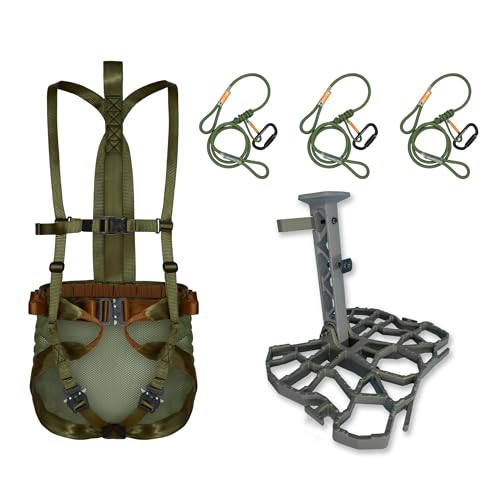
- 1XOP Complete Tree Saddle Hunting SystemThe pick for nearly everyone, and the reason is the parts list rather than the fabric. XOP publishes this as a complete system: the Mondo saddle harness, an aluminum tree saddle platform and a carrying bag, in one box. That matters more than any comfort claim, because the platform is the component people forget and the one that turns a saddle from an idea into a hunt - it is what your feet are on while you lean back and shoot. Buying the saddle and the platform together also means they are designed to work as a pair, which is not guaranteed when you assemble a setup from three brands. Honest cons: it still does not include climbing sticks, so there is one more purchase before the first hunt, and nobody tells you that on the listing. The Mondo is a one-panel saddle, which is the design most likely to need a few sits before it feels right. And it is an entry-to-middle system rather than a premium one - the buckles and bridge are good, not jewelry.Best for: Best overall - a system, not a seat
- 2
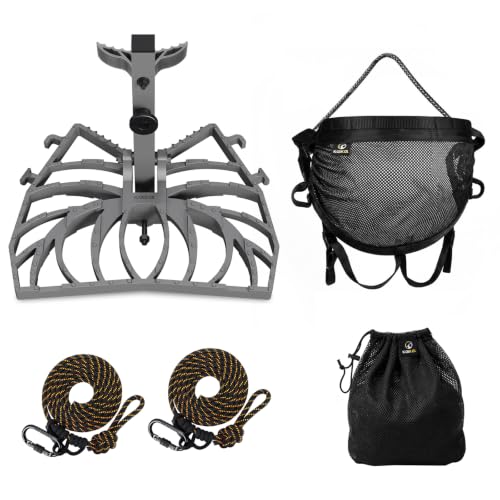 Kalkal Complete Tree Saddle Hunting SystemThe honest cheap answer, and the one place where cheap is defensible here. Kalkal publishes this kit as a saddle, an aluminum tree saddle platform and two safety ropes, which means the ropes that actually keep a hunter attached to the tree are in the box rather than on a second order. For a gift buyer that is the whole point: there is no way for the recipient to find a critical piece missing on opening day. At this price it is also the right way to find out whether someone even likes saddle hunting before anyone spends Tethrd money. Honest cons: this is an unfamiliar brand next to XOP and Tethrd, and the hardware shows it - the stitching, buckles and rope quality are the places a budget kit saves money, and those are not the places anyone wants savings when the gear is holding a person twenty feet up. Inspect everything before the first climb, and replace any rope that looks or feels wrong rather than hunting on it. Sticks are still a separate purchase. Treat it as a complete entry setup, not a lifetime one.Best for: Budget pick - the cheapest complete box
- 3
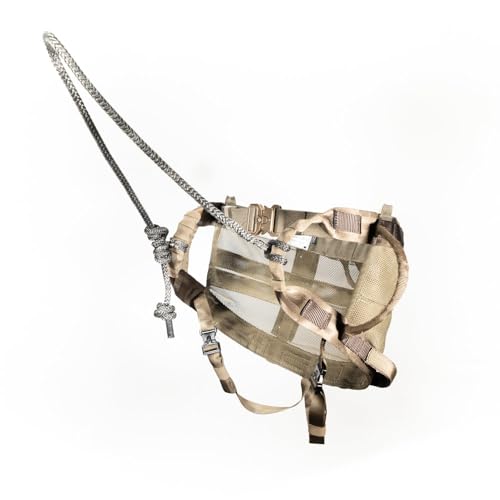 Tethrd Ultralock SD Hunting SaddleThe pick when the recipient already saddle hunts and owns a platform. Tethrd is the name that took saddle hunting from a forum habit to a mainstream method, and this is their modular version: Tethrd publishes it as a fully modular saddle with an expandable saddle body and their Ultralock links, made in the USA. Modular matters in a saddle more than it sounds, because the way a saddle fits is not a size chart - it is a set of adjustments you keep tuning over a season, and a saddle whose panels, bridge and links can all be changed is one that can be made to fit rather than tolerated. It is also the gift a saddle hunter would not buy themselves at this price. Honest cons: this is a saddle, full stop. No platform, no sticks, no ropes - if the recipient does not already own those, this is the wrong item on this page and the XOP system is the right one. The listing here is the X-Large; saddle sizing is real and a saddle that is the wrong size is uncomfortable rather than dangerous, but it is still the wrong gift. And a modular saddle with more adjustment is a saddle with more ways to set it up badly at first.Best for: Best premium saddle - the brand that built the category
- 4
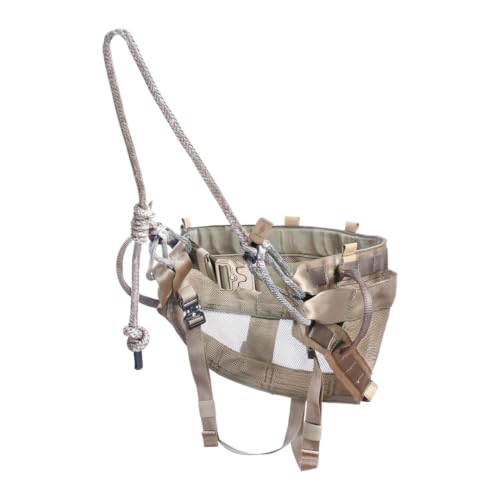 Tethrd Carnivore 2-Panel Hunting Saddle (XL)The pick if a one-panel saddle has never been comfortable, which for a lot of larger hunters is the whole story of saddle hunting. Tethrd publishes the Carnivore as a two-panel design with independently adjustable panels and a 300 lb weight rating. Two panels is the meaningful difference: one panel spreads your weight across a single band of fabric, while independent panels let you set hip and leg support separately, which is what stops the dead-leg feeling that ends a lot of all-day sits early. The XL is also simply a bigger saddle, and the honest truth is that most saddle discomfort complaints are fit complaints. Honest cons: it is the most expensive item on this page, and it is still only the saddle - platform, sticks and ropes are all separate. Two panels means more straps to set, so the learning curve is longer, not shorter. The 300 lb rating is the published figure for the saddle, and it is worth remembering that the rest of the system - sticks, platform, tether - carries its own separate limits, so the weakest published rating in your setup is the real one.Best for: Best for bigger hunters - two panels, published 300 lb rating
- 5
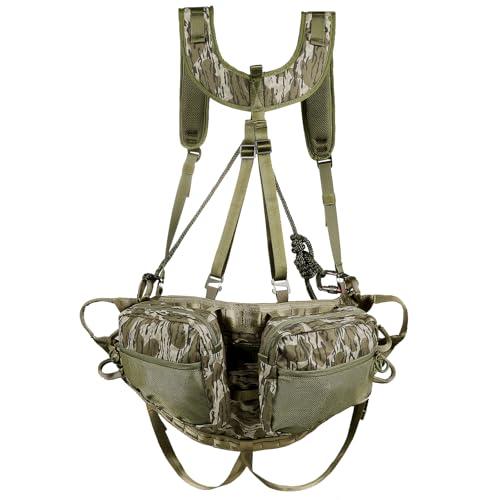 UIIHUNT Gen 3 Hunting SaddleThe middle option: more saddle than a budget kit, less money than Tethrd. UIIHUNT publishes the Gen 3 as a lightweight tree saddle with an expandable saddle body, two dump pouches and suspenders included, which is a genuinely useful bundle - the dump pouches are where a saddle hunter puts a release, a call and a phone, because in a saddle there is no stand platform to set anything down on, and anything dropped is gone for the sit. Suspenders solve the other small annoyance, which is a saddle sliding down while you climb. For a hunter who already owns a platform and sticks and wants to upgrade a basic saddle, this is a sensible place to land. Honest cons: no platform and no ropes, so this is an upgrade purchase and a poor first purchase. The brand has nothing like the track record of Tethrd or XOP, which matters in gear that holds a person off the ground. And an expandable body is an adjustment range, not a guarantee of fit - the same sizing caution applies here as anywhere else in this category.Best for: Best mid-price saddle-only pick
- 6
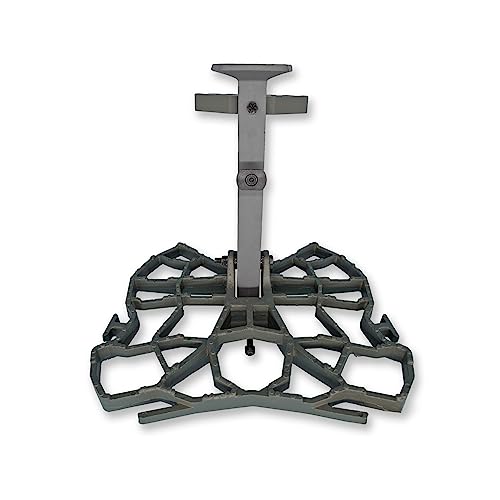 XOP Edge Aluminum Tree Saddle PlatformThe pick when the saddle is fine and the standing is not. A platform is the piece that decides what a saddle sit actually feels like: too small and you are shifting your feet all morning, poorly made and it creaks at the worst moment. XOP publishes the Edge as an adjustable aluminum saddle platform, and aluminum is the right material argument here - it is light enough to carry on a pack with sticks and does not rust after a season of being strapped to a wet tree. This is also the usual first upgrade for anyone who started on a cheap complete kit, because the kit platform is nearly always the weakest component in the box. Honest cons: it is an accessory, not a setup - on its own it does nothing, which makes it a poor standalone gift unless you know what the recipient already owns. Any platform adds weight and bulk to the pack-in. And a platform is a component where fit to the specific saddle, sticks and climbing style matters, so for an existing saddle hunter it is worth asking rather than guessing.Best for: Best platform upgrade - bought on its own
- 7
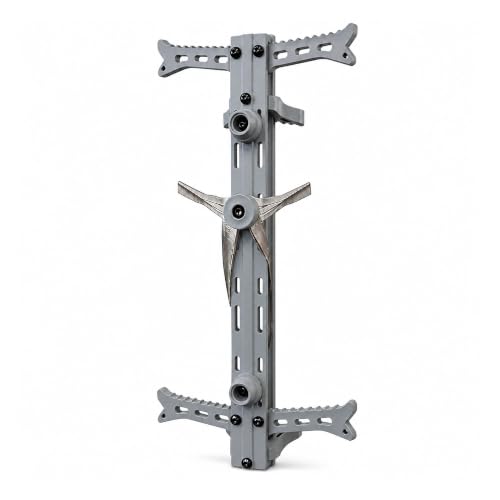 Hawk Helium 20-Inch Climbing Sticks (4-Pack)This is on the page because without sticks there is no hunt. A saddle and a platform get you set up at height; nothing in either box gets you to that height. Hawk publishes this set as a four-pack of lightweight non-slip aluminum climbing sticks from its 20-inch Helium line - and 20 inches is the specification that matters for a saddle hunter, because short sticks stack flat against each other and four sticks that stack flat are four sticks that do not clatter against a pack frame on a dark walk in. Aluminum keeps the carry weight sensible when the saddle and platform are on the same pack. Four 20-inch sticks is also the usual honest answer for a hunting height in cover rather than a record-setting one. Honest cons: four sticks is not twenty feet of climb - the sections overlap at the tree and your feet end up near the top of the top stick, so plan the height you want accordingly. Hawk has sold several revisions of the Helium stick and this listing publishes no step spacing, stand-off or weight rating, so the geometry has to be taken on the brand rather than on a spec sheet. Hanging and retrieving sticks is the noisiest, slowest part of any climb. And aluminum in January is cold enough that gloves stop being optional.Best for: The part that gets forgotten - the way up
| # | Gift | Best for | Price |
|---|---|---|---|
| 1 | XOP Complete Tree Saddle Hunting SystemThe pick for nearly everyone, and the reason is the parts list rather than the fabric. XOP publishes this as a complete system: the Mondo saddle harness, an aluminum tree saddle platform and a carrying bag, in one box. That matters more than any comfort claim, because the platform is the component people forget and the one that turns a saddle from an idea into a hunt - it is what your feet are on while you lean back and shoot. Buying the saddle and the platform together also means they are designed to work as a pair, which is not guaranteed when you assemble a setup from three brands. Honest cons: it still does not include climbing sticks, so there is one more purchase before the first hunt, and nobody tells you that on the listing. The Mondo is a one-panel saddle, which is the design most likely to need a few sits before it feels right. And it is an entry-to-middle system rather than a premium one - the buckles and bridge are good, not jewelry. | Best overall - a system, not a seat | $223.55View on Amazon |
| 2 | Kalkal Complete Tree Saddle Hunting SystemThe honest cheap answer, and the one place where cheap is defensible here. Kalkal publishes this kit as a saddle, an aluminum tree saddle platform and two safety ropes, which means the ropes that actually keep a hunter attached to the tree are in the box rather than on a second order. For a gift buyer that is the whole point: there is no way for the recipient to find a critical piece missing on opening day. At this price it is also the right way to find out whether someone even likes saddle hunting before anyone spends Tethrd money. Honest cons: this is an unfamiliar brand next to XOP and Tethrd, and the hardware shows it - the stitching, buckles and rope quality are the places a budget kit saves money, and those are not the places anyone wants savings when the gear is holding a person twenty feet up. Inspect everything before the first climb, and replace any rope that looks or feels wrong rather than hunting on it. Sticks are still a separate purchase. Treat it as a complete entry setup, not a lifetime one. | Budget pick - the cheapest complete box | $98.99View on Amazon |
| 3 | Tethrd Ultralock SD Hunting SaddleThe pick when the recipient already saddle hunts and owns a platform. Tethrd is the name that took saddle hunting from a forum habit to a mainstream method, and this is their modular version: Tethrd publishes it as a fully modular saddle with an expandable saddle body and their Ultralock links, made in the USA. Modular matters in a saddle more than it sounds, because the way a saddle fits is not a size chart - it is a set of adjustments you keep tuning over a season, and a saddle whose panels, bridge and links can all be changed is one that can be made to fit rather than tolerated. It is also the gift a saddle hunter would not buy themselves at this price. Honest cons: this is a saddle, full stop. No platform, no sticks, no ropes - if the recipient does not already own those, this is the wrong item on this page and the XOP system is the right one. The listing here is the X-Large; saddle sizing is real and a saddle that is the wrong size is uncomfortable rather than dangerous, but it is still the wrong gift. And a modular saddle with more adjustment is a saddle with more ways to set it up badly at first. | Best premium saddle - the brand that built the category | $299.99View on Amazon |
| 4 | Tethrd Carnivore 2-Panel Hunting Saddle (XL)The pick if a one-panel saddle has never been comfortable, which for a lot of larger hunters is the whole story of saddle hunting. Tethrd publishes the Carnivore as a two-panel design with independently adjustable panels and a 300 lb weight rating. Two panels is the meaningful difference: one panel spreads your weight across a single band of fabric, while independent panels let you set hip and leg support separately, which is what stops the dead-leg feeling that ends a lot of all-day sits early. The XL is also simply a bigger saddle, and the honest truth is that most saddle discomfort complaints are fit complaints. Honest cons: it is the most expensive item on this page, and it is still only the saddle - platform, sticks and ropes are all separate. Two panels means more straps to set, so the learning curve is longer, not shorter. The 300 lb rating is the published figure for the saddle, and it is worth remembering that the rest of the system - sticks, platform, tether - carries its own separate limits, so the weakest published rating in your setup is the real one. | Best for bigger hunters - two panels, published 300 lb rating | $329.99View on Amazon |
| 5 | UIIHUNT Gen 3 Hunting SaddleThe middle option: more saddle than a budget kit, less money than Tethrd. UIIHUNT publishes the Gen 3 as a lightweight tree saddle with an expandable saddle body, two dump pouches and suspenders included, which is a genuinely useful bundle - the dump pouches are where a saddle hunter puts a release, a call and a phone, because in a saddle there is no stand platform to set anything down on, and anything dropped is gone for the sit. Suspenders solve the other small annoyance, which is a saddle sliding down while you climb. For a hunter who already owns a platform and sticks and wants to upgrade a basic saddle, this is a sensible place to land. Honest cons: no platform and no ropes, so this is an upgrade purchase and a poor first purchase. The brand has nothing like the track record of Tethrd or XOP, which matters in gear that holds a person off the ground. And an expandable body is an adjustment range, not a guarantee of fit - the same sizing caution applies here as anywhere else in this category. | Best mid-price saddle-only pick | $144.49View on Amazon |
| 6 | XOP Edge Aluminum Tree Saddle PlatformThe pick when the saddle is fine and the standing is not. A platform is the piece that decides what a saddle sit actually feels like: too small and you are shifting your feet all morning, poorly made and it creaks at the worst moment. XOP publishes the Edge as an adjustable aluminum saddle platform, and aluminum is the right material argument here - it is light enough to carry on a pack with sticks and does not rust after a season of being strapped to a wet tree. This is also the usual first upgrade for anyone who started on a cheap complete kit, because the kit platform is nearly always the weakest component in the box. Honest cons: it is an accessory, not a setup - on its own it does nothing, which makes it a poor standalone gift unless you know what the recipient already owns. Any platform adds weight and bulk to the pack-in. And a platform is a component where fit to the specific saddle, sticks and climbing style matters, so for an existing saddle hunter it is worth asking rather than guessing. | Best platform upgrade - bought on its own | $99.99View on Amazon |
| 7 | Hawk Helium 20-Inch Climbing Sticks (4-Pack)This is on the page because without sticks there is no hunt. A saddle and a platform get you set up at height; nothing in either box gets you to that height. Hawk publishes this set as a four-pack of lightweight non-slip aluminum climbing sticks from its 20-inch Helium line - and 20 inches is the specification that matters for a saddle hunter, because short sticks stack flat against each other and four sticks that stack flat are four sticks that do not clatter against a pack frame on a dark walk in. Aluminum keeps the carry weight sensible when the saddle and platform are on the same pack. Four 20-inch sticks is also the usual honest answer for a hunting height in cover rather than a record-setting one. Honest cons: four sticks is not twenty feet of climb - the sections overlap at the tree and your feet end up near the top of the top stick, so plan the height you want accordingly. Hawk has sold several revisions of the Helium stick and this listing publishes no step spacing, stand-off or weight rating, so the geometry has to be taken on the brand rather than on a spec sheet. Hanging and retrieving sticks is the noisiest, slowest part of any climb. And aluminum in January is cold enough that gloves stop being optional. | The part that gets forgotten - the way up | $119.99View on Amazon |
Prices from Amazon as of November 24, 2026 and change often — the button always opens the current listing. Some links earn us a commission at no extra cost to you.
XOP Complete Tree Saddle Hunting System
The pick for nearly everyone, and the reason is the parts list rather than the fabric. XOP publishes this as a complete system: the Mondo saddle harness, an aluminum tree saddle platform and a carrying bag, in one box. That matters more than any comfort claim, because the platform is the component people forget and the one that turns a saddle from an idea into a hunt - it is what your feet are on while you lean back and shoot. Buying the saddle and the platform together also means they are designed to work as a pair, which is not guaranteed when you assemble a setup from three brands. Honest cons: it still does not include climbing sticks, so there is one more purchase before the first hunt, and nobody tells you that on the listing. The Mondo is a one-panel saddle, which is the design most likely to need a few sits before it feels right. And it is an entry-to-middle system rather than a premium one - the buckles and bridge are good, not jewelry.
#ad · Price as of November 24, 2026. We may earn a commission.
Kalkal Complete Tree Saddle Hunting System
The honest cheap answer, and the one place where cheap is defensible here. Kalkal publishes this kit as a saddle, an aluminum tree saddle platform and two safety ropes, which means the ropes that actually keep a hunter attached to the tree are in the box rather than on a second order. For a gift buyer that is the whole point: there is no way for the recipient to find a critical piece missing on opening day. At this price it is also the right way to find out whether someone even likes saddle hunting before anyone spends Tethrd money. Honest cons: this is an unfamiliar brand next to XOP and Tethrd, and the hardware shows it - the stitching, buckles and rope quality are the places a budget kit saves money, and those are not the places anyone wants savings when the gear is holding a person twenty feet up. Inspect everything before the first climb, and replace any rope that looks or feels wrong rather than hunting on it. Sticks are still a separate purchase. Treat it as a complete entry setup, not a lifetime one.
#ad · Price as of November 24, 2026. We may earn a commission.
Tethrd Ultralock SD Hunting Saddle
The pick when the recipient already saddle hunts and owns a platform. Tethrd is the name that took saddle hunting from a forum habit to a mainstream method, and this is their modular version: Tethrd publishes it as a fully modular saddle with an expandable saddle body and their Ultralock links, made in the USA. Modular matters in a saddle more than it sounds, because the way a saddle fits is not a size chart - it is a set of adjustments you keep tuning over a season, and a saddle whose panels, bridge and links can all be changed is one that can be made to fit rather than tolerated. It is also the gift a saddle hunter would not buy themselves at this price. Honest cons: this is a saddle, full stop. No platform, no sticks, no ropes - if the recipient does not already own those, this is the wrong item on this page and the XOP system is the right one. The listing here is the X-Large; saddle sizing is real and a saddle that is the wrong size is uncomfortable rather than dangerous, but it is still the wrong gift. And a modular saddle with more adjustment is a saddle with more ways to set it up badly at first.
#ad · Price as of November 24, 2026. We may earn a commission.
Tethrd Carnivore 2-Panel Hunting Saddle (XL)
The pick if a one-panel saddle has never been comfortable, which for a lot of larger hunters is the whole story of saddle hunting. Tethrd publishes the Carnivore as a two-panel design with independently adjustable panels and a 300 lb weight rating. Two panels is the meaningful difference: one panel spreads your weight across a single band of fabric, while independent panels let you set hip and leg support separately, which is what stops the dead-leg feeling that ends a lot of all-day sits early. The XL is also simply a bigger saddle, and the honest truth is that most saddle discomfort complaints are fit complaints. Honest cons: it is the most expensive item on this page, and it is still only the saddle - platform, sticks and ropes are all separate. Two panels means more straps to set, so the learning curve is longer, not shorter. The 300 lb rating is the published figure for the saddle, and it is worth remembering that the rest of the system - sticks, platform, tether - carries its own separate limits, so the weakest published rating in your setup is the real one.
#ad · Price as of November 24, 2026. We may earn a commission.
UIIHUNT Gen 3 Hunting Saddle
The middle option: more saddle than a budget kit, less money than Tethrd. UIIHUNT publishes the Gen 3 as a lightweight tree saddle with an expandable saddle body, two dump pouches and suspenders included, which is a genuinely useful bundle - the dump pouches are where a saddle hunter puts a release, a call and a phone, because in a saddle there is no stand platform to set anything down on, and anything dropped is gone for the sit. Suspenders solve the other small annoyance, which is a saddle sliding down while you climb. For a hunter who already owns a platform and sticks and wants to upgrade a basic saddle, this is a sensible place to land. Honest cons: no platform and no ropes, so this is an upgrade purchase and a poor first purchase. The brand has nothing like the track record of Tethrd or XOP, which matters in gear that holds a person off the ground. And an expandable body is an adjustment range, not a guarantee of fit - the same sizing caution applies here as anywhere else in this category.
#ad · Price as of November 24, 2026. We may earn a commission.
XOP Edge Aluminum Tree Saddle Platform
The pick when the saddle is fine and the standing is not. A platform is the piece that decides what a saddle sit actually feels like: too small and you are shifting your feet all morning, poorly made and it creaks at the worst moment. XOP publishes the Edge as an adjustable aluminum saddle platform, and aluminum is the right material argument here - it is light enough to carry on a pack with sticks and does not rust after a season of being strapped to a wet tree. This is also the usual first upgrade for anyone who started on a cheap complete kit, because the kit platform is nearly always the weakest component in the box. Honest cons: it is an accessory, not a setup - on its own it does nothing, which makes it a poor standalone gift unless you know what the recipient already owns. Any platform adds weight and bulk to the pack-in. And a platform is a component where fit to the specific saddle, sticks and climbing style matters, so for an existing saddle hunter it is worth asking rather than guessing.
#ad · Price as of November 24, 2026. We may earn a commission.
Hawk Helium 20-Inch Climbing Sticks (4-Pack)
This is on the page because without sticks there is no hunt. A saddle and a platform get you set up at height; nothing in either box gets you to that height. Hawk publishes this set as a four-pack of lightweight non-slip aluminum climbing sticks from its 20-inch Helium line - and 20 inches is the specification that matters for a saddle hunter, because short sticks stack flat against each other and four sticks that stack flat are four sticks that do not clatter against a pack frame on a dark walk in. Aluminum keeps the carry weight sensible when the saddle and platform are on the same pack. Four 20-inch sticks is also the usual honest answer for a hunting height in cover rather than a record-setting one. Honest cons: four sticks is not twenty feet of climb - the sections overlap at the tree and your feet end up near the top of the top stick, so plan the height you want accordingly. Hawk has sold several revisions of the Helium stick and this listing publishes no step spacing, stand-off or weight rating, so the geometry has to be taken on the brand rather than on a spec sheet. Hanging and retrieving sticks is the noisiest, slowest part of any climb. And aluminum in January is cold enough that gloves stop being optional.
#ad · Price as of November 24, 2026. We may earn a commission.
What has to be in the box
If you read nothing else here, read this list. A working saddle setup is four things, and the listings do not always make clear which ones are included:
1. The saddle. The fabric seat the hunter sits in, which is also the harness. This is the part everyone shops for and the only part most listings photograph.
2. The platform. A small aluminum shelf strapped to the trunk that the hunter stands on. Without it there is nowhere to put your feet, and a saddle sit becomes hanging rather than hunting. Platforms bought on their own are compared in best saddle hunting platform, where standing area — not weight — is the number that decides a long sit.
3. Climbing sticks.The way up. Four short sticks, hung one above the next. No saddle and no platform includes them — the sets worth comparing, and the two published numbers that actually separate them, are in best climbing sticks for hunting.
4. The ropes.A tether, which attaches the saddle to the tree at hunting height, and a lineman's belt, which keeps the hunter attached to the trunk while climbing and hanging sticks. Some complete kits include both, some include one, some include neither.
A "complete system" usually means items 1, 2 and 4. Sticks are almost always separate. Budget for them from the start rather than discovering it later.
Saddle or tree stand? The honest comparison
| Hunting saddle | Hang-on or climbing stand | |
|---|---|---|
| Weight to carry in | Lightest option in this category once you are practiced | Heavier - a climber is a load on its own |
| Trees it works in | Crooked, leaning, branchy - almost anything | A climber needs a straight, limb-free trunk |
| Setup time, first season | Slow. There is a real learning curve | Faster, and far more intuitive out of the box |
| All-day comfort | Depends entirely on fit and panels | A seat is a seat - predictable from day one |
| Shooting | 360 degrees around the trunk once practiced | Limited by the stand and the trunk behind you |
| Parts to buy | Saddle, platform, sticks, ropes | A ladder stand arrives complete; a hang-on needs sticks |
| Right for a gift | Only if you know the recipient wants to switch | Safer gift for a hunter who has not asked for a saddle |
Put plainly: a saddle wins on mobility and loses on simplicity. For a hunter who already hunts public ground and moves every few days, that trade is obviously worth it. For someone who hunts the same two trees on a farm every season, it mostly is not — and best tree stands is the more useful page for them.
Fit is the whole comfort story
Almost every complaint about saddle hunting — numb legs, pinched hips, needing to climb down at 10 a.m. — traces back to fit and setup rather than to saddles as a concept. Three things decide it.
Panel design. A one-panel saddle supports you across a single band of fabric. A two-panel saddle, like the Tethrd Carnivore, splits that into two independently adjustable panels, which lets a hunter set hip and thigh support separately. For larger hunters and for anyone planning genuinely all-day sits, that is the difference that matters.
Size. Saddles are sized, and the size is not decorative. A saddle that is too small concentrates pressure in the wrong place; one too large lets you sag through it. If you are buying for someone else and cannot ask, a complete kit or a saddle with a wide published adjustment range is the lower-risk choice.
Bridge and tether length.How far the saddle hangs from the trunk, and how high the tether is set above your head, change the lean angle completely. Nobody gets this right on the first climb. It is worth setting a saddle up on a tree in the yard, at knee height, and adjusting until leaning back is comfortable — which is also the safest way to learn it.
Safety, stated plainly
The saddle is the harness, which is the most attractive thing about the method: a saddle hunter who is attached to the tree is attached by the same thing they are sitting in. But being attached is not automatic, and the gap is the climb.
The lineman's belt is not optional.Climbing sticks and hanging a platform both happen before the tether goes on. A lineman's belt, run around the trunk and clipped to both saddle bridge loops, is what keeps a hunter connected during that part. It is the single piece most often skipped by someone teaching themselves from videos.
Check the published rating of every component, not just the saddle. A saddle rated to 300 lb in a system with sticks or a platform rated lower is a system limited by the lowest number. That figure is a published specification on good gear; where a listing does not publish one, treat the absence as information.
Inspect the soft goods every season. Rope, webbing and stitching are the parts that fail, and they fail from abrasion, UV and age rather than from one bad day. Anything frayed, glazed or cut gets replaced, not taped.
Practice at knee height. Every adjustment above can be learned a foot off the ground. None of it should be learned at twenty feet in the dark.
What the first setup costs, honestly
A complete kit plus a set of sticks is the realistic entry price, and it lands in the same bracket as a decent hang-on stand with sticks — a few hundred dollars all in, not the sticker price of the saddle alone. Buying the pieces separately from premium brands costs considerably more. The cheap route is a complete kit now and a better platform later, which is the upgrade path most saddle hunters actually take: the kit platform is almost always the first thing replaced, and the saddle is almost always the last.
One more honest note on money: nothing here is a bargain compared with hunting from the ground. A ground blind and a good chair cost less, keep a hunter out of the weather and require no climbing at all. Saddles are bought for mobility, not for value.
Match the setup to the hunter
New to saddles, wants everything in one box. The XOP Complete Tree Saddle Hunting System, plus sticks.
Trying it without committing. The Kalkal complete kit. Cheapest honest way to find out.
Already saddle hunts, wants the upgrade they would not buy themselves. The Tethrd Ultralock SD.
A bigger hunter, or anyone whose saddle goes numb by nine. The Tethrd Carnivore 2-Panel XL.
Owns a platform and sticks, needs a better seat. The UIIHUNT Gen 3.
Has a saddle, hates the platform that came with it. The XOP Edge aluminum platform.
Has everything except a way up. The Hawk Helium climbing sticks.
Keep browsing
The other elevated options, including ladder stands, climbers and hang-ons, are in best tree stands, which is the page to read first if the hunter has not specifically asked for a saddle. At ground level, the comparison is best hunting blinds and best 2-person ground blind. If the hunt involves long cold sits however you get up the tree, both best hunting blind heater and best heated hunting gear are worth a look, and the haul-out problem is covered in best game cart for deer.
If the budget is the constraint rather than the choice, the honest version of this list at a hard ceiling is best hunting saddle under $200— including the one complete kit that gets you up a tree at that price, and a plain account of what the cheaper route costs you over a six-hour sit.
Frequently asked questions
What is the best hunting saddle?
For most buyers the XOP Complete Tree Saddle Hunting System, because it is sold as a system rather than a seat - XOP publishes it with the Mondo saddle harness, an aluminum platform and a carrying bag in one box, so the only thing still missing is climbing sticks. If the hunter already owns a platform and sticks, a saddle-only pick like the Tethrd Ultralock SD is the better upgrade, and the two-panel Tethrd Carnivore XL is the one to look at first for a larger hunter or anyone who has found one-panel saddles uncomfortable.
What do you need besides the saddle itself?
Three things, and only some kits include them. A platform to stand on, climbing sticks to get up the tree, and ropes - a tether that holds you at hunting height plus a lineman's belt that keeps you attached while you climb and hang sticks. Complete systems usually include the platform and at least one rope; almost none include sticks. Budget for sticks separately from the start, because a saddle and a platform with no way up the tree cannot be hunted.
Is saddle hunting safer than a tree stand?
It is different rather than automatically safer. The appealing part is that the saddle is the harness, so a hunter at hunting height is attached by the thing they are sitting in rather than by a separate vest they might skip. The risk moves to the climb: hanging sticks and a platform happens before the tether goes on, and that is the stretch where a lineman's belt is the only thing keeping you connected. Skipping the lineman's belt is the common mistake, and it is the part self-taught saddle hunters most often leave out.
How much does a complete saddle setup cost?
Realistically a complete kit plus a set of climbing sticks, which lands in the same bracket as a hang-on stand with sticks - a few hundred dollars rather than the price of the saddle alone. Entry kits that include a platform and ropes start well below premium saddle-only prices. Buying piece by piece from premium brands costs considerably more, which is why the usual path is a complete kit first and a better platform later.
Are hunting saddles comfortable for big guys?
They can be, and panel design is the thing that decides it. A one-panel saddle carries your weight on a single band of fabric, while a two-panel saddle splits support into independently adjustable panels - Tethrd publishes the Carnivore as a two-panel design with a 300 lb weight rating, and that is the right place for a larger hunter to start looking. Size matters as much as panels: most saddle discomfort is a fit problem, not a saddle problem.
Can you hunt a crooked tree with a saddle?
Yes, and that is the main practical reason people switch. A climbing stand needs a straight trunk with no limbs for the whole climb, which rules out a large share of the trees in most woods. A saddle setup uses climbing sticks, so it will go up a leaning, crooked or branchy tree - and the right tree for the wind and the trail is frequently not the one a climber can take.
Is a hunting saddle a good gift?
Only if the hunter has talked about saddle hunting. This is the one gear category where the equipment implies a method of hunting, and someone content in a ladder stand did not ask to change how they hunt. If they already saddle hunt, check what they own before buying a saddle-only item - a second saddle is a wasted gift, while a platform, sticks or a pack are things saddle hunters keep adding. If you are not sure, a complete kit is the safe version.
Sources
- Amazon listing - XOP Complete Tree Saddle Hunting System: published contents, aluminum tree saddle platform, Mondo saddle harness and carrying bag
- Amazon listing - Kalkal Complete Tree Saddle Hunting System: published aluminum platform, saddle safety harness and two safety ropes
- Amazon listing - Tethrd Ultralock SD Hunting Saddle: published fully modular build, expandable saddle body, Ultralock links, made in the USA
- Amazon listing - Tethrd Carnivore 2-Panel Hunting Saddle XL: published independently adjustable panels and 300 lb weight rating
- Amazon listing - UIIHUNT Gen 3 Hunting Saddle: published expandable saddle body, two dump pouches and suspenders included
- Amazon listing - XOP Edge Aluminum Tree Saddle Platform: published adjustable aluminum saddle hunting platform
- Amazon listing - Hawk Helium 20-Inch Climbing Sticks (4-pack): published lightweight non-slip aluminum construction