Gear Guides
The Best Saddle Hunting Platforms
The saddle holds a hunter up. The platform decides whether they can stand there until last light. Here is the one specification that separates these, which brands publish it, and what you give up at each price.
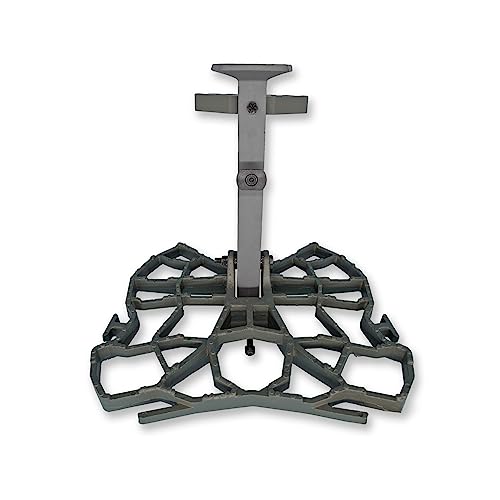
What a platform is, in one line. It is a small aluminum shelf strapped to the trunk that a saddle hunter stands on. The saddleis the seat and the harness; the platform is the floor. Without one, a saddle hunter is hanging rather than hunting, and this is the component most often missing from a setup that someone assembled piece by piece — or the component that came bundled in a cheap complete kit and is the first thing they want to replace.
The verdict: the XOP Edge Aluminum Tree Saddle Platform is the one to buy for most people. It is the only pick here from a brand with a real saddle hunting track record, it is published as an adjustable aluminum platform, and it is the standard upgrade for anyone who started on a kit platform. The budget pick is the Tomakiadjustable platform, published at 12 by 12 inches — the cheapest way here to get a saddle hunter onto their feet. And if the problem is specifically that their feet go numb, the ZNNM publishes the biggest standing area on this page at 16.2 by 12 inches, which is the single most useful number in this category.
That is the thing to understand before comparing prices: in platforms, area beats ounces. Every listing here advertises how light it is, and weight does matter on a long walk in. But nobody abandons a saddle because the platform was heavy. They abandon it because at hour four there was nowhere to put their feet except the exact spot they had already been standing on since dawn. Prices below are pulled live and dated.
- 1XOP Edge Aluminum Tree Saddle PlatformThe pick for nearly everyone, and the reason is reputation plus the right material. XOP publishes the Edge as an adjustable aluminum tree saddle platform sold as part of their tree saddle hunting system, and XOP is one of the few names in this roundup that has actually been building saddle hunting gear rather than fulfilling a category. Aluminum is the correct call here and worth saying plainly: it is light enough to carry on a pack alongside a stack of sticks, and it cannot rust after a season of being strapped to a wet trunk, which is what quietly destroys cheap steel hardware. Adjustable matters because trees are not flat - the ability to level the standing surface against an irregular or leaning trunk is the difference between standing square and standing on a ramp all morning. This is also the platform most people buy second, after the one that came in a complete kit, which tells you something. Honest cons: it is the most expensive platform here, and the premium is brand and finish rather than a published figure you can check - the listing does not print a standing area or a weight rating, so the two numbers you would most like to compare are not there. A platform is also an accessory, not a setup: on its own it does nothing, which makes it a weak standalone gift unless you already know what the recipient owns. And every platform adds bulk to the pack-in, however light it is.Best for: Best overall - the standard upgrade, from a saddle brand
- 2
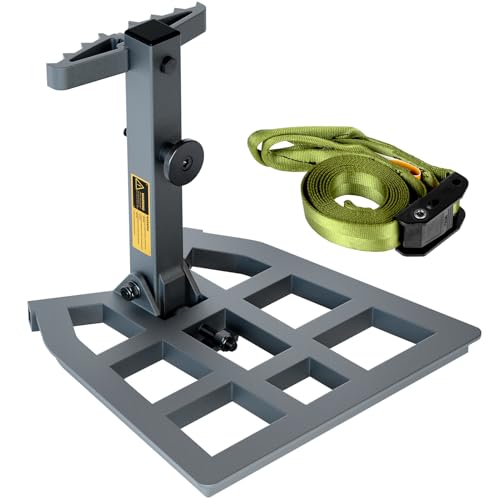 Tomaki Adjustable Tree Saddle PlatformThe honest cheap answer, and a defensible one. Tomaki publishes this as an aluminum adjustable tree saddle platform at 12 by 12 inches with a reliable silent adjustable mount - and 12 by 12 is the standard size in this category rather than a cut-down one, so the budget saving is not coming out of the standing area. For a buyer whose actual question is whether saddle hunting is for them at all, this is the right amount of money to spend finding out: it puts a hunter's feet on aluminum for roughly the price of a decent pair of boots socks and a box of broadheads. It is also the sensible pairing for a cheap complete kit whose platform has already been outgrown. Honest cons: this is an Amazon-native brand with no hunting track record, and this is a component that holds a person off the ground - you are buying a published description, not a reputation, and it deserves a careful look at the welds, the hinge and the strap out of the box. There is no published weight rating on the listing, and the absence of a number is information. 12 by 12 inches is adequate rather than generous; if the hunter is a size 13 boot or plans genuinely all-day sits, the ZNNM below is the better answer for a few dollars more. Replace the strap at the first sign of fraying rather than hunting on it.Best for: Budget pick - the cheapest real aluminum platform
- 3
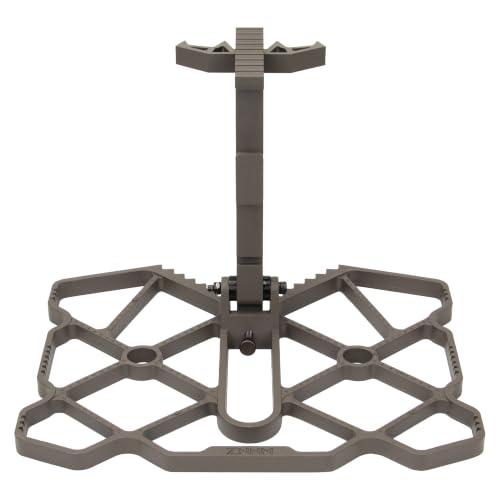 ZNNM 16.2 x 12-Inch Saddle Hunting PlatformThe pick if the complaint about saddle hunting is the feet, which for a lot of hunters is the whole complaint. ZNNM publishes this at 16.2 by 12 inches with a large footrest area, cast aluminum construction, a foldable backpack design and an open frame that supports multiple foot positions. Read that last part again, because it is the real argument: an open frame with room for several foot positions means a hunter can shift their stance without stepping off the platform, and shifting stance is what keeps circulation going through a six-hour sit. Four extra inches of width sounds trivial on a spec sheet and is the difference between standing with your feet together like a diver and standing with them apart like a person. The foldable backpack design is the other sensible part - a platform that folds flat rides on a pack instead of swinging off it. Honest cons: cast aluminum is strong but it is also the manufacturing method that tends to produce a heavier part than extruded or machined aluminum, so the biggest platform here is unlikely to be the lightest. No weight rating is published, which is the recurring gap across this whole category. ZNNM has no saddle hunting history to speak of. And a bigger platform is a bigger thing to carry and a bigger thing to catch on branches on the way up - the trade for standing room is real.Best for: Best standing area - the fix for numb feet
- 4
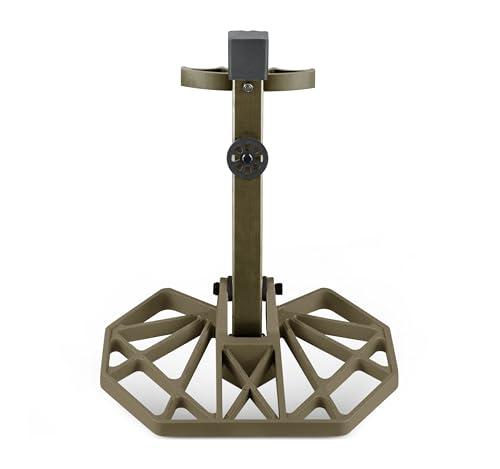 UIIHUNT Die-Cast Aluminum Saddle PlatformThe middle of this category, and a straightforward one. UIIHUNT publishes a die-cast aluminum platform at 12 by 12 inches with an adjustable, silent mount, sold as part of a mobile saddle hunting system. Die-cast is a meaningful thing to name: it means the part was formed as one piece in a mold rather than welded up from sections, and a one-piece frame has no welds to crack - which is the failure anyone inspecting a used platform looks for first. 'Silent' in this category almost always refers to the attachment method rather than the platform itself, and quiet attachment is worth more than it sounds, because the platform goes on the tree last, at hunting height, in the dark, when noise costs the most. UIIHUNT also already makes a saddle this site recommends, so a hunter buying both gets components designed by the same people. Honest cons: it is priced above two platforms here that publish more about themselves, and the extra money buys a construction method rather than a bigger standing area - it is the same 12 by 12 as the budget Tomaki. No weight rating is published. Die-cast parts fail differently from welded ones: less likely to crack at a seam, more likely to be brittle if the alloy and process are poor, and nothing on a listing tells you which you have. As with every platform, it needs a close look before the first climb and every season after.Best for: Best mid-price pick - die-cast aluminum, silent mount
- 5
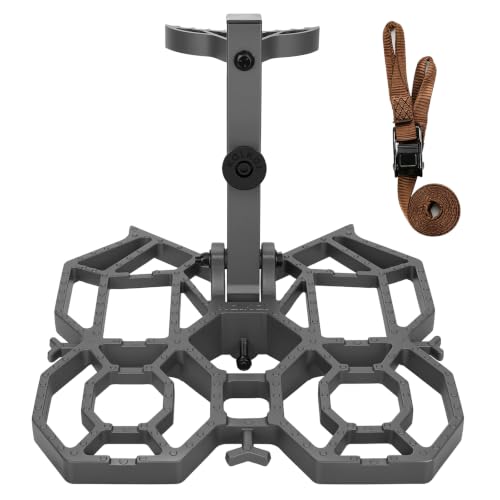 Kalkal Foldable Tree Saddle PlatformThe pick when the hunt starts with a mile of walking. Kalkal publishes this as an adjustable aluminum saddle hunting platform that is foldable, with an all-around design, sold for mobile deer hunting. Foldable is the specification doing the work here, and it matters more than people expect: a platform that folds flat sits against a pack rather than hanging off it, which means it does not swing into brush, does not clang against sticks, and does not change your balance on a creek crossing. 'All-around' refers to a frame that lets the hunter rotate and face any direction around the trunk, which is the actual advantage of saddle hunting over a stand - if the platform restricts where you can put your feet, it takes that advantage back. For a hunter working public ground and moving trees weekly, this is a sensible place to land. Honest cons: no published standing area, which in a category where standing area is the headline number is the gap that matters most - you cannot tell from the listing whether this is a 12-inch platform or a bigger one. No published weight rating either. A folding hinge is a moving part, and moving parts in load-bearing gear are the parts to inspect, keep clean of grit and never force. And Kalkal, like most of this list, is a direct-to-Amazon brand rather than a hunting company with a service history.Best for: Best for a long walk in - folds flat
- 6
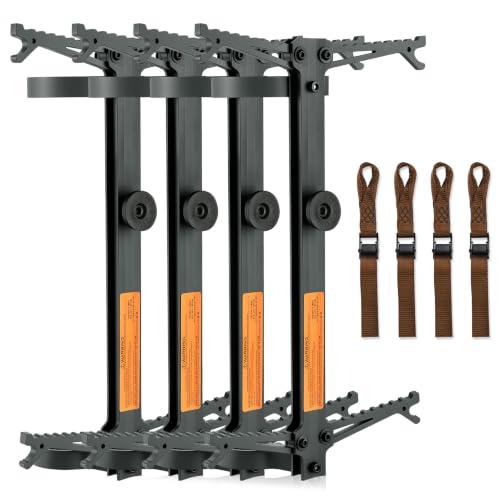 Kalkal Upgraded Hunting Climbing Sticks (4-Pack)This is on the page because a platform twenty feet up a tree is not reachable without sticks, and no platform on this page includes any. Kalkal publishes this four-pack as 6061 aluminum with foldable non-slip steps and a 300 lb max load, built specifically for saddle hunting - and it is one of the only sets in that category willing to print a weight rating, which is exactly the number you want when you are checking whether the lowest-rated part of a system is the sticks or the saddle. Folding steps matter for the same reason a folding platform does: four sticks that stack flat are four sticks that do not announce your arrival. For a gift buyer this is also the component that is almost never already owned in a decent version - most mobile hunters are still climbing on whatever they bought first. Honest cons: this is a second purchase on top of the platform, which makes the real cost of 'buying a platform' roughly double the sticker. Four short sticks is a hunting height in cover, not a high climb, and the overlap between sticks means the total is less than the arithmetic suggests. Rope or strap attachment is a skill to practice at knee height first. And sticks still do not include a lineman's belt, which is the piece that keeps a hunter attached while hanging them.Best for: The part that gets forgotten - the way up to it
| # | Gift | Best for | Price |
|---|---|---|---|
| 1 | XOP Edge Aluminum Tree Saddle PlatformThe pick for nearly everyone, and the reason is reputation plus the right material. XOP publishes the Edge as an adjustable aluminum tree saddle platform sold as part of their tree saddle hunting system, and XOP is one of the few names in this roundup that has actually been building saddle hunting gear rather than fulfilling a category. Aluminum is the correct call here and worth saying plainly: it is light enough to carry on a pack alongside a stack of sticks, and it cannot rust after a season of being strapped to a wet trunk, which is what quietly destroys cheap steel hardware. Adjustable matters because trees are not flat - the ability to level the standing surface against an irregular or leaning trunk is the difference between standing square and standing on a ramp all morning. This is also the platform most people buy second, after the one that came in a complete kit, which tells you something. Honest cons: it is the most expensive platform here, and the premium is brand and finish rather than a published figure you can check - the listing does not print a standing area or a weight rating, so the two numbers you would most like to compare are not there. A platform is also an accessory, not a setup: on its own it does nothing, which makes it a weak standalone gift unless you already know what the recipient owns. And every platform adds bulk to the pack-in, however light it is. | Best overall - the standard upgrade, from a saddle brand | $99.99View on Amazon |
| 2 | Tomaki Adjustable Tree Saddle PlatformThe honest cheap answer, and a defensible one. Tomaki publishes this as an aluminum adjustable tree saddle platform at 12 by 12 inches with a reliable silent adjustable mount - and 12 by 12 is the standard size in this category rather than a cut-down one, so the budget saving is not coming out of the standing area. For a buyer whose actual question is whether saddle hunting is for them at all, this is the right amount of money to spend finding out: it puts a hunter's feet on aluminum for roughly the price of a decent pair of boots socks and a box of broadheads. It is also the sensible pairing for a cheap complete kit whose platform has already been outgrown. Honest cons: this is an Amazon-native brand with no hunting track record, and this is a component that holds a person off the ground - you are buying a published description, not a reputation, and it deserves a careful look at the welds, the hinge and the strap out of the box. There is no published weight rating on the listing, and the absence of a number is information. 12 by 12 inches is adequate rather than generous; if the hunter is a size 13 boot or plans genuinely all-day sits, the ZNNM below is the better answer for a few dollars more. Replace the strap at the first sign of fraying rather than hunting on it. | Budget pick - the cheapest real aluminum platform | $56.99View on Amazon |
| 3 | ZNNM 16.2 x 12-Inch Saddle Hunting PlatformThe pick if the complaint about saddle hunting is the feet, which for a lot of hunters is the whole complaint. ZNNM publishes this at 16.2 by 12 inches with a large footrest area, cast aluminum construction, a foldable backpack design and an open frame that supports multiple foot positions. Read that last part again, because it is the real argument: an open frame with room for several foot positions means a hunter can shift their stance without stepping off the platform, and shifting stance is what keeps circulation going through a six-hour sit. Four extra inches of width sounds trivial on a spec sheet and is the difference between standing with your feet together like a diver and standing with them apart like a person. The foldable backpack design is the other sensible part - a platform that folds flat rides on a pack instead of swinging off it. Honest cons: cast aluminum is strong but it is also the manufacturing method that tends to produce a heavier part than extruded or machined aluminum, so the biggest platform here is unlikely to be the lightest. No weight rating is published, which is the recurring gap across this whole category. ZNNM has no saddle hunting history to speak of. And a bigger platform is a bigger thing to carry and a bigger thing to catch on branches on the way up - the trade for standing room is real. | Best standing area - the fix for numb feet | $65.44View on Amazon |
| 4 | UIIHUNT Die-Cast Aluminum Saddle PlatformThe middle of this category, and a straightforward one. UIIHUNT publishes a die-cast aluminum platform at 12 by 12 inches with an adjustable, silent mount, sold as part of a mobile saddle hunting system. Die-cast is a meaningful thing to name: it means the part was formed as one piece in a mold rather than welded up from sections, and a one-piece frame has no welds to crack - which is the failure anyone inspecting a used platform looks for first. 'Silent' in this category almost always refers to the attachment method rather than the platform itself, and quiet attachment is worth more than it sounds, because the platform goes on the tree last, at hunting height, in the dark, when noise costs the most. UIIHUNT also already makes a saddle this site recommends, so a hunter buying both gets components designed by the same people. Honest cons: it is priced above two platforms here that publish more about themselves, and the extra money buys a construction method rather than a bigger standing area - it is the same 12 by 12 as the budget Tomaki. No weight rating is published. Die-cast parts fail differently from welded ones: less likely to crack at a seam, more likely to be brittle if the alloy and process are poor, and nothing on a listing tells you which you have. As with every platform, it needs a close look before the first climb and every season after. | Best mid-price pick - die-cast aluminum, silent mount | $84.99View on Amazon |
| 5 | Kalkal Foldable Tree Saddle PlatformThe pick when the hunt starts with a mile of walking. Kalkal publishes this as an adjustable aluminum saddle hunting platform that is foldable, with an all-around design, sold for mobile deer hunting. Foldable is the specification doing the work here, and it matters more than people expect: a platform that folds flat sits against a pack rather than hanging off it, which means it does not swing into brush, does not clang against sticks, and does not change your balance on a creek crossing. 'All-around' refers to a frame that lets the hunter rotate and face any direction around the trunk, which is the actual advantage of saddle hunting over a stand - if the platform restricts where you can put your feet, it takes that advantage back. For a hunter working public ground and moving trees weekly, this is a sensible place to land. Honest cons: no published standing area, which in a category where standing area is the headline number is the gap that matters most - you cannot tell from the listing whether this is a 12-inch platform or a bigger one. No published weight rating either. A folding hinge is a moving part, and moving parts in load-bearing gear are the parts to inspect, keep clean of grit and never force. And Kalkal, like most of this list, is a direct-to-Amazon brand rather than a hunting company with a service history. | Best for a long walk in - folds flat | $69.11View on Amazon |
| 6 | Kalkal Upgraded Hunting Climbing Sticks (4-Pack)This is on the page because a platform twenty feet up a tree is not reachable without sticks, and no platform on this page includes any. Kalkal publishes this four-pack as 6061 aluminum with foldable non-slip steps and a 300 lb max load, built specifically for saddle hunting - and it is one of the only sets in that category willing to print a weight rating, which is exactly the number you want when you are checking whether the lowest-rated part of a system is the sticks or the saddle. Folding steps matter for the same reason a folding platform does: four sticks that stack flat are four sticks that do not announce your arrival. For a gift buyer this is also the component that is almost never already owned in a decent version - most mobile hunters are still climbing on whatever they bought first. Honest cons: this is a second purchase on top of the platform, which makes the real cost of 'buying a platform' roughly double the sticker. Four short sticks is a hunting height in cover, not a high climb, and the overlap between sticks means the total is less than the arithmetic suggests. Rope or strap attachment is a skill to practice at knee height first. And sticks still do not include a lineman's belt, which is the piece that keeps a hunter attached while hanging them. | The part that gets forgotten - the way up to it | $93.85View on Amazon |
Prices from Amazon as of November 24, 2026 and change often — the button always opens the current listing. Some links earn us a commission at no extra cost to you.
XOP Edge Aluminum Tree Saddle Platform
The pick for nearly everyone, and the reason is reputation plus the right material. XOP publishes the Edge as an adjustable aluminum tree saddle platform sold as part of their tree saddle hunting system, and XOP is one of the few names in this roundup that has actually been building saddle hunting gear rather than fulfilling a category. Aluminum is the correct call here and worth saying plainly: it is light enough to carry on a pack alongside a stack of sticks, and it cannot rust after a season of being strapped to a wet trunk, which is what quietly destroys cheap steel hardware. Adjustable matters because trees are not flat - the ability to level the standing surface against an irregular or leaning trunk is the difference between standing square and standing on a ramp all morning. This is also the platform most people buy second, after the one that came in a complete kit, which tells you something. Honest cons: it is the most expensive platform here, and the premium is brand and finish rather than a published figure you can check - the listing does not print a standing area or a weight rating, so the two numbers you would most like to compare are not there. A platform is also an accessory, not a setup: on its own it does nothing, which makes it a weak standalone gift unless you already know what the recipient owns. And every platform adds bulk to the pack-in, however light it is.
#ad · Price as of November 24, 2026. We may earn a commission.
Tomaki Adjustable Tree Saddle Platform
The honest cheap answer, and a defensible one. Tomaki publishes this as an aluminum adjustable tree saddle platform at 12 by 12 inches with a reliable silent adjustable mount - and 12 by 12 is the standard size in this category rather than a cut-down one, so the budget saving is not coming out of the standing area. For a buyer whose actual question is whether saddle hunting is for them at all, this is the right amount of money to spend finding out: it puts a hunter's feet on aluminum for roughly the price of a decent pair of boots socks and a box of broadheads. It is also the sensible pairing for a cheap complete kit whose platform has already been outgrown. Honest cons: this is an Amazon-native brand with no hunting track record, and this is a component that holds a person off the ground - you are buying a published description, not a reputation, and it deserves a careful look at the welds, the hinge and the strap out of the box. There is no published weight rating on the listing, and the absence of a number is information. 12 by 12 inches is adequate rather than generous; if the hunter is a size 13 boot or plans genuinely all-day sits, the ZNNM below is the better answer for a few dollars more. Replace the strap at the first sign of fraying rather than hunting on it.
#ad · Price as of November 24, 2026. We may earn a commission.
ZNNM 16.2 x 12-Inch Saddle Hunting Platform
The pick if the complaint about saddle hunting is the feet, which for a lot of hunters is the whole complaint. ZNNM publishes this at 16.2 by 12 inches with a large footrest area, cast aluminum construction, a foldable backpack design and an open frame that supports multiple foot positions. Read that last part again, because it is the real argument: an open frame with room for several foot positions means a hunter can shift their stance without stepping off the platform, and shifting stance is what keeps circulation going through a six-hour sit. Four extra inches of width sounds trivial on a spec sheet and is the difference between standing with your feet together like a diver and standing with them apart like a person. The foldable backpack design is the other sensible part - a platform that folds flat rides on a pack instead of swinging off it. Honest cons: cast aluminum is strong but it is also the manufacturing method that tends to produce a heavier part than extruded or machined aluminum, so the biggest platform here is unlikely to be the lightest. No weight rating is published, which is the recurring gap across this whole category. ZNNM has no saddle hunting history to speak of. And a bigger platform is a bigger thing to carry and a bigger thing to catch on branches on the way up - the trade for standing room is real.
#ad · Price as of November 24, 2026. We may earn a commission.
UIIHUNT Die-Cast Aluminum Saddle Platform
The middle of this category, and a straightforward one. UIIHUNT publishes a die-cast aluminum platform at 12 by 12 inches with an adjustable, silent mount, sold as part of a mobile saddle hunting system. Die-cast is a meaningful thing to name: it means the part was formed as one piece in a mold rather than welded up from sections, and a one-piece frame has no welds to crack - which is the failure anyone inspecting a used platform looks for first. 'Silent' in this category almost always refers to the attachment method rather than the platform itself, and quiet attachment is worth more than it sounds, because the platform goes on the tree last, at hunting height, in the dark, when noise costs the most. UIIHUNT also already makes a saddle this site recommends, so a hunter buying both gets components designed by the same people. Honest cons: it is priced above two platforms here that publish more about themselves, and the extra money buys a construction method rather than a bigger standing area - it is the same 12 by 12 as the budget Tomaki. No weight rating is published. Die-cast parts fail differently from welded ones: less likely to crack at a seam, more likely to be brittle if the alloy and process are poor, and nothing on a listing tells you which you have. As with every platform, it needs a close look before the first climb and every season after.
#ad · Price as of November 24, 2026. We may earn a commission.
Kalkal Foldable Tree Saddle Platform
The pick when the hunt starts with a mile of walking. Kalkal publishes this as an adjustable aluminum saddle hunting platform that is foldable, with an all-around design, sold for mobile deer hunting. Foldable is the specification doing the work here, and it matters more than people expect: a platform that folds flat sits against a pack rather than hanging off it, which means it does not swing into brush, does not clang against sticks, and does not change your balance on a creek crossing. 'All-around' refers to a frame that lets the hunter rotate and face any direction around the trunk, which is the actual advantage of saddle hunting over a stand - if the platform restricts where you can put your feet, it takes that advantage back. For a hunter working public ground and moving trees weekly, this is a sensible place to land. Honest cons: no published standing area, which in a category where standing area is the headline number is the gap that matters most - you cannot tell from the listing whether this is a 12-inch platform or a bigger one. No published weight rating either. A folding hinge is a moving part, and moving parts in load-bearing gear are the parts to inspect, keep clean of grit and never force. And Kalkal, like most of this list, is a direct-to-Amazon brand rather than a hunting company with a service history.
#ad · Price as of November 24, 2026. We may earn a commission.
Kalkal Upgraded Hunting Climbing Sticks (4-Pack)
This is on the page because a platform twenty feet up a tree is not reachable without sticks, and no platform on this page includes any. Kalkal publishes this four-pack as 6061 aluminum with foldable non-slip steps and a 300 lb max load, built specifically for saddle hunting - and it is one of the only sets in that category willing to print a weight rating, which is exactly the number you want when you are checking whether the lowest-rated part of a system is the sticks or the saddle. Folding steps matter for the same reason a folding platform does: four sticks that stack flat are four sticks that do not announce your arrival. For a gift buyer this is also the component that is almost never already owned in a decent version - most mobile hunters are still climbing on whatever they bought first. Honest cons: this is a second purchase on top of the platform, which makes the real cost of 'buying a platform' roughly double the sticker. Four short sticks is a hunting height in cover, not a high climb, and the overlap between sticks means the total is less than the arithmetic suggests. Rope or strap attachment is a skill to practice at knee height first. And sticks still do not include a lineman's belt, which is the piece that keeps a hunter attached while hanging them.
#ad · Price as of November 24, 2026. We may earn a commission.
Standing area is the number that matters
If you compare one specification across these, compare the size of the standing surface. A saddle hunter is on their feet for the whole sit. The saddle takes most of the weight once you lean back into it, but the feet are still bearing load, still cold, and still in whatever position the platform allows.
12 by 12 inchesis the standard in this category — the Tomaki and the UIIHUNT both publish it. That is enough for a pair of boots side by side and not much else. It works, and it is what most saddle hunters use.
16.2 by 12 inches is what ZNNM publishes, and the extra four-odd inches of width is the only meaningful upgrade available in this whole roundup that you can verify from a listing. It buys a second foot position: feet apart, feet staggered, one foot forward. Being able to change stance without stepping off is the thing that makes the back half of a sit bearable.
An open frame is the other half of the same idea. A solid plate gives you one surface; an open frame with crossmembers gives a hunter edges and bars to brace a toe or a heel against, which is how people actually stand still for hours. ZNNM publishes an open frame design supporting multiple foot positions, and that phrasing is doing real work.
What almost nobody in this category publishes is a weight rating. Across the five platforms here, not one listing prints one. That is worth naming rather than glossing over, because a saddle hunting system is limited by its lowest-rated component, and if the platform publishes nothing then the platform is the unknown. The practical response is to buy aluminum from the brand with the most track record you can afford, inspect it properly, and treat the published figures you do get — on the saddle and the sticks— as the numbers you are actually allowed to plan against.
How the platform attaches, and why it is the quiet problem
A platform goes on the tree last. The sticks are hung, the hunter is at height on a lineman's belt, and then the platform comes off the pack and gets strapped to the trunk at the level their feet need to be. That sequence is why the attachment method matters more here than it does on a stick.
Ratchet and cam straps are secure, intuitive and loud. A ratchet clicking at twenty feet in still air at 6 a.m. carries. For a platform that gets set once on a pre-scouted tree, that is a fair trade.
Rope and toggle systems— what several of these listings mean by "silent" — are quieter and self-tightening once loaded, and they are the reason experienced saddle hunters can set up without the whole hollow knowing. The cost is the same as it is on sticks: it is a technique, and the first few attempts are slower.
Adjustability is the other half of attachment."Adjustable" in these listings means the standing surface can be leveled independently of the strap, which is what lets a platform sit flat on a leaning or oval trunk. A platform that cannot level is a platform that is only comfortable on a perfectly vertical tree, and a perfectly vertical tree is rarely the one with the right wind and the right trail.
Platform, hang-on stand, or ground?
| Saddle + platform | Hang-on stand | Ground blind | |
|---|---|---|---|
| What you stand or sit on | A 12-16 in platform, standing the whole sit | A seat and a mesh floor | A chair, on the ground |
| Weight to carry | Lightest once you own it all | Heavier - the stand is a load on its own | Heaviest to set, but it stays there |
| Trees it needs | Almost any - crooked, leaning, branchy | Needs a reasonably sound trunk and a flat-ish face | None |
| Shooting arc | 360 degrees around the trunk, once practiced | Limited by the stand and the trunk behind you | Whatever the windows allow |
| All-day comfort | Decided by platform size and saddle fit | Predictable - a seat is a seat | The most comfortable option, full stop |
| Learning curve | Real. A season of fiddling | Low | None |
| Total parts to buy | Saddle, platform, sticks, ropes, harness | Stand, sticks, harness | Blind and chair |
The honest read: a saddle and platform win on mobility and lose on comfort and simplicity. A hunter who moves with the sign on public ground gets a genuine advantage. A hunter who sits the same two trees every year is usually better served by a hang-on or ladder stand, and a hunter who would rather be warm and seated should be reading best hunting blinds and best hunting blind chair instead.
Buying a platform on its own: when it makes sense
A platform is one of the few components in this category worth buying separately, and there are three situations where it is the right purchase.
The complete kit platform has been outgrown. This is the most common case. A budget complete saddle kit includes a platform because it has to, and that platform is almost always the weakest part in the box. Replacing it is the single upgrade that changes the most about how a sit feels.
The hunter bought a saddle on its own.Premium saddles — the modular, two-panel, brand-name ones — ship as a saddle and nothing else. A hunter who was given one, or bought one, may genuinely own no platform at all.
Their feet are the reason they come down early. If a saddle hunter is climbing down at 10 a.m. and blaming the saddle, the platform is at least as likely to be the culprit, and a wider one with multiple foot positions is a cheaper fix than a new saddle.
The situation where buying a platform alone does not make sense: a hunter who does not already saddle hunt. A platform in isolation is an unusable object, and the whole-system version of this purchase is covered in best hunting saddles, with the hard-ceiling version in best hunting saddle under $200.
Safety, stated plainly
The platform is the piece a hunter trusts with their footing, and the one they install at height. Four rules, none optional.
A lineman's belt is on before the platform goes up.The tether that holds a saddle hunter at hunting height is not set while they are hanging sticks and strapping a platform on. A lineman's belt — a rope around the trunk clipped to both hip attachment points — is the only thing connecting them during that work. It is the piece most often skipped by self-taught saddle hunters.
Weight it before you trust it. Once the platform is strapped and leveled, load it deliberately while still on the belt, with the tether set, before committing your full weight and attention to it. A strap that slipped a half inch on bark is something you want to discover at that moment, not an hour later.
Inspect the hinge, the welds and the strap every season.Folding platforms have a pivot; cast platforms have a single piece that can be brittle; welded platforms have seams. All of them have webbing, and webbing is what actually fails — from abrasion, UV and age rather than from one bad day. Frayed, cut, stiff or sun-bleached straps get replaced, not taped.
Practice at knee height. Setting a platform level, stepping onto it from a stick and transferring your weight into the tether can all be learned a foot off the ground. None of it should be learned at twenty feet in the dark, in gloves, in the cold.
What the platform plus the way up actually costs
A platform on its own sits in the lower-to-middle two-figure bracket at the budget end and pushes toward three figures for the brand-name version. That is the easy part of the bill. The honest total for a hunter with a saddle and nothing else is a platform plus a four-pack of climbing sticksplus a harness and a lineman's belt — which together land in the same bracket as a hang-on stand with sticks. Budget for all of it from the start. The expensive mistake in this category is treating the saddle as the purchase and the rest as accessories, when the rest is what the hunt depends on.
Match the platform to the hunter
Already saddle hunts, wants the upgrade from the kit platform. The XOP Edge.
Finding out whether saddle hunting is for them. The Tomaki.
Comes down early because their feet are done. The ZNNM, for the extra width and the open frame.
Wants a one-piece frame with no welds. The UIIHUNT die-cast.
Walks a long way in. The Kalkal, because it folds flat against a pack.
Has a saddle and a platform and no way up. The Kalkal climbing sticks.
Keep browsing
The rest of the system: the seat is in best hunting saddles, the way up is in best climbing sticks for hunting, and the whole-setup budget version is best hunting saddle under $200. If a saddle is not actually what the hunter wants, best tree stands covers ladder stands, climbers and hang-ons, and best ground blind for bow hunting covers the ground-level alternative. For carrying a platform and a stack of sticks at once, best hunting backpacks is the page, and best hunting binoculars is what most hunters reach for once they are finally standing still up there.
Frequently asked questions
What is the best saddle hunting platform?
For most buyers the XOP Edge Aluminum Tree Saddle Platform, because it is published as an adjustable aluminum platform from one of the few brands here with a genuine saddle hunting track record, and it is the standard replacement for the platform that came in a budget complete kit. If the specific problem is numb feet or standing room, the ZNNM publishes the biggest surface on this page at 16.2 by 12 inches with an open frame supporting multiple foot positions, and that is the more useful upgrade. The cheapest real aluminum option is the Tomaki at a published 12 by 12 inches.
How big should a saddle hunting platform be?
12 by 12 inches is the standard in this category and it works - it holds a pair of boots side by side. Anything wider buys a second foot position, which is what lets a hunter change stance without stepping off and is the main reason a long sit stays bearable. The ZNNM platform publishes 16.2 by 12 inches, which is the largest standing area among the picks here. If the hunter has large boots or plans genuinely all-day sits, pay for the width.
Do I need a platform if I have a hunting saddle?
Yes. A saddle without a platform is not a hunting setup - it is a seat with nowhere to put your feet, and a saddle hunter stands for the whole sit. Some complete saddle kits include a platform; premium saddle-only products almost never do. The full parts list for a working saddle setup is the saddle, a platform, climbing sticks and the ropes - a tether plus a lineman's belt.
What weight can a saddle hunting platform hold?
None of the five platform listings covered here publishes a weight rating, and that is worth stating rather than guessing around. A saddle hunting system is limited by its lowest-rated component, so when the platform publishes nothing, the platform is the unknown in the system. The practical answer is to buy aluminum from the brand with the most history you can afford, inspect welds, hinges and straps before the first climb and every season after, and plan against the published ratings you do get - which are usually on the saddle and the sticks.
Aluminum or cast aluminum - does it matter?
Both are aluminum, and the difference is how the part was formed. A die-cast or cast platform is made as one piece in a mold, so there are no welds to crack - which is the first thing anyone inspects on a used platform. The trade is that cast parts tend to be heavier for the same strength and their quality depends entirely on the alloy and the process, neither of which a listing tells you. A welded or machined platform can be lighter but gives you seams to watch. Neither is automatically better; both need inspecting.
What does 'adjustable' mean on a saddle platform?
That the standing surface can be leveled independently of the strap holding it to the tree. It matters because trees lean and trunks are oval, and a platform that cannot be leveled is only flat on a perfectly vertical tree - which is rarely the tree with the right wind and the right trail. Every platform on this page except the ZNNM publishes some form of adjustability.
Is a saddle platform a good gift?
It is one of the better gifts in this category, with a single condition: the recipient has to already saddle hunt. A platform is the component people intend to upgrade and never get around to, so a better one is genuinely welcome. Check roughly what they own first, because a hunter who has already replaced their kit platform does not need a second. For anyone who does not saddle hunt, a platform on its own is unusable and a pack or a tree stand is the better present.
Sources
- Amazon listing - XOP Edge Aluminum Tree Saddle Platform: published adjustable aluminum saddle hunting platform, tree saddle hunting system
- Amazon listing - Tomaki Saddle Hunting Platform: published aluminum adjustable tree saddle platform, 12 x 12 in, silent adjustable
- Amazon listing - ZNNM Saddle Hunting Platform: published 16.2 x 12 in large footrest area, cast aluminum, foldable backpack design, open frame supporting multiple foot positions
- Amazon listing - UIIHUNT Saddle Platform: published die-cast aluminum construction, adjustable silent mount, 12 x 12 in platform
- Amazon listing - Kalkal Tree Saddle Platform: published adjustable aluminum, foldable, all-around design for mobile hunting
- Amazon listing - Kalkal Upgraded Hunting Climbing Sticks (4-pack): published 6061 lightweight aluminum, foldable non-slip steps, built for saddle hunting, max load 300 lb