Gear Guides
Earplugs vs Earmuffs for Hunting
Muffs protect better in practice, plugs stay out of the way of a gun stock, and the pair that gets worn beats the pair that rates higher. Which of those matters most depends on whether you are hunting or at the range.
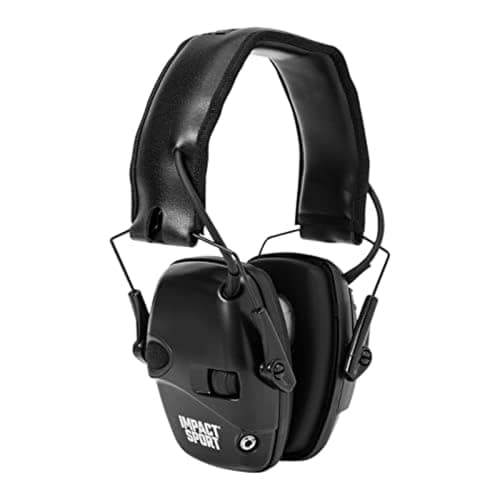
For hunting, start with an electronic earmuff — the Howard Leight Impact Sport is the one most hunters end up owning, at a published NRR of 22 dB with amplification that cuts the instant an impulse reaches 82 dB. Switch to in-ear protection only when a muff genuinely gets in the way of mounting the gun, which for some shooters it genuinely does. At a busy range, the answer changes again: a high-blocking passive muff, or plugs and muffs together.
The reason the question is harder than it looks is that the two form factors fail in opposite ways. A muff has to seal against the side of the head, which hats, glasses arms and a rifle stock all interfere with. A plug has to be inserted correctly, which is a skill, and nobody — including the wearer — can see whether they got it right. Published ratings assume neither of those went wrong.
Below: how the two compare on the things that decide a real-world outcome, three picks with the manufacturers' published ratings, and the case for wearing both. For the category ranked rather than compared, see best hunting hearing protection.
Howard Leight Impact Sport Electronic Earmuff
The electronic muff most hunters end up owning, and the right default. Published spec is NRR 22 dB in both on and off mode, 4x amplification of quiet sound, and electronics that shut the amplification off the moment an impulse sound reaches 82 dB - which is the whole trick: the hunter hears the woods, hears a companion, and never hears the shot at full value. A muff is also the form factor you can verify from the outside, which matters when you are buying for somebody else or supervising a young shooter. Honest cons: 22 dB is the lowest published figure on this page, the trade for the electronics; the cups can catch a long gun stock on the mount, which is the single best reason to consider in-ear instead; and like any powered muff, flat batteries drop it back to passive performance.
#ad · Price as of October 5, 2026. We may earn a commission.
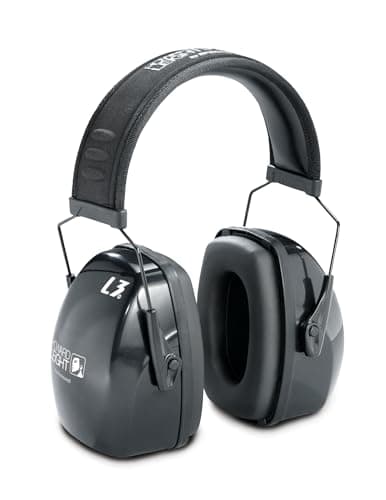
Howard Leight Leightning L3 Shooting Earmuff
The pick when blocking is the only job - an indoor range, a busy firing line, or shooting alongside centrefire rifles. Published NRR is 30 dB, substantially more raw attenuation than anything powered here, achieved with an Air Flow Control design that lowers levels across the frequency range without making the cups bigger. No batteries, nothing to fail, and it is the pair we would put on anybody who will be next to other people's rifles for several hours. Honest cons: it blocks everything, including the conversation and the approaching animal, which makes it a poor hunting muff and a poor choice for a beginner being coached; the bulkier cups interfere more with a gun mount; and there is no amplification to help an older hunter hear the woods.
#ad · Price as of October 5, 2026. We may earn a commission.
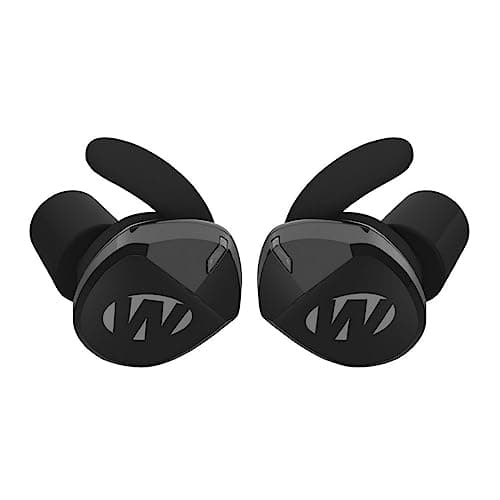
Walker's Silencer 2.0 Electronic Earbuds
The pick for the shooter a muff genuinely does not suit. These are electronic earbuds with a published NRR of 24 dB - higher than either electronic muff here - and nothing under the cheek, which is the point: no cup to collide with a stock, no interference with a cheek weld, and no gap created by a hat brim or the arm of a pair of glasses. For a hunter who has quietly stopped wearing protection because muffs ruin their gun mount, this is the fix. Honest cons: in-ear protection depends entirely on correct insertion and nobody can see whether you got it right, which makes it the wrong choice for a child or a beginner; small electronic buds are easy to lose in the leaves and need charging; and a bud that works loose mid-sit gives no warning that it has.
#ad · Price as of October 5, 2026. We may earn a commission.
How the two actually compare
| Earmuffs | Earplugs / in-ear | |
|---|---|---|
| Protection in practice | More consistent - it either seals or you can see that it does not | Higher ceiling, but depends on insertion you cannot verify |
| Gun stock and cheek weld | Can catch the stock on the mount | Nothing under the cheek - the main reason to choose them |
| Hats, glasses, hoods | All three can break the seal | Unaffected |
| Hearing the woods | Electronic models amplify ambient sound | Electronic models amplify too |
| Cold weather | Warm, and stay put | Nothing over the ears, so no warmth |
| Supervising a beginner | You can see it is on and sealed | You cannot tell if it is in properly |
| Losing it | Hard to lose | Easy to lose, easy to drop in leaves |
Read that table with one thing in mind: the published rating is a laboratory figure obtained with a correct fit. The gap between a plug's rating and the protection a hurried hunter actually gets from it is the biggest unmeasured variable in this comparison, and it is why we recommend a muff first for most people despite the lower numbers.
Published NRR on the three picks
| Pick | Type | Published NRR | Powered |
|---|---|---|---|
| Howard Leight Leightning L3 | Passive earmuff | 30 dB | No |
| Walker's Silencer 2.0 | Electronic in-ear | 24 dB | Yes |
| Howard Leight Impact Sport | Electronic earmuff | 22 dB | Yes |
Those are the manufacturers' own figures, cited in the sources below; we have not measured any of them. Notice the ordering, because it is the opposite of what most people assume: the cheapest, simplest, unpowered muff blocks the most, and the electronics on the other two cost you a few decibels of raw attenuation in exchange for being able to hear.
When to wear both
Doubling up — plugs under muffs — is standard practice at indoor ranges and around muzzle brakes, and it is worth knowing about rather than treating as paranoia. Noise damage is a function of level and duration, as NIOSH sets out, and an indoor range concentrates both.
Two honest caveats. First, wearing both does not add the two ratings together; the combination gives you more protection than either alone, but far less than the sum, and no honest source will give you a single number for it. Second, doubling up removes your ability to hear instruction, which has a real cost with a new shooter — so it suits a hunter practicing alone better than a parent coaching a child. Our best hearing protection for youth hunters page works through that trade-off properly.
The thing both sides get wrong: wearing it at all
Plenty of hunters still take a shot at a deer with nothing in their ears, on the reasoning that it is one shot a year. The NIDCD is explicit that noise-induced hearing loss comes from both one-time impulse sounds and repeated exposure, and that it is permanent — so "only one shot" is a statement about frequency, not about safety.
The practical answer is electronic protection, in whichever form factor the hunter will actually keep on. Amplified ambient sound means a hunter hears the woods better than with bare ears, which removes the one genuine argument against wearing protection while hunting. That is also why the question "which rates higher" matters less than the question which one will still be on their head when the deer walks in. Our do you need ear protection for hunting page makes that case at length.
Buying either as a gift
Hearing protection is one of the most-used and least-bought hunting gifts, and it has no sizing problem worth speaking of. If you are buying for somebody else, buy a muff: it fits nearly everyone, it is obvious how to use it, and you are not betting on whether they will insert a plug correctly. Save the in-ear option for a hunter who has specifically complained that muffs get in the way of their gun.
Most of this page sits inside hunting gifts under $100, and the brand question is settled head-to-head in Howard Leight vs Walker's Razor.
How we chose these
We do not run a test lab and we have not measured a decibel. Every NRR figure, amplification claim and compression threshold above is the manufacturer's published specification, cited below, and the recommendations are reasoning from those specifications plus published guidance from NIOSH and the NIDCD on how noise damage works. Nothing here has a rating, a score or an award from us. Our method is on the how we choose page, and prices are pulled live from Amazon and stamped with the date they were captured.
Keep browsing
Best hunting hearing protection ranks the full field with published ratings on each, best hearing protection for youth hunters covers the one case where fit decides everything, and best hunting gadgets and tools covers the rest of the small kit a hunter actually uses.
Frequently asked questions
Are earplugs or earmuffs better for hunting?
For most hunters, an electronic earmuff - it seals reliably, you can see that it is on, and amplification lets you hear the woods right up until the shot. In-ear protection is the better answer for a shooter whose gun mount a muff interferes with, because there is nothing under the cheek to disturb a cheek weld.
Do earplugs protect as well as earmuffs?
On paper they can protect more - the in-ear pick here publishes 24 dB against 22 dB for the electronic muff. In practice a muff is more consistent, because a plug depends entirely on correct insertion that nobody, including the wearer, can verify. The published ratings all assume a correct fit.
Can you wear earplugs and earmuffs at the same time?
Yes, and it is standard practice at indoor ranges and around muzzle brakes. Two caveats: the protection does not add up to the sum of the two ratings, only to more than either alone, and doubling up removes your ability to hear instruction - which matters if you are coaching a beginner.
What NRR do I need for shooting?
More than you will get from a protector that does not fit. Among the picks here, the passive muff publishes 30 dB, the electronic in-ear 24 dB and the electronic muff 22 dB. The electronics cost a few decibels of raw blocking in exchange for letting you hear, which is usually the right trade while hunting and the wrong one on a busy indoor range.
Why do muffs interfere with shooting a rifle?
The cup can catch the stock as the gun comes up, which pushes the muff and breaks the seal, or pushes your head off a consistent cheek weld. Slim-cup muffs reduce the problem and in-ear protection removes it entirely. If a hunter has quietly stopped wearing protection, this is usually why.
Is one shot a year loud enough to damage hearing?
Yes. Noise-induced hearing loss is caused by both one-time impulse sounds and repeated exposure, and it is permanent - so a single unprotected shot per season is a statement about how often, not about whether it is safe. Electronic protection solves the practical objection, because it lets a hunter hear the woods better than bare ears do.
Sources
- Honeywell Store - published specifications for the Impact Sport electronic earmuff (NRR 22 dB, 4x amplification, 82 dB compression threshold)
- Howard Leight Shooting Sports - published specifications for the Leightning L3 shooting earmuff (NRR 30 dB, Air Flow Control)
- Bass Pro Shops - published specifications for the Walker's Silencer 2.0 electronic ear buds (NRR 24 dB)
- NIOSH (CDC) - noise and hearing loss prevention: level and duration of exposure
- NIDCD - noise-induced hearing loss: caused by both impulse and repeated exposure, and permanent
- OSHA - occupational noise exposure guidance