Gear Guides
Howard Leight vs Walker's Razor: Which Electronic Earmuff?
The two electronic muffs almost every hunter ends up choosing between, separated by about one decibel on paper and by something much more practical in the field. Here is the difference that actually decides it.
If you have spent any time reading about hearing protection for hunting, two pairs come up over and over: the Howard Leight Impact Sport and the Walker's Razor Slim. They sit at similar prices, they do the same clever thing — amplify quiet sound so you can hear the woods, then clamp down the instant a shot goes off — and on the published numbers they are almost identical.
Which means the decision is not really about decibels. It is about the shape of the cup against a gun stock, what the controls do, and what happens when the batteries die. Those are the things that decide whether a pair gets worn or gets left in the truck, and a pair left in the truck protects nobody.
This page compares the two on their manufacturers' own published specifications, adds the third pair that beats both of them at raw blocking, and says which one we would give to whom. The full category, including earbuds and youth sizes, is in our best hearing protection for hunting roundup.
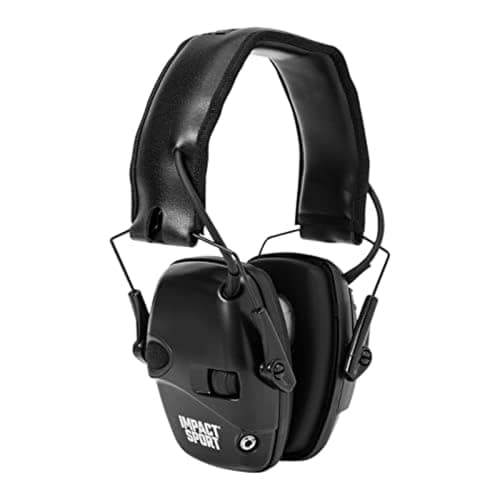
- 1Howard Leight Impact Sport Electronic EarmuffThe default pair, and the one we would put in a box for someone else. Honeywell publishes an NRR of 22 dB in both on and off modes, 4x amplification of quiet sound, and electronics that shut the amplification off the moment an impulse sound reaches 82 dB - so the hunter hears the woods right up to the shot and never hears the shot at full value. It runs on two AAA batteries with an automatic four-hour shut-off, and the cutaway at the bottom of the earcup exists specifically to clear the stock of a long gun. What makes it the gift pick is boring and important: it is the muff most hunters already recognise, and AAA cells are available at any gas station. Honest cons: 22 dB is mid-pack protection; the AAA cells are not rechargeable; and this is the Med/Large size, so it can sit loose on a small head.Best for: Best overall, and the safer gift
- 2
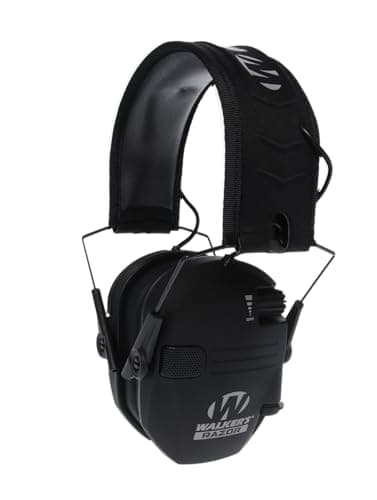 Walker's Razor Slim Electronic MuffThe pair that made electronic protection normal by costing roughly what a plain passive muff used to. Walker's publishes an NRR of 23 dB, two hi-gain omnidirectional microphones feeding full dynamic range speakers, sound-activated compression that clamps a spike in 0.02 seconds, independent volume controls for each ear, an audio input jack, and two AAA batteries in the box. The reason to choose it over the Impact Sport is physical rather than electronic: the ultra-low-profile cups fold flat and are genuinely easier to mount a rifle or shotgun under, which matters if the recipient shoots rather than only sits. Honest cons: slim cups mean less space inside and they get uncomfortable on a long day sooner than a fatter muff; the headband padding is thin; and the amplification has an audible hiss the pricier sets do not.Best for: Best under a long gun
 - 3
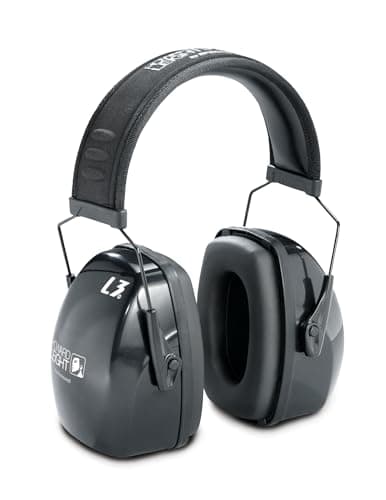 Howard Leight Leightning L3 Shooting EarmuffWorth including because the honest answer to 'which of these two protects best' is 'neither, by a wide margin'. Honeywell rates the Leightning L3 at NRR 30 dB - substantially more raw attenuation than anything powered on this page - using an Air Flow Control design that lowers levels across the frequency range without making the cups bigger. There are no batteries to die, no circuitry to soak in rain, and no hiss. Snap-in cushions replace when they wear and the telescopic headband is steel-wire, so it survives a decade in a truck. Honest cons: it is passive, so it blocks conversation and the approaching deer along with the muzzle blast - this is a range pair and a spare-in-the-truck pair far more than a sit-in-the-woods pair - and the deeper cups catch on a stock more readily.Best for: Best raw protection - and the honest third answer
| # | Gift | Best for | Price |
|---|---|---|---|
| 1 | Howard Leight Impact Sport Electronic EarmuffThe default pair, and the one we would put in a box for someone else. Honeywell publishes an NRR of 22 dB in both on and off modes, 4x amplification of quiet sound, and electronics that shut the amplification off the moment an impulse sound reaches 82 dB - so the hunter hears the woods right up to the shot and never hears the shot at full value. It runs on two AAA batteries with an automatic four-hour shut-off, and the cutaway at the bottom of the earcup exists specifically to clear the stock of a long gun. What makes it the gift pick is boring and important: it is the muff most hunters already recognise, and AAA cells are available at any gas station. Honest cons: 22 dB is mid-pack protection; the AAA cells are not rechargeable; and this is the Med/Large size, so it can sit loose on a small head. | Best overall, and the safer gift | $60.00View on Amazon |
| 2 | Walker's Razor Slim Electronic MuffThe pair that made electronic protection normal by costing roughly what a plain passive muff used to. Walker's publishes an NRR of 23 dB, two hi-gain omnidirectional microphones feeding full dynamic range speakers, sound-activated compression that clamps a spike in 0.02 seconds, independent volume controls for each ear, an audio input jack, and two AAA batteries in the box. The reason to choose it over the Impact Sport is physical rather than electronic: the ultra-low-profile cups fold flat and are genuinely easier to mount a rifle or shotgun under, which matters if the recipient shoots rather than only sits. Honest cons: slim cups mean less space inside and they get uncomfortable on a long day sooner than a fatter muff; the headband padding is thin; and the amplification has an audible hiss the pricier sets do not. | Best under a long gun | $35.09View on Amazon |
| 3 | Howard Leight Leightning L3 Shooting EarmuffWorth including because the honest answer to 'which of these two protects best' is 'neither, by a wide margin'. Honeywell rates the Leightning L3 at NRR 30 dB - substantially more raw attenuation than anything powered on this page - using an Air Flow Control design that lowers levels across the frequency range without making the cups bigger. There are no batteries to die, no circuitry to soak in rain, and no hiss. Snap-in cushions replace when they wear and the telescopic headband is steel-wire, so it survives a decade in a truck. Honest cons: it is passive, so it blocks conversation and the approaching deer along with the muzzle blast - this is a range pair and a spare-in-the-truck pair far more than a sit-in-the-woods pair - and the deeper cups catch on a stock more readily. | Best raw protection - and the honest third answer | $41.75View on Amazon |
Prices from Amazon as of Sep 17, 2026 and change often — the button always opens the current listing. Some links earn us a commission at no extra cost to you.
Howard Leight Impact Sport Electronic Earmuff
The default pair, and the one we would put in a box for someone else. Honeywell publishes an NRR of 22 dB in both on and off modes, 4x amplification of quiet sound, and electronics that shut the amplification off the moment an impulse sound reaches 82 dB - so the hunter hears the woods right up to the shot and never hears the shot at full value. It runs on two AAA batteries with an automatic four-hour shut-off, and the cutaway at the bottom of the earcup exists specifically to clear the stock of a long gun. What makes it the gift pick is boring and important: it is the muff most hunters already recognise, and AAA cells are available at any gas station. Honest cons: 22 dB is mid-pack protection; the AAA cells are not rechargeable; and this is the Med/Large size, so it can sit loose on a small head.
#ad · Price as of Sep 17, 2026. We may earn a commission.
Walker's Razor Slim Electronic Muff
The pair that made electronic protection normal by costing roughly what a plain passive muff used to. Walker's publishes an NRR of 23 dB, two hi-gain omnidirectional microphones feeding full dynamic range speakers, sound-activated compression that clamps a spike in 0.02 seconds, independent volume controls for each ear, an audio input jack, and two AAA batteries in the box. The reason to choose it over the Impact Sport is physical rather than electronic: the ultra-low-profile cups fold flat and are genuinely easier to mount a rifle or shotgun under, which matters if the recipient shoots rather than only sits. Honest cons: slim cups mean less space inside and they get uncomfortable on a long day sooner than a fatter muff; the headband padding is thin; and the amplification has an audible hiss the pricier sets do not.
#ad · Price as of Sep 17, 2026. We may earn a commission.
Howard Leight Leightning L3 Shooting Earmuff
Worth including because the honest answer to 'which of these two protects best' is 'neither, by a wide margin'. Honeywell rates the Leightning L3 at NRR 30 dB - substantially more raw attenuation than anything powered on this page - using an Air Flow Control design that lowers levels across the frequency range without making the cups bigger. There are no batteries to die, no circuitry to soak in rain, and no hiss. Snap-in cushions replace when they wear and the telescopic headband is steel-wire, so it survives a decade in a truck. Honest cons: it is passive, so it blocks conversation and the approaching deer along with the muzzle blast - this is a range pair and a spare-in-the-truck pair far more than a sit-in-the-woods pair - and the deeper cups catch on a stock more readily.
#ad · Price as of Sep 17, 2026. We may earn a commission.
The short answer
Buy the Impact Sport if you are buying for someone else or the person mostly sits and listens. Buy the Razor Slim if they shoot a lot and want the lowest-profile cup under a stock. On published protection the two are within one decibel of each other, which is not a meaningful difference in the field. If what you actually want is maximum blocking — a range pair, a spare in the truck, a pair for someone who is not trying to hear anything — skip both and buy the passive L3.
Side by side, on published numbers
| Howard Leight Impact Sport | Walker's Razor Slim | Howard Leight L3 | |
|---|---|---|---|
| Type | Electronic | Electronic | Passive (no electronics) |
| Published NRR | 22 dB (on and off) | 23 dB | 30 dB |
| Amplification | 4x quiet sound | Dual hi-gain omnidirectional mics | None |
| Shot response | Amplification cuts at 82 dB impulse | Sound-activated compression in 0.02 s | Constant attenuation |
| Power | 2 x AAA, 4-hour auto shut-off | 2 x AAA (included) | None |
| Cup profile | Cutaway to clear a long-gun stock | Ultra-low-profile, folds flat | Deeper cups |
| Extras | — | Independent per-ear volume, audio input jack | Steel-wire telescopic headband, snap-in cushions |
What NRR really means (and why 22 does not mean 22)
The Noise Reduction Rating printed on the box is a laboratory figure, produced under ideal fit conditions that nobody reproduces while climbing into a treestand with a hat on. NIOSH — the federal institute that sets occupational noise criteria — recommends derating labelled NRR values for real-world use, by 25 per cent for earmuffs and considerably more for earplugs, precisely because the lab number is optimistic.
Two practical consequences for a gift buyer. First, the one-decibel gap between these two muffs is noise, not signal — do not choose on it. Second, fit beats rating: a 30 dB muff sitting on a hat brim, or perched on a head it is too big for, protects worse than a well-seated 22 dB muff. This is why a pair that is comfortable enough to keep on is the pair that works, and it is the entire reason the cup profile matters more than the specification sheet.
Electronic or passive, for a hunter?
The choice follows from what the person is doing with their ears.
Sitting in the woods waiting for an animal:electronic, without question. A passive muff removes exactly the sound the hunter is there for — a twig, a footstep, a bird going quiet. Amplification is the feature, and the shot-clamping is what makes it safe.
At a range, sighting in before the season:passive. Nobody needs to hear subtle woodland noise at a bench, and the L3's 30 dB does more for the ears than either electronic pair.
Waterfowl hunting, in a blind, in the rain: passive is the more robust choice, and there is a good case for keeping a cheap passive pair in a bag regardless of what else they own. Electronics and standing water are not friends.
How we chose these
We do not run a test lab and we are not going to invent one. Every NRR figure, response time and feature on this page is the manufacturer's own published specification, cited in the sources at the bottom, and the derating note comes from NIOSH's published criteria rather than from us. No medical advice is given or implied here — this is a buying comparison. Our method is on the how we choose page, and prices are pulled live and stamped with the date they were captured.
Buying a pair as a gift
Hearing protection is an unusually good present for a hunter precisely because it is the thing they know they should own and keep not buying. Three notes that make it land better.
Size matters more than you think.The Impact Sport is a Med/Large. For a smaller head — and for anyone under about twelve — an adult muff does not seal, and a muff that does not seal is not protection at any rating. The youth-sized option is covered in the full hearing protection roundup.
Add batteries. Both electronic pairs run on AAA cells. A pack taped to the box turns a present into something usable that afternoon.
It pairs well. Muffs sit neatly beside a knife or a stocking stuffer to make a fuller gift, and they are one of the few pieces of gear that fit any hunter regardless of what they hunt.
Keep browsing
The whole category — including electronic earbuds, youth sizing and the premium Bluetooth option — is in best hearing protection for hunting, and do you need ear protection for hunting answers the question one level up. For gifts that suit any hunter regardless of quarry, best hunting gadgets and tools and hunting gifts for men are the broader lists.
Frequently asked questions
Is Howard Leight or Walker's Razor better for hunting?
On published protection they are within one decibel - Honeywell rates the Impact Sport at NRR 22 dB and Walker's rates the Razor Slim at 23 dB - so the decision comes down to fit. Choose the Impact Sport as the safer, more recognised gift and for someone who mostly sits and listens; choose the Razor Slim for its ultra-low-profile cups if they shoot a lot under a long gun.
What NRR do I need for hunting?
More than the label suggests, because NRR is a laboratory figure. NIOSH recommends derating published earmuff ratings by about 25 per cent for real-world use, and much more for earplugs. More usefully: fit beats rating. A well-seated 22 dB muff protects better than a 30 dB muff perched on a hat brim.
Do electronic earmuffs actually let you hear better?
That is the whole point of them. They amplify quiet sound - Honeywell publishes 4x amplification on the Impact Sport - so a hunter hears a twig or a footstep more clearly than with bare ears, then cut that amplification the instant an impulse sound arrives. Walker's publishes a 0.02-second compression response; Honeywell's electronics cut at an 82 dB impulse.
Are passive earmuffs better than electronic ones for hunting?
They block more - the passive Leightning L3 is rated NRR 30 dB against 22 and 23 for the electronic pairs - but they block the animal too, which is the opposite of what a hunter sitting in the woods wants. Passive is the better choice at the range, in the rain, and as a spare in the truck.
Can one gunshot damage your hearing?
Yes. The CDC notes that loud impulse noise can cause immediate and permanent hearing damage, and that noise-induced hearing loss does not recover. That is why electronic muffs exist for hunting at all - they remove the reason people skip protection, which is wanting to hear an animal approaching.
Do electronic earmuffs work for kids?
Only if they are sized for a child. An adult muff on a small head does not seal, and an unsealed muff offers little protection whatever its rating - which is why youth-specific models exist rather than shrunken adult headbands. The Impact Sport in particular is a Med/Large and is the wrong buy for a young hunter.
Sources
- Honeywell Howard Leight - Impact Sport electronic earmuff (R-02524): NRR 22 dB, 4x amplification, 82 dB shut-off, 2 x AAA with 4-hour auto shut-off
- Walker's Game Ear - Razor Slim electronic ear muff: NRR 23 dB, dual hi-gain omnidirectional microphones, 0.02 s sound-activated compression, independent volume controls, audio input jack
- Howard Leight Shooting Sports - Leightning L3 shooting earmuff (R-03318): NRR 30 dB, Air Flow Control, steel-wire telescopic headband
- NIOSH - Criteria for a Recommended Standard: Occupational Noise Exposure (1998), on NRR labelling and recommended derating
- CDC - Noise-induced hearing loss: impulse noise can cause immediate and permanent damage