Gear Guides
The Best Hearing Protection for Hunting
Hunters lose their hearing slowly, one unprotected shot at a time, and almost nobody buys themselves a decent pair of muffs. It is the most useful gift on this site that the recipient will never ask for - here is what to get, and the one thing to check before you buy.
Ask a group of hunters over fifty to hear you across a room and watch how many lean in. Hunting is one of the few pursuits where the noise arrives without warning, in single enormous spikes, and where the culture spent decades treating protection as something for the range rather than the woods. The result is a generation of people who hear the television at a volume that annoys everyone else in the house.
The reason it happened is simple and worth understanding before you buy: old-fashioned muffs made hunting harder. They blocked the rustle, the footstep and the conversation along with the shot, so hunters took them off and left them off. Electronic protection fixed that years ago — it amplifies quiet sound and clamps down the instant a shot goes — and a large share of hunters still don't own a pair. That gap is exactly why this is such a good gift: it fits any head, it suits any taste, and it protects something they cannot buy back. Here are the pairs worth giving, with a live price on each.
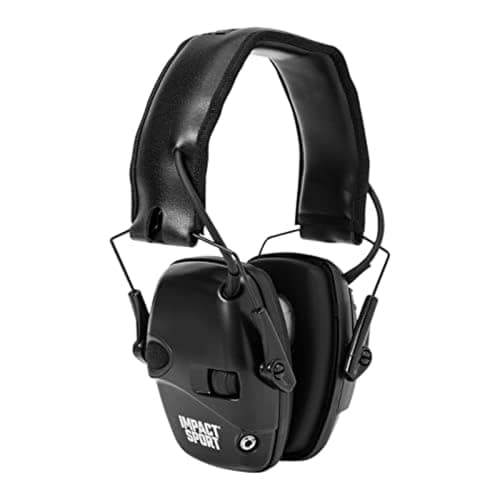
- 1Howard Leight Impact Sport Electronic EarmuffThe default pair, and the one to buy if you're buying one. Honeywell publishes an NRR of 22 dB in both on and off mode, 4x amplification of quiet sound, and electronics that shut the amplification off automatically the moment an impulse sound reaches 82 dB - which is the whole trick, because it means the hunter hears the woods right up until the shot and never hears the shot at full value. It runs on 2 AAA batteries with an automatic shut-off after four hours, and the cutaway at the bottom of the earcup is there specifically to clear the stock of a long gun. Honest cons: 22 dB is mid-pack protection - the passive pick below blocks considerably more - the AAA cells aren't rechargeable, and this is the Med/Large size, so it can sit loose on a small head.Best for: Best overall
- 2
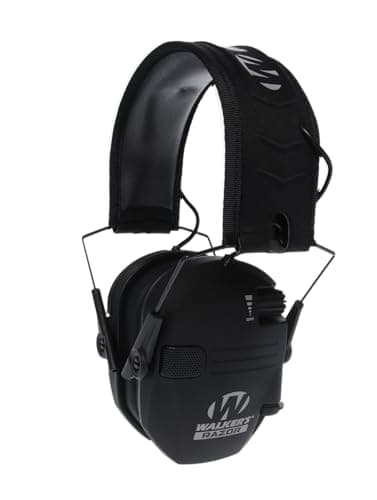 Walker's Razor Slim Electronic MuffThe pair that made electronic protection normal, because it costs about what a plain passive muff used to. Walker's publishes an NRR of 23 dB, two hi-gain omnidirectional microphones feeding full dynamic range speakers, sound-activated compression that clamps a spike in 0.02 seconds, independent volume controls per ear, an audio input jack, and 2 AAA batteries included. The ultra-low-profile cups fold flat and are genuinely easier to shoot a rifle or shotgun under than a standard muff. Honest cons: slim cups mean less space inside, and they get uncomfortable on a long day sooner than a fatter muff does; the headband padding is thin; the amplification has an audible hiss that the pricier sets don't; and there's no Bluetooth at this price.Best for: Best value electronic
 - 3
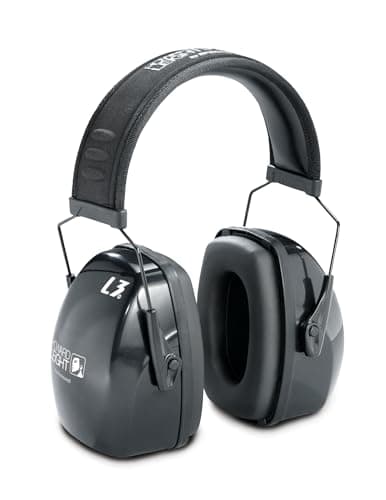 Howard Leight Leightning L3 Shooting EarmuffSometimes the right answer is not electronic. Honeywell rates the Leightning L3 at NRR 30 dB - substantially more raw attenuation than anything powered on this page - using an Air Flow Control design that lowers levels across the frequency range without making the cups bigger. There are no batteries to die, no circuitry to soak, and no hiss. Snap-in cushions replace when they wear and the telescopic headband is steel-wire, so it survives being thrown in a truck for a decade. Honest cons: it is passive, which means it blocks the conversation and the approaching deer along with the muzzle blast - this is a range pair and a spare-in-the-truck pair far more than a sit-in-the-woods pair - and the deeper cups are more likely to catch on a stock when the gun comes up.Best for: Best with no batteries
 - 4
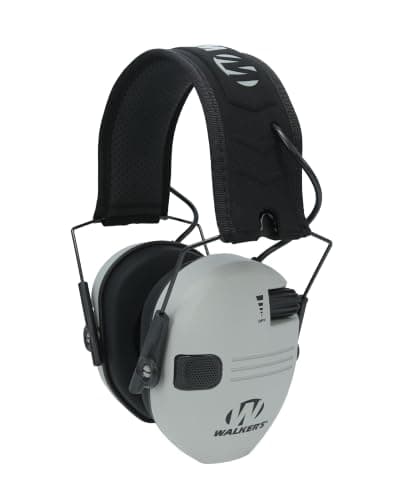 Walker's Razor Junior Youth Electronic MuffThe pick that actually solves a real problem instead of pretending to. Adult muffs on a child's head don't seal, and a hearing protector that doesn't seal isn't a hearing protector at any rating - so Walker's built the Razor Junior around youth head sizes from the start rather than shrinking the headband on an adult pair. Published spec is NRR 23 dB with the same 0.02-second sound-activated compression, dual hi-gain microphones and low-profile cups as the adult Razor, on a padded headband with a metal wire frame. If you are buying for a kid who has started going along on hunts, buy this before you buy them anything else. Honest cons: youth sizing has an expiry date and they will outgrow it; the thin headband padding is the same compromise as the adult Razor; and the smaller cups leave less passive protection to fall back on if the batteries die.Best for: Best for a young hunter
 - 5
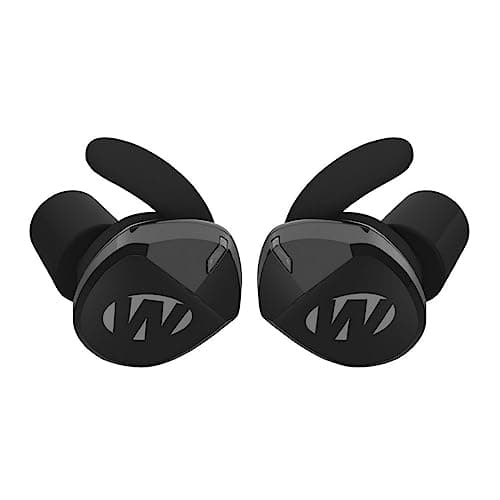 Walker's Silencer 2.0 Electronic EarbudsFor the hunter who has tried muffs and hates them. Nothing sits between the cheek and the stock, nothing snags on a hood or a hat brim, and nothing has to come off to raise a gun - which for some shooters is the difference between wearing protection and quietly not wearing it. These are rechargeable electronic buds with sound-activated compression, Bluetooth, and three sizes of locking fin in the box; Walker's publishes an NRR of 24 dB for the Silencer 2.0 line. Honest cons: buds are far easier to lose than a muff and a lot of people do; they need charging rather than a fresh AAA out of the glovebox; the fit is fussy and an imperfect seal makes the rating meaningless; and they cost more than a very good pair of muffs.Best for: Best in-ear
 - 6
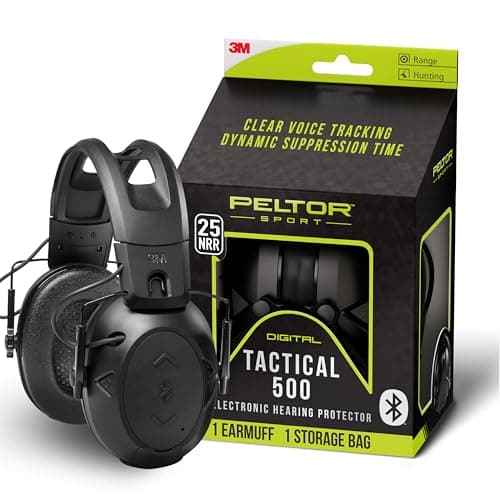 Peltor Sport Tactical 500 Bluetooth EarmuffsThe one to buy for somebody who shoots a lot, not just hunts a little. 3M's electronics are the genuine differentiator: Dynamic Suppression Time measures the energy in each gunshot and sets the suppression length accordingly rather than using a fixed clamp, and Clear Voice Tracking works to pull speech out of background noise instead of amplifying everything equally. It adds Bluetooth for calls, low-profile cups with long-gun cutouts, a vented headband for wearing over a cap, and recessed microphones to cut wind noise. On protection: 3M's own documentation for the Sport Tactical 500 (TAC500-OTH) publishes NRR 26 dB, while this listing states 25 dB - either way it is the best-rated electronic pair here. Honest cons: it costs three to four times the Razor Slim, it is heavier on the head, the Bluetooth is mostly a range-and-driving feature rather than a woods one, and more electronics means more to fail in the wet.Best for: Splurge
| # | Gift | Best for | Price |
|---|---|---|---|
| 1 | Howard Leight Impact Sport Electronic EarmuffThe default pair, and the one to buy if you're buying one. Honeywell publishes an NRR of 22 dB in both on and off mode, 4x amplification of quiet sound, and electronics that shut the amplification off automatically the moment an impulse sound reaches 82 dB - which is the whole trick, because it means the hunter hears the woods right up until the shot and never hears the shot at full value. It runs on 2 AAA batteries with an automatic shut-off after four hours, and the cutaway at the bottom of the earcup is there specifically to clear the stock of a long gun. Honest cons: 22 dB is mid-pack protection - the passive pick below blocks considerably more - the AAA cells aren't rechargeable, and this is the Med/Large size, so it can sit loose on a small head. | Best overall | $60.00View on Amazon |
| 2 | Walker's Razor Slim Electronic MuffThe pair that made electronic protection normal, because it costs about what a plain passive muff used to. Walker's publishes an NRR of 23 dB, two hi-gain omnidirectional microphones feeding full dynamic range speakers, sound-activated compression that clamps a spike in 0.02 seconds, independent volume controls per ear, an audio input jack, and 2 AAA batteries included. The ultra-low-profile cups fold flat and are genuinely easier to shoot a rifle or shotgun under than a standard muff. Honest cons: slim cups mean less space inside, and they get uncomfortable on a long day sooner than a fatter muff does; the headband padding is thin; the amplification has an audible hiss that the pricier sets don't; and there's no Bluetooth at this price. | Best value electronic | $31.48View on Amazon |
| 3 | Howard Leight Leightning L3 Shooting EarmuffSometimes the right answer is not electronic. Honeywell rates the Leightning L3 at NRR 30 dB - substantially more raw attenuation than anything powered on this page - using an Air Flow Control design that lowers levels across the frequency range without making the cups bigger. There are no batteries to die, no circuitry to soak, and no hiss. Snap-in cushions replace when they wear and the telescopic headband is steel-wire, so it survives being thrown in a truck for a decade. Honest cons: it is passive, which means it blocks the conversation and the approaching deer along with the muzzle blast - this is a range pair and a spare-in-the-truck pair far more than a sit-in-the-woods pair - and the deeper cups are more likely to catch on a stock when the gun comes up. | Best with no batteries | $39.32View on Amazon |
| 4 | Walker's Razor Junior Youth Electronic MuffThe pick that actually solves a real problem instead of pretending to. Adult muffs on a child's head don't seal, and a hearing protector that doesn't seal isn't a hearing protector at any rating - so Walker's built the Razor Junior around youth head sizes from the start rather than shrinking the headband on an adult pair. Published spec is NRR 23 dB with the same 0.02-second sound-activated compression, dual hi-gain microphones and low-profile cups as the adult Razor, on a padded headband with a metal wire frame. If you are buying for a kid who has started going along on hunts, buy this before you buy them anything else. Honest cons: youth sizing has an expiry date and they will outgrow it; the thin headband padding is the same compromise as the adult Razor; and the smaller cups leave less passive protection to fall back on if the batteries die. | Best for a young hunter | $45.15View on Amazon |
| 5 | Walker's Silencer 2.0 Electronic EarbudsFor the hunter who has tried muffs and hates them. Nothing sits between the cheek and the stock, nothing snags on a hood or a hat brim, and nothing has to come off to raise a gun - which for some shooters is the difference between wearing protection and quietly not wearing it. These are rechargeable electronic buds with sound-activated compression, Bluetooth, and three sizes of locking fin in the box; Walker's publishes an NRR of 24 dB for the Silencer 2.0 line. Honest cons: buds are far easier to lose than a muff and a lot of people do; they need charging rather than a fresh AAA out of the glovebox; the fit is fussy and an imperfect seal makes the rating meaningless; and they cost more than a very good pair of muffs. | Best in-ear | $130.23View on Amazon |
| 6 | Peltor Sport Tactical 500 Bluetooth EarmuffsThe one to buy for somebody who shoots a lot, not just hunts a little. 3M's electronics are the genuine differentiator: Dynamic Suppression Time measures the energy in each gunshot and sets the suppression length accordingly rather than using a fixed clamp, and Clear Voice Tracking works to pull speech out of background noise instead of amplifying everything equally. It adds Bluetooth for calls, low-profile cups with long-gun cutouts, a vented headband for wearing over a cap, and recessed microphones to cut wind noise. On protection: 3M's own documentation for the Sport Tactical 500 (TAC500-OTH) publishes NRR 26 dB, while this listing states 25 dB - either way it is the best-rated electronic pair here. Honest cons: it costs three to four times the Razor Slim, it is heavier on the head, the Bluetooth is mostly a range-and-driving feature rather than a woods one, and more electronics means more to fail in the wet. | Splurge | $146.88View on Amazon |
Prices from Amazon as of October 24, 2026 and change often — the button always opens the current listing. Some links earn us a commission at no extra cost to you.
Howard Leight Impact Sport Electronic Earmuff
The default pair, and the one to buy if you're buying one. Honeywell publishes an NRR of 22 dB in both on and off mode, 4x amplification of quiet sound, and electronics that shut the amplification off automatically the moment an impulse sound reaches 82 dB - which is the whole trick, because it means the hunter hears the woods right up until the shot and never hears the shot at full value. It runs on 2 AAA batteries with an automatic shut-off after four hours, and the cutaway at the bottom of the earcup is there specifically to clear the stock of a long gun. Honest cons: 22 dB is mid-pack protection - the passive pick below blocks considerably more - the AAA cells aren't rechargeable, and this is the Med/Large size, so it can sit loose on a small head.
#ad · Price as of October 24, 2026. We may earn a commission.
Walker's Razor Slim Electronic Muff
The pair that made electronic protection normal, because it costs about what a plain passive muff used to. Walker's publishes an NRR of 23 dB, two hi-gain omnidirectional microphones feeding full dynamic range speakers, sound-activated compression that clamps a spike in 0.02 seconds, independent volume controls per ear, an audio input jack, and 2 AAA batteries included. The ultra-low-profile cups fold flat and are genuinely easier to shoot a rifle or shotgun under than a standard muff. Honest cons: slim cups mean less space inside, and they get uncomfortable on a long day sooner than a fatter muff does; the headband padding is thin; the amplification has an audible hiss that the pricier sets don't; and there's no Bluetooth at this price.
#ad · Price as of October 24, 2026. We may earn a commission.
Howard Leight Leightning L3 Shooting Earmuff
Sometimes the right answer is not electronic. Honeywell rates the Leightning L3 at NRR 30 dB - substantially more raw attenuation than anything powered on this page - using an Air Flow Control design that lowers levels across the frequency range without making the cups bigger. There are no batteries to die, no circuitry to soak, and no hiss. Snap-in cushions replace when they wear and the telescopic headband is steel-wire, so it survives being thrown in a truck for a decade. Honest cons: it is passive, which means it blocks the conversation and the approaching deer along with the muzzle blast - this is a range pair and a spare-in-the-truck pair far more than a sit-in-the-woods pair - and the deeper cups are more likely to catch on a stock when the gun comes up.
#ad · Price as of October 24, 2026. We may earn a commission.
Walker's Razor Junior Youth Electronic Muff
The pick that actually solves a real problem instead of pretending to. Adult muffs on a child's head don't seal, and a hearing protector that doesn't seal isn't a hearing protector at any rating - so Walker's built the Razor Junior around youth head sizes from the start rather than shrinking the headband on an adult pair. Published spec is NRR 23 dB with the same 0.02-second sound-activated compression, dual hi-gain microphones and low-profile cups as the adult Razor, on a padded headband with a metal wire frame. If you are buying for a kid who has started going along on hunts, buy this before you buy them anything else. Honest cons: youth sizing has an expiry date and they will outgrow it; the thin headband padding is the same compromise as the adult Razor; and the smaller cups leave less passive protection to fall back on if the batteries die.
#ad · Price as of October 24, 2026. We may earn a commission.
Walker's Silencer 2.0 Electronic Earbuds
For the hunter who has tried muffs and hates them. Nothing sits between the cheek and the stock, nothing snags on a hood or a hat brim, and nothing has to come off to raise a gun - which for some shooters is the difference between wearing protection and quietly not wearing it. These are rechargeable electronic buds with sound-activated compression, Bluetooth, and three sizes of locking fin in the box; Walker's publishes an NRR of 24 dB for the Silencer 2.0 line. Honest cons: buds are far easier to lose than a muff and a lot of people do; they need charging rather than a fresh AAA out of the glovebox; the fit is fussy and an imperfect seal makes the rating meaningless; and they cost more than a very good pair of muffs.
#ad · Price as of October 24, 2026. We may earn a commission.
Peltor Sport Tactical 500 Bluetooth Earmuffs
The one to buy for somebody who shoots a lot, not just hunts a little. 3M's electronics are the genuine differentiator: Dynamic Suppression Time measures the energy in each gunshot and sets the suppression length accordingly rather than using a fixed clamp, and Clear Voice Tracking works to pull speech out of background noise instead of amplifying everything equally. It adds Bluetooth for calls, low-profile cups with long-gun cutouts, a vented headband for wearing over a cap, and recessed microphones to cut wind noise. On protection: 3M's own documentation for the Sport Tactical 500 (TAC500-OTH) publishes NRR 26 dB, while this listing states 25 dB - either way it is the best-rated electronic pair here. Honest cons: it costs three to four times the Razor Slim, it is heavier on the head, the Bluetooth is mostly a range-and-driving feature rather than a woods one, and more electronics means more to fail in the wet.
#ad · Price as of October 24, 2026. We may earn a commission.
How we chose these
We don't run an audiology lab, and we're not going to invent one. Every protection figure on this page is the manufacturer's own published NRR, cited in the sources at the bottom, and the picks are chosen on how well each pair suits a specific hunting situation — sitting still in the woods, standing at a bench, putting a young shooter behind a gun for the first time — rather than on a single "best" that doesn't exist. Our full method is on the how we choose page, and prices are pulled live rather than typed in.
Three brands cover five of the six picks, which is simply what the category looks like: Honeywell's Howard Leight line, Walker's and 3M's Peltor line have owned shooting hearing protection for a long time, and filling a slot with a lesser-known alternative to look even-handed would make this a worse guide, not a fairer one.
Why this is a better gift than it sounds
Noise-induced hearing loss is the injury hunters take most reliably and notice last. It arrives gradually, it is painless, and it does not repair itself — which is what separates it from every other risk in this hobby. You can replace a knife, a boot or a rifle. You cannot replace the hearing.
And unlike most safety gear, this one is genuinely pleasant to use. A modern electronic muff doesn't just protect — it makes a hunter hear better than they do with bare ears, because the microphones amplify the quiet end. Hunters who try a pair usually describe the same thing: they start hearing footsteps in leaves they used to miss entirely. That is a rare combination in a present, a thing that is good for someone and that they actually enjoy.
It is also almost impossible to get wrong as a gift. There is no size to guess beyond adult versus youth, no color that ruins it, and no chance the recipient already owns three — because most hunters own none.
Electronic or passive? This is the whole decision
Electronic muffs and buds contain microphones that amplify quiet sound and circuitry that cuts the amplification the instant a loud impulse arrives. The practical effect is that the hunter can hold a conversation, hear a squirrel in the leaves and hear a deer coming, and still be protected when the shot goes. For hunting specifically this is the right category, and it is the reason people wear protection now who wouldn't before.
Passive muffs are just foam, plastic and physics. They block more — the passive pick here is rated 30 dB against 22 to 26 for the electronic ones — and they never run out of battery. But they block everything, which is exactly why hunters take them off. They are excellent at a bench, on a range day, or sitting in a truck as the backup pair, and poor company on a quiet morning sit.
If you are buying one gift, buy electronic. If you are buying two, buy an electronic pair for hunting and a cheap passive pair to live in the truck.
What the NRR number actually means
Every hearing protector sold in the United States carries a Noise Reduction Rating, a single-number rating NIOSH describes as "required by law to be shown on the label of each hearing protector sold in the United States." Higher is more attenuation. That much is straightforward.
The part almost nobody tells you is that the number is a laboratory result, not a promise. Real people put protectors on imperfectly, over hair, under hat brims and around glasses arms, and NIOSH therefore recommends derating the printed figure — specifically, subtracting 25 percent from the labeled NRR for earmuffs, 50 percent for slow-recovery foam plugs, and 70 percent for other plugs.
Two useful conclusions for a gift-buyer come out of that. First, the gap between a 22 dB muff and a 26 dB muff is much smaller than the gap between a muff that seals and one that doesn't, so do not agonize over a few decibels. Second, plugs are penalized far harder than muffs in real-world use because they are so much easier to fit badly — which is the honest reason muffs lead this list and the in-ear pick carries a fit warning.
Muffs, buds or plugs — and the long gun problem
Muffs are the default. They are easy to put on right, easy to check at a glance, easy to share, and easy to take on and off. Their one real drawback is that a cup sitting on the side of the head is exactly where a rifle or shotgun stock wants to be when a hunter puts their cheek down — which is why every serious hunting muff on this page has a cut-away or low-profile cup, and why it is worth caring about that detail specifically.
Electronic buds solve the stock problem completely by not being there. The trade is fit: a bud that isn't seated properly protects far less than the box claims, and they are small enough to lose in a leaf pile.
Disposable foam plugs are the cheap backup everyone should have in a pack, and they are genuinely effective when rolled and inserted correctly — which, per the NIOSH derating above, is a real condition and not a formality. They're a sensible thing to tuck in alongside a gift rather than a gift in themselves.
What to check before you buy
Adult or youth head. This is the only sizing decision, and it matters more than any spec. An adult muff on a child does not seal and therefore does not work. Buy the youth pair for a young hunter.
Do they wear glasses? Eyeglass arms break a muff's seal — it is one of the most common real-world causes of a protector under-performing its rating. It is not a reason to avoid muffs, but it is a reason to favor a pair with soft, deep cushions, and a reason the in-ear option genuinely suits some people better.
Batteries or charging. AAA cells can be replaced in a truck at 5 a.m.; a rechargeable set cannot. If the person you're buying for is disorganized, that is an argument for the AAA muffs and against the buds.
Where they actually shoot. A hunter who fires two shots a season and sits still for forty hours wants amplification and comfort. Someone who spends afternoons at a range wants attenuation and a headband that survives it. They are different purchases.
What this gift can't do
Worth saying plainly, because it keeps the recommendation honest. Hearing protection prevents damage; it does not undo damage already done. If the person you're buying for is already asking people to repeat themselves, a pair of muffs is a good present and a hearing test is a better next step — that is a conversation for them and a professional, not for a gift guide.
And no protector works in a pack. The single biggest factor in whether this gift does anything is whether it is comfortable and convenient enough to stay on the head, which is the entire reason the electronic picks lead this list over the higher-rated passive one.
Keep browsing
If you're buying for a young or brand-new hunter, the youth muff above belongs with the rest of the picks on our hunting gifts for kids page and in best hunting gifts for beginners. And if the problem is that they already own everything obvious, hearing protection is one of the few genuinely useful blanks left — see gifts for hunters who have everything for the rest of them.
Choosing between the two electronic muffs at opposite ends of this page? Howard Leight Impact Sport vs Peltor Sport Tactical 500 puts them head to head on published NRR, how each handles the energy of a single shot, and whether the premium pair's voice separation is worth roughly double — the short version being that it depends entirely on how often the person is around gunfire.
Two companion pages. If the recipient is not yet convinced they need any of this, do you need ear protection for hunting answers the "I only fire two shots a season" objection with the published science rather than a lecture. And if you have narrowed it to the two electronic muffs most people choose between, Howard Leight vs Walker's Razor puts them side by side on published NRR, cup profile, controls and batteries.
Two follow-ups to this page. Earplugs vs earmuffs for hunting settles the form-factor question, including when wearing both is the right call, and best hearing protection for youth hunters covers the one case where fit matters more than the published rating.
Two more, both of which go deeper than this page can. What NRR do I need for hunting stops at the arithmetic rather than the platitude: it takes the published gunshot peak levels, applies the NIOSH derating rule to the ratings listed above, and shows what each one is actually worth against a rifle and against a shotgun. And best hearing protection for duck hunting is the one hunt that changes the answer on this page, because a parka hood pressed against an earcup breaks the seal and a shotgun stock shoves a deep cup off the ear every time the gun comes up.
Frequently asked questions
Do you really need hearing protection for hunting?
Yes, and it is the one hunting injury that never heals. A single unprotected shot can do permanent damage, and the loss builds quietly over seasons rather than announcing itself. The practical problem was always that old passive muffs blocked the sounds a hunter needs to hear, which is exactly what electronic protection fixed.
Electronic or passive ear protection for hunting?
Electronic, for hunting specifically. Electronic muffs amplify quiet sound so a hunter can still hear game, conversation and their surroundings, then clamp down the instant a shot goes off. Passive muffs block more on paper - the Howard Leight Leightning L3 is rated NRR 30 dB against 22 to 26 dB for the electronic picks - but they block everything, which is why hunters end up taking them off.
What NRR do you need for shooting?
Less than you might think, because fit matters more than the printed number. NIOSH recommends derating a labeled NRR to reflect real-world use - subtract 25 percent for earmuffs, 50 percent for slow-recovery foam plugs and 70 percent for other plugs - so a well-sealed 22 dB muff outperforms a badly fitted higher-rated one. Pick a protector the person will wear correctly, then worry about decibels.
Will electronic ear muffs let you hear a deer coming?
That is the point of them. The microphones amplify quiet sound, so most hunters report hearing footsteps in leaves more clearly with electronic muffs on than with bare ears. The Howard Leight Impact Sport, for example, publishes 4x amplification with the electronics cutting out automatically when an impulse sound reaches 82 dB.
Are electronic earbuds as good as earmuffs for shooting?
They solve a real problem and create a smaller one. Buds leave nothing between the cheek and a rifle or shotgun stock, which is why some hunters will wear them and won't wear muffs. But an earbud that isn't seated correctly protects far less than its rating suggests, and NIOSH derates plugs much more heavily than muffs for exactly that reason. Buy buds for someone who will fit them properly.
Is hearing protection a good gift for a hunter?
It's one of the safest gifts on this site. There is no size to guess beyond adult versus youth, no style to get wrong, and most hunters own no decent pair at all because it is the kind of thing people never buy themselves. Pair it with something enjoyable and it reads as thoughtful rather than worthy.
Sources
- Honeywell Howard Leight - Impact Sport electronic earmuff (R-02524) published specifications: NRR 22 dB, 4x amplification, 82 dB shut-off
- Howard Leight Shooting Sports - Leightning L3 shooting earmuff (R-03318): NRR 30 dB, Air Flow Control
- Walker's Game Ear - Razor Slim electronic ear muff: NRR 23 dB, dual hi-gain microphones, 0.02s sound-activated compression
- NRA Shooting Sports USA - Walker's Razor Junior youth muff announcement: youth head sizing, NRR 23 dB
- Walker's Silencer 2.0 Bluetooth earbuds - published NRR 24 dB, sound-activated compression, rechargeable
- 3M - Peltor Sport Tactical 500 electronic hearing protector (TAC500-OTH): Dynamic Suppression Time, Clear Voice Tracking, Bluetooth, NRR 26 dB
- NIOSH - Criteria for a Recommended Standard: Occupational Noise Exposure (1998), on NRR labeling and recommended derating (25% earmuffs, 50%/70% earplugs)