Gear Guides
How to Keep Your Feet Warm Hunting
Nearly every cold-feet problem is one of three things, and none of them is the boot. Fix them in order and most hunters never need the expensive solution at the end.
Start here, because it is cheap and it works: wear a thin merino liner sock under your regular sock, in a boot with room for both. Walk in slowly enough not to sweat. Put a warmer on your core, not just your feet. Those three things fix most cold-feet complaints, and together they cost less than a pair of socks.
What makes this worth a page is that the obvious diagnosis is usually wrong. A hunter with cold feet assumes the boot is not warm enough and buys a warmer boot, which fails for the same reason the first one did. Three things are actually happening, and insulation is involved in none of them directly.
Sweat. Feet sweat, waterproof boots breathe poorly, and a damp sock carries heat away from the skin far faster than a dry one. A hunter who worked hard on the walk in arrives with wet socks inside a boot that is about to sit still for four hours.
A boot packed too tight.Insulation works by trapping air, and so does a sock. Cram a heavy sock into a boot sized for a thin one and you compress both, while squeezing the blood supply the foot depends on. NIOSH's cold-stress guidance makes the point directly: tight clothing restricts circulation, and circulation is what warms an extremity.
A cold core.Cold-induced vasoconstriction shuts down blood flow to the hands and feet specifically to protect the body's core temperature. If the torso is cold, the body is deliberately not sending warm blood to your toes — and no sock overrides that.
The fixes, in the order to try them
| Fix | Cost | What it solves | How much it helps |
|---|---|---|---|
| A thin merino liner under the main sock | Very low | Sweat against the skin, plus a layer of trapped air | The biggest single improvement for most hunters |
| Room in the boot for the sock you are wearing | Free, or a half size up | Compressed insulation and restricted circulation | Large, and most people never check it |
| Walking in slower, and carrying the outer layer | Free | Arriving sweaty | Large on a long approach |
| A body warmer on the core | Low | Vasoconstriction shutting blood off to the feet | Underrated - often more than another sock |
| Adhesive toe warmers on top of the sock | Low | The part that actually goes numb first | Reliable for a fixed number of hours |
| A heavier boot sock | Low | Genuinely thin insulation | Only if there is room for it |
| Rechargeable heated socks | High | Poor circulation that the above does not fix | The last resort, and it works |
| A warmer boot | High | A boot that was genuinely wrong for the hunt | Try everything above first |
Those are ordered by cost-to-benefit rather than by how much heat each one adds, which is why the most expensive option is last. If a hunter has not tried a liner sock, a half size of boot room and a body warmer, buying heated socks is solving the problem from the wrong end.
Things that make it worse
Cotton socks. Cotton holds moisture against the skin and keeps none of its insulating value wet. It is the single worst material for this job and it is what most people already own.
Lacing tight for the walk in and leaving it.Tight laces help on a hill and hurt on a stand. Loosen them once you sit down — it costs nothing and it restores the circulation you spent the walk restricting.
Standing in one place on frozen ground or metal. Conduction takes heat straight out through the sole. A foam pad, a square of closed-cell foam, or standing on a log instead of a steel stand platform all help more than they sound like they should.
Putting a warmer directly against skin.HotHands' own guidance is against direct skin application, and it is also less effective there than on top of the sock, where the heat spreads rather than concentrating in one spot.
Drying boots on a radiator overnight.High heat degrades adhesives and waterproof membranes. A boot dryer, newspaper, or simply pulling the liners and insoles out and leaving them somewhere warm is the better answer — and starting the day in a genuinely dry boot matters more than almost anything on this page.
What to look for in a hunting sock
Merino or a merino blend, never cotton. Wool keeps a meaningful share of its insulating value when damp, which is the specific property that matters here.
The right weight for the hunt, not the heaviest available. A heavyweight sock in a boot with no room is colder than a midweight sock with air around it.
Height above the boot cuff. A sock that ends below the top of the boot is a rub waiting to happen and leaves a cold gap at the ankle.
A smooth toe seam, and enough cushion where the boot presses. Blisters end sits as reliably as cold does.
A pair you can afford to own several of. The hunter who changes into dry socks at the stand has solved this problem permanently, and that only happens if there are spare pairs in the pack.
Four items that cover the fixes above, with prices pulled live from Amazon.
Fox River Castile Light Merino Liner Socks
Start here. A thin merino liner worn under a thicker sock is the cheapest fix there is for feet that sweat and then freeze - it moves moisture off the skin, adds a layer of trapped air, and lets the two sock surfaces slide against each other instead of against your foot, which cuts blisters as well. Fox River has been knitting socks in the United States for a very long time and this is the plain, light crew liner version of the idea. Buy two or three pairs; the one in the pack is the one that saves a hunt. Honest cons: it is a liner, not a sock, and on its own it does nothing for real cold; thin merino wears at the toe and heel with use; and it only works if the boot has room for two socks - in a tight boot it makes things worse.
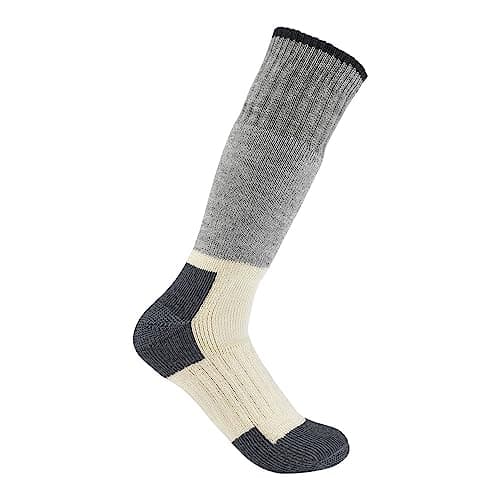
Carhartt Arctic Heavyweight Merino Blend Boot Sock
The heavy sock to put over the liner when the sit is long and the temperature is not moving. It is a heavyweight merino-blend boot sock from a brand every outdoorsman already owns something from, and the merino content is what matters: wool keeps a meaningful share of its insulating value when damp, which is exactly the condition a hunter's foot ends up in. The warmest practical sock here. Honest cons: a heavyweight sock needs a boot with room for it, and in a boot sized for thin socks it will make feet colder rather than warmer; it is too warm for an active hunt; and heavy socks take a long time to dry if they do get wet.
#ad · Price as of October 5, 2026. We may earn a commission.
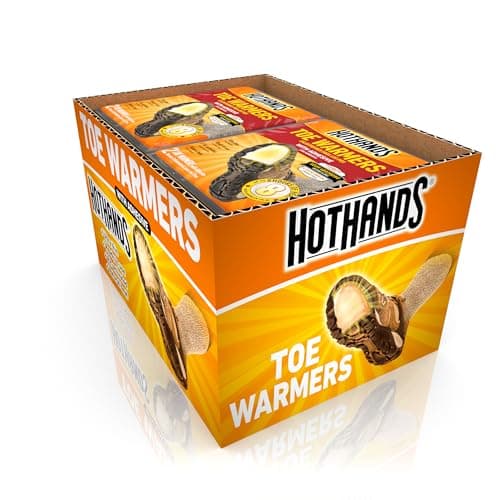
HotHands Toe Warmers (20-Pair Value Pack)
The fix for the part of a hunter that actually goes numb first. These are adhesive warmers that stick to the top of a sock - on top of the sock, not against the skin, which is both the manufacturer's guidance and where the heat spreads best. They are air-activated, which means they need air to work and take ten to twenty minutes to come up to temperature, so open them before the walk in rather than when your toes have already stopped reporting in. A 20-pair value pack means some always live in the pack. Honest cons: single-use, so there is a running cost; they cannot be switched off once started; and in an already-tight boot an adhesive pad is one more thing taking up room the foot needed.
#ad · Price as of October 5, 2026. We may earn a commission.
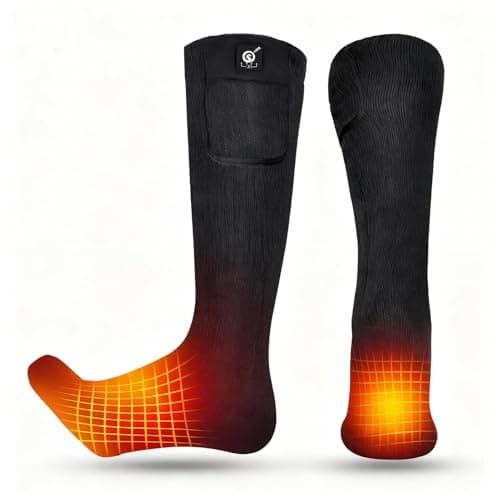
Heated Socks (Rechargeable)
The last resort, and for a hunter with genuinely poor circulation it is the thing that keeps them out there. Rechargeable battery-heated socks solve the problem directly rather than managing it, which is worth real money to somebody who has quietly been cutting sits short for years. It is also an excellent gift precisely because almost nobody buys them for themselves - they feel like an indulgence until you have sat through a January morning. Honest cons: batteries are bulk at the calf and need charging the night before, which is one more thing to remember; cold reduces battery capacity exactly when you need the runtime; and if the real problem is a tight boot or a damp sock, heated socks mask it rather than fix it.
#ad · Price as of October 5, 2026. We may earn a commission.
How we chose these
We do not run a test lab and we have not measured a sock. Materials and construction above are the manufacturers' own published product information, the physiology is sourced to NIOSH's cold-stress guidance, and the ordering of the fixes is reasoning about cost against benefit rather than a measured result. Nothing here carries a rating, a score or an award from us. Our method is on the how we choose page, and prices are live and dated.
Keep browsing
Best hunting socks ranks the liner and the heavy sock properly, and best hunting boots for cold weather is the page to read if the boot really is the problem — it explains why insulation weight is only the third thing that matters. How to stay warm hunting handles the core, which is where cold feet usually start, and best hand warmers for hunting covers the body warmer and the toe warmer in detail.
Frequently asked questions
How do I keep my feet warm while hunting?
Three things, in order. Wear a thin merino liner sock under your regular sock, in a boot with room for both. Walk in slowly enough that you do not sweat. And put a warmer on your core as well as your feet, because the body restricts blood flow to the extremities to protect its core temperature. Those three fixes cost very little and solve most cold-feet complaints.
Why are my feet cold even in insulated hunting boots?
Almost always sweat, fit, or a cold core rather than insulation. Feet sweat, waterproof boots breathe poorly, and a damp sock carries heat away from the skin far faster than a dry one. A heavy sock crammed into a boot sized for a thin one compresses the trapped air that does the insulating and squeezes circulation. And if your torso is cold, your body is deliberately not sending warm blood to your toes.
Are two pairs of socks warmer than one?
Usually yes, if the boot has room for both. A thin liner moves moisture off the skin, the outer sock holds the insulating air, and the two surfaces slide against each other rather than against your foot, which also reduces blisters. In a boot that was already tight, two socks are worse than one - there the answer is a bigger boot.
Where do toe warmers go?
On top of the sock, over the toes - not against bare skin, which is the manufacturer's own guidance and also less effective because the heat concentrates in one spot. They are air-activated, so they need air and take about ten to twenty minutes to reach temperature. Open them before the walk in rather than once your toes are already numb.
Do heated socks work for hunting?
Yes, and for a hunter with genuinely poor circulation they are often the thing that keeps them out there. Treat them as the last step rather than the first: if the real problem is a damp sock or a boot with no room in it, heated socks mask the cause instead of fixing it. The batteries also lose capacity in cold, which is exactly when the runtime matters.
Should I wear cotton socks hunting?
No. Cotton holds moisture against the skin and keeps almost none of its insulating value when wet, which makes it the worst available material for this job - and it is what most people already own. Merino or a merino blend keeps a meaningful share of its warmth damp, which is the specific property a hunting sock needs.
Sources
- NIOSH (CDC) - cold stress guidance: cold-induced vasoconstriction in the extremities, and tight clothing restricting circulation
- Fox River - published product information for the Castile Light ultra-lightweight merino crew liner sock
- Carhartt - published product information for the Arctic heavyweight merino wool blend boot sock
- HotHands - manufacturer FAQ: air-activated single-use warmers, 10-20 minutes to reach temperature, guidance against direct skin application
- Snow Deer - published product information for the rechargeable heated socks