Gear Guides
The Best Hunting Boots for Cold Weather
Cold feet are almost never an insulation problem. They are a moisture problem, a fit problem, or a sitting-still problem - and which one you have decides which of these boots is the right answer.
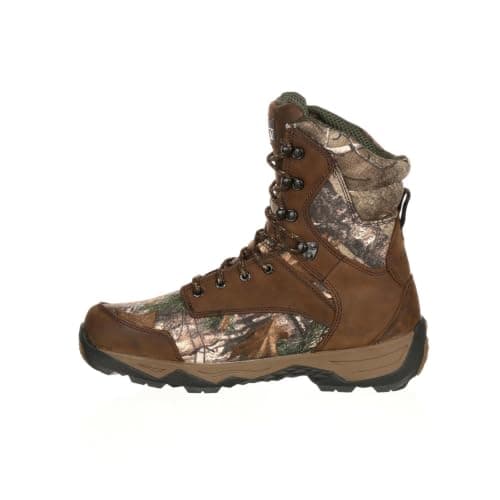
If the hunter sits still in the cold, buy the Rocky Retraction 800g: heavy insulation plus a waterproof upper is the combination a motionless foot needs, and nothing else on this page is built for a five-hour sit in November. If they hunt wet ground — flooded timber, marsh, a muddy pasture — the answer changes to the Muck Woody Max, because on wet ground the cold arrives as water and no amount of insulation survives a soaked sock. And if they cover miles rather than sitting, the lighter XPETI Thermator is the better boot, because a hunter who overheats on the walk in arrives with damp feet and freezes anyway.
That is the whole decision, and it is worth stating plainly because this category is sold almost entirely on one number. Insulation weight — the grams figure printed on the box — is real and useful, and it is also the third most important thing about a cold-weather hunting boot. Fit comes first. Water comes second.
Below are five boots that answer five genuinely different versions of "cold", with prices pulled live from Amazon. For the category ranked without the cold filter, our best hunting boots roundup covers wet ground, cold and distance side by side, and how to choose hunting boots works through the decision from scratch.
- 1Rocky Retraction 800g Insulated Hunting BootThe pick for the hunter who freezes out on late-season stands, and the only boot here built primarily for not moving. Rocky's Retraction pairs 800g of insulation with a waterproof upper, which is the specific combination a motionless foot needs: a foot that is not working generates almost no heat of its own, so the boot has to do all of it. That is why a boot that feels absurdly warm on the walk in is the correct boot for a stand hunter. Honest cons: 800g is genuinely too much boot for an active hunt and will cook feet on a long approach; it is heavier than the lighter boots here, which matters over miles; and it is a premium pair, so the size has to be right the first time - go half a size up if there is any doubt, because a boot crushed tight by a thick sock loses most of its warmth.Best for: Best for sitting still in real cold
- 2
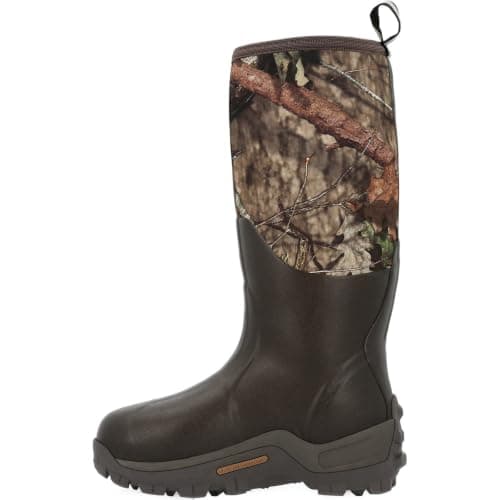 Muck Boot Woody Max Hunting BootThe answer when the cold arrives as water rather than as air. A rubber boot is waterproof by construction rather than by a membrane that can wear through at a flex point, which is why duck hunters, marsh hunters and anyone crossing a flooded ditch end up in Muck boots regardless of what else is in the closet. Pull-on means no laces to tie with cold fingers and no tongue to leak. Honest cons: rubber does not breathe, so a long walk in these leaves feet damp from the inside - which is precisely how a waterproof boot ends up cold; there is less ankle support than a laced leather boot; and the loose pull-on fit that makes them easy to get on also lets the heel move on steep ground.Best for: Best for wet and muddy cold
 - 3
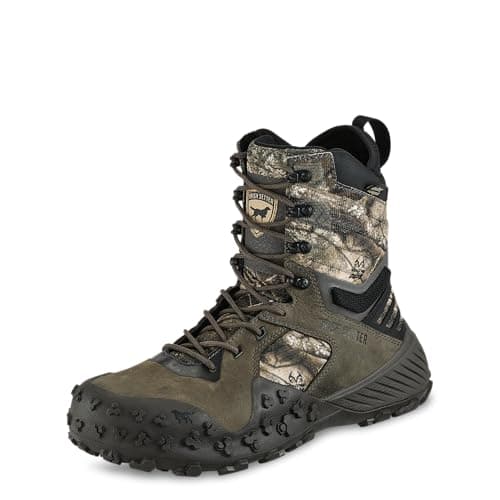 Irish Setter Men's Hunting BootsThe pick if you are buying this as a present and are not certain which kind of cold the hunter faces. Irish Setter is a name every American hunter recognizes, the boots are warm and waterproof, and the brand has enough history in whitetail country that the box itself reads as a serious gift. For a hunter who does a bit of everything - some sitting, some walking, mostly dry ground that is sometimes not - this is the least likely pair to be wrong. Honest cons: a do-everything boot is by definition not the best at any one thing, so it is neither as warm as the 800g pick nor as impervious as rubber; boots are the hardest hunting gift to size, and these are a premium pair to get wrong; ask for their size before you buy, or buy the socks and the warmers instead.Best for: Safest all-round gift
 - 4
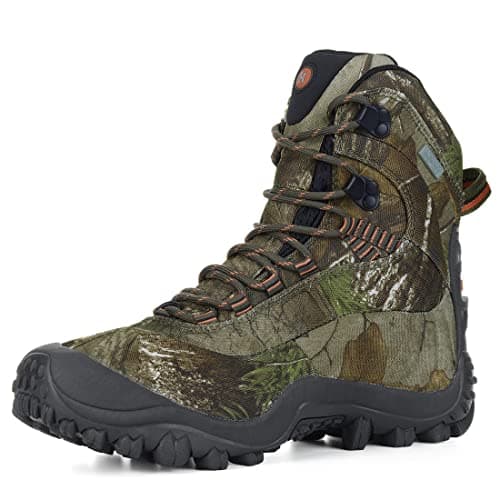 XPETI Thermator Insulated Waterproof BootThe boot for the hunter who walks, and the one most cold-weather roundups get wrong. An insulated boot that is too warm for the effort makes feet sweat on the way in, and a damp sock inside a cold boot is colder than a thin dry one - so for a hunter who still-hunts, pushes brush or walks a long way to a stand, a lighter insulated boot is not a compromise, it is the right tool. The Thermator is comfortable out of the box, which also makes it the easiest pair here to give to somebody who will not break boots in properly. Honest cons: clearly less insulation than the stand-hunting picks, so it is the wrong boot for a motionless five-hour sit; a lighter boot is a less durable boot over years of rough ground; and the hiking-boot look will not appeal to everyone.Best for: Best for covering ground in the cold
 - 5
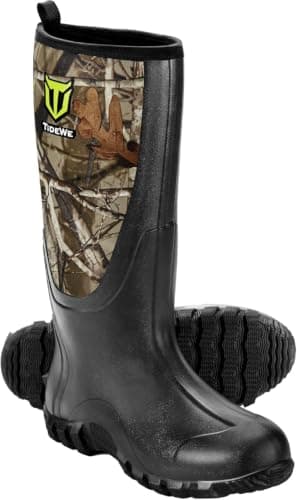 TIDEWE Rubber Hunting BootsThe way to put genuinely waterproof cold-weather boots on somebody's feet without spending premium money, and the pick if you are not certain they will keep hunting. These are camo rubber pull-ons at a friendly price, which covers the wet-cold job that matters most while leaving room in the budget for the socks and warmers that do more per dollar than any boot. Honest cons: a budget rubber boot is the pair most likely to be the one that wears out, because flex points are where rubber boots fail and cheaper rubber fails there sooner; insulation is modest next to a dedicated cold-weather boot; and like all rubber, they do not breathe.Best for: Best budget pair
| # | Gift | Best for | Price |
|---|---|---|---|
| 1 | Rocky Retraction 800g Insulated Hunting BootThe pick for the hunter who freezes out on late-season stands, and the only boot here built primarily for not moving. Rocky's Retraction pairs 800g of insulation with a waterproof upper, which is the specific combination a motionless foot needs: a foot that is not working generates almost no heat of its own, so the boot has to do all of it. That is why a boot that feels absurdly warm on the walk in is the correct boot for a stand hunter. Honest cons: 800g is genuinely too much boot for an active hunt and will cook feet on a long approach; it is heavier than the lighter boots here, which matters over miles; and it is a premium pair, so the size has to be right the first time - go half a size up if there is any doubt, because a boot crushed tight by a thick sock loses most of its warmth. | Best for sitting still in real cold | $110.14View on Amazon |
| 2 | Muck Boot Woody Max Hunting BootThe answer when the cold arrives as water rather than as air. A rubber boot is waterproof by construction rather than by a membrane that can wear through at a flex point, which is why duck hunters, marsh hunters and anyone crossing a flooded ditch end up in Muck boots regardless of what else is in the closet. Pull-on means no laces to tie with cold fingers and no tongue to leak. Honest cons: rubber does not breathe, so a long walk in these leaves feet damp from the inside - which is precisely how a waterproof boot ends up cold; there is less ankle support than a laced leather boot; and the loose pull-on fit that makes them easy to get on also lets the heel move on steep ground. | Best for wet and muddy cold | $127.95View on Amazon |
| 3 | Irish Setter Men's Hunting BootsThe pick if you are buying this as a present and are not certain which kind of cold the hunter faces. Irish Setter is a name every American hunter recognizes, the boots are warm and waterproof, and the brand has enough history in whitetail country that the box itself reads as a serious gift. For a hunter who does a bit of everything - some sitting, some walking, mostly dry ground that is sometimes not - this is the least likely pair to be wrong. Honest cons: a do-everything boot is by definition not the best at any one thing, so it is neither as warm as the 800g pick nor as impervious as rubber; boots are the hardest hunting gift to size, and these are a premium pair to get wrong; ask for their size before you buy, or buy the socks and the warmers instead. | Safest all-round gift | $189.95View on Amazon |
| 4 | XPETI Thermator Insulated Waterproof BootThe boot for the hunter who walks, and the one most cold-weather roundups get wrong. An insulated boot that is too warm for the effort makes feet sweat on the way in, and a damp sock inside a cold boot is colder than a thin dry one - so for a hunter who still-hunts, pushes brush or walks a long way to a stand, a lighter insulated boot is not a compromise, it is the right tool. The Thermator is comfortable out of the box, which also makes it the easiest pair here to give to somebody who will not break boots in properly. Honest cons: clearly less insulation than the stand-hunting picks, so it is the wrong boot for a motionless five-hour sit; a lighter boot is a less durable boot over years of rough ground; and the hiking-boot look will not appeal to everyone. | Best for covering ground in the cold | $69.99View on Amazon |
| 5 | TIDEWE Rubber Hunting BootsThe way to put genuinely waterproof cold-weather boots on somebody's feet without spending premium money, and the pick if you are not certain they will keep hunting. These are camo rubber pull-ons at a friendly price, which covers the wet-cold job that matters most while leaving room in the budget for the socks and warmers that do more per dollar than any boot. Honest cons: a budget rubber boot is the pair most likely to be the one that wears out, because flex points are where rubber boots fail and cheaper rubber fails there sooner; insulation is modest next to a dedicated cold-weather boot; and like all rubber, they do not breathe. | Best budget pair | $69.99View on Amazon |
Prices from Amazon as of October 5, 2026 and change often — the button always opens the current listing. Some links earn us a commission at no extra cost to you.
Rocky Retraction 800g Insulated Hunting Boot
The pick for the hunter who freezes out on late-season stands, and the only boot here built primarily for not moving. Rocky's Retraction pairs 800g of insulation with a waterproof upper, which is the specific combination a motionless foot needs: a foot that is not working generates almost no heat of its own, so the boot has to do all of it. That is why a boot that feels absurdly warm on the walk in is the correct boot for a stand hunter. Honest cons: 800g is genuinely too much boot for an active hunt and will cook feet on a long approach; it is heavier than the lighter boots here, which matters over miles; and it is a premium pair, so the size has to be right the first time - go half a size up if there is any doubt, because a boot crushed tight by a thick sock loses most of its warmth.
#ad · Price as of October 5, 2026. We may earn a commission.
Muck Boot Woody Max Hunting Boot
The answer when the cold arrives as water rather than as air. A rubber boot is waterproof by construction rather than by a membrane that can wear through at a flex point, which is why duck hunters, marsh hunters and anyone crossing a flooded ditch end up in Muck boots regardless of what else is in the closet. Pull-on means no laces to tie with cold fingers and no tongue to leak. Honest cons: rubber does not breathe, so a long walk in these leaves feet damp from the inside - which is precisely how a waterproof boot ends up cold; there is less ankle support than a laced leather boot; and the loose pull-on fit that makes them easy to get on also lets the heel move on steep ground.
#ad · Price as of October 5, 2026. We may earn a commission.
Irish Setter Men's Hunting Boots
The pick if you are buying this as a present and are not certain which kind of cold the hunter faces. Irish Setter is a name every American hunter recognizes, the boots are warm and waterproof, and the brand has enough history in whitetail country that the box itself reads as a serious gift. For a hunter who does a bit of everything - some sitting, some walking, mostly dry ground that is sometimes not - this is the least likely pair to be wrong. Honest cons: a do-everything boot is by definition not the best at any one thing, so it is neither as warm as the 800g pick nor as impervious as rubber; boots are the hardest hunting gift to size, and these are a premium pair to get wrong; ask for their size before you buy, or buy the socks and the warmers instead.
#ad · Price as of October 5, 2026. We may earn a commission.
XPETI Thermator Insulated Waterproof Boot
The boot for the hunter who walks, and the one most cold-weather roundups get wrong. An insulated boot that is too warm for the effort makes feet sweat on the way in, and a damp sock inside a cold boot is colder than a thin dry one - so for a hunter who still-hunts, pushes brush or walks a long way to a stand, a lighter insulated boot is not a compromise, it is the right tool. The Thermator is comfortable out of the box, which also makes it the easiest pair here to give to somebody who will not break boots in properly. Honest cons: clearly less insulation than the stand-hunting picks, so it is the wrong boot for a motionless five-hour sit; a lighter boot is a less durable boot over years of rough ground; and the hiking-boot look will not appeal to everyone.
#ad · Price as of October 5, 2026. We may earn a commission.
TIDEWE Rubber Hunting Boots
The way to put genuinely waterproof cold-weather boots on somebody's feet without spending premium money, and the pick if you are not certain they will keep hunting. These are camo rubber pull-ons at a friendly price, which covers the wet-cold job that matters most while leaving room in the budget for the socks and warmers that do more per dollar than any boot. Honest cons: a budget rubber boot is the pair most likely to be the one that wears out, because flex points are where rubber boots fail and cheaper rubber fails there sooner; insulation is modest next to a dedicated cold-weather boot; and like all rubber, they do not breathe.
#ad · Price as of October 5, 2026. We may earn a commission.
How cold actually gets into a boot
There are only three routes, and matching the boot to the route is the whole skill.
Water, from outside. A wet sock carries heat away from the foot far faster than a dry one, so a single leak undoes every gram of insulation in the boot. On wet ground this is the only failure mode that matters, and it is why rubber beats leather there.
Water, from inside. The one nobody plans for. Feet sweat, waterproof boots breathe poorly, and a hunter who works hard on the walk in arrives with damp socks inside a boot that is about to sit still for hours. This is the most common cause of cold feet among hunters who already own good boots.
A fit that is too tight.Insulation works by trapping air, and so does a sock. Cram a thick sock into a boot sized for a thin one and you compress both, while also squeezing the blood supply the foot depends on. NIOSH's cold-stress guidance makes the same point about clothing generally — tight layers restrict circulation, and circulation is what warms an extremity in the first place.
Insulation, construction and what each one is for
| Boot | Construction | Best for | What it is not |
|---|---|---|---|
| Rocky Retraction 800g | Insulated, waterproof upper | Stand hunting in real cold | A walking boot |
| Muck Woody Max | Rubber pull-on | Marsh, mud, flooded timber | Breathable |
| Irish Setter hunting boot | Insulated, waterproof | A bit of everything, dry to damp ground | A specialist |
| XPETI Thermator | Lighter insulated, waterproof | Still-hunting and long approaches | Enough for a five-hour sit |
| TIDEWE rubber boot | Rubber pull-on, budget | Wet ground on a tight budget | A lifetime pair |
A word on the grams figure, because it is the number everyone shops on. Insulation weight describes how much insulating material is in the boot. It is not a temperature rating, and no honest boot has one — the same pair performs completely differently on a hunter walking a ridge and a hunter sitting in a stand. Treat the number as a measure of how little the foot is going to be moving, which is the variable it is really tracking.
The three things that beat a warmer boot
A liner sock.A thin merino liner worn under the main sock moves moisture off the skin and adds a layer of trapped air, and it costs a fraction of a boot. If you change only one thing about a cold-footed hunter's setup, change this. Our best hunting socks roundup covers the liner and the heavy sock that goes over it, and how to keep your feet warm hunting works through the whole problem in order.
Walking in slower. Free, and more effective than any purchase. A hunter who arrives at the stand without having broken a sweat has dry socks, and dry socks are warm socks.
Toe warmers, and a body warmer.Adhesive toe warmers go on top of the sock rather than against skin, and a warmer on the core does more for the extremities than people expect — cold-induced vasoconstriction shuts down blood flow to the feet specifically to protect the core, so warming the core is warming the feet. The range is in best hand warmers for hunting.
Buying cold-weather boots as a gift
Boots are the hardest major hunting gift to get right, for one boring reason: they are the one piece of gear where a wrong size is useless rather than merely imperfect. Three ways to handle that.
Ask.It is not a spoiler. "What size boot do you wear" gives away nothing about what is in the box, and it is the difference between a gift that gets worn for five seasons and a return.
Buy the rubber pull-on if you must guess. A pull-on rubber boot is far more forgiving of being half a size out than a laced, fitted leather boot, because there is no lacing system to get right and the fit was always loose by design.
Or buy around the boots. Socks, liners and toe warmers are all genuinely wanted, none of them need a size, and together they fix more cold-feet complaints than a new pair of boots does. See hunting gifts under $50 and the best gifts to keep a hunter warm.
Break them in before the cold arrives
A stiff new boot is a blister in waiting, and a blister in November ends the sit faster than cold does. Insulated boots also fit differently once the insulation has compressed slightly with wear, which is a second reason not to find out about the fit on opening morning. Our how to break in hunting boots guide covers the sequence; the short version is that boots want miles on easy ground before they get miles on hard ground, and a boot gifted in December should be walked in before it is hunted in.
How we chose these
We do not run a test lab and we are not going to pretend otherwise. Every construction and insulation detail above comes from the manufacturer's own published product information, cited in the sources below, and the use-case rankings are reasoning from how each boot is built rather than measured results. No boot here has been given a rating, an award or a test score, because we have not run one. Our method is on the how we choose page, and prices are pulled live from Amazon and stamped with the date they were captured.
Keep browsing
For the field ranked without the cold-weather filter, see best hunting boots. For the rubber-or-leather question on its own there is rubber vs leather hunting boots, and hunting vs hiking boots answers whether the hiking boots already in the closet will do. If you are buying for a specific hunter, gifts for duck hunters leans hardest on wet-ground gear and gifts for deer hunters on the long cold sit.
Frequently asked questions
What are the best hunting boots for cold weather?
For a hunter who sits still, a heavily insulated waterproof boot such as the Rocky Retraction 800g - a motionless foot produces almost no heat of its own, so the boot has to supply it. For wet or muddy ground, a rubber pull-on like the Muck Woody Max instead, because there the cold arrives as water. For a hunter who walks a long way in, a lighter insulated boot is genuinely the warmer choice.
How many grams of insulation do I need in a hunting boot?
It depends on how much the foot will be moving, not on the temperature. Insulation weight measures how much insulating material is in the boot; it is not a temperature rating, and no honest boot has one. Heavy insulation suits a stand hunter sitting still in the cold, and the same boot will cook the feet of a hunter walking miles, who arrives with damp socks and ends up colder.
Why are my feet still cold in insulated hunting boots?
Usually moisture or fit rather than insulation. Feet sweat on the walk in, waterproof boots breathe poorly, and a damp sock carries heat away from the foot far faster than a dry one. The other common cause is a boot packed too tight with a thick sock, which compresses the trapped air that does the insulating and squeezes the circulation the foot depends on.
Are rubber boots warm enough for cold weather hunting?
On wet ground they are often the warmest practical choice, because they cannot leak at a worn membrane the way a fabric boot can. Their weakness is breathability: rubber traps the moisture a foot produces, so a long hard walk in rubber boots leaves feet damp from the inside. Good for marsh, mud and short walks; less good for covering miles.
Should I size up for thick hunting socks?
Usually yes, by about half a size. Insulation and socks both work by trapping air, and cramming a heavy sock into a boot sized for a thin one compresses both while restricting circulation - which is why an over-tight warm boot can be colder than a looser thin one. If you are buying as a gift and guessing, a pull-on rubber boot forgives a half size far better than a laced leather boot.
What is the cheapest way to fix cold feet while hunting?
A thin merino liner sock under the regular sock, worn in a boot with enough room for both. After that, adhesive toe warmers on top of the sock and a body warmer on the core - cold-induced vasoconstriction shuts blood flow to the extremities to protect the core, so warming the core is one of the most effective things you can do for your feet.
Sources
- Rocky - published product information for the Retraction waterproof insulated hunting boot (800g insulation)
- Muck Boot Company - men's hunting boot range and published construction details
- Irish Setter - hunting boot range and published product information
- XPETI - published product information for the Thermator insulated waterproof boot
- TIDEWE - published product information for the camo rubber hunting boot
- NIOSH (CDC) - cold stress guidance, including cold-induced vasoconstriction and the effect of tight clothing on circulation