Gear Guides
How to Choose Hunting Boots (A Gift-Buyer's Guide)
Boots are one of the best gifts you can give a hunter — and one of the easiest to get wrong. Here's how to pick the right pair without hunting yourself, from rubber vs. leather to the honest truth about getting the size right.
A good pair of hunting boots is one of the most personal — and most appreciated — gifts you can give a hunter. Boots are the piece of gear they stand in for hours, walk miles in, and quietly curse when they get it wrong. Give the right pair and they'll think of you every single season. But boots also come with a catch that trips up well-meaning gift-givers, and it's worth knowing about before you buy: unlike a knife or a headlamp, a boot has to fit, and the wrong size turns a wonderful present into a returns-desk errand.
The good news is that you don't have to be a hunter to choose well. This guide walks through it in plain English: how to figure out what kind of boot suits the person you're shopping for, the big rubber-versus-leather decision (with two boots hunters actually trust as examples), how much insulation is too much, what waterproofing really buys you, and the one thing — size — that matters more than everything else combined. By the end you'll know exactly what to look for and, just as importantly, what to double-check before you wrap it.
Start with where — and when — they hunt
Before you compare a single pair, answer one question: where does this person actually hunt, and in what weather? That single answer decides most of what follows. A hunter who spends mornings in flooded timber, marshes, or muddy field edges needs something completely different from one who covers miles of dry ridgeline chasing elk. So think about the two or three places you've heard them mention — the duck blind, the deer stand, the back forty — and roughly what time of year they're out there.
As a rough rule: wet, muddy, sit-still hunting favors rubber boots, while long walks, hills, and all-round use favor leather. Cold, late-season sits call for heavy insulation; warm, early-season hunts call for very little. Don't worry if you can't pin it down perfectly — the sections below turn each of these into an easy choice. And if you genuinely have no idea where they hunt, that's a sign a boot might be a risky gift, and you may be better off with something one-size-fits-most from our guide to the best gifts to keep a hunter warm.
Rubber vs. leather: the core choice
Nearly every hunting boot falls into one of two camps, and picking the right camp is the most important decision you'll make. Here's the plain-English version of each.
Rubber boots— think of a pair like the Muck Boot Woody Max — are pull-on, fully waterproof to the top, and built for wet ground. They shine in marshes, mud, and duck blinds, and they have a second quirk hunters love: rubber holds almost no scent, which matters to deer hunters trying to stay invisible to a whitetail's nose. They're also wonderfully easy to yank on in a dark, freezing morning. The trade-off is that a soft rubber boot offers less arch and ankle support than a laced leather boot, so they're less ideal for someone hiking long distances over rough ground.
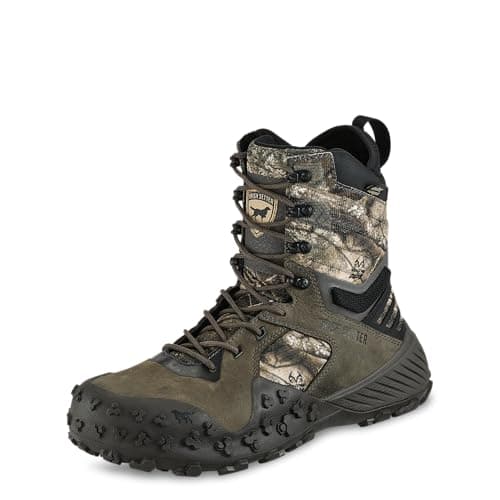
Leather boots— like the Irish Setter hunting boots that many hunters consider a do-everything standard — lace up for a snug, supportive fit that carries a person over miles and hills without wearing their feet out. They tend to breathe a little better in milder weather and feel more like a proper hiking boot. The trade-offs: leather usually needs a short break-in period, benefits from occasional care to stay waterproof, and while it's water-resistant, it isn't submarine-proof the way a rubber boot is if they're wading. Here's how the two stack up at a glance.
| Rubber (e.g. Muck Woody) | Leather (e.g. Irish Setter) | |
|---|---|---|
| Best for | Marsh, mud, flooded fields, duck blinds | Long walks, hills, all-round deer & big-game use |
| Wet ground | Excellent — waterproof to the top, made for standing in water | Good — water-resistant, but not for wading |
| Support for miles | Softer, less arch and ankle support | Laced and supportive for covering distance |
| Getting them on | Pull-on — fast and easy in the dark | Laced — a bit more effort, but a locked-in fit |
| Scent control | Rubber holds little scent — a plus for deer hunters | Leather can carry more scent |
| Upkeep | Rinse and go — very low maintenance | Occasional conditioning to stay waterproof |
If you want a deeper head-to-head on the two styles, our rubber vs. leather hunting boots comparison breaks down exactly when each one wins. For most gift-givers, the shortcut is simple: if they hunt wet, go rubber; if they hunt far, go leather.
One more thing worth knowing: plenty of hunters own both, and reach for whichever suits the day. So if the person you're shopping for already has a beat-up pair of one style, you're not locked into matching it — you may actually be filling a gap in their kit. If you know they've got old leather boots for hiking but nothing for the duck marsh, a rubber pair is a genuinely useful complement, and vice versa. When you can, a quiet glance at what's already by their back door tells you more than any spec sheet.
Insulation: match the warmth to the hunt
Insulation is where thoughtful gift-givers most often overshoot. It feels generous to buy the warmest boot on the shelf, but a boot that's too warm makes feet sweat, and damp feet get cold fast — so more insulation isn't automatically better. The right amount depends entirely on how the person hunts.
A hunter who sits still for hours in a stand or blind during cold, late-season weather wants a heavily insulated boot, because they generate almost no body heat while waiting. A hunter who moves constantly— spot-and-stalk, walking to and from the field, early-season hunts in mild weather — wants little or no insulation, so their feet don't overheat and sweat. Manufacturers usually describe warmth in grams of insulation, and the plain-English read is straightforward: a higher number means a warmer, bulkier boot for sitting in the cold, while uninsulated or lightly insulated boots suit active, warmer-weather hunting. Plenty of serious hunters actually own two pairs for exactly this reason.
If you're unsure, err toward the season you most often picture them hunting. And remember that warm feet are also a matter of good socks — a pair of quality boots plus warm socks is a combination worth considering, and you'll find more ideas along those lines in our roundup of the best gifts to keep a hunter warm.
Socks deserve their own thought here, because they change the fit as well as the warmth: our best hunting socks roundup explains why a thicker sock in a snug boot can leave feet colder rather than warmer, and which weight to pick when you don't know how the person hunts.
Waterproofing, height, and traction
Whatever style you land on, a few practical features separate a boot a hunter loves from one they tolerate. Waterproofing is the big one: a hunter with wet feet is a miserable, cold hunter, so genuine waterproofing is close to non-negotiable. Rubber boots are waterproof by nature; quality leather boots achieve it through waterproof construction and treated materials. Either way, it's a feature worth confirming rather than assuming.
Heightmatters more than people expect. Taller rubber boots let a hunter wade into deeper water without flooding them — important for waterfowlers — while a mid-height leather boot around the ankle gives support for walking. Traction is the other quiet essential: aggressive lugs on the sole grip mud, wet leaves, and slick hillsides, which is both a comfort and a safety thing on uneven ground in the dark. And ankle supportis worth weighing for anyone who carries a pack or covers rough terrain — it's a real advantage of a well-laced leather boot. None of these require you to be an expert; you're just checking that the boot suits how they hunt.
It also helps to think about how the boot goes on and off. A pull-on rubber boot is a small mercy at four in the morning when it's dark and freezing and their hands are cold; a laced leather boot takes a moment longer but rewards it with a fit they can dial in. Neither is right or wrong — it's just one more way to picture the person actually using the gift. If they're the type who values grabbing gear and going, that leans rubber; if they like everything snug and locked down for a long day on their feet, that leans leather.
The one thing that ruins a boot gift: size
Here's the honest caveat, and it's the single most important paragraph in this guide: a hunting boot is only a great gift if it fits. It doesn't matter how perfect the style, warmth, or brand is — the wrong size means a return, and a boot is not a fun thing to guess on. Foot sizes run differently from brand to brand, hunters often wear thick or layered socks that change the fit they need, and plenty of people have wider or narrower feet than a standard size assumes. All of that makes "I think he's about a ten" a genuinely risky bet.
What we like
- Confirm their exact size before you buy — ideally the size in the specific brand you're gifting
- Ask what socks they hunt in, since thick socks change the fit they need
- Check whether they need a wide (or narrow) width, not just a length
- Keep the receipt and buy from a retailer with an easy exchange policy, just in case
Worth knowing
- Guessing the size from a shoe you saw once — sizing varies by brand
- Assuming their everyday shoe size is their hunting-boot size
- Buying a boot that can't be easily exchanged if the fit is off
- Surprising them so completely that you can't verify the size at all
This is such a recurring theme with boots that it's worth repeating: confirm the size first.If keeping the surprise intact matters to you, there are graceful ways to do it — ask a spouse or hunting buddy, sneak a look inside a boot they already own, or gift a "boot fund" card alongside a printout of the pair you chose so they can confirm the fit. A little detective work here is the difference between a gift they wear for years and one that never leaves the box.
Which boot for which hunter
Pulling it all together, here's the quick match-up. For a waterfowl or duck hunter, or anyone who's regularly standing in mud and water, a tall rubber boot like the Muck Woody is the obvious call — you'll find it and other wet-weather ideas in our gifts for duck hunters guide. For a deer hunter who sitslong, cold morning stands, lean toward an insulated boot — rubber if scent control and wet ground are the priority, insulated leather if comfort over a longer walk-in matters.
For an all-round hunterwho covers ground — walking to stands, hiking for big game, doing a bit of everything — a supportive leather boot like the Irish Setter is the safe, versatile choice, which is exactly why it works so well as a hunting gift for Dador any hunter whose exact style you aren't sure of. When in doubt, a quality waterproof leather boot in the right size is the pair the widest range of hunters will happily wear all season — just make sure that "right size" part is nailed down before you buy.
And once the size is right, there is one more thing to hand over with them. How to break in hunting boots explains how long heavy leather really needs, why break-in has to be done wearing the sock they will actually hunt in, and which of the popular shortcuts — soaking, heat, one enormous walk — age the boot instead of softening it. It also makes the case for buying synthetic or rubber if the season is only a fortnight away.
Once you have settled on the kind of boot, best hunting boots for cold weather applies the same logic to the one condition that catches most hunters out — and explains why insulation is only the third most important thing about a cold-weather boot.
And on the size question itself, should hunting boots be tight or loose is the page to read before ordering: snug at the heel, genuinely roomy at the toes, and never tight anywhere — because a boot filled by a thick sock is the single most common cause of the cold feet people blame on insulation.
Frequently asked questions
Are rubber or leather hunting boots a better gift?
It depends on how they hunt. Rubber boots (like the Muck Woody) win for wet ground, mud, marshes, and duck blinds, and they hold little scent — a plus for deer hunters. Leather boots (like Irish Setter) win for covering long distances, hills, and all-round use thanks to their laced support. If they hunt wet, go rubber; if they hunt far, go leather.
How much insulation should hunting boots have?
Match it to how they hunt. A hunter who sits still for hours in cold, late-season weather wants heavy insulation, since they make little body heat. A hunter who moves a lot or hunts in mild early-season weather wants little or no insulation, so their feet don't sweat and then get cold. More isn't automatically better — a too-warm boot causes damp, chilly feet.
What's the most important thing to get right when buying hunting boots as a gift?
Size, by a wide margin. A boot only works if it fits, and sizing runs differently from brand to brand, hunters often wear thick socks, and many people need a wider or narrower width. Confirm their exact size before you buy — ideally in the specific brand — ask about their sock setup, and buy from a retailer with an easy exchange policy just in case.
How do I confirm boot size without ruining the surprise?
You have a few options: ask a spouse or hunting buddy who knows, quietly check the size printed inside a boot they already own, or gift a card toward the boots alongside a printout of the exact pair you picked so they can confirm the fit themselves. A little detective work is far better than guessing and hoping.
Do hunting boots need to be waterproof?
For almost every hunter, yes — wet feet get cold fast and make a hunt miserable. Rubber boots are waterproof by nature and can be waded in. Quality leather boots achieve waterproofing through their construction and treated materials, though they benefit from occasional conditioning to keep it up and aren't meant for wading. Either way, confirm waterproofing rather than assuming it.