Gear Guides
How to Set Up a Ground Blind
A ground blind does not fail because of the blind. It fails for three reasons that all happen at setup: it was never staked, it was never brushed in, and it went out the same week you hunted it.
Put the blind out at least a week or two before you intend to hunt it, stake every corner and both guy points, brush the base and the roofline with vegetation from the surrounding area, close the back windows, and sit in it once before you hunt it. That is the whole method. Everything below is why each step is on the list and what goes wrong when it is skipped.
Hub blinds are sold on the idea that they go up in sixty seconds, and they do. That is exactly the problem: a blind that pops open in a minute invites you to treat setup as a non-event, and a blind set up as a non-event is a black box in the woods that deer walk around. The blind is not the variable. How it was put out is.
1. Timing: get it out early
This is the highest-value step and the one nobody wants to hear, because it has to happen weeks before you are thinking about hunting. A ground blind is a large, new, hard-edged object appearing at ground level in an animal's core area. Deer notice it, and what they do about it depends entirely on how long it has been there.
Give it a week or two of standing there doing nothing and it becomes part of the landscape. Put it out the morning you hunt and you have told every deer on the property that something changed overnight. If you genuinely must set up and hunt the same day — a travel hunt, a late-season weather window — then set it in the thickest cover you can find, accept that you are hunting a brand-new object, and expect the first sits to be about watching rather than shooting.
2. Site: pick the background first
Most people choose where to put a blind by looking at where the deer go. That is the second question. The first is: what is behind it?
A blind set against a solid backdrop — a treeline edge, a brush pile, a cedar, a blowdown, a creek bank — has no outline, because there is nothing bright behind it for the shape to read against. The same blind set in the open middle of a field reads as a box from three hundred yards away no matter what pattern is printed on it. Tuck it into something.
Then, in order: put the sun behind you where you can, so you are not squinting into it at first light and your movement inside is not lit up; set it so the prevailing wind carries your scent away from where you expect deer to come from; and leave yourself a quiet approach route that does not cross the trail you are hunting.
3. Stake it, all of it
A hub blind is a fabric box with a lot of surface area and almost no weight, which makes it a sail. An unstaked blind in a gust does one of three things: it shifts and scrapes, it folds a wall and spooks everything within two hundred yards, or it leaves entirely and you find it in the fenceline. The flapping is the underrated problem, because a wall that moves in the wind is exactly the motion a deer is built to notice.
Stake every corner, and use the guy-out points if your blind has them — most hub blinds ship with loops at the roofline specifically for this and most people never use them. Note the count: a four-pack of stakes is right for a four-sided blind and short for a five-sided one, so buy accordingly. And in frozen ground stakes are close to useless, which is the argument for setting the blind out early in the first place: you stake it in soft ground in October and it is still staked in January.
4. Brush it in
Brushing in is the step that separates a blind deer ignore from a blind deer avoid, and it takes about ten minutes. The principle is to break the two things that identify a blind as manufactured: the hard straight edges, and the fact that it is a solid object sitting on bare ground with a visible gap underneath.
Work from the bottom. Pile brush, branches and grass against the base of all four walls so the blind appears to grow out of the ground rather than to be standing on it. Then break the roofline — a few branches leaned against the upper corners or laid across the top destroys the horizontal line that reads as "roof" at distance. Use vegetation from the immediate area, not from somewhere else: a bundle of cedar against an oak-and-brush hedgerow is its own kind of wrong. Leave your shooting windows clear, and check from twenty yards out at the height a deer's eyes actually are rather than from standing height.
5. Set the inside up for how you shoot
The last ten minutes are the ones that decide whether you get the shot. Sit in the chair you will actually use, at the height you will actually use, and check three things: can you see out of the window without craning, can you draw a bow or shoulder a gun without hitting a wall or the chair arms, and is the window at the right height for your seated shoulder rather than for a standing adult?
A seated shooter is lower than blind designers assume, and raising the chair is usually the fix — but a higher chair puts your head nearer the roof and closer to the window line, which costs you concealment. That trade is the real reason to try it before the hunt rather than at gray light with a deer at forty yards. Clear the floor of anything that crunches, rustles or rolls, and if you have brought a heater or a pack, give it a place that is not where your feet go.
Three cheap things that make the difference
None of these is the blind, and all three are the difference between a blind that works and one that sits in a garage. Each shows a live price with the date it was captured.
RHINO OUTDOORS Auger Blind Stakes (4-Pack)
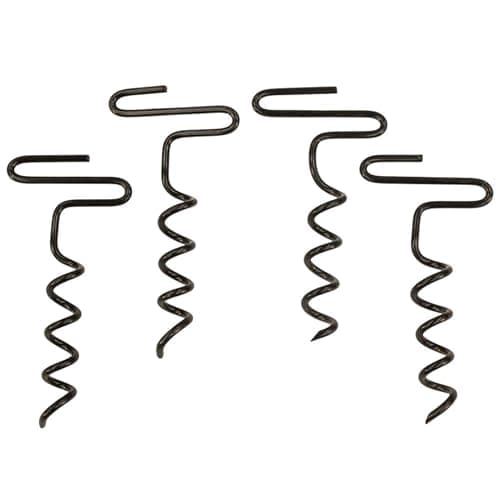
The cheapest item on this page and the one with the largest effect on whether the blind works at all, because an unstaked hub blind is a sail and a wall moving in the wind is the exact motion deer are built to detect. These are auger stakes - they screw into the ground rather than being driven, which means they hold in loose soil and sand far better than a straight peg and can be put in and taken out by hand without a hammer. Buy them at the same time as the blind, not after the first windy morning. Honest cons: a 4-pack covers the corners of a four-sided blind and leaves nothing for a five-sided blind or for the roofline guy points, so most setups want two packs; auger stakes are longer and bulkier to carry than straight pegs; and no stake is much use in frozen ground, which is the practical argument for setting your blind out in October rather than December.
#ad · Price as of October 17, 2026. We may earn a commission.
Therm-A-Seat Hunting Seat Cushion
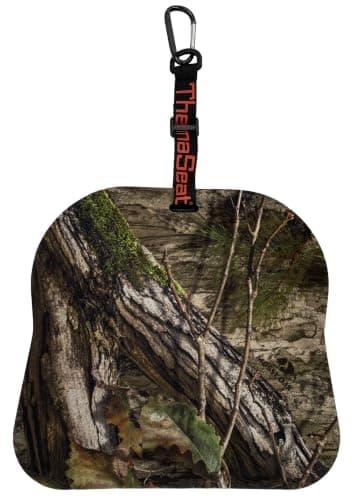
Included because a ground blind is colder than people expect and the floor is the reason. You are sitting at ground level in the coldest air on the property, out of the sun, with your feet and your seat in contact with frozen dirt, and conduction pulls heat out of you far faster than still air does. A closed-cell foam cushion between you and the chair - or between you and a bucket, a log or the ground - is the cheapest insulation in hunting, weighs almost nothing and clips to a pack. It is also what lets a new hunter or a kid last long enough to see something. Honest cons: foam cushions are bulky for their weight and awkward to pack inside a full blind bag; the camo print means it reads as hunting gear even though it belongs at every cold football game; and it insulates your seat, which does nothing for your feet.
#ad · Price as of October 17, 2026. We may earn a commission.
TIDEWE 360° Silent Swivel Hunting Chair
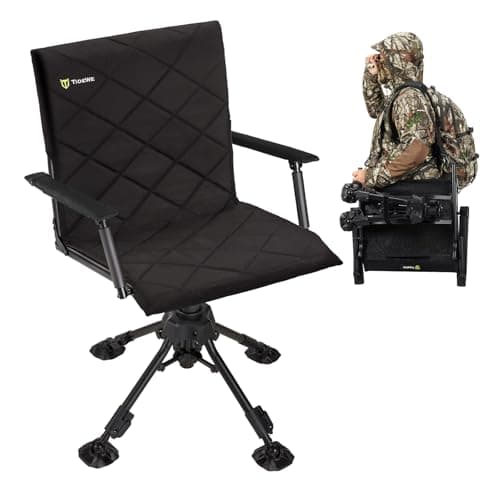
The pick if you are willing to spend on one interior item, because the chair decides your shooting position and your shooting position is the whole point of the blind. A 360-degree silent swivel chair solves the specific problem a ground blind creates: you cannot stand up and turn, so when the deer appears at the window you were not watching, your options are rotate silently or watch it leave. A swivel also lets you change angle without scraping chair legs on the floor, which is the loudest thing most blinds ever do. Set the seat height before you hunt, because it trades directly against how close your head sits to the window line. Honest cons: it costs a real fraction of what the blind cost, and two hunters need two; the footprint is larger than a folding stool, which eats floor space in a small blind; and a silent swivel stays silent only while it stays clean and dry.
#ad · Price as of October 17, 2026. We may earn a commission.
The setup checklist, in order
| Step | When | Why it matters |
|---|---|---|
| Choose a site with a solid backdrop | Weeks ahead | Nothing bright behind it means no outline |
| Set the blind and leave it | 1-2 weeks minimum | Deer accept a familiar object, not a new one |
| Stake every corner and the guy points | At setup, in soft ground | A flapping wall is motion, and motion spooks |
| Brush the base and the roofline | At setup | Breaks the straight edges and the ground gap |
| Close the back windows | Every hunt | An open back window makes you a silhouette |
| Sit in it with your chair | Before the first hunt | Window height and draw clearance, discovered early |
| Clear the floor | Every hunt | Crunching and rolling is the noise you control |
Scent, and the one advantage a blind gives you
An enclosed blind does something a treestand cannot: it contains a good deal of your scent and your sound. That is a real advantage and it is worth not wasting. Two practical habits. Keep the blind closed between hunts so it is not airing your scent across the property all week, and do your scent control on the way in rather than inside — spraying down in an enclosed fabric box is how you end up smelling strongly of something that is not the woods. Best deer scents covers the control half of that category properly, and how to wash hunting clothes is the cheaper upstream fix.
Bowhunting from a blind changes two things
First, interior height. A compound bow at full draw needs vertical clearance that a seated rifle hunter never thinks about, and the cam or the top limb finding the roof at full draw is a hunt-ending discovery. Second, the window. A bow needs a window tall enough to shoot through from a seated draw and wide enough that the lower limb clears the sill, which is a bigger opening than a rifle needs. Best ground blind for bow hunting is built around those two measurements. If there will be two of you drawing bows in there, best 2-person ground blind explains why the person rating on the box is a seat count rather than a space measurement.
What this page is and is not
We do not run a test lab, and nothing here is a measured result. This is a setup procedure built from how a ground blind physically conceals a hunter — an interior darker than the exterior, an outline broken against a backdrop, and a fabric box that must not move in wind — plus the published features of the three products recommended above, cited below. There are no scores and no awards from us, and no claim that any of it was field-tested by us. Our method is on the how we choosepage. One honest note on timing: "a week or two" is the widely used rule of thumb among blind hunters rather than a figure from a study, and the underlying principle — that deer accept a familiar object and avoid a new one — is the part worth trusting.
Keep browsing
Best hunting blinds is the roundup if you have not bought one yet, and how to stay warm in a ground blind explains why a blind can be colder than an exposed treestand and what to do about it. What to wear deer hunting covers the dark-interior clothing point in the context of the whole outfit.
Frequently asked questions
How long before hunting should you set up a ground blind?
A week or two at minimum, and longer is better. A blind is a large new object at ground level in an animal's core area; left standing it becomes part of the landscape, while one that appears overnight tells every deer on the property that something changed. If you must set up and hunt the same day, put it in the thickest cover you can find and treat the first sits as watching rather than shooting.
How do you brush in a ground blind?
Work from the bottom up with vegetation from the immediate area. Pile brush, branches and grass against the base of all four walls so the blind looks like it grows out of the ground rather than standing on it, then lean a few branches on the upper corners to break the horizontal roofline. Keep the shooting windows clear and check your work from twenty yards away at the height a deer's eyes actually are.
Do you really need to stake a ground blind?
Yes, every corner plus the guy-out loops most hub blinds ship with and almost nobody uses. A hub blind is a lot of fabric with almost no weight, so wind either moves it, folds a wall, or takes it away - and a wall flapping in the wind is exactly the motion deer are built to detect. Stake it in soft ground early in the season, because stakes do very little in frozen dirt.
Should you leave the windows open in a ground blind?
Open the ones you shoot through and close the ones behind you. A blind hides you by being darker inside than out, so an open back window turns every front window into a lit frame with you silhouetted in it. Close the back windows and the roof vent on bright days, and wear dark clothing rather than camo inside the blind.
Where is the best place to put a ground blind?
Pick the background before you pick the deer trail. Tucked against a treeline edge, a cedar, a brush pile or a creek bank, a blind has no outline because there is nothing bright behind it; in the open middle of a field it reads as a box from hundreds of yards regardless of the camo pattern. After that, put the sun behind you, let the prevailing wind carry your scent away from where deer will come from, and keep your approach route off the trail you are hunting.
What do you need inside a ground blind?
A chair at the right height, something insulating between you and the seat, and a clear floor. The chair decides your shooting position, and a silent swivel lets you turn toward a window you were not watching without standing up. An insulated cushion matters because you are sitting in the coldest air on the property with your feet on frozen ground. And anything on the floor that crunches or rolls is noise you could have eliminated.
Sources
- RHINO OUTDOORS - published product information for the auger (screw-in) blind stakes, 4-pack
- Therm-A-Seat - published product information for the Predator XT Softek seat cushion (closed-cell foam, carabiner clip)
- TIDEWE - published product information for the 360-degree silent swivel hunting chair
- Rhino Blinds - published product information for the R100 hub ground blind, including hub construction and staking points