Gear Guides
What to Wear Deer Hunting
Deer hunting clothing is a moisture problem dressed up as a warmth problem. Get the layer against the skin right and the rest is easy - get it wrong and no jacket saves the sit.
Short answer, before the detail: a merino or synthetic base layer next to the skin, a fleece mid-layer, an insulated or waterproof outer layer depending on the weather, plus boots rated for sitting rather than walking, a warm hat, and whatever blaze orange your state requires. Carry the outer layer in; do not wear it in.
The reason this is worth a page rather than a packing list is that deer hunting has a clothing problem no other outdoor activity has. A hiker is warm because they are moving. A deer hunter walks hard for twenty minutes, then sits almost perfectly still for four hours in the coldest part of the day. One outfit has to cover both, and the transition is where it goes wrong: sweat generated on the walk in soaks the layer against the skin, wet fabric conducts heat away from the body far faster than dry fabric, and the sit starts with a cold, damp shirt on.
Which is why the single most important garment is also the cheapest and least visible: the base layer. Everything else is comfort and legality.
The three layers, and what each one is for
| Layer | Its actual job | What to use | What not to use |
|---|---|---|---|
| Base layer (next to skin) | Move sweat away from the body | Merino wool or a synthetic | Cotton - it holds sweat against you all day |
| Mid-layer | Trap air, which is what warmth is | Fleece, or a wool shirt | Nothing - this is the layer people skip |
| Outer layer | Stop wind and water | Insulated jacket for sitting, shell for rain | A heavy coat worn on the walk in |
| Extremities | They fail first, regardless of the core | Wool socks, insulated boots, hat, gloves | Thin cotton socks, and no hat |
| Blaze orange | Being seen by other hunters | Whatever your state's regulations require | Guessing - the rules differ by state and season |
The honest note on that table: it is conventional layering practice rather than a measured finding, and the specific amounts depend entirely on temperature, wind and how long the hunter sits. What is not a matter of opinion is the cotton rule and the carry-the-jacket-in rule. Both come up in every cold-weather injury discussion for the same reason — wet clothing loses heat dramatically faster than dry clothing, which is why NIOSH's cold-stress guidance treats staying dry as a primary control rather than a comfort tip.
Head to toe, in order
Head.A beanie, and a second one in the pack. A huge amount of a seated hunter's heat loss is from an uncovered head, and a hat is the fastest thermostat a hunter has — put it on when cold, take it off on the walk to stop sweating.
Face and neck. A neck gaiter does two jobs at once: it covers the pale, moving thing a deer notices first, and it closes the gap at the collar where cold air gets in. It is the cheapest upgrade on this list.
Torso.Base, mid, outer, as above. For a sit in genuine cold, an insulated parka cut long in the body — a short jacket leaves the lower back exposed exactly where a seated hunter needs cover. Best hunting jackets ranks those by the weather each is for.
Legs. The most-neglected part of the outfit. Legs sit still on a cold stand and a seated hunter loses heat through the back of the thighs into the seat. Insulated or fleece-lined pants, or a base layer under ordinary hunting pants.
Feet.One pair of good wool socks, not two pairs of thin ones — doubling up compresses the boot, and a tight boot kills circulation, which makes feet colder rather than warmer. How to keep your feet warm hunting covers the diagnosis properly, and should hunting boots be tight or loose covers the fit.
Hands.Thin gloves for the walk and the shot, something warmer for the sit, and a hand warmer rather than a thicker glove. If the hunter shoots a bow, keep the string hand thin — best gloves for bow hunting explains why.
How much does camo pattern matter?
Less than movement, and less than wind. The order of what gets a hunter caught is roughly: scent first, movement second, silhouette third, pattern a distant fourth. Deer see short wavelengths well and long wavelengths poorly, so the colour accuracy of a pattern is a far smaller factor than whether the hunter broke up their outline and sat still.
What does matter in a fabric: quietness. A shell that crackles on a branch at fifteen yards costs an opportunity that no pattern recovers. If you are choosing between a louder jacket in a perfect pattern and a quiet jacket in a generic one, take the quiet one. Best camo hunting clothes covers the category with that priority.
Four things to get right first
These four cover the base layer, the mid-layer, the legs and the blaze orange requirement — which between them do more for a cold sit than any single jacket purchase. Prices are pulled live from Amazon.
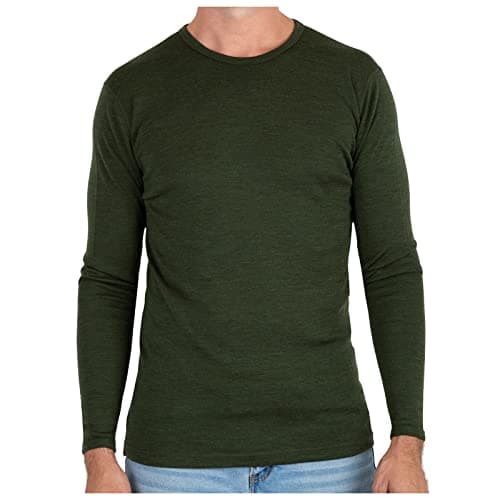
MERIWOOL Merino Wool Base Layer Top
Buy this before anything else on the list. A merino base layer moves moisture away from the skin and keeps a usable amount of its insulating value when damp, which is the specific property that matters to a hunter who sweats on the walk in and then sits still. MERIWOOL publishes it as a midweight merino wool crew, and midweight is the right pick for deer season - heavyweight is too warm for the walk and lightweight is not enough for the sit. Merino also resists odour between washes far better than synthetics, which is a genuine practical benefit over a multi-day hunt. Honest cons: merino costs several times what a synthetic equivalent does; it wears through at friction points sooner than polyester; and it needs washing with care rather than thrown in on hot.
#ad · Price as of October 10, 2026. We may earn a commission.
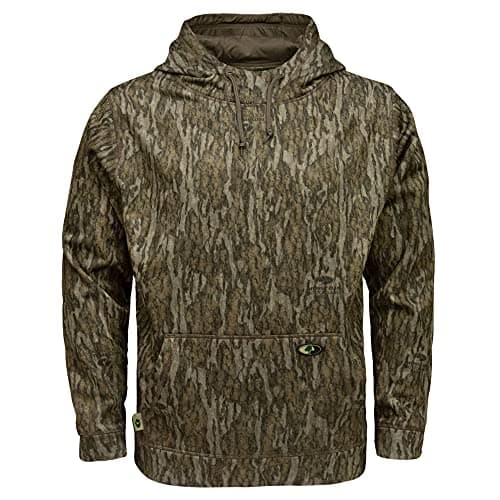
Mossy Oak Performance Fleece Camo Hoodie
The missing piece in most cold-weather hunting outfits. Warmth is trapped air, a fleece traps a lot of it for very little money, and a hunter in a good base layer plus a fleece plus a shell is warmer than a hunter in a base layer plus an expensive coat. Mossy Oak builds this in a camo performance fleece that works as the outer layer in early season and the mid-layer in late season, so it earns its keep twice across one season. It is also the lowest-risk garment here to buy as a gift, since fleece sizing is forgiving. Honest cons: fleece is wind-permeable and needs something over it on an exposed stand; the hood bunches under a jacket collar; and it is not a substitute for an outer layer however warm it feels indoors.
#ad · Price as of October 10, 2026. We may earn a commission.
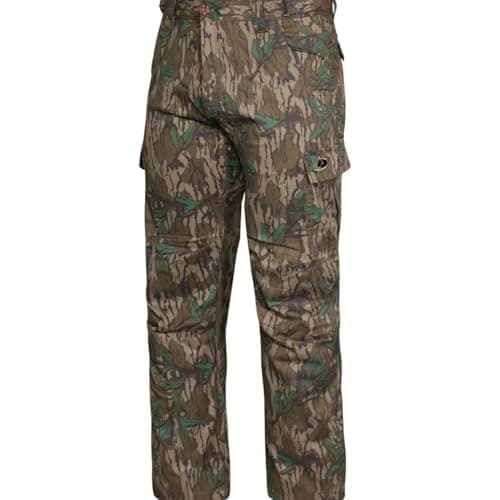
Mossy Oak Cotton Mill 2.0 Camo Hunting Pants
Nobody writes articles about hunting pants and everybody sits down in them. A seated hunter loses heat through the back of the thighs and the seat, and ordinary jeans are the worst possible choice - cotton denim holds moisture, dries slowly and offers nothing against wind. Mossy Oak's Cotton Mill 2.0 is a purpose-built camo hunting pant with reinforcement where a hunter kneels and climbs, and the right way to use it is with a base layer underneath rather than relying on the pant alone. Honest cons: it is a cotton-blend pant rather than an insulated one, so hard cold needs a base layer or a bib over the top; cotton content means it is slow to dry if soaked; and the fit is cut for movement rather than for looks.
#ad · Price as of October 10, 2026. We may earn a commission.
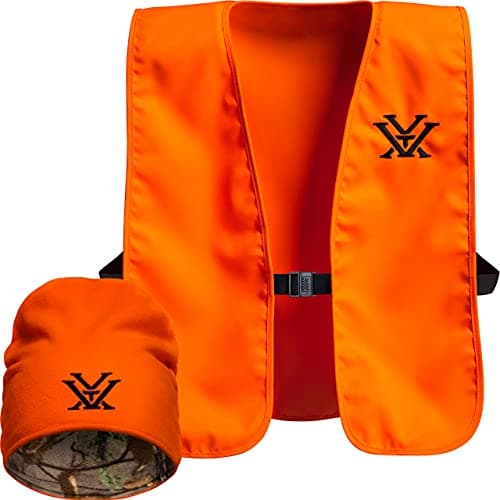
Vortex Blaze Orange Vest & Beanie Combo
The simplest way to satisfy a blaze orange requirement without buying an orange coat. It is a blaze orange vest and beanie together, worn over whatever the hunter already owns, which is exactly how most firearm-season hunters handle the rule - and the beanie matters because several states specify that the orange must include headwear. Buying the pair as a set is also the honest gift answer for a non-hunter who wants to give something genuinely useful and cannot guess a jacket size, since a vest goes over everything. Honest cons: a vest over an insulated jacket adds a layer that can rustle; requirements differ by state and season so you must still check the regulations rather than assume this satisfies them; and blaze orange is a firearm-season item that mostly sits unused during archery season.
#ad · Price as of October 10, 2026. We may earn a commission.
The four mistakes that end hunts early
1. Wearing the sit jacket on the walk in. Sweat soaks the insulation, wet insulation stops insulating, and the coldest hour starts damp. Carry it; put it on when you stop.
2. Cotton against the skin. A cotton T-shirt under good outerwear is the single most common cold-weather clothing error in hunting, and the cheapest to fix.
3. Two pairs of socks. Doubling up fills the boot, compression cuts circulation, and the hunter ends up colder in more sock. One good wool sock, in a boot with room.
4. No hat, or no spare. An uncovered head on a four-hour sit is a continuous heat leak, and a damp hat from the walk in is worse than no hat. Two hats weigh nothing.
What to wear deer hunting in a ground blind
A blind changes the problem rather than solving it. It blocks the wind, which is a large help, but it also blocks the sun, holds cold air at floor level, and lets a hunter sit even more still than a treestand does — so hunters are often colder in a blind than they expect. Dress as though you were exposed, and add something under your feet. How to stay warm in a ground blind covers that case specifically.
Buying hunting clothing for somebody else
Clothing is the riskiest category of hunting gift, because almost all of it has a size. Two ways around that. Buy the sizeless items — a hat, a neck gaiter, a hand warmer, a blaze vest, socks — or buy the items where being a size out does not matter, which is base layers and fleece rather than boots and jackets.
The other thing worth knowing: a hunter with good outerwear and a cotton shirt underneath is far more common than a hunter who needs another coat. A good base layer is a better gift than its price suggests, and it is the one thing on this page a hunter almost never buys themselves. Best gifts to keep a hunter warm is the gift-shaped version of this list, gifts for deer hunters is the hunter-type page, and gifts for a hunting couple covers the case where two people are heading out together and you are buying one present.
How we chose these
We do not run a test lab and we have not sat out a December morning in each garment. Every fabric, weight and construction detail above is the manufacturer's own published product information, cited below; the layering advice is conventional practice plus NIOSH's published cold-stress guidance on wet clothing; and the deer-vision note reflects published research that deer are dichromats. No garment here has a warmth rating or an award from us. Our method is on the how we choosepage, and prices come live from Amazon with the capture date beside them. Blaze orange requirements are not quoted as numbers anywhere on this page on purpose — they are state law and they change.
Keep browsing
Best camo hunting clothes ranks the clothing category, best hunting jackets handles the outer layer, and merino vs synthetic base layers settles the one decision that matters most. How to stay warm hunting is the whole system in one page.
Frequently asked questions
What should I wear deer hunting?
A merino or synthetic base layer next to the skin, a fleece mid-layer, and an outer layer chosen for the weather - insulated for a cold sit, waterproof for rain. Add one pair of good wool socks in boots with room, a warm hat, a neck gaiter, and whatever blaze orange your state requires. Carry the outer layer on the walk in rather than wearing it.
What is the most important piece of deer hunting clothing?
The base layer, which is also the cheapest and least visible. Deer hunting means working hard on the walk in and then sitting still for hours, and sweat trapped against the skin makes the sit cold no matter how good the jacket is. Merino or a synthetic moves moisture; cotton holds it.
Can I wear jeans deer hunting?
You can, and they are a poor choice. Cotton denim holds moisture, dries slowly and does nothing against wind, and a seated hunter loses heat through the back of the thighs. A purpose-built hunting pant, or ordinary hunting pants with a base layer underneath, is a large upgrade for not much money.
How much does camo pattern matter for deer hunting?
Less than most hunters assume. The order of what gets you caught is roughly scent, then movement, then silhouette, then pattern. Deer are dichromats and perceive long wavelengths poorly, so exact colour matching matters little. Quiet fabric matters much more than pattern - a shell that crackles on a branch at fifteen yards costs the opportunity outright.
How much blaze orange do I need to wear deer hunting?
That is set by your state, it differs by season and sometimes by land type, and archery seasons are often exempt - so check your state wildlife agency's current regulations rather than taking a number from an article. A blaze vest and beanie worn over existing clothing is how most firearm-season hunters satisfy it, and several states specify that headwear is included.
Should I wear two pairs of socks deer hunting?
No. Two pairs fill the boot, compression cuts circulation, and the hunter ends up colder in more sock. One good merino or wool-blend sock in a boot with room to wiggle toes is warmer. If feet still fail, the answer is insulation under the feet or battery heat, not another sock.
Sources
- MERIWOOL - published product information for the midweight merino wool base layer top
- Mossy Oak - published product information for the performance fleece camo hoodie
- Mossy Oak - published product information for the Cotton Mill 2.0 camo hunting pant
- Vortex Optics - published product information for the blaze orange vest and beanie combo
- NIOSH (CDC) - cold stress guidance, including wet clothing as a primary cold-weather hazard control
- University of Georgia Deer Research - published work on deer colour vision (dichromatic, poor long-wavelength sensitivity)