Gear Guides
How to Stay Warm in a Ground Blind
A blind blocks the wind, which is most of the battle - and then it takes away the sun, traps cold air at the floor, and lets you sit more still than you ever would in a tree.
Short answer: get off the ground, insulate under your feet, and add heat rather than more clothing. A blind has already solved the wind problem for you, so the remaining heat loss is going downward into cold earth and outward from a body that is sitting more still than it would anywhere else. Those are different problems from the ones a treestand hunter has, and they have different fixes.
Hunters are routinely surprised by this. A pop-up blind feels like shelter, so the expectation is that it will be warmer than an exposed stand — and then four hours in, feet are numb and the hunter is packing up early. Three things are going on.
The blind blocks the sun as well as the wind. On a cold, bright morning an exposed hunter gets real radiant warmth from direct sun. Inside a dark fabric box, you get none of it. Cold air pools at the floor. Cold air is denser, so the coldest part of a blind is exactly where your boots are, and the ground underneath is a large, cold mass drawing heat out by conduction through the soles. And a blind lets you sit genuinely motionless.That is the whole point of hunting from one — concealment means no need to shift, turn or stretch — but muscle movement is how a resting body generates heat, and a hunter who never moves generates almost none.
Where the heat is actually going
| Route | In a ground blind | The fix |
|---|---|---|
| Conduction, into the ground | The big one - boots on cold earth for hours | Something insulating under your feet, and a proper seat |
| Conduction, into the seat | A cold steel or plastic stool pulls heat from the thighs | An insulated cushion or a padded blind chair |
| Convection, wind | Mostly solved by the blind itself | Close the unused windows; a blind with gaps is a wind tunnel |
| Radiation, no sun | Worse than being exposed on a sunny day | Add heat - battery or catalytic - rather than insulation |
| Metabolic, you are not moving | Worst of any hunting position | Eat, drink warm fluid, flex calves and hands periodically |
| Evaporation, sweat from the walk in | Same as anywhere, and still the first mistake | Carry the jacket in, put it on once inside |
Read the first two rows together and you have the one insight worth taking away: in a blind, most of the fixable heat loss is downward. The hunter who adds a second jacket is solving the wrong route. The hunter who puts a closed-cell pad under their boots and sits on something insulated gains more sit time for less money.
The fixes, in the order that works
1. Close the blind down. Open every window and a blind is a wind tunnel with a roof. Shoot from one or two windows, zip the rest, and the inside temperature rises noticeably on a breezy day. A blind with see-through mesh panels lets you keep this closed and still watch.
2. Get off the ground, properly. A padded, insulated chair rather than a bucket or a camp stool. This does double duty: insulation between you and a cold seat, and a back that lets you stay relaxed, which matters because tensed, shivering muscles burn through energy fast.
3. Insulate under your feet.The cheapest high-impact fix in this whole page. A square of closed-cell foam, an old sleeping pad, a scrap of carpet, or a boot mat — anything that breaks the conduction path from boot sole to cold earth. Hunters consistently underrate this and then blame their boots.
4. Add heat, not insulation. Once the hunter is dry, off the ground and out of the wind, more clothing has diminishing returns, because the body is simply not producing much heat to retain. Battery or fuel heat adds energy, which is a different thing entirely.
5. Eat and drink. Digestion produces heat and warm fluid is a direct delivery. A thermos of something hot at the two-hour mark changes a sit measurably more than it sounds like it should.
Four things that make a blind sit work
A chair that insulates and swivels, body warmers for the core, a rechargeable hand warmer, and the base layer that stops the whole problem starting. Prices are pulled live from Amazon.
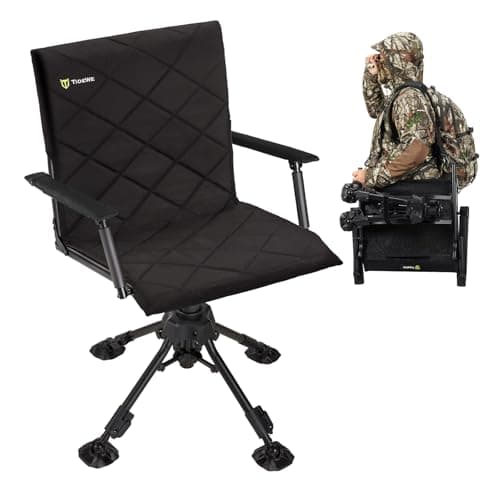
TIDEWE 360° Silent Swivel Hunting Chair
The single most useful purchase for a blind hunter who gets cold, and it is not sold as a warmth product. TIDEWE publishes it as a silent 360-degree swivel hunting chair with a padded seat and back - which is three separate wins in a blind. The padding breaks the conduction path from your thighs into a cold seat; the back lets a hunter stay relaxed rather than hunched, and relaxed muscles burn less energy; and the silent swivel means you can cover every window without standing up, which is what lets a hunter actually stay still and not open the blind to shift position. Honest cons: it is bulky to carry to a blind that is not near a vehicle; a swivel mechanism is one more thing that can squeak once it is dirty, so it needs keeping clean; and it is the most expensive item on this page.
#ad · Price as of October 10, 2026. We may earn a commission.
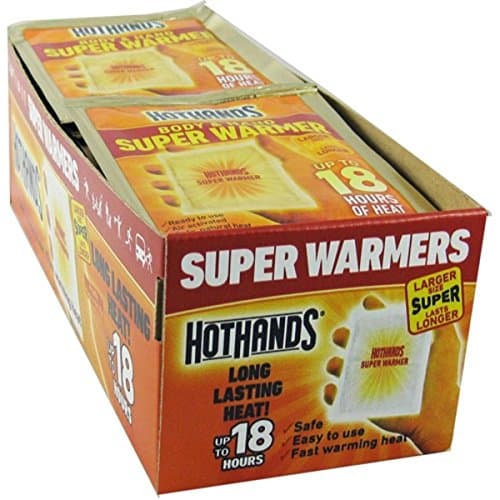
HotHands 18-Hour Body & Hand Super Warmers (40-Pack)
The cheapest meaningful heat in hunting, bought in bulk. These are the large air-activated warmers HotHands publishes at up to 18 hours of heat, sized for the body rather than the hand - which is the point: stuck to the inside of a base layer over the kidneys or across the chest, they warm the core, and a warm core is what stops the body pulling blood back from the hands and feet. A 40-pack means a hunter never has to decide whether today is worth using one. For a blind sit specifically, two on the body and one in each boot is a complete answer for under the price of a tank of gas. Honest cons: single use, so there is a running cost and waste; they need air to activate and smother inside a sealed pocket; and they take 15 to 30 minutes to reach full heat, so you open them at the truck rather than when you are already cold.
#ad · Price as of October 10, 2026. We may earn a commission.
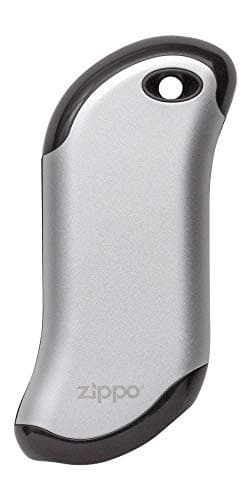
Zippo HeatBank 9s Rechargeable Hand Warmer
The pick if the hunter would rather charge something than buy disposables every season. Zippo publishes the HeatBank 9s as a rechargeable hand warmer with six heat settings and up to nine hours of run time, which also works as a USB power bank for a phone - genuinely useful on a long, cold, boring sit. In a blind its advantage over heated gloves is flexibility: in a pocket, in a muff, under a hat on a break, or down a boot. It is also the item on this page with no fit to get wrong, which makes it the safest gift. Honest cons: it heats one hand properly and two awkwardly; it is a half-pound brick in a pocket; and when it is flat it is nothing at all, with no fuel-stick fallback - which is why a couple of disposables should live in the pack regardless.
#ad · Price as of October 10, 2026. We may earn a commission.
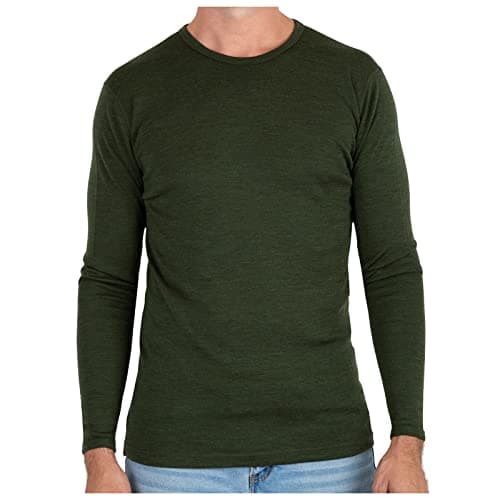
MERIWOOL Merino Wool Base Layer Top
Included because the most common reason a blind sit goes cold has nothing to do with the blind: the hunter sweated on the walk in and is now sitting in a damp shirt. A midweight merino base layer moves moisture away from the skin and keeps a usable amount of its insulating value when damp, which is the specific property that matters here. Merino also resists odour between washes better than synthetics, which is worth something to anyone hunting the same blind several days running. MERIWOOL publishes it as a midweight merino crew - the right weight for deer season, warmer than a lightweight and less sweaty than a heavyweight. Honest cons: merino costs several times a synthetic equivalent; it wears through at friction points sooner than polyester; and it is the least exciting thing a non-hunter can wrap up as a gift, however much it helps.
#ad · Price as of October 10, 2026. We may earn a commission.
A blind sit, hour by hour
| When | Do this | Why |
|---|---|---|
| At the truck | Activate body warmers; strip to base plus mid-layer | Warmers need 15-30 minutes; you are about to sweat |
| Walking in | Carry the jacket, walk deliberately cool | Sweat now is cold later |
| First five minutes inside | Jacket on, pad under feet, unused windows zipped | Set the blind up warm before you get cold |
| Hour one to two | Flex calves and hands every so often | A still body makes almost no heat |
| Hour two | Eat something, drink something warm | Digestion is heat; warm fluid is direct delivery |
| When hands go | Hand warmer, not a thicker glove | Added heat beats more insulation at this point |
| When feet go | Stand, flex, check boot tightness | Compression is the usual culprit, not insulation |
That last row is the one worth repeating, because it is counter-intuitive. Feet most often go cold because the boot is packed too tight — two pairs of socks, or a boot sized to fit with one — and compression kills circulation. How to keep your feet warm hunting works through the three real causes, and should hunting boots be tight or loose covers the fit rule.
Does the blind itself make a difference?
Yes, in two ways. A blind with see-through mesh panels lets a hunter keep the shooting windows closed and still watch, which is a direct warmth gain over a blind where you have to open a window to see anything. And a larger blind is colder than a snug one for the same reason a big room is harder to heat than a small one — more air volume, more fabric surface, and a body heating none of it meaningfully.
Beyond that, blind choice is a hunting decision rather than a warmth decision: standing height, floor space, and whether it is left out all season. Best hunting blinds ranks the category, and best ground blind for bow hunting covers the archery case, where floor space and height are the deciding specs.
What to buy for a blind hunter who gets cold
If you are buying a gift for somebody who hunts from a blind and complains about the cold, the priority order is unintuitive and worth following: a chair, then a foam pad or boot mat, then heat, then clothing. The chair and the pad are the two things they probably have not bought for themselves, and they address the route most of the heat is taking.
Avoid buying a propane heater as a gift. Even setting aside the ventilation question above, a heater is a decision the hunter should make for their own blind with the manufacturer's instructions in hand — not something to be handed in a box. Best heated hunting gear covers the safe, flameless versions, and best hand warmers for hunting ranks the disposables and refillables.
How we chose these
We do not run a test lab and we have not measured a temperature inside a blind. Every chair, warmer and fabric detail above is the manufacturer's own published product information, cited below; the heat-loss routes are standard physics and the cold-weather guidance follows NIOSH's published cold-stress material; and the carbon monoxide caution follows published portable-heater safety guidance rather than anything we tested. No product here carries a score or an award from us. Our method is on the how we choose page, and prices come live from Amazon with the capture date beside them.
Keep browsing
How to stay warm hunting is the general version of this page, what to wear deer hunting handles the clothing side head to toe, and best hunting blinds covers the blind itself.
Frequently asked questions
How do you stay warm in a ground blind?
Get off the ground onto an insulated, padded chair, put something insulating under your boots, close every window you are not shooting from, and add heat rather than more clothing. A blind has already solved the wind, so the heat you are losing is going downward into cold earth and outward from a body that is sitting unusually still.
Why am I colder in a ground blind than in a treestand?
Three reasons. The blind blocks the sun as well as the wind, so you lose the radiant warmth an exposed hunter gets on a bright morning. Cold air pools at the floor, which is where your boots are, and the ground conducts heat out through the soles. And a blind lets you sit genuinely motionless, which means your body produces almost no heat of its own.
What should I put under my feet in a ground blind?
Anything that breaks the conduction path from boot sole to cold earth - a square of closed-cell foam, an old sleeping pad, a boot mat, even a scrap of carpet. It is the cheapest high-impact fix for a cold blind sit, and hunters consistently blame their boots instead.
Is it safe to use a propane heater in a hunting blind?
Any fuel-burning heater produces carbon monoxide, and a zipped fabric blind is a small, poorly ventilated space - which is the combination portable-heater safety guidance warns about. If a hunter uses one, the manufacturer's instructions govern: ventilation, clearance from fabric, never while drowsy or asleep, and a CO alarm. Everything else here works without an open flame, which is why none of our picks is a heater.
Do blind heaters or hand warmers work better?
For a hunter already dry, seated and out of the wind, body and hand warmers do most of the useful work with none of the ventilation risk - two body warmers on the core and a hand warmer in a pocket is a complete answer for a day sit. A core that stays warm also stops the body restricting blood flow to the hands and feet, which is what actually ends sits.
What is the best chair for a cold ground blind?
A padded, insulated chair with a back and a silent swivel. The padding stops heat conducting out of your thighs, the back lets you stay relaxed rather than hunched and shivering, and the swivel lets you cover every window without standing up - which is what makes it possible to sit still rather than opening the blind to shift.
Sources
- TIDEWE - published product information for the 360-degree silent swivel hunting chair (padded seat and back)
- HotHands - published product information for the 18-hour body and hand super warmers (air-activated, warm-up time)
- Zippo - published product information for the HeatBank 9s rechargeable hand warmer (six settings, up to 9 hours, USB power bank)
- MERIWOOL - published product information for the midweight merino wool base layer top
- NIOSH (CDC) - cold stress guidance, including wet clothing and cold-induced vasoconstriction
- U.S. Consumer Product Safety Commission - portable heater and carbon monoxide safety guidance