Gear Guides
What Do Binocular Numbers Mean?
Every pair of binoculars has two numbers on it, like 10x42. Here's what each one actually tells you — in plain English — so you can shop for a hunter with confidence, even if you've never picked up a pair yourself.
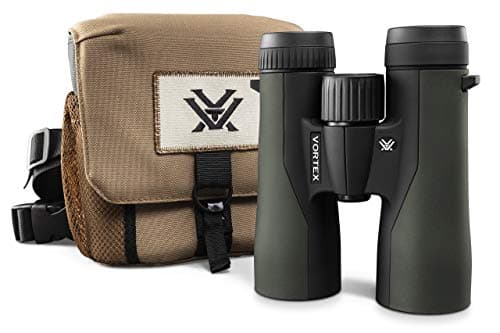
If you've started shopping for binoculars as a gift, you've probably run into a wall of listings covered in numbers: 8x42, 10x42, 10x50, 8x32. It looks like a secret code, and it's easy to assume you need to be an expert to tell the difference. You don't. There are only two numbersthat matter, they mean the same thing on every pair ever made, and once you know what each one does you can shop like you've been doing it for years.
This guide breaks it down the way you'd explain it to a friend across the kitchen table. We'll decode both numbers, cover what each one means for how far the binoculars reach, how bright and steady the picture is, how much they weigh, and how wide a view you get — and then we'll match the two most popular sizes to the kind of hunting the person on your list actually does. No jargon, no spec-sheet homework, just enough to buy the right pair with confidence.
The two numbers, decoded
Pick up any pair of binoculars and you'll see something like 10x42 printed on the body. That's the whole code, and it's only two pieces of information. The first number — the one before the "x" — is the magnification: how many times closer the binoculars make things appear. The second number, after the "x", is the objective lens diameterin millimeters — the size of the big lenses at the far end, which is what gathers light. So "10x42" reads as "ten by forty-two": ten times magnification, with forty-two-millimeter front lenses.
That's genuinely it. Every binocular on the shelf follows this exact convention, whether it's a budget pair or a premium one, so once you can read those two numbers you can compare any two models at a glance. The rest of this guide is just about what each number means in practice — and how to pick the pairing that fits. If you want the bigger picture on choosing a pair, our how to choose hunting binoculars guide walks through it start to finish.
The first number: magnification (why bigger isn't always better)
The first number is the one everybody fixates on, because it sounds like the important one: higher must be better, right? Not quite. Magnification tells you how much closer the image looks. A 10x pair makes a deer on a far ridge appear ten times closer than it does to the naked eye; an 8x pair makes it eight times closer. More magnification means more reach, which is a real advantage when a hunter is glassing wide-open country and trying to pick out an animal a long way off.
But magnification comes with three trade-offs that surprise people. First, higher magnification magnifies your shake, too. Your hands are never perfectly still, and at 10x every tiny tremor is amplified, so the image bounces more than it does at 8x — which makes it harder to hold steady and study detail. Second, more magnification usually gives you a narrower field of view, meaning you see a smaller slice of the landscape at once (more on that below). Third, at the same lens size, a higher-power view is spread thinner and can look a touch dimmerin low light. None of these make 10x a bad choice — they just mean "more power" isn't automatically "better." It's a balance.
The second number: the objective lens (brightness and weight)
The second number — the 42 in 10x42 — is the diameter of those big front lenses in millimeters, and its job is simple: gathering light. Bigger objective lenses let in more light, which means a brighter, clearer image, and that matters most exactly when hunters are out: the dim half-light of dawn and dusk, when game moves and the sun isn't up yet. A larger lens is what lets a hunter keep glassing after the light starts to fade, when smaller lenses have already gone dark and grainy.
The catch is size and weight. A bigger objective lens means a bigger, heavier pair of binoculars — and weight matters a lot when someone is carrying them on a strap all day or hiking miles into the backcountry. You'll commonly see three objective sizes: around 32mm (compact and light, but dimmer in low light), 42mm (the popular all-around middle ground), and 50mm(very bright, but noticeably heavier and bulkier). For most hunters, 42mm hits the sweet spot — bright enough for the low-light hours without being a brick around the neck.
Field of view and exit pupil, in plain terms
Two more ideas get tossed around, and both come straight out of those two numbers, so they're easier than they sound. Field of view is simply how wide a slice of the world you can see through the binoculars at once. Lower magnification gives a wider field of view, which makes it much easier to find an animal in the first place and to followone that's moving. That's a quiet reason a lot of hunters in timber and brushy country favor 8x — the wider view helps them catch movement and stay on it.
Exit pupilsounds technical but is really just a small circle of light you can see if you hold the binoculars at arm's length and look at the eyepieces. Here's the plain-English trick: divide the second number by the first. On a 10x42, that's 42 divided by 10, so about a 4.2mm circle; on an 8x42, it's 42 divided by 8, so a bigger circle closer to 5.25mm. A bigger exit pupil means a brighter, more forgiving view — easier for your eye to line up with, steadier-feeling, and better in dim light. That's why, with the same42mm lens, an 8x pair often feels a little brighter and easier on the eyes than a 10x pair. You don't need to memorize any of this to buy well — just know that at the same lens size, lower power is a bit brighter and steadier, and higher power reaches farther.
How to read the common sizes at a glance
Almost every binocular a hunter would want lands in one of a handful of sizes. Here's the quick read on each, so you can recognize what you're looking at:
| Size | What it's good at | Worth knowing |
|---|---|---|
| 8x42 | Steady, wide, bright — the do-everything all-rounder | Less reach for glassing wide-open country |
| 10x42 | More reach in the same size body — great for open country | A touch shakier by hand and slightly narrower view |
| 8x32 / 10x32 | Lighter and more compact to carry all day | Smaller lenses gather less light — dimmer at dawn and dusk |
| 10x50 / 12x50 | Maximum reach and brightness for long-range glassing | Heavier and hard to hold steady without a rest or tripod |
Notice the pattern: the two numbers are always trading off against each other. Push the first number up for reach and you lose a little steadiness and view; push the second number up for brightness and you add weight. There's no single "best" pair — only the best pair for how someone hunts. And in practice, the great majority of hunters land on either 8x42 or 10x42, which is why those two are worth a closer look.
Which pairing suits which hunter
For the person you're shopping for, the choice almost always comes down to 8x42 versus 10x42— same 42mm lenses, the only difference being the power. Here's the simple way to decide. If they mostly hunt woods, timber, or from a treestand, where most looks are close to mid-range and animals appear and move fast, lean toward 8x42: it's steadier to hold, has a wider view for catching movement, and is a little more forgiving in low light. If they hunt open country— western big game, agricultural fields, long looks across canyons or bean fields where spotting a distant animal is half the game — lean toward 10x42 for the extra reach.
If you truly aren't sure, 10x42 is the safe, versatile defaultthat suits most deer and big-game hunters, which is why a value pair like the Vortex Crossfire HD 10x42 is such a reliable gift. It has enough reach for open ground yet stays steady enough for most hands, and it's the size a lot of hunters would pick for themselves. For a deeper side-by-side, our 8x42 vs 10x42 binoculars comparison lays out exactly when each wins. And whichever you choose, a bino harnesskeeps them from swinging and banging on the hike in — a small, thoughtful add-on any hunter with binoculars will appreciate.
Frequently asked questions
What do the two numbers on binoculars mean?
The first number is the magnification — how many times closer things appear. The second number is the diameter of the front (objective) lenses in millimeters, which is how much light they gather. So 10x42 means ten times magnification with forty-two-millimeter objective lenses. Every pair of binoculars uses this same format.
Is a higher first number always better?
No. A higher first number gives more reach, but it also magnifies your hand shake, narrows the field of view, and can look a little dimmer at the same lens size. That's why 10x isn't automatically better than 8x — it's a trade-off between reach and steadiness, and the right choice depends on how someone hunts.
What does the second number do?
The second number is the objective lens diameter in millimeters, and its job is gathering light. A bigger lens gives a brighter, clearer image — which matters most at dawn and dusk when hunters are out. The downside is weight: bigger lenses mean heavier binoculars. For most people, 42mm is the sweet spot between brightness and portability.
Should I buy 8x42 or 10x42 for a hunter?
Choose 8x42 for someone who mostly hunts woods, timber, or from a treestand — it's steadier, wider, and a bit brighter in low light. Choose 10x42 for open-country and western big-game hunters who need the extra reach. If you're unsure, 10x42 is the safe, versatile default that suits most deer and big-game hunters.
What is exit pupil, and does it matter for a gift?
Exit pupil is the small circle of light you'd see holding the binoculars at arm's length — just divide the second number by the first (42 divided by 10 is about 4.2 on a 10x42). A bigger exit pupil means a brighter, more forgiving view in low light. You don't need to calculate it to buy well; just know lower power at the same lens size is a bit brighter and steadier.