Gear Guides
What Size Hunting Pack Do You Need?
Liters are the only honest way to compare packs, and almost nobody buys on them. Here is the number for each kind of hunt - and why the pack most hunters buy is a size too big.
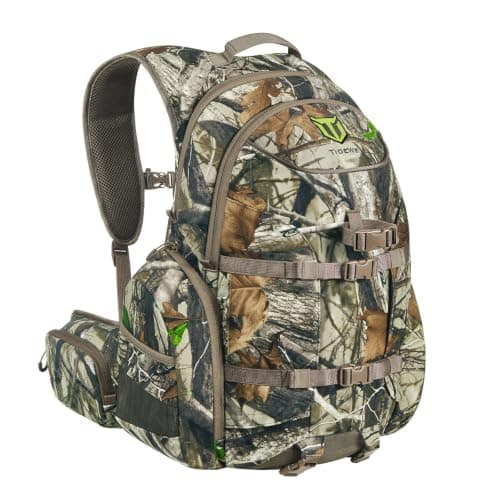
Short answer, before the detail: most hunters need 30 to 45 liters. A whitetail sit from a truck needs 20 to 30, a long day in the mountains 35 to 50, an overnight or a camp 65 and up, and carrying an animal out is a frame question rather than a capacity question. If you buy one pack, buy around 40 liters.
The reason this question is worth a page is that liters are the one specification in the category that means something, and they are the one almost nobody shops on. Packs get bought on pockets, patterns and brand, and the hunter finds out about capacity on the first hunt — either by not being able to fit a jacket in, or by carrying eighty liters of air up a hill.
And that second failure is the common one. Too big is worse than slightly too small, for a reason that is not obvious: a pack expands to fill itself. Give a hunter more room and they carry more, and every ounce of it comes up the hill with them. A pack that forces a decision about what matters is doing useful work.
How many liters, by how you hunt
| The hunt | Capacity | What has to fit | Watch out for |
|---|---|---|---|
| A sit close to the truck | 20-30 L | A layer, water, snacks, a knife, a light, a call | Buying bigger than this because it was on offer |
| A long day, mountains or public land | 35-50 L | All of the above plus more water, more layers, a kill kit and game bags | Running out of room for the layers you shed on the walk in |
| Overnight or a base camp | 65 L and up | Sleep system, food, stove, camp clothing | Treating this as a hunting pack - it is a camping pack |
| Carrying an animal out | A frame, not a capacity | A load shelf and a hip belt that transfers weight | Assuming liters will do the job a frame does |
One honest note on those ranges: they are conventional practice rather than measured findings, and they are offered as guidance. Every manufacturer's liter figure is measured slightly differently, and two 40-liter packs can swallow noticeably different amounts of gear depending on how much of the volume is in pockets you cannot stuff.
What to look for once you have the number
Torso length, not shirt size. A pack carries properly when the hip belt sits on the hip bones and the shoulder straps wrap without gapping, and that is a function of torso length. Any pack worth buying adjusts; a pack that does not adjust is a pack that fits one person by accident.
A hip belt that actually transfers load. The belt is what moves weight off the shoulders and onto the legs. A thin webbing strap is not a hip belt, whatever the listing calls it.
Compression straps. The feature that lets one pack work at two sizes. Cinched down, a 40-liter pack carries a half load without it sloshing around; without compression, a part-full pack swings on every sidehill.
Quiet fabric, and no rattling. Nylon that crackles against brush costs opportunities. So do a dozen loose buckles.
Access that suits the hunt. A top-loader is simple and strong. A panel-loading zip gets you to the thing at the bottom without unpacking in the dark, which matters more on a day hunt than it sounds.
Water, and where it goes. A bladder sleeve or bottle pockets you can reach without taking the pack off. A hunter who has to stop and unpack to drink stops drinking.
Three packs that sit at three of the four sizes above, with prices pulled live from Amazon.
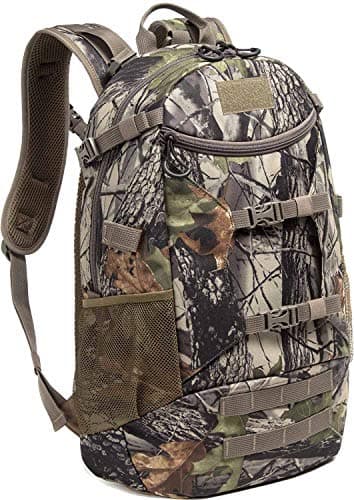
AIRTTUZ Camo Hunting Daypack (with Rain Cover)
The day-sit size, and the cheapest honest way to find out what size you actually need. This is an inexpensive camo daypack in quiet 600D fabric with a rain cover and a pull-down gun pocket, which covers a close-to-the-truck whitetail sit completely: a layer, water, food, a knife, a light and a call. For a hunter who is not sure whether they want a dedicated hunting pack, a cheap daypack used for a season tells you exactly which pocket you wished was bigger. Honest cons: a budget pack has a budget suspension, which you feel on a long carry; the fabric and zips are the first things to fail on a pack at this price; and if you already know you hunt long days, this is a size too small rather than a bargain.
#ad · Price as of October 5, 2026. We may earn a commission.
TIDEWE 40L Hunting Backpack
Forty liters, and the answer for most hunters buying one pack. This is the size that fits the layers a cold morning demands plus the water, food, kill kit and game bags a long day needs, without the dead volume that turns a pack into a packing exercise. If you take one number away from this page it is this one: a hunter who hunts a mix of ground and does not camp will be well served by about 40 liters for years. Honest cons: 40 L is not an overnight and will not pretend to be; it is a soft pack, so it does not solve the pack-out; and the size that fits a long day perfectly is the size that is tight on the one day you shed every layer you brought.
#ad · Price as of October 5, 2026. We may earn a commission.
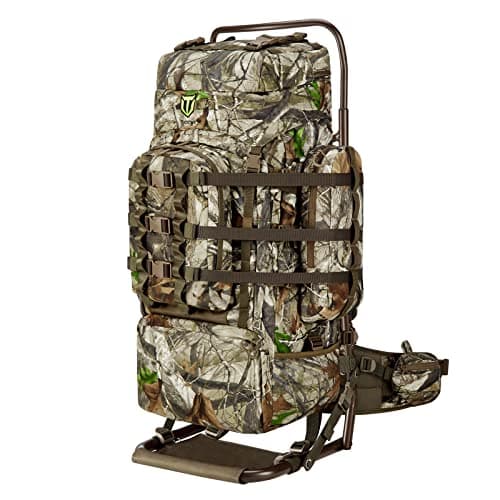
TIDEWE 90L External Frame Hunting Pack
Ninety liters and an external frame - the camp-and-pack-out end of the range, and the one that answers a different question than capacity. The frame is the point: it transfers a heavy load onto the hips, holds it off the back, and gives you something rigid to lash meat or a boned-out load to. At 90 L it also swallows a multi-day camp on the way in. Buy this if the hunter goes past where a vehicle can reach, or hunts elk. Honest cons: this is far more pack than a day hunt needs and unpleasant to carry nearly empty; an external frame is bulkier and noisier through brush; and a frame pack is a second pack for most people rather than their only one.
#ad · Price as of October 5, 2026. We may earn a commission.
How we chose these
We do not run a test lab. Every liter figure above is the manufacturer's own published capacity, cited below, and the capacity-by-trip ranges are conventional practice offered as guidance rather than measured findings. Nothing here carries a rating, a score or an award from us. Our method is on the how we choose page, and prices are pulled live from Amazon and stamped with the date they were captured.
Keep browsing
Best hunting backpacks ranks the field, how to choose a hunting backpack covers fit and suspension once you have the size, and what to pack in a hunting backpack covers what goes in it. If the hunter is heading to elk country, best hunting backpack for elk hunting is the one page here where the frame matters more than the liters.
Frequently asked questions
What size hunting pack do I need?
For most hunters, 30 to 45 liters - and about 40 if you only buy one. A sit close to the truck needs 20 to 30 liters, a long day in the mountains or on public land 35 to 50, and an overnight or base camp 65 and up. Carrying an animal out is a frame-and-hip-belt question rather than a capacity one.
Is 40 liters enough for hunting?
For the large majority of day hunting, yes, and it is the size we would recommend to somebody buying one pack. Forty liters holds the layers a cold morning needs plus water, food, a kill kit and game bags. What it will not do is an overnight, and it will not carry a quarter of an elk - that is a frame pack's job.
Is a bigger hunting pack better?
Usually not. A pack expands to fill itself: give a hunter more room and they carry more, and every ounce comes up the hill. A pack a little smaller than you think forces a decision about what matters, and carrying eighty liters of air is the most common version of buying wrong in this category.
What size pack do I need for elk hunting?
Two sizes, because elk hunting is two jobs. Thirty-five to fifty liters for the hunting, and a frame pack - 65 liters and up - for camp and the pack-out. Many elk hunters run both and leave the frame at camp or in the truck until an animal is down.
How do I know what size pack fits me?
Fit is torso length, not clothing size. The hip belt should sit on the hip bones and carry the weight, and the shoulder straps should wrap without gapping. Any pack worth buying adjusts for torso length; a pack with no adjustment fits one person by accident.
Do liters mean the same thing on every pack?
Not exactly. Manufacturers measure capacity slightly differently, and two 40-liter packs can swallow noticeably different amounts depending on how much of that volume sits in pockets you cannot stuff. Treat the figure as a good comparison between packs and a rough guide to what will fit.
Sources
- AIRTTUZ - published product information for the camo hunting daypack with rain cover
- TIDEWE - published product information for the 40L hunting backpack
- TIDEWE - published product information for the 90L external frame hunting pack
- ALPS OutdoorZ - hunting pack range and published capacity specifications