Gear Guides
The Best Compound Bow Under $200
Under two hundred dollars you are buying an adjustable ready-to-hunt package, not a flagship bow, and that is a perfectly honest thing to buy. Here is what works at this price, what it costs you in performance, and the two purchases that matter more than which bow you pick.
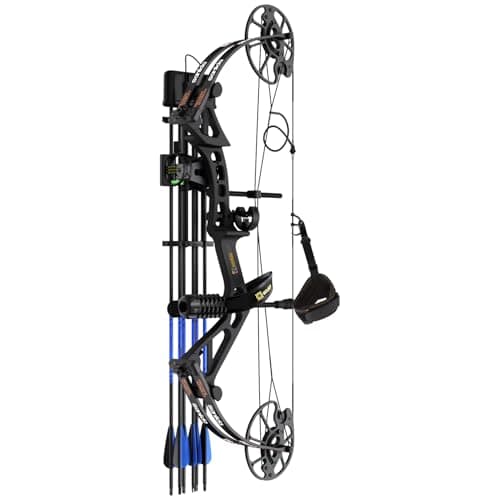
The verdict: the Sanlida Dragon X7 Ready-to-Hunt Bow Packageis the right buy under $200, and it is for the adult beginner or the gift buyer who needs a bow that will fit a person whose draw length they do not know. Sanlida publishes it as a complete, adjustable ready-to-hunt package, and the adjustability is the entire reason it wins at this price — a bow with a wide draw-length and draw-weight range fits a range of people and keeps fitting as they grow into it, where a fixed-spec bow has to be bought right the first time. The budget pick is the Sanlida Dragon X6 Youth Compound Bow Kit, the cheapest bow here, and it is a genuine recommendation for a young or smaller archer rather than a cut-rate version of the X7.
Be clear about what this price bracket is. A $170 compound bow is not a cheaper flagship. It is a different product: heavier mass weight, slower arrow speed, less refined cams, a stiffer draw cycle, and the accessories in the box are serviceable rather than good. What it does give you is a real compound bow, with real adjustability, that will put an arrow where you aim it inside sensible range. For learning to shoot, for a backyard target bow, and for a hunter finding out whether bowhunting is for them, that is the correct purchase and nobody should feel talked down to about it.
The two things that matter more than the bow. A target, because a bow nobody practises with is worse than no bow; and broadheads, because the field points in the box will not ethically kill a deer. Both are below, and both are priced live and dated along with the bows.
- 1Sanlida Dragon X7 Ready-to-Hunt Bow PackageThe pick, and the sensible default for almost everyone shopping at this price. Sanlida publishes the Dragon X7 as a complete ready-to-hunt compound bow package with a wide adjustment range, and the adjustment range is doing the heavy lifting: draw length and draw weight are personal fit specifications, a bow set to the wrong draw length cannot be shot accurately by anyone, and a gift buyer has no way to measure a recipient's draw length in advance. A bow that adjusts across a broad span solves that outright - it can be set to fit when it arrives and reset as the archer's form and strength change, which is exactly what happens in a first year. Buying it as a package rather than as a bare bow matters just as much at this budget, because sight, rest, quiver and release bought separately would cost more than the bow. Honest cons: this is an entry-level bow and the honest list is long. Arrow speed is well below a flagship, which narrows the range at which you should be shooting at an animal. The draw cycle is stiffer and less smooth, which is felt most by someone holding at full draw waiting for a deer to step clear. The included accessories are the first things an improving archer will replace, starting with the sight and the release. Cams and strings at this price need checking and will not hold tune as long. And it still needs a bow shop or a competent friend to set draw length, level the rest and paper-tune it - out of the box is not ready to hunt in the way the name implies.Best for: Best overall under $200 - for an adult beginner or a gift you cannot size
- 2
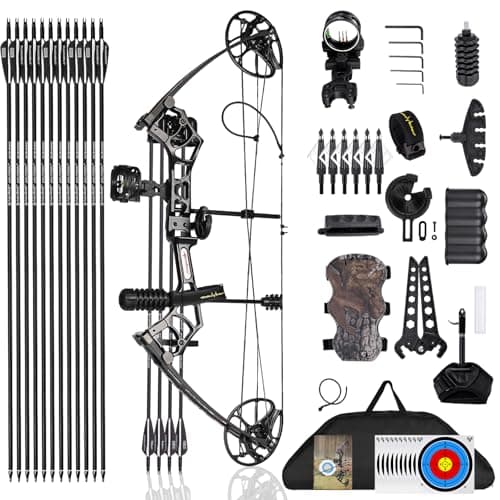 PANDARUS Ready-to-Hunt Compound Bow PackageThe pick for a buyer whose priority is getting shooting rather than getting the best bow, which is a defensible priority at this level. PANDARUS publishes this as an adjustable ready-to-shoot compound bow package for teens and adults, and the case for it over the X7 is simply arithmetic: the money saved buys a target, a dozen decent arrows and a season of practice, and practice improves a new archer far more than the difference between two entry-level bows does. The adjustability is the same crucial feature - it fits a range of people, which is what a first bow needs to do. For a household where more than one person will shoot it, or where you genuinely do not know who will end up using it, an adjustable package at the lowest honest price is the right call. Honest cons: everything said about the X7 applies here and slightly more so. Fit and finish at the lowest end of the compound market is variable, which means the chance of needing a part replaced or a limb checked is real and the support experience from smaller brands is thinner. The accessories are the weakest part of the package. Published speed figures at this price are achieved at maximum draw weight and length, which is not where most new archers will be shooting, so expect less in practice. And a bow that needs a part is a bow that is not being shot, which is the real cost of saving money here.Best for: Best value - for a hunter who wants to spend the saving on arrows and a target
- 3
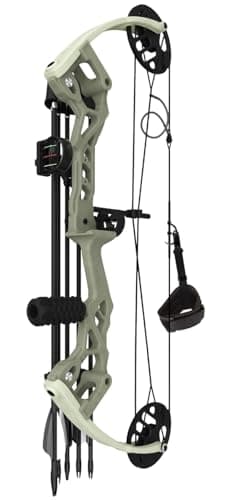 Sanlida Dragon X6 Youth Compound Bow KitThe cheapest bow on this page and the correct choice rather than a compromise if the archer is a kid or a smaller-framed adult. Sanlida publishes the Dragon X6 as a youth compound bow kit with arrows and accessories included, and the thing that makes a youth bow the right answer is not the price but the draw weight range: an adult bow adjusted to its lowest setting is usually still too heavy for a ten-year-old to hold at full draw with good form, and bad form learned early is very hard to unlearn. A bow that fits lets a kid shoot enough arrows to actually improve, which is the only thing that matters in a first year. Including arrows and accessories means it is shootable the day it arrives, which is what keeps a child interested. Honest cons: a youth bow has a low maximum draw weight, and that has a hard consequence - most states set a minimum legal draw weight for hunting deer, and a youth bow at the bottom of the range may not be legal to hunt with where you live. Check your own state's minimum before you buy it as a hunting bow rather than a target bow. It will be outgrown, which is a real cost even though it is the right purchase. The included arrows are practice arrows, not hunting arrows. And a youth bow is wrong for a full-sized adult beginner, who should buy the X7 or the PANDARUS instead.Best for: Budget pick - the cheapest here, and the right bow for a young archer
- 4
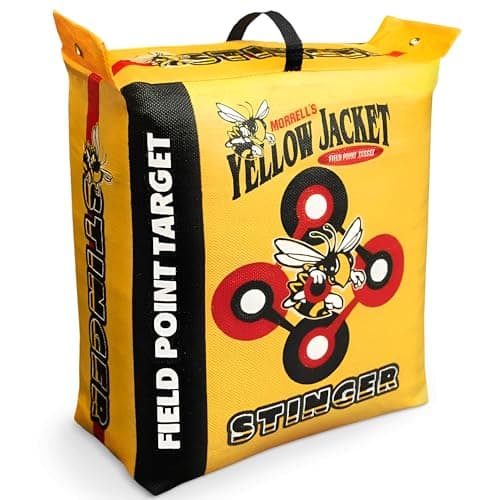 Morrell Yellow Jacket Archery TargetOn this page because leaving it off would be dishonest, and arguably the most important item here. Morrell publishes the Yellow Jacket as a field-point bag target, and the reason it belongs alongside a sub-$200 bow is that an entry-level bow shot two hundred times is more effective than a flagship shot ten times, and nobody shoots two hundred arrows without somewhere to shoot them. A bag target is the right type for a new archer specifically - it stops field points reliably, arrows pull out of it easily rather than requiring a wrestle, and it is quiet enough for a suburban back garden, which is where most practice actually has to happen. The alternative, shooting at a block of cardboard or a hay bale, destroys arrows and teaches nothing. Honest cons: bag targets are for field points only and broadheads will wreck one - expandable heads in particular, which is a genuinely expensive mistake to make once. It is bulky and it does not like being left in the rain, so it needs somewhere to live. Bag targets wear out through the centre where everyone shoots, so aim at different spots to spread the wear. And it does nothing to improve a bow that is not properly tuned; a target shows you your groups, it does not fix them.Best for: Buy this with the bow - the purchase that decides whether any of it works
- 5
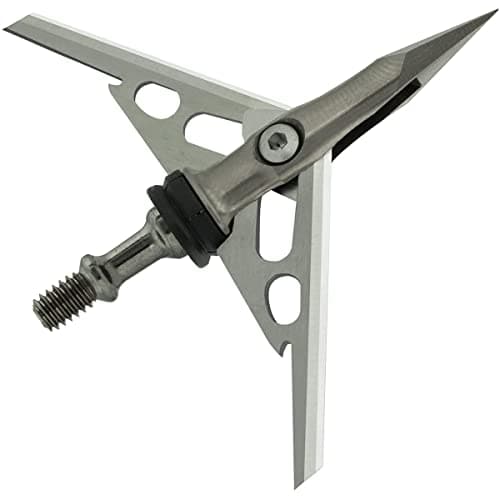 Rage Hypodermic Broadheads (3-Pack)The second mandatory companion purchase, and the one most new bowhunters do not realise they need. A ready-to-hunt package ships with field points, which are practice tips - they punch a hole and nothing else. Hunting deer requires a broadhead, and Rage publishes the Hypodermic as an expandable mechanical broadhead that deploys on impact. Mechanicals are the sensible choice for a hunter shooting an entry-level bow for the first season, for one specific reason: a fixed-blade broadhead has large surfaces that catch air and will amplify every tuning flaw in a cheap bow, where a mechanical flies closer to the field points you practised with and is therefore far more forgiving of a setup that is not perfectly tuned. That is exactly the situation a sub-$200 bow puts you in. Honest cons: mechanicals need more kinetic energy to open reliably and penetrate, and a low-poundage entry-level bow is at the bottom of the window where that is true - if the bow is set light, a fixed-blade head of modest cutting diameter is the more reliable choice, and this is a real decision rather than a preference. They have more to go wrong than a solid head. They cost noticeably more per head than fixed blades. And you must shoot a broadhead-tipped arrow into a broadhead-rated target before you hunt with it, because broadheads do not always hit where field points do.Best for: Buy this before you hunt - the field points in the box will not do
| # | Gift | Best for | Price |
|---|---|---|---|
| 1 | Sanlida Dragon X7 Ready-to-Hunt Bow PackageThe pick, and the sensible default for almost everyone shopping at this price. Sanlida publishes the Dragon X7 as a complete ready-to-hunt compound bow package with a wide adjustment range, and the adjustment range is doing the heavy lifting: draw length and draw weight are personal fit specifications, a bow set to the wrong draw length cannot be shot accurately by anyone, and a gift buyer has no way to measure a recipient's draw length in advance. A bow that adjusts across a broad span solves that outright - it can be set to fit when it arrives and reset as the archer's form and strength change, which is exactly what happens in a first year. Buying it as a package rather than as a bare bow matters just as much at this budget, because sight, rest, quiver and release bought separately would cost more than the bow. Honest cons: this is an entry-level bow and the honest list is long. Arrow speed is well below a flagship, which narrows the range at which you should be shooting at an animal. The draw cycle is stiffer and less smooth, which is felt most by someone holding at full draw waiting for a deer to step clear. The included accessories are the first things an improving archer will replace, starting with the sight and the release. Cams and strings at this price need checking and will not hold tune as long. And it still needs a bow shop or a competent friend to set draw length, level the rest and paper-tune it - out of the box is not ready to hunt in the way the name implies. | Best overall under $200 - for an adult beginner or a gift you cannot size | $169.99View on Amazon |
| 2 | PANDARUS Ready-to-Hunt Compound Bow PackageThe pick for a buyer whose priority is getting shooting rather than getting the best bow, which is a defensible priority at this level. PANDARUS publishes this as an adjustable ready-to-shoot compound bow package for teens and adults, and the case for it over the X7 is simply arithmetic: the money saved buys a target, a dozen decent arrows and a season of practice, and practice improves a new archer far more than the difference between two entry-level bows does. The adjustability is the same crucial feature - it fits a range of people, which is what a first bow needs to do. For a household where more than one person will shoot it, or where you genuinely do not know who will end up using it, an adjustable package at the lowest honest price is the right call. Honest cons: everything said about the X7 applies here and slightly more so. Fit and finish at the lowest end of the compound market is variable, which means the chance of needing a part replaced or a limb checked is real and the support experience from smaller brands is thinner. The accessories are the weakest part of the package. Published speed figures at this price are achieved at maximum draw weight and length, which is not where most new archers will be shooting, so expect less in practice. And a bow that needs a part is a bow that is not being shot, which is the real cost of saving money here. | Best value - for a hunter who wants to spend the saving on arrows and a target | $139.88View on Amazon |
| 3 | Sanlida Dragon X6 Youth Compound Bow KitThe cheapest bow on this page and the correct choice rather than a compromise if the archer is a kid or a smaller-framed adult. Sanlida publishes the Dragon X6 as a youth compound bow kit with arrows and accessories included, and the thing that makes a youth bow the right answer is not the price but the draw weight range: an adult bow adjusted to its lowest setting is usually still too heavy for a ten-year-old to hold at full draw with good form, and bad form learned early is very hard to unlearn. A bow that fits lets a kid shoot enough arrows to actually improve, which is the only thing that matters in a first year. Including arrows and accessories means it is shootable the day it arrives, which is what keeps a child interested. Honest cons: a youth bow has a low maximum draw weight, and that has a hard consequence - most states set a minimum legal draw weight for hunting deer, and a youth bow at the bottom of the range may not be legal to hunt with where you live. Check your own state's minimum before you buy it as a hunting bow rather than a target bow. It will be outgrown, which is a real cost even though it is the right purchase. The included arrows are practice arrows, not hunting arrows. And a youth bow is wrong for a full-sized adult beginner, who should buy the X7 or the PANDARUS instead. | Budget pick - the cheapest here, and the right bow for a young archer | $79.99View on Amazon |
| 4 | Morrell Yellow Jacket Archery TargetOn this page because leaving it off would be dishonest, and arguably the most important item here. Morrell publishes the Yellow Jacket as a field-point bag target, and the reason it belongs alongside a sub-$200 bow is that an entry-level bow shot two hundred times is more effective than a flagship shot ten times, and nobody shoots two hundred arrows without somewhere to shoot them. A bag target is the right type for a new archer specifically - it stops field points reliably, arrows pull out of it easily rather than requiring a wrestle, and it is quiet enough for a suburban back garden, which is where most practice actually has to happen. The alternative, shooting at a block of cardboard or a hay bale, destroys arrows and teaches nothing. Honest cons: bag targets are for field points only and broadheads will wreck one - expandable heads in particular, which is a genuinely expensive mistake to make once. It is bulky and it does not like being left in the rain, so it needs somewhere to live. Bag targets wear out through the centre where everyone shoots, so aim at different spots to spread the wear. And it does nothing to improve a bow that is not properly tuned; a target shows you your groups, it does not fix them. | Buy this with the bow - the purchase that decides whether any of it works | $44.99View on Amazon |
| 5 | Rage Hypodermic Broadheads (3-Pack)The second mandatory companion purchase, and the one most new bowhunters do not realise they need. A ready-to-hunt package ships with field points, which are practice tips - they punch a hole and nothing else. Hunting deer requires a broadhead, and Rage publishes the Hypodermic as an expandable mechanical broadhead that deploys on impact. Mechanicals are the sensible choice for a hunter shooting an entry-level bow for the first season, for one specific reason: a fixed-blade broadhead has large surfaces that catch air and will amplify every tuning flaw in a cheap bow, where a mechanical flies closer to the field points you practised with and is therefore far more forgiving of a setup that is not perfectly tuned. That is exactly the situation a sub-$200 bow puts you in. Honest cons: mechanicals need more kinetic energy to open reliably and penetrate, and a low-poundage entry-level bow is at the bottom of the window where that is true - if the bow is set light, a fixed-blade head of modest cutting diameter is the more reliable choice, and this is a real decision rather than a preference. They have more to go wrong than a solid head. They cost noticeably more per head than fixed blades. And you must shoot a broadhead-tipped arrow into a broadhead-rated target before you hunt with it, because broadheads do not always hit where field points do. | Buy this before you hunt - the field points in the box will not do | $48.00View on Amazon |
Prices from Amazon as of November 24, 2026 and change often — the button always opens the current listing. Some links earn us a commission at no extra cost to you.
Sanlida Dragon X7 Ready-to-Hunt Bow Package
The pick, and the sensible default for almost everyone shopping at this price. Sanlida publishes the Dragon X7 as a complete ready-to-hunt compound bow package with a wide adjustment range, and the adjustment range is doing the heavy lifting: draw length and draw weight are personal fit specifications, a bow set to the wrong draw length cannot be shot accurately by anyone, and a gift buyer has no way to measure a recipient's draw length in advance. A bow that adjusts across a broad span solves that outright - it can be set to fit when it arrives and reset as the archer's form and strength change, which is exactly what happens in a first year. Buying it as a package rather than as a bare bow matters just as much at this budget, because sight, rest, quiver and release bought separately would cost more than the bow. Honest cons: this is an entry-level bow and the honest list is long. Arrow speed is well below a flagship, which narrows the range at which you should be shooting at an animal. The draw cycle is stiffer and less smooth, which is felt most by someone holding at full draw waiting for a deer to step clear. The included accessories are the first things an improving archer will replace, starting with the sight and the release. Cams and strings at this price need checking and will not hold tune as long. And it still needs a bow shop or a competent friend to set draw length, level the rest and paper-tune it - out of the box is not ready to hunt in the way the name implies.
#ad · Price as of November 24, 2026. We may earn a commission.
PANDARUS Ready-to-Hunt Compound Bow Package
The pick for a buyer whose priority is getting shooting rather than getting the best bow, which is a defensible priority at this level. PANDARUS publishes this as an adjustable ready-to-shoot compound bow package for teens and adults, and the case for it over the X7 is simply arithmetic: the money saved buys a target, a dozen decent arrows and a season of practice, and practice improves a new archer far more than the difference between two entry-level bows does. The adjustability is the same crucial feature - it fits a range of people, which is what a first bow needs to do. For a household where more than one person will shoot it, or where you genuinely do not know who will end up using it, an adjustable package at the lowest honest price is the right call. Honest cons: everything said about the X7 applies here and slightly more so. Fit and finish at the lowest end of the compound market is variable, which means the chance of needing a part replaced or a limb checked is real and the support experience from smaller brands is thinner. The accessories are the weakest part of the package. Published speed figures at this price are achieved at maximum draw weight and length, which is not where most new archers will be shooting, so expect less in practice. And a bow that needs a part is a bow that is not being shot, which is the real cost of saving money here.
#ad · Price as of November 24, 2026. We may earn a commission.
Sanlida Dragon X6 Youth Compound Bow Kit
The cheapest bow on this page and the correct choice rather than a compromise if the archer is a kid or a smaller-framed adult. Sanlida publishes the Dragon X6 as a youth compound bow kit with arrows and accessories included, and the thing that makes a youth bow the right answer is not the price but the draw weight range: an adult bow adjusted to its lowest setting is usually still too heavy for a ten-year-old to hold at full draw with good form, and bad form learned early is very hard to unlearn. A bow that fits lets a kid shoot enough arrows to actually improve, which is the only thing that matters in a first year. Including arrows and accessories means it is shootable the day it arrives, which is what keeps a child interested. Honest cons: a youth bow has a low maximum draw weight, and that has a hard consequence - most states set a minimum legal draw weight for hunting deer, and a youth bow at the bottom of the range may not be legal to hunt with where you live. Check your own state's minimum before you buy it as a hunting bow rather than a target bow. It will be outgrown, which is a real cost even though it is the right purchase. The included arrows are practice arrows, not hunting arrows. And a youth bow is wrong for a full-sized adult beginner, who should buy the X7 or the PANDARUS instead.
#ad · Price as of November 24, 2026. We may earn a commission.
Morrell Yellow Jacket Archery Target
On this page because leaving it off would be dishonest, and arguably the most important item here. Morrell publishes the Yellow Jacket as a field-point bag target, and the reason it belongs alongside a sub-$200 bow is that an entry-level bow shot two hundred times is more effective than a flagship shot ten times, and nobody shoots two hundred arrows without somewhere to shoot them. A bag target is the right type for a new archer specifically - it stops field points reliably, arrows pull out of it easily rather than requiring a wrestle, and it is quiet enough for a suburban back garden, which is where most practice actually has to happen. The alternative, shooting at a block of cardboard or a hay bale, destroys arrows and teaches nothing. Honest cons: bag targets are for field points only and broadheads will wreck one - expandable heads in particular, which is a genuinely expensive mistake to make once. It is bulky and it does not like being left in the rain, so it needs somewhere to live. Bag targets wear out through the centre where everyone shoots, so aim at different spots to spread the wear. And it does nothing to improve a bow that is not properly tuned; a target shows you your groups, it does not fix them.
#ad · Price as of November 24, 2026. We may earn a commission.
Rage Hypodermic Broadheads (3-Pack)
The second mandatory companion purchase, and the one most new bowhunters do not realise they need. A ready-to-hunt package ships with field points, which are practice tips - they punch a hole and nothing else. Hunting deer requires a broadhead, and Rage publishes the Hypodermic as an expandable mechanical broadhead that deploys on impact. Mechanicals are the sensible choice for a hunter shooting an entry-level bow for the first season, for one specific reason: a fixed-blade broadhead has large surfaces that catch air and will amplify every tuning flaw in a cheap bow, where a mechanical flies closer to the field points you practised with and is therefore far more forgiving of a setup that is not perfectly tuned. That is exactly the situation a sub-$200 bow puts you in. Honest cons: mechanicals need more kinetic energy to open reliably and penetrate, and a low-poundage entry-level bow is at the bottom of the window where that is true - if the bow is set light, a fixed-blade head of modest cutting diameter is the more reliable choice, and this is a real decision rather than a preference. They have more to go wrong than a solid head. They cost noticeably more per head than fixed blades. And you must shoot a broadhead-tipped arrow into a broadhead-rated target before you hunt with it, because broadheads do not always hit where field points do.
#ad · Price as of November 24, 2026. We may earn a commission.
What $200 actually buys, and what it costs you
Every bow on this page is a ready-to-hunt package with an adjustable draw length and weight. That shared design is not a coincidence — it is the only sensible way to build a bow at this price, because it removes the need to size the bow to the buyer at the point of sale. Here is the honest comparison against what the money cannot buy.
| What you get under $200 | What you give up | Does it matter? |
|---|---|---|
| A real compound bow with adjustable fit | Nothing - this is the genuine win | No. Adjustability is worth more than specs to a beginner |
| Sight, rest, quiver and release in the box | Quality - these are the first parts you replace | Only once you improve; fine for a first season |
| Enough speed to hunt at sensible range | Flagship arrow speed | Yes, at distance. It shortens your ethical range |
| A shootable bow | A smooth draw cycle and a solid back wall | Yes, when holding at full draw waiting on a deer |
| A bow that holds tune for a season | Long-term tune stability and better strings | Yes over years; check it more often |
| A bow you still have to set up | A shop-tuned bow ready to shoot | Yes. Budget for a bow shop visit or a competent friend |
That last row is the one people miss. “Ready to hunt” describes the contents of the box, not the state of the bow. Draw length has to be set to the archer, the rest has to be centred and levelled, and the whole thing should be paper-tuned before an arrow is aimed at an animal.
Draw weight is a legal question, not just a comfort one
This is the single most important thing on the page if the bow is going to be hunted with. Most states set a minimum legal draw weight for hunting deer, and the minimum is not the same everywhere. A bow adjusted below that minimum is not legal for deer in that state, regardless of what the bow is capable of.
That matters most for the youth bow, whose whole purpose is a low draw weight. As a target bow for a child it is exactly right. As a deer bow it may not be legal where you live, and that is a thing to check with your own state's current regulations before you buy rather than after. We are not going to print a state-by-state table, because those numbers change and a stale table is worse than none.
The related question — what draw weight actually kills a deer cleanly, as opposed to what is legal — is worked through in what draw weight for deer hunting.
Why adjustability beats specifications at this price
Draw length is the specification that decides whether anyone can shoot a bow accurately. Set too long, the archer over-extends and collapses their form; set too short, they cannot anchor consistently. It is personal, it is measurable in about a minute by anyone who knows how, and it is impossible for a gift buyer to guess.
An adjustable ready-to-hunt package sidesteps the whole problem. It arrives, you set it to the person, and you reset it in a year when their form has changed and their strength has come up. That is why every bow on this page is adjustable, and why we would take an adjustable entry-level bow over a fixed-spec bargain at the same price every single time.
The broader bow roundup, including the one bow we recommend above this price ceiling, is best hunting bows. If the recipient might prefer a crossbow — which is a genuinely different decision and often the right one for an adult beginner — see crossbow vs compound bow.
The rest of the first-season list
Beyond the bow, target and broadheads, the kit a new bowhunter actually needs is short and not expensive. Arrows matched to the bow's draw weight and length, which is a real compatibility question rather than a preference — see best hunting arrows. A release aid, usually included at this price and usually the first thing upgraded. And a rangefinder, because bowhunting distances are short enough that a ten-yard misjudgement is the difference between a clean kill and a wounded animal: best rangefinder for bow hunting.
After that it is gloves that let you feel a release and a pack to carry it all: best gloves for bow hunting and best hunting backpacks.
Match the bow to the archer
Adult beginner, or a gift whose draw length you do not know. The Sanlida Dragon X7.
Lowest honest price, money going into arrows and practice instead. The PANDARUS ready-to-hunt package.
A child or a smaller-framed archer.The Sanlida Dragon X6 youth kit — and check your state's minimum draw weight before treating it as a deer bow.
Already own a bow, buying for someone who does. The Morrell target and the broadheads. These get used; another bow does not.
Hunting this season rather than target shooting. Bow, target and broadheads together, plus an hour at a bow shop. In that order, and do not skip the last one.
Frequently asked questions
What is the best compound bow under $200?
The Sanlida Dragon X7 ready-to-hunt package for most buyers, because its wide draw-length and draw-weight adjustment range means it fits a range of people and keeps fitting as an archer's form and strength change - which is the single most useful property a first bow can have, and the one a gift buyer cannot otherwise solve. For a child or a smaller archer the Dragon X6 youth kit is the right bow instead, and the PANDARUS package is the lowest-price honest option.
Can you actually hunt with a compound bow under $200?
Yes, within honest limits. These are real compound bows that will put an arrow where you aim inside sensible range, and plenty of deer have been killed with bows like them. What the price costs you is arrow speed, which shortens your ethical shooting distance, and a smooth draw cycle, which is felt when holding at full draw waiting on a deer. Two conditions apply: the bow must be set up and tuned properly rather than shot straight out of the box, and the draw weight must meet your state's legal minimum for deer.
Is a cheap compound bow ready to hunt out of the box?
No, and the name is misleading. 'Ready to hunt' describes what is in the box - sight, rest, quiver, release - not the state of the bow. Draw length has to be set to the individual archer, the rest has to be centred and levelled, and the bow should be paper-tuned before an arrow is pointed at an animal. Budget an hour at a bow shop or with someone competent. A bow shot at the wrong draw length cannot be shot accurately by anybody.
What draw weight do I need to hunt deer with a bow?
Enough to meet your state's legal minimum first, and enough to penetrate reliably second - and the legal minimum is not the same everywhere, so check your own state's current regulations rather than a number you read online. This matters most for youth bows, whose low draw weight is the whole point and which may not be legal for deer where you hunt even though they are perfect as target bows. There is a separate question of what actually kills cleanly, which is usually above the legal floor.
Do I need to buy broadheads separately?
Yes, and it is the most commonly missed purchase. Ready-to-hunt packages ship with field points, which are practice tips that punch a hole and nothing more - hunting deer requires a broadhead. For a first season on an entry-level bow, a mechanical broadhead is often the more forgiving choice, because it flies closer to the field points you practised with and is less affected by a bow that is not perfectly tuned. If the bow is set to a low draw weight, a fixed-blade head may penetrate more reliably. Either way, shoot a broadhead into a broadhead-rated target before you hunt with it.
Can I shoot broadheads into a bag target?
No - and it is an expensive lesson to learn once. Bag targets like the Morrell Yellow Jacket are built for field points: they stop them reliably and release arrows easily. A broadhead, and especially an expandable one, will cut the bag apart. Practise with field points on the bag, and use a dedicated broadhead-rated target for the handful of shots you take to confirm your broadheads hit where your field points do.
Should a beginner buy a compound bow or a crossbow?
It depends on what the person wants out of it. A compound bow is a skill to learn - it takes months of practice to become competent and that practice is the point for many people. A crossbow is far quicker to become accurate with and takes much less ongoing practice, which makes it the better choice for an adult who wants to hunt this season rather than take up archery. Check your state's crossbow season rules, which are often different from compound bow seasons.
Sources
- Amazon listing - Sanlida Dragon X7 Ready-to-Hunt Bow Package: published as a complete adjustable ready-to-hunt compound package
- Amazon listing - PANDARUS Ready-to-Hunt Compound Bow Package: published as an adjustable ready-to-shoot package for teens and adults
- Amazon listing - Sanlida Dragon X6 Youth Compound Bow Kit: published as a youth compound bow kit with arrows and accessories
- Amazon listing - Morrell Yellow Jacket Archery Target: published as a field-point bag target
- Amazon listing - Rage Hypodermic Broadheads (3-pack): published as expandable mechanical broadheads, 100 grain