Gear Guides
The Best Rangefinder for Bow Hunting
Bowhunters need almost none of what rangefinder marketing sells. Range to 1,800 yards is irrelevant inside forty; what matters is what happens when the shot is steeply downhill - and that is the feature nobody advertises loudly.
Rangefinders are sold on one number: how far they reach. Fifteen hundred yards, eighteen hundred, a mile. For a bowhunter that number is close to meaningless. The overwhelming majority of archery shots on whitetail happen inside forty yards, and a great many happen inside twenty-five.
What matters instead is a much less advertised set of things: whether the device gives an accurate reading at short distance on a soft, non-reflective target, how quickly and quietly it does it with an animal already close, and — the one that genuinely changes arrows in the air — whether it corrects for shooting steeply downhill out of a treestand.
This page picks rangefinders for that job. If you want the category ranked without the archery lens, our best hunting rangefinders roundup does that, and do you need a rangefinder for hunting asks the more basic question first. Prices below are pulled live from Amazon.
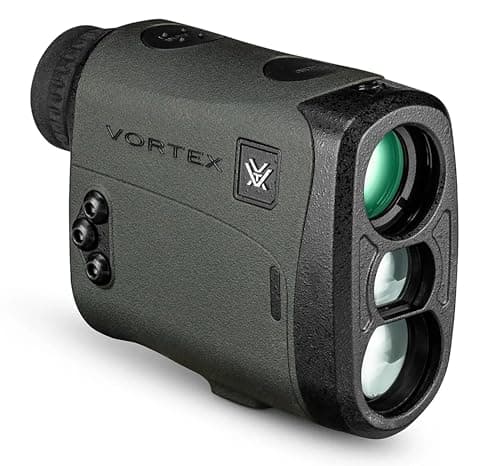
- 1Vortex Sonora HD 1800 Laser RangefinderThis is the pick if you want the bowhunting-specific feature rather than a general-purpose rangefinder, because Vortex publishes angle-compensated ranging on the Sonora HD - it reports the horizontal distance your pin should be set for rather than the straight-line distance to the animal, which is the exact correction a hunter twenty feet up a tree needs and the one most models at lower prices leave out. It also carries the Vortex VIP warranty, which is unconditional, transferable and needs no receipt, so it survives being dropped out of a stand. Honest cons: almost all of its eighteen hundred yards of range is irrelevant to archery, so you are paying for reach the recipient will never use; it is comfortably the most expensive pick here; and it is a single-purpose tool - a hunter who does not yet own binoculars should be given those first.Best for: Best overall for bowhunters
- 2
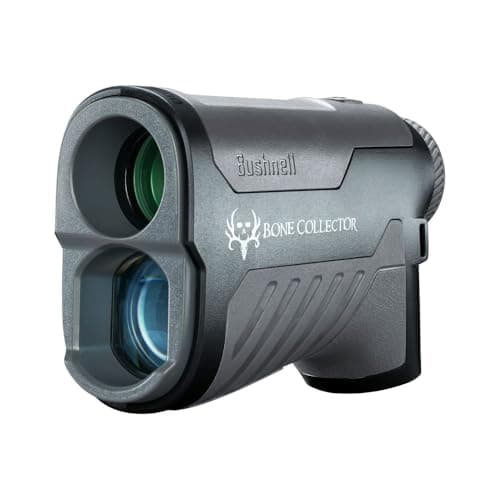 Bushnell BoneCollector 1000 RangefinderThe safe present. Bushnell is a brand every hunter knows, the Bone Collector is point-press-read simple with nothing to configure, and a thousand yards of range means it will never be the limiting factor on any shot a bowhunter takes. For a gift-buyer who does not hunt and cannot interrogate the recipient about features, a legitimate, familiar, unfussy rangefinder is a better present than a more capable one nobody can operate. Honest cons: do not assume angle compensation on a model at this price - check the specific listing before you count on it, because that is the feature a treestand bowhunter most wants; the glass is good rather than exceptional in poor light; and it is a rifle-shaped product being used for an archery job, which is fine but not optimized.Best for: Best recognized name for a gift
 - 3
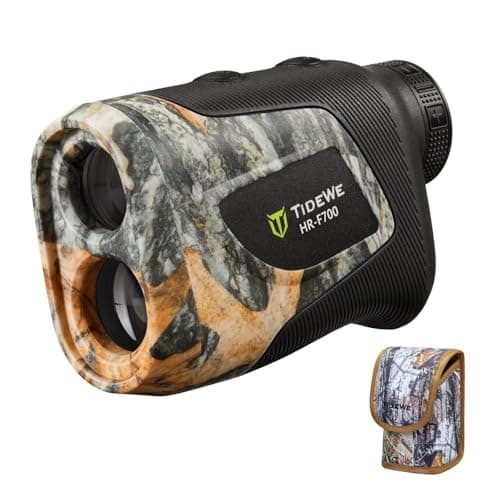 TIDEWE Hunting RangefinderThe most sensible spend on this page for a pure bowhunter, because it matches the tool to the actual distances involved rather than to a spec sheet. A bowhunter working inside sixty yards genuinely does not need the reach of the flagship models, and this rechargeable camo unit covers realistic hunting distances comfortably for a fraction of the money. Buying here and spending the difference on a better release or a decent target is a defensible plan. Honest cons: at this price you are buying core function rather than premium optics, so it is less crisp to look through in the gray light when deer actually move; and, again, verify whether the specific model publishes angle compensation rather than assuming it.Best for: Best value for archery distances
 - 4
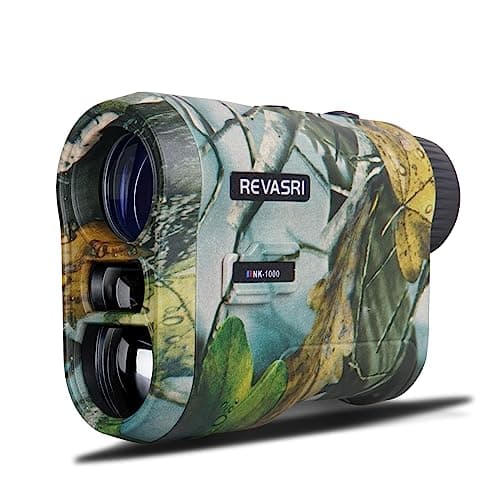 REVASRI 1000-Yard Hunting RangefinderThe honest entry point. This is the pick when the budget is firmly modest, or when you are buying for someone new enough to archery that you do not yet know whether they will use a rangefinder at all. It is rechargeable, it ranges far past any archery distance, and it does the one thing that matters - turning a guess into a number - which is a large upgrade over eyeballing forty yards in the woods. Honest cons: build quality and optics reflect the price and it should be treated as a starter tool rather than a lifetime one; there is no meaningful warranty story compared with the Vortex; and a cheap rangefinder that reads slowly in low light can cost a hunter the shot it was bought to secure.Best for: Best budget / first rangefinder
 - 5
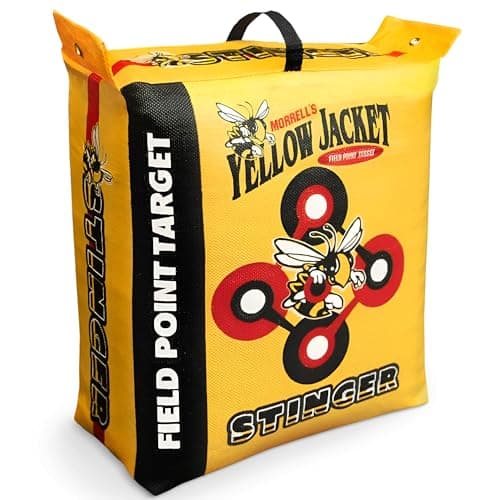 Morrell Yellow Jacket Archery TargetWorth saying plainly: a rangefinder tells a bowhunter how far away the deer is, and that is only useful if they can hit at that distance. For someone in their first season or two, a backyard target does far more for their season than any optic, because arrows fired in practice are the only thing that makes a forty-yard pin mean anything. The Morrell Yellow Jacket is a bag target for field points that stops arrows and pulls them back out easily, which is the practical difference between practising and giving up. Honest cons: it is a field-point target, not a broadhead target, so it is not the whole answer; bag targets are bulky to store; and it is a deeply unglamorous thing to unwrap next to a rangefinder.Best for: Buy this first if they are new to archery
| # | Gift | Best for | Price |
|---|---|---|---|
| 1 | Vortex Sonora HD 1800 Laser RangefinderThis is the pick if you want the bowhunting-specific feature rather than a general-purpose rangefinder, because Vortex publishes angle-compensated ranging on the Sonora HD - it reports the horizontal distance your pin should be set for rather than the straight-line distance to the animal, which is the exact correction a hunter twenty feet up a tree needs and the one most models at lower prices leave out. It also carries the Vortex VIP warranty, which is unconditional, transferable and needs no receipt, so it survives being dropped out of a stand. Honest cons: almost all of its eighteen hundred yards of range is irrelevant to archery, so you are paying for reach the recipient will never use; it is comfortably the most expensive pick here; and it is a single-purpose tool - a hunter who does not yet own binoculars should be given those first. | Best overall for bowhunters | $184.87View on Amazon |
| 2 | Bushnell BoneCollector 1000 RangefinderThe safe present. Bushnell is a brand every hunter knows, the Bone Collector is point-press-read simple with nothing to configure, and a thousand yards of range means it will never be the limiting factor on any shot a bowhunter takes. For a gift-buyer who does not hunt and cannot interrogate the recipient about features, a legitimate, familiar, unfussy rangefinder is a better present than a more capable one nobody can operate. Honest cons: do not assume angle compensation on a model at this price - check the specific listing before you count on it, because that is the feature a treestand bowhunter most wants; the glass is good rather than exceptional in poor light; and it is a rifle-shaped product being used for an archery job, which is fine but not optimized. | Best recognized name for a gift | $99.88View on Amazon |
| 3 | TIDEWE Hunting RangefinderThe most sensible spend on this page for a pure bowhunter, because it matches the tool to the actual distances involved rather than to a spec sheet. A bowhunter working inside sixty yards genuinely does not need the reach of the flagship models, and this rechargeable camo unit covers realistic hunting distances comfortably for a fraction of the money. Buying here and spending the difference on a better release or a decent target is a defensible plan. Honest cons: at this price you are buying core function rather than premium optics, so it is less crisp to look through in the gray light when deer actually move; and, again, verify whether the specific model publishes angle compensation rather than assuming it. | Best value for archery distances | $64.99View on Amazon |
| 4 | REVASRI 1000-Yard Hunting RangefinderThe honest entry point. This is the pick when the budget is firmly modest, or when you are buying for someone new enough to archery that you do not yet know whether they will use a rangefinder at all. It is rechargeable, it ranges far past any archery distance, and it does the one thing that matters - turning a guess into a number - which is a large upgrade over eyeballing forty yards in the woods. Honest cons: build quality and optics reflect the price and it should be treated as a starter tool rather than a lifetime one; there is no meaningful warranty story compared with the Vortex; and a cheap rangefinder that reads slowly in low light can cost a hunter the shot it was bought to secure. | Best budget / first rangefinder | $44.99View on Amazon |
| 5 | Morrell Yellow Jacket Archery TargetWorth saying plainly: a rangefinder tells a bowhunter how far away the deer is, and that is only useful if they can hit at that distance. For someone in their first season or two, a backyard target does far more for their season than any optic, because arrows fired in practice are the only thing that makes a forty-yard pin mean anything. The Morrell Yellow Jacket is a bag target for field points that stops arrows and pulls them back out easily, which is the practical difference between practising and giving up. Honest cons: it is a field-point target, not a broadhead target, so it is not the whole answer; bag targets are bulky to store; and it is a deeply unglamorous thing to unwrap next to a rangefinder. | Buy this first if they are new to archery | $49.95View on Amazon |
Prices from Amazon as of Sep 17, 2026 and change often — the button always opens the current listing. Some links earn us a commission at no extra cost to you.
Vortex Sonora HD 1800 Laser Rangefinder
This is the pick if you want the bowhunting-specific feature rather than a general-purpose rangefinder, because Vortex publishes angle-compensated ranging on the Sonora HD - it reports the horizontal distance your pin should be set for rather than the straight-line distance to the animal, which is the exact correction a hunter twenty feet up a tree needs and the one most models at lower prices leave out. It also carries the Vortex VIP warranty, which is unconditional, transferable and needs no receipt, so it survives being dropped out of a stand. Honest cons: almost all of its eighteen hundred yards of range is irrelevant to archery, so you are paying for reach the recipient will never use; it is comfortably the most expensive pick here; and it is a single-purpose tool - a hunter who does not yet own binoculars should be given those first.
#ad · Price as of Sep 17, 2026. We may earn a commission.
Bushnell BoneCollector 1000 Rangefinder
The safe present. Bushnell is a brand every hunter knows, the Bone Collector is point-press-read simple with nothing to configure, and a thousand yards of range means it will never be the limiting factor on any shot a bowhunter takes. For a gift-buyer who does not hunt and cannot interrogate the recipient about features, a legitimate, familiar, unfussy rangefinder is a better present than a more capable one nobody can operate. Honest cons: do not assume angle compensation on a model at this price - check the specific listing before you count on it, because that is the feature a treestand bowhunter most wants; the glass is good rather than exceptional in poor light; and it is a rifle-shaped product being used for an archery job, which is fine but not optimized.
#ad · Price as of Sep 17, 2026. We may earn a commission.
TIDEWE Hunting Rangefinder
The most sensible spend on this page for a pure bowhunter, because it matches the tool to the actual distances involved rather than to a spec sheet. A bowhunter working inside sixty yards genuinely does not need the reach of the flagship models, and this rechargeable camo unit covers realistic hunting distances comfortably for a fraction of the money. Buying here and spending the difference on a better release or a decent target is a defensible plan. Honest cons: at this price you are buying core function rather than premium optics, so it is less crisp to look through in the gray light when deer actually move; and, again, verify whether the specific model publishes angle compensation rather than assuming it.
#ad · Price as of Sep 17, 2026. We may earn a commission.
REVASRI 1000-Yard Hunting Rangefinder
The honest entry point. This is the pick when the budget is firmly modest, or when you are buying for someone new enough to archery that you do not yet know whether they will use a rangefinder at all. It is rechargeable, it ranges far past any archery distance, and it does the one thing that matters - turning a guess into a number - which is a large upgrade over eyeballing forty yards in the woods. Honest cons: build quality and optics reflect the price and it should be treated as a starter tool rather than a lifetime one; there is no meaningful warranty story compared with the Vortex; and a cheap rangefinder that reads slowly in low light can cost a hunter the shot it was bought to secure.
#ad · Price as of Sep 17, 2026. We may earn a commission.
Morrell Yellow Jacket Archery Target
Worth saying plainly: a rangefinder tells a bowhunter how far away the deer is, and that is only useful if they can hit at that distance. For someone in their first season or two, a backyard target does far more for their season than any optic, because arrows fired in practice are the only thing that makes a forty-yard pin mean anything. The Morrell Yellow Jacket is a bag target for field points that stops arrows and pulls them back out easily, which is the practical difference between practising and giving up. Honest cons: it is a field-point target, not a broadhead target, so it is not the whole answer; bag targets are bulky to store; and it is a deeply unglamorous thing to unwrap next to a rangefinder.
#ad · Price as of Sep 17, 2026. We may earn a commission.
Angle compensation, in plain English
This is the feature that matters most for archery and gets explained worst, so here it is without the jargon.
An arrow leaves a bow slowly compared with a bullet and drops a great deal on the way to the target. That is why bow sights have separate pins for twenty, thirty and forty yards. Gravity, though, only pulls the arrow down — it does not pull it backwards. So the drop depends on how far the arrow travels horizontally, not on the straight-line distance through the air.
From flat ground those two numbers are the same and none of this matters. From twenty feet up a tree, shooting down at a deer, they are not. A plain rangefinder reports the straight-line distance, which is longer than the horizontal distance; use a pin for that longer number and the arrow flies high over the animal's back. An angle-compensating rangefinder does the trigonometry and reports the horizontal figure — the number the hunter's pin is actually calibrated for.
The effect grows with the steepness of the angle, which is exactly the situation a treestand creates and exactly the situation where a bowhunter has the least time to think. It is the one specification worth paying for in this category, and it is the one to check on the listing rather than assume.
Why short-range accuracy is harder than it sounds
A rangefinder works by bouncing a laser off something and timing the return. Hard, flat, reflective surfaces — a rock face, a barn, a tree trunk — send back a strong signal. The flank of a deer standing in brush does not: it is soft, angled, and surrounded by vegetation that reflects better than the animal does.
That is why a rangefinder advertised to a thousand yards can still hesitate on a deer at thirty. The distance is not the problem; the target is. This is also why cheap units feel slower in the woods than in a parking lot, and why a bowhunter should think about the quality of the return rather than the size of the number.
Two practical consequences. First, a bowhunter who ranges landmarks beforethe deer arrives — the fencepost at thirty, the forked oak at forty — never has to range the animal at all, which is faster and quieter and works with any rangefinder on this page. Second, this is why a rifle hunter and a bowhunter want different things from the same-looking device, which our how to choose a rangefinder guide goes through properly.
How we chose these
We do not run a test lab and we are not going to invent one. Every capability described here is the manufacturer's own published specification, cited in the sources at the bottom, and where we could not verify that a model publishes angle compensation we have said so rather than implying it. The picks are judged on the things archery actually asks of a rangefinder rather than on maximum reach. Our full method is on the how we choose page, and prices are live and dated.
Rangefinder or binoculars first?
If the bowhunter you are buying for does not yet own decent binoculars, buy those instead. This is the most common expensive mistake gift-buyers make in the optics aisle. Binoculars get used continuously from first light through every quiet hour of a sit; a rangefinder gets used in short bursts, a handful of times a season, and a bowhunter can substitute pre-ranged landmarks for it entirely.
Our best binoculars for deer hunting page covers that side, and hunting vs golf rangefinderis worth reading if someone in the family already has a golf unit and is wondering whether it will do — the answer is more interesting than yes or no.
What else a bowhunter actually wants
If the rangefinder turns out to be the wrong call, these are the gifts bowhunters consistently rate, and none of them need you to know a draw length.
A target. The single highest-value archery gift under a hundred dollars. Practice is the whole sport and most people do not have a safe place to shoot at home until somebody buys them one.
Arrows and broadheads.Consumable, restocked every season, and welcome — with the caveat that arrow spine has to match the bow, which our best hunting arrows guide explains before you buy the wrong ones.
A binocular harness. A bowhunter at full draw does not want a strap swinging off their chest.
For the full list built for this person, gifts for bow hunters starts from the hunter rather than the gear, and what to buy a new bowhunter is the page for someone in their first season.
Match the rangefinder to the bowhunter
They hunt from a treestand. The Sonora HD, for the angle compensation. This is the case where the premium pick genuinely earns its price.
They hunt from the ground, or from a blind. Any of them. The angle correction barely applies, so buy on budget and build quality.
You do not hunt and cannot ask questions. The Bushnell. Recognizable, simple, and impossible to get visibly wrong.
They are in their first or second season. The target, and spend the rest on arrows. Come back for the rangefinder next year.
Keep browsing
The category roundup is best hunting rangefinders; the direct model comparison is Vortex Sonora vs TIDEWE. For the bow itself, see best hunting bows, and if crossbows are in the conversation, crossbow vs compound bow settles which one you are actually shopping for.
Frequently asked questions
What is the best rangefinder for bow hunting?
For a bowhunter who sits a treestand, the one that publishes angle compensation - the Vortex Sonora HD here. It reports the horizontal distance the bow's sight pins are calibrated for rather than the longer straight-line distance to the animal, which is the correction that matters most when shooting steeply downhill. On flat ground, almost any of these will do the job.
Do bowhunters need angle compensation on a rangefinder?
From a treestand, yes. An arrow drops according to how far it travels horizontally, not along the line of sight, so a plain reading taken from twenty feet up is longer than the number the pins are set for and the arrow flies high. On flat ground the two distances are the same and the feature does not matter.
How far does a rangefinder need to reach for bow hunting?
Far less than the marketing suggests. Most archery shots on whitetail happen inside forty yards, so any rangefinder on the market already covers it several times over. Maximum range is the least useful specification in this category for a bowhunter - accuracy at short distance on a soft target matters far more.
Why won't my rangefinder read a deer at thirty yards?
Because the target, not the distance, is the hard part. A laser bounces cleanly off hard reflective surfaces and poorly off a soft, angled animal standing in brush. Ranging landmarks before the deer arrives - the fencepost at thirty, the forked oak at forty - sidesteps the problem entirely and is faster and quieter anyway.
Should I buy a bowhunter a rangefinder or binoculars?
Binoculars, if they do not already own a decent pair. Binoculars get used continuously through every hour of a sit; a rangefinder gets used in short bursts a few times a season, and a bowhunter can replace it with pre-ranged landmarks. Buy the glass first and the rangefinder next year.
Can you use a golf rangefinder for bow hunting?
Sometimes, with caveats. Golf units are built to lock onto the nearest reflective target - the flag - while hunting units prioritise a distant target through foreground brush, which is the opposite behaviour. Some golf models also offer slope correction that they disable for tournament play. Our hunting vs golf rangefinder comparison covers where the line falls.
Sources
- Vortex Optics - Sonora HD 1800 rangefinder: published specifications including angle-compensated ranging
- Vortex Optics - VIP warranty terms: unconditional, transferable, no receipt required
- Bushnell - Bone Collector rangefinder product information
- Morrell Targets - Yellow Jacket field-point bag target, published description
- Bowhunter-ed.com - state-approved bowhunter education material on shot placement and elevated stands