Gear Guides
What Draw Weight Do You Need for Deer Hunting?
Less than most people buy, and the number that matters is not the one you can pull - it is the one you can hold steady, sitting down, in a coat, after three hours in the cold.
Short answer: a sharp broadhead on a well-tuned arrow kills a whitetail cleanly at draw weights far below what most new archers buy. Conventional practice puts adult beginners somewhere around 40 to 50 pounds, and the right number for any individual is the heaviest weight they can draw and hold steady— not the heaviest they can drag back once in a sporting goods store.
That distinction is the entire subject. Draw weight is the one bow specification that a beginner can feel, so it becomes the number they shop on, and the result is predictable: people buy ten or fifteen pounds more bow than they can shoot well. An over-bowed archer develops bad form to cope with the weight, cannot hold at full draw long enough to wait for a deer to take one more step, and in the worst case hurts a shoulder. None of that is fixed by the extra poundage being there.
There is also a legal layer, and it is worth being clear about it up front: many states set a minimum legal draw weight for hunting deer, the number is not the same everywhere, and some states set none at all. We deliberately do not print a table of fifty figures here, because those rules change and a stale number in a buying guide is how somebody ends up out of compliance. Check your own state wildlife agency's current regulations before you buy — it takes two minutes and it is the one input to this decision that is not a matter of preference.
What actually decides the right draw weight
Five things, in the order they matter.
The weight you can hold, not the weight you can pull. Drawing a bow takes two seconds. Hunting with it means coming to full draw as a deer walks in, then holding while it turns, steps behind a tree, and feeds for another twenty seconds. If a hunter cannot hold the bow still through that, the weight is wrong regardless of what they can pull.
Arrow and broadhead quality, which do more for penetration than poundage. A sharp, well-matched broadhead on an arrow with the right spine penetrates better than a dull one pushed harder. This is why the poundage arms race misses the point: the cheapest meaningful upgrade to any setup is a genuinely sharp head, not ten more pounds. Our best hunting arrows guide covers spine matching, which has to change when draw weight changes.
Letoff, which makes the hold far easier than the peak number suggests.Modern compounds hold only a fraction of peak weight at full draw — the cams do the rest. A sixty-pound compound does not feel like sixty pounds once you are anchored, which is exactly why compounds suit hunting and why the peak figure alone is a poor guide to what a hunter can manage.
The position and the clothing they will actually shoot in. Almost nobody tests their draw weight the way they will use it: seated, in a bulky coat, cold, at an awkward angle, from a stand or inside a blind. A weight that is comfortable standing in a T-shirt in July can be genuinely difficult in November. Our best ground blind for bow hunting page covers the seated-draw problem, and best gloves for bow hunting covers the other way cold weather quietly changes a draw.
Adjustability, which is the answer to all of the above.A bow that covers a wide weight range lets the archer start lower, build strength, and move up without buying a second bow — and it is the only honest way to buy a bow as a gift, because you are not betting on a measurement you do not have.
Three bows that cover the weight ranges below, plus the one accessory that lets a hunter find their own number. Prices are pulled live from Amazon and stamped with the date they were captured.
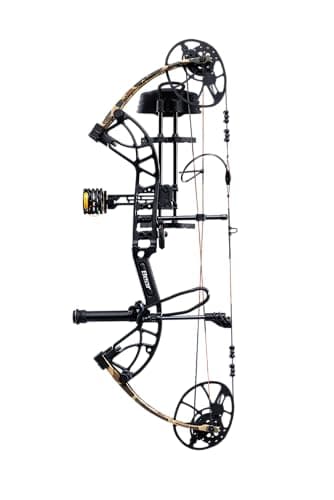
Bear Cruzer G4 Ready-to-Hunt Compound Bow
The pick when draw weight is the open question, which is exactly the situation this page describes. Bear Archery is one of the oldest names in American bowhunting and the Cruzer line exists to span a very wide range of draw lengths and draw weights without a bow press - so an archer can start at a weight they can genuinely hold, then move up as their form and strength settle, on the same bow. That is the property that makes it the right gift: you are not guessing a number that has to be right the first time. Honest cons: it is the priciest bow on this page, and some of what you pay for is the name and the shop network; a hugely adjustable bow is a compromise against a bow built for one archer at one weight; and adjustment still has limits, so the buyer should confirm the published range covers the person they are buying for.
#ad · Price as of October 6, 2026. We may earn a commission.
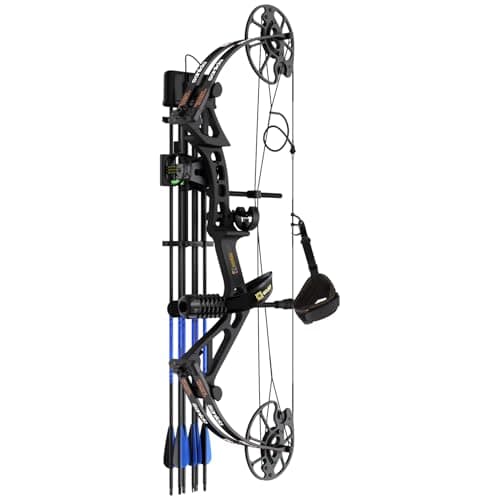
Sanlida Dragon X7 Ready-to-Hunt Bow Package
The value version of the same idea, and the sweet spot for most gift-givers. It is a complete, adjustable ready-to-hunt package at a fraction of flagship money, with the sight, rest and quiver already fitted, so nothing else has to be bought before the first arrow. For somebody curious about bowhunting rather than committed to it, this gets them shooting at a weight they choose instead of a weight that was chosen for them. Honest cons: components are entry-level and a serious archer will eventually replace the sight and rest; the value end of the market changes models often, so check the published draw-weight range on the listing rather than assuming; and a ready-to-hunt package still benefits from a shop setting the draw length properly.
#ad · Price as of October 6, 2026. We may earn a commission.
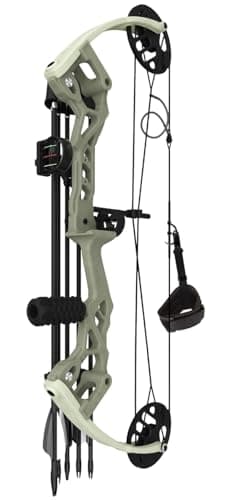
Sanlida Dragon X6 Youth Compound Bow Kit
The pick for a young archer, where draw weight is not a preference but a safety and form question. Youth bows exist because a child cannot hold an adult weight steady - and an over-bowed kid learns to heave the bow rather than to shoot it, which is a habit that takes years to unpick. This kit is light enough for a child to reach and hold full draw without shaking, adjusts upward as they grow so it is not outgrown in a season, and includes the arrows and accessories to start the day it is opened. Honest cons: they will outgrow it, which is the nature of youth gear; a light bow needs correspondingly light arrows, so the included ones are not optional extras; and a young hunter still has to meet their state's legal minimum draw weight to hunt deer, which may mean this is a practice and target bow first.
#ad · Price as of October 6, 2026. We may earn a commission.
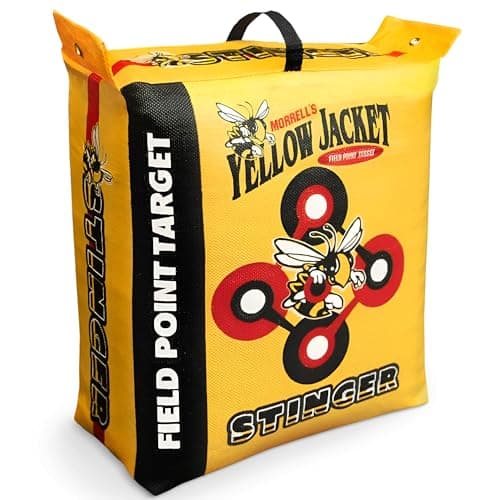
Morrell Yellow Jacket Archery Target
Not a bow, and the item that actually answers the question this page asks. You cannot find your right draw weight by reading - you find it by shooting dozens of arrows and noticing where your form falls apart. A bag target in the backyard is where that happens, and it is the difference between a bow that gets shot all summer and a bow propped in a corner until opening week. It also has no compatibility question of any kind, which makes it the safest archery gift on this site. Honest cons: it is for field points, not broadheads, so a hunter still needs a separate broadhead-rated target before season; bag targets wear out with heavy use; and it is bulky to ship and store.
#ad · Price as of October 6, 2026. We may earn a commission.
Draw weight by archer, as conventional guidance
| Who | Commonly used range | What to watch |
|---|---|---|
| Young child, learning | Roughly 10-20 lb | Form and fun only; not a deer-hunting weight |
| Older child / small teen | Roughly 20-35 lb | May be below the state legal minimum for deer |
| Adult beginner, smaller frame | Roughly 35-45 lb | Plenty for whitetail with a sharp broadhead |
| Adult beginner, average frame | Roughly 40-50 lb | Start at the bottom of the range, not the top |
| Experienced adult hunter | Roughly 55-70 lb | Only if it still passes the 30-second hold test |
Read that table as conventional archery practice rather than as a standard or a test result — it is the range people commonly shoot, offered as a starting point. Two things it is explicitly not. It is not a legal minimum: that is set by your state, varies, and must be checked directly. And it is not a prescription for an individual, because frame size, shoulder health, training and draw length all move the number. The hold test above beats the table every time.
Why over-bowing is the most common beginner mistake
Four specific consequences, all of which cost more than the poundage gains.
Collapsing form. An archer fighting the weight drops their bow arm, shortens their draw, or leans back to get the string moving. Every one of those changes where the arrow goes, and all of them become habits.
No hold time. The whole advantage of a compound in a stand is the ability to draw early and wait. An over-bowed hunter has to draw late and shoot fast, which is the worst version of every shot opportunity.
Target panic. Punching the release to get the shot over with is strongly associated with shooting more weight than you can control. It is one of the hardest problems in archery to fix and one of the easiest to avoid.
Shoulder injury. The one that ends seasons. Drawing heavy weight with poor mechanics, repeatedly, is a recognized way to hurt a shoulder, and a hunter cannot shoot through it.
The fix costs nothing: back the limb bolts out, shoot at a weight that behaves, and move up later if you want to. Strength built by shooting correctly at 45 pounds arrives faster than strength built by struggling at 60.
What changes when you change draw weight
Draw weight is not an isolated dial, and this is the part that catches people out after they adjust a bow.
Arrow spine.Shaft stiffness has to match the force driving it. Move draw weight meaningfully and the correct spine can change, which means the arrows that flew well before may not now. If you adjust a bow, check the spine chart or have a shop do it — best hunting arrows covers why this matters more than arrow brand.
Sight marks. Every pin is calibrated to a specific arrow speed. Change the weight and the pins are wrong until you re-sight. This is non-negotiable before hunting.
Broadhead flight. Fixed blades in particular are sensitive to tuning, and a bow that shoots field points well can throw broadheads after a weight change.
Nothing about your shot placement standards. Lower draw weight is not a license to take longer or steeper shots. If anything it argues for the opposite: closer, broadside, and patient. That is the honest trade for shooting a weight you can actually control.
Crossbows are a different question entirely
Worth separating, because the two get conflated. A crossbow's draw weight is a manufacturing specification rather than something the hunter has to hold — the bow is cocked mechanically and held by the latch, so there is no 30-second hold problem and no over-bowing in the sense described above. What matters on a crossbow is cocking effort, overall length and weight, and whether the hunter can manage it from a seated position.
If that is the direction you are heading, how to choose a crossbow covers it properly, crossbow vs compound bow compares the two honestly, and best hunting crossbows ranks the field. For an older hunter, a hunter with a shoulder injury, or somebody who simply will not put in practice time, a crossbow is often the better answer than a lighter compound.
Buying a bow as a gift when you do not know their draw weight
This is the situation most readers of this site are actually in, and there is a clean answer.
Buy adjustable, and say so on the card. A bow spanning a wide weight range turns an impossible guess into a setup step the recipient does with a shop or an Allen key. It is the single reason the two adjustable packages above are the picks here.
Do not try to find out their draw length by stealth. Draw length matters as much as weight and is harder to guess. A ready-to-hunt adjustable package handles it; a fitted bow does not.
Consider buying around the bow instead. A target, arrows, a release aid or a range session are all genuinely wanted, none of them need a measurement, and for a hunter who already owns a bow they are better gifts than a second bow. What to buy a new bowhunter lists what belongs alongside, and gifts for bow hunters starts from the person.
Budget honestly. A bow is the big gift in this category; most of the useful accessories sit well below it. See hunting gifts under $100 for the bracket most of the add-ons fall into.
How we chose these
We do not run a test lab, we have not measured an arrow, and nothing on this page carries a rating, a score or an award from us. The adjustment ranges and package contents above are the manufacturers' own published product information, cited below; the weight ranges in the table are conventional archery practice presented as guidance rather than as a standard; and the legal minimum draw weight for hunting deer is set by your state and is deliberately not reproduced here. Every pick was verified as currently purchasable before it was written in. Our method is on the how we choose page, and prices are live and dated.
Keep browsing
Best hunting bows ranks the field, best hunting arrows covers the spine question that follows any weight change, and what to buy a new bowhunter is the complete starter list. For the hunt itself, best ground blind for bow hunting covers drawing in a confined space and best rangefinder for bow hunting covers knowing the distance before you draw at all.
Frequently asked questions
What draw weight do you need for deer hunting?
Conventional practice puts adult beginners around 40 to 50 pounds, and a sharp broadhead on a well-matched arrow kills a whitetail cleanly well below what most new archers buy. The right number for an individual is the heaviest weight they can draw and hold steady - not the heaviest they can pull once. Many states also set a legal minimum, which varies, so check your state wildlife agency.
Is 40 pounds enough to kill a deer?
For most whitetail hunting at sensible range, yes - penetration depends far more on a sharp, well-matched broadhead and a properly spined arrow than on raw poundage. What lower draw weight does argue for is discipline about the shot: closer, broadside, and patient. Check your state's legal minimum as well, because that is a separate question from what is effective.
How do I know if my draw weight is too heavy?
Use the 30-second hold test. Come to full draw, settle your anchor, and hold for thirty seconds. If the pin wanders, your arms shake, or you have to let down early, it is too heavy - and it will feel heavier in a coat on a cold morning. Other signs of over-bowing are dropping the bow arm, short-drawing, or leaning back to get the string moving.
What draw weight should a youth hunter use?
Light enough to reach and hold full draw without shaking, which is commonly somewhere around 10 to 20 pounds for a young child learning and 20 to 35 for an older child or small teen. An over-bowed kid learns to heave the bow rather than shoot it, and that habit takes years to unpick. Note that a youth weight may be below the state legal minimum for deer, making it a practice bow first.
Does changing draw weight affect anything else on the bow?
Yes, three things. Arrow spine has to match the force driving the shaft, so a meaningful weight change can mean your arrows no longer fly right. Sight pins are calibrated to arrow speed and will be wrong until you re-sight. And fixed-blade broadheads are tuning-sensitive, so a bow that shoots field points well can throw broadheads after an adjustment.
Is a higher draw weight always better for hunting?
No. Past the point you can control, extra weight costs more than it gains: collapsing form, no ability to hold at full draw while a deer takes another step, target panic, and a real risk of shoulder injury. A hunter shooting 45 pounds well is more effective than the same hunter struggling at 60.
Does draw weight matter the same way on a crossbow?
No - a crossbow is cocked mechanically and held by the latch, so there is no hold problem and no over-bowing in the compound sense. Its draw weight is a manufacturing specification rather than something you sustain. What matters instead is cocking effort, length and weight, and whether the hunter can manage it seated.
How do I buy a bow as a gift without knowing their draw weight?
Buy an adjustable ready-to-hunt package that spans a wide weight and draw-length range, which turns an impossible guess into a setup step. Alternatively buy around the bow - a target, arrows, a release aid or a range session are all genuinely wanted and none need a measurement.
Sources
- Bowhunter-Ed - bowhunter education material on equipment selection, draw weight, form and shot placement
- Archery Trade Association - archery and bowhunting equipment resources
- Bear Archery - published product information for the Cruzer G4 ready-to-hunt compound bow and its adjustment range
- Sanlida - published product information for the Dragon X7 ready-to-hunt package and the Dragon X6 youth kit
- Morrell Targets - published product information for the Yellow Jacket field point target
- National Deer Association - whitetail biology and shot placement resources
- U.S. Fish & Wildlife Service - hunting overview; minimum legal draw weight and permitted equipment are set state by state