Gear Guides
The Best Hunting Crossbow for Beginners
A crossbow is the fastest way for an adult to go from never having hunted with archery gear to being genuinely accurate. It is also five purchases pretending to be one. Here is the package to start with and the rest of the list nobody tells you about.
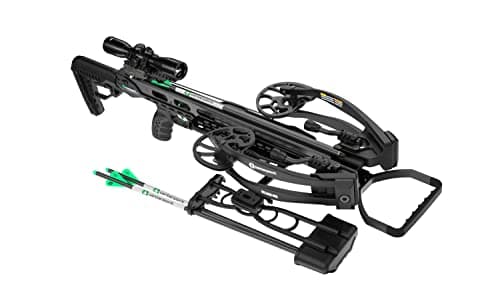
The verdict: the CenterPoint Hellion 400 Crossbow Package is the one to start with, and it is for the adult beginner who wants to hunt this season rather than take up archery as a hobby. CenterPoint publishes it as a complete ready-to-hunt package, and complete is the specification that matters most for a first crossbow: a bare crossbow with no scope, no quiver and no cocking device is three more purchases and a frustrating first afternoon. The budget pick is the Morrell Yellow Jacket target, and that is a deliberate answer rather than a dodge — there is no cheaper crossbow we can point you at with a live price today, and the cheapest purchase that genuinely changes a beginner's first season is somewhere to shoot.
Why a crossbow at all. A compound bow is a skill you acquire over months. A crossbow is a tool you become accurate with in an afternoon, because it holds itself at full draw, it has a scope, and it is shot from the shoulder like a rifle. For an adult who wants to hunt an archery season without spending a summer learning to shoot, that is the honest advantage, and it is a large one.
Read the regulations before you read the rest of this page. Crossbow rules vary enormously by state: some allow them in all archery seasons, some only in firearms seasons, some only for hunters with a disability permit or over a certain age, and some set minimum draw-weight or arrow specifications. A crossbow that is a great buy in one state is unusable in the next one over. Check your own state's current regulations before you buy. Prices below are pulled live and dated.
- 1CenterPoint Hellion 400 Crossbow PackageThe pick, and the right first crossbow for most people for one reason above all others: it is complete. CenterPoint publishes the Hellion 400 as a ready-to-hunt crossbow package, meaning the scope, quiver, arrows and cocking device come in the box, and that matters far more to a beginner than any individual specification. A bare crossbow is unusable - it needs a scope mounted and sighted, a cocking device because cocking a hunting-weight crossbow by hand is genuinely difficult and dangerous to do inconsistently, and a quiver, and buying those separately costs more and delays the first shot by a week. The second reason it suits a beginner is the shooting experience: a crossbow holds itself cocked, so there is no holding at full draw waiting for a deer to turn, and it is shot off the shoulder with a scope, which anyone who has fired a rifle already knows how to do. That is why an adult can be reliably accurate at sensible range on day one. Honest cons: a crossbow is heavy, long and awkward, which is felt in a tree stand and worse in a ground blind - it does not come up and swing like a gun, and it must be cocked before you are in position. The included scope is the first thing a serious shooter replaces. Cocking devices are slow and noisy, which rules out a quick second shot. And a crossbow string and rail need regular waxing or they wear fast, which is maintenance nobody warns a first-time buyer about.Best for: Best overall - for the adult beginner hunting this season
- 2
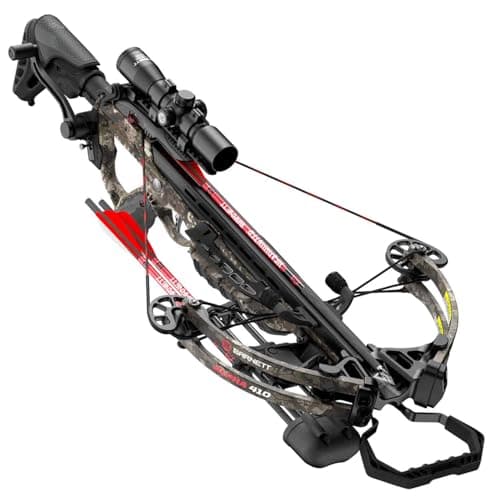 Barnett Alpha 410 Crossbow PackageThe alternative for someone who wants to buy once and buy from a name with a long crossbow history. Barnett publishes the Alpha 410 as a package shipping with an illuminated scope, arrows, quiver and cocking device in the box, and the illuminated reticle is the concrete upgrade over a plain scope: crossbow hunting happens disproportionately in the last twenty minutes of legal light, which is exactly when a black crosshair disappears against a dark deer and an illuminated one does not. Barnett is also one of the established names in the category, which is worth something to a buyer who wants the support and parts availability that come with a long-running brand rather than a newcomer. Honest cons: this listing does not show a live price in our price feed right now, which is why it is not the top pick on this page - we will not recommend as a best buy something we cannot price for you, and you should check availability before planning around it. Everything said above about crossbow handling applies here too: heavy, long, slow to cock, awkward in a blind. Illuminated reticles need a battery you will forget to check, and the illumination is the part most likely to fail. And a higher draw weight means a cocking device is not optional, it is mandatory.Best for: Step up - for a buyer who wants an illuminated scope from a legacy brand
- 3
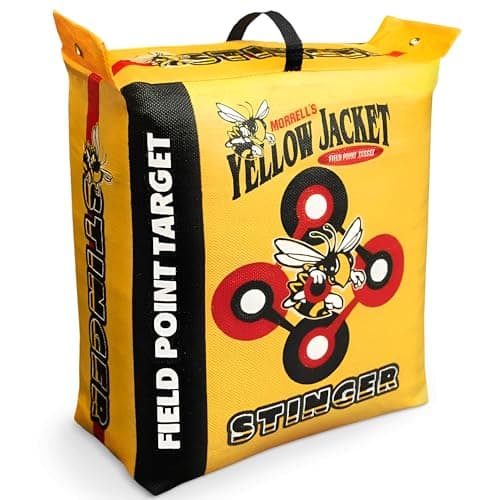 Morrell Yellow Jacket Archery TargetThe budget pick, and we want to be straight about why: there is no cheaper crossbow in our catalogue with a live price, so the honest cheapest-thing-that-does-the-job on this page is not a crossbow at all - it is the target, and it is the single highest-value purchase a new crossbow hunter makes. Morrell publishes the Yellow Jacket as a field-point bag target, and the case for it is simple arithmetic: crossbows are accurate out of the box but they are not sighted in out of the box, and nobody should point one at an animal before confirming where it hits at the ranges they intend to shoot. That takes a few dozen arrows, and a bag target is the right type for it - it stops field points reliably, arrows pull out easily rather than needing a wrestle, and it is quiet enough for a back garden. Honest cons: bag targets are for field points only, and a broadhead - especially an expandable one - will cut one apart, which is an expensive lesson. Crossbow arrows fly fast and heavy, and they will wear out the centre of any bag target faster than compound arrows do, so aim at different spots. It is bulky and does not like rain, so it needs somewhere to live. And for the handful of broadhead-tipped shots you should take before hunting, you will need a broadhead-rated target as well.Best for: Budget pick - the cheapest purchase that changes a first season
- 4
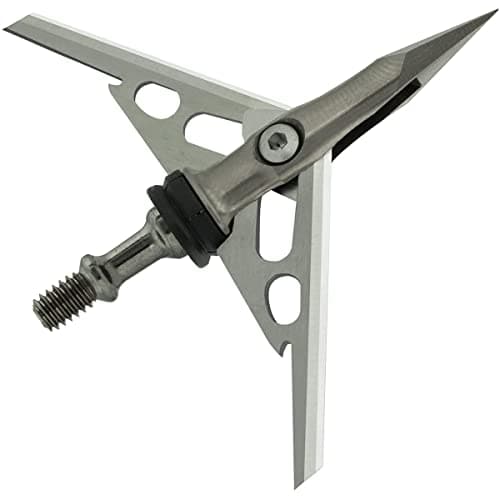 Rage Hypodermic Broadheads (3-Pack)The second mandatory companion purchase and the one most first-time buyers miss entirely. A ready-to-hunt package ships with field points, which are practice tips: they punch a hole and nothing else. Hunting deer requires a broadhead, and Rage publishes the Hypodermic as an expandable mechanical broadhead that deploys on impact. Mechanicals suit a crossbow particularly well, for a reason specific to the platform: crossbows generate high arrow speed and kinetic energy, which is exactly the condition under which a mechanical head opens reliably - the usual objection to mechanicals is that they need energy to deploy, and a crossbow has it in abundance. They also fly closer to the field points you sighted in with than a large fixed-blade head does, which means less re-sighting between practice and hunting. Honest cons: a crossbow's speed is hard on broadheads, and not every mechanical is rated for crossbow use - check the manufacturer's guidance for the head and the bow before you hunt with any combination. Mechanicals cost more per head than fixed blades and have more to go wrong. Some states restrict broadhead type or minimum cutting diameter, so check your regulations. And you must shoot at least one broadhead-tipped arrow into a broadhead-rated target before hunting, because broadheads do not always hit where field points do.Best for: Buy before you hunt - the arrows in the box will not do
- 5
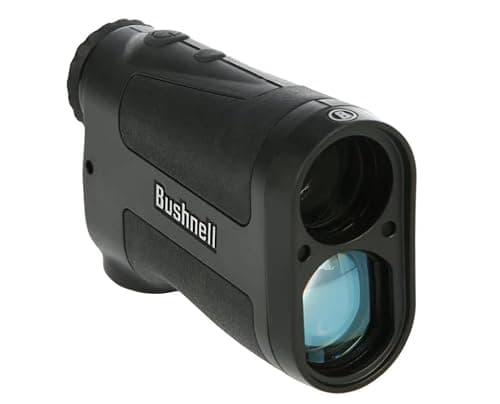 Bushnell Legend 6x24 1200-Yard RangefinderThe pick for the piece of kit that does most to prevent a wounded animal. Bushnell publishes this as a 1,200-yard rangefinder with angle compensation, and the reason it belongs on a beginner's crossbow list rather than an advanced one is the platform itself: a crossbow shoots a heavy arrow with a steep trajectory, so the drop between twenty and forty yards is large, and a scope with stacked range markings only works if you know which marking to use. Guessing distance by eye is where new crossbow hunters wound deer - the arrow goes exactly where the reticle was, at the wrong hold. Angle compensation matters too, because most crossbow shots are taken downward out of a tree stand, where the line-of-sight distance is longer than the horizontal distance the arrow actually drops over. Honest cons: it is an additional purchase on top of an already expensive setup, and a hunter who commits to only taking shots inside twenty-five yards can manage without one. Lasers struggle to read a dark deer in shadow, so range a tree or a rock near your expected shooting lane instead - better still, range your lanes in daylight before the hunt and write the numbers down. It needs a battery. And a rangefinder tells you the distance, not whether you can make the shot.Best for: The accuracy purchase - for a platform where ten yards changes everything
| # | Gift | Best for | Price |
|---|---|---|---|
| 1 | CenterPoint Hellion 400 Crossbow PackageThe pick, and the right first crossbow for most people for one reason above all others: it is complete. CenterPoint publishes the Hellion 400 as a ready-to-hunt crossbow package, meaning the scope, quiver, arrows and cocking device come in the box, and that matters far more to a beginner than any individual specification. A bare crossbow is unusable - it needs a scope mounted and sighted, a cocking device because cocking a hunting-weight crossbow by hand is genuinely difficult and dangerous to do inconsistently, and a quiver, and buying those separately costs more and delays the first shot by a week. The second reason it suits a beginner is the shooting experience: a crossbow holds itself cocked, so there is no holding at full draw waiting for a deer to turn, and it is shot off the shoulder with a scope, which anyone who has fired a rifle already knows how to do. That is why an adult can be reliably accurate at sensible range on day one. Honest cons: a crossbow is heavy, long and awkward, which is felt in a tree stand and worse in a ground blind - it does not come up and swing like a gun, and it must be cocked before you are in position. The included scope is the first thing a serious shooter replaces. Cocking devices are slow and noisy, which rules out a quick second shot. And a crossbow string and rail need regular waxing or they wear fast, which is maintenance nobody warns a first-time buyer about. | Best overall - for the adult beginner hunting this season | $493.99View on Amazon |
| 2 | Barnett Alpha 410 Crossbow PackageThe alternative for someone who wants to buy once and buy from a name with a long crossbow history. Barnett publishes the Alpha 410 as a package shipping with an illuminated scope, arrows, quiver and cocking device in the box, and the illuminated reticle is the concrete upgrade over a plain scope: crossbow hunting happens disproportionately in the last twenty minutes of legal light, which is exactly when a black crosshair disappears against a dark deer and an illuminated one does not. Barnett is also one of the established names in the category, which is worth something to a buyer who wants the support and parts availability that come with a long-running brand rather than a newcomer. Honest cons: this listing does not show a live price in our price feed right now, which is why it is not the top pick on this page - we will not recommend as a best buy something we cannot price for you, and you should check availability before planning around it. Everything said above about crossbow handling applies here too: heavy, long, slow to cock, awkward in a blind. Illuminated reticles need a battery you will forget to check, and the illumination is the part most likely to fail. And a higher draw weight means a cocking device is not optional, it is mandatory. | Step up - for a buyer who wants an illuminated scope from a legacy brand | Check price on Amazon |
| 3 | Morrell Yellow Jacket Archery TargetThe budget pick, and we want to be straight about why: there is no cheaper crossbow in our catalogue with a live price, so the honest cheapest-thing-that-does-the-job on this page is not a crossbow at all - it is the target, and it is the single highest-value purchase a new crossbow hunter makes. Morrell publishes the Yellow Jacket as a field-point bag target, and the case for it is simple arithmetic: crossbows are accurate out of the box but they are not sighted in out of the box, and nobody should point one at an animal before confirming where it hits at the ranges they intend to shoot. That takes a few dozen arrows, and a bag target is the right type for it - it stops field points reliably, arrows pull out easily rather than needing a wrestle, and it is quiet enough for a back garden. Honest cons: bag targets are for field points only, and a broadhead - especially an expandable one - will cut one apart, which is an expensive lesson. Crossbow arrows fly fast and heavy, and they will wear out the centre of any bag target faster than compound arrows do, so aim at different spots. It is bulky and does not like rain, so it needs somewhere to live. And for the handful of broadhead-tipped shots you should take before hunting, you will need a broadhead-rated target as well. | Budget pick - the cheapest purchase that changes a first season | $44.99View on Amazon |
| 4 | Rage Hypodermic Broadheads (3-Pack)The second mandatory companion purchase and the one most first-time buyers miss entirely. A ready-to-hunt package ships with field points, which are practice tips: they punch a hole and nothing else. Hunting deer requires a broadhead, and Rage publishes the Hypodermic as an expandable mechanical broadhead that deploys on impact. Mechanicals suit a crossbow particularly well, for a reason specific to the platform: crossbows generate high arrow speed and kinetic energy, which is exactly the condition under which a mechanical head opens reliably - the usual objection to mechanicals is that they need energy to deploy, and a crossbow has it in abundance. They also fly closer to the field points you sighted in with than a large fixed-blade head does, which means less re-sighting between practice and hunting. Honest cons: a crossbow's speed is hard on broadheads, and not every mechanical is rated for crossbow use - check the manufacturer's guidance for the head and the bow before you hunt with any combination. Mechanicals cost more per head than fixed blades and have more to go wrong. Some states restrict broadhead type or minimum cutting diameter, so check your regulations. And you must shoot at least one broadhead-tipped arrow into a broadhead-rated target before hunting, because broadheads do not always hit where field points do. | Buy before you hunt - the arrows in the box will not do | $48.00View on Amazon |
| 5 | Bushnell Legend 6x24 1200-Yard RangefinderThe pick for the piece of kit that does most to prevent a wounded animal. Bushnell publishes this as a 1,200-yard rangefinder with angle compensation, and the reason it belongs on a beginner's crossbow list rather than an advanced one is the platform itself: a crossbow shoots a heavy arrow with a steep trajectory, so the drop between twenty and forty yards is large, and a scope with stacked range markings only works if you know which marking to use. Guessing distance by eye is where new crossbow hunters wound deer - the arrow goes exactly where the reticle was, at the wrong hold. Angle compensation matters too, because most crossbow shots are taken downward out of a tree stand, where the line-of-sight distance is longer than the horizontal distance the arrow actually drops over. Honest cons: it is an additional purchase on top of an already expensive setup, and a hunter who commits to only taking shots inside twenty-five yards can manage without one. Lasers struggle to read a dark deer in shadow, so range a tree or a rock near your expected shooting lane instead - better still, range your lanes in daylight before the hunt and write the numbers down. It needs a battery. And a rangefinder tells you the distance, not whether you can make the shot. | The accuracy purchase - for a platform where ten yards changes everything | $69.99View on Amazon |
Prices from Amazon as of November 24, 2026 and change often — the button always opens the current listing. Some links earn us a commission at no extra cost to you.
CenterPoint Hellion 400 Crossbow Package
The pick, and the right first crossbow for most people for one reason above all others: it is complete. CenterPoint publishes the Hellion 400 as a ready-to-hunt crossbow package, meaning the scope, quiver, arrows and cocking device come in the box, and that matters far more to a beginner than any individual specification. A bare crossbow is unusable - it needs a scope mounted and sighted, a cocking device because cocking a hunting-weight crossbow by hand is genuinely difficult and dangerous to do inconsistently, and a quiver, and buying those separately costs more and delays the first shot by a week. The second reason it suits a beginner is the shooting experience: a crossbow holds itself cocked, so there is no holding at full draw waiting for a deer to turn, and it is shot off the shoulder with a scope, which anyone who has fired a rifle already knows how to do. That is why an adult can be reliably accurate at sensible range on day one. Honest cons: a crossbow is heavy, long and awkward, which is felt in a tree stand and worse in a ground blind - it does not come up and swing like a gun, and it must be cocked before you are in position. The included scope is the first thing a serious shooter replaces. Cocking devices are slow and noisy, which rules out a quick second shot. And a crossbow string and rail need regular waxing or they wear fast, which is maintenance nobody warns a first-time buyer about.
#ad · Price as of November 24, 2026. We may earn a commission.
Barnett Alpha 410 Crossbow Package
The alternative for someone who wants to buy once and buy from a name with a long crossbow history. Barnett publishes the Alpha 410 as a package shipping with an illuminated scope, arrows, quiver and cocking device in the box, and the illuminated reticle is the concrete upgrade over a plain scope: crossbow hunting happens disproportionately in the last twenty minutes of legal light, which is exactly when a black crosshair disappears against a dark deer and an illuminated one does not. Barnett is also one of the established names in the category, which is worth something to a buyer who wants the support and parts availability that come with a long-running brand rather than a newcomer. Honest cons: this listing does not show a live price in our price feed right now, which is why it is not the top pick on this page - we will not recommend as a best buy something we cannot price for you, and you should check availability before planning around it. Everything said above about crossbow handling applies here too: heavy, long, slow to cock, awkward in a blind. Illuminated reticles need a battery you will forget to check, and the illumination is the part most likely to fail. And a higher draw weight means a cocking device is not optional, it is mandatory.
Morrell Yellow Jacket Archery Target
The budget pick, and we want to be straight about why: there is no cheaper crossbow in our catalogue with a live price, so the honest cheapest-thing-that-does-the-job on this page is not a crossbow at all - it is the target, and it is the single highest-value purchase a new crossbow hunter makes. Morrell publishes the Yellow Jacket as a field-point bag target, and the case for it is simple arithmetic: crossbows are accurate out of the box but they are not sighted in out of the box, and nobody should point one at an animal before confirming where it hits at the ranges they intend to shoot. That takes a few dozen arrows, and a bag target is the right type for it - it stops field points reliably, arrows pull out easily rather than needing a wrestle, and it is quiet enough for a back garden. Honest cons: bag targets are for field points only, and a broadhead - especially an expandable one - will cut one apart, which is an expensive lesson. Crossbow arrows fly fast and heavy, and they will wear out the centre of any bag target faster than compound arrows do, so aim at different spots. It is bulky and does not like rain, so it needs somewhere to live. And for the handful of broadhead-tipped shots you should take before hunting, you will need a broadhead-rated target as well.
#ad · Price as of November 24, 2026. We may earn a commission.
Rage Hypodermic Broadheads (3-Pack)
The second mandatory companion purchase and the one most first-time buyers miss entirely. A ready-to-hunt package ships with field points, which are practice tips: they punch a hole and nothing else. Hunting deer requires a broadhead, and Rage publishes the Hypodermic as an expandable mechanical broadhead that deploys on impact. Mechanicals suit a crossbow particularly well, for a reason specific to the platform: crossbows generate high arrow speed and kinetic energy, which is exactly the condition under which a mechanical head opens reliably - the usual objection to mechanicals is that they need energy to deploy, and a crossbow has it in abundance. They also fly closer to the field points you sighted in with than a large fixed-blade head does, which means less re-sighting between practice and hunting. Honest cons: a crossbow's speed is hard on broadheads, and not every mechanical is rated for crossbow use - check the manufacturer's guidance for the head and the bow before you hunt with any combination. Mechanicals cost more per head than fixed blades and have more to go wrong. Some states restrict broadhead type or minimum cutting diameter, so check your regulations. And you must shoot at least one broadhead-tipped arrow into a broadhead-rated target before hunting, because broadheads do not always hit where field points do.
#ad · Price as of November 24, 2026. We may earn a commission.
Bushnell Legend 6x24 1200-Yard Rangefinder
The pick for the piece of kit that does most to prevent a wounded animal. Bushnell publishes this as a 1,200-yard rangefinder with angle compensation, and the reason it belongs on a beginner's crossbow list rather than an advanced one is the platform itself: a crossbow shoots a heavy arrow with a steep trajectory, so the drop between twenty and forty yards is large, and a scope with stacked range markings only works if you know which marking to use. Guessing distance by eye is where new crossbow hunters wound deer - the arrow goes exactly where the reticle was, at the wrong hold. Angle compensation matters too, because most crossbow shots are taken downward out of a tree stand, where the line-of-sight distance is longer than the horizontal distance the arrow actually drops over. Honest cons: it is an additional purchase on top of an already expensive setup, and a hunter who commits to only taking shots inside twenty-five yards can manage without one. Lasers struggle to read a dark deer in shadow, so range a tree or a rock near your expected shooting lane instead - better still, range your lanes in daylight before the hunt and write the numbers down. It needs a battery. And a rangefinder tells you the distance, not whether you can make the shot.
#ad · Price as of November 24, 2026. We may earn a commission.
Crossbow or compound, honestly
This is the real first decision, and the answer depends on what the person wants out of it rather than on which is better.
| Crossbow | Compound bow | |
|---|---|---|
| Time to competence | An afternoon at a target | Months of regular practice |
| Ongoing practice needed | Little - it holds its zero like a rifle | Constant, or form degrades |
| Hold at full draw | Indefinitely - it stays cocked | Seconds, under load, while a deer looks at you |
| Handling in a stand or blind | Awkward - long, heavy, wide | Much easier to manoeuvre |
| Second shot | Slow and noisy to re-cock | A few seconds |
| Season access | Varies hugely by state - check first | Allowed in archery seasons essentially everywhere |
If someone wants to learn archery, buy a compound — see best compound bow under $200. If someone wants to hunt an archery season this year with gear they will be accurate with quickly, buy a crossbow. The longer comparison is in crossbow vs compound bow.
The five purchases, in order
The price on a crossbow package is not the price of hunting with a crossbow. Here is the real order, and the first three are not optional.
1. A complete package. Scope, quiver, arrows and a cocking device in the box. Buying a bare crossbow to save money costs more and delays your first shot by a week.
2. A target. A crossbow out of the box is accurate but not sighted in. Nobody should hunt with one before confirming where it hits at their intended ranges.
3. Broadheads. The field points in the box are practice tips. They will not kill a deer cleanly, and hunting with them is not an option.
4. A rangefinder. Strictly optional, practically close to essential, because crossbow arrow drop between twenty and forty yards is steep and a stacked reticle is useless if you guess the range wrong.
5. String wax.Cheap, unglamorous, and the maintenance item nobody mentions — a dry string and rail wear fast on a crossbow.
What a beginner gets wrong
Cocking it inconsistently. A crossbow cocked slightly off-centre shoots to a different place. The cocking device in the box exists to make every cock identical, which is most of a crossbow's accuracy. Use it every time, including at the target.
Shooting too far because the scope has markings for it. A reticle with stacked marks out to fifty or sixty yards is not permission. Arrow flight time at fifty yards is long enough for a deer to move, and that is how animals get wounded. Most experienced crossbow hunters cap themselves well inside the scope's range.
Leaving it cocked all day.Check the manufacturer's guidance. Prolonged cocking is hard on the limbs and string on many models, and de-cocking safely has to be done the way the maker specifies — usually by shooting a discharge arrow into a target or using a de-cocking device, never by hand.
Forgetting the width. A crossbow is wide, and a ground blind window or a tight stand rail that works for a gun may not clear the limbs. Try it before opening morning, not during it. Best hunting blinds and best 2-person ground blinds are worth reading for window size if you hunt from a blind.
What this page does not cover
We have not ranked crossbow scopes separately, because every package here includes one and replacing it is an upgrade a beginner does not need in their first season. We have not ranked crossbow-specific arrows, because the arrows in the package are matched to the bow and mixing in the wrong spine or length is a real safety issue rather than a performance preference — buy replacements to the manufacturer's specification.
And there is a limitation worth stating plainly: there is exactly one crossbow package on this page with a live price today. That is a catalogue constraint rather than an editorial verdict, and we would rather tell you that than pad the list with things we cannot price. The broader crossbow roundup is best hunting crossbows, and the buying walkthrough is how to choose a crossbow.
Match the buy to the beginner
Adult beginner, wants to hunt this season. The CenterPoint Hellion 400 package, the Morrell target and the broadheads. All three, before opening day.
Wants an illuminated reticle and a legacy brand.The Barnett Alpha 410 package — check current availability and price first.
Already owns a crossbow, buying for someone who does. The target, the broadheads or the rangefinder. All three get used; another crossbow does not.
Hunts from a tree stand. Add the rangefinder. Downward shots are where angle compensation earns its money.
Wants to learn archery rather than hunt quickly. Buy a compound bow instead. It is the honest answer and it is a cheaper start.
Frequently asked questions
What is the best hunting crossbow for beginners?
The CenterPoint Hellion 400 package, because the thing that matters most for a first crossbow is that it is complete - CenterPoint publishes it as ready-to-hunt with the scope, quiver, arrows and cocking device in the box. A bare crossbow needs all of those bought separately, which costs more and delays the first shot. The Barnett Alpha 410 package is the alternative for a buyer who wants an illuminated scope from a long-established brand, though we could not price that listing live at the time of writing.
Is a crossbow easier than a compound bow for a beginner?
Substantially, and that is the main reason to choose one. A crossbow holds itself at full draw, has a scope, and is shot from the shoulder like a rifle - so an adult who has fired a gun can be reliably accurate at sensible range after one afternoon at a target, where a compound bow takes months of practice to shoot well and constant practice to keep shooting well. The trade is handling: a crossbow is long, heavy and wide, which is awkward in a tree stand and worse in a ground blind.
What else do I need to buy with a crossbow?
Three things that are not optional and one that nearly is. A target, because a crossbow is accurate out of the box but not sighted in, and nobody should hunt before confirming where it hits. Broadheads, because the field points in the package are practice tips that will not kill a deer cleanly. String wax, because a dry string and rail wear fast. And a rangefinder, which is technically optional but close to essential given how steeply a crossbow arrow drops between twenty and forty yards.
Are crossbows legal in archery season?
It depends entirely on your state, and crossbow rules vary more than almost any other hunting equipment. Some states allow them throughout archery season, some restrict them to firearms seasons, some permit them only for hunters with a disability permit or above a certain age, and some set minimum draw-weight or arrow requirements. A crossbow that is a great buy in one state can be unusable in the next one over, so check your own state's current regulations before you buy anything.
How far can a beginner shoot a crossbow at a deer?
Far less than the scope's markings suggest. A reticle with stacked marks out to fifty or sixty yards is not permission to shoot there - arrow flight time at that distance is long enough for a deer to move, which is how animals get wounded. Most experienced crossbow hunters cap themselves well inside their scope's range, and a beginner should pick a maximum distance they can group consistently at the target and refuse shots beyond it. Rangefind your shooting lanes in daylight and write the numbers down.
Can I leave my crossbow cocked all day while hunting?
Check the manufacturer's guidance for your specific model, because prolonged cocking is hard on the limbs and string on many crossbows. The related and more important point is de-cocking: it has to be done the way the maker specifies, normally by shooting a discharge arrow into a target or using a de-cocking device, and never by hand. Plan where you will safely de-cock before you leave the house.
Is a crossbow a good gift for someone new to hunting?
It is a strong gift for an adult who has mentioned wanting to hunt an archery season, because it removes the months of practice a compound bow requires. Three cautions. Check that crossbows are legal in the seasons they would hunt, since that varies by state. Buy a complete package rather than a bare bow, or the gift is unusable on arrival. And include the target - a crossbow with nowhere to sight it in cannot be hunted with, and the target is the cheapest part of the setup.
Sources
- Amazon listing - CenterPoint Hellion 400 Crossbow Package: published as a complete ready-to-hunt package
- Amazon listing - Barnett Alpha 410 Crossbow Package: published shipping with illuminated scope, arrows, quiver and cocking device
- Amazon listing - Morrell Yellow Jacket Archery Target: published as a field-point bag target
- Amazon listing - Rage Hypodermic Broadheads (3-pack): published as expandable mechanical broadheads, 100 grain
- Amazon listing - Bushnell Legend 6x24 Rangefinder: published at 1,200 yards with angle compensation