Gear Guides
The Best Hunting Tripods for Glassing
A tripod does not make glass sharper. It removes the shake that was hiding the detail, and it is what lets a hunter glass for an hour instead of ten minutes. Here is what to look for, and the part almost every buyer forgets.
What a tripod actually does for a hunter.It does not improve the glass. It removes your pulse, your breathing and your arm fatigue from the picture — and those three things hide more detail than any difference between a $200 binocular and a $600 one. A bedded deer at 600 yards is a shape you will not resolve handheld and will often pick out on a tripod with the same binoculars. The second thing it does is less obvious and matters more: it makes glassing comfortable, which means a hunter will do it for an hour instead of quitting after ten minutes with sore arms. Time on glass is how animals get found.
The verdict: the Bushnell Advanced Aluminum Tripodis the one to buy for most people, because it publishes the number most cheap tripods quietly fail — a 63-inch max height, which is tall enough to glass standing up — along with an 11 lb capacity and a 3-way pan head, from a brand that makes optics. The budget pick is the K&F Concept spotting scope tripod, and it is the only pick here that includes the binocular adapter in the box rather than selling it separately. If the recipient is a serious Western or mountain hunter, the Vortex High Country II kitis the hunting-specific option, with a published 22 lb max load, an Arca-Swiss mount and Vortex's unlimited unconditional warranty.
One honest scoping note before the picks.This page is about glassing — putting binoculars or a spotting scope on legs so a hunter can study country. Several tripods in this category are also marketed as shooting rests, and this site does not cover firearms or shooting equipment, so nothing below is recommended on that basis. Prices are pulled live and dated.
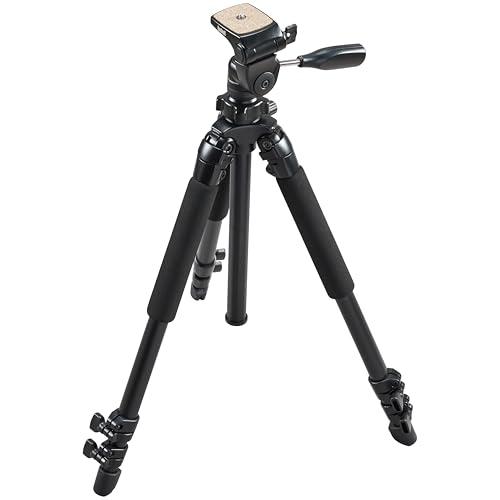
- 1Bushnell Advanced Aluminum TripodThe pick for nearly everyone, and the reason is the published height. Bushnell prints a 63-inch max height, an 11 lb weight capacity, a 3-way pan head, adjustable legs and center column, and non-slip feet. Sixty-three inches is the specification that separates a usable glassing tripod from a frustrating one, because most inexpensive tripods top out somewhere around chest height, and a hunter who has to stoop to look through it will stop looking through it. Eleven pounds of capacity is far more than any binocular needs and comfortably covers a spotting scope, which matters because capacity is really a proxy for how little the whole thing flexes under load. The 3-way pan head is the right head for this job: separate controls for pan and tilt mean you can sweep a hillside dead level without the horizon rolling, which is exactly how a glassing grid gets worked. And it is from an optics company, which usually means the mount and the plate are sized for optics rather than for a phone. Honest cons: aluminum legs and a center column make this a sturdy tripod rather than a light one, and a center column is always the least rigid part of any tripod - raise it last, not first. A 3-way pan head has two handles sticking out of it, which is two things to catch on brush and the reason some hunters prefer a ball head. It is also not a backcountry tripod: it will ride in a truck or strapped to a pack for a mile, not comfortably on a multi-day pack-in. And it does not include a binocular adapter.Best for: Best overall - tall enough to glass standing up
- 2
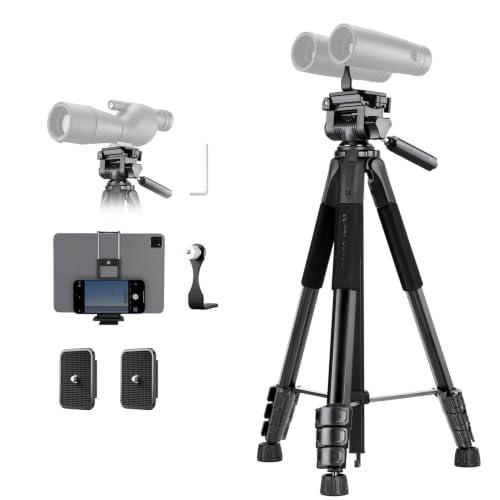 K&F Concept Spotting Scope Tripod with Binocular AdapterThe cheapest honest way to put binoculars on legs, and the smartest buy on this page for anyone who is not sure they will use a tripod at all. K&F Concept publishes this as a spotting scope tripod with a binocular adapter, compatible with binoculars, spotting scopes, cameras and phones - and that adapter is the whole reason it leads the budget slot. Every other tripod here needs a separate $19 to $69 part before a binocular can physically attach, which is the single most common way a first tripod purchase ends in an unusable box on the kitchen table. For a gift buyer that is decisive: this is the one that works on the day it is opened. It is also perfectly adequate for its real job, which is sitting on a truck tailgate or beside a glassing rock with 8x or 10x binoculars on it. Honest cons: this is the lightest-duty pick here and the listing publishes no height, no load capacity and no head type, so three of the figures you would want to compare simply are not there. Budget tripods in this bracket are typically shorter than a standing adult, so plan on sitting down to glass. The legs and the head are where the money is saved, which means more flex, more vibration settling time after each touch, and a mount that will not love a heavy spotting scope. Treat it as a tripod that proves the concept, not a lifetime purchase.Best for: Budget pick - and the only one with the adapter included
- 3
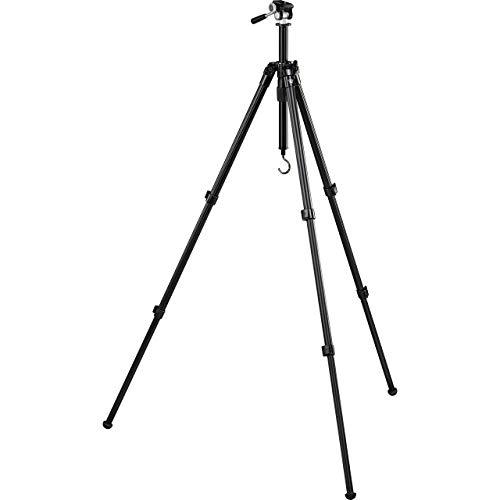 Vortex High Country II Tripod KitThe pick for a hunter who glasses country rather than trails: Vortex publishes the High Country II as a tripod kit with a 2-way pan head, a 22 lb max load, an Arca-Swiss head mount, aluminum legs with flip lever leg locks, and the Vortex unlimited unconditional warranty. Two things here are genuinely hunting-specific. Flip lever leg locks open and close with a gloved hand in the cold, which twist locks do not, and that is not a small thing at first light in November. The Arca-Swiss mount is the quiet one: it is the de-facto standard plate system in optics, so a hunter who buys into it can move the same binocular or scope clamp between tripods and heads for years rather than hunting for a proprietary plate. And the warranty is the real reason Vortex owners are Vortex owners - unlimited and unconditional, on a piece of gear that gets dropped on rock. It pairs naturally with the Vortex glass this site already recommends. Honest cons: it is the most expensive pick here, and the 22 lb capacity is far more than any binocular will ever ask for - you are paying for rigidity and for the warranty, not for a number you will use. Aluminum legs mean it is not the lightest option in this price bracket; the carbon picks below are. At the time of writing the listing read 'Only 6 left in stock', which on a gift timeline is worth knowing, so we state it rather than hide it. And like everything else here except the K&F, it does not include a binocular adapter.Best for: Best hunting-specific kit - the warranty is the argument
- 4
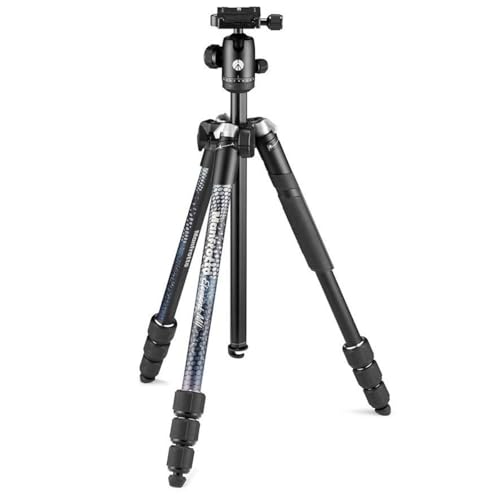 Manfrotto Element MII Aluminum Tripod with Ball HeadThe pick if the hunter glasses from a sitting position and moves the optic a lot. Manfrotto publishes the Element MII as a 4-section aluminum tripod with a ball head, a 17.6 lb load capacity, a 63-inch max height and a 200PL-PRO plate. A ball head is a genuinely different tool from a pan head: one lever loosens every axis at once, so reframing from a far ridge to a close draw is a single motion instead of two handles' worth of fiddling. For a hunter who is scanning opportunistically rather than working a methodical grid, that is faster and far less annoying. Four leg sections also fold shorter than three, which is why this is the one on the page that genuinely disappears into a pack side pocket, and the 63-inch height means it still stands up to full use. Manfrotto is a camera company rather than an optics one, and in this instance that is a strength: tripod engineering is their actual product. Honest cons: a ball head is worse than a pan head at the thing glassing most rewards, which is sweeping dead level across a hillside - a ball head will let the horizon tip, and you will notice. Four leg sections means more joints, and the thinnest bottom section of any multi-section tripod is always the least rigid part. The 200PL-PRO is a Manfrotto plate standard, not Arca-Swiss, so it does not interchange with the Vortex ecosystem. And it is sold for cameras, so no binocular adapter is included.Best for: Best ball head - one motion to reframe
- 5
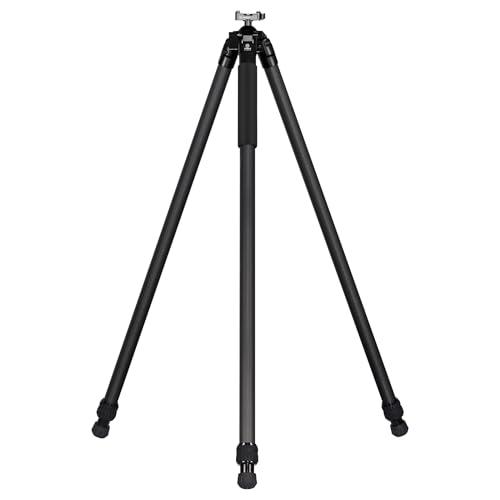 FANAUE Carbon Fiber Hunting TripodThe pick when the tripod has to be carried all day rather than driven to. FANAUE publishes this as a carbon fiber tripod for hunting with an Arca-Swiss quick-release plate and a 360-degree ball head for spotting scopes and binoculars. Carbon legs are the reason to look: for the same stiffness they are lighter than aluminum, and they transmit less vibration and get far less painfully cold to handle in winter - which is a real and underrated difference when the tripod gets adjusted bare-handed at dawn. The Arca-Swiss plate puts it in the same standard as the Vortex kit, so a binocular clamp or scope foot bought once works on either. And a 360-degree ball head is the fast-reframing option for a hunter who is covering a lot of country from a lot of positions. Honest cons: the listing publishes neither a maximum height nor a load capacity, which are the two numbers that most determine whether a tripod suits a given hunter, so this one has to be bought on material and head type alone. FANAUE is an Amazon-native brand without a long optics or outdoor track record. Carbon is light and stiff but it is also brittle in a way aluminum is not - aluminum bends and keeps working, carbon can crack, and a cracked leg section is a dead leg section. The listing markets rifle use heavily; this site does not cover shooting equipment and recommends it strictly as a glassing tripod.Best for: Best carbon pick - for the tripod that lives on a pack
- 6
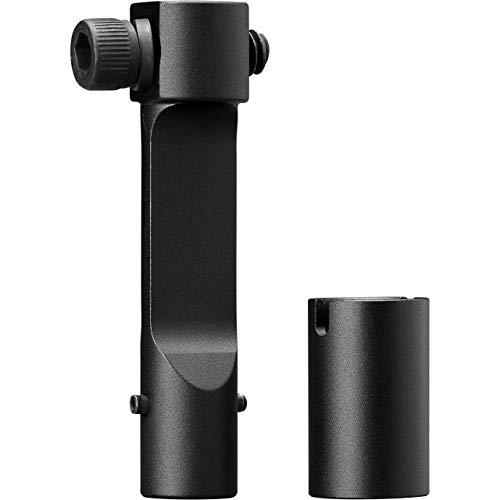 Vortex Sport Binocular AdapterThis is on the page because without it most of the tripods above cannot physically hold a binocular, and that is the single most common disappointment in this category. Vortex publishes the Sport Binocular Adapter as fitting tripod-adaptable binoculars and tripods with a 1/4-20 socket or thread, with a quick-release connector and the same unlimited unconditional warranty as the rest of their gear. Here is the mechanism nobody explains on a tripod listing: a tripod head takes a camera screw, and a binocular has no screw hole - it has a small threaded socket hidden behind a cap on the front of the center hinge, and only some binoculars have it at all. The adapter is the bridge between those two, and it costs a fraction of the tripod. The quick-release part matters in practice because it means the binocular can come off the tripod and go back on the chest harness in a second, which is how a hunter actually uses both. Honest cons: it only works on a binocular that is tripod-adaptable in the first place - check for a cap on the front of the hinge before buying, because plenty of compact and budget binoculars have no socket and no amount of hardware will fix that. It is an accessory, so it is a poor gift on its own unless it is going in the box with a tripod. And it adds one more small object to lose in the dark; Vortex also sells a heavier-duty Pro version if the optic is a large spotting scope rather than a binocular.Best for: The part everyone forgets - buy it with the tripod
| # | Gift | Best for | Price |
|---|---|---|---|
| 1 | Bushnell Advanced Aluminum TripodThe pick for nearly everyone, and the reason is the published height. Bushnell prints a 63-inch max height, an 11 lb weight capacity, a 3-way pan head, adjustable legs and center column, and non-slip feet. Sixty-three inches is the specification that separates a usable glassing tripod from a frustrating one, because most inexpensive tripods top out somewhere around chest height, and a hunter who has to stoop to look through it will stop looking through it. Eleven pounds of capacity is far more than any binocular needs and comfortably covers a spotting scope, which matters because capacity is really a proxy for how little the whole thing flexes under load. The 3-way pan head is the right head for this job: separate controls for pan and tilt mean you can sweep a hillside dead level without the horizon rolling, which is exactly how a glassing grid gets worked. And it is from an optics company, which usually means the mount and the plate are sized for optics rather than for a phone. Honest cons: aluminum legs and a center column make this a sturdy tripod rather than a light one, and a center column is always the least rigid part of any tripod - raise it last, not first. A 3-way pan head has two handles sticking out of it, which is two things to catch on brush and the reason some hunters prefer a ball head. It is also not a backcountry tripod: it will ride in a truck or strapped to a pack for a mile, not comfortably on a multi-day pack-in. And it does not include a binocular adapter. | Best overall - tall enough to glass standing up | $109.99View on Amazon |
| 2 | K&F Concept Spotting Scope Tripod with Binocular AdapterThe cheapest honest way to put binoculars on legs, and the smartest buy on this page for anyone who is not sure they will use a tripod at all. K&F Concept publishes this as a spotting scope tripod with a binocular adapter, compatible with binoculars, spotting scopes, cameras and phones - and that adapter is the whole reason it leads the budget slot. Every other tripod here needs a separate $19 to $69 part before a binocular can physically attach, which is the single most common way a first tripod purchase ends in an unusable box on the kitchen table. For a gift buyer that is decisive: this is the one that works on the day it is opened. It is also perfectly adequate for its real job, which is sitting on a truck tailgate or beside a glassing rock with 8x or 10x binoculars on it. Honest cons: this is the lightest-duty pick here and the listing publishes no height, no load capacity and no head type, so three of the figures you would want to compare simply are not there. Budget tripods in this bracket are typically shorter than a standing adult, so plan on sitting down to glass. The legs and the head are where the money is saved, which means more flex, more vibration settling time after each touch, and a mount that will not love a heavy spotting scope. Treat it as a tripod that proves the concept, not a lifetime purchase. | Budget pick - and the only one with the adapter included | $36.99View on Amazon |
| 3 | Vortex High Country II Tripod KitThe pick for a hunter who glasses country rather than trails: Vortex publishes the High Country II as a tripod kit with a 2-way pan head, a 22 lb max load, an Arca-Swiss head mount, aluminum legs with flip lever leg locks, and the Vortex unlimited unconditional warranty. Two things here are genuinely hunting-specific. Flip lever leg locks open and close with a gloved hand in the cold, which twist locks do not, and that is not a small thing at first light in November. The Arca-Swiss mount is the quiet one: it is the de-facto standard plate system in optics, so a hunter who buys into it can move the same binocular or scope clamp between tripods and heads for years rather than hunting for a proprietary plate. And the warranty is the real reason Vortex owners are Vortex owners - unlimited and unconditional, on a piece of gear that gets dropped on rock. It pairs naturally with the Vortex glass this site already recommends. Honest cons: it is the most expensive pick here, and the 22 lb capacity is far more than any binocular will ever ask for - you are paying for rigidity and for the warranty, not for a number you will use. Aluminum legs mean it is not the lightest option in this price bracket; the carbon picks below are. At the time of writing the listing read 'Only 6 left in stock', which on a gift timeline is worth knowing, so we state it rather than hide it. And like everything else here except the K&F, it does not include a binocular adapter. | Best hunting-specific kit - the warranty is the argument | $199.00View on Amazon |
| 4 | Manfrotto Element MII Aluminum Tripod with Ball HeadThe pick if the hunter glasses from a sitting position and moves the optic a lot. Manfrotto publishes the Element MII as a 4-section aluminum tripod with a ball head, a 17.6 lb load capacity, a 63-inch max height and a 200PL-PRO plate. A ball head is a genuinely different tool from a pan head: one lever loosens every axis at once, so reframing from a far ridge to a close draw is a single motion instead of two handles' worth of fiddling. For a hunter who is scanning opportunistically rather than working a methodical grid, that is faster and far less annoying. Four leg sections also fold shorter than three, which is why this is the one on the page that genuinely disappears into a pack side pocket, and the 63-inch height means it still stands up to full use. Manfrotto is a camera company rather than an optics one, and in this instance that is a strength: tripod engineering is their actual product. Honest cons: a ball head is worse than a pan head at the thing glassing most rewards, which is sweeping dead level across a hillside - a ball head will let the horizon tip, and you will notice. Four leg sections means more joints, and the thinnest bottom section of any multi-section tripod is always the least rigid part. The 200PL-PRO is a Manfrotto plate standard, not Arca-Swiss, so it does not interchange with the Vortex ecosystem. And it is sold for cameras, so no binocular adapter is included. | Best ball head - one motion to reframe | $174.95View on Amazon |
| 5 | FANAUE Carbon Fiber Hunting TripodThe pick when the tripod has to be carried all day rather than driven to. FANAUE publishes this as a carbon fiber tripod for hunting with an Arca-Swiss quick-release plate and a 360-degree ball head for spotting scopes and binoculars. Carbon legs are the reason to look: for the same stiffness they are lighter than aluminum, and they transmit less vibration and get far less painfully cold to handle in winter - which is a real and underrated difference when the tripod gets adjusted bare-handed at dawn. The Arca-Swiss plate puts it in the same standard as the Vortex kit, so a binocular clamp or scope foot bought once works on either. And a 360-degree ball head is the fast-reframing option for a hunter who is covering a lot of country from a lot of positions. Honest cons: the listing publishes neither a maximum height nor a load capacity, which are the two numbers that most determine whether a tripod suits a given hunter, so this one has to be bought on material and head type alone. FANAUE is an Amazon-native brand without a long optics or outdoor track record. Carbon is light and stiff but it is also brittle in a way aluminum is not - aluminum bends and keeps working, carbon can crack, and a cracked leg section is a dead leg section. The listing markets rifle use heavily; this site does not cover shooting equipment and recommends it strictly as a glassing tripod. | Best carbon pick - for the tripod that lives on a pack | $179.99View on Amazon |
| 6 | Vortex Sport Binocular AdapterThis is on the page because without it most of the tripods above cannot physically hold a binocular, and that is the single most common disappointment in this category. Vortex publishes the Sport Binocular Adapter as fitting tripod-adaptable binoculars and tripods with a 1/4-20 socket or thread, with a quick-release connector and the same unlimited unconditional warranty as the rest of their gear. Here is the mechanism nobody explains on a tripod listing: a tripod head takes a camera screw, and a binocular has no screw hole - it has a small threaded socket hidden behind a cap on the front of the center hinge, and only some binoculars have it at all. The adapter is the bridge between those two, and it costs a fraction of the tripod. The quick-release part matters in practice because it means the binocular can come off the tripod and go back on the chest harness in a second, which is how a hunter actually uses both. Honest cons: it only works on a binocular that is tripod-adaptable in the first place - check for a cap on the front of the hinge before buying, because plenty of compact and budget binoculars have no socket and no amount of hardware will fix that. It is an accessory, so it is a poor gift on its own unless it is going in the box with a tripod. And it adds one more small object to lose in the dark; Vortex also sells a heavier-duty Pro version if the optic is a large spotting scope rather than a binocular. | The part everyone forgets - buy it with the tripod | $19.00View on Amazon |
Prices from Amazon as of November 24, 2026 and change often — the button always opens the current listing. Some links earn us a commission at no extra cost to you.
Bushnell Advanced Aluminum Tripod
The pick for nearly everyone, and the reason is the published height. Bushnell prints a 63-inch max height, an 11 lb weight capacity, a 3-way pan head, adjustable legs and center column, and non-slip feet. Sixty-three inches is the specification that separates a usable glassing tripod from a frustrating one, because most inexpensive tripods top out somewhere around chest height, and a hunter who has to stoop to look through it will stop looking through it. Eleven pounds of capacity is far more than any binocular needs and comfortably covers a spotting scope, which matters because capacity is really a proxy for how little the whole thing flexes under load. The 3-way pan head is the right head for this job: separate controls for pan and tilt mean you can sweep a hillside dead level without the horizon rolling, which is exactly how a glassing grid gets worked. And it is from an optics company, which usually means the mount and the plate are sized for optics rather than for a phone. Honest cons: aluminum legs and a center column make this a sturdy tripod rather than a light one, and a center column is always the least rigid part of any tripod - raise it last, not first. A 3-way pan head has two handles sticking out of it, which is two things to catch on brush and the reason some hunters prefer a ball head. It is also not a backcountry tripod: it will ride in a truck or strapped to a pack for a mile, not comfortably on a multi-day pack-in. And it does not include a binocular adapter.
#ad · Price as of November 24, 2026. We may earn a commission.
K&F Concept Spotting Scope Tripod with Binocular Adapter
The cheapest honest way to put binoculars on legs, and the smartest buy on this page for anyone who is not sure they will use a tripod at all. K&F Concept publishes this as a spotting scope tripod with a binocular adapter, compatible with binoculars, spotting scopes, cameras and phones - and that adapter is the whole reason it leads the budget slot. Every other tripod here needs a separate $19 to $69 part before a binocular can physically attach, which is the single most common way a first tripod purchase ends in an unusable box on the kitchen table. For a gift buyer that is decisive: this is the one that works on the day it is opened. It is also perfectly adequate for its real job, which is sitting on a truck tailgate or beside a glassing rock with 8x or 10x binoculars on it. Honest cons: this is the lightest-duty pick here and the listing publishes no height, no load capacity and no head type, so three of the figures you would want to compare simply are not there. Budget tripods in this bracket are typically shorter than a standing adult, so plan on sitting down to glass. The legs and the head are where the money is saved, which means more flex, more vibration settling time after each touch, and a mount that will not love a heavy spotting scope. Treat it as a tripod that proves the concept, not a lifetime purchase.
#ad · Price as of November 24, 2026. We may earn a commission.
Vortex High Country II Tripod Kit
The pick for a hunter who glasses country rather than trails: Vortex publishes the High Country II as a tripod kit with a 2-way pan head, a 22 lb max load, an Arca-Swiss head mount, aluminum legs with flip lever leg locks, and the Vortex unlimited unconditional warranty. Two things here are genuinely hunting-specific. Flip lever leg locks open and close with a gloved hand in the cold, which twist locks do not, and that is not a small thing at first light in November. The Arca-Swiss mount is the quiet one: it is the de-facto standard plate system in optics, so a hunter who buys into it can move the same binocular or scope clamp between tripods and heads for years rather than hunting for a proprietary plate. And the warranty is the real reason Vortex owners are Vortex owners - unlimited and unconditional, on a piece of gear that gets dropped on rock. It pairs naturally with the Vortex glass this site already recommends. Honest cons: it is the most expensive pick here, and the 22 lb capacity is far more than any binocular will ever ask for - you are paying for rigidity and for the warranty, not for a number you will use. Aluminum legs mean it is not the lightest option in this price bracket; the carbon picks below are. At the time of writing the listing read 'Only 6 left in stock', which on a gift timeline is worth knowing, so we state it rather than hide it. And like everything else here except the K&F, it does not include a binocular adapter.
#ad · Price as of November 24, 2026. We may earn a commission.
Manfrotto Element MII Aluminum Tripod with Ball Head
The pick if the hunter glasses from a sitting position and moves the optic a lot. Manfrotto publishes the Element MII as a 4-section aluminum tripod with a ball head, a 17.6 lb load capacity, a 63-inch max height and a 200PL-PRO plate. A ball head is a genuinely different tool from a pan head: one lever loosens every axis at once, so reframing from a far ridge to a close draw is a single motion instead of two handles' worth of fiddling. For a hunter who is scanning opportunistically rather than working a methodical grid, that is faster and far less annoying. Four leg sections also fold shorter than three, which is why this is the one on the page that genuinely disappears into a pack side pocket, and the 63-inch height means it still stands up to full use. Manfrotto is a camera company rather than an optics one, and in this instance that is a strength: tripod engineering is their actual product. Honest cons: a ball head is worse than a pan head at the thing glassing most rewards, which is sweeping dead level across a hillside - a ball head will let the horizon tip, and you will notice. Four leg sections means more joints, and the thinnest bottom section of any multi-section tripod is always the least rigid part. The 200PL-PRO is a Manfrotto plate standard, not Arca-Swiss, so it does not interchange with the Vortex ecosystem. And it is sold for cameras, so no binocular adapter is included.
#ad · Price as of November 24, 2026. We may earn a commission.
FANAUE Carbon Fiber Hunting Tripod
The pick when the tripod has to be carried all day rather than driven to. FANAUE publishes this as a carbon fiber tripod for hunting with an Arca-Swiss quick-release plate and a 360-degree ball head for spotting scopes and binoculars. Carbon legs are the reason to look: for the same stiffness they are lighter than aluminum, and they transmit less vibration and get far less painfully cold to handle in winter - which is a real and underrated difference when the tripod gets adjusted bare-handed at dawn. The Arca-Swiss plate puts it in the same standard as the Vortex kit, so a binocular clamp or scope foot bought once works on either. And a 360-degree ball head is the fast-reframing option for a hunter who is covering a lot of country from a lot of positions. Honest cons: the listing publishes neither a maximum height nor a load capacity, which are the two numbers that most determine whether a tripod suits a given hunter, so this one has to be bought on material and head type alone. FANAUE is an Amazon-native brand without a long optics or outdoor track record. Carbon is light and stiff but it is also brittle in a way aluminum is not - aluminum bends and keeps working, carbon can crack, and a cracked leg section is a dead leg section. The listing markets rifle use heavily; this site does not cover shooting equipment and recommends it strictly as a glassing tripod.
#ad · Price as of November 24, 2026. We may earn a commission.
Vortex Sport Binocular Adapter
This is on the page because without it most of the tripods above cannot physically hold a binocular, and that is the single most common disappointment in this category. Vortex publishes the Sport Binocular Adapter as fitting tripod-adaptable binoculars and tripods with a 1/4-20 socket or thread, with a quick-release connector and the same unlimited unconditional warranty as the rest of their gear. Here is the mechanism nobody explains on a tripod listing: a tripod head takes a camera screw, and a binocular has no screw hole - it has a small threaded socket hidden behind a cap on the front of the center hinge, and only some binoculars have it at all. The adapter is the bridge between those two, and it costs a fraction of the tripod. The quick-release part matters in practice because it means the binocular can come off the tripod and go back on the chest harness in a second, which is how a hunter actually uses both. Honest cons: it only works on a binocular that is tripod-adaptable in the first place - check for a cap on the front of the hinge before buying, because plenty of compact and budget binoculars have no socket and no amount of hardware will fix that. It is an accessory, so it is a poor gift on its own unless it is going in the box with a tripod. And it adds one more small object to lose in the dark; Vortex also sells a heavier-duty Pro version if the optic is a large spotting scope rather than a binocular.
#ad · Price as of November 24, 2026. We may earn a commission.
Height is the spec that decides whether it gets used
Every tripod listing leads with weight, and weight matters for carrying. Height is what decides whether the tripod gets set up at all.
A tripod that reaches eye level standinglets a hunter glass from the edge of a field without lying down in wet grass, lets them glass over a brush line rather than through it, and lets them break off to look at something else without resetting anything. Bushnell publishes 63 inches on the Advanced and Manfrotto publishes 63 inches on the Element MII; those are the two picks here that will work standing for most adults. Most inexpensive tripods top out well short of that, and the real consequence is not discomfort — it is that the tripod stays in the truck.
The counter-argument is legitimate and worth stating: a lot of serious glassing happens sitting down, because sitting is steadier, warmer, less visible and sustainable for hours. A Western hunter picking apart a basin is usually on their backside with a pack as a backrest and a short tripod in front of them. If that is the hunting, a tall tripod is carrying weight it never uses, and the shorter carbon or budget options make more sense.
One more height note: the center column is the weakest part of any tripod. Extending the legs is rigid; extending the column is a lever. Use the legs first and the column only for the last few inches.
Pan head or ball head?
| Pan head (2-way / 3-way) | Ball head | |
|---|---|---|
| Sweeping a hillside level | Its whole purpose - the horizon stays flat | The horizon tips unless you are careful |
| Reframing somewhere new | Two controls, a few seconds | One lever, one motion - much faster |
| Working a methodical glassing grid | Better. Repeatable, level passes | Workable but fiddlier |
| Snagging on brush | Handles stick out and catch | Compact, nothing to catch |
| Spotting scope at high power | Smoother, more controlled | Can creep under a heavy load |
| On this page | Bushnell (3-way), Vortex High Country II (2-way) | Manfrotto Element MII, FANAUE carbon |
The short version: if the hunting is glassing big country methodically— elk basins, open ag fields, long cutovers — a pan head is the better tool, because level, repeatable sweeps are how a grid gets covered without missing a strip. If the hunting is moving and looking opportunistically, a ball head is faster and less to snag. Neither is wrong. A hunter who does not know which they are will be happier with a pan head, because the failure mode of a tipped horizon is missing animals and the failure mode of a slower reframe is mild annoyance.
The adapter problem, explained once
This is the paragraph that saves the most grief in this category, so it is worth being blunt about. A binocular does not attach to a tripod on its own.A tripod head ends in a 1/4-20 camera screw. A binocular has no screw hole — what it has, if it has anything, is a small threaded socket behind a removable cap on the front of the center hinge. A binocular tripod adapter is the L-shaped bracket that screws into that socket and clamps onto the tripod head.
Two things follow from that. First, check that the binocular is tripod-adaptable before buying any of this. Unscrew the cap on the front of the hinge; if there is a thread under it, you are fine. Many full-size hunting binoculars have one, including the Vortex models this site recommends. Plenty of compacts and budget pairs do not, and no adapter can add one.
Second, the adapter is almost never in the box. Of the five tripods here, only the K&F Concept kit includes one. That is a $19 part on a $110 to $199 purchase, and leaving it out is how a gift arrives unusable. If you are buying a tripod for a hunter who owns binoculars, buy the adapter in the same order.
Carbon or aluminum?
Aluminumis cheaper for the same stiffness, and it fails gracefully — a bent leg is usually still a working leg. It is also colder to the touch in winter and transmits a little more vibration. The Bushnell, the Vortex High Country II and the Manfrotto Element MII are all aluminum, and for a tripod that rides in a truck and walks a mile that is the sensible material.
Carbon fiber is lighter for the same stiffness, damps vibration better, and is noticeably less unpleasant to handle bare-handed in the cold. The honest trade is brittleness: carbon can crack where aluminum would deform, and a cracked section is finished. It also costs more. The FANAUE is the carbon pick here, and carbon earns its premium specifically when the tripod is carried on a pack for days rather than driven to a field edge.
For most hunters on this site — whitetail hunters glassing fields, cutovers and food plots from a truck or a short walk — aluminum is the right answer and the money saved is better spent on the glass that goes on top.
How a tripod changes the way you glass
The point of a tripod is not a single better look. It is a method. Handheld, almost everyone glasses the same way: sweep across the country, see nothing obvious, lower the binoculars. On a tripod, the binocular stays exactly where it was pointed, and that makes a methodical pass possible — work one horizontal strip of hillside from edge to edge, move up a strip, work back the other way, and keep going until the whole face has been covered.
What that finds is not animals standing in the open; it is the ones that are already mostly hidden. An ear. A patch of tan that is the wrong color for the brush around it. A horizontal line in a landscape of vertical ones. Those details are inside the resolution of ordinary 10x binoculars and outside what a shaking pair can hold still long enough to register.
Two practical notes. Let the tripod settle— after every adjustment there is a second or two of vibration, and looking during it wastes the pass. And glass at the edges of the day and into shade, because first and last light plus shadowed timber are where a stationary animal is most findable, and both are exactly where a handheld binocular struggles most.
What to spend, and on what
An honest order of priorities for a hunter who owns none of this: glass first, then the adapter, then legs. Good binoculars on a cheap tripod outperform mediocre binoculars on an excellent one, every time. The $19 adapter comes before any tripod upgrade because without it the tripod does nothing. After that, a mid-priced aluminum tripod with a published height covers nearly every hunter on this site, and the jump to a premium kit buys a warranty, gloved-hand leg locks and the Arca-Swiss standard rather than a visibly better picture.
A spotting scope is the one purchase that changes this math: a heavy scope at high magnification demands more rigidity than a budget tripod has, and that is where the Vortex and Bushnell capacities start to matter. For whitetail hunting in the East and Midwest, a spotting scope is usually the wrong buy anyway — binoculars on a tripod plus a rangefinder answer more questions.
Match the tripod to the hunter
Glasses fields and cutovers, standing, wants one tripod to do everything. The Bushnell Advanced.
Has never used a tripod and might not stick with it.The K&F Concept kit, because the adapter is included.
Hunts Western country and already owns Vortex glass. The Vortex High Country II.
Scans opportunistically and wants speed over level sweeps. The Manfrotto Element MII, for the ball head.
Carries everything on their back for days. The FANAUE carbon.
Already owns a tripod and still cannot attach their binoculars. The Vortex Sport Binocular Adapter. Buy it first.
Keep browsing
A tripod is the second half of an optics setup. The first half is in best hunting binoculars, with the use-case versions in best binoculars for elk hunting and best binoculars for deer hunting. For carrying binoculars where they are reachable rather than swinging, best bino harness is the page, and best hunting rangefinders covers the other optic most hunters add next. If the glassing is being done from a tree rather than a ridge, best climbing sticks for hunting and best saddle hunting platform cover getting up there, and best hunting backpacks covers carrying a tripod and everything else at once.
Frequently asked questions
What is the best tripod for hunting?
For most hunters the Bushnell Advanced Aluminum Tripod, because it publishes a 63-inch max height - tall enough to glass standing up, which is where most cheap tripods fall short - along with an 11 lb capacity and a 3-way pan head that lets you sweep a hillside dead level. The cheapest option that works out of the box is the K&F Concept spotting scope tripod, which is the only pick here that includes a binocular adapter. For a Western hunter who already owns Vortex glass, the Vortex High Country II kit publishes a 22 lb max load, an Arca-Swiss mount, gloved-hand flip lever leg locks and an unlimited unconditional warranty.
Do I need a special adapter to put binoculars on a tripod?
Yes, and it is almost never included. A tripod head ends in a 1/4-20 camera screw; a binocular has no screw hole, only a small threaded socket hidden behind a cap on the front of the center hinge - and only tripod-adaptable binoculars have one at all. A binocular tripod adapter is the bracket that bridges the two, and it costs around $19. Check for the thread under the cap before buying anything, because many compact and budget binoculars have no socket and no hardware can add one.
Is a tripod worth it for hunting, or is it just extra weight?
It is worth it for one reason: time on glass. A tripod removes your pulse, breathing and arm fatigue from the image, which reveals detail your binoculars could always resolve but could not hold still enough to show - an ear, a wrong-colored patch, a horizontal line in vertical cover. More importantly, glassing becomes comfortable enough to do for an hour rather than ten minutes, and sustained glassing is what finds bedded animals. For a hunter who mostly sits over a small food plot it is genuinely extra weight; for anyone looking across open country it is one of the highest-return purchases in optics.
Pan head or ball head for glassing?
A pan head for methodical glassing, a ball head for speed. A pan head separates the pan and tilt axes, so you can sweep a hillside without the horizon rolling, which is how a glassing grid gets covered without missing a strip. A ball head loosens every axis with one lever, so reframing from a far ridge to a near draw is a single motion - faster, more compact, worse at level sweeps. If you do not know which you need, choose the pan head: missing animals is a worse failure than a slower reframe.
How tall should a hunting tripod be?
Tall enough for how the hunter actually glasses. If they glass standing at a field edge or over a brush line, look for a published max height near 60 inches or more - the Bushnell Advanced and the Manfrotto Element MII both publish 63 inches. If they glass sitting down with a pack as a backrest, which is how most Western hunters pick apart a basin, a shorter and lighter tripod is the better buy and the height is weight they never use. In either case extend the legs before the center column: the column is the least rigid part of any tripod.
Carbon fiber or aluminum tripod legs?
Aluminum for a tripod that rides in a truck or walks a mile, carbon for one that lives on a pack. Aluminum is cheaper for the same stiffness and fails gracefully - a bent leg usually still works. Carbon is lighter, damps vibration better and is far less painful to handle bare-handed in the cold, but it is brittle where aluminum is not, and a cracked section is finished. For most whitetail hunting, aluminum is the right answer and the savings belong in the glass on top.
Can I use a camera tripod for hunting?
Yes - a camera tripod is mechanically the same object, and the Manfrotto on this page is sold for cameras. Two things are worth checking. First, height: many travel camera tripods are short, which is fine sitting and frustrating standing. Second, the plate standard: Arca-Swiss is the de-facto standard in optics, so a tripod on a proprietary plate system is harder to build around later. And a camera tripod will not include a binocular adapter, so that is still a separate part.
Sources
- Amazon listing - Bushnell Advanced Aluminum Tripod: published 63-inch max height, 11 lb weight capacity, 3-way pan head, adjustable legs and center column, non-slip feet
- Amazon listing - K&F Concept Spotting Scope Tripod with Binocular Adapter: published compatibility with binoculars, spotting scopes, cameras and phones, binocular adapter included
- Amazon listing - Vortex High Country II Tripod Kit: published 2-way pan head, 22 lb max load, Arca-Swiss mount, aluminum legs, flip lever leg locks, unlimited unconditional warranty; availability read "Only 6 left in stock" when checked
- Amazon listing - Manfrotto Element MII 4-Section Aluminum Tripod with Ball Head: published 17.6 lb load capacity, 63-inch max height, 200PL-PRO plate
- Amazon listing - FANAUE Carbon Fiber Tripod for Hunting: published carbon fiber build, Arca-Swiss quick-release plate, 360-degree ball head for spotting scopes and binoculars
- Amazon listing - Vortex Sport Binocular Adapter: published fit for tripod-adaptable binoculars and tripods with a 1/4-20 socket or thread, quick-release connector, unlimited unconditional warranty