Gear Guides
The Best Binoculars for Deer Hunting
Deer hunting asks less of a binocular than elk hunting does, and more of it at exactly the wrong time of day. Here are the pairs that suit whitetail distances and gray first light - and why the expensive answer is often the wrong one.
Most binocular advice is written for the mountains. It talks about picking apart a far ridge at first light, about tripod adapters and 15x glass and hours behind the lens. That advice is correct, and it is almost entirely wrong for deer hunting, which is what the great majority of American hunters actually do.
A deer hunter is usually looking at something between forty yards and three hundred, often from a treestand or a blind, often through gaps in cover, and almost always in the first and last thirty minutes of legal light. That combination — short-to-medium distance, awkward shooting position, terrible light — changes which binocular is the right one. It rewards a wide, steady, bright view and punishes magnification for its own sake.
This page picks binoculars for that job specifically. If you want the wider category view — every binocular we recommend, ranked by budget regardless of quarry — that lives on our best hunting binocularsroundup. Come here when you know the person hunts deer. Every price below is live from Amazon, and none of these are "as tested" claims: we compile published specifications and long-standing reputation, and we say so.
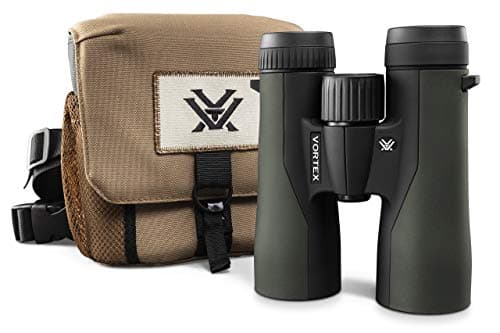
- 1Vortex Crossfire HD 10x42 BinocularsThe Crossfire HD 10x42 is the pair we would hand to most deer hunters and the one that best fits the whitetail job: a 42 mm objective for the gray light at either end of the day, ten-power reach for the long shot across a bean field or a power line cut, and Vortex's unconditional VIP warranty behind it - repaired or replaced, no receipt, no registration, regardless of whose fault it was. That warranty is the reason this works as a gift rather than just a purchase, because the risk of buying optics for someone else largely disappears. Honest cons: ten power is more magnification than a timber hunter strictly needs, it shows hand-shake more than an 8x does when you are braced awkwardly in a stand, and the glass is a genuine step below the Diamondback if you put them side by side at dusk.Best for: Best overall for deer
- 2
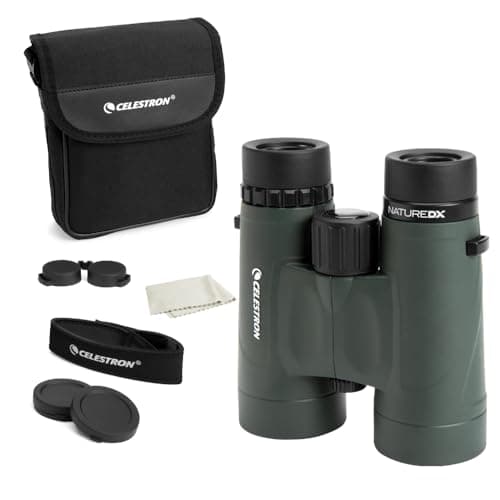 Celestron Nature DX 8x42 BinocularsIf the deer hunter you are buying for hunts woods rather than fields, this is quietly the better binocular for them, and it costs less. The Nature DX is an 8x42: same light-gathering objective, less magnification, and in exchange a noticeably wider field of view and a steadier picture one-handed. In timber that matters more than reach - you are trying to find a deer in clutter and confirm antlers at eighty yards, not identify one at four hundred. Celestron publishes fully multi-coated optics, phase-corrected BaK-4 prisms and a waterproof, nitrogen-purged housing, which is more than most glass at the price admits to. Honest cons: eight power runs out of usefulness on genuinely long fields, the warranty is a conventional limited one rather than Vortex's no-questions policy, and it is a bulkier binocular than its price suggests.Best for: Best for timber and close cover
 - 3
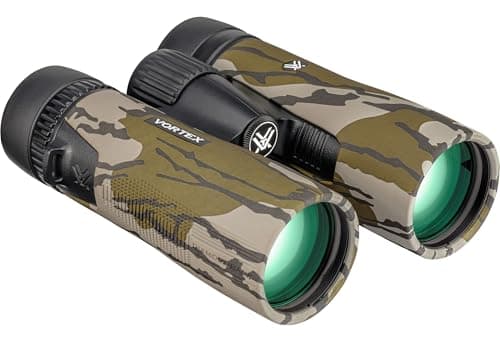 Vortex Diamondback HD 10x42 BinocularsThe case for spending more on a deer binocular is not that you will see farther. It is that you will see for longer. The Diamondback HD's better glass and coatings hold contrast and edge detail further into the last few minutes of shooting light, which on a whitetail hunt is exactly when the deer moves - and it carries the same unconditional VIP warranty as the Crossfire. If the person already owns a workable pair and you want to give a genuine upgrade rather than a duplicate, this is the one that earns it. Honest cons: it is several times the price of the Nature DX for a difference most people only notice in the last ten minutes of the day, and a hunter who only ever sits a box blind over a food plot will not get their money back out of it.Best for: Splurge - best in low light
 - 4
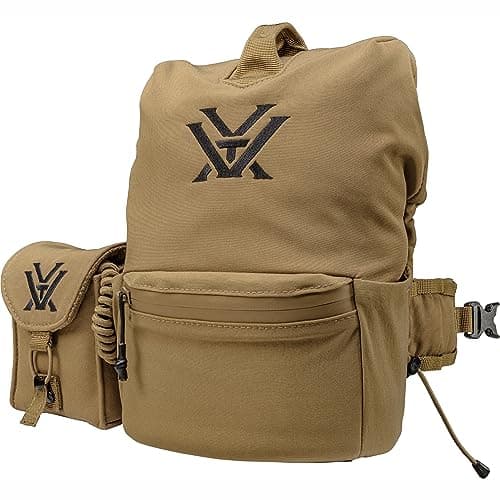 Vortex Glasspak Binocular HarnessBuy this with whichever binocular you choose. A neck strap lets binoculars swing, and swinging binoculars bang into a rifle, a bow, a treestand ladder and the hunter's own chest on every step of the walk in - which is why so many pairs end up left in the truck. The GlassPak is a chest harness that holds them flat against the sternum with the straps taking the weight across the shoulders and back, and it has a zip pocket for a rangefinder or a tag. It is the single cheapest way to make sure the expensive thing you bought actually gets carried. Honest cons: it is another strap system to put on over a jacket, it adds bulk on the chest for a bowhunter at full draw, and someone who only walks fifty yards to a box blind genuinely does not need one.Best for: The add-on that changes everything
 - 5
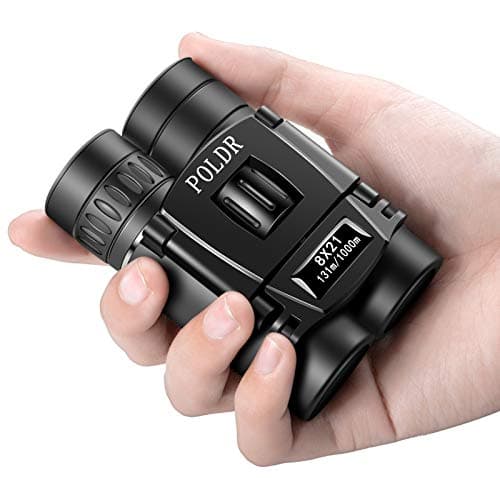 POLDR 8x21 Compact BinocularsThe honest budget answer, and a better one than it looks. These are 8x21 compacts - a small 21 mm objective, so they gather far less light than any 42 mm pair here and will fade first at dusk. What they are is pocketable: small enough to live in a jacket pocket or a pack lid permanently, which means they are there on the days the real binoculars stayed home. For a young hunter, a second pair for the truck, or a stocking stuffer beside a larger gift, that is a genuinely useful thing. Honest cons: this is the one pick on the page that is not a serious low-light binocular, and if it is meant to be somebody's only pair for evening sits it is the wrong buy - spend up to the Nature DX instead.Best for: Best pocket pair / stocking stuffer
| # | Gift | Best for | Price |
|---|---|---|---|
| 1 | Vortex Crossfire HD 10x42 BinocularsThe Crossfire HD 10x42 is the pair we would hand to most deer hunters and the one that best fits the whitetail job: a 42 mm objective for the gray light at either end of the day, ten-power reach for the long shot across a bean field or a power line cut, and Vortex's unconditional VIP warranty behind it - repaired or replaced, no receipt, no registration, regardless of whose fault it was. That warranty is the reason this works as a gift rather than just a purchase, because the risk of buying optics for someone else largely disappears. Honest cons: ten power is more magnification than a timber hunter strictly needs, it shows hand-shake more than an 8x does when you are braced awkwardly in a stand, and the glass is a genuine step below the Diamondback if you put them side by side at dusk. | Best overall for deer | $149.00View on Amazon |
| 2 | Celestron Nature DX 8x42 BinocularsIf the deer hunter you are buying for hunts woods rather than fields, this is quietly the better binocular for them, and it costs less. The Nature DX is an 8x42: same light-gathering objective, less magnification, and in exchange a noticeably wider field of view and a steadier picture one-handed. In timber that matters more than reach - you are trying to find a deer in clutter and confirm antlers at eighty yards, not identify one at four hundred. Celestron publishes fully multi-coated optics, phase-corrected BaK-4 prisms and a waterproof, nitrogen-purged housing, which is more than most glass at the price admits to. Honest cons: eight power runs out of usefulness on genuinely long fields, the warranty is a conventional limited one rather than Vortex's no-questions policy, and it is a bulkier binocular than its price suggests. | Best for timber and close cover | $148.99View on Amazon |
| 3 | Vortex Diamondback HD 10x42 BinocularsThe case for spending more on a deer binocular is not that you will see farther. It is that you will see for longer. The Diamondback HD's better glass and coatings hold contrast and edge detail further into the last few minutes of shooting light, which on a whitetail hunt is exactly when the deer moves - and it carries the same unconditional VIP warranty as the Crossfire. If the person already owns a workable pair and you want to give a genuine upgrade rather than a duplicate, this is the one that earns it. Honest cons: it is several times the price of the Nature DX for a difference most people only notice in the last ten minutes of the day, and a hunter who only ever sits a box blind over a food plot will not get their money back out of it. | Splurge - best in low light | $279.00View on Amazon |
| 4 | Vortex Glasspak Binocular HarnessBuy this with whichever binocular you choose. A neck strap lets binoculars swing, and swinging binoculars bang into a rifle, a bow, a treestand ladder and the hunter's own chest on every step of the walk in - which is why so many pairs end up left in the truck. The GlassPak is a chest harness that holds them flat against the sternum with the straps taking the weight across the shoulders and back, and it has a zip pocket for a rangefinder or a tag. It is the single cheapest way to make sure the expensive thing you bought actually gets carried. Honest cons: it is another strap system to put on over a jacket, it adds bulk on the chest for a bowhunter at full draw, and someone who only walks fifty yards to a box blind genuinely does not need one. | The add-on that changes everything | $124.44View on Amazon |
| 5 | POLDR 8x21 Compact BinocularsThe honest budget answer, and a better one than it looks. These are 8x21 compacts - a small 21 mm objective, so they gather far less light than any 42 mm pair here and will fade first at dusk. What they are is pocketable: small enough to live in a jacket pocket or a pack lid permanently, which means they are there on the days the real binoculars stayed home. For a young hunter, a second pair for the truck, or a stocking stuffer beside a larger gift, that is a genuinely useful thing. Honest cons: this is the one pick on the page that is not a serious low-light binocular, and if it is meant to be somebody's only pair for evening sits it is the wrong buy - spend up to the Nature DX instead. | Best pocket pair / stocking stuffer | $19.99View on Amazon |
Prices from Amazon as of Sep 17, 2026 and change often — the button always opens the current listing. Some links earn us a commission at no extra cost to you.
Vortex Crossfire HD 10x42 Binoculars
The Crossfire HD 10x42 is the pair we would hand to most deer hunters and the one that best fits the whitetail job: a 42 mm objective for the gray light at either end of the day, ten-power reach for the long shot across a bean field or a power line cut, and Vortex's unconditional VIP warranty behind it - repaired or replaced, no receipt, no registration, regardless of whose fault it was. That warranty is the reason this works as a gift rather than just a purchase, because the risk of buying optics for someone else largely disappears. Honest cons: ten power is more magnification than a timber hunter strictly needs, it shows hand-shake more than an 8x does when you are braced awkwardly in a stand, and the glass is a genuine step below the Diamondback if you put them side by side at dusk.
#ad · Price as of Sep 17, 2026. We may earn a commission.
Celestron Nature DX 8x42 Binoculars
If the deer hunter you are buying for hunts woods rather than fields, this is quietly the better binocular for them, and it costs less. The Nature DX is an 8x42: same light-gathering objective, less magnification, and in exchange a noticeably wider field of view and a steadier picture one-handed. In timber that matters more than reach - you are trying to find a deer in clutter and confirm antlers at eighty yards, not identify one at four hundred. Celestron publishes fully multi-coated optics, phase-corrected BaK-4 prisms and a waterproof, nitrogen-purged housing, which is more than most glass at the price admits to. Honest cons: eight power runs out of usefulness on genuinely long fields, the warranty is a conventional limited one rather than Vortex's no-questions policy, and it is a bulkier binocular than its price suggests.
#ad · Price as of Sep 17, 2026. We may earn a commission.
Vortex Diamondback HD 10x42 Binoculars
The case for spending more on a deer binocular is not that you will see farther. It is that you will see for longer. The Diamondback HD's better glass and coatings hold contrast and edge detail further into the last few minutes of shooting light, which on a whitetail hunt is exactly when the deer moves - and it carries the same unconditional VIP warranty as the Crossfire. If the person already owns a workable pair and you want to give a genuine upgrade rather than a duplicate, this is the one that earns it. Honest cons: it is several times the price of the Nature DX for a difference most people only notice in the last ten minutes of the day, and a hunter who only ever sits a box blind over a food plot will not get their money back out of it.
#ad · Price as of Sep 17, 2026. We may earn a commission.
Vortex Glasspak Binocular Harness
Buy this with whichever binocular you choose. A neck strap lets binoculars swing, and swinging binoculars bang into a rifle, a bow, a treestand ladder and the hunter's own chest on every step of the walk in - which is why so many pairs end up left in the truck. The GlassPak is a chest harness that holds them flat against the sternum with the straps taking the weight across the shoulders and back, and it has a zip pocket for a rangefinder or a tag. It is the single cheapest way to make sure the expensive thing you bought actually gets carried. Honest cons: it is another strap system to put on over a jacket, it adds bulk on the chest for a bowhunter at full draw, and someone who only walks fifty yards to a box blind genuinely does not need one.
#ad · Price as of Sep 17, 2026. We may earn a commission.
POLDR 8x21 Compact Binoculars
The honest budget answer, and a better one than it looks. These are 8x21 compacts - a small 21 mm objective, so they gather far less light than any 42 mm pair here and will fade first at dusk. What they are is pocketable: small enough to live in a jacket pocket or a pack lid permanently, which means they are there on the days the real binoculars stayed home. For a young hunter, a second pair for the truck, or a stocking stuffer beside a larger gift, that is a genuinely useful thing. Honest cons: this is the one pick on the page that is not a serious low-light binocular, and if it is meant to be somebody's only pair for evening sits it is the wrong buy - spend up to the Nature DX instead.
#ad · Price as of Sep 17, 2026. We may earn a commission.
8x or 10x for deer? The honest answer
This is the only real decision, and the internet answers it badly by arguing about magnification as though more is better. It is a trade, not a ladder. Both numbers here sit in front of the same 42 mm objective lens, so both gather the same light; what changes is how much the image is enlarged, and therefore how wide and how steady it is.
Eight power gives a wider field of view and a visibly steadier picture, because any shake in your hands is magnified eight times rather than ten. For a hunter in timber, in a ground blind, or leaning out of a treestand with one arm hooked around the tree, that steadiness is worth more than reach. It is also much easier to find an animal with: a wide field means you point roughly at the movement and the deer is already in the picture.
Ten powerearns its keep when the shot could genuinely be long — a cut cornfield, a pipeline right of way, a food plot at the far end of a property. At that distance the extra magnification is what lets a hunter count points and decide before the deer walks out of the gap.
The practical rule for a gift buyer: if they hunt woods, 8x42; if they hunt fields or a mix, 10x42. If you genuinely do not know, buy the 10x42 — it is the more common hunting size, it is the one most hunters expect, and nobody has ever been disappointed to receive one. The full walkthrough of what those numbers mean is in what the numbers on binoculars mean, and the head-to-head is in 8x42 vs 10x42 binoculars.
Why the objective lens matters more for deer than anything else
Deer move at dawn and dusk. That is not a preference, it is most of the hunting day — and it is the hardest light an optic ever has to work in. The second number on a binocular, the objective diameter in millimeters, is how much light the instrument can collect, and it is the specification that decides how late into the evening a hunter can still tell a buck from a doe.
This is why every serious pick on this page is a 42. A 42 mm objective is the standard full-size hunting diameter: big enough to stay usable to the edges of legal light, small enough to hang on a chest all day. Compacts like the 8x21 above are genuinely useful in the middle of the day and genuinely poor at last light, and any honest page should say so rather than pretend the size does not matter.
Two things you do notneed to spend on for deer hunting: enormous 50 mm and 56 mm objectives, which are heavy and aimed at open-country glassing sessions, and very high magnifications, which for whitetail ranges mostly add shake.
How we chose these
We do not run a test lab and we are not going to invent one. Every specification here is the manufacturer's own published figure, cited in the sources at the bottom of this page, and the picks are chosen against the criteria that actually matter for this quarry: a 42 mm objective for the light window deer move in, a field of view and magnification suited to whitetail distances, a warranty that protects the person opening the box, and a sensible price for the tier. Our full method is on the how we choose page. Prices are pulled live and stamped with the date they were captured.
The warranty is a bigger deal on a gift than on a purchase
When you buy optics for yourself, a warranty is insurance. When you buy them for someone else, it is the difference between a good gift and an awkward one, because you will not be there when a strap fails over a rock face and you cannot be the person they have to tell.
Vortex's VIP warranty is unconditional and fully transferable: the company will repair or replace the binocular regardless of the cause, with no proof of purchase and no registration, and it stays with the product rather than with the original buyer. For a gift that is unusually valuable, because the person opening the box is covered by it without you needing to keep a receipt or explain anything. Both Vortex picks on this page carry it; the Celestron carries a conventional limited warranty instead, which is normal for the price and worth knowing before you choose.
What to ignore on the box
"Night vision" branding on ordinary binoculars. No conventional binocular sees in the dark. It gathers whatever light exists, which is why the objective size matters and the marketing sticker does not.
Ruby-coated or brightly tinted lenses. A red or gold sheen on the front glass is a cosmetic coating that discards light, which is the opposite of what a dawn-and-dusk binocular should do.
Zoom binoculars. A binocular that runs from 10x to 30x sounds like it replaces three pairs. In practice the mechanism costs brightness and sharpness at every setting, and a hunter ends up leaving it at the low end anyway.
Extreme magnification. Anything above about 10x for deer hunting needs support to be usable, and a hunter in a treestand does not have a tripod.
Match the binocular to the deer hunter
They sit a stand in hardwoods. The Nature DX 8x42. Wide, steady, bright enough, and the extra reach of a 10x would never get used.
They hunt fields, food plots or open country. The Crossfire HD 10x42, and the harness with it.
They already own a decent pair and hunt hard. The Diamondback HD, for the extra minutes at the end of the day.
You have no idea how or where they hunt. The Crossfire HD 10x42 plus the GlassPak harness. It is the most expected answer in the category, it carries a warranty that makes a wrong guess recoverable, and the harness is useful with any binocular they own.
Keep browsing
If you want the whole category rather than the deer-specific slice, start at best hunting binoculars, and how to choose hunting binoculars walks through the decision from scratch. For the two model comparisons behind the picks above, see Diamondback vs Crossfire and Celestron Nature DX vs Vortex Crossfire. And if binoculars turn out to be the wrong gift entirely, our gifts for deer hunters page starts over from the person rather than the gear.
Frequently asked questions
What magnification binoculars are best for deer hunting?
For most deer hunting, 8x42 or 10x42. Use 8x42 in timber and close cover, where a wider, steadier view helps you find a deer in clutter, and 10x42 for fields, food plots and open country where the shot could be long. If you cannot ask which they hunt, 10x42 is the safer gift - it is the standard hunting size and nobody is disappointed to get one.
Are 10x42 binoculars too much for whitetail hunting?
Not too much, but often more than needed. At typical whitetail distances the extra magnification adds little and it does magnify hand-shake, which matters when you are braced awkwardly in a treestand. Plenty of experienced whitetail hunters deliberately run 8x for the wider, steadier picture. Neither choice is a mistake.
What size objective lens do I need for deer hunting?
42 mm. Deer move in the first and last half hour of legal light, which is the hardest light an optic works in, and the objective diameter is what decides how late into the evening the view stays usable. Compact 21 mm or 25 mm binoculars are fine in daylight and noticeably poor at dusk.
Do I need a binocular harness for deer hunting?
If they walk to their stand, yes - it is the cheapest upgrade on this page. A neck strap lets binoculars swing into a rifle, a bow and the ladder on every step, which is why so many pairs get left in the truck. A chest harness holds them flat and spreads the weight. If they drive to a box blind and sit, it matters far less.
How much should I spend on binoculars for a deer hunter?
All three full-size picks here are genuinely good enough to hunt deer with - you are buying refinement and warranty as you climb, not the ability to see a deer. The entry pair is a real gift, the mid tier adds an unconditional lifetime warranty that makes it a safe thing to buy for someone else, and the top pick buys extra usable minutes at last light.
Are cheap compact binoculars any good for deer hunting?
As a second pair, yes. A pocket 8x21 lives in a jacket permanently and is there on the days the real binoculars stayed home, which makes it a good stocking stuffer beside a larger gift. As somebody's only pair for evening sits, no - the small objective gives up exactly the low-light performance deer hunting depends on.
Sources
- Vortex Optics - Diamondback HD 10x42 binocular, published specifications
- Vortex Optics - VIP warranty terms: unconditional, transferable, no receipt or registration required
- Vortex Optics - GlassPak binocular harness, published description and features
- Celestron - Nature DX 8x42 roof-prism binocular: fully multi-coated optics, phase-corrected BaK-4 prisms, waterproof and nitrogen-purged housing
- Audubon - How to choose your first pair of binoculars (plain-English explanation of magnification and objective diameter)