Gear Guides
Should Hunting Boots Be Tight or Loose?
Snug at the heel, roomy at the toes, and never tight anywhere. Get that backwards and you get the two classic hunting foot problems - blisters on the walk, numb toes on the sit.
Short answer: snug at the heel and across the instep, with genuine room at the toes. Not tight anywhere. A hunting boot should lock your heel down so it does not lift when you climb, and leave your toes enough space to wiggle freely with your hunting sock on. If you can only have one of those two, take the room at the toes — a lifting heel gives you a blister, and a crushed toe box gives you numb feet, and only one of those two sends you home.
The specific mistake worth naming, because almost every cold-feet complaint traces back to it: hunters buy boots that fit, then add a thick sock, and end up in a boot that is effectively a size too small. That feels secure in the shop and it is the opposite of what cold feet need.
Why a tight boot makes your feet colder
Warmth at the extremities is two things: blood flow, and trapped air. A tight boot removes both at once.
It compresses the small vessels that carry warm blood into the foot, and a hunter sitting still already has that working against them — cold triggers vasoconstriction, where the body deliberately restricts blood flow to the hands and feet to protect the core, which NIOSH's cold-stress guidance describes directly. Squeezing the foot on top of that is piling on.
And it compresses the sock and the boot's own insulation. Insulation does not work by being thick, it works by holding still air; crushed insulation holds very little. This is why 800-gram boots can feel colder than 400-gram boots on the same foot — not because the insulation is worse, but because the hunter sized the boot for a bare foot and then filled it.
How to check the fit, in four steps
1. Try them on with the sock you will hunt in. Not a dress sock, not a bare foot. A midweight hunting sock changes fit by close to a half size, which is the entire margin you are judging.
2. Kick forward, then lace. Slide your foot forward until the toes touch the front, and check that you can get a finger behind the heel. Then kick the heel back into the heel cup and lace from the bottom up. That is where the boot is supposed to be sized from.
3. Walk a slope.Downhill is the test for the toe box — if your toes slam into the front going down a ramp or stairs, the boot is too short. Uphill is the test for the heel — if the heel lifts more than a little, that is the blister.
4. Wiggle your toes at the end. Fully laced, you should still be able to move all five toes. If you cannot, the boot will be cold on a sit, regardless of what the insulation says on the box.
Tight, loose, or right - what each feels like
| Part of the boot | Correct | Too tight means | Too loose means |
|---|---|---|---|
| Heel | Locked, with minimal lift | Pressure on the Achilles, hot spot at the back | Heel lift, then a blister within a mile |
| Instep / laces | Snug, holds the foot back in the heel cup | Numbness across the top of the foot | Foot slides forward on descents |
| Toe box | All five toes move freely | Cold, numb toes on a sit; bruised nails downhill | Rarely a problem - this is the side to err on |
| Width | No pressure on the sides of the foot | Cold feet and side-of-foot pain | Foot rolls inside the boot on sidehills |
| Ankle / shaft | Supportive, not constricting | Restricted movement, fatigue | Rolled ankles on uneven ground |
One line summarises the whole table: tight is a warmth and circulation problem, loose is a friction problem, and friction you can mostly manage with socks and lacing while circulation you cannot.
Should you size up for hunting boots?
Usually by a half size over your street shoe, for one specific reason: hunting boots are worn with thicker socks than street shoes and you need the room that sock occupies. Going a full size up is a different and worse mistake — the heel cup then sits behind your heel, the foot slides, and you have bought a blister machine.
Two exceptions worth knowing. Rubber boots are generally sized whole-size only and run differently from leather, so they get judged on their own rather than against your boot size. And if the hunter plans to use battery-heated socks, the cuff battery pocket needs space too — that is another reason to leave room rather than buy snug. Best heated hunting gear covers that case, and rubber vs leather hunting boots covers the material decision.
Three things that fix a fit problem
If the boots are already bought, the sock is the adjustment you have left. A correctly chosen sock changes fit, friction and warmth at once — and for a boot that is slightly roomy, a thicker sock is the fix, while for a boot that is already full, a thinner merino sock genuinely warms the foot by letting it breathe and move. Prices are pulled live from Amazon.
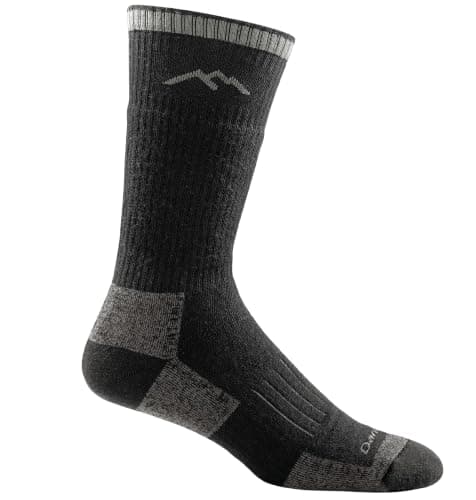
Darn Tough Hunting Boot Sock (2012)
The pick if the boot has room to fill, which is the fit you should have bought. Darn Tough builds its hunting boot sock in merino wool with a dense knit and a footbed cushion, and the reason it matters for fit is that a structured sock takes up slack without becoming a loose wad of fabric the way a cheap thick sock does - fabric that moves is fabric that causes blisters. Merino also keeps a usable amount of its insulating value when damp, which is the whole game for a hunter who sweats on the walk in. Darn Tough's lifetime guarantee is published rather than something we have tested, and it is the reason hunters buy these once. Honest cons: it is one of the most expensive socks on the market; a dense merino sock is too much sock for a boot that is already full; and the cushioning is lost if the hunter doubles up over the top of it.
#ad · Price as of October 10, 2026. We may earn a commission.
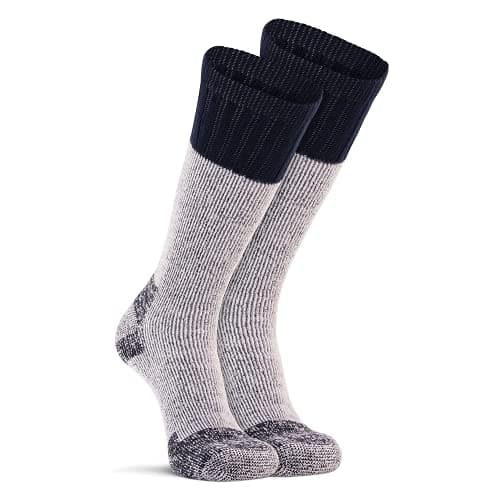
Fox River Wick Dry Outlander Boot Socks (2-Pack)
The pick for the opposite problem, and the one more hunters have: boots sized without allowing for a hunting sock, now too full to be warm. These are wick-dry boot socks sold in a two-pack, lighter than a heavy merino hunting sock, which frees up the toe box and lets circulation and trapped air do their work. Counter-intuitive but reliably true - a thinner sock in a full boot is warmer than a thicker one. A two-pack also means a dry pair lives in the pack, which is the single best cold-feet contingency there is. Honest cons: a lighter sock gives up some cushioning on long walks; it is a synthetic-blend wick-dry construction rather than a high-merino sock, so it does less for odour over multiple days; and it is not the sock to buy if the boot genuinely has room to fill.
#ad · Price as of October 10, 2026. We may earn a commission.
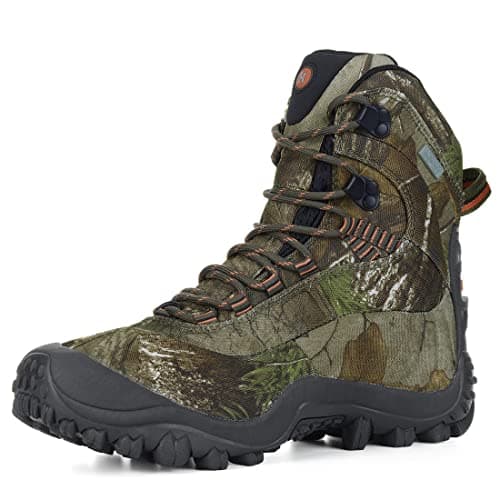
XPETI Thermator Insulated Waterproof Boot
Included for the hunter who concludes, correctly, that the fit problem is the boot. The XPETI Thermator is an insulated, waterproof hunting boot at the accessible end of the price range, which makes it a realistic replacement rather than a theoretical one - and a boot you can afford to size correctly is worth more than an expensive boot you bought in the wrong size to save money. Buy it with the hunting sock on, allow room at the toes, and lace from the bottom up. Honest cons: moderate insulation rather than an extreme-cold boot, so a hunter sitting still in single digits will want more; break-in is real on any insulated boot and this one is not an exception; and at this price the materials are a value proposition rather than a lifetime one.
#ad · Price as of October 10, 2026. We may earn a commission.
Lacing, which is half the fit
Most hunters lace a boot as one continuous pull, which guarantees the wrong result: the tightest part ends up across the instep and the loosest at the ankle. Two habits fix it.
Lace in two zones. Snug from the toe to the instep, then a separate, firmer section up the ankle. That is what locks the heel without compressing the forefoot.
Relax the laces on the sit. A hunter who walks in laced for the walk and then loosens the top two eyelets once seated gets measurably warmer feet, because the foot is no longer being squeezed by lacing meant for a climb. Re-lace before climbing down.
When tight is not the problem
| Symptom | Likely cause | What to change |
|---|---|---|
| Numb toes after an hour of sitting | Boot too full, or laces too tight | Thinner sock, loosen laces, insulate under the feet |
| Blister on the back of the heel | Heel lift - boot too long or laced loose | Lace in two zones; a structured sock takes up slack |
| Bruised or sore toenails after a walk out | Toe box too short on descents | Half a size longer, laced tighter at the instep |
| Hot spots on the sides of the foot | Boot too narrow, not too short | A wider boot - length will not fix width |
| Feet cold even in a roomy boot | Core heat loss, or conduction into the ground | Warm the core; insulate under the feet |
| New boots hurt everywhere | Not broken in yet | Wear them before the season, not during it |
That last row is its own job. How to break in hunting boots covers it, and the short version is that the break-in should happen in August rather than on opening morning. How to keep your feet warm hunting works through the three real causes of cold feet, of which boot fit is the one hunters discover last.
Buying boots for somebody else
Honest advice: do not, unless you know their size and their width and that they want that specific boot. Boots are the single worst hunting gift for a non-hunter to guess at, because the fit margin that separates a good boot from a blister is about half a size, and it varies by brand.
What works instead is the sock, which is genuinely useful, has a wide fit tolerance and is the item hunters under-buy. A good merino hunting sock is a real gift rather than a consolation one — best hunting socks ranks them, and hunting gifts under $50 is the bracket they sit in. If you want to give boots, give the choice: a gift card and this page.
How we chose these
We do not run a test lab and we have not measured a foot temperature. The fit rules above are conventional bootfitting practice plus NIOSH's published cold-stress guidance on vasoconstriction in the extremities, and every fabric, knit and insulation detail is the manufacturer's own published product information, cited below. Nothing here carries a score or an award from us. Our method is on the how we choose page, and prices come live from Amazon with the capture date beside them.
Keep browsing
How to choose hunting boots covers the decision before this one, best hunting boots ranks the category, and best hunting boots for cold weather explains why insulation is only the third thing that matters.
Frequently asked questions
Should hunting boots be tight or loose?
Snug at the heel and instep, with real room at the toes, and never tight anywhere. The heel needs to be locked so it does not lift when you climb; the toes need space to wiggle with your hunting sock on. If you have to choose, err toward room at the toes - a lifting heel gives you a blister, a crushed toe box gives you numb feet.
How tight should hunting boots be laced?
In two zones: snug from the toes to the instep, then firmer up the ankle. That locks the heel without compressing the forefoot. On a long sit, loosen the top two eyelets once you are seated - lacing set up for a climb squeezes the foot and makes it colder - then re-lace before you climb down.
Should I size up in hunting boots?
Usually by a half size over your street shoe, because a hunting sock takes up that room. A full size up is a mistake: the heel cup then sits behind your heel, the foot slides on descents, and you get blisters. Rubber boots are a separate case - they are often whole-size only and run differently from leather.
Why are my feet cold in insulated hunting boots?
Most often because the boot is too full. Warmth is circulation plus trapped air, and a tight boot removes both - it squeezes the vessels carrying warm blood into the foot and crushes the insulation, which only works by holding still air. This is why 800-gram boots can feel colder than 400-gram boots on a foot that filled them.
Should I wear two pairs of socks in hunting boots?
No. Two pairs fill the boot, compression cuts circulation and crushes insulation, and the hunter ends up colder in more sock. One good merino or wool-blend sock in a boot with room beats two thin socks in a full boot. If you want more insulation, put it under the foot instead, where it compresses nothing.
How do I know if my hunting boots are too small?
Walk down a slope or a set of stairs in them with your hunting sock on. If your toes touch or slam into the front, they are too short. Then check that you can wiggle all five toes fully laced - if you cannot, the boot will be cold on a sit no matter what the insulation rating says.
Sources
- Darn Tough - published product information for the hunting boot sock (merino construction, cushioned footbed, lifetime guarantee)
- Fox River - published product information for the Wick Dry Outlander boot sock (two-pack)
- XPETI - published product information for the Thermator insulated waterproof hunting boot
- NIOSH (CDC) - cold stress guidance, including cold-induced vasoconstriction in the extremities