Gear Guides
The Best Blood Tracking Light
The hour after a marginal shot is the worst hour in hunting, and it is the one piece of it you can buy your way into being better at. Here is the light built for a blood trail, the bright handhelds that work almost as well, and the cheap lamp that belongs in every pack regardless.
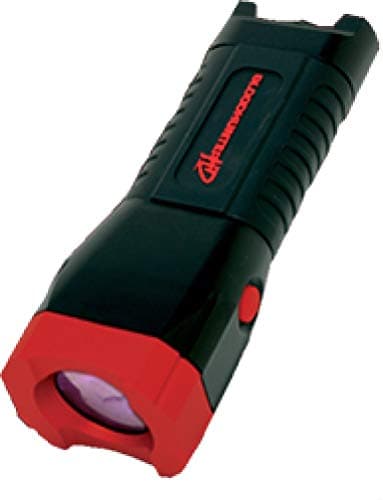
The verdict: the Primos Bloodhunter HDis the right buy, and it is for the deer hunter who hunts the last half hour of light and has to follow a trail into the dark alone. It is the only light here actually built for the job: Primos publishes it as a blood tracking light with a filtered beam, and filtering is the entire point — it makes blood stand out against wet leaves rather than simply making everything brighter. The budget pick is the EverBrite 700-lumen rechargeable headlamp, which carries white, red and green beams for about a tenth of what the serious handhelds cost, and it is a genuine recommendation rather than a consolation: a tracking job needs two lights, and the second one does not have to be expensive.
The thing to understand before you spend anything is that lumens are not what finds blood. A very bright white light washes out the subtle colour difference between a dark red droplet and a wet brown oak leaf, and it destroys your own night vision so completely that you lose the trail the moment you switch it off. What finds blood is contrast — either a filter that suppresses the colours around the blood, or a low-angle beam held near the ground that catches the gloss of a fresh drop.
And a light is the last resort, not the plan. The best outcome is the one where you wait, mark the spot, and go in with a second set of eyes. Everything on this page is priced live and dated below, and the whole list costs less than most hunters spend on a season of corn.
- 1Primos Bloodhunter HD Blood Tracking LightThe pick, and the only light here designed around this single problem. Primos publishes the Bloodhunter HD as a blood tracking light with a filtered beam, and the filter is what separates it from every bright flashlight in the category: rather than adding output, it cuts the wavelengths that make wet leaf litter, mud and bark compete visually with blood, so a droplet that reads as just another dark spot under white light jumps out as red. The practical effect is on the hardest trails rather than the easy ones - a good trail is findable with a phone, and the trails where people give up are the sparse ones through brown November woods, which is exactly where the filter earns its money. It is also a dedicated tool, which matters more than it sounds: it lives in the truck or the pack as the thing you grab for one job, so it is charged and it is there. Honest cons: it is a single-purpose light, and it is a poor general-use flashlight - the filtered beam is not what you want for walking in, finding a gate or changing a trail camera card, so this does not replace a headlamp. Filtering costs you raw output, so it does not throw the way the Streamlight does. It is bulkier than a pocket light. And no filter makes a bad hit findable: it improves contrast, it does not create blood that is not there.Best for: Best overall - for the hunter tracking alone after dark
- 2
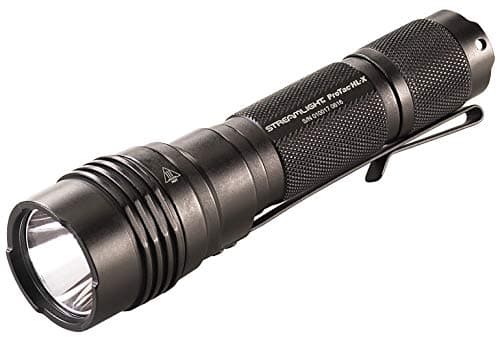 Streamlight ProTac HL-X 1,300-Lumen FlashlightThe pick when the trail crosses a field, a cut bean lot or an open bottom rather than close timber. Streamlight publishes the ProTac HL-X at 1,300 lumens, and the honest case for that much output on a tracking job is reach: on open ground you often need to confirm where a deer went before you commit to walking two hundred yards in the wrong direction, and a high-output beam lets you sweep a tree line, a fence or a far bank from where you stand. It is also the most durable light on this page by a distance, from a brand duty users have relied on for decades, which is the real argument for spending here - this is a buy-it-once light that will still work in ten seasons. The low mode matters more than the high one for actual tracking, and having both in one body is the point. Honest cons: 1,300 lumens pointed at leaf litter is actively counterproductive - it flattens the colour contrast you are hunting for and it wrecks your dark adaptation for several minutes afterwards, so the discipline to stay in low is on you. It is the most expensive light here. It is a handheld, which means one hand is permanently occupied while you are also carrying a bow or a rifle. And it has no filter and no coloured beam, so on a sparse trail in brown woods the Primos will out-track it.Best for: Best for distance - for tracking across open ground
- 3
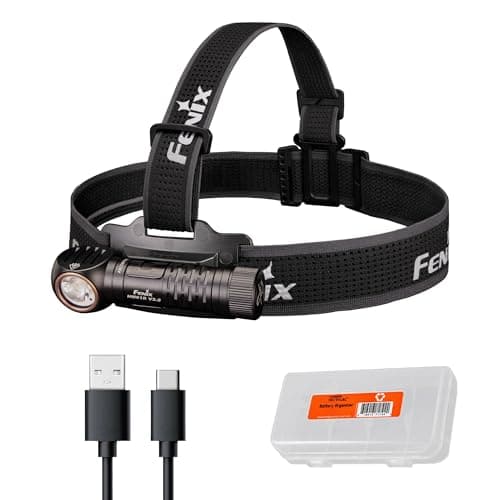 Fenix HM61R V3.0 Rechargeable HeadlampThe pick for the hunter who needs both hands and does not want to choose between the light and the job. Fenix publishes the HM61R V3.0 as a rechargeable headlamp, and a headlamp solves the specific problem a tracking handheld creates: following a trail on your hands and knees, marking spots with tape, dragging an animal and handling a weapon are all two-handed activities. What makes this one worth the premium over a hardware-store lamp is that it uses a removable 18650 cell rather than a sealed battery, so a spare cell in a pocket turns a dead light at the worst possible moment into a ten-second fix - the single most useful feature a tracking light can have, because tracking happens at the end of the day when everything is already low. Honest cons: a head-mounted light is the worst possible geometry for spotting blood, because the beam leaves your eye at almost zero angle and you lose the glint that a low, raking light picks up - for the actual close-in trail work, a hand-held light held near the ground beats any headlamp. It is a premium price for a lamp. The 18650 format means buying the right spare cell, which is a step most people skip. And it is white-light only in the modes that matter here.Best for: Best hands-free - for a hunter carrying a weapon and a drag rope
- 4
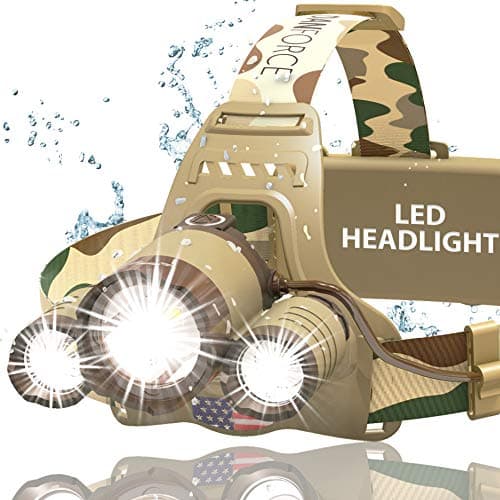 DanForce Rechargeable LED HeadlampThe pick for the hunter who wants hands free and understands that the walk between sign matters as much as the sign. DanForce publishes this as a USB-rechargeable headlamp with a red light and a zoomable beam, and the red mode is the reason it belongs on a tracking page: red light at low output preserves dark adaptation almost completely, so you can move between the last drop and the next without blinding yourself and without lighting up the whole woodlot. The zoom is the second useful part - a wide flood to scan a patch of ground, a tight spot to check a specific leaf twenty feet ahead, from the same lamp. At this money it is the most capable all-rounder here, and it is the lamp that will still get used for the walk in on the other three hundred days of the year. Honest cons: red light does not make blood easier to see - that is a persistent myth, and in practice red on red can make a drop harder to pick out, so red is for moving and white or filtered light is for looking. It is a head-mounted beam with the same low-angle problem as the Fenix. Zoom mechanisms are the part that fails first on a cheap lamp. And it has a sealed battery, so when it is dead it is dead until you can charge it.Best for: Best red-light headlamp - for preserving your night vision
- 5
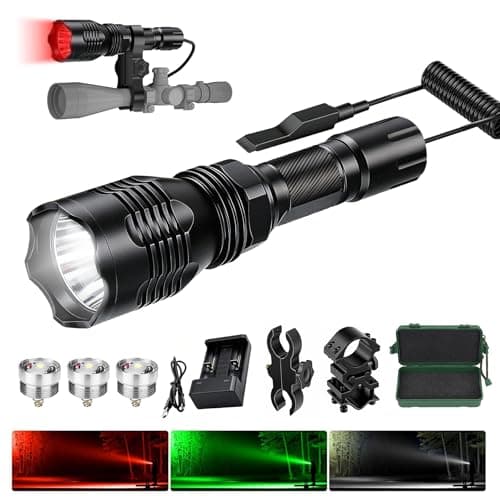 VASTFIRE Interchangeable Red/Green/White Predator LightThe pick for a hunter who is already out at night for hogs or coyotes and wants one light that covers both jobs. VASTFIRE publishes this with interchangeable red, green and white heads, and the swappable head is the reason it works here: white for close inspection of a questionable spot, and a coloured beam for the walking and scanning in between, from one body instead of three lights on three lanyards. Held low and raked across the ground, a handheld of any colour outperforms a headlamp for spotting the gloss on a fresh drop, and this is the cheapest handheld here that gives you beam-colour choice at all. Honest cons: the law is the first consideration and it is not a footnote - night hunting rules and restrictions on artificial light vary by state, by species and sometimes by county, and some places that allow a light for predators do not allow one for tracking a deer. Check your own regulations before you rely on this. Interchangeable heads are another part to lose in the dark. Build quality at this price is not Streamlight's. And no colour of light is invisible to game, whatever the marketing on a predator light implies.Best for: Best coloured-beam handheld - for hunters who are out after dark anyway
- 6
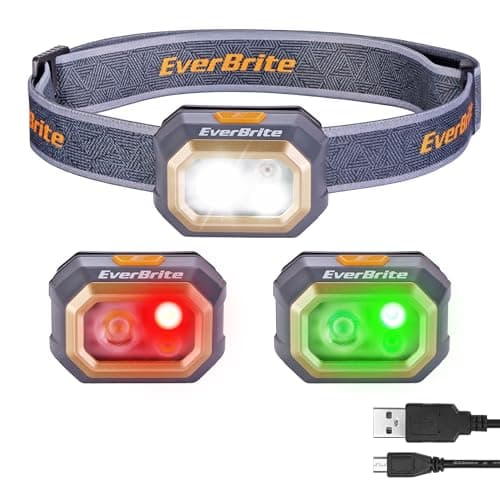 EverBrite 700-Lumen Rechargeable Headlamp (White/Red/Green)The honest cheap answer, and the one every hunter on this page should own in addition to whatever else they buy. EverBrite publishes this as a 700-lumen rechargeable headlamp with white, red and green beams, and the argument is not that it beats the premium lamps - it is that a tracking job genuinely needs two lights and the second one has no reason to be expensive. One hunter holds a light low and rakes the ground, the other scans ahead; or you carry a backup for the near-certainty that the primary light is the one that dies. Having three beam colours and a rechargeable cell at this money also means there is no excuse for the lamp not to be in the pack, which is the only quality that matters in gear you need once a season. Honest cons: it is a budget lamp and it will not survive what the Streamlight survives - a sealed cheap battery, a plastic body and a bracket that is the usual failure point. The 700-lumen rating is a peak figure, not a sustained one, and runtime at full output on a lamp this size is short. It has no filter, so on the hardest trails it is doing nothing the Primos does. And a head-mounted light has the wrong beam geometry for close trail work no matter what it costs.Best for: Budget pick - the cheap second light every pack should carry
| # | Gift | Best for | Price |
|---|---|---|---|
| 1 | Primos Bloodhunter HD Blood Tracking LightThe pick, and the only light here designed around this single problem. Primos publishes the Bloodhunter HD as a blood tracking light with a filtered beam, and the filter is what separates it from every bright flashlight in the category: rather than adding output, it cuts the wavelengths that make wet leaf litter, mud and bark compete visually with blood, so a droplet that reads as just another dark spot under white light jumps out as red. The practical effect is on the hardest trails rather than the easy ones - a good trail is findable with a phone, and the trails where people give up are the sparse ones through brown November woods, which is exactly where the filter earns its money. It is also a dedicated tool, which matters more than it sounds: it lives in the truck or the pack as the thing you grab for one job, so it is charged and it is there. Honest cons: it is a single-purpose light, and it is a poor general-use flashlight - the filtered beam is not what you want for walking in, finding a gate or changing a trail camera card, so this does not replace a headlamp. Filtering costs you raw output, so it does not throw the way the Streamlight does. It is bulkier than a pocket light. And no filter makes a bad hit findable: it improves contrast, it does not create blood that is not there. | Best overall - for the hunter tracking alone after dark | $60.04View on Amazon |
| 2 | Streamlight ProTac HL-X 1,300-Lumen FlashlightThe pick when the trail crosses a field, a cut bean lot or an open bottom rather than close timber. Streamlight publishes the ProTac HL-X at 1,300 lumens, and the honest case for that much output on a tracking job is reach: on open ground you often need to confirm where a deer went before you commit to walking two hundred yards in the wrong direction, and a high-output beam lets you sweep a tree line, a fence or a far bank from where you stand. It is also the most durable light on this page by a distance, from a brand duty users have relied on for decades, which is the real argument for spending here - this is a buy-it-once light that will still work in ten seasons. The low mode matters more than the high one for actual tracking, and having both in one body is the point. Honest cons: 1,300 lumens pointed at leaf litter is actively counterproductive - it flattens the colour contrast you are hunting for and it wrecks your dark adaptation for several minutes afterwards, so the discipline to stay in low is on you. It is the most expensive light here. It is a handheld, which means one hand is permanently occupied while you are also carrying a bow or a rifle. And it has no filter and no coloured beam, so on a sparse trail in brown woods the Primos will out-track it. | Best for distance - for tracking across open ground | $98.82View on Amazon |
| 3 | Fenix HM61R V3.0 Rechargeable HeadlampThe pick for the hunter who needs both hands and does not want to choose between the light and the job. Fenix publishes the HM61R V3.0 as a rechargeable headlamp, and a headlamp solves the specific problem a tracking handheld creates: following a trail on your hands and knees, marking spots with tape, dragging an animal and handling a weapon are all two-handed activities. What makes this one worth the premium over a hardware-store lamp is that it uses a removable 18650 cell rather than a sealed battery, so a spare cell in a pocket turns a dead light at the worst possible moment into a ten-second fix - the single most useful feature a tracking light can have, because tracking happens at the end of the day when everything is already low. Honest cons: a head-mounted light is the worst possible geometry for spotting blood, because the beam leaves your eye at almost zero angle and you lose the glint that a low, raking light picks up - for the actual close-in trail work, a hand-held light held near the ground beats any headlamp. It is a premium price for a lamp. The 18650 format means buying the right spare cell, which is a step most people skip. And it is white-light only in the modes that matter here. | Best hands-free - for a hunter carrying a weapon and a drag rope | $89.95View on Amazon |
| 4 | DanForce Rechargeable LED HeadlampThe pick for the hunter who wants hands free and understands that the walk between sign matters as much as the sign. DanForce publishes this as a USB-rechargeable headlamp with a red light and a zoomable beam, and the red mode is the reason it belongs on a tracking page: red light at low output preserves dark adaptation almost completely, so you can move between the last drop and the next without blinding yourself and without lighting up the whole woodlot. The zoom is the second useful part - a wide flood to scan a patch of ground, a tight spot to check a specific leaf twenty feet ahead, from the same lamp. At this money it is the most capable all-rounder here, and it is the lamp that will still get used for the walk in on the other three hundred days of the year. Honest cons: red light does not make blood easier to see - that is a persistent myth, and in practice red on red can make a drop harder to pick out, so red is for moving and white or filtered light is for looking. It is a head-mounted beam with the same low-angle problem as the Fenix. Zoom mechanisms are the part that fails first on a cheap lamp. And it has a sealed battery, so when it is dead it is dead until you can charge it. | Best red-light headlamp - for preserving your night vision | $28.47View on Amazon |
| 5 | VASTFIRE Interchangeable Red/Green/White Predator LightThe pick for a hunter who is already out at night for hogs or coyotes and wants one light that covers both jobs. VASTFIRE publishes this with interchangeable red, green and white heads, and the swappable head is the reason it works here: white for close inspection of a questionable spot, and a coloured beam for the walking and scanning in between, from one body instead of three lights on three lanyards. Held low and raked across the ground, a handheld of any colour outperforms a headlamp for spotting the gloss on a fresh drop, and this is the cheapest handheld here that gives you beam-colour choice at all. Honest cons: the law is the first consideration and it is not a footnote - night hunting rules and restrictions on artificial light vary by state, by species and sometimes by county, and some places that allow a light for predators do not allow one for tracking a deer. Check your own regulations before you rely on this. Interchangeable heads are another part to lose in the dark. Build quality at this price is not Streamlight's. And no colour of light is invisible to game, whatever the marketing on a predator light implies. | Best coloured-beam handheld - for hunters who are out after dark anyway | $45.99View on Amazon |
| 6 | EverBrite 700-Lumen Rechargeable Headlamp (White/Red/Green)The honest cheap answer, and the one every hunter on this page should own in addition to whatever else they buy. EverBrite publishes this as a 700-lumen rechargeable headlamp with white, red and green beams, and the argument is not that it beats the premium lamps - it is that a tracking job genuinely needs two lights and the second one has no reason to be expensive. One hunter holds a light low and rakes the ground, the other scans ahead; or you carry a backup for the near-certainty that the primary light is the one that dies. Having three beam colours and a rechargeable cell at this money also means there is no excuse for the lamp not to be in the pack, which is the only quality that matters in gear you need once a season. Honest cons: it is a budget lamp and it will not survive what the Streamlight survives - a sealed cheap battery, a plastic body and a bracket that is the usual failure point. The 700-lumen rating is a peak figure, not a sustained one, and runtime at full output on a lamp this size is short. It has no filter, so on the hardest trails it is doing nothing the Primos does. And a head-mounted light has the wrong beam geometry for close trail work no matter what it costs. | Budget pick - the cheap second light every pack should carry | $13.59View on Amazon |
Prices from Amazon as of November 24, 2026 and change often — the button always opens the current listing. Some links earn us a commission at no extra cost to you.
Primos Bloodhunter HD Blood Tracking Light
The pick, and the only light here designed around this single problem. Primos publishes the Bloodhunter HD as a blood tracking light with a filtered beam, and the filter is what separates it from every bright flashlight in the category: rather than adding output, it cuts the wavelengths that make wet leaf litter, mud and bark compete visually with blood, so a droplet that reads as just another dark spot under white light jumps out as red. The practical effect is on the hardest trails rather than the easy ones - a good trail is findable with a phone, and the trails where people give up are the sparse ones through brown November woods, which is exactly where the filter earns its money. It is also a dedicated tool, which matters more than it sounds: it lives in the truck or the pack as the thing you grab for one job, so it is charged and it is there. Honest cons: it is a single-purpose light, and it is a poor general-use flashlight - the filtered beam is not what you want for walking in, finding a gate or changing a trail camera card, so this does not replace a headlamp. Filtering costs you raw output, so it does not throw the way the Streamlight does. It is bulkier than a pocket light. And no filter makes a bad hit findable: it improves contrast, it does not create blood that is not there.
#ad · Price as of November 24, 2026. We may earn a commission.
Streamlight ProTac HL-X 1,300-Lumen Flashlight
The pick when the trail crosses a field, a cut bean lot or an open bottom rather than close timber. Streamlight publishes the ProTac HL-X at 1,300 lumens, and the honest case for that much output on a tracking job is reach: on open ground you often need to confirm where a deer went before you commit to walking two hundred yards in the wrong direction, and a high-output beam lets you sweep a tree line, a fence or a far bank from where you stand. It is also the most durable light on this page by a distance, from a brand duty users have relied on for decades, which is the real argument for spending here - this is a buy-it-once light that will still work in ten seasons. The low mode matters more than the high one for actual tracking, and having both in one body is the point. Honest cons: 1,300 lumens pointed at leaf litter is actively counterproductive - it flattens the colour contrast you are hunting for and it wrecks your dark adaptation for several minutes afterwards, so the discipline to stay in low is on you. It is the most expensive light here. It is a handheld, which means one hand is permanently occupied while you are also carrying a bow or a rifle. And it has no filter and no coloured beam, so on a sparse trail in brown woods the Primos will out-track it.
#ad · Price as of November 24, 2026. We may earn a commission.
Fenix HM61R V3.0 Rechargeable Headlamp
The pick for the hunter who needs both hands and does not want to choose between the light and the job. Fenix publishes the HM61R V3.0 as a rechargeable headlamp, and a headlamp solves the specific problem a tracking handheld creates: following a trail on your hands and knees, marking spots with tape, dragging an animal and handling a weapon are all two-handed activities. What makes this one worth the premium over a hardware-store lamp is that it uses a removable 18650 cell rather than a sealed battery, so a spare cell in a pocket turns a dead light at the worst possible moment into a ten-second fix - the single most useful feature a tracking light can have, because tracking happens at the end of the day when everything is already low. Honest cons: a head-mounted light is the worst possible geometry for spotting blood, because the beam leaves your eye at almost zero angle and you lose the glint that a low, raking light picks up - for the actual close-in trail work, a hand-held light held near the ground beats any headlamp. It is a premium price for a lamp. The 18650 format means buying the right spare cell, which is a step most people skip. And it is white-light only in the modes that matter here.
#ad · Price as of November 24, 2026. We may earn a commission.
DanForce Rechargeable LED Headlamp
The pick for the hunter who wants hands free and understands that the walk between sign matters as much as the sign. DanForce publishes this as a USB-rechargeable headlamp with a red light and a zoomable beam, and the red mode is the reason it belongs on a tracking page: red light at low output preserves dark adaptation almost completely, so you can move between the last drop and the next without blinding yourself and without lighting up the whole woodlot. The zoom is the second useful part - a wide flood to scan a patch of ground, a tight spot to check a specific leaf twenty feet ahead, from the same lamp. At this money it is the most capable all-rounder here, and it is the lamp that will still get used for the walk in on the other three hundred days of the year. Honest cons: red light does not make blood easier to see - that is a persistent myth, and in practice red on red can make a drop harder to pick out, so red is for moving and white or filtered light is for looking. It is a head-mounted beam with the same low-angle problem as the Fenix. Zoom mechanisms are the part that fails first on a cheap lamp. And it has a sealed battery, so when it is dead it is dead until you can charge it.
#ad · Price as of November 24, 2026. We may earn a commission.
VASTFIRE Interchangeable Red/Green/White Predator Light
The pick for a hunter who is already out at night for hogs or coyotes and wants one light that covers both jobs. VASTFIRE publishes this with interchangeable red, green and white heads, and the swappable head is the reason it works here: white for close inspection of a questionable spot, and a coloured beam for the walking and scanning in between, from one body instead of three lights on three lanyards. Held low and raked across the ground, a handheld of any colour outperforms a headlamp for spotting the gloss on a fresh drop, and this is the cheapest handheld here that gives you beam-colour choice at all. Honest cons: the law is the first consideration and it is not a footnote - night hunting rules and restrictions on artificial light vary by state, by species and sometimes by county, and some places that allow a light for predators do not allow one for tracking a deer. Check your own regulations before you rely on this. Interchangeable heads are another part to lose in the dark. Build quality at this price is not Streamlight's. And no colour of light is invisible to game, whatever the marketing on a predator light implies.
#ad · Price as of November 24, 2026. We may earn a commission.
EverBrite 700-Lumen Rechargeable Headlamp (White/Red/Green)
The honest cheap answer, and the one every hunter on this page should own in addition to whatever else they buy. EverBrite publishes this as a 700-lumen rechargeable headlamp with white, red and green beams, and the argument is not that it beats the premium lamps - it is that a tracking job genuinely needs two lights and the second one has no reason to be expensive. One hunter holds a light low and rakes the ground, the other scans ahead; or you carry a backup for the near-certainty that the primary light is the one that dies. Having three beam colours and a rechargeable cell at this money also means there is no excuse for the lamp not to be in the pack, which is the only quality that matters in gear you need once a season. Honest cons: it is a budget lamp and it will not survive what the Streamlight survives - a sealed cheap battery, a plastic body and a bracket that is the usual failure point. The 700-lumen rating is a peak figure, not a sustained one, and runtime at full output on a lamp this size is short. It has no filter, so on the hardest trails it is doing nothing the Primos does. And a head-mounted light has the wrong beam geometry for close trail work no matter what it costs.
#ad · Price as of November 24, 2026. We may earn a commission.
Contrast finds blood, not brightness
This is the one thing worth internalising before you spend money. Blood on wet autumn leaves is a dark red spot on a background of dark red, brown and black. The problem is not that you cannot see it — it is that it does not look different from everything around it. Adding light does not fix a contrast problem. It usually makes it worse, because a bright beam washes out colour saturation and your pupils close down.
Two things do work, and they work for different reasons.
| Technique | What it does | When to use it |
|---|---|---|
| Filtered tracking light | Suppresses the colours competing with blood so red stands out | Sparse trails, brown leaf litter, when you are alone |
| Low, raking white beam | Catches the wet gloss of a fresh drop at a shallow angle | Close trail work, within the first few hours |
| High-output white beam | Reach - confirms direction across open ground | Fields, cut crops, far tree lines; not for leaf litter |
| Red or green low beam | Preserves dark adaptation while you move | Walking between sign, not looking for it |
| Headlamp (white) | Frees both hands | Dragging, taping, handling a weapon - not for spotting |
The practical consequence is that a headlamp is the wrong tool for the looking and the right tool for everything else, which is why most experienced trackers carry both. The beam from a head-mounted lamp leaves at almost the same angle as your line of sight, so you never see the glint; a light held down near your boots throws shadows and highlights that make a drop obvious.
Red light does not make blood glow
This gets repeated constantly and it is worth stating plainly: red light is for protecting your night vision while you walk, not for finding blood. Shining red light on a red drop can actively reduce the contrast you need. Use red or green to move between sign, then switch to white or to a filtered beam when you are looking. We go through the colour question in more depth in red or green light for hunting, and the output question in how many lumens for a hunting headlamp.
Before you turn a light on at all
Mark where you last saw the animal, from where you shot. Not approximately. Pick two landmarks and line them up before you climb down, because everything looks different from the ground.
Wait. This is the hardest and most valuable part. A pushed animal travels much further than one left alone. How long depends on the hit and that judgement is yours, but the instinct to go immediately is almost always the wrong one.
Tape every drop you find.Bright flagging tape on a branch at eye height, one per confirmed spot. When the trail runs out — and it will — the line of tape behind you shows the direction of travel, which is the single best clue to where to look next.
Get a second person. One works the trail, one stays on the last confirmed drop. Two lights and two sets of eyes find trails one hunter walks past, which is the real reason the cheap second lamp is on this list.
What else is in the recovery kit
A light is one of four things that decide how a recovery goes. Flagging tape is the second and costs almost nothing. The third is a knife you can actually work with in the dark, covered in best hunting knife for field dressing. The fourth is the plan for moving the animal, which is best game cart for deer— a drag harness in the pack is the version of that you will actually have with you. After that it is a cooling problem: see best hunting coolers and what size cooler for a deer.
If the light you are shopping for is really the one for the walk in rather than the trail out, the broader roundups are best hunting headlamps, best hunting flashlight and best rechargeable headlamp for hunting. For hunters out after dark on purpose, see best predator hunting light.
Match the light to the ground
Close timber, brown leaf litter, tracking alone. The Primos Bloodhunter HD. The filter is doing something nothing else here does.
Fields, cut crops, long sight lines. The Streamlight ProTac HL-X, kept in low mode until you need reach.
Hands full with a bow, a rifle or a drag rope. The Fenix HM61R, with a spare cell in a pocket.
One lamp for the walk in and the trail out. The DanForce, for the red mode and the zoom.
Already out after dark for hogs or coyotes. The VASTFIRE, where your regulations allow it.
Everyone, as the second light. The EverBrite 700. Two lights find trails one light walks past.
Frequently asked questions
What is the best blood tracking light?
The Primos Bloodhunter HD for most hunters, because it is the only light in this price range actually built for the job - Primos publishes it as a blood tracking light with a filtered beam, and the filter suppresses the colours that compete with blood rather than simply adding brightness. For tracking across open ground where reach matters more than contrast, a high-output handheld like the Streamlight ProTac HL-X is the better tool. Every hunter should also carry a cheap second lamp, because a tracking job needs two lights.
Does a blood tracking light actually work?
On the trails where it matters, yes - but it is a contrast tool, not a magic one. A filtered beam makes a dark droplet separate visually from wet brown leaf litter, which is exactly the situation where hunters lose trails. It will not create blood that is not there, it will not help on a hit that did not bleed, and on an obvious trail through green grass a phone light is enough. The honest summary is that it improves your odds on the hardest trails and does nothing on the easy ones.
Is red or green light better for tracking blood?
Neither, for the looking. Red and green light at low output preserve your dark adaptation, which makes them the right choice for walking between sign without blinding yourself or lighting up the woodlot - but shining red light on a red drop can reduce the contrast you need rather than increase it. The approach that works is coloured light to move and white or filtered light to look.
How many lumens do I need to track a deer at night?
Far fewer than the packaging suggests, and more output is often worse. A very bright white beam washes out the colour difference between blood and wet leaves and closes your pupils down so you lose the trail the moment it is off. What matters is beam angle and contrast: a modest light held low and raked across the ground catches the gloss of a fresh drop better than a 1,300-lumen beam pointed straight at it. High output earns its place for reach across open fields, not for leaf litter.
Should I use a headlamp or a handheld to track blood?
Both, for different parts of the job. A headlamp has the worst possible geometry for spotting blood, because the beam leaves at nearly the same angle as your line of sight, so you never see the glint - but it is the only option when you need both hands for taping, dragging, field dressing or carrying a weapon. A handheld held down near your boots is what actually finds drops. Most experienced trackers carry one of each, which is why the cheap second lamp is on this list.
Is it legal to use a light to track a wounded deer?
It depends entirely on where you hunt, and the rules are not consistent. Regulations on artificial light after dark vary by state, by species and sometimes by county, and some states treat recovering a wounded animal differently from hunting - a few require you to notify a warden, and some restrict what you may carry while a light is in use. Check your own state's current regulations before you need them, because these rules change between seasons.
Is a blood tracking light a good gift for a hunter?
It is one of the better ones, for a specific reason: it is a piece of gear almost no hunter buys for themselves until the night they wish they had it, and it costs less than most people expect. It suits a deer hunter who hunts the last half hour of light, which is most of them. If you are not sure they would use a dedicated tracking light, a rechargeable headlamp with a red mode is the safer version of the same gift and gets used year round.
Sources
- Amazon listing - Primos Bloodhunter HD: published as a blood tracking light with a filtered beam
- Amazon listing - Streamlight ProTac HL-X: published at 1,300 lumens with multiple output modes
- Amazon listing - Fenix HM61R V3.0: published as a rechargeable headlamp using a removable 18650 cell
- Amazon listing - DanForce Rechargeable LED Headlamp: published with a red light and a zoomable beam
- Amazon listing - VASTFIRE Predator Light: published with interchangeable red, green and white heads
- Amazon listing - EverBrite 700-Lumen Rechargeable Headlamp: published with white, red and green beams