Gear Guides
The Best Game Cart for Deer
Getting a deer out is the part of the hunt nobody plans for until they are standing over one at dusk, a half mile from the truck. Here are the carts, sleds and drags that actually fit the ground you hunt - and the honest cases where the cheapest one wins.
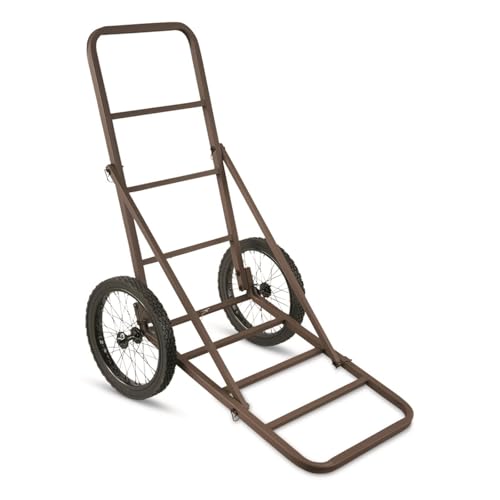
The verdict: the Guide Gear Deluxe Deer Cartis the right buy for most hunters. It is a two-wheel steel cart with big wheels and a flat load bed at a price that makes it an easy decision, and on a field edge, a logging road or any kind of trail it does the entire job. If the hunt involves genuinely rough ground — blowdowns, creek crossings, steep sidehill — the Hawk Crawler is the one built for it, with dual-pivoting axles and a folding frame. The budget pick is the MULTUS deer drag harness at well under thirty dollars, and it is on this page honestly rather than as filler: in thick timber, a drag beats a cart every time, because a cart that will not fit between the trees is a cart you are carrying.
Nobody buys this before they need it, which is exactly the problem. A mature whitetail is 150 to 200 pounds of dead weight, often downhill of nothing useful, usually at the end of a day when you are already tired, and frequently in the dark. The purchase is not really about the cart — it is about whether you can recover an animal alone, cleanly, before the meat spoils. That makes a cart one of the few hunting gifts whose value the recipient only fully appreciates the first time they use it.
Buy for the ground, not the capacity. Every cart on this page will carry a deer. What separates them is what happens at the first blowdown, the first creek bank, the first stretch of pines planted eight feet apart. Read the terrain section below before you pick a number. Prices are pulled live and dated.
- 1Guide Gear Deluxe Deer CartThe pick for the majority of deer hunting in the country, which happens within reach of a field edge, a two-track or a logging road. Guide Gear publishes this as a two-wheel deer cart with big wheels and a load bed for game and gear, and the two things that matter are both there: wheels large enough to roll over ruts and roots instead of stopping at them, and a frame wide enough that the deer rides balanced rather than sliding off. The price is the other half of the argument - this is less than many hunters spend on a season of corn, and it is the difference between dragging 180 pounds alone and wheeling it. It also earns its keep outside the season hauling stands, feeders and firewood, which is how most of them actually get used. Honest cons: steel means it is heavier than the aluminum version and it will rust where the paint chips, so it wants a dry shed rather than a truck bed. Two wheels on one axle is the design that tips on a steep sidehill, and the hunter is the only thing stopping it. Assembly takes an hour with a wrench, which is not the night before opening day. And a cart this wide does not fit through tight timber - that is not a defect, it is the category.Best for: Best overall - the cart most hunters should own
- 2
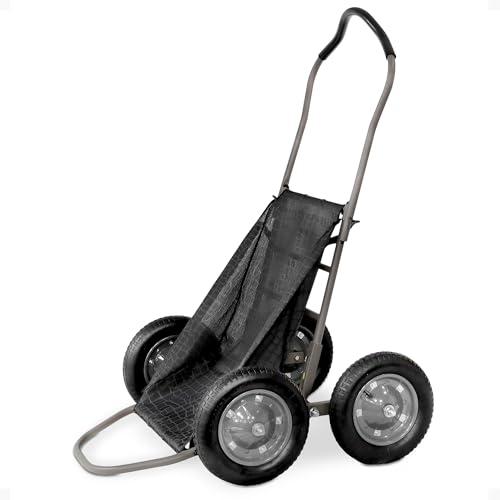 Hawk Crawler All-Terrain Deer CartThe pick when the recovery is the hard part rather than the long part. Hawk publishes the Crawler at a 500 lb capacity with dual-pivoting axles, a folding frame and a sling for the load, and the pivoting axles are the whole reason to spend the extra money: on uneven ground, a rigid cart lifts a wheel and stops dead, while pivoting axles let each side follow the terrain so the cart keeps rolling and the load stays level. The folding frame is the quieter advantage - it means the cart actually lives in the truck all season instead of in the garage, which is where a cart has to be to be useful. The sling carries awkward loads, including quarters, stands and gear, better than a flat bed does. Honest cons: it is the most expensive item here by a wide margin, and on flat ground it does nothing a $80 cart cannot do. More moving parts means more to maintain and more to misalign. It is heavier to carry when it is not rolling. And like every cart, it is beaten by a plain sled once the trees close in.Best for: Best for rough ground - dual-pivoting axles
- 3
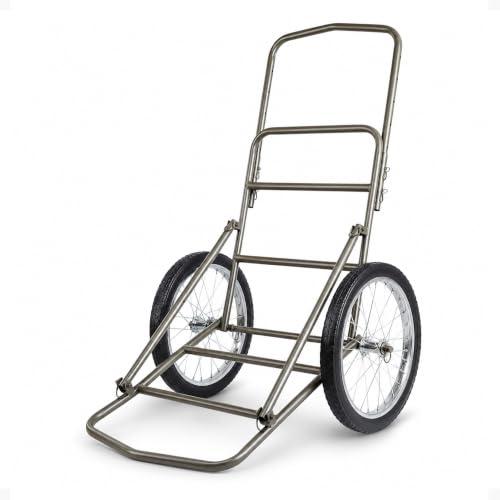 Kill Shot 750 lb Deer Hunting Game CartThe pick when the load is bigger than a whitetail. Kill Shot publishes this one at a 750 lb capacity on 20-inch rubber wheels, which is roughly four times the weight of a big whitetail and the reason it belongs on an elk or moose hunt rather than a deer lease. The 20-inch wheels do most of the real work: wheel diameter, not capacity, is what determines whether a cart climbs over a root or stops against it, and a large rubber wheel also runs quieter than a small hard one on frozen ground. Big capacity also means a cart that does not flex and wobble under a normal deer, which is the practical benefit for anyone hauling a stand, a feeder and a pack in one trip. Honest cons: capacity you do not need is weight and bulk you do carry - this is a bigger, heavier cart to load into a truck alone. A published rating is a frame rating, not an invitation to wheel 750 lb up a hill by yourself. And the wider the cart, the more trails it will not fit down.Best for: Best capacity - elk quarters and loaded stands
- 4
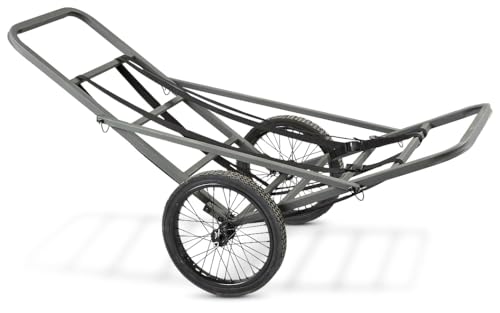 Guide Gear Aluminum Game CartThe pick for anyone whose cart is going to live in a truck bed. Guide Gear publishes this as an aluminum game cart for hauling deer and gear, and the material is the entire argument: aluminum is lighter to carry in empty and to lift into a truck, and it does not rust when it spends four months in the weather - which is where most hunting carts spend their lives, no matter what anyone intends. For a hunter who hunts alone and has to load the cart as well as the deer, weight at the front end matters more than the maximum number on the spec sheet. Honest cons: aluminum frames flex more than steel under heavy awkward loads, and they bend rather than dent when something goes wrong. It costs more than the steel version of the same idea. Same two-wheel geometry as any basic cart, so it tips on a sidehill the same way. And it is still too wide for thick timber.Best for: Best lightweight cart - cannot rust
- 5
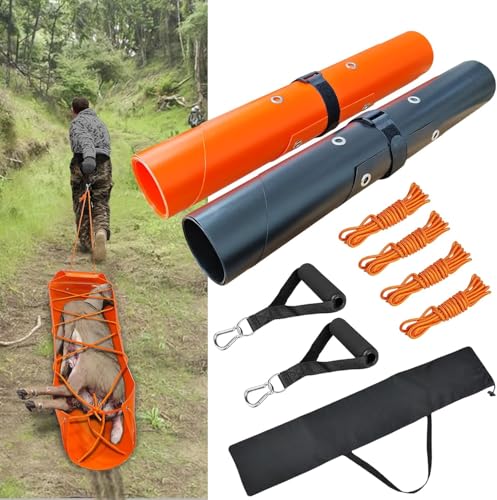 Deer Drag Sled (2-Pack)The pick for snow, leaves, thick timber, and anyone who wants the recovery gear with them rather than in the truck. A drag sled is a tear-resistant sheet with ropes and handles that rolls up small enough to live in a pack, and that changes the problem completely: a cart is only useful if you can get it to the deer, while a sled is already there. On snow or wet leaves a sled is genuinely easier than a cart, because it slides rather than rolls and nothing can get stuck between wheels and a root. It also keeps the carcass out of the dirt, which matters for meat care, and this listing is a two-set. Honest cons: on dry ground, gravel or bare dirt a sled is hard work - the friction that makes it quiet also makes it heavy. Up a hill it is brutal, and on a long haul it is the slowest option here. Thin material tears on sharp stubs if you drag carelessly. And it is a one-animal solution: it will not carry a stand, a feeder or the rest of your gear the way a cart will.Best for: Best sled - the haul-out that fits in a pack
- 6
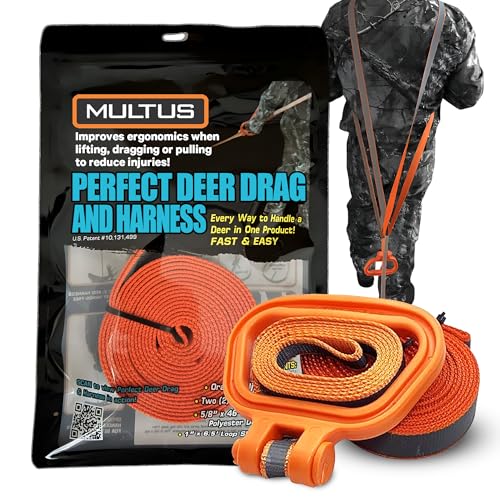 MULTUS Deer Drag HarnessThe honest cheap answer, and the one every deer hunter should own regardless of what else is on this page. MULTUS publishes this as a shoulder or hand drag harness in reflective orange with a 400 lb rating, and the point is simple physics: dragging a deer by an antler with one arm wrecks a shoulder and takes twice as long, while a harness puts the load across both shoulders and lets you use your legs. Reflective orange is the second reason to buy it - dragging a brown animal through the woods at dusk during gun season is the scenario where being seen matters most. For well under thirty dollars this goes in the pack and stays there all season. Honest cons: it is a drag, not a wheel. It does not reduce the weight at all, it only redistributes it, and on bare dirt or gravel you are still moving 180 pounds by muscle. It does not keep the carcass off the ground, so expect dirt and hair in places you would rather not have them. And a solo drag of a mature buck is still a genuinely hard job in any harness.Best for: Budget pick - the cheapest thing that changes the walk out
| # | Gift | Best for | Price |
|---|---|---|---|
| 1 | Guide Gear Deluxe Deer CartThe pick for the majority of deer hunting in the country, which happens within reach of a field edge, a two-track or a logging road. Guide Gear publishes this as a two-wheel deer cart with big wheels and a load bed for game and gear, and the two things that matter are both there: wheels large enough to roll over ruts and roots instead of stopping at them, and a frame wide enough that the deer rides balanced rather than sliding off. The price is the other half of the argument - this is less than many hunters spend on a season of corn, and it is the difference between dragging 180 pounds alone and wheeling it. It also earns its keep outside the season hauling stands, feeders and firewood, which is how most of them actually get used. Honest cons: steel means it is heavier than the aluminum version and it will rust where the paint chips, so it wants a dry shed rather than a truck bed. Two wheels on one axle is the design that tips on a steep sidehill, and the hunter is the only thing stopping it. Assembly takes an hour with a wrench, which is not the night before opening day. And a cart this wide does not fit through tight timber - that is not a defect, it is the category. | Best overall - the cart most hunters should own | $79.99View on Amazon |
| 2 | Hawk Crawler All-Terrain Deer CartThe pick when the recovery is the hard part rather than the long part. Hawk publishes the Crawler at a 500 lb capacity with dual-pivoting axles, a folding frame and a sling for the load, and the pivoting axles are the whole reason to spend the extra money: on uneven ground, a rigid cart lifts a wheel and stops dead, while pivoting axles let each side follow the terrain so the cart keeps rolling and the load stays level. The folding frame is the quieter advantage - it means the cart actually lives in the truck all season instead of in the garage, which is where a cart has to be to be useful. The sling carries awkward loads, including quarters, stands and gear, better than a flat bed does. Honest cons: it is the most expensive item here by a wide margin, and on flat ground it does nothing a $80 cart cannot do. More moving parts means more to maintain and more to misalign. It is heavier to carry when it is not rolling. And like every cart, it is beaten by a plain sled once the trees close in. | Best for rough ground - dual-pivoting axles | $229.99View on Amazon |
| 3 | Kill Shot 750 lb Deer Hunting Game CartThe pick when the load is bigger than a whitetail. Kill Shot publishes this one at a 750 lb capacity on 20-inch rubber wheels, which is roughly four times the weight of a big whitetail and the reason it belongs on an elk or moose hunt rather than a deer lease. The 20-inch wheels do most of the real work: wheel diameter, not capacity, is what determines whether a cart climbs over a root or stops against it, and a large rubber wheel also runs quieter than a small hard one on frozen ground. Big capacity also means a cart that does not flex and wobble under a normal deer, which is the practical benefit for anyone hauling a stand, a feeder and a pack in one trip. Honest cons: capacity you do not need is weight and bulk you do carry - this is a bigger, heavier cart to load into a truck alone. A published rating is a frame rating, not an invitation to wheel 750 lb up a hill by yourself. And the wider the cart, the more trails it will not fit down. | Best capacity - elk quarters and loaded stands | $120.49View on Amazon |
| 4 | Guide Gear Aluminum Game CartThe pick for anyone whose cart is going to live in a truck bed. Guide Gear publishes this as an aluminum game cart for hauling deer and gear, and the material is the entire argument: aluminum is lighter to carry in empty and to lift into a truck, and it does not rust when it spends four months in the weather - which is where most hunting carts spend their lives, no matter what anyone intends. For a hunter who hunts alone and has to load the cart as well as the deer, weight at the front end matters more than the maximum number on the spec sheet. Honest cons: aluminum frames flex more than steel under heavy awkward loads, and they bend rather than dent when something goes wrong. It costs more than the steel version of the same idea. Same two-wheel geometry as any basic cart, so it tips on a sidehill the same way. And it is still too wide for thick timber. | Best lightweight cart - cannot rust | $119.99View on Amazon |
| 5 | Deer Drag Sled (2-Pack)The pick for snow, leaves, thick timber, and anyone who wants the recovery gear with them rather than in the truck. A drag sled is a tear-resistant sheet with ropes and handles that rolls up small enough to live in a pack, and that changes the problem completely: a cart is only useful if you can get it to the deer, while a sled is already there. On snow or wet leaves a sled is genuinely easier than a cart, because it slides rather than rolls and nothing can get stuck between wheels and a root. It also keeps the carcass out of the dirt, which matters for meat care, and this listing is a two-set. Honest cons: on dry ground, gravel or bare dirt a sled is hard work - the friction that makes it quiet also makes it heavy. Up a hill it is brutal, and on a long haul it is the slowest option here. Thin material tears on sharp stubs if you drag carelessly. And it is a one-animal solution: it will not carry a stand, a feeder or the rest of your gear the way a cart will. | Best sled - the haul-out that fits in a pack | $39.99View on Amazon |
| 6 | MULTUS Deer Drag HarnessThe honest cheap answer, and the one every deer hunter should own regardless of what else is on this page. MULTUS publishes this as a shoulder or hand drag harness in reflective orange with a 400 lb rating, and the point is simple physics: dragging a deer by an antler with one arm wrecks a shoulder and takes twice as long, while a harness puts the load across both shoulders and lets you use your legs. Reflective orange is the second reason to buy it - dragging a brown animal through the woods at dusk during gun season is the scenario where being seen matters most. For well under thirty dollars this goes in the pack and stays there all season. Honest cons: it is a drag, not a wheel. It does not reduce the weight at all, it only redistributes it, and on bare dirt or gravel you are still moving 180 pounds by muscle. It does not keep the carcass off the ground, so expect dirt and hair in places you would rather not have them. And a solo drag of a mature buck is still a genuinely hard job in any harness. | Budget pick - the cheapest thing that changes the walk out | $24.55View on Amazon |
Prices from Amazon as of November 24, 2026 and change often — the button always opens the current listing. Some links earn us a commission at no extra cost to you.
Guide Gear Deluxe Deer Cart
The pick for the majority of deer hunting in the country, which happens within reach of a field edge, a two-track or a logging road. Guide Gear publishes this as a two-wheel deer cart with big wheels and a load bed for game and gear, and the two things that matter are both there: wheels large enough to roll over ruts and roots instead of stopping at them, and a frame wide enough that the deer rides balanced rather than sliding off. The price is the other half of the argument - this is less than many hunters spend on a season of corn, and it is the difference between dragging 180 pounds alone and wheeling it. It also earns its keep outside the season hauling stands, feeders and firewood, which is how most of them actually get used. Honest cons: steel means it is heavier than the aluminum version and it will rust where the paint chips, so it wants a dry shed rather than a truck bed. Two wheels on one axle is the design that tips on a steep sidehill, and the hunter is the only thing stopping it. Assembly takes an hour with a wrench, which is not the night before opening day. And a cart this wide does not fit through tight timber - that is not a defect, it is the category.
#ad · Price as of November 24, 2026. We may earn a commission.
Hawk Crawler All-Terrain Deer Cart
The pick when the recovery is the hard part rather than the long part. Hawk publishes the Crawler at a 500 lb capacity with dual-pivoting axles, a folding frame and a sling for the load, and the pivoting axles are the whole reason to spend the extra money: on uneven ground, a rigid cart lifts a wheel and stops dead, while pivoting axles let each side follow the terrain so the cart keeps rolling and the load stays level. The folding frame is the quieter advantage - it means the cart actually lives in the truck all season instead of in the garage, which is where a cart has to be to be useful. The sling carries awkward loads, including quarters, stands and gear, better than a flat bed does. Honest cons: it is the most expensive item here by a wide margin, and on flat ground it does nothing a $80 cart cannot do. More moving parts means more to maintain and more to misalign. It is heavier to carry when it is not rolling. And like every cart, it is beaten by a plain sled once the trees close in.
#ad · Price as of November 24, 2026. We may earn a commission.
Kill Shot 750 lb Deer Hunting Game Cart
The pick when the load is bigger than a whitetail. Kill Shot publishes this one at a 750 lb capacity on 20-inch rubber wheels, which is roughly four times the weight of a big whitetail and the reason it belongs on an elk or moose hunt rather than a deer lease. The 20-inch wheels do most of the real work: wheel diameter, not capacity, is what determines whether a cart climbs over a root or stops against it, and a large rubber wheel also runs quieter than a small hard one on frozen ground. Big capacity also means a cart that does not flex and wobble under a normal deer, which is the practical benefit for anyone hauling a stand, a feeder and a pack in one trip. Honest cons: capacity you do not need is weight and bulk you do carry - this is a bigger, heavier cart to load into a truck alone. A published rating is a frame rating, not an invitation to wheel 750 lb up a hill by yourself. And the wider the cart, the more trails it will not fit down.
#ad · Price as of November 24, 2026. We may earn a commission.
Guide Gear Aluminum Game Cart
The pick for anyone whose cart is going to live in a truck bed. Guide Gear publishes this as an aluminum game cart for hauling deer and gear, and the material is the entire argument: aluminum is lighter to carry in empty and to lift into a truck, and it does not rust when it spends four months in the weather - which is where most hunting carts spend their lives, no matter what anyone intends. For a hunter who hunts alone and has to load the cart as well as the deer, weight at the front end matters more than the maximum number on the spec sheet. Honest cons: aluminum frames flex more than steel under heavy awkward loads, and they bend rather than dent when something goes wrong. It costs more than the steel version of the same idea. Same two-wheel geometry as any basic cart, so it tips on a sidehill the same way. And it is still too wide for thick timber.
#ad · Price as of November 24, 2026. We may earn a commission.
Deer Drag Sled (2-Pack)
The pick for snow, leaves, thick timber, and anyone who wants the recovery gear with them rather than in the truck. A drag sled is a tear-resistant sheet with ropes and handles that rolls up small enough to live in a pack, and that changes the problem completely: a cart is only useful if you can get it to the deer, while a sled is already there. On snow or wet leaves a sled is genuinely easier than a cart, because it slides rather than rolls and nothing can get stuck between wheels and a root. It also keeps the carcass out of the dirt, which matters for meat care, and this listing is a two-set. Honest cons: on dry ground, gravel or bare dirt a sled is hard work - the friction that makes it quiet also makes it heavy. Up a hill it is brutal, and on a long haul it is the slowest option here. Thin material tears on sharp stubs if you drag carelessly. And it is a one-animal solution: it will not carry a stand, a feeder or the rest of your gear the way a cart will.
#ad · Price as of November 24, 2026. We may earn a commission.
MULTUS Deer Drag Harness
The honest cheap answer, and the one every deer hunter should own regardless of what else is on this page. MULTUS publishes this as a shoulder or hand drag harness in reflective orange with a 400 lb rating, and the point is simple physics: dragging a deer by an antler with one arm wrecks a shoulder and takes twice as long, while a harness puts the load across both shoulders and lets you use your legs. Reflective orange is the second reason to buy it - dragging a brown animal through the woods at dusk during gun season is the scenario where being seen matters most. For well under thirty dollars this goes in the pack and stays there all season. Honest cons: it is a drag, not a wheel. It does not reduce the weight at all, it only redistributes it, and on bare dirt or gravel you are still moving 180 pounds by muscle. It does not keep the carcass off the ground, so expect dirt and hair in places you would rather not have them. And a solo drag of a mature buck is still a genuinely hard job in any harness.
#ad · Price as of November 24, 2026. We may earn a commission.
Cart, sled or drag? Pick the ground first
| Ground you hunt | What actually works | Why |
|---|---|---|
| Field edges, two-tracks, logging roads | Two-wheel cart | Rolls the whole way; the cheapest option is fine |
| Blowdowns, creeks, steep sidehill | All-terrain cart with pivoting axles | A rigid cart lifts a wheel and stops |
| Thick timber, close-planted pines | Sled or drag harness | A cart that does not fit between trees gets carried |
| Snow or wet leaves | Sled | It slides; a wheel does not help on snow |
| Public land with a long walk in | Drag harness in the pack | The recovery gear that is actually with you |
| Elk, moose, quartered game | High-capacity cart | Multiple heavy trips; wheel size does the work |
| Hauling stands and feeders too | Cart, any of them | The off-season use that justifies the purchase |
The mistake is buying the biggest cart for the heaviest animal you might ever shoot. The better question is what the first two hundred yards look like, because that is where a cart either works or becomes a thing you are dragging alongside the deer.
Wheels decide everything
Diameter beats capacity. A large wheel rolls over a root; a small one stops against it. That is the single most useful specification on a cart listing, and it is why the 20-inch wheels on the Kill Shot are a bigger practical difference than its 750 lb rating.
Solid or pneumatic. Solid tires never go flat and never need a pump, which is worth a lot in gear that sits unused for ten months. Pneumatic tires ride softer over rough ground and are quieter. Neither is wrong; a flat tire a mile from the truck is simply a different failure than a harsh ride.
Two wheels or four. Two wheels on one axle is the classic design: narrow, simple, and balanced by the hunter, which means it tips on sidehill. Four wheels are stable and track straight, at the cost of width and weight. On a trail, two is fine. On broken ground, four with pivoting axles is the upgrade you can feel.
The meat-care argument nobody makes
A cart is usually sold as a back-saver. The better reason to own one is time. A deer starts losing quality the moment it stops cooling, and the two things that fix that are getting it gutted and getting it somewhere cold. A long solo drag turns a thirty-minute recovery into two hours of stopping, resting and dragging again — in early-season warmth, that delay is the difference between good venison and wasted venison.
Keeping the carcass off the dirt is the second half of it. A sled or a cart bed keeps the body cavity out of leaf litter and mud, which means less contamination and less trimming. Once it is back at the truck, cooling is the next job — best hunting coolers covers that, and what size cooler for a deer answers the sizing question most people get wrong.
What a cart is really worth in the off-season
Hunters justify a cart with deer and then use it for everything else. A tree stand and four climbing sticks are an awkward, heavy, two-trip load by hand and a one-trip load on a cart. So is a deer feeder plus a bag of corn, a ground blindin its carry bag, or firewood for camp. If you are deciding whether a cart earns its space in the shed, count those trips too — most carts do more hauling in September than in November.
Using one without wrecking yourself
Load the deer with the heavy end forward. Weight slightly ahead of the axle puts a little downward pressure on the handles and keeps the cart from see-sawing. Weight behind the axle lifts the handles and fights you the whole way.
Strap it down properly. A deer that shifts on a sidehill takes the cart over with it. Most carts include straps; use all of them, including one across the legs.
Pull, do not push, on rough ground. Pulling lets you pick the line and see what the wheels are about to hit. Pushing a loaded cart downhill is how ankles get hurt.
Scout the exit before the season.The single best thing you can do for a future recovery is to know, in daylight and in advance, which route will take a cart. That is a job for a summer walk, not for 5 p.m. in November with a flashlight — though a good headlamp is still mandatory, and a blood-tracking light is worth having if the shot was marginal.
Match the gear to the hunt
Farmland, food plots, trails. The Guide Gear Deluxe Deer Cart. Cheapest thing that fully solves it.
Rough public ground with blowdowns and creeks. The Hawk Crawler.
Elk, moose, or hauling a stand and a feeder in one trip. The Kill Shot 750 lb cart.
The cart lives in the truck all season. The Guide Gear aluminum cart, which cannot rust.
Snow, leaves, or timber too thick for wheels. The drag sled.
Every deer hunter, regardless. The MULTUS drag harness, in the pack, all season.
Keep browsing
Recovery is the end of a chain that starts with where you sit: best tree stands, best hunting saddles and best hunting blinds cover that end of it. For the job immediately after the drag, see best hunting knife for field dressing and best skinning knives. If the hunt itself is a cold one, best hunting blind heater is the companion page to this one.
Frequently asked questions
What is the best game cart for deer?
The Guide Gear Deluxe Deer Cart for most hunters: a two-wheel steel cart with big wheels and a flat load bed, at a price that makes it an easy purchase, and more than enough for field edges, two-tracks and logging roads. If the ground is genuinely rough - blowdowns, creek crossings, sidehill - the Hawk Crawler with its dual-pivoting axles and folding frame is the upgrade that earns its money. In thick timber, neither is right, and a sled or a drag harness is the honest answer.
Do I really need a game cart, or will a drag work?
It depends almost entirely on the ground and the distance. On a trail or a field edge, a cart turns a brutal solo drag into a walk. In close timber a cart will not fit between the trees and you end up carrying it, which is worse than dragging. On snow or wet leaves a sled beats both. The cheapest honest setup for a hunter who does not know yet is a drag harness in the pack plus a cart in the truck - between them they cover almost every recovery.
What capacity game cart do I need for a deer?
Far less than the numbers on the listings suggest. A mature whitetail is roughly 150 to 200 lb, so any cart here carries one comfortably - the 500 and 750 lb ratings matter for elk, for quartered game, or for hauling a stand and a feeder at the same time. Wheel diameter is the specification that actually changes how a cart performs: a large wheel rolls over a root where a small one stops dead.
Steel or aluminum game cart?
Steel is stronger and cheaper and will rust where the paint chips, which makes it the better choice for a cart kept in a shed. Aluminum costs more and flexes more under heavy awkward loads, but it is lighter to lift into a truck and it cannot rust, which makes it the better choice for a cart that lives in an open truck bed all season. For a hunter who loads and unloads alone, that weight difference is felt every single trip.
Can one person use a game cart alone?
Yes, and that is the main reason to own one. The things that make a solo haul work are loading the deer with the heavy end slightly ahead of the axle so the handles stay down, strapping the animal down properly including across the legs, and pulling rather than pushing on rough ground so you can see the line. A two-wheel cart on a steep sidehill is the one situation where a second person genuinely helps, because the hunter is the only thing keeping it upright.
Does a game cart help with meat care?
More than most people expect. The real cost of a long drag is time, and a deer loses quality from the moment it stops cooling - in early-season warmth, a two-hour drag can be the difference between good venison and wasted venison. A cart or a sled also keeps the carcass out of the dirt and leaf litter, which means less contamination and less trimming later.
Is a game cart a good gift for a hunter?
It is a genuinely good gift because it is the item hunters do not buy until the season they need it, and it gets used in the off-season for stands, feeders and firewood. Check two things first: whether they hunt ground a cart can actually roll on, and how far they park from where they hunt. For a hunter in steep timber or deep public land, a drag harness and a sled together cost less and are the gear that will actually be with them.
Sources
- Amazon listing - Guide Gear Deluxe Deer Cart: published two-wheel game hauler with big wheels
- Amazon listing - Hawk Crawler All-Terrain Deer & Game Recovery Cart: published 500 lb capacity, dual-pivoting axles, folding frame and sling
- Amazon listing - Kill Shot Deer Hunting Game Cart: published 750 lb capacity on 20-inch rubber wheels
- Amazon listing - Guide Gear Aluminum Game Cart: published aluminum frame deer hauler with wheels
- Amazon listing - Bayattoo Deer Drag Sleds (2-set): published tear-resistant heavy-duty sled with ropes and handles
- Amazon listing - MULTUS Deer Drag Harness: published shoulder or hand drag, reflective orange, 400 lb