Gear Guides
The Best Boot Dryer for Hunting Boots
Wet insulation does not insulate. A boot dryer is the one gift that makes the boots a hunter already owns work the way they did the first week - and the cheapest pick here is the one we would buy.
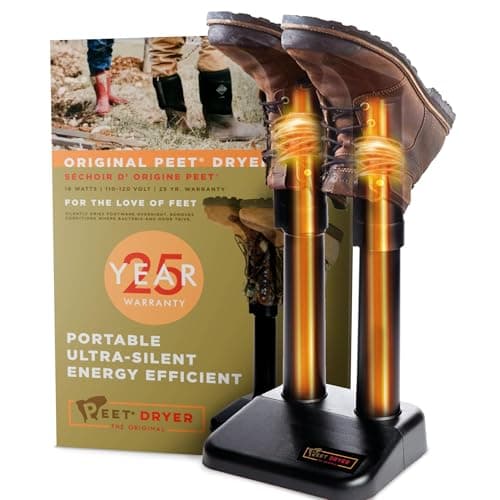
Buy the PEET Original. It is a silent, fanless convection dryer that draws a published 36 watts, has no switch to forget and no timer to set, is rated by the manufacturer as safe on all footwear materials, and carries a published 25-year warranty. If the hunter needs boots dry in hours rather than overnight, the PEET Advantage Plus adds a fan and heat and publishes a 1-to-4-hour dry time for two pairs at once. If the boots live in a truck more than a mudroom, the DryGuy Travel Dry DX is the only pick here that runs off a 12-volt outlet.
Here is the part worth understanding before you spend anything, because it is the reason this is a better gift than it sounds. Insulation works by holding still air. Water displaces that air, so a wet boot is not a slightly colder boot — it is a boot with most of its insulation switched off, and it stays that way for days, because nothing inside a hunting boot is designed to let moisture out quickly. A rubber boot has no breathable membrane at all.
That matters twice. A hunter who walks in hot and sweats into a boot in the afternoon has a damp boot by evening and a cold boot at 4 a.m. And the hunter who steps in a creek on Saturday is wearing a genuinely compromised boot on Sunday, which is how people conclude that their expensive boots are not warm. The boots are usually fine. The boots are wet.
So the six picks below are ranked against four criteria in this order: how hot the air gets and whether that is safe for rubber, neoprene and waterproof membranes; how long it takes; whether it runs silently; and what it can hold besides one pair of boots. Every figure below is a published manufacturer or retailer specification, cited at the bottom, and prices are live from Amazon.
- 1PEET Original Boot & Shoe DryerThe pick, and the one most hunting households should own. It is a fanless convection dryer: a low-wattage element warms the air inside the boot, warm air rises and carries moisture out, and nothing moves or makes a sound. Published figures are a 36-watt draw, a 110-120 V supply, a silent always-on design with no switch or timer, construction the manufacturer states is safe on all footwear materials including leather, rubber, neoprene and synthetics, and a 25-year warranty. The always-on design is the underrated part: a dryer that has to be switched on is a dryer that gets forgotten after a wet evening hunt, and the whole value of this thing is that the boots are dry at 4 a.m. without anybody deciding anything. At 36 watts it costs almost nothing to leave running. Honest cons: PEET publishes no drying time at all, and says explicitly that it depends on material and saturation while recommending you leave footwear on it overnight - so this is an overnight tool, not a two-hour one, and if a hunter needs the same soaked pair for a morning hunt after an evening hunt it will not get there; it dries one pair, so a household with two hunters needs two units or a bigger model; the warranty requires registering the product within ten days of purchase, which nobody does, so register it for them if this is a gift; and gloves do not fit this model.Best for: Best overall, and the right answer for most hunters
- 2
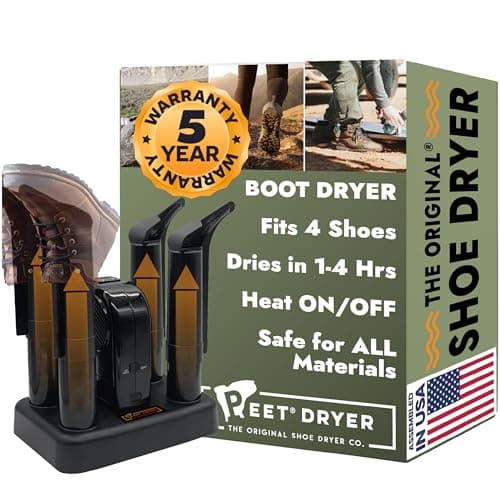 PEET Advantage Plus 2-Pair Boot DryerThe pick for back-to-back hunts, wet climates, and anyone who hunts hard enough to soak boots regularly. It is the same idea with a fan and a heater added: retailers publish a 1-to-4-hour dry time, selectable heat and no-heat settings, four ports so it takes two pairs at once, and a wattage range listed as 33 to 220 watts. The low end of that range is the fan running without heat, which is the setting to use on anything with a glued sole or a thin membrane, and the high end is the fast setting. Two pairs at once also means boots and a pair of rubber boots, or two hunters, on one plug. If the gift is for someone whose boots are regularly soaked rather than occasionally damp, this is the more useful present even though the Original is the better-reviewed machine. Honest cons: it has a fan, so it is audible - fine in a garage or mudroom, less fine in a hallway outside a bedroom or in a hunting camp where people are sleeping; the published warranty is 5 years against the Original's 25, which is a real step down; retailers publish two different wattage ranges for it (33-220 W and 33-200 W), so we cite both rather than picking one; and it costs roughly double the Original for a feature most hunters need only a few times a season.Best for: Best when boots have to be dry in hours, not overnight
- 3
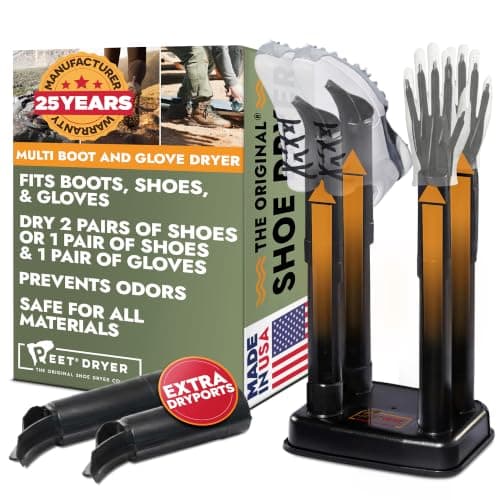 PEET Multi Boot, Shoe & Glove DryerThe pick when more than one person's gear needs drying, or when the gloves are the actual problem. PEET publishes a unit that holds two pairs of shoes or boots plus one pair of gloves, using built-in glove DryPorts, in the same silent fanless convection design as the Original, with a 25-year warranty cited for the model. Gloves deserve the attention: a hunter's hands get cold because the gloves are damp from the inside, and damp gloves are far harder to dry than boots because there is nowhere for the moisture to go. A dryer that handles both ends of the problem on one plug is a genuinely better buy than two separate gadgets. Honest cons: it is the most expensive pick here, and it is slow as well as expensive - convection means overnight, so you are paying for capacity rather than speed; it is a large object that lives permanently on a floor, which is a real consideration in an apartment or a shared mudroom; we could not verify a published wattage figure for this model anywhere, so the table says so rather than assuming it is three times the Original's 36 watts; and like all PEET units the warranty depends on registration.Best for: Best for a hunting household, and for gloves
- 4
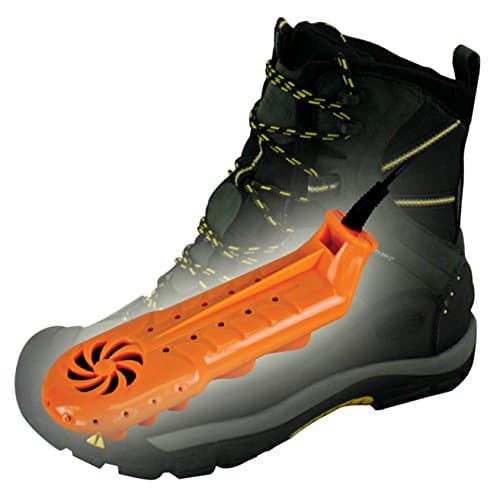 DryGuy Travel Dry DX Boot DryerThe pick for a hunter who drives to hunt, which is most of them. It is the only unit here that publishes a 12-volt vehicle outlet alongside a 120-volt household plug, and the reason that matters is timing: boots dry on the drive home instead of starting to dry when you walk in the door, which is the difference between dry boots at 4 a.m. and nearly-dry boots. Published figures are 13 watts, a maximum temperature of 99 degrees Fahrenheit (37 Celsius), and an approximate 2-to-5-hour dry time per one major retailer. Low temperature is a feature rather than a weakness on a waterproof hunting boot, because heat is what kills membranes and adhesives. Honest cons: that low temperature is also a real limit, and one reviewer who metered the unit and tested it concluded the heat output is too low for insulated boots - believe the published 99-degree ceiling and treat this as a damp-boot tool rather than a soaked-boot one; the published wattage is disputed, with a metered review recording about 11 watts for two units and another reviewer estimating 30; the 2-to-5-hour figure assumes damp rather than wet; and it is a small travel-sized unit, not the thing you build a mudroom around.Best for: Best for the truck, and for travel
- 5
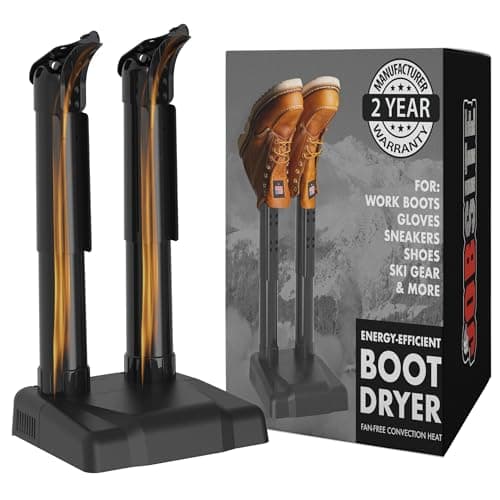 JobSite Silent Boot & Glove DryerThe pick when you want convection quiet at the lowest price it is available, and the budget alternative to the PEET Original. Published information describes a fan-free convection design drawing 36 watts - the same figure as the PEET Original - running silently, with ports that take gloves and ski-boot liners as well as work and hunting boots, and a deodorizing effect that comes simply from the boots being dry rather than from any additive. One comparison lists a 2-year warranty. For a gift under the price of a box of shells, a silent dryer that also handles gloves is a lot of function. Honest cons: one review site puts its drying time at 8 to 12 hours, which is the slowest figure published for anything on this page, so this is strictly an overnight tool; the 2-year published warranty is a fraction of PEET's 25 years, and on a device that runs unattended all night that gap is the whole difference in price; JobSite is a general work-gear brand with no hunting pedigree, which matters if this is a gift that needs to look considered; and it publishes no material-safety statement of the kind PEET makes, so we would not leave an expensive pair of membrane-lined boots on it unattended for a week.Best for: Best cheap silent dryer, and it takes gloves
- 6
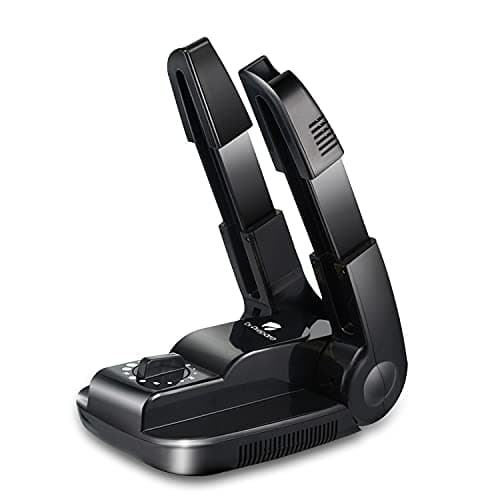 Dr. Prepare Boot Dryer with TimerThe pick if you are not sure a boot dryer will get used, which is a fair thing to wonder about before spending real money. The listing publishes a forced-air heat blower, a portable adjustable rack that takes boots or gloves, a timer, and a folding design that packs away, at the lowest price of anything here. The timer is a genuine advantage over the always-on PEET for anyone who would rather not leave an appliance running overnight, and the folding rack means it can live in a closet between seasons rather than occupying floor space all year. As a stocking-sized way to find out whether the hunter in your life will actually use one, it does the job. Honest cons: the listing publishes no wattage, no maximum temperature and no drying time, which is three of the four specifications that decide whether a dryer is safe for a waterproof boot - we are not going to estimate them; a blower is the noisiest option on this page; a folding plastic rack is the least durable construction here and the part most likely to break first; and there is no meaningful published warranty, so treat it as a season-or-two purchase rather than the one that outlives the boots.Best for: Best way to try a dryer cheaply, with a timer
| # | Gift | Best for | Price |
|---|---|---|---|
| 1 | PEET Original Boot & Shoe DryerThe pick, and the one most hunting households should own. It is a fanless convection dryer: a low-wattage element warms the air inside the boot, warm air rises and carries moisture out, and nothing moves or makes a sound. Published figures are a 36-watt draw, a 110-120 V supply, a silent always-on design with no switch or timer, construction the manufacturer states is safe on all footwear materials including leather, rubber, neoprene and synthetics, and a 25-year warranty. The always-on design is the underrated part: a dryer that has to be switched on is a dryer that gets forgotten after a wet evening hunt, and the whole value of this thing is that the boots are dry at 4 a.m. without anybody deciding anything. At 36 watts it costs almost nothing to leave running. Honest cons: PEET publishes no drying time at all, and says explicitly that it depends on material and saturation while recommending you leave footwear on it overnight - so this is an overnight tool, not a two-hour one, and if a hunter needs the same soaked pair for a morning hunt after an evening hunt it will not get there; it dries one pair, so a household with two hunters needs two units or a bigger model; the warranty requires registering the product within ten days of purchase, which nobody does, so register it for them if this is a gift; and gloves do not fit this model. | Best overall, and the right answer for most hunters | $49.99View on Amazon |
| 2 | PEET Advantage Plus 2-Pair Boot DryerThe pick for back-to-back hunts, wet climates, and anyone who hunts hard enough to soak boots regularly. It is the same idea with a fan and a heater added: retailers publish a 1-to-4-hour dry time, selectable heat and no-heat settings, four ports so it takes two pairs at once, and a wattage range listed as 33 to 220 watts. The low end of that range is the fan running without heat, which is the setting to use on anything with a glued sole or a thin membrane, and the high end is the fast setting. Two pairs at once also means boots and a pair of rubber boots, or two hunters, on one plug. If the gift is for someone whose boots are regularly soaked rather than occasionally damp, this is the more useful present even though the Original is the better-reviewed machine. Honest cons: it has a fan, so it is audible - fine in a garage or mudroom, less fine in a hallway outside a bedroom or in a hunting camp where people are sleeping; the published warranty is 5 years against the Original's 25, which is a real step down; retailers publish two different wattage ranges for it (33-220 W and 33-200 W), so we cite both rather than picking one; and it costs roughly double the Original for a feature most hunters need only a few times a season. | Best when boots have to be dry in hours, not overnight | $119.99View on Amazon |
| 3 | PEET Multi Boot, Shoe & Glove DryerThe pick when more than one person's gear needs drying, or when the gloves are the actual problem. PEET publishes a unit that holds two pairs of shoes or boots plus one pair of gloves, using built-in glove DryPorts, in the same silent fanless convection design as the Original, with a 25-year warranty cited for the model. Gloves deserve the attention: a hunter's hands get cold because the gloves are damp from the inside, and damp gloves are far harder to dry than boots because there is nowhere for the moisture to go. A dryer that handles both ends of the problem on one plug is a genuinely better buy than two separate gadgets. Honest cons: it is the most expensive pick here, and it is slow as well as expensive - convection means overnight, so you are paying for capacity rather than speed; it is a large object that lives permanently on a floor, which is a real consideration in an apartment or a shared mudroom; we could not verify a published wattage figure for this model anywhere, so the table says so rather than assuming it is three times the Original's 36 watts; and like all PEET units the warranty depends on registration. | Best for a hunting household, and for gloves | $129.99View on Amazon |
| 4 | DryGuy Travel Dry DX Boot DryerThe pick for a hunter who drives to hunt, which is most of them. It is the only unit here that publishes a 12-volt vehicle outlet alongside a 120-volt household plug, and the reason that matters is timing: boots dry on the drive home instead of starting to dry when you walk in the door, which is the difference between dry boots at 4 a.m. and nearly-dry boots. Published figures are 13 watts, a maximum temperature of 99 degrees Fahrenheit (37 Celsius), and an approximate 2-to-5-hour dry time per one major retailer. Low temperature is a feature rather than a weakness on a waterproof hunting boot, because heat is what kills membranes and adhesives. Honest cons: that low temperature is also a real limit, and one reviewer who metered the unit and tested it concluded the heat output is too low for insulated boots - believe the published 99-degree ceiling and treat this as a damp-boot tool rather than a soaked-boot one; the published wattage is disputed, with a metered review recording about 11 watts for two units and another reviewer estimating 30; the 2-to-5-hour figure assumes damp rather than wet; and it is a small travel-sized unit, not the thing you build a mudroom around. | Best for the truck, and for travel | $39.99View on Amazon |
| 5 | JobSite Silent Boot & Glove DryerThe pick when you want convection quiet at the lowest price it is available, and the budget alternative to the PEET Original. Published information describes a fan-free convection design drawing 36 watts - the same figure as the PEET Original - running silently, with ports that take gloves and ski-boot liners as well as work and hunting boots, and a deodorizing effect that comes simply from the boots being dry rather than from any additive. One comparison lists a 2-year warranty. For a gift under the price of a box of shells, a silent dryer that also handles gloves is a lot of function. Honest cons: one review site puts its drying time at 8 to 12 hours, which is the slowest figure published for anything on this page, so this is strictly an overnight tool; the 2-year published warranty is a fraction of PEET's 25 years, and on a device that runs unattended all night that gap is the whole difference in price; JobSite is a general work-gear brand with no hunting pedigree, which matters if this is a gift that needs to look considered; and it publishes no material-safety statement of the kind PEET makes, so we would not leave an expensive pair of membrane-lined boots on it unattended for a week. | Best cheap silent dryer, and it takes gloves | $41.16View on Amazon |
| 6 | Dr. Prepare Boot Dryer with TimerThe pick if you are not sure a boot dryer will get used, which is a fair thing to wonder about before spending real money. The listing publishes a forced-air heat blower, a portable adjustable rack that takes boots or gloves, a timer, and a folding design that packs away, at the lowest price of anything here. The timer is a genuine advantage over the always-on PEET for anyone who would rather not leave an appliance running overnight, and the folding rack means it can live in a closet between seasons rather than occupying floor space all year. As a stocking-sized way to find out whether the hunter in your life will actually use one, it does the job. Honest cons: the listing publishes no wattage, no maximum temperature and no drying time, which is three of the four specifications that decide whether a dryer is safe for a waterproof boot - we are not going to estimate them; a blower is the noisiest option on this page; a folding plastic rack is the least durable construction here and the part most likely to break first; and there is no meaningful published warranty, so treat it as a season-or-two purchase rather than the one that outlives the boots. | Best way to try a dryer cheaply, with a timer | $25.99View on Amazon |
Prices from Amazon as of November 4, 2026 and change often — the button always opens the current listing. Some links earn us a commission at no extra cost to you.
PEET Original Boot & Shoe Dryer
The pick, and the one most hunting households should own. It is a fanless convection dryer: a low-wattage element warms the air inside the boot, warm air rises and carries moisture out, and nothing moves or makes a sound. Published figures are a 36-watt draw, a 110-120 V supply, a silent always-on design with no switch or timer, construction the manufacturer states is safe on all footwear materials including leather, rubber, neoprene and synthetics, and a 25-year warranty. The always-on design is the underrated part: a dryer that has to be switched on is a dryer that gets forgotten after a wet evening hunt, and the whole value of this thing is that the boots are dry at 4 a.m. without anybody deciding anything. At 36 watts it costs almost nothing to leave running. Honest cons: PEET publishes no drying time at all, and says explicitly that it depends on material and saturation while recommending you leave footwear on it overnight - so this is an overnight tool, not a two-hour one, and if a hunter needs the same soaked pair for a morning hunt after an evening hunt it will not get there; it dries one pair, so a household with two hunters needs two units or a bigger model; the warranty requires registering the product within ten days of purchase, which nobody does, so register it for them if this is a gift; and gloves do not fit this model.
#ad · Price as of November 4, 2026. We may earn a commission.
PEET Advantage Plus 2-Pair Boot Dryer
The pick for back-to-back hunts, wet climates, and anyone who hunts hard enough to soak boots regularly. It is the same idea with a fan and a heater added: retailers publish a 1-to-4-hour dry time, selectable heat and no-heat settings, four ports so it takes two pairs at once, and a wattage range listed as 33 to 220 watts. The low end of that range is the fan running without heat, which is the setting to use on anything with a glued sole or a thin membrane, and the high end is the fast setting. Two pairs at once also means boots and a pair of rubber boots, or two hunters, on one plug. If the gift is for someone whose boots are regularly soaked rather than occasionally damp, this is the more useful present even though the Original is the better-reviewed machine. Honest cons: it has a fan, so it is audible - fine in a garage or mudroom, less fine in a hallway outside a bedroom or in a hunting camp where people are sleeping; the published warranty is 5 years against the Original's 25, which is a real step down; retailers publish two different wattage ranges for it (33-220 W and 33-200 W), so we cite both rather than picking one; and it costs roughly double the Original for a feature most hunters need only a few times a season.
#ad · Price as of November 4, 2026. We may earn a commission.
PEET Multi Boot, Shoe & Glove Dryer
The pick when more than one person's gear needs drying, or when the gloves are the actual problem. PEET publishes a unit that holds two pairs of shoes or boots plus one pair of gloves, using built-in glove DryPorts, in the same silent fanless convection design as the Original, with a 25-year warranty cited for the model. Gloves deserve the attention: a hunter's hands get cold because the gloves are damp from the inside, and damp gloves are far harder to dry than boots because there is nowhere for the moisture to go. A dryer that handles both ends of the problem on one plug is a genuinely better buy than two separate gadgets. Honest cons: it is the most expensive pick here, and it is slow as well as expensive - convection means overnight, so you are paying for capacity rather than speed; it is a large object that lives permanently on a floor, which is a real consideration in an apartment or a shared mudroom; we could not verify a published wattage figure for this model anywhere, so the table says so rather than assuming it is three times the Original's 36 watts; and like all PEET units the warranty depends on registration.
#ad · Price as of November 4, 2026. We may earn a commission.
DryGuy Travel Dry DX Boot Dryer
The pick for a hunter who drives to hunt, which is most of them. It is the only unit here that publishes a 12-volt vehicle outlet alongside a 120-volt household plug, and the reason that matters is timing: boots dry on the drive home instead of starting to dry when you walk in the door, which is the difference between dry boots at 4 a.m. and nearly-dry boots. Published figures are 13 watts, a maximum temperature of 99 degrees Fahrenheit (37 Celsius), and an approximate 2-to-5-hour dry time per one major retailer. Low temperature is a feature rather than a weakness on a waterproof hunting boot, because heat is what kills membranes and adhesives. Honest cons: that low temperature is also a real limit, and one reviewer who metered the unit and tested it concluded the heat output is too low for insulated boots - believe the published 99-degree ceiling and treat this as a damp-boot tool rather than a soaked-boot one; the published wattage is disputed, with a metered review recording about 11 watts for two units and another reviewer estimating 30; the 2-to-5-hour figure assumes damp rather than wet; and it is a small travel-sized unit, not the thing you build a mudroom around.
#ad · Price as of November 4, 2026. We may earn a commission.
JobSite Silent Boot & Glove Dryer
The pick when you want convection quiet at the lowest price it is available, and the budget alternative to the PEET Original. Published information describes a fan-free convection design drawing 36 watts - the same figure as the PEET Original - running silently, with ports that take gloves and ski-boot liners as well as work and hunting boots, and a deodorizing effect that comes simply from the boots being dry rather than from any additive. One comparison lists a 2-year warranty. For a gift under the price of a box of shells, a silent dryer that also handles gloves is a lot of function. Honest cons: one review site puts its drying time at 8 to 12 hours, which is the slowest figure published for anything on this page, so this is strictly an overnight tool; the 2-year published warranty is a fraction of PEET's 25 years, and on a device that runs unattended all night that gap is the whole difference in price; JobSite is a general work-gear brand with no hunting pedigree, which matters if this is a gift that needs to look considered; and it publishes no material-safety statement of the kind PEET makes, so we would not leave an expensive pair of membrane-lined boots on it unattended for a week.
#ad · Price as of November 4, 2026. We may earn a commission.
Dr. Prepare Boot Dryer with Timer
The pick if you are not sure a boot dryer will get used, which is a fair thing to wonder about before spending real money. The listing publishes a forced-air heat blower, a portable adjustable rack that takes boots or gloves, a timer, and a folding design that packs away, at the lowest price of anything here. The timer is a genuine advantage over the always-on PEET for anyone who would rather not leave an appliance running overnight, and the folding rack means it can live in a closet between seasons rather than occupying floor space all year. As a stocking-sized way to find out whether the hunter in your life will actually use one, it does the job. Honest cons: the listing publishes no wattage, no maximum temperature and no drying time, which is three of the four specifications that decide whether a dryer is safe for a waterproof boot - we are not going to estimate them; a blower is the noisiest option on this page; a folding plastic rack is the least durable construction here and the part most likely to break first; and there is no meaningful published warranty, so treat it as a season-or-two purchase rather than the one that outlives the boots.
#ad · Price as of November 4, 2026. We may earn a commission.
The six side by side
| Pick | Fan or convection | Published dry time | Published power | Capacity | Best for |
|---|---|---|---|---|---|
| PEET Original | Convection, silent | Not published (overnight) | 36 W | 1 pair | The pick, for most hunters |
| PEET Advantage Plus | Fan, heat and no-heat | 1-4 hours | 33-220 W (one listing 33-200 W) | 2 pairs | Boots dry in hours, back-to-back hunts |
| PEET Multi | Convection, silent | Not published (overnight) | Not published | 2 pairs + 1 pair gloves | A household, and gloves |
| DryGuy Travel Dry DX | Forced air | About 2-5 hours | 13 W published (disputed) | 1 pair | The truck, and travel |
| JobSite Silent | Convection, fan free | 8-12 hours per one review | 36 W | 1 pair, gloves fit | The cheapest silent dryer |
| Dr. Prepare | Heat blower | Not published | Not published | 1 pair, gloves fit | Trying a dryer cheaply |
Every figure in that table is a published manufacturer or retailer specification, cited at the bottom of this page. We have not run these six dryers side by side with a moisture meter. Where a figure is not published — and two of these publish neither a wattage nor a drying time — the table says "not published" rather than filling the cell with an estimate.
Criterion 1: temperature, because heat is what ruins boots
This is the criterion to get right, and it is the one that separates a boot dryer from the things people use instead of one.
Hunting boots are assembled from materials that do not like heat: waterproof membranes, adhesives holding a rubber outsole to a leather or synthetic upper, foam midsoles, and rubber itself, which hardens and cracks over time when it is repeatedly cooked. A furnace vent, a wood stove, a hair dryer or a space heater pointed into a boot all push air far hotter than anything on this page, and they are the actual reason boots delaminate in a single season.
Real boot dryers run deliberately cool. DryGuy publishes a maximum of 99 degrees Fahrenheit on the Travel Dry DX — roughly body temperature. PEET does not publish a temperature figure for the Original but states the design is safe on all footwear materials, which is the claim that matters on a dryer you leave running unattended for eight hours. Low and slow is not a compromise here. It is the entire design.
Criterion 2: convection or a fan?
This is the real fork in the category, and both answers are correct for different hunters.
Convection dryers— the PEET Original, the PEET Multi and the JobSite — have no moving parts. A low-wattage element warms the air, it rises through the boot, and moisture goes with it. They are silent, they use very little power, there is nothing to wear out, and they are the ones you leave on all night without thinking. They are also slow: plan on overnight, and know that neither PEET nor JobSite publishes a figure you can hold them to.
Forced-air dryers— the PEET Advantage Plus, the DryGuy and the Dr. Prepare — push air through the boot. The published numbers show what that buys: 1 to 4 hours on the Advantage Plus against an unpublished overnight on the Original. The cost is noise, more power, and a motor that is the first thing to fail.
The honest decision rule: if the hunter hunts once or twice a week and the boots have until tomorrow, buy convection and buy it silent. If they hunt consecutive days, hunt somewhere wet, or share the dryer with a second person, the fan is worth the noise.
Criterion 3: rubber boots are the hard case
If the hunter wears rubber boots — and most deer and duck hunters own a pair — the drying problem is substantially worse than it is for a leather boot, and it is worth knowing why before you choose.
A leather or synthetic boot with a waterproof membrane is designed to let some water vapor escape outward. A rubber boot is not: it is a sealed bag. Every bit of moisture that goes in, whether from a creek over the top or from a sweaty two-mile walk, has exactly one way out, and that is up and out of the cuff. Which means a rubber boot left standing in a mudroom barely dries at all, and a neoprene liner can hold water for days.
That is the single strongest argument for owning a dryer rather than relying on time, and it is also an argument for the two-pair units: a hunter with rubber boots usually also has a leather pair, and both of them were worn this week. Our comparison of rubber versus leather hunting boots goes into the trade-off properly, and cold-weather boot picks covers the insulated end of the problem.
The scent-control argument nobody makes
Here is a benefit that does not show up in the marketing and that deer hunters in particular should think about.
Boot odor is bacterial, and bacteria need moisture. A boot that is genuinely dry between hunts grows far less of what makes it smell, which is why every one of these dryers is marketed as a deodorizer without needing to add anything. For a whitetail hunter who washes clothes in scent-free detergent and sprays down before every sit, the boots are often the one item in the whole kit that never gets treated — and they are the item in direct contact with the ground the deer walks on.
Drying them is not a scent-elimination product and we are not going to claim it kills odor. It removes the water the odor-causing bacteria need. That is a cheap, permanent, no-consumables version of something hunters otherwise spend money on every season. Our guide to washing hunting clothes covers the rest of that routine.
Buying a boot dryer as a gift
A boot dryer is one of the best hunting gifts there is for buyers who do not hunt, for four reasons, and one reason it sometimes is not.
There is no size to guess, which eliminates the main failure mode of buying hunting gear for someone else. It works with whatever boots they already own, however old or odd. It is a thing experienced hunters know they should have and keep not buying, because the boots technically dry eventually. And it improves gear they already like rather than replacing gear they already chose, which is the safest possible position to be in as a gift-giver.
The one case where it is the wrong gift: if the hunter lives somewhere with no mudroom, garage or utility space, a floor-standing appliance can be an imposition rather than a present. In that situation buy the Dr. Prepare, which folds, or the DryGuy, which lives in the truck.
Two notes on the gift itself. Register the warranty for them if you buy a PEET, because the 25-year coverage depends on registration within ten days and nobody does it. And if you want to make it a complete present rather than an appliance, pair it with a good pair of merino hunting socks— dry boots and the right socks solve the same problem from both ends, and how to keep your feet warm hunting explains why the socks matter as much as the insulation. For more ideas at this price, hunting gifts under $100 is the right bracket, and gifts for a hunting dadis where this one usually lands. The same logic — a cheap accessory that makes expensive gear they already own get used — is why a bino harness is the other gift on this site with nothing to size, if the hunter owns binoculars.
How we chose these
We have not run six dryers overnight with soaked boots and a moisture meter, and we are not going to imply otherwise. What this page does is take each manufacturer's and retailer's published information — wattage, maximum temperature, published dry time, fan or convection, capacity, material-safety claims and warranty term — and rank them against what a hunting boot actually needs: cool air rather than hot, enough hours to reach a sealed liner, silence if it runs all night, and room for the gloves. Where a figure is not published, or where retailers publish conflicting figures for the same unit, this page says so. Every pick was confirmed as a live, in-stock Amazon listing before it was featured. Our full method is on the how we choose page.
Frequently asked questions
What is the best boot dryer for hunting boots?
The PEET Original, for most hunters. It is a silent fanless convection dryer with a published 36-watt draw, an always-on design with no switch or timer to forget, a manufacturer statement that it is safe on all footwear materials, and a published 25-year warranty. If boots need to be dry in hours rather than overnight, the PEET Advantage Plus publishes a 1-to-4-hour dry time and takes two pairs; if the boots live in a truck, the DryGuy Travel Dry DX is the only pick that runs off a 12-volt outlet.
Are boot dryers bad for hunting boots?
Purpose-built boot dryers are not; improvised heat is. Real dryers run deliberately cool - DryGuy publishes a 99-degree-Fahrenheit maximum on the Travel Dry DX, and PEET states its design is safe on all footwear materials. What damages boots is a furnace vent, a wood stove, a space heater or a hair dryer, all of which push far hotter air and work on the adhesive holding the outsole to the upper while the inside of the boot stays wet.
How long does a boot dryer take?
It depends entirely on whether it has a fan. The forced-air PEET Advantage Plus publishes 1 to 4 hours and the DryGuy Travel Dry DX about 2 to 5. Convection dryers are slower and most do not publish a figure at all: PEET says drying time depends on material and saturation and recommends leaving footwear on overnight, and one review site puts the JobSite at 8 to 12 hours. Soaked rubber boots with neoprene liners take the longest of anything.
Do boot dryers help with boot odor?
Indirectly, and it is real. Boot odor is bacterial and bacteria need moisture, so a boot that is genuinely dry between hunts grows much less of what makes it smell - which is why these units are marketed as deodorizers without adding anything. For a deer hunter who is careful about scent everywhere else, the boots are often the one untreated item in the kit, and they are the part in contact with the ground.
Can a boot dryer dry gloves too?
Some of them. The PEET Multi publishes built-in glove DryPorts alongside two pairs of boots, and the JobSite and the Dr. Prepare both take gloves on their racks. The PEET Original does not. It is worth paying attention to, because damp gloves are harder to dry than boots - there is nowhere for the moisture to go - and cold hands are usually a wet-glove problem rather than an insulation problem.
Do you need a boot dryer for rubber boots?
More than for any other kind. A leather or synthetic boot with a waterproof membrane lets some vapor escape outward; a rubber boot is a sealed bag, so every bit of water from a creek or from sweat has only one way out, up through the cuff. Left standing in a mudroom, rubber boots barely dry at all and a neoprene liner can hold water for days. This is the strongest single argument for owning a dryer instead of relying on time.
Is a boot dryer a good gift for a hunter?
One of the best on this site for a buyer who does not hunt. There is no size to guess, it works with whatever boots they already own, it is something experienced hunters know they should have and keep not buying, and it improves gear they chose themselves rather than second-guessing it. The one exception is a hunter with no mudroom or garage, where a floor-standing appliance is an imposition - buy the folding Dr. Prepare or the truck-powered DryGuy instead.
Sources
- PEET Dryer, via retailer product listings and Q&A - published information for the Original boot and shoe dryer (model M97): 36 watts, 110-120 V, silent fanless convection with no switch or timer, safe on all footwear materials, 25-year warranty, drying time stated to depend on material and saturation with overnight recommended
- Amazon listing - published product information for the PEET Original Portable Electric Boot & Shoe Dryer: silent and always-on, dries boots, shoes and sneakers overnight, safe on all materials
- Blain's Farm & Fleet and Gempler's - published retailer specifications for the PEET Advantage Plus shoe and boot dryer (model M2107F): dries in about 1 to 4 hours, heat and no-heat settings, fan-assisted heated air, four ports for two pairs, 33-220 watts (a second listing states 33-200 watts), 5-year warranty
- Amazon listing - published product information for the PEET Multi Boot, Shoe & Glove Electric Dryer: built-in glove DryPorts, holds two pairs of shoes and one pair of gloves
- REI - published retailer specifications for the DryGuy Travel Dry DX boot dryer: 120 V AC household outlet or 12 V DC vehicle outlet, 13 watts, maximum temperature 99 degrees F / 37 C, drying time approximately 2-5 hours
- Amazon listing - published product information for the JobSite Boot Dryer: silent fan-free shoe and glove dryer, warmer and deodorizer for work boots, winter gloves and ski boot liners
- Amazon listing - published product information for the Dr. Prepare Boot Dryer: shoe, glove and boot warmer with heat blower, portable adjustable rack, timer, folding design