Gear Guides
The Best Deer Feeders
A feeder is the cheapest way to find out what is actually living on a property - and the one piece of deer gear whose legality you have to check before you order. Here is the honest comparison, gravity against timed, with the rules question first.
Read this before the picks. Feeding and baiting deer is regulated, and the rules are not the same two counties apart. Many states ban hunting over bait outright, many more restrict or prohibit feeders inside chronic wasting disease management zones, and plenty draw a legal line between supplemental feeding out of season and baiting during it. Those rules change from year to year. We are not going to print a state list, because a list on a web page is exactly the thing that goes stale and gets someone cited — check your state wildlife agency's current regulations for the specific county you hunt, every season. Nothing below is advice that feeding is legal where you are.
The verdict: the Moultrie 250 lb gravity tripodis the feeder to buy. Gravity feeders have no motor, no timer, no battery and no circuit board, which means the list of things that can break in a wet February is empty — and Moultrie publishes this one at 250 lb capacity, protein-pellet ready, with a conversion adapter, so one fill can run for weeks without a trip back. If you want deer on a schedule rather than just fed, take the Moultrie 30-gallon timed tripod instead. The budget pick is the American Hunter ECON kit at well under thirty dollars, which is a timer, motor and spin plate that turns a barrel you already own into a working feeder.
The thing nobody tells you first: a feeder is not primarily a way to kill a deer. In most of the places where feeders are legal, their real value is information— a feeder and a camera on the same post tell you how many bucks are actually using the property, what shape they are in, and which hours they move, which is worth more over a season than a bag of corn is in a week. Judge these on whether they will still be standing and still be working in month three, because that is when the useful pictures arrive. Prices are pulled live and dated.
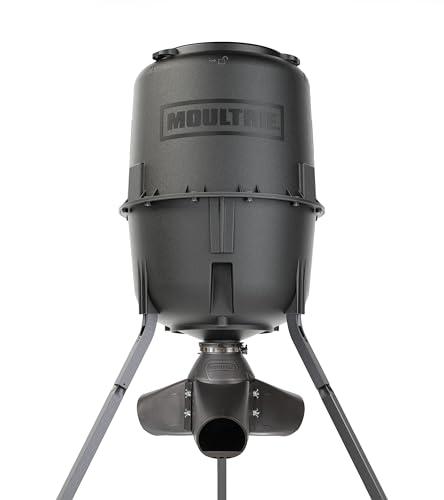
- 1Moultrie 250 lb Gravity Deer Feeder TripodThe pick for almost everyone, and the reason is subtraction rather than addition. A gravity feeder has no motor, no spin plate, no digital timer and no battery, so it cannot be killed by cold, water, a chewed wire or a varmint that got inside the housing - which between them account for most feeders that stop working. Moultrie publishes this one at a 250 lb capacity, ready for protein pellets as well as corn, with an easy conversion adapter and a gravity-fed tripod frame. Big capacity is the quiet advantage: fewer trips in means less human scent and less disturbance on the property, which is the whole point of a feeder you set and leave. Honest cons: gravity means feed is available every hour of every day, so you cannot concentrate deer into daylight the way a timer can, and you cannot stop a herd of hogs or a bold raccoon from emptying it. 250 lb of corn is also a genuine job to carry in. And a constantly available pile is exactly the arrangement most CWD-zone rules target, so the legal check matters more on this one, not less.Best for: Best overall - nothing on it can break
- 2
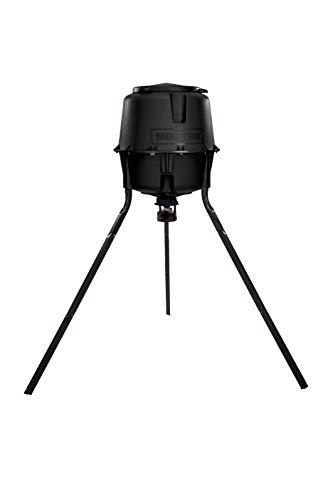 Moultrie 30-Gallon Deer Feeder TripodThe pick if the goal is a pattern rather than a pile. A timed spin-cast feeder throws a measured amount of corn at set times, and that does two things gravity cannot: it rations the feed so varmints and hogs cannot drain the hopper in a night, and it trains deer to show up in a window you choose - which, paired with a camera, is how you learn what is on the property rather than guessing. Moultrie publishes this one with a quick-lock hopper system, a programmable digital timer and compatibility with corn and protein pellets, on a 30-gallon tripod. Honest cons: every objection to timed feeders is the same objection - more to go wrong. There is a motor, a battery and a control unit, and all three are things that fail in deep cold or heavy rain, usually in the month you most wanted pictures. Spin plates also sling corn into the dirt, where it can sour. And the timer is only useful if the hunting the feeder supports is legal where you are, which varies by season as well as by state.Best for: Best timed feeder - for putting deer on a pattern
- 3
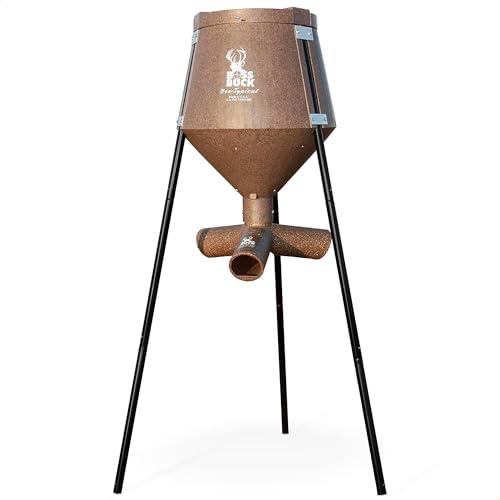 Boss Buck 200 lb Gravity Deer FeederThe pick for a property you will still be hunting in ten years. This is the heavy-duty end of the gravity category: Boss Buck publishes a 200 lb corn capacity on 75-inch galvanized legs with three feed ports and an adjustable flow setting, which is a different construction argument from the lighter tripods - galvanized steel is what survives standing in a wet field for years, and the adjustable flow lets you slow the feed rate rather than take whatever the hole gives you. Three ports also means three deer feeding without one pushing the others off, which matters more than it sounds on a property with a real herd. Honest cons: it is the most expensive feeder here by a wide margin, and the extra money buys longevity rather than better hunting this season. Tall galvanized legs are heavier and more awkward to set up in rough ground. And like every gravity feeder, feed is available around the clock, so it is a varmint buffet and the first design a CWD regulation will restrict.Best for: Best built to last - buy once
- 4
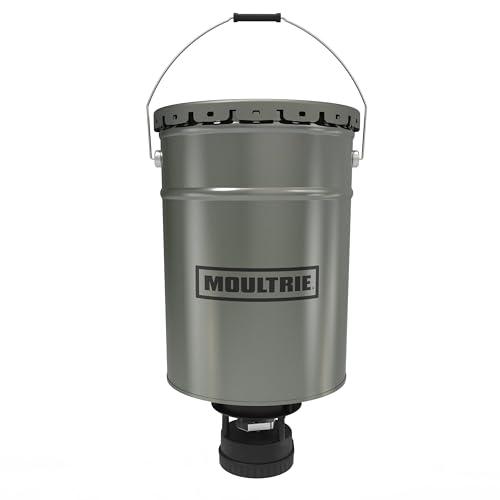 Moultrie All-in-One Hanging Deer Feeder (40 lb)The pick for leased ground, a new property, or anyone who does not yet know where the feeder should live. A hanging feeder is a hopper on a rope: no tripod to assemble, no legs to level, nothing to drag through the woods - it goes up on a limb in minutes and comes down just as fast when the sign says the deer are using a different draw. Moultrie publishes this one at 40 lb capacity with a metal hopper, a locking lid, adjustable feed times and Bluetooth app control that pairs with their Edge 3 system, so the schedule changes from your phone rather than on a ladder. Honest cons: 40 lb is a fraction of a tripod's capacity, which means more trips in and more human scent on the spot. A feeder hanging from a limb swings in wind and is easier for a bear or a determined raccoon to work on than a tripod. App control needs a phone in range to be any use, so treat it as convenience rather than capability. And you need a suitable limb at the right height, which not every spot has.Best for: Best hanging feeder - up in ten minutes, moves next week
- 5
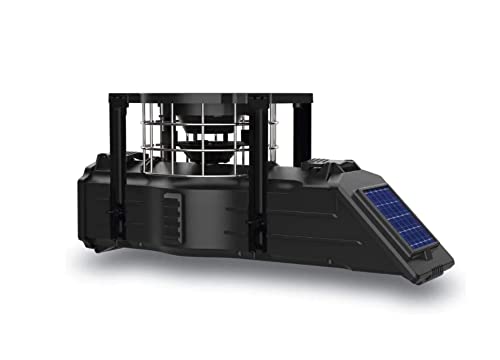 American Hunter Sunslinger Solar Feeder KitThe pick if you already have a barrel and a way to hang it, and the honest answer to the most common feeder complaint. A kit is the business end only - the digital timer, the motor and the metal spin plate - and this one has the solar panel integrated into the unit, which addresses the single biggest reason feeders stop working: the battery goes flat in the cold, usually unnoticed, usually in the best week of the season. American Hunter publishes it as weather resistant with an integrated solar panel and a metal spin plate, and the 6V battery is sold separately. Honest cons: 'kit' means it is not a feeder. You supply the hopper, the lid and the legs, and a DIY barrel is worse at keeping water and varmints out than a purpose-built hopper. Buying the battery separately is an easy thing to forget and it does not work without one. A small integrated panel trickle-charges rather than charges, so it extends the battery's life and does not make it eternal. And in shaded timber, a solar panel is decoration.Best for: Best kit - solves the dead-battery problem
- 6
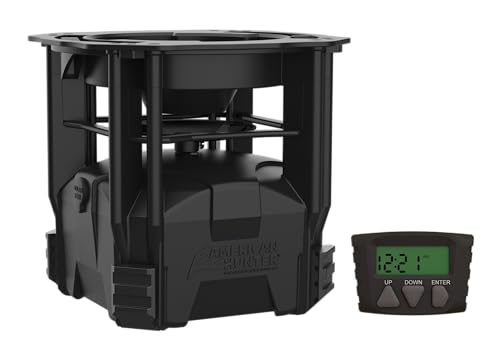 American Hunter ECON Digital Feeder KitThe honest cheap answer, labeled honestly. For well under thirty dollars you get a digital timer, a motor and a metal spin plate with a built-in varmint guard - everything that makes a barrel into a programmable feeder, and the varmint guard matters because squirrels chewing wiring is how cheap feeder kits usually die. If you have a 30-gallon drum, a food-grade bucket or last year's broken feeder's hopper, this is the cheapest route to real information about what is on your land. It is also the right first purchase for anyone who is not yet sure a feeder is legal or useful where they hunt, because the downside is the price of a tank of fuel. Honest cons: no hopper, no lid, no legs, and no solar - you are buying the motor and nothing else, and a 6V battery is an additional purchase. Entry-level housings are the least weather-resistant thing in this category. A DIY hopper will leak and spoil corn unless you build the lid properly. And a cheap timer that drifts is worse than no timer when you are trying to read a pattern off a camera.Best for: Budget pick - a working feeder for the price of two bags of corn
| # | Gift | Best for | Price |
|---|---|---|---|
| 1 | Moultrie 250 lb Gravity Deer Feeder TripodThe pick for almost everyone, and the reason is subtraction rather than addition. A gravity feeder has no motor, no spin plate, no digital timer and no battery, so it cannot be killed by cold, water, a chewed wire or a varmint that got inside the housing - which between them account for most feeders that stop working. Moultrie publishes this one at a 250 lb capacity, ready for protein pellets as well as corn, with an easy conversion adapter and a gravity-fed tripod frame. Big capacity is the quiet advantage: fewer trips in means less human scent and less disturbance on the property, which is the whole point of a feeder you set and leave. Honest cons: gravity means feed is available every hour of every day, so you cannot concentrate deer into daylight the way a timer can, and you cannot stop a herd of hogs or a bold raccoon from emptying it. 250 lb of corn is also a genuine job to carry in. And a constantly available pile is exactly the arrangement most CWD-zone rules target, so the legal check matters more on this one, not less. | Best overall - nothing on it can break | $159.99View on Amazon |
| 2 | Moultrie 30-Gallon Deer Feeder TripodThe pick if the goal is a pattern rather than a pile. A timed spin-cast feeder throws a measured amount of corn at set times, and that does two things gravity cannot: it rations the feed so varmints and hogs cannot drain the hopper in a night, and it trains deer to show up in a window you choose - which, paired with a camera, is how you learn what is on the property rather than guessing. Moultrie publishes this one with a quick-lock hopper system, a programmable digital timer and compatibility with corn and protein pellets, on a 30-gallon tripod. Honest cons: every objection to timed feeders is the same objection - more to go wrong. There is a motor, a battery and a control unit, and all three are things that fail in deep cold or heavy rain, usually in the month you most wanted pictures. Spin plates also sling corn into the dirt, where it can sour. And the timer is only useful if the hunting the feeder supports is legal where you are, which varies by season as well as by state. | Best timed feeder - for putting deer on a pattern | $109.99View on Amazon |
| 3 | Boss Buck 200 lb Gravity Deer FeederThe pick for a property you will still be hunting in ten years. This is the heavy-duty end of the gravity category: Boss Buck publishes a 200 lb corn capacity on 75-inch galvanized legs with three feed ports and an adjustable flow setting, which is a different construction argument from the lighter tripods - galvanized steel is what survives standing in a wet field for years, and the adjustable flow lets you slow the feed rate rather than take whatever the hole gives you. Three ports also means three deer feeding without one pushing the others off, which matters more than it sounds on a property with a real herd. Honest cons: it is the most expensive feeder here by a wide margin, and the extra money buys longevity rather than better hunting this season. Tall galvanized legs are heavier and more awkward to set up in rough ground. And like every gravity feeder, feed is available around the clock, so it is a varmint buffet and the first design a CWD regulation will restrict. | Best built to last - buy once | $249.99View on Amazon |
| 4 | Moultrie All-in-One Hanging Deer Feeder (40 lb)The pick for leased ground, a new property, or anyone who does not yet know where the feeder should live. A hanging feeder is a hopper on a rope: no tripod to assemble, no legs to level, nothing to drag through the woods - it goes up on a limb in minutes and comes down just as fast when the sign says the deer are using a different draw. Moultrie publishes this one at 40 lb capacity with a metal hopper, a locking lid, adjustable feed times and Bluetooth app control that pairs with their Edge 3 system, so the schedule changes from your phone rather than on a ladder. Honest cons: 40 lb is a fraction of a tripod's capacity, which means more trips in and more human scent on the spot. A feeder hanging from a limb swings in wind and is easier for a bear or a determined raccoon to work on than a tripod. App control needs a phone in range to be any use, so treat it as convenience rather than capability. And you need a suitable limb at the right height, which not every spot has. | Best hanging feeder - up in ten minutes, moves next week | $79.99View on Amazon |
| 5 | American Hunter Sunslinger Solar Feeder KitThe pick if you already have a barrel and a way to hang it, and the honest answer to the most common feeder complaint. A kit is the business end only - the digital timer, the motor and the metal spin plate - and this one has the solar panel integrated into the unit, which addresses the single biggest reason feeders stop working: the battery goes flat in the cold, usually unnoticed, usually in the best week of the season. American Hunter publishes it as weather resistant with an integrated solar panel and a metal spin plate, and the 6V battery is sold separately. Honest cons: 'kit' means it is not a feeder. You supply the hopper, the lid and the legs, and a DIY barrel is worse at keeping water and varmints out than a purpose-built hopper. Buying the battery separately is an easy thing to forget and it does not work without one. A small integrated panel trickle-charges rather than charges, so it extends the battery's life and does not make it eternal. And in shaded timber, a solar panel is decoration. | Best kit - solves the dead-battery problem | $44.37View on Amazon |
| 6 | American Hunter ECON Digital Feeder KitThe honest cheap answer, labeled honestly. For well under thirty dollars you get a digital timer, a motor and a metal spin plate with a built-in varmint guard - everything that makes a barrel into a programmable feeder, and the varmint guard matters because squirrels chewing wiring is how cheap feeder kits usually die. If you have a 30-gallon drum, a food-grade bucket or last year's broken feeder's hopper, this is the cheapest route to real information about what is on your land. It is also the right first purchase for anyone who is not yet sure a feeder is legal or useful where they hunt, because the downside is the price of a tank of fuel. Honest cons: no hopper, no lid, no legs, and no solar - you are buying the motor and nothing else, and a 6V battery is an additional purchase. Entry-level housings are the least weather-resistant thing in this category. A DIY hopper will leak and spoil corn unless you build the lid properly. And a cheap timer that drifts is worse than no timer when you are trying to read a pattern off a camera. | Budget pick - a working feeder for the price of two bags of corn | $28.23View on Amazon |
Prices from Amazon as of November 24, 2026 and change often — the button always opens the current listing. Some links earn us a commission at no extra cost to you.
Moultrie 250 lb Gravity Deer Feeder Tripod
The pick for almost everyone, and the reason is subtraction rather than addition. A gravity feeder has no motor, no spin plate, no digital timer and no battery, so it cannot be killed by cold, water, a chewed wire or a varmint that got inside the housing - which between them account for most feeders that stop working. Moultrie publishes this one at a 250 lb capacity, ready for protein pellets as well as corn, with an easy conversion adapter and a gravity-fed tripod frame. Big capacity is the quiet advantage: fewer trips in means less human scent and less disturbance on the property, which is the whole point of a feeder you set and leave. Honest cons: gravity means feed is available every hour of every day, so you cannot concentrate deer into daylight the way a timer can, and you cannot stop a herd of hogs or a bold raccoon from emptying it. 250 lb of corn is also a genuine job to carry in. And a constantly available pile is exactly the arrangement most CWD-zone rules target, so the legal check matters more on this one, not less.
#ad · Price as of November 24, 2026. We may earn a commission.
Moultrie 30-Gallon Deer Feeder Tripod
The pick if the goal is a pattern rather than a pile. A timed spin-cast feeder throws a measured amount of corn at set times, and that does two things gravity cannot: it rations the feed so varmints and hogs cannot drain the hopper in a night, and it trains deer to show up in a window you choose - which, paired with a camera, is how you learn what is on the property rather than guessing. Moultrie publishes this one with a quick-lock hopper system, a programmable digital timer and compatibility with corn and protein pellets, on a 30-gallon tripod. Honest cons: every objection to timed feeders is the same objection - more to go wrong. There is a motor, a battery and a control unit, and all three are things that fail in deep cold or heavy rain, usually in the month you most wanted pictures. Spin plates also sling corn into the dirt, where it can sour. And the timer is only useful if the hunting the feeder supports is legal where you are, which varies by season as well as by state.
#ad · Price as of November 24, 2026. We may earn a commission.
Boss Buck 200 lb Gravity Deer Feeder
The pick for a property you will still be hunting in ten years. This is the heavy-duty end of the gravity category: Boss Buck publishes a 200 lb corn capacity on 75-inch galvanized legs with three feed ports and an adjustable flow setting, which is a different construction argument from the lighter tripods - galvanized steel is what survives standing in a wet field for years, and the adjustable flow lets you slow the feed rate rather than take whatever the hole gives you. Three ports also means three deer feeding without one pushing the others off, which matters more than it sounds on a property with a real herd. Honest cons: it is the most expensive feeder here by a wide margin, and the extra money buys longevity rather than better hunting this season. Tall galvanized legs are heavier and more awkward to set up in rough ground. And like every gravity feeder, feed is available around the clock, so it is a varmint buffet and the first design a CWD regulation will restrict.
#ad · Price as of November 24, 2026. We may earn a commission.
Moultrie All-in-One Hanging Deer Feeder (40 lb)
The pick for leased ground, a new property, or anyone who does not yet know where the feeder should live. A hanging feeder is a hopper on a rope: no tripod to assemble, no legs to level, nothing to drag through the woods - it goes up on a limb in minutes and comes down just as fast when the sign says the deer are using a different draw. Moultrie publishes this one at 40 lb capacity with a metal hopper, a locking lid, adjustable feed times and Bluetooth app control that pairs with their Edge 3 system, so the schedule changes from your phone rather than on a ladder. Honest cons: 40 lb is a fraction of a tripod's capacity, which means more trips in and more human scent on the spot. A feeder hanging from a limb swings in wind and is easier for a bear or a determined raccoon to work on than a tripod. App control needs a phone in range to be any use, so treat it as convenience rather than capability. And you need a suitable limb at the right height, which not every spot has.
#ad · Price as of November 24, 2026. We may earn a commission.
American Hunter Sunslinger Solar Feeder Kit
The pick if you already have a barrel and a way to hang it, and the honest answer to the most common feeder complaint. A kit is the business end only - the digital timer, the motor and the metal spin plate - and this one has the solar panel integrated into the unit, which addresses the single biggest reason feeders stop working: the battery goes flat in the cold, usually unnoticed, usually in the best week of the season. American Hunter publishes it as weather resistant with an integrated solar panel and a metal spin plate, and the 6V battery is sold separately. Honest cons: 'kit' means it is not a feeder. You supply the hopper, the lid and the legs, and a DIY barrel is worse at keeping water and varmints out than a purpose-built hopper. Buying the battery separately is an easy thing to forget and it does not work without one. A small integrated panel trickle-charges rather than charges, so it extends the battery's life and does not make it eternal. And in shaded timber, a solar panel is decoration.
#ad · Price as of November 24, 2026. We may earn a commission.
American Hunter ECON Digital Feeder Kit
The honest cheap answer, labeled honestly. For well under thirty dollars you get a digital timer, a motor and a metal spin plate with a built-in varmint guard - everything that makes a barrel into a programmable feeder, and the varmint guard matters because squirrels chewing wiring is how cheap feeder kits usually die. If you have a 30-gallon drum, a food-grade bucket or last year's broken feeder's hopper, this is the cheapest route to real information about what is on your land. It is also the right first purchase for anyone who is not yet sure a feeder is legal or useful where they hunt, because the downside is the price of a tank of fuel. Honest cons: no hopper, no lid, no legs, and no solar - you are buying the motor and nothing else, and a 6V battery is an additional purchase. Entry-level housings are the least weather-resistant thing in this category. A DIY hopper will leak and spoil corn unless you build the lid properly. And a cheap timer that drifts is worse than no timer when you are trying to read a pattern off a camera.
#ad · Price as of November 24, 2026. We may earn a commission.
The legal check, in more detail
We put this first in the introduction and it earns a second pass, because it is the only part of this purchase that can cost you more than the feeder.
Baiting and feeding are often treated as two different things. A number of states allow a feeder to run outside the hunting season but prohibit hunting within some distance of it, or require the feed to be gone for a set number of days before you can hunt the area. The feeder being legal in March tells you nothing about November.
Disease management zones change the answer. Where chronic wasting disease has been detected, agencies commonly restrict or ban feeders, and the reason they give is straightforward: a feeder concentrates deer nose-to-nose at one point for hours, which is the opposite of how deer feed naturally. Those zones are redrawn as detections move, so a legal feeder location can become an illegal one between seasons without you doing anything.
Public land is usually a flat no. Most public ground prohibits placing bait or feed entirely, independent of whatever the statewide rule says.
What to actually do.Look up your state wildlife agency's current regulations for the county you hunt, every single season, and read the baiting and supplemental-feeding entries separately. If you hunt a state line, check both sides. That is a ten-minute job that no amount of gear research replaces.
Gravity or timed? This is the whole decision
| Gravity feeder | Timed spin-cast feeder | |
|---|---|---|
| What can break | Nothing electrical - no motor, timer or battery | Motor, battery, timer, wiring; cold and water are the enemies |
| Feed control | Always available - you cannot ration it | Measured amounts at set times, so a hopper lasts |
| Varmints and hogs | Will empty it; a flow setting slows them at best | Rationing is the best defense available |
| Putting deer on a schedule | No - deer come when they like | Yes, and this is the main reason to buy one |
| Trips back to refill | Fewer - big hoppers and slow flow | More often per pound, but the pound lasts longer |
| Best paired with | A property you visit rarely | A trail camera, because the pattern is the payoff |
Put simply: buy gravity if you want reliability and fewer visits, buy timed if you want to know when deer are there. If you only ever own one and the land is far from home, the gravity feeder is the one that will still be working when you get back.
Tripod, hanging, or a kit on a barrel?
A tripod feeder is the standard: a hopper on three legs, stable, high enough to keep feed off the ground, and large enough that a fill lasts. It is the right default on land you own or lease long-term. The cost is assembly and the fact that it is not moving once it is full.
A hanging feeder trades capacity for flexibility. It goes up in minutes, it comes down in minutes, and it is the right choice for the first season on new ground when you are still learning where the deer actually travel. Expect to refill it more often.
A kitis the control unit alone, bolted onto a barrel or bucket you provide. It is by far the cheapest way to get a working feeder, it is the natural repair when a feeder's motor dies and the hopper is fine, and it is the sensible first purchase if you are testing whether a feeder helps at all on your property. What you give up is weather resistance, because a homemade lid is rarely as good as a molded one.
The feeder is half of the setup
A feeder with no camera on it is a bag of corn with extra steps. The pairing is what makes this purchase worth the money: the feeder brings deer to a known point, the camera tells you which deer, in what condition, and at what hour. That is the data a season's decisions get made on — which stand to hang, which buck is worth passing a doe for, whether the property is holding anything at all.
If you do not already run cameras, start with best trail cameras, or the value-focused shortlist in best trail camera for the money. Placement matters more than megapixels, and how to set up a trail camera covers the mistakes that cost people a whole summer of blank cards. If you are not sure the whole exercise is worth it, are trail cameras worth it makes the honest case both ways.
Corn, protein, or neither
Corn is cheap, deer eat it readily, and it is almost entirely energy. It is the right choice if the aim is to concentrate deer at a camera. It is a poor choice as nutrition, and in wet weather it spoils on the ground and can grow mold that is genuinely dangerous to deer, which is one reason feeders that sling corn into dirt get criticized.
Protein pelletscost more and are what people use when the goal is herd condition over years rather than pictures this month. Both Moultrie feeders above publish pellet compatibility, which not every feeder does — pellets bridge and jam in hoppers and ports designed only for corn, so check before you fill.
Neitheris a real answer. If feeders are illegal where you hunt, or you would rather not concentrate deer in one place, the same job — drawing deer past a camera at a predictable point — is done by scent in most places that restrict feed. Our scent pages cover that: best deer scents and best scent dripper for deer hunting. Those carry their own rules, including restrictions on natural urine products in some states, which those pages explain.
How we chose these
We do not run feeders on a test property. Every capacity, material and feature claim above is the manufacturer's or retailer's own published description, cited in the sources below, and availability and price on all six picks were checked against the retailer the day this page was published.
The criteria, in order: will it still be working in month three (which is why gravity ranks above timed for the overall pick), does the published capacity match how often you can realistically visit, how well is the mechanism protected from water and varmints, and does it handle pellets as well as corn. Price is a tiebreaker rather than a criterion — the cheapest feeder that stops working in December costs more than the one that does not. Method: how we choose.
Match the feeder to the property
Land you own, visited every few weeks. The Moultrie 250 lb gravity tripod. Big hopper, nothing to fail, fewest trips in.
You want to know what hour the deer move. The Moultrie 30-gallon timed tripod, with a camera on the same post.
A property you will still be hunting in ten years.The Boss Buck — galvanized legs, three ports, adjustable flow.
New ground, or a lease that might not renew. The Moultrie hanging feeder. Up in ten minutes, moves whenever the sign does.
You already have a barrel, and a battery that keeps dying. The American Hunter Sunslinger kit, for the integrated solar panel.
You are not yet sure a feeder is worth it. The American Hunter ECON kit. Cheapest honest way to find out.
Keep browsing
The other half of a scouting setup is covered in best trail cameras and cellular vs standard trail cameras, which is the decision that matters most if the property is far from home. Once you know where the deer are, the elevated options are in best tree stands and the ground-level ones in best hunting blinds. For the legal alternative to feed in states that restrict it, see best deer scents.
Frequently asked questions
What is the best deer feeder?
The Moultrie 250 lb gravity tripod, for a reason that is about failure rather than features: a gravity feeder has no motor, timer or battery, so there is nothing on it for cold or water to kill. Moultrie publishes it at 250 lb capacity and ready for protein pellets as well as corn, which means a single fill runs for weeks and you disturb the spot less. If you specifically want deer arriving in a chosen window, buy a timed spin-cast feeder instead.
Gravity feeder or timed feeder - which is better?
Gravity if you want reliability, timed if you want a schedule. A gravity feeder cannot break electrically and needs fewer visits, but feed is available around the clock, so varmints and hogs can drain it and you cannot concentrate deer into daylight. A timed spin-cast feeder rations the feed and trains deer to appear in a window you set, which is what makes trail-camera data useful - at the cost of a motor, a battery and a timer that can all fail in cold weather.
Is it legal to use a deer feeder?
That depends entirely on where you hunt, and it is the first thing to check. Many states prohibit hunting over bait, many restrict or ban feeders inside chronic wasting disease management zones, and several draw a legal distinction between supplemental feeding outside the season and baiting during it. Public land usually prohibits feed outright. These rules change between seasons and vary by county, so read your state wildlife agency's current regulations for the exact place you hunt rather than any list on a web page.
How much feed capacity do I need?
Match it to how often you can realistically visit, not to the size of the herd. Every trip to a feeder leaves human scent and disturbs the spot, so a bigger hopper is a hunting advantage rather than just a convenience - a 200 to 250 lb gravity feeder can run for weeks, while a 40 lb hanging feeder means regular visits. The trade is that big capacity is heavy to carry in and impossible to relocate once it is full.
Can I use protein pellets instead of corn?
Only in a feeder built for them, so check before you fill. Pellets bridge and jam in hoppers and feed ports designed around corn, which is why pellet compatibility is a published specification worth looking for - both Moultrie feeders here state it. Corn is cheaper and draws deer readily but is almost pure energy, and it can mold on wet ground, which is a genuine risk to deer. Pellets cost more and are what people use when the goal is herd condition rather than pictures.
Why does my deer feeder keep stopping?
On a timed feeder it is almost always the battery, and almost always unnoticed until you check the camera. Cold weather drops battery performance sharply, and a flat 6V battery looks exactly like a working feeder from the road. The common fixes, in order: a feeder kit with an integrated solar panel to trickle-charge the battery, a varmint guard so squirrels cannot chew the wiring, and keeping the control unit out of standing water. If none of that appeals, buy a gravity feeder, which has nothing electrical to stop.
Do I need a trail camera with a feeder?
If the point is scouting rather than feeding, yes - the feeder brings deer to a known point and the camera is the part that tells you anything. Without a camera you have a bag of corn disappearing and no information about which deer took it or when. The pairing is what makes the purchase worth the money, and it is the reason a timed feeder and a camera belong on the same post.
Sources
- Amazon listing - Moultrie 250 lb Gravity Deer Feeder Tripod: published 250 lb capacity, no power required, protein-pellet ready, conversion adapter
- Amazon listing - Moultrie 30-Gallon Deer Feeder Tripod: published quick-lock hopper system, programmable digital timer, corn and pellet compatibility
- Amazon listing - Boss Buck Gravity Deer Feeder: published 200 lb corn capacity, 75-inch galvanized legs, three feed ports, adjustable flow
- Amazon listing - Moultrie All-in-One Hanging Deer Feeder 40 lb: published metal hopper, locking lid, adjustable feed times, Bluetooth app control
- Amazon listing - American Hunter Sunslinger feeder kit: published weather-resistant housing, integrated solar panel, metal spin plate, 6V battery sold separately
- Amazon listing - American Hunter ECON feeder kit: published digital timer, metal spin plate, built-in varmint guard
- Your state wildlife agency's current hunting regulations - the authority on baiting, supplemental feeding and CWD-zone restrictions for the county you hunt. Check these every season; no list on a web page stays accurate.