Gear Guides
The Best Trail Camera for the Money
The sticker price on a trail camera is not what it costs. Batteries, cards and a data plan decide that - and once you count them, the cheapest camera is not always the cheapest answer.
"Best for the money" is the most-searched way to shop for a trail camera and the worst-served, because almost every roundup answers it by comparing sticker prices. A trail camera is not a sticker price. It is a camera plus batteries plus a memory card plus, on the cellular models, a monthly plan — and the gap between the number on the box and the number a year later is the whole subject.
This page works that out honestly. It covers three cameras at three genuinely different price points, explains what each one costs to run rather than to buy, and says plainly which one we would give to which kind of hunter. If you want the wider category view rather than the value argument, our best trail cameras roundup ranks the field on its own terms.
One thing worth saying up front, because it saves people money: a trail camera is not a magic deer-finder. It tells you what walked past one specific tree. Buying more camera than the property justifies is the single most common way hunters waste money in this category, which is why the cheapest pick here is a genuine recommendation rather than a consolation prize.
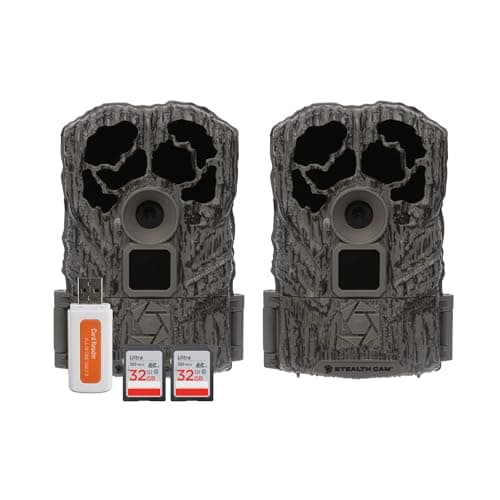
- 1Stealth Cam Browtine Trail CameraThis is the one we would buy with our own money and the one we would give. The Browtine is Stealth Cam's deliberately stripped-back scouting camera - it takes the photo, it stores it on a card, and it does not try to be a phone. That is the whole argument: on a standard SD-card camera there is no subscription, no signal to worry about and nothing to go wrong in software, so the price on the box really is close to the price of ownership once you add batteries and a card. Stealth Cam is a long-established name in the category rather than a marketplace brand that appeared last season, which matters for a device that lives outdoors on a tree for six months. Honest cons: somebody has to physically walk in to swap the card, and every one of those trips leaves scent and disturbance exactly where you least want it; there is no remote check, so a camera pointed at nothing stays pointed at nothing until the next visit; and a simple camera gives you no way to tell it has been stolen.Best for: Best value overall
- 2
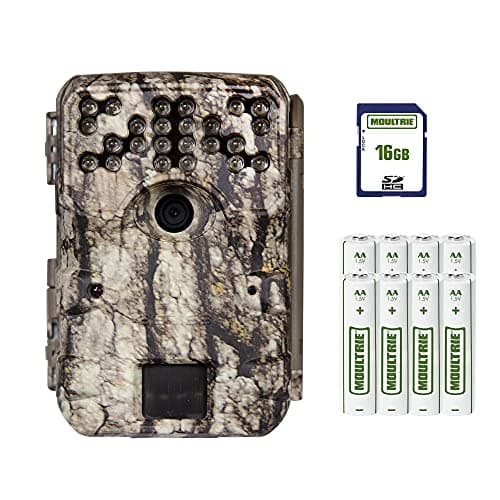 Moultrie A900 Trail CameraThe pick for a first camera, a second angle on a property you already cover, or a gift where the recipient may not know yet whether they want this hobby. The Moultrie A900 is a set-and-forget SD-card camera from another of the genuinely old names in the category, and for the money it does the job that matters - a clear daytime image, a usable night image, and low enough power draw that it is not eating batteries every three weeks. Buying two of these to cover two trails is often a better use of the same money than buying one better camera, because trail cameras are a coverage problem before they are an image-quality problem. Honest cons: image quality is exactly what the price suggests and noticeably softer at night than pricier cameras; trigger speed is adequate for a deer on a trail and not for something moving fast across the frame; and like any card camera it still needs the walk-in.Best for: Best cheap camera that is still worth owning
 - 3
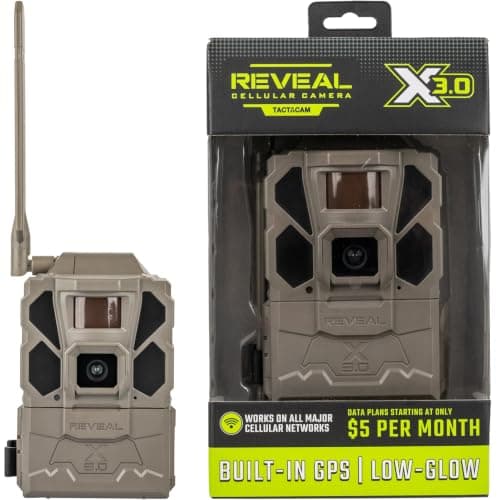 Tactacam Reveal X Cellular Trail CameraThe cellular camera on this page, and the one where the money argument gets interesting. The Reveal X sends images to a phone over a cell network, which means the hunter never walks in to check a card - and on a property where every visit spooks deer, or a lease two hours from home, that is not a convenience feature, it is the entire value. It is also the pick that costs the most after you buy it, because cellular cameras require a data plan, and the plan is a recurring cost the gift recipient inherits rather than one you have paid. Honest cons: the subscription is the real price and it never stops; it needs usable cell signal where the camera hangs, which plenty of good hunting ground does not have; and for someone hunting a hundred acres behind their own house, the walk-in it eliminates was never much of a problem.Best for: Worth the money only if the walk-in is the problem
| # | Gift | Best for | Price |
|---|---|---|---|
| 1 | Stealth Cam Browtine Trail CameraThis is the one we would buy with our own money and the one we would give. The Browtine is Stealth Cam's deliberately stripped-back scouting camera - it takes the photo, it stores it on a card, and it does not try to be a phone. That is the whole argument: on a standard SD-card camera there is no subscription, no signal to worry about and nothing to go wrong in software, so the price on the box really is close to the price of ownership once you add batteries and a card. Stealth Cam is a long-established name in the category rather than a marketplace brand that appeared last season, which matters for a device that lives outdoors on a tree for six months. Honest cons: somebody has to physically walk in to swap the card, and every one of those trips leaves scent and disturbance exactly where you least want it; there is no remote check, so a camera pointed at nothing stays pointed at nothing until the next visit; and a simple camera gives you no way to tell it has been stolen. | Best value overall | $89.99View on Amazon |
| 2 | Moultrie A900 Trail CameraThe pick for a first camera, a second angle on a property you already cover, or a gift where the recipient may not know yet whether they want this hobby. The Moultrie A900 is a set-and-forget SD-card camera from another of the genuinely old names in the category, and for the money it does the job that matters - a clear daytime image, a usable night image, and low enough power draw that it is not eating batteries every three weeks. Buying two of these to cover two trails is often a better use of the same money than buying one better camera, because trail cameras are a coverage problem before they are an image-quality problem. Honest cons: image quality is exactly what the price suggests and noticeably softer at night than pricier cameras; trigger speed is adequate for a deer on a trail and not for something moving fast across the frame; and like any card camera it still needs the walk-in. | Best cheap camera that is still worth owning | $79.95View on Amazon |
| 3 | Tactacam Reveal X Cellular Trail CameraThe cellular camera on this page, and the one where the money argument gets interesting. The Reveal X sends images to a phone over a cell network, which means the hunter never walks in to check a card - and on a property where every visit spooks deer, or a lease two hours from home, that is not a convenience feature, it is the entire value. It is also the pick that costs the most after you buy it, because cellular cameras require a data plan, and the plan is a recurring cost the gift recipient inherits rather than one you have paid. Honest cons: the subscription is the real price and it never stops; it needs usable cell signal where the camera hangs, which plenty of good hunting ground does not have; and for someone hunting a hundred acres behind their own house, the walk-in it eliminates was never much of a problem. | Worth the money only if the walk-in is the problem | $94.78View on Amazon |
Prices from Amazon as of Sep 17, 2026 and change often — the button always opens the current listing. Some links earn us a commission at no extra cost to you.
Stealth Cam Browtine Trail Camera
This is the one we would buy with our own money and the one we would give. The Browtine is Stealth Cam's deliberately stripped-back scouting camera - it takes the photo, it stores it on a card, and it does not try to be a phone. That is the whole argument: on a standard SD-card camera there is no subscription, no signal to worry about and nothing to go wrong in software, so the price on the box really is close to the price of ownership once you add batteries and a card. Stealth Cam is a long-established name in the category rather than a marketplace brand that appeared last season, which matters for a device that lives outdoors on a tree for six months. Honest cons: somebody has to physically walk in to swap the card, and every one of those trips leaves scent and disturbance exactly where you least want it; there is no remote check, so a camera pointed at nothing stays pointed at nothing until the next visit; and a simple camera gives you no way to tell it has been stolen.
#ad · Price as of Sep 17, 2026. We may earn a commission.
Moultrie A900 Trail Camera
The pick for a first camera, a second angle on a property you already cover, or a gift where the recipient may not know yet whether they want this hobby. The Moultrie A900 is a set-and-forget SD-card camera from another of the genuinely old names in the category, and for the money it does the job that matters - a clear daytime image, a usable night image, and low enough power draw that it is not eating batteries every three weeks. Buying two of these to cover two trails is often a better use of the same money than buying one better camera, because trail cameras are a coverage problem before they are an image-quality problem. Honest cons: image quality is exactly what the price suggests and noticeably softer at night than pricier cameras; trigger speed is adequate for a deer on a trail and not for something moving fast across the frame; and like any card camera it still needs the walk-in.
#ad · Price as of Sep 17, 2026. We may earn a commission.
Tactacam Reveal X Cellular Trail Camera
The cellular camera on this page, and the one where the money argument gets interesting. The Reveal X sends images to a phone over a cell network, which means the hunter never walks in to check a card - and on a property where every visit spooks deer, or a lease two hours from home, that is not a convenience feature, it is the entire value. It is also the pick that costs the most after you buy it, because cellular cameras require a data plan, and the plan is a recurring cost the gift recipient inherits rather than one you have paid. Honest cons: the subscription is the real price and it never stops; it needs usable cell signal where the camera hangs, which plenty of good hunting ground does not have; and for someone hunting a hundred acres behind their own house, the walk-in it eliminates was never much of a problem.
#ad · Price as of Sep 17, 2026. We may earn a commission.
What a trail camera actually costs
Here is the arithmetic nobody does before buying, laid out in the order it hits you.
Batteries.Most trail cameras run on eight or twelve AA cells, and a set will not last a whole season if the camera is busy or the weather is cold. Alkalines are the default and the worst choice for this job; lithium AAs cost more per set, last substantially longer, and — the part that matters — do not lose most of their capacity when the temperature drops, which is precisely when a deer camera is working hardest. Rechargeables are the cheapest long-run option if the person is organized enough to rotate them.
The card. A memory card is a small cost that becomes a large annoyance. Buying two per camera rather than one is the fix: swap a fresh card in at the camera and read the full one at home, which halves the time spent standing under the tree.
The data plan, on cellular models only.This is the big one and the one the price comparison always omits. A cellular camera carries a monthly or annual plan for as long as it is in service. Over a few seasons that recurring cost can exceed what the camera itself cost, which does not make it a bad buy — it makes it a different kind of buy, a subscription rather than a purchase.
The lock and the strap. Cameras get stolen, and the factory strap is the weakest part of most setups. A python cable lock and a better strap are cheap and are what keeps the rest of this from being academic.
Cellular or not? The only question that matters for value
Everything else in this category is a detail. The cellular-or-not decision changes both what the camera does and what it costs, and it is worth thinking about in terms of what the hunter is actually buying: not photos, but visits they no longer have to make.
Every trip to a card camera leaves human scent on the trail, makes noise, and teaches mature deer that this particular corner of the woods has people in it. On heavily hunted ground that cost is real, and the subscription starts to look cheap. On a family farm the owner drives past every day anyway, it is money for nothing.
Our cellular vs standard trail cameras comparison takes that decision apart properly, and are trail cameras worth it asks the question one level up, which is whether the hunter wants one at all.
Specifications that are worth money, and ones that are not
Megapixels: mostly marketing.Trail-camera manufacturers quote interpolated figures that bear little relationship to the sensor, and a scouting photo only has to answer "what is it and how big is it". Do not pay extra for a bigger number.
Trigger speed and recovery: worth money. How fast the camera fires after it detects movement, and how quickly it is ready for the next frame. This is what decides whether you get the deer or the back half of the deer.
Detection range: worth understanding. The distance at which the sensor reliably wakes up. It is more useful to know than megapixels, and it is the number to match to how wide the trail is.
No-glow versus low-glow infrared: worth money on pressured ground. Low-glow emitters show a faint red at night; no-glow show nothing, at the cost of some night image quality. On public land or a shared lease, invisible is worth the trade.
Battery life: worth more than anything above. A camera that runs all season is a camera you do not walk to.
How we chose these
We do not run a test lab and we do not pretend to. These picks come from each manufacturer's published description and each brand's long standing in the category, judged against the question this page asks: what does it cost to own, not to buy. Our full method is on the how we choosepage. Prices are pulled live from Amazon and stamped with the date they were captured — and for the cellular pick, remember the plan is not in that number.
Buying one as a gift
Trail cameras are one of the best gifts on this site for a deer hunter, for a reason that has nothing to do with hunting: the recipient gets photographs of animals on their own ground, all year, whether or not the season is open. It is the rare piece of hunting gear that pays out in January.
Two cautions. First, do not give a cellular camera without being clear that it carries a subscription — nobody enjoys discovering a recurring bill inside a present. If you want to give one properly, buy the first year of the plan with it. Second, a camera on its own is an incomplete gift: add batteries, a card and a lock and it works the day it is opened instead of after a trip to the store. There is a full list of what to add in how to set up a trail camera, and how to choose a trail camera covers the decision from scratch if you are starting cold.
Match the camera to the hunter
They hunt their own or family ground. The Browtine, or two of the Moultrie A900s. Coverage beats image quality.
They hunt a lease a long drive away. The Reveal X, with the first year of data paid for.
They are new to this and might not stick with it. The A900. It is cheap enough to be a low-stakes introduction and good enough not to put them off.
They already run cameras. Batteries, cards and a cable lock. Unglamorous, and the thing they will actually use.
Keep browsing
For the category ranked on its own merits, see best trail cameras, and for a direct model-to-model call there is Stealth Cam vs Moultrie. If you are buying for a deer hunter more broadly, gifts for deer hunters starts from the person, and the best binoculars for deer hunting covers the other piece of glass most whitetail hunters use every time out.
Frequently asked questions
What is the best trail camera for the money?
For most hunters, a standard SD-card camera from an established brand - the Stealth Cam Browtine here. With no subscription and no signal to worry about, the price on the box is close to the real cost of ownership once you add batteries and a card. A cellular camera is better value only if walking in to swap cards is itself the problem.
Do cellular trail cameras require a monthly subscription?
Yes. A cellular camera sends images over a mobile network and needs a data plan for as long as it is in service, so the recurring cost can exceed the camera's own price over a few seasons. That does not make it a bad buy - it makes it a subscription rather than a purchase, and it is the number most price comparisons leave out.
How much does it cost to run a trail camera for a season?
Budget for batteries, at least one memory card and a cable lock on any camera, plus the data plan on a cellular model. Lithium AAs cost more per set than alkalines but last far longer and hold their capacity in the cold, which is exactly when a deer camera is busiest - so they are usually the cheaper choice over a season.
Is it better to buy one good trail camera or two cheap ones?
Often two. Trail cameras are a coverage problem before they are an image-quality problem, and a scouting photo only has to tell you what walked past and roughly how big it was. Two cameras on two trails answer more questions than one better camera on one trail.
Do more megapixels make a better trail camera?
No. Trail-camera megapixel figures are usually interpolated and bear little relation to the sensor. Trigger speed, recovery time, detection range and battery life all affect whether you get a usable photo far more than the megapixel number on the box.
Is a trail camera a good gift for a hunter?
One of the best, because it pays out year-round - the recipient gets photos of animals on their own ground whether or not a season is open. Add batteries, a card and a cable lock so it works the day it is unwrapped, and if you choose a cellular model, buy the first year of the data plan with it rather than handing over a bill.
Sources
- Stealth Cam - trail camera range and scouting guidance (published manufacturer material)
- Moultrie - published product information for the A-series trail cameras
- Tactacam - Reveal cellular trail camera range, published description and plan requirement
- U.S. Fish & Wildlife Service - hunting overview (context on regulated hunting in the United States)