Gear Guides
The Best Hunting Blind Heater
A heater is what turns a 20-degree morning into a sit you can finish. It is also the one piece of hunting gear that can hurt you indoors. Here are the sizes that fit each kind of blind, the safety rules in plain English, and the no-flame options worth knowing about.
Read the safety paragraph before the picks.Every propane heater here burns fuel in a space you are sitting in. Mr. Heater builds these with an oxygen depletion sensor that shuts the heater down when oxygen in the area drops, and a tip-over switch that cuts it if the unit falls over. Neither of those is a carbon monoxide detector, and that distinction is the whole point: an oxygen sensor reacts to falling oxygen, not to rising CO. So a heater in a blind needs three things every time — real ventilation, clearance from fabric and clothing, and a battery CO alarm in the blind with you. That alarm costs less than a box of slugs.
The verdict: the Mr. Heater 9,000 BTU Portable Buddy is the blind heater to buy. It is the size that suits most hard-sided and larger hub blinds, it runs off a 1 lb cylinder with no hose or tank to manage, and it is the unit the rest of this category gets compared against. In a tight two-person pop-up, the 3,800 BTU Little Buddy is the better choice, because the problem in a small blind is not making heat, it is making too much of it. For a wooden box blind that never really warms up, step to the 18,000 BTU Big Buddy. The budget pick is the Kidde battery-powered carbon monoxide alarmat under thirty dollars — the cheapest item on this page and the only one that is not optional.
One honest note on how to read the specifications: coverage figures for these heaters vary between sources, and Mr. Heater has also changed hardware on some Big Buddy production runs — the fan is not present on every version sold. Treat published square-footage as a rough guide, and buy by blind type instead, which is how the picks below are organized. Prices are pulled live and dated.
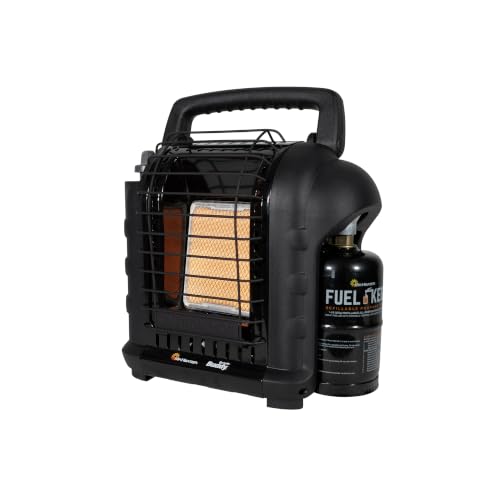
- 1Mr. Heater 9,000 BTU Portable Buddy HeaterThe default answer, and it is the default for good reasons. At 9,000 BTU of radiant propane heat it is enough for a hard-sided blind or a large hub blind on a cold morning without turning a small one into a sauna, and it runs off a single 1 lb cylinder that screws straight on, so there is no hose, no bulk tank and nothing to set up in the dark. Mr. Heater publishes it with an oxygen depletion sensor that shuts the heater down if oxygen in the space falls, a tip-over switch, and piezo ignition - press and turn, no lighter, which matters at 5 a.m. with cold hands. Radiant heat is also the right kind of heat for a blind: it warms the people and surfaces it faces rather than trying to heat the air in a drafty box. Honest cons: a 1 lb cylinder is expensive heat and it runs out faster than anyone expects, which is why most regulars end up buying a hose and a filter to run it off a 20 lb tank. The face of the unit gets genuinely hot and needs real clearance from a fabric blind wall, a jacket or a dog. The ODS can cut the heater off at high elevation, because thinner air reads to the sensor like depleted oxygen. And propane burning in an enclosed space produces water, so expect condensation on the windows of a sealed blind.Best for: Best overall - the right size for most blinds
- 2
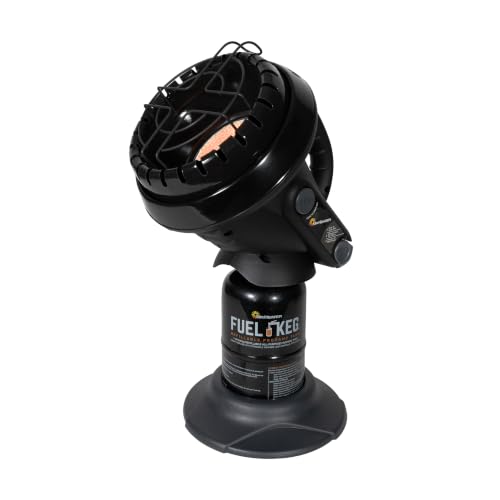 Mr. Heater 3,800 BTU Little Buddy HeaterThe pick for a small hub blind, and the reason is restraint. At 3,800 BTU it is roughly a third of the output of the Portable Buddy, which sounds like a downgrade until you have sat in a two-person pop-up with a 9,000 BTU heater three feet from your knee and spent the morning opening and closing windows. A small blind traps heat well; the job is taking the edge off, not heating a room. It is also the smallest and lightest unit here, which matters when the heater has to walk in with the chair, the pack and the bow. Like its bigger sibling it uses a 1 lb cylinder and carries Mr. Heater's oxygen depletion shutoff. Honest cons: output is fixed - there is no turning it up when the temperature drops to single digits, and in a box blind or a cold wind it will not keep up. It sits on top of its cylinder, which makes it taller and easier to knock over in a crowded blind, and a tip-over shutoff is a safety feature rather than a reason to be careless. Cylinder cost per hour is the same unimpressive math as the Portable Buddy. And the ventilation and CO rules do not scale down with the BTU - a small heater in a small sealed space is not safer, it is the same risk in a smaller room.Best for: Best for a two-person pop-up blind
- 3
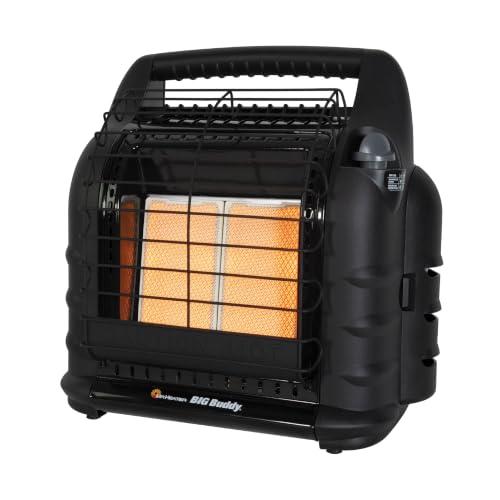 Mr. Heater 18,000 BTU Big Buddy HeaterThe pick when the blind is a building. An 18,000 BTU unit is a different class of heater: retailers publish the Big Buddy with selectable settings of 4,000, 9,000 and 18,000 BTU per hour, which is the feature that actually matters, because it lets one heater run low in a mild November and high when it is genuinely cold. It takes two 1 lb cylinders rather than one, which doubles the unhurried run time, and it is the only unit here that can hold a wooden box blind or a large shooting house at a comfortable temperature rather than merely a bearable one. Honest cons: coverage claims for this model vary by source between roughly 400 and 450 square feet, and Mr. Heater has removed the fan from some production runs, so check what the listing in front of you actually includes before assuming forced air. It is the heaviest and bulkiest unit here and it is not a walk-in heater - this is for a blind you drive to. Eighteen thousand BTU in a tight space is too much heat and burns too much oxygen, so size down rather than running a big heater throttled in a small blind. And the bigger the burner, the more seriously the ventilation and CO-alarm rules have to be taken.Best for: Best for a wooden box blind
- 4
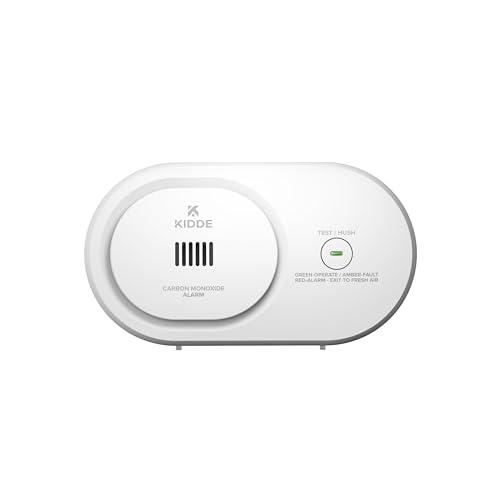 Kidde Battery-Powered Carbon Monoxide DetectorThe cheapest thing on this page and the one to buy first. Carbon monoxide is odorless, and the symptoms - headache, drowsiness, a bit of nausea - are indistinguishable from a cold early morning after a short night, which is exactly why people ignore them in a blind. Kidde publishes this one as a battery-powered CO alarm running on AA cells, with LED status lights and an 85 dB alarm, in a package small enough to live in a blind bag year round and be moved between the blind, the camper and the truck. The important thing to understand is that it does a job your heater does not: an oxygen depletion sensor shuts the heater off when oxygen falls, while a CO alarm sounds when carbon monoxide rises, and those are two different failure modes. Honest cons: it is a consumable - sensors age out, and a CO alarm has a service life printed on the back that is worth checking rather than assuming. Cold temperatures reduce battery performance, so a winter-long blind alarm needs fresh cells at the start of the season. It is an alarm, not ventilation, and it does not make a sealed blind safe. And an 85 dB alarm in a blind at dawn will end the hunt - which is the correct outcome, and worth telling anyone you lend it to.Best for: Budget pick - the one item here that is not optional
- 5
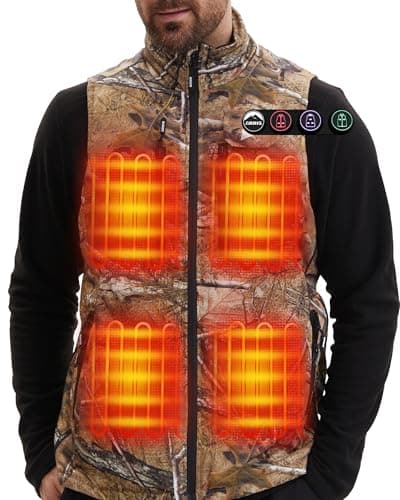 ARRIS Size-Adjustable Camo Heated Hunting VestThe pick for a hunter who should not be running a flame at all: a tight pop-up, a tree stand or a saddle, public land with fire restrictions, or anyone who simply does not want combustion next to them in the dark. A battery heated vest puts the heat on your core, which is where it does the most good, and it produces no carbon monoxide, no water vapor on the windows and no glow. It is also the only option here that works on the walk in and in an elevated stand, where a propane heater is not an option in any form. Honest cons: a vest warms a person, not a space, so your hands and feet are still your own problem - pair it with warmers. Run time is a battery, not a tank, and cold weather shortens it exactly when you need it most; the same battery that lasts a long sit in October gives you less in January. It is a clothing item, so size and fit matter, which makes it a harder blind purchase to get right than a heater. And it cannot rescue a genuinely cold box blind the way 18,000 BTU can.Best for: Best no-flame option - heat with nothing burning
- 6
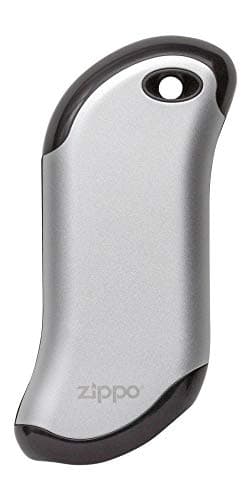 Zippo HeatBank 9s Rechargeable Hand WarmerThe pick to put in the blind bag alongside whichever heater you buy, because a radiant heater warms the side of you facing it and does very little for the hand holding a bow or a call. A rechargeable hand warmer is heat you can hold, move and put in a pocket, with no flame, no cylinder and nothing to vent, and it doubles as a power bank for a phone on a long sit - which on public land is a genuine safety item rather than a convenience. It is also the small gift that gets used every cold morning, not just on the hunt. Honest cons: it warms hands and pockets, and that is all - it will not take the chill off a blind and it is no substitute for a heater on a hard morning. Like every battery device it loses capacity in deep cold, so it wants charging the night before rather than the week before. Using it as a power bank spends the charge you wanted for heat. And a hand warmer plus a cold blind is still a cold blind.Best for: Best small add-on - hands, pockets, no fuel to manage
| # | Gift | Best for | Price |
|---|---|---|---|
| 1 | Mr. Heater 9,000 BTU Portable Buddy HeaterThe default answer, and it is the default for good reasons. At 9,000 BTU of radiant propane heat it is enough for a hard-sided blind or a large hub blind on a cold morning without turning a small one into a sauna, and it runs off a single 1 lb cylinder that screws straight on, so there is no hose, no bulk tank and nothing to set up in the dark. Mr. Heater publishes it with an oxygen depletion sensor that shuts the heater down if oxygen in the space falls, a tip-over switch, and piezo ignition - press and turn, no lighter, which matters at 5 a.m. with cold hands. Radiant heat is also the right kind of heat for a blind: it warms the people and surfaces it faces rather than trying to heat the air in a drafty box. Honest cons: a 1 lb cylinder is expensive heat and it runs out faster than anyone expects, which is why most regulars end up buying a hose and a filter to run it off a 20 lb tank. The face of the unit gets genuinely hot and needs real clearance from a fabric blind wall, a jacket or a dog. The ODS can cut the heater off at high elevation, because thinner air reads to the sensor like depleted oxygen. And propane burning in an enclosed space produces water, so expect condensation on the windows of a sealed blind. | Best overall - the right size for most blinds | $89.99View on Amazon |
| 2 | Mr. Heater 3,800 BTU Little Buddy HeaterThe pick for a small hub blind, and the reason is restraint. At 3,800 BTU it is roughly a third of the output of the Portable Buddy, which sounds like a downgrade until you have sat in a two-person pop-up with a 9,000 BTU heater three feet from your knee and spent the morning opening and closing windows. A small blind traps heat well; the job is taking the edge off, not heating a room. It is also the smallest and lightest unit here, which matters when the heater has to walk in with the chair, the pack and the bow. Like its bigger sibling it uses a 1 lb cylinder and carries Mr. Heater's oxygen depletion shutoff. Honest cons: output is fixed - there is no turning it up when the temperature drops to single digits, and in a box blind or a cold wind it will not keep up. It sits on top of its cylinder, which makes it taller and easier to knock over in a crowded blind, and a tip-over shutoff is a safety feature rather than a reason to be careless. Cylinder cost per hour is the same unimpressive math as the Portable Buddy. And the ventilation and CO rules do not scale down with the BTU - a small heater in a small sealed space is not safer, it is the same risk in a smaller room. | Best for a two-person pop-up blind | $77.88View on Amazon |
| 3 | Mr. Heater 18,000 BTU Big Buddy HeaterThe pick when the blind is a building. An 18,000 BTU unit is a different class of heater: retailers publish the Big Buddy with selectable settings of 4,000, 9,000 and 18,000 BTU per hour, which is the feature that actually matters, because it lets one heater run low in a mild November and high when it is genuinely cold. It takes two 1 lb cylinders rather than one, which doubles the unhurried run time, and it is the only unit here that can hold a wooden box blind or a large shooting house at a comfortable temperature rather than merely a bearable one. Honest cons: coverage claims for this model vary by source between roughly 400 and 450 square feet, and Mr. Heater has removed the fan from some production runs, so check what the listing in front of you actually includes before assuming forced air. It is the heaviest and bulkiest unit here and it is not a walk-in heater - this is for a blind you drive to. Eighteen thousand BTU in a tight space is too much heat and burns too much oxygen, so size down rather than running a big heater throttled in a small blind. And the bigger the burner, the more seriously the ventilation and CO-alarm rules have to be taken. | Best for a wooden box blind | $147.71View on Amazon |
| 4 | Kidde Battery-Powered Carbon Monoxide DetectorThe cheapest thing on this page and the one to buy first. Carbon monoxide is odorless, and the symptoms - headache, drowsiness, a bit of nausea - are indistinguishable from a cold early morning after a short night, which is exactly why people ignore them in a blind. Kidde publishes this one as a battery-powered CO alarm running on AA cells, with LED status lights and an 85 dB alarm, in a package small enough to live in a blind bag year round and be moved between the blind, the camper and the truck. The important thing to understand is that it does a job your heater does not: an oxygen depletion sensor shuts the heater off when oxygen falls, while a CO alarm sounds when carbon monoxide rises, and those are two different failure modes. Honest cons: it is a consumable - sensors age out, and a CO alarm has a service life printed on the back that is worth checking rather than assuming. Cold temperatures reduce battery performance, so a winter-long blind alarm needs fresh cells at the start of the season. It is an alarm, not ventilation, and it does not make a sealed blind safe. And an 85 dB alarm in a blind at dawn will end the hunt - which is the correct outcome, and worth telling anyone you lend it to. | Budget pick - the one item here that is not optional | $24.97View on Amazon |
| 5 | ARRIS Size-Adjustable Camo Heated Hunting VestThe pick for a hunter who should not be running a flame at all: a tight pop-up, a tree stand or a saddle, public land with fire restrictions, or anyone who simply does not want combustion next to them in the dark. A battery heated vest puts the heat on your core, which is where it does the most good, and it produces no carbon monoxide, no water vapor on the windows and no glow. It is also the only option here that works on the walk in and in an elevated stand, where a propane heater is not an option in any form. Honest cons: a vest warms a person, not a space, so your hands and feet are still your own problem - pair it with warmers. Run time is a battery, not a tank, and cold weather shortens it exactly when you need it most; the same battery that lasts a long sit in October gives you less in January. It is a clothing item, so size and fit matter, which makes it a harder blind purchase to get right than a heater. And it cannot rescue a genuinely cold box blind the way 18,000 BTU can. | Best no-flame option - heat with nothing burning | $118.98View on Amazon |
| 6 | Zippo HeatBank 9s Rechargeable Hand WarmerThe pick to put in the blind bag alongside whichever heater you buy, because a radiant heater warms the side of you facing it and does very little for the hand holding a bow or a call. A rechargeable hand warmer is heat you can hold, move and put in a pocket, with no flame, no cylinder and nothing to vent, and it doubles as a power bank for a phone on a long sit - which on public land is a genuine safety item rather than a convenience. It is also the small gift that gets used every cold morning, not just on the hunt. Honest cons: it warms hands and pockets, and that is all - it will not take the chill off a blind and it is no substitute for a heater on a hard morning. Like every battery device it loses capacity in deep cold, so it wants charging the night before rather than the week before. Using it as a power bank spends the charge you wanted for heat. And a hand warmer plus a cold blind is still a cold blind. | Best small add-on - hands, pockets, no fuel to manage | $58.93View on Amazon |
Prices from Amazon as of November 24, 2026 and change often — the button always opens the current listing. Some links earn us a commission at no extra cost to you.
Mr. Heater 9,000 BTU Portable Buddy Heater
The default answer, and it is the default for good reasons. At 9,000 BTU of radiant propane heat it is enough for a hard-sided blind or a large hub blind on a cold morning without turning a small one into a sauna, and it runs off a single 1 lb cylinder that screws straight on, so there is no hose, no bulk tank and nothing to set up in the dark. Mr. Heater publishes it with an oxygen depletion sensor that shuts the heater down if oxygen in the space falls, a tip-over switch, and piezo ignition - press and turn, no lighter, which matters at 5 a.m. with cold hands. Radiant heat is also the right kind of heat for a blind: it warms the people and surfaces it faces rather than trying to heat the air in a drafty box. Honest cons: a 1 lb cylinder is expensive heat and it runs out faster than anyone expects, which is why most regulars end up buying a hose and a filter to run it off a 20 lb tank. The face of the unit gets genuinely hot and needs real clearance from a fabric blind wall, a jacket or a dog. The ODS can cut the heater off at high elevation, because thinner air reads to the sensor like depleted oxygen. And propane burning in an enclosed space produces water, so expect condensation on the windows of a sealed blind.
#ad · Price as of November 24, 2026. We may earn a commission.
Mr. Heater 3,800 BTU Little Buddy Heater
The pick for a small hub blind, and the reason is restraint. At 3,800 BTU it is roughly a third of the output of the Portable Buddy, which sounds like a downgrade until you have sat in a two-person pop-up with a 9,000 BTU heater three feet from your knee and spent the morning opening and closing windows. A small blind traps heat well; the job is taking the edge off, not heating a room. It is also the smallest and lightest unit here, which matters when the heater has to walk in with the chair, the pack and the bow. Like its bigger sibling it uses a 1 lb cylinder and carries Mr. Heater's oxygen depletion shutoff. Honest cons: output is fixed - there is no turning it up when the temperature drops to single digits, and in a box blind or a cold wind it will not keep up. It sits on top of its cylinder, which makes it taller and easier to knock over in a crowded blind, and a tip-over shutoff is a safety feature rather than a reason to be careless. Cylinder cost per hour is the same unimpressive math as the Portable Buddy. And the ventilation and CO rules do not scale down with the BTU - a small heater in a small sealed space is not safer, it is the same risk in a smaller room.
#ad · Price as of November 24, 2026. We may earn a commission.
Mr. Heater 18,000 BTU Big Buddy Heater
The pick when the blind is a building. An 18,000 BTU unit is a different class of heater: retailers publish the Big Buddy with selectable settings of 4,000, 9,000 and 18,000 BTU per hour, which is the feature that actually matters, because it lets one heater run low in a mild November and high when it is genuinely cold. It takes two 1 lb cylinders rather than one, which doubles the unhurried run time, and it is the only unit here that can hold a wooden box blind or a large shooting house at a comfortable temperature rather than merely a bearable one. Honest cons: coverage claims for this model vary by source between roughly 400 and 450 square feet, and Mr. Heater has removed the fan from some production runs, so check what the listing in front of you actually includes before assuming forced air. It is the heaviest and bulkiest unit here and it is not a walk-in heater - this is for a blind you drive to. Eighteen thousand BTU in a tight space is too much heat and burns too much oxygen, so size down rather than running a big heater throttled in a small blind. And the bigger the burner, the more seriously the ventilation and CO-alarm rules have to be taken.
#ad · Price as of November 24, 2026. We may earn a commission.
Kidde Battery-Powered Carbon Monoxide Detector
The cheapest thing on this page and the one to buy first. Carbon monoxide is odorless, and the symptoms - headache, drowsiness, a bit of nausea - are indistinguishable from a cold early morning after a short night, which is exactly why people ignore them in a blind. Kidde publishes this one as a battery-powered CO alarm running on AA cells, with LED status lights and an 85 dB alarm, in a package small enough to live in a blind bag year round and be moved between the blind, the camper and the truck. The important thing to understand is that it does a job your heater does not: an oxygen depletion sensor shuts the heater off when oxygen falls, while a CO alarm sounds when carbon monoxide rises, and those are two different failure modes. Honest cons: it is a consumable - sensors age out, and a CO alarm has a service life printed on the back that is worth checking rather than assuming. Cold temperatures reduce battery performance, so a winter-long blind alarm needs fresh cells at the start of the season. It is an alarm, not ventilation, and it does not make a sealed blind safe. And an 85 dB alarm in a blind at dawn will end the hunt - which is the correct outcome, and worth telling anyone you lend it to.
#ad · Price as of November 24, 2026. We may earn a commission.
ARRIS Size-Adjustable Camo Heated Hunting Vest
The pick for a hunter who should not be running a flame at all: a tight pop-up, a tree stand or a saddle, public land with fire restrictions, or anyone who simply does not want combustion next to them in the dark. A battery heated vest puts the heat on your core, which is where it does the most good, and it produces no carbon monoxide, no water vapor on the windows and no glow. It is also the only option here that works on the walk in and in an elevated stand, where a propane heater is not an option in any form. Honest cons: a vest warms a person, not a space, so your hands and feet are still your own problem - pair it with warmers. Run time is a battery, not a tank, and cold weather shortens it exactly when you need it most; the same battery that lasts a long sit in October gives you less in January. It is a clothing item, so size and fit matter, which makes it a harder blind purchase to get right than a heater. And it cannot rescue a genuinely cold box blind the way 18,000 BTU can.
#ad · Price as of November 24, 2026. We may earn a commission.
Zippo HeatBank 9s Rechargeable Hand Warmer
The pick to put in the blind bag alongside whichever heater you buy, because a radiant heater warms the side of you facing it and does very little for the hand holding a bow or a call. A rechargeable hand warmer is heat you can hold, move and put in a pocket, with no flame, no cylinder and nothing to vent, and it doubles as a power bank for a phone on a long sit - which on public land is a genuine safety item rather than a convenience. It is also the small gift that gets used every cold morning, not just on the hunt. Honest cons: it warms hands and pockets, and that is all - it will not take the chill off a blind and it is no substitute for a heater on a hard morning. Like every battery device it loses capacity in deep cold, so it wants charging the night before rather than the week before. Using it as a power bank spends the charge you wanted for heat. And a hand warmer plus a cold blind is still a cold blind.
#ad · Price as of November 24, 2026. We may earn a commission.
Match the heater to the blind
| Blind type | What fits | Why |
|---|---|---|
| Two-person pop-up / hub blind | 3,800 BTU Little Buddy | A small blind traps heat; more output just means more window opening |
| Large hub blind, 3-4 person | 9,000 BTU Portable Buddy | Enough to beat a cold wind without cooking the blind |
| Hard-sided or insulated blind | 9,000 BTU Portable Buddy | The sweet spot for most permanent blinds |
| Wooden box blind / shooting house | 18,000 BTU Big Buddy | A building needs real output and selectable settings |
| Tree stand or saddle | No propane. Heated vest and warmers | An open flame at height, in the wind, is not a plan |
| Walk-in public land hunt | Heated vest, hand warmers | Nothing with a cylinder is worth the pack weight |
| Any of the above | Battery CO alarm | The heater's oxygen sensor is not a CO detector |
The common mistake is buying up. A bigger heater in a small blind is not more comfortable — it is a cycle of too hot, window open, too cold, window shut, which is movement and noise all morning. Buy for the blind you actually hunt.
Ventilation, in plain English
Burning propane consumes oxygen and produces carbon monoxide, water vapor and heat. In a drafty hub blind with mesh windows there is usually enough air exchange without trying. In a tight, well-built box blind with the windows shut there is not, and that is the blind where people get into trouble.
Leave an opening, upwind and downwind if you can. A cracked window at each end gives you air moving through rather than air sitting still. One small gap at the top is better than nothing; two openings are far better than one.
Never run a heater while you sleep in a blind or a camper. This is the scenario behind most of the serious incidents, and the fact that a heater has an oxygen depletion sensor does not change it.
Give it clearance. The front of a radiant heater gets hot enough to scorch fabric. In a pop-up blind that means it does not go against a wall, under a shelf, next to a hanging jacket or where a dog can lean on it. Read the clearance distances in the manual that comes in the box, not a number from a forum.
Put the CO alarm at head height. An alarm in the bottom of a pack is decoration. Hang it where you are breathing, and test it at the start of each season.
Cylinders or a 20 lb tank?
Every Buddy-series heater will run from a 1 lb disposable cylinder straight out of the box, and for occasional sits that is the simplest arrangement there is. The math stops working once you hunt regularly: 1 lb cylinders are expensive per hour of heat, they run out mid-sit, and they pile up as waste.
The usual fix is a hose that connects the heater to a refillable 20 lb barbecue tank, together with an inline fuel filter. The filter is not optional in that setup — bulk tanks and hoses carry an oily residue that can clog the heater's regulator, which is the most common way a Buddy heater that worked all last season refuses to light. If you hunt a box blind you drive to, that setup is cheaper, quieter and lasts for weeks.
One trade worth stating: a 20 lb tank in the blind is a much larger fuel source in the room with you, and it is heavy. Most hunters set the tank outside the blind and run the hose in through a window gap, which solves both problems at once.
The no-flame route, and when it is actually better
Not every cold sit calls for a heater. In a tree stand, a saddle, or on a walk-in public land hunt, propane is not merely inconvenient, it is the wrong tool entirely. The alternatives:
A heated vestputs electric heat on your core, which keeps blood warm on the way to your hands and feet. It is the single most effective no-flame item for long sits, and it works anywhere — stand, saddle, blind or the walk in. The whole category is compared in best heated hunting vest and best heated hunting gear.
Hand and toe warmers are the cheapest warmth on this site and the most reliable, because nothing can go flat or fail to light. See best hand warmers for hunting.
Layering fixes more than a heater does. A hunter who is cold because they walked in sweating in a cotton shirt will still be cold next to a 9,000 BTU heater. How to stay warm in a ground blind and how to stay warm hunting cover the part of this problem that no purchase solves.
Small things that make a blind heater work better
Light it before you need it. A blind warms slowly and a cold hunter warms more slowly still. Ten minutes of heat before first light is worth more than an hour of it at nine.
Put it low and to the side.Heat rises, so a heater on the floor warms the whole blind more evenly than one on a shelf at head height — and it keeps the hot face away from sleeves and gun stocks.
Expect condensation. Propane produces water vapor. In a closed blind that lands on the windows, so keep a cloth in the bag and open a window periodically, which you should be doing anyway.
Keep a spare cylinder and fresh alarm batteries in the blind bag. Both fail at the coldest part of the season, which is the one morning you did not want to leave early.
Do not use it to dry boots overnight in a camper. That is how an unattended heater becomes the story. A boot dryer does that job safely.
Match the heater to the hunter
Hunts a hard-sided or large hub blind. The 9,000 BTU Portable Buddy.
Hunts a two-person pop-up. The 3,800 BTU Little Buddy.
Hunts a wooden box blind they drive to. The 18,000 BTU Big Buddy, plus a hose and filter for a 20 lb tank.
Runs any heater in any blind. The Kidde CO alarm, every time.
Hunts a stand, a saddle, or walks in a mile. The heated vest.
Wants the small thing that always gets used. The rechargeable hand warmer.
Keep browsing
The blind itself is covered in best hunting blinds and best 2-person ground blind, and the other half of a comfortable sit is the seat — best hunting blind chair. For hunters who sit above the ground instead, best tree stands and best hunting saddles are the relevant pages, and neither should be hunted with an open flame. When the sit ends well, the haul-out is in best game cart for deer.
Frequently asked questions
What is the best heater for a hunting blind?
The Mr. Heater 9,000 BTU Portable Buddy for most blinds. It is the right output for a hard-sided blind or a larger hub blind, it runs off a 1 lb propane cylinder with no hose to manage, and Mr. Heater publishes it with an oxygen depletion shutoff, a tip-over switch and piezo ignition. In a tight two-person pop-up the 3,800 BTU Little Buddy is the better size, and for a wooden box blind the 18,000 BTU Big Buddy is the one with enough output and selectable settings.
Is it safe to use a propane heater in a ground blind?
It can be, with ventilation, clearance and a carbon monoxide alarm - and it is not safe without all three. Burning propane consumes oxygen and produces carbon monoxide and water vapor. Mr. Heater's oxygen depletion sensor shuts the heater off when oxygen in the space falls, but that is not a CO detector, so it does not protect against carbon monoxide building up. Keep at least one window cracked, keep the hot face away from fabric walls and clothing, hang a battery CO alarm at head height, and never run a heater while sleeping.
How many BTU do I need for a deer blind?
Less than most people buy. A two-person pop-up is comfortable on about 3,800 BTU, a large hub or hard-sided blind suits roughly 9,000 BTU, and a wooden box blind or shooting house is where 18,000 BTU starts making sense. Published coverage figures vary between sources and are a rough guide at best, so buy by blind type. Oversizing is a real mistake: too much heat in a small blind means opening and closing windows all morning, which is movement and noise.
Does a Buddy heater have a carbon monoxide detector?
No, and this is the most important misunderstanding in the category. Mr. Heater publishes an oxygen depletion sensor, which shuts the heater down when oxygen in the area falls too low, plus a tip-over switch. An oxygen sensor reacts to falling oxygen; a CO alarm reacts to rising carbon monoxide. They cover different failure modes, which is why a separate battery-powered CO alarm belongs in the blind bag with any heater.
Can I run a Buddy heater off a 20 lb propane tank?
Yes, with a hose and an inline fuel filter, and for anyone hunting regularly it is the cheaper arrangement by a wide margin. The filter matters: bulk tanks and hoses carry an oily residue that can clog the heater's regulator, which is the usual reason a heater that worked last season will not light this one. Most hunters set the tank outside the blind and run the hose in through a window gap, which keeps the weight and the bulk fuel source out of the space they are sitting in.
What can I use instead of a propane heater?
A battery heated vest is the best no-flame option, because it heats your core and works anywhere - a blind, a tree stand, a saddle or the walk in - with no combustion, no condensation and no fuel. Rechargeable and disposable hand warmers cover hands and pockets, which a radiant heater never does well. And layering fixes more cold than any purchase: a hunter who walked in sweating will be cold next to a 9,000 BTU heater.
Can you use a heater in a tree stand or saddle?
No. A propane heater belongs on a stable floor with clearance from fabric and clothing, and an elevated platform in the wind is neither. For a stand or a saddle the answer is a heated vest, hand and toe warmers, and the right layers. That is also true for anyone hunting under fire restrictions on public land.
Sources
- Amazon listing - Mr. Heater 9,000 BTU Portable Buddy Radiant Propane Heater
- Amazon listing - Mr. Heater 3,800 BTU Little Buddy Portable Radiant Propane Heater
- Amazon listing - Mr. Heater 18,000 BTU Big Buddy Heater
- Mr. Heater - Portable Buddy heater product page (manufacturer): published safety features and heater specifications
- Mr. Heater - Big Buddy portable heater product page (manufacturer), including the note that the fan has been removed from some Big Buddy (MH18B) production
- Mr. Heater Portable Buddy owner's manual (operating and safety instructions): oxygen depletion sensor shutdown, tip-over switch, ventilation and clearance requirements
- Amazon listing - Kidde AA battery-powered carbon monoxide alarm: published LED status lights and 85 dB alarm