Gear Guides
Rangefinder Angle Compensation, Explained
From twenty feet up, your rangefinder tells you the truth and the truth is the wrong number. Gravity does not care how far the deer is along your line of sight - only how far it is across the ground.
Angle compensation is a rangefinder calculating the horizontal distance to the target instead of the straight-line distance to it. It matters because gravity acts over the horizontal distance, so a steep downhill shot ranged without compensation reads longer than the shot really is — and a bowhunter who trusts that number shoots high. Manufacturers sell it under different names: Vortex calls it HCD, Bushnell calls it ARC, and plenty of listings just say "angle compensation" or "slope".
The physics is simple enough to do on the back of a tag. An arrow or a bullet leaves the muzzle or the string and begins falling immediately, at the same rate regardless of which direction it was pointed. How much it falls depends on how long it is in the air, and how long it is in the air depends on how far it has to travel. But the dropyou have to compensate for is vertical, and when you are shooting downhill from a treestand part of your line of sight is already pointing down — so some of the distance your rangefinder measured is being spent descending rather than traveling across the ground.
The number you want is the horizontal leg of the triangle, and the arithmetic is one multiplication:
horizontal distance = line-of-sight distance × the cosine of the angle
That is the whole trick. A rangefinder with angle compensation has an inclinometer in it, measures the angle, does that multiplication, and shows you the horizontal number. One without an inclinometer shows you the hypotenuse, which is always the larger of the two.
How much does it actually matter?
Here is the table that answers the real question, which is not "what is angle compensation" but "does it matter at my stand height". Each row is the arithmetic above, worked for a shot taken from a treestand.
| Stand height | Deer at (line of sight) | Angle | True horizontal | Error if you ignore it |
|---|---|---|---|---|
| 15 ft | 20 yd | about 14 degrees | 19.4 yd | 0.6 yd - irrelevant |
| 20 ft | 20 yd | about 19 degrees | 18.9 yd | 1.1 yd - still fine |
| 20 ft | 10 yd | about 42 degrees | 7.4 yd | 2.6 yd - this one misses |
| 30 ft | 15 yd | about 42 degrees | 11.1 yd | 3.9 yd - a clean miss high |
| Flat ground, any distance | 30 yd | 0 degrees | 30 yd | None at all |
Read the rows in order and the real conclusion appears, and it is not the one the marketing implies. Angle compensation barely matters at normal stand heights and normal distances, and it matters enormously when the animal is close and you are high. At twenty yards from twenty feet up the correction is about a yard, which no bowhunter will notice. At ten yards directly below a twenty-foot stand the correction is more than two and a half yards, which with a fixed twenty-yard pin is the difference between the lungs and the spine.
That is also why this feature belongs to bowhunters first. An arrow travels slowly and drops a lot, so two yards of error is a visible miss. A centerfire rifle shooting inside two hundred yards has a flat enough trajectory that a yard or two of range error disappears into the margin — which is why the hunters who need compensation most are the ones taking very steep, very close shots.
What to look for on the listing
The feature named explicitly.It has a dozen trade names, so look for angle compensation, HCD, ARC, slope, or incline/decline. If a listing does not mention any of them, assume the unit does not do it — this is a feature manufacturers advertise when they have it.
Whether the compensated reading is the default. Some units display the horizontal number automatically; others require a mode switch. A rangefinder that defaults to line-of-sight and needs a button press is a rangefinder that will give you the wrong number on the one shot you took in a hurry.
A maximum range figure you can trust.Published maximums are usually quoted against a highly reflective target. A unit that claims 1,000 yards will reach far less on a deer's hide at last light, and for a treestand bowhunter the number that matters is whether it ranges reliably at 15 to 40 yards, not what it does at a thousand. How to choose a rangefinder covers that in full.
Whether you actually need it. Stated plainly, because the opposite advice sells more rangefinders: if you hunt flat ground, or you hunt from the ground, or you shoot a rifle at moderate range, angle compensation will change nothing you do. Spend the money on glass clarity and a readout you can see in low light instead.
Three rangefinders that publish it
These are the three units in our catalog whose listings state angle compensation, from the cheapest to the most capable. Each shows a live price with the date it was captured.
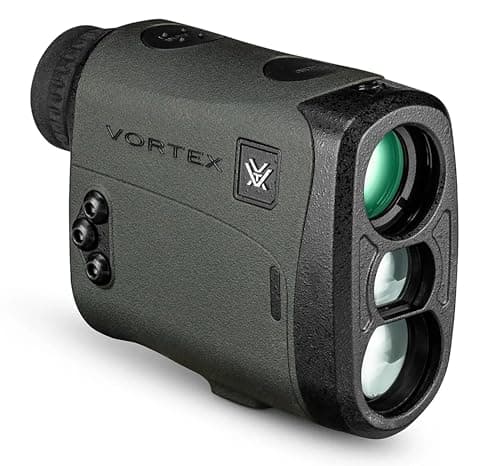
Vortex Sonora HD 1800 Laser Rangefinder
The pick if the hunter shoots steep terrain or long distances, which is where this feature earns real money rather than a yard. Vortex publishes the Sonora HD 1800 with HCD - horizontal component distance - which is Vortex's name for displaying the angle-compensated horizontal number rather than the line-of-sight one, out to a published 1,800-yard maximum. The reason to buy the compensation on this unit specifically is the range: at 600 yards across a canyon the correction is tens of yards, and tens of yards of error at that distance is feet of bullet drop. It also carries the Vortex warranty, which is the brand's genuine differentiator on anything optical. Honest cons: it is the most expensive rangefinder we list, and a whitetail bowhunter who ranges nothing past 40 yards is paying for reach they will never use; published maximums are quoted against reflective targets rather than deer hide; and HCD mode means you are trusting the unit's inclinometer, which you cannot sanity-check in the field.
#ad · Price as of October 17, 2026. We may earn a commission.
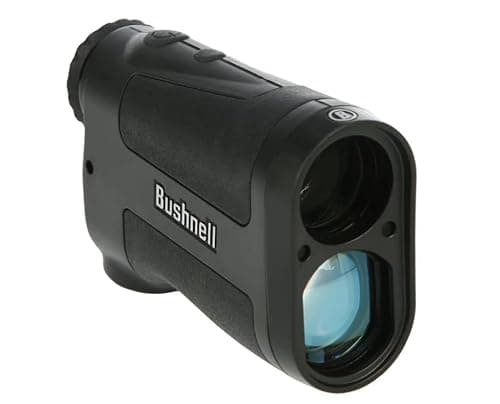
Bushnell Legend 6x24 1200-Yard Rangefinder
The pick for a buyer who wants a recognized optics name and angle compensation in the same unit without premium money. Bushnell publishes this Legend 6x24 with ARC - Angle Range Compensation - and a 1,200-yard maximum range, which makes it the cheapest pick here that states the feature outright. For a treestand hunter this is the sensible middle: ARC covers the close, steep shots where the correction genuinely matters, 6x magnification is plenty for ranging a deer inside a hundred yards, and the brand means a gift recipient recognizes what they have been given. Honest cons: the glass and the readout are basic compared with the Vortex, which shows most at dusk when you most want to range; the published 1,200-yard figure is a reflective-target number and real performance on an animal is far shorter; and the listing publishes range and ARC but not the scan or speed modes some cheaper units advertise.
#ad · Price as of October 17, 2026. We may earn a commission.
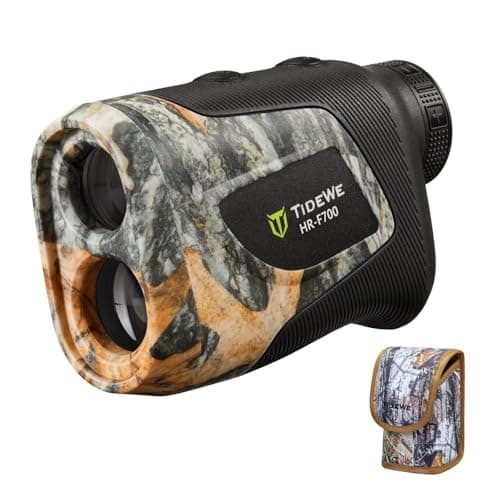
TIDEWE Hunting Rangefinder
The pick when the budget is the binding constraint and you still want the compensation, which for a treestand bowhunter is a perfectly rational priority order. TIDEWE publishes this unit with angle compensation at a price that sits well under $100, and the honest argument for it is the one this page has been making: the correction that matters to a whitetail bowhunter happens at ten to twenty yards from a stand, and measuring that correctly does not require premium glass or a thousand yards of reach. It is also the easiest of the three to justify as a gift for somebody who may or may not use a rangefinder much. Honest cons: budget rangefinders give up optical quality and readout brightness first, and a dim readout against a dark deer at last light is the exact moment you need it; the published maximum range is a reflective-target figure and will be far shorter in practice; and build quality and weather sealing are where the savings come from.
#ad · Price as of October 17, 2026. We may earn a commission.
Do the correction yourself, for free
You do not need a compensating rangefinder to get the right number, and knowing this is useful whether you own one or not. Two methods, both of which cost nothing.
Range the base of the tree, not the deer.This is the treestand bowhunter's trick and it is exact rather than approximate. The horizontal distance from your stand to the animal is the same as the horizontal distance from the base of your tree to the animal — so range from the ground before you climb, or range a landmark at the animal's position and you have the number gravity cares about with no arithmetic at all.
Pre-range your shooting lanes.Before daylight, range the three or four spots a deer is actually likely to stand — the trail crossing, the edge of the plot, the scrape — from the ground on the way in. Then the shot requires no ranging, no angle, no button press and no light on a display. Every experienced stand hunter does this, and it is better than any feature you can buy.
The archery cut chart problem
One honest complication, because it is the thing that confuses people who have read about "cut charting". For very steep shots the cosine correction is a good approximation rather than a perfect answer, because an arrow's flight path is a curve rather than a straight line and a severely angled shot also changes the effective shape of the vital area you are aiming at. The practical consequence is not that compensation is useless — it gets you far closer than the raw line-of-sight number ever does — it is that very steep, very close shots are difficult shots for reasons beyond arithmetic, and the honest answer is often to let the deer walk a few steps further out.
Where these numbers come from
We do not run a test lab and we have not ranged anything with a measuring tape. The compensated distances in the table on this page are the cosine arithmetic above applied to stated stand heights and distances — they are geometry, not measurement, and you can check every row yourself. Every feature claim about a specific rangefinder (HCD, ARC, maximum range, magnification) is the manufacturer's own published specification, cited below. Nothing here has a score or an award from us. Our method is on the how we choose page.
Keep browsing
Best rangefinder for bow hunting is the roundup for the hunter this feature matters most to, and best hunting rangefinders is the general one. Do you need a rangefinder for hunting is the honest prior question, and hunting vs golf rangefindercovers the cheapest adjacent mistake — a golf unit measures the slope-adjusted number too, and is built around assumptions that do not hold in the woods. If the budget is the constraint, the best hunting rangefinder under $100 covers that bracket properly.
Frequently asked questions
What is angle compensation on a rangefinder?
It is the rangefinder measuring the angle to your target with a built-in inclinometer and showing you the horizontal distance instead of the straight-line distance. That matters because gravity acts over the horizontal leg of the triangle, so the line-of-sight number is always longer than the shot actually is on any angled shot. Vortex calls it HCD, Bushnell calls it ARC, and some listings just say slope or angle compensation.
How much difference does angle compensation make from a treestand?
Less than you would think at normal distances, and a great deal when the animal is close. At 20 yards from a 20-foot stand the correction is about a yard, which nobody notices. At 10 yards directly below that same stand it is more than two and a half yards, which with a 20-yard pin is a clean miss. Stand height matters far less than how close the deer is.
Do I need angle compensation for deer hunting?
If you bowhunt from a treestand and take close shots, it is genuinely useful. If you hunt flat ground, hunt from a blind or a ground seat, or shoot a rifle at moderate range, it will change nothing you do - a flat-shooting rifle inside 200 yards absorbs a yard or two of range error without noticing. Spend the money on glass clarity and a readout you can see at dusk instead.
How do you calculate angle-compensated distance?
Multiply the line-of-sight distance by the cosine of the angle. A 15-yard reading at 42 degrees is 15 x cos(42) = about 11.1 yards horizontally. That single multiplication is exactly what a compensating rangefinder does internally, which is why you can check any figure a rangefinder gives you.
Can I get the right distance without a compensating rangefinder?
Yes, and the method is better than the feature. Range the base of your tree to the animal rather than your stand to the animal - the horizontal distance is identical, so it needs no arithmetic and no inclinometer. Better still, range your shooting lanes from the ground on the way in, before daylight, and the shot needs no ranging at all.
Is HCD the same as ARC?
They are two brands' names for the same idea. HCD is Vortex's Horizontal Component Distance and ARC is Bushnell's Angle Range Compensation; both use an inclinometer to report the horizontal distance rather than the line-of-sight distance. Check which reading a given unit shows by default, because one that needs a mode switch is one that will give you the wrong number on a hurried shot.
Sources
- Vortex Optics - published specifications for the Sonora HD 1800 laser rangefinder: HCD (horizontal component distance) mode, 1,800-yard maximum range
- Bushnell - published specifications for the Legend 6x24 rangefinder: ARC (Angle Range Compensation), 1,200-yard maximum range
- TIDEWE - published specifications for the hunting rangefinder, including angle compensation