Gear Guides
The Best Elk Hunting Gear
Elk hunting punishes gear in a way whitetail hunting never does: miles of vertical, hours behind glass, and a pack-out that can weigh more than you do. Here is the kit that actually decides whether the hunt works, ranked by what fails first.
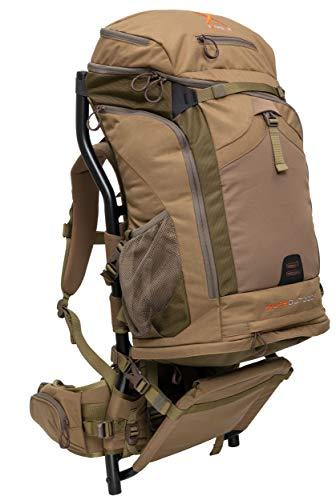
The verdict: the ALPS OutdoorZ Extreme Trophy X frame and pack bagis the first thing to buy, and it is for the hunter planning a DIY or public-land elk hunt where the animal has to come out on their back. ALPS publishes it as a freighter frame with a pack bag and a load shelf for lashing a boned-out quarter to, and that is the difference that matters — a day pack carries your gear, a freighter frame carries meat. The budget pick is the Darn Tough hunting boot sock, which is the cheapest item on this page and prevents the single most common reason an elk hunt ends on day two: feet that blistered on day one.
Elk gear lists usually read like a shopping spree. The useful way to think about it is failure-first: what actually sends people home early is, in order, feet, then the inability to carry the animal out, then not being able to find elk at all because you cannot sit behind glass long enough to spot them. Everything below is on this page because it addresses one of those three, and the order reflects it.
One honest caveat.This is not a backcountry sheep-camp list and it does not pretend to be — there is no tent, no stove and no water filter here, because those are camping decisions rather than hunting ones. What this covers is the hunting half: carrying, seeing, ranging and staying on your feet. Prices are pulled live and dated.
- 1ALPS OutdoorZ Extreme Trophy X + Pack BagThe pick, and the one item on this list a whitetail hunter genuinely cannot substitute for. ALPS publishes the Extreme Trophy X as an aluminum freighter frame with a pack bag and a load shelf, and the load shelf is the whole argument: it sits between the frame and the bag so a boned-out quarter can be lashed directly against the frame, close to your spine and high, which is the only geometry in which a hundred pounds is carryable at all. A day pack with a heavy load hanging off the back rotates you backwards and destroys your lower back in half a mile. The second thing a freighter buys you is modularity - the bag comes off for a day hunt and goes back on for the pack-out, so one purchase covers both roles instead of two packs you only half use. An elk is four to six trips for one hunter, and the frame is what makes those trips survivable. Honest cons: it is the most expensive item here by a wide margin and it is overkill for anyone who is not actually packing meat - a whitetail hunter will never use the load shelf. An external frame is bulkier and catches brush in a way an internal frame does not, which is a real nuisance in thick timber. It is heavier empty than a day pack. And the frame does not make the weight lighter, only carryable: the first elk pack-out is still the hardest physical thing most hunters ever do.Best for: Best overall - for the hunter packing an elk out on foot
- 2
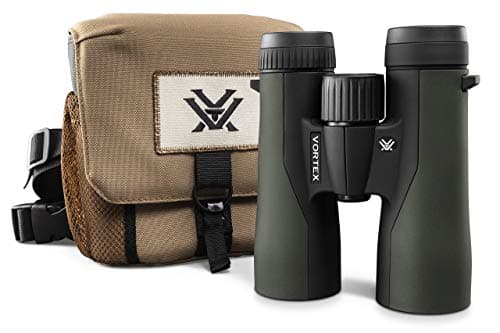 Vortex Crossfire HD 10x42 BinocularsThe pick for the job that actually finds elk, which is sitting behind glass for hours rather than walking. Vortex publishes the Crossfire HD 10x42 with their unlimited lifetime warranty, and the specification is the right one for elk: 10x gives the magnification to pick a bedded animal out of a black timber edge a mile off, and the 42mm objective keeps the exit pupil large enough to still be useful in the first and last light when elk actually move. The honest reason this is the pick rather than the pricier Diamondback is that the limiting factor in elk glassing is almost never the glass - it is whether you can keep your eyes behind it for three hours without a headache, and both of these are good enough that the difference is small next to the price gap. The lifetime warranty is the other half: Vortex's no-questions policy means a hunting binocular that gets dropped on a rock slide is a replacement rather than a write-off. Honest cons: 10x is harder to hold steady by hand than 8x, and over a long glassing session the shake is genuinely tiring - this specification wants a harness, a tripod or at minimum something to brace against. It is noticeably heavier than a compact. The HD designation is a product tier rather than a measurement, so do not read it as a spec. And if you glass in genuinely dark timber rather than open parks, the bigger objective and better coatings on premium glass do earn their money.Best for: Best glass for the money - for a hunter glassing open country all day
- 3
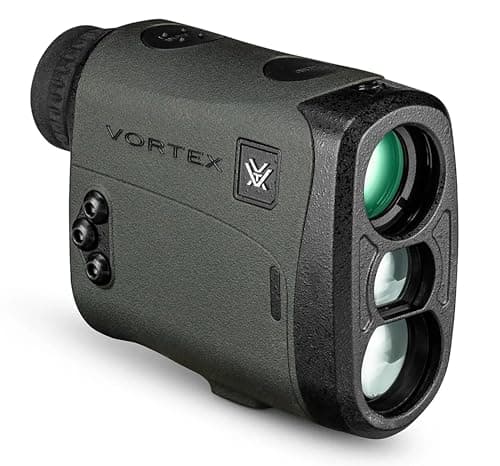 Vortex Sonora HD 1800 Laser RangefinderThe pick because elk country is the terrain where guessing range fails worst. Vortex publishes the Sonora HD 1800 as ranging past a thousand yards with angle compensation, and angle compensation is the feature that matters in the mountains rather than the headline distance: shooting steeply uphill or downhill, the line-of-sight distance your eye estimates is longer than the horizontal distance gravity actually acts over, and in steep country that difference is large enough to miss or wound an animal. A unit that does the arithmetic for you removes a mistake that is very easy to make and impossible to take back. The long maximum range is not about shooting a thousand yards - it is about having enough reach to range a landmark across a basin while you plan a stalk, which is how a rangefinder actually gets used on an elk hunt. Honest cons: it is a premium price for a single-purpose tool, and plenty of elk are killed inside a hundred yards where none of this matters. Laser rangefinders struggle on a dark brown animal in shadow, which is exactly the target you want - range a rock or a tree beside it instead. It needs a battery you will forget to check. And no rangefinder makes a long shot ethical: knowing the number does not mean you can make the shot.Best for: Best rangefinder - for mountains where distance and angle both lie
- 4
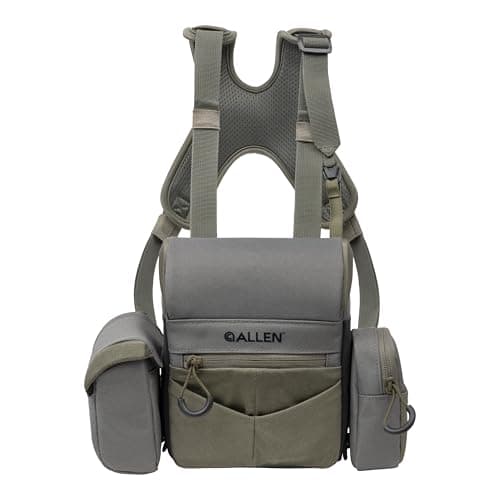 Allen Company Altitude Bino HarnessThe pick for the accessory that turns a good binocular into one you will actually use. Allen publishes the Altitude as a bino harness with a dedicated tethered rangefinder pouch, and the two problems it solves are both specific to mountain hunting. First, a binocular on a neck strap swings into your chest on every step of a steep climb and bangs against rock when you scramble, which is both exhausting and how glass gets wrecked - a harness holds it still against your sternum. Second, on an elk hunt you reach for the binocular and the rangefinder in immediate succession, and the tethered rangefinder pouch is the pocket most harnesses leave out, so the rangefinder otherwise lives in a pack where it is useless. Carrying both on your chest is the difference between glassing a basin properly and glancing at it. Honest cons: a chest harness sits exactly where a rifle sling or a bow riser wants to be, and for some hunters that interference is a genuine annoyance. It is another layer of insulation on your chest, which is welcome in November and not in September. The enclosed designs protect better than this open style does in rain and dust. And a harness is only worth buying once you own glass worth protecting.Best for: Best harness - for the hunter who glasses from the hip, not the neck
- 5
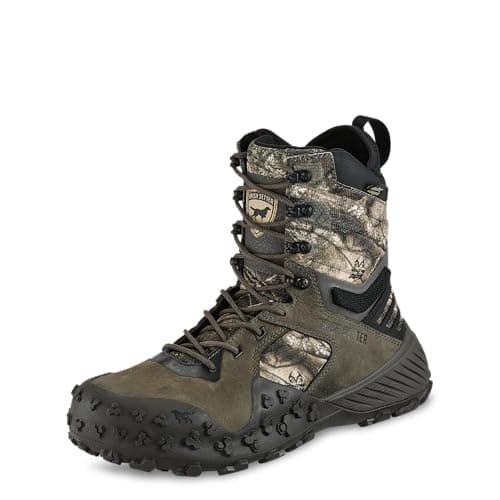 Irish Setter Men's Hunting BootsThe pick for the half of an elk hunt that happens before you see an elk. Irish Setter publishes these as waterproof insulated hunting boots, and for mountain hunting the two attributes that matter are the ones most hunters compromise: a stiff enough sole to edge on sidehill and carry a loaded pack without the arch collapsing, and genuine waterproofing for the creek crossings and wet morning grass that otherwise soak your feet in the first hour. A soft, flexible boot that is comfortable for walking to a whitetail stand is actively dangerous under a hundred-pound pack on scree, because the sole flexes and your ankle takes the load. Irish Setter is also a name with a long track record in hunting boots specifically, which matters when the alternative is a hiking boot with no weather sealing. Honest cons: this is the single hardest item on this page to buy for somebody else, because boot fit is individual and getting it wrong is worse than not buying boots - check the size and the width first, always. Insulated boots are too warm for a September archery elk hunt in the desert, where you want an uninsulated boot. They need breaking in, which is weeks of work before a hunt and not a thing you do during one. And no boot prevents blisters on its own, which is the next pick.Best for: Best boots - for the hunter covering real vertical
- 6
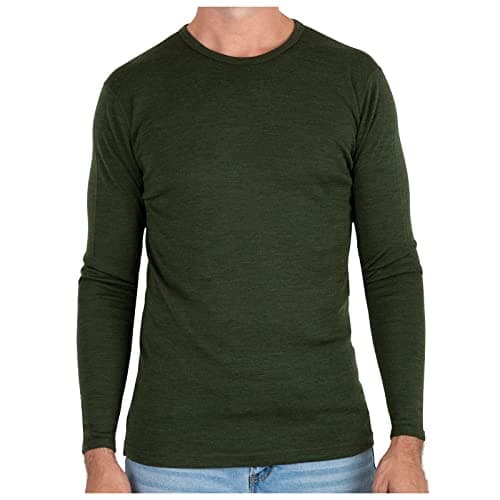 MERIWOOL Merino Wool Base Layer TopThe pick for the clothing problem elk hunting creates more sharply than any other kind of hunting. You climb a thousand feet in the dark and arrive soaked, then sit still behind glass in the wind for three hours as the sun comes up. MERIWOOL publishes this as a midweight merino base layer, and merino is the fibre that survives that cycle: it keeps insulating while it is damp, where a synthetic of the same weight goes cold and clammy the moment you stop moving. The odour resistance matters here in a way it does not on a day hunt - a merino layer can be worn for five or six days of a backcountry trip without becoming unbearable, which means one layer instead of a pack full of shirts. Honest cons: merino is the most expensive fibre per garment, it dries slowly once genuinely soaked through, and it wears thin under pack straps faster than a synthetic - which is a real consideration when the pack in question is a loaded freighter frame. It needs cool washing and no dryer. And a base layer is the bottom of a system: on its own it is not a cold-weather solution, and it does not replace a shell.Best for: Best layer - for the sweat-then-sit cycle of a mountain hunt
- 7
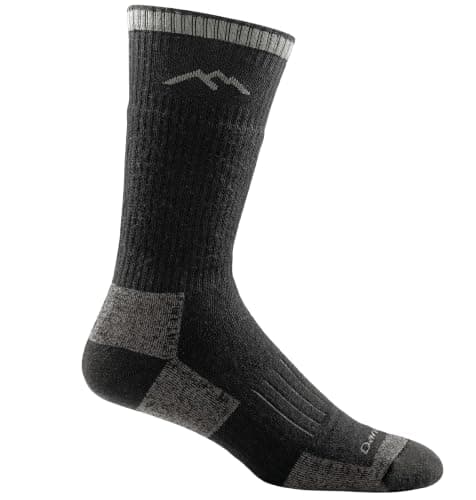 Darn Tough Hunting Boot Sock (2012)The honest cheap answer, and per dollar the highest-return purchase on this page. More elk hunts end early because of feet than because of anything else on this list - a blister on day one of a five-day hunt in steep country is not an inconvenience, it is the end of the hunt, and no frame pack or binocular helps you then. Darn Tough publishes these as midweight full-cushion merino hunting boot socks, and the two things doing the work are the merino, which moves moisture off skin so the foot is not sitting wet inside a waterproof boot, and the cushioned knit, which takes the repeated impact of descending with a loaded pack. Darn Tough also publishes an unconditional lifetime guarantee on its socks, which it states plainly on its own site: if they are not the most comfortable, durable, best-fitting socks, the company replaces them. For the cost of a tank of gas this is the most sensible money on this page. Honest cons: they cost several times what a bulk pack of cotton work socks costs, and for a hunter who sits in a heated blind that premium buys nothing. Heavyweight or cushioned socks need boot room - adding them to boots sized for thin socks compresses the air gap that insulates and makes feet colder. They dry slowly when soaked. And the guarantee is a replacement policy, not a repair one, so it is only useful if you actually send them in.Best for: Budget pick - the cheapest thing that stops an elk hunt ending on day two
| # | Gift | Best for | Price |
|---|---|---|---|
| 1 | ALPS OutdoorZ Extreme Trophy X + Pack BagThe pick, and the one item on this list a whitetail hunter genuinely cannot substitute for. ALPS publishes the Extreme Trophy X as an aluminum freighter frame with a pack bag and a load shelf, and the load shelf is the whole argument: it sits between the frame and the bag so a boned-out quarter can be lashed directly against the frame, close to your spine and high, which is the only geometry in which a hundred pounds is carryable at all. A day pack with a heavy load hanging off the back rotates you backwards and destroys your lower back in half a mile. The second thing a freighter buys you is modularity - the bag comes off for a day hunt and goes back on for the pack-out, so one purchase covers both roles instead of two packs you only half use. An elk is four to six trips for one hunter, and the frame is what makes those trips survivable. Honest cons: it is the most expensive item here by a wide margin and it is overkill for anyone who is not actually packing meat - a whitetail hunter will never use the load shelf. An external frame is bulkier and catches brush in a way an internal frame does not, which is a real nuisance in thick timber. It is heavier empty than a day pack. And the frame does not make the weight lighter, only carryable: the first elk pack-out is still the hardest physical thing most hunters ever do. | Best overall - for the hunter packing an elk out on foot | $359.99View on Amazon |
| 2 | Vortex Crossfire HD 10x42 BinocularsThe pick for the job that actually finds elk, which is sitting behind glass for hours rather than walking. Vortex publishes the Crossfire HD 10x42 with their unlimited lifetime warranty, and the specification is the right one for elk: 10x gives the magnification to pick a bedded animal out of a black timber edge a mile off, and the 42mm objective keeps the exit pupil large enough to still be useful in the first and last light when elk actually move. The honest reason this is the pick rather than the pricier Diamondback is that the limiting factor in elk glassing is almost never the glass - it is whether you can keep your eyes behind it for three hours without a headache, and both of these are good enough that the difference is small next to the price gap. The lifetime warranty is the other half: Vortex's no-questions policy means a hunting binocular that gets dropped on a rock slide is a replacement rather than a write-off. Honest cons: 10x is harder to hold steady by hand than 8x, and over a long glassing session the shake is genuinely tiring - this specification wants a harness, a tripod or at minimum something to brace against. It is noticeably heavier than a compact. The HD designation is a product tier rather than a measurement, so do not read it as a spec. And if you glass in genuinely dark timber rather than open parks, the bigger objective and better coatings on premium glass do earn their money. | Best glass for the money - for a hunter glassing open country all day | $149.00View on Amazon |
| 3 | Vortex Sonora HD 1800 Laser RangefinderThe pick because elk country is the terrain where guessing range fails worst. Vortex publishes the Sonora HD 1800 as ranging past a thousand yards with angle compensation, and angle compensation is the feature that matters in the mountains rather than the headline distance: shooting steeply uphill or downhill, the line-of-sight distance your eye estimates is longer than the horizontal distance gravity actually acts over, and in steep country that difference is large enough to miss or wound an animal. A unit that does the arithmetic for you removes a mistake that is very easy to make and impossible to take back. The long maximum range is not about shooting a thousand yards - it is about having enough reach to range a landmark across a basin while you plan a stalk, which is how a rangefinder actually gets used on an elk hunt. Honest cons: it is a premium price for a single-purpose tool, and plenty of elk are killed inside a hundred yards where none of this matters. Laser rangefinders struggle on a dark brown animal in shadow, which is exactly the target you want - range a rock or a tree beside it instead. It needs a battery you will forget to check. And no rangefinder makes a long shot ethical: knowing the number does not mean you can make the shot. | Best rangefinder - for mountains where distance and angle both lie | $184.87View on Amazon |
| 4 | Allen Company Altitude Bino HarnessThe pick for the accessory that turns a good binocular into one you will actually use. Allen publishes the Altitude as a bino harness with a dedicated tethered rangefinder pouch, and the two problems it solves are both specific to mountain hunting. First, a binocular on a neck strap swings into your chest on every step of a steep climb and bangs against rock when you scramble, which is both exhausting and how glass gets wrecked - a harness holds it still against your sternum. Second, on an elk hunt you reach for the binocular and the rangefinder in immediate succession, and the tethered rangefinder pouch is the pocket most harnesses leave out, so the rangefinder otherwise lives in a pack where it is useless. Carrying both on your chest is the difference between glassing a basin properly and glancing at it. Honest cons: a chest harness sits exactly where a rifle sling or a bow riser wants to be, and for some hunters that interference is a genuine annoyance. It is another layer of insulation on your chest, which is welcome in November and not in September. The enclosed designs protect better than this open style does in rain and dust. And a harness is only worth buying once you own glass worth protecting. | Best harness - for the hunter who glasses from the hip, not the neck | $69.99View on Amazon |
| 5 | Irish Setter Men's Hunting BootsThe pick for the half of an elk hunt that happens before you see an elk. Irish Setter publishes these as waterproof insulated hunting boots, and for mountain hunting the two attributes that matter are the ones most hunters compromise: a stiff enough sole to edge on sidehill and carry a loaded pack without the arch collapsing, and genuine waterproofing for the creek crossings and wet morning grass that otherwise soak your feet in the first hour. A soft, flexible boot that is comfortable for walking to a whitetail stand is actively dangerous under a hundred-pound pack on scree, because the sole flexes and your ankle takes the load. Irish Setter is also a name with a long track record in hunting boots specifically, which matters when the alternative is a hiking boot with no weather sealing. Honest cons: this is the single hardest item on this page to buy for somebody else, because boot fit is individual and getting it wrong is worse than not buying boots - check the size and the width first, always. Insulated boots are too warm for a September archery elk hunt in the desert, where you want an uninsulated boot. They need breaking in, which is weeks of work before a hunt and not a thing you do during one. And no boot prevents blisters on its own, which is the next pick. | Best boots - for the hunter covering real vertical | $151.96View on Amazon |
| 6 | MERIWOOL Merino Wool Base Layer TopThe pick for the clothing problem elk hunting creates more sharply than any other kind of hunting. You climb a thousand feet in the dark and arrive soaked, then sit still behind glass in the wind for three hours as the sun comes up. MERIWOOL publishes this as a midweight merino base layer, and merino is the fibre that survives that cycle: it keeps insulating while it is damp, where a synthetic of the same weight goes cold and clammy the moment you stop moving. The odour resistance matters here in a way it does not on a day hunt - a merino layer can be worn for five or six days of a backcountry trip without becoming unbearable, which means one layer instead of a pack full of shirts. Honest cons: merino is the most expensive fibre per garment, it dries slowly once genuinely soaked through, and it wears thin under pack straps faster than a synthetic - which is a real consideration when the pack in question is a loaded freighter frame. It needs cool washing and no dryer. And a base layer is the bottom of a system: on its own it is not a cold-weather solution, and it does not replace a shell. | Best layer - for the sweat-then-sit cycle of a mountain hunt | $65.00View on Amazon |
| 7 | Darn Tough Hunting Boot Sock (2012)The honest cheap answer, and per dollar the highest-return purchase on this page. More elk hunts end early because of feet than because of anything else on this list - a blister on day one of a five-day hunt in steep country is not an inconvenience, it is the end of the hunt, and no frame pack or binocular helps you then. Darn Tough publishes these as midweight full-cushion merino hunting boot socks, and the two things doing the work are the merino, which moves moisture off skin so the foot is not sitting wet inside a waterproof boot, and the cushioned knit, which takes the repeated impact of descending with a loaded pack. Darn Tough also publishes an unconditional lifetime guarantee on its socks, which it states plainly on its own site: if they are not the most comfortable, durable, best-fitting socks, the company replaces them. For the cost of a tank of gas this is the most sensible money on this page. Honest cons: they cost several times what a bulk pack of cotton work socks costs, and for a hunter who sits in a heated blind that premium buys nothing. Heavyweight or cushioned socks need boot room - adding them to boots sized for thin socks compresses the air gap that insulates and makes feet colder. They dry slowly when soaked. And the guarantee is a replacement policy, not a repair one, so it is only useful if you actually send them in. | Budget pick - the cheapest thing that stops an elk hunt ending on day two | $29.95View on Amazon |
Prices from Amazon as of November 24, 2026 and change often — the button always opens the current listing. Some links earn us a commission at no extra cost to you.
ALPS OutdoorZ Extreme Trophy X + Pack Bag
The pick, and the one item on this list a whitetail hunter genuinely cannot substitute for. ALPS publishes the Extreme Trophy X as an aluminum freighter frame with a pack bag and a load shelf, and the load shelf is the whole argument: it sits between the frame and the bag so a boned-out quarter can be lashed directly against the frame, close to your spine and high, which is the only geometry in which a hundred pounds is carryable at all. A day pack with a heavy load hanging off the back rotates you backwards and destroys your lower back in half a mile. The second thing a freighter buys you is modularity - the bag comes off for a day hunt and goes back on for the pack-out, so one purchase covers both roles instead of two packs you only half use. An elk is four to six trips for one hunter, and the frame is what makes those trips survivable. Honest cons: it is the most expensive item here by a wide margin and it is overkill for anyone who is not actually packing meat - a whitetail hunter will never use the load shelf. An external frame is bulkier and catches brush in a way an internal frame does not, which is a real nuisance in thick timber. It is heavier empty than a day pack. And the frame does not make the weight lighter, only carryable: the first elk pack-out is still the hardest physical thing most hunters ever do.
#ad · Price as of November 24, 2026. We may earn a commission.
Vortex Crossfire HD 10x42 Binoculars
The pick for the job that actually finds elk, which is sitting behind glass for hours rather than walking. Vortex publishes the Crossfire HD 10x42 with their unlimited lifetime warranty, and the specification is the right one for elk: 10x gives the magnification to pick a bedded animal out of a black timber edge a mile off, and the 42mm objective keeps the exit pupil large enough to still be useful in the first and last light when elk actually move. The honest reason this is the pick rather than the pricier Diamondback is that the limiting factor in elk glassing is almost never the glass - it is whether you can keep your eyes behind it for three hours without a headache, and both of these are good enough that the difference is small next to the price gap. The lifetime warranty is the other half: Vortex's no-questions policy means a hunting binocular that gets dropped on a rock slide is a replacement rather than a write-off. Honest cons: 10x is harder to hold steady by hand than 8x, and over a long glassing session the shake is genuinely tiring - this specification wants a harness, a tripod or at minimum something to brace against. It is noticeably heavier than a compact. The HD designation is a product tier rather than a measurement, so do not read it as a spec. And if you glass in genuinely dark timber rather than open parks, the bigger objective and better coatings on premium glass do earn their money.
#ad · Price as of November 24, 2026. We may earn a commission.
Vortex Sonora HD 1800 Laser Rangefinder
The pick because elk country is the terrain where guessing range fails worst. Vortex publishes the Sonora HD 1800 as ranging past a thousand yards with angle compensation, and angle compensation is the feature that matters in the mountains rather than the headline distance: shooting steeply uphill or downhill, the line-of-sight distance your eye estimates is longer than the horizontal distance gravity actually acts over, and in steep country that difference is large enough to miss or wound an animal. A unit that does the arithmetic for you removes a mistake that is very easy to make and impossible to take back. The long maximum range is not about shooting a thousand yards - it is about having enough reach to range a landmark across a basin while you plan a stalk, which is how a rangefinder actually gets used on an elk hunt. Honest cons: it is a premium price for a single-purpose tool, and plenty of elk are killed inside a hundred yards where none of this matters. Laser rangefinders struggle on a dark brown animal in shadow, which is exactly the target you want - range a rock or a tree beside it instead. It needs a battery you will forget to check. And no rangefinder makes a long shot ethical: knowing the number does not mean you can make the shot.
#ad · Price as of November 24, 2026. We may earn a commission.
Allen Company Altitude Bino Harness
The pick for the accessory that turns a good binocular into one you will actually use. Allen publishes the Altitude as a bino harness with a dedicated tethered rangefinder pouch, and the two problems it solves are both specific to mountain hunting. First, a binocular on a neck strap swings into your chest on every step of a steep climb and bangs against rock when you scramble, which is both exhausting and how glass gets wrecked - a harness holds it still against your sternum. Second, on an elk hunt you reach for the binocular and the rangefinder in immediate succession, and the tethered rangefinder pouch is the pocket most harnesses leave out, so the rangefinder otherwise lives in a pack where it is useless. Carrying both on your chest is the difference between glassing a basin properly and glancing at it. Honest cons: a chest harness sits exactly where a rifle sling or a bow riser wants to be, and for some hunters that interference is a genuine annoyance. It is another layer of insulation on your chest, which is welcome in November and not in September. The enclosed designs protect better than this open style does in rain and dust. And a harness is only worth buying once you own glass worth protecting.
#ad · Price as of November 24, 2026. We may earn a commission.
Irish Setter Men's Hunting Boots
The pick for the half of an elk hunt that happens before you see an elk. Irish Setter publishes these as waterproof insulated hunting boots, and for mountain hunting the two attributes that matter are the ones most hunters compromise: a stiff enough sole to edge on sidehill and carry a loaded pack without the arch collapsing, and genuine waterproofing for the creek crossings and wet morning grass that otherwise soak your feet in the first hour. A soft, flexible boot that is comfortable for walking to a whitetail stand is actively dangerous under a hundred-pound pack on scree, because the sole flexes and your ankle takes the load. Irish Setter is also a name with a long track record in hunting boots specifically, which matters when the alternative is a hiking boot with no weather sealing. Honest cons: this is the single hardest item on this page to buy for somebody else, because boot fit is individual and getting it wrong is worse than not buying boots - check the size and the width first, always. Insulated boots are too warm for a September archery elk hunt in the desert, where you want an uninsulated boot. They need breaking in, which is weeks of work before a hunt and not a thing you do during one. And no boot prevents blisters on its own, which is the next pick.
#ad · Price as of November 24, 2026. We may earn a commission.
MERIWOOL Merino Wool Base Layer Top
The pick for the clothing problem elk hunting creates more sharply than any other kind of hunting. You climb a thousand feet in the dark and arrive soaked, then sit still behind glass in the wind for three hours as the sun comes up. MERIWOOL publishes this as a midweight merino base layer, and merino is the fibre that survives that cycle: it keeps insulating while it is damp, where a synthetic of the same weight goes cold and clammy the moment you stop moving. The odour resistance matters here in a way it does not on a day hunt - a merino layer can be worn for five or six days of a backcountry trip without becoming unbearable, which means one layer instead of a pack full of shirts. Honest cons: merino is the most expensive fibre per garment, it dries slowly once genuinely soaked through, and it wears thin under pack straps faster than a synthetic - which is a real consideration when the pack in question is a loaded freighter frame. It needs cool washing and no dryer. And a base layer is the bottom of a system: on its own it is not a cold-weather solution, and it does not replace a shell.
#ad · Price as of November 24, 2026. We may earn a commission.
Darn Tough Hunting Boot Sock (2012)
The honest cheap answer, and per dollar the highest-return purchase on this page. More elk hunts end early because of feet than because of anything else on this list - a blister on day one of a five-day hunt in steep country is not an inconvenience, it is the end of the hunt, and no frame pack or binocular helps you then. Darn Tough publishes these as midweight full-cushion merino hunting boot socks, and the two things doing the work are the merino, which moves moisture off skin so the foot is not sitting wet inside a waterproof boot, and the cushioned knit, which takes the repeated impact of descending with a loaded pack. Darn Tough also publishes an unconditional lifetime guarantee on its socks, which it states plainly on its own site: if they are not the most comfortable, durable, best-fitting socks, the company replaces them. For the cost of a tank of gas this is the most sensible money on this page. Honest cons: they cost several times what a bulk pack of cotton work socks costs, and for a hunter who sits in a heated blind that premium buys nothing. Heavyweight or cushioned socks need boot room - adding them to boots sized for thin socks compresses the air gap that insulates and makes feet colder. They dry slowly when soaked. And the guarantee is a replacement policy, not a repair one, so it is only useful if you actually send them in.
#ad · Price as of November 24, 2026. We may earn a commission.
What actually ends elk hunts
Gear lists for elk tend to be written as aspiration. The more useful frame is failure. Ask anyone who has guided DIY hunters what sends people home and the order is consistent.
| What fails | How it ends the hunt | What fixes it |
|---|---|---|
| Feet | A day-one blister in steep country, five days to go | Merino cushioned socks, broken-in boots that fit |
| The pack-out | An animal down two miles in and no way to carry it | A freighter frame with a load shelf |
| Not finding elk | Glassing for twenty minutes instead of three hours | 10x42 glass on a harness, braced or tripod-mounted |
| Getting wet | Soaked on the climb, then motionless in wind | Merino next to skin, a real shell over it |
| Misjudged range | A steep-angle shot that was never the distance you thought | A rangefinder with angle compensation |
| Fitness | The honest one, and nothing here fixes it | Months of hill work before the season |
The last row is not a joke and it is the reason this page is ordered the way it is. No purchase on this site substitutes for arriving in condition to climb. What gear does is stop preventable problems from compounding on top of a hard hunt.
Why the pack is the first purchase, not the last
A whitetail hunter can carry everything they own in a day pack and drag the animal to a truck. Neither of those is available on an elk hunt. A mature bull is several hundred pounds of usable meat, and one hunter on foot is looking at four to six loaded trips, often with vertical in both directions.
That is why the frame matters more than the capacity. A load shelf puts weight against the frame, high and close to the spine, which is the only arrangement in which a very heavy load stays over your feet instead of levering you backwards. A big day pack with meat strapped outside the bag puts the weight behind you and wrecks your back.
If you are comparing capacities rather than frames, what size hunting pack do I need works through the litre question, and best hunting backpack for elk hunting is the dedicated pack roundup for this hunt. The general roundup is best hunting backpacks.
Glassing is the skill, not the binocular
Elk hunting is mostly looking. The hunters who find animals are the ones who sit down, pick the country apart in a grid, and stay there — which is a stamina problem as much as an optics one. Two practical consequences follow.
Brace the glass. Handheld 10x shakes enough to hide a bedded elk. Rest your elbows on your knees, use a pack as a prop, or run a tripod. This matters more than upgrading the binocular.
Get it off your neck. A harness is not an accessory on a mountain hunt. The binocular you reach for is the one on your chest; the one in your pack stays in your pack.
Best binoculars for elk hunting goes deeper on the optics choice itself, and best bino harness covers the carry options. If the 8x-versus-10x question is the one you are stuck on, see 8x42 vs 10x42 binoculars.
What this list deliberately leaves out
No tent, no sleeping system, no stove, no water filter. Those are camping purchases, they depend entirely on whether you are backpacking in or driving to a trailhead each morning, and a hunting site that pretends to rank them is guessing. No calls or decoys either: elk calling is a skill question long before it is a gear question, and a bugle tube in untrained hands pushes more elk out of a basin than it brings in.
No firearms or optics-for-firearms, which this site does not cover at all. And nothing for meat care beyond the pack, because the honest answer there is game bags and a cooler at the truck — see best hunting coolers and best skinning knives for that end of it.
Match the gear to the hunt
First DIY public-land elk hunt, animal comes out on your back. The ALPS Trophy X frame, then boots, then socks. In that order.
Hunting open country, struggling to find animals. The Vortex Crossfire HD 10x42 on the Allen Altitude harness, and learn to grid-glass.
Archery elk in September heat. The merino layer and the socks; skip the insulated boots and buy an uninsulated pair instead.
Steep country, rifle, long sight lines. The Vortex Sonora HD 1800 for the angle compensation.
Smallest budget, biggest return. The Darn Tough socks. Feet end more elk hunts than anything else on this page.
Frequently asked questions
What is the most important piece of elk hunting gear?
The pack, if the animal has to come out on your back - a freighter frame with a load shelf like the ALPS OutdoorZ Extreme Trophy X is the only kind of pack that makes a hundred-pound meat load carryable, because it holds the weight high and tight against the frame instead of hanging it behind you. Right behind it are boots that fit and merino socks, because feet end more elk hunts than gear failures do.
What size pack do I need for elk hunting?
Frame type matters more than litres. For a day hunt where you drive back to camp, a 40 to 60 litre pack is plenty; for a hunt where you will pack meat, what you need is an external or freighter frame with a load shelf, because that is the geometry that lets a very heavy load sit over your feet rather than levering you backwards. A big day pack with a quarter strapped to the outside is the common mistake and it is hard on a lower back.
Are 8x42 or 10x42 binoculars better for elk hunting?
10x42 for most elk hunting, because you are usually picking animals out of timber edges across open basins and the extra magnification genuinely helps. The trade is that 10x shakes more in the hand, which is tiring over a long glassing session - so if you buy 10x, plan to brace them on your knees, a pack or a tripod. If most of your glassing is in close dark timber, 8x is easier to hold and gives a brighter, wider picture.
Do I need a rangefinder for elk hunting?
In steep country, it earns its place - not for the maximum range on the box but for angle compensation. Shooting sharply uphill or downhill, the line-of-sight distance your eye estimates is longer than the horizontal distance that actually matters, and in mountains that gap is big enough to wound an animal. One caution: lasers struggle to read a dark brown elk in shadow, so range a rock or tree beside it instead.
What should I wear elk hunting?
Layers built around the sweat-then-sit cycle, because that cycle is sharper on an elk hunt than anywhere else: you climb hard in the dark, arrive soaked, and then sit motionless behind glass in the wind. Merino next to skin so you stay warm while damp, a fleece or insulation layer over it, and a real shell on top. Avoid cotton entirely. For September archery hunts, drop the insulation and the insulated boots - the heat is the problem, not the cold.
How much does a good elk hunting setup cost?
The pack, boots and glass are the three expensive items and together they are the bulk of any honest elk kit - the rest, including the harness, the socks and the base layer, is a small fraction of that. The prices on this page are pulled live and dated so you can total the list yourself rather than trust an estimate. The sensible way to build it is in failure order: socks and boots first, then the pack, then the glass.
Is elk hunting gear different from deer hunting gear?
Substantially, and the difference is carrying and covering ground. A whitetail hunter sits close to a truck and drags the animal out; an elk hunter climbs for miles, glasses for hours and makes several loaded trips with the meat. That changes the pack from a gear bag to a load carrier, raises the demands on boots and socks enormously, and makes optics and a harness central rather than optional. Most clothing crosses over; almost none of the carrying gear does.
Sources
- Amazon listing - ALPS OutdoorZ Extreme Trophy X + Pack Bag: published as an aluminum freighter frame with pack bag and load shelf
- Amazon listing - Vortex Crossfire HD 10x42 Binoculars: published with Vortex's unlimited lifetime warranty
- Amazon listing - Vortex Sonora HD 1800 Rangefinder: published ranging past 1,000 yards with angle compensation
- Amazon listing - Allen Company Altitude Bino Harness: published with a dedicated tethered rangefinder pouch
- Amazon listing - Irish Setter Men's Hunting Boots: published as waterproof insulated hunting boots
- Amazon listing - MERIWOOL Merino Wool Base Layer Top: published as a midweight merino wool base layer
- Darn Tough - company guarantee as published on its own site: "Unconditionally Guaranteed for Life" and "If our socks aren't the most comfortable, durable, best-fitting socks, we'll replace them"