Gear Guides
The Best Hunting Ear Protection Under $50
Electronic hearing protection used to be a serious purchase. It is not any more - the cheapest pair here amplifies quiet sound, cuts the shot, and costs less than a box of shells. Here is what fifty dollars buys, and the one thing it does not.
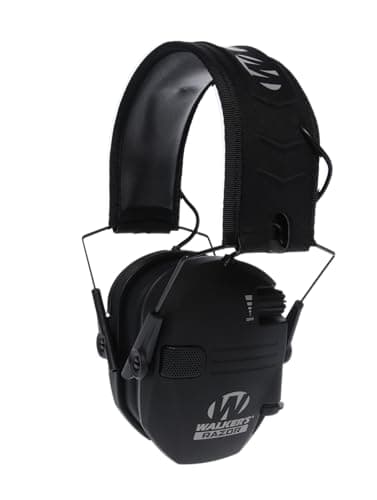
The verdict: the Walker's Razor Slim electronic muff is both the best pick and the cheapest pick on this page, which does not happen often enough to pass up. It is for the hunter who wants to hear a deer coming and still have their hearing tomorrow: the electronics amplify quiet woodland sound and clamp down on the shot, and the slim cup profile is the part that matters at a rifle — a thick muff gets shoved sideways by the stock when a hunter builds a cheek weld. Because it is the cheapest item here, it is also the budget pick; we are not going to invent a worse product to fill that slot.
If batteries are the objection — and for a lot of hunters they are — the Howard Leight Leightning L3 is the passive answer: nothing to switch on, nothing to go flat, a higher published noise reduction rating than the electronic pairs, and it will be exactly as good in ten years as it is today. And for a young or small-headed shooter the Walker's Razor Juniorexists for one honest reason, which is that an adult muff does not seal on a child's head and a muff that does not seal is decoration.
Three picks, because three is how many genuinely good options sit under fifty dollars in our catalogue, and padding a list with a fourth we would not buy would make this page worse. If your ceiling is a little higher, the full field — including the electronic muff most shooters consider the default and the in-ear sets duck hunters prefer — is in best hunting hearing protection. Prices here are pulled live and stamped with the date; the button is always the authority.
- 1Walker's Razor Slim Electronic MuffFor the hunter who actually wants to hear the woods. The Razor Slim is an electronic earmuff: microphones pick up ambient sound and feed it to speakers inside the cup, so leaves, footsteps and a turkey yelping get amplified while the gunshot is cut off before it reaches your ear. That is the feature that converts hunters who have always refused hearing protection, because the usual objection - 'I can't hear anything with muffs on' - is exactly backwards with electronics in. The slim cup is the second reason it is here: a low-profile muff is far less likely to be knocked out of position by a rifle stock when the hunter drops their cheek onto it, which is the most common way hearing protection fails in the field. Honest cons: it runs on batteries, so it can be flat on the morning you need it; electronic muffs amplify wind and rain as well as footsteps, which gets tiring on a blustery sit; and a slim cup trades some passive attenuation for that profile, so it is not the pair for a long session at a rifle range.Best for: Best overall and budget pick - cheapest here, and the one to buy
- 2
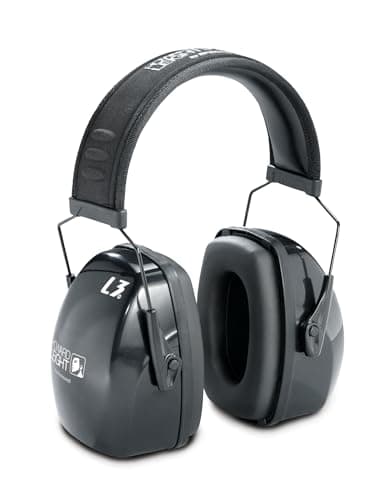 Howard Leight Leightning L3 Shooting EarmuffThe pick for a hunter who does not want a device. The Leightning L3 is a conventional passive shooting earmuff with a high published noise reduction rating - higher than the electronic muffs on this page - and that is the honest trade in this category: pure attenuation is cheap, hearing through it is what costs money. It suits sighting-in day, a range session, a dove field or a youth shooter's first clay outing, and it suits anyone who has had a battery die on them once and decided never again. It is also the pair to buy as a spare for the truck, because it will work in five years with no maintenance at all. Honest cons: it blocks the quiet sounds you hunt by as efficiently as it blocks the loud one, so a deer hunter will take it off and then forget to put it back on, which is a worse outcome than a slightly lower rating; the full-size cup is the kind a rifle stock shoves; and it is bulkier in a pack than it looks.Best for: Best passive pair - nothing to switch on, nothing to go flat
- 3
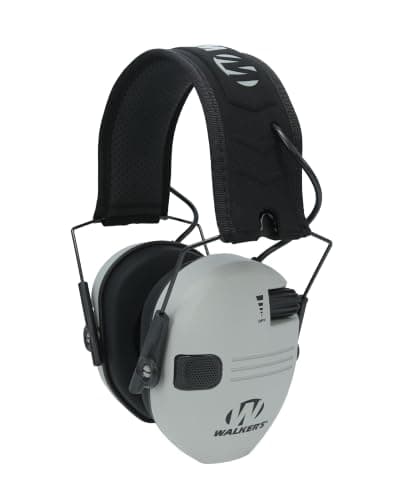 Walker's Razor Junior Youth Electronic MuffThis exists for a reason that has nothing to do with marketing to kids. Hearing protection works by sealing, and an adult muff on a child's head leaves a gap at the jaw that lets the shot straight in - so the published rating on the box becomes irrelevant and the parent believes the child is protected when they are not. The Razor Junior is a youth-sized electronic muff, so a young shooter gets both a proper seal and the amplification that lets them hear a range instruction or a parent's voice without lifting a cup. Buying it for a new young hunter is one of the genuinely important purchases on this site. Honest cons: a youth muff is outgrown, which makes it a shorter-lived purchase than an adult pair; it is the most expensive of these three despite being the smallest; and children lose things, so budget for the batteries and a replacement cable if it has one.Best for: Best for a youth or small-headed shooter
| # | Gift | Best for | Price |
|---|---|---|---|
| 1 | Walker's Razor Slim Electronic MuffFor the hunter who actually wants to hear the woods. The Razor Slim is an electronic earmuff: microphones pick up ambient sound and feed it to speakers inside the cup, so leaves, footsteps and a turkey yelping get amplified while the gunshot is cut off before it reaches your ear. That is the feature that converts hunters who have always refused hearing protection, because the usual objection - 'I can't hear anything with muffs on' - is exactly backwards with electronics in. The slim cup is the second reason it is here: a low-profile muff is far less likely to be knocked out of position by a rifle stock when the hunter drops their cheek onto it, which is the most common way hearing protection fails in the field. Honest cons: it runs on batteries, so it can be flat on the morning you need it; electronic muffs amplify wind and rain as well as footsteps, which gets tiring on a blustery sit; and a slim cup trades some passive attenuation for that profile, so it is not the pair for a long session at a rifle range. | Best overall and budget pick - cheapest here, and the one to buy | $30.31View on Amazon |
| 2 | Howard Leight Leightning L3 Shooting EarmuffThe pick for a hunter who does not want a device. The Leightning L3 is a conventional passive shooting earmuff with a high published noise reduction rating - higher than the electronic muffs on this page - and that is the honest trade in this category: pure attenuation is cheap, hearing through it is what costs money. It suits sighting-in day, a range session, a dove field or a youth shooter's first clay outing, and it suits anyone who has had a battery die on them once and decided never again. It is also the pair to buy as a spare for the truck, because it will work in five years with no maintenance at all. Honest cons: it blocks the quiet sounds you hunt by as efficiently as it blocks the loud one, so a deer hunter will take it off and then forget to put it back on, which is a worse outcome than a slightly lower rating; the full-size cup is the kind a rifle stock shoves; and it is bulkier in a pack than it looks. | Best passive pair - nothing to switch on, nothing to go flat | $39.15View on Amazon |
| 3 | Walker's Razor Junior Youth Electronic MuffThis exists for a reason that has nothing to do with marketing to kids. Hearing protection works by sealing, and an adult muff on a child's head leaves a gap at the jaw that lets the shot straight in - so the published rating on the box becomes irrelevant and the parent believes the child is protected when they are not. The Razor Junior is a youth-sized electronic muff, so a young shooter gets both a proper seal and the amplification that lets them hear a range instruction or a parent's voice without lifting a cup. Buying it for a new young hunter is one of the genuinely important purchases on this site. Honest cons: a youth muff is outgrown, which makes it a shorter-lived purchase than an adult pair; it is the most expensive of these three despite being the smallest; and children lose things, so budget for the batteries and a replacement cable if it has one. | Best for a youth or small-headed shooter | $51.98View on Amazon |
Prices from Amazon as of November 24, 2026 and change often — the button always opens the current listing. Some links earn us a commission at no extra cost to you.
Walker's Razor Slim Electronic Muff
For the hunter who actually wants to hear the woods. The Razor Slim is an electronic earmuff: microphones pick up ambient sound and feed it to speakers inside the cup, so leaves, footsteps and a turkey yelping get amplified while the gunshot is cut off before it reaches your ear. That is the feature that converts hunters who have always refused hearing protection, because the usual objection - 'I can't hear anything with muffs on' - is exactly backwards with electronics in. The slim cup is the second reason it is here: a low-profile muff is far less likely to be knocked out of position by a rifle stock when the hunter drops their cheek onto it, which is the most common way hearing protection fails in the field. Honest cons: it runs on batteries, so it can be flat on the morning you need it; electronic muffs amplify wind and rain as well as footsteps, which gets tiring on a blustery sit; and a slim cup trades some passive attenuation for that profile, so it is not the pair for a long session at a rifle range.
#ad · Price as of November 24, 2026. We may earn a commission.
Howard Leight Leightning L3 Shooting Earmuff
The pick for a hunter who does not want a device. The Leightning L3 is a conventional passive shooting earmuff with a high published noise reduction rating - higher than the electronic muffs on this page - and that is the honest trade in this category: pure attenuation is cheap, hearing through it is what costs money. It suits sighting-in day, a range session, a dove field or a youth shooter's first clay outing, and it suits anyone who has had a battery die on them once and decided never again. It is also the pair to buy as a spare for the truck, because it will work in five years with no maintenance at all. Honest cons: it blocks the quiet sounds you hunt by as efficiently as it blocks the loud one, so a deer hunter will take it off and then forget to put it back on, which is a worse outcome than a slightly lower rating; the full-size cup is the kind a rifle stock shoves; and it is bulkier in a pack than it looks.
#ad · Price as of November 24, 2026. We may earn a commission.
Walker's Razor Junior Youth Electronic Muff
This exists for a reason that has nothing to do with marketing to kids. Hearing protection works by sealing, and an adult muff on a child's head leaves a gap at the jaw that lets the shot straight in - so the published rating on the box becomes irrelevant and the parent believes the child is protected when they are not. The Razor Junior is a youth-sized electronic muff, so a young shooter gets both a proper seal and the amplification that lets them hear a range instruction or a parent's voice without lifting a cup. Buying it for a new young hunter is one of the genuinely important purchases on this site. Honest cons: a youth muff is outgrown, which makes it a shorter-lived purchase than an adult pair; it is the most expensive of these three despite being the smallest; and children lose things, so budget for the batteries and a replacement cable if it has one.
#ad · Price as of November 24, 2026. We may earn a commission.
What the fifty-dollar ceiling actually costs you
Being straight about this is more useful than pretending price does not matter. Under fifty dollars you give up four things, and only one of them affects whether your hearing is protected.
Sound quality through the electronics. This is the real difference. More expensive electronic muffs sound cleaner and less hissy, and they handle a gust of wind without roaring. A budget pair amplifies faithfully and also amplifies its own noise floor.
Bluetooth, radio and app control. Absent at this price, present on pairs a step up. Useful for a range day, irrelevant to a hunter sitting still in the dark.
Comfort over hours. Headband padding and clamping force are expensive to get right. Budget muffs are fine for a morning and start to ache on a long range session.
Battery life and build. Expect shorter runtimes and more plastic. Neither is a safety issue; both are an annoyance issue.
What you are not giving up is protection. A cheap muff that fits and seals protects your hearing. An expensive one that is knocked crooked by a rifle stock does not. Fit beats price in this category more decisively than in any other on this site.
Electronic or passive under $50?
This is the only real decision on the page, and it is decided by what the hunter is doing.
Electronic, if they are hunting. The entire problem with hearing protection in the field is that hunters take it off to listen, and then the shot arrives while it is hanging round their neck. Amplification removes the reason to take it off. That is worth more in practice than a couple of decibels on a label.
Passive, if they are shooting.Sighting in, a range session, a dove field, clay targets — situations with lots of shots and nothing quiet to listen for. Here pure attenuation is the whole job, and passive muffs do it better per dollar with nothing to charge.
Both, if the budget allows. They are cheap. A great many hunters keep electronics in the pack and a passive pair in the truck, and that is a genuinely sensible arrangement rather than a sales pitch. The long-form comparison is in earplugs vs earmuffs for hunting.
The NRR number, and why it is smaller than it looks
Every muff carries a noise reduction rating. It is a laboratory figure measured under ideal fit, and real-world protection is lower — which is why occupational-safety guidance derates published NRR rather than taking it at face value. The practical reading: a rating is a comparison tool between products, not a promise of how many decibels your ears will be spared.
Two consequences worth acting on. First, fit and seal matter more than the number, so long hair, glasses arms, a hat brim or a hood under the cup all cost you more protection than choosing a pair with a rating two decibels lower. Second, a single unprotected gunshot can do permanent damage, so the pair that gets worn beats the pair with the better label. We do the arithmetic properly, with published gunshot peak levels and the derating rule, in what NRR do I need for hunting.
The rifle-stock problem nobody mentions in the shop
Here is the failure that catches rifle hunters out. To shoot a rifle accurately you put your cheek on the stock, and the stock comes up right where the back edge of an earmuff cup sits. A full-size muff gets levered off the ear at exactly the moment the shot goes off. Hunters notice this, conclude that muffs and rifles do not mix, and stop wearing them.
Two fixes, both cheap. A slim-profile muff — the reason the Razor Slim is the top pick here — or in-ear protection, which has no cup to shove at all and is what duck hunters wearing hoods end up using. The in-ear case is argued in best hearing protection for duck hunting, and the shotgun version of the same problem shows up on every drive and dove field.
How we chose these
No test lab, no decibel meter, no invented field trials. Every figure referenced above is the manufacturer's own published rating, cited in the sources, and the picks are judged against what hearing protection has to do for a hunter: seal properly on the head it is bought for, survive a cheek weld, let a hunter keep listening so they do not take it off, and cost little enough that there is no excuse not to own a pair. Our method is on the how we choose page. Prices come from a live feed and are dated.
Match the pair to the shooter
They hunt deer or turkey and want to hear the woods. Razor Slim. The amplification is the whole point.
They mostly shoot clays, dove or at a range. The Leightning L3. More attenuation per dollar and no batteries to manage.
It is for a kid or a teenager.The Razor Junior, and do not be tempted by the adult pair because it looks like better value — it will not seal.
You are buying a gift and know nothing about their gear. Razor Slim. It works for almost every kind of hunting, needs no sizing, and most hunters still do not own electronic protection.
Keep browsing
The full field with no price ceiling is in best hunting hearing protection. For specific situations, see best hearing protection for duck hunting and best hearing protection for youth hunters. The two explainers worth ten minutes are do you need ear protection for hunting and what NRR do I need for hunting, and the model head-to-heads are Howard Leight vs Peltor Sport Tactical 500 and Howard Leight vs Walker's Razor.
Frequently asked questions
Can you get good hunting ear protection under $50?
Yes, including electronic muffs that amplify quiet sound and cut the gunshot. What a higher budget buys is cleaner-sounding electronics, Bluetooth or radio, better padding for long sessions and longer battery life - not protection. A cheap muff that fits and seals protects your hearing; an expensive one knocked crooked by a rifle stock does not.
Are electronic or passive earmuffs better for hunting?
Electronic for hunting, passive for shooting. The real-world problem with hearing protection in the field is that hunters take it off to listen and then the shot arrives while it is hanging round their neck - amplification removes the reason to take it off. For sighting in, a range session or a dove field, passive muffs give more attenuation per dollar with nothing to charge.
Why do earmuffs get knocked off when shooting a rifle?
Because a cheek weld puts the rifle stock exactly where the back edge of the ear cup sits, so a full-size muff gets levered off the ear at the moment of the shot. The fixes are a slim-profile muff - the reason the top pick here is the slim one - or in-ear protection, which has no cup for the stock to shove at all.
Is the NRR number on the box accurate?
It is a laboratory figure measured under ideal fit, and real-world protection is lower, which is why occupational-safety guidance derates published ratings rather than taking them at face value. Treat NRR as a way to compare products, not as a promise. Fit and seal matter more than a two-decibel difference on the label - glasses arms, a hat brim or a hood under the cup all cost you more than that.
Can a child use adult shooting earmuffs?
No, and this is the one place on the page where it genuinely matters. Protection depends on the cup sealing against the head, and an adult muff on a child leaves a gap at the jaw that lets the shot straight in - so the rating on the box becomes meaningless while the parent believes the child is protected. Buy a youth-sized pair.
Do you really need hearing protection for deer hunting if you only fire one shot?
Yes. Hearing damage from gunfire is caused by peak pressure rather than by duration, so a single unprotected shot can cause permanent loss - there is no safe number of free shots. The practical answer for a deer hunter is electronic protection, because it is the only kind that does not give you a reason to take it off while you listen.
Sources
- Walker's Game Ear - Razor Slim electronic muff, published description and noise reduction rating
- Howard Leight by Honeywell - Leightning L3 passive shooting earmuff, published noise reduction rating
- Walker's Game Ear - Razor Junior youth electronic muff, published description and youth sizing
- NIOSH - hearing protector noise reduction rating derating guidance