Gear Guides
Darn Tough Alternatives
Darn Tough socks cost what they cost because of a guarantee the company publishes in writing. Here is exactly what that guarantee says, which cheaper merino socks match the warmth and the moisture handling, and the one thing none of them can replace.
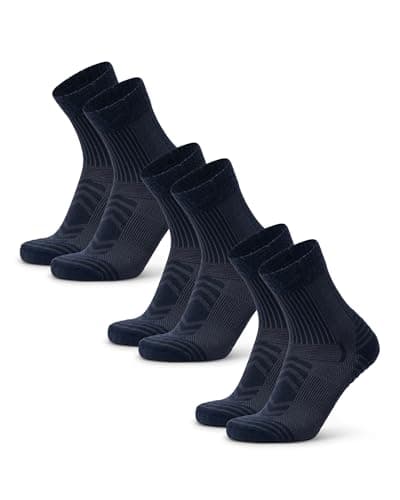
The verdict: the DANISH ENDURANCE Merino Hiking Socks multi-packis the alternative most people should buy, and it is for the hunter who needs several pairs rather than one perfect pair. It delivers the thing that actually matters in a hunting sock — merino against the skin, moving sweat off a foot inside a sealed boot — at a price per pair that lets you restock a drawer instead of rationing one pair. The budget pick is the Fox River Wick Dry Outlander boot sock two-pack, the cheapest option here, and it is a genuine recommendation: a thermalined mid-calf boot sock at stocking-stuffer money that gets worn hard and replaced without resentment.
What Darn Tough actually publishes.On its own site the company states “Unconditionally Guaranteed for Life,” and spells it out as: “If our socks aren't the most comfortable, durable, best-fitting socks, we'll replace them.” It also states that the socks are “Still Made in Vermont, USA” and links to its own mills there. That is the premium. It is not marketing vapour, and it is the one thing on this page that cannot be matched at a lower price.
So this is a page about what you are trading away. The merino performance of a good hunting sock is reproducible for much less money. The lifetime replacement policy is not. Everything below is priced live and dated so you can do that arithmetic yourself rather than take our word for it.
- 1DANISH ENDURANCE Merino Hiking Socks (Multi-Pack)The pick, and the honest answer to what most people are actually asking when they look for a Darn Tough alternative. DANISH ENDURANCE publishes these as merino wool hiking socks in a multi-pack, and the multi-pack is the whole argument: the performance that matters in a hunting sock comes from merino against the skin pulling sweat off a foot that is sealed inside a waterproof boot, and that property is present here. What changes is quantity. Several pairs for roughly the price of one premium pair means a hunter can put on dry socks at midday, wash a load without running out, and keep a spare pair in the pack - all of which do more for cold feet in practice than a single better sock does. Hunting socks also live a hard life in boots full of grit, and owning enough of them is a strategy rather than a compromise. Honest cons: these are hiking socks rather than purpose-built hunting socks, and the difference shows in the cuff height and the cushioning placement - a hunting sock is usually taller, to sit above a tall boot cuff rather than inside it, and this is the one place a dedicated hunting sock is better. The wool blend content is lower than a premium pure-merino sock, which means slightly less wet-warmth and noticeably less odour resistance over multiple days. There is no lifetime guarantee, which is the point of the page. And durability per pair is lower, which is why you buy several.Best for: Best alternative overall - for the hunter who needs several pairs
- 2
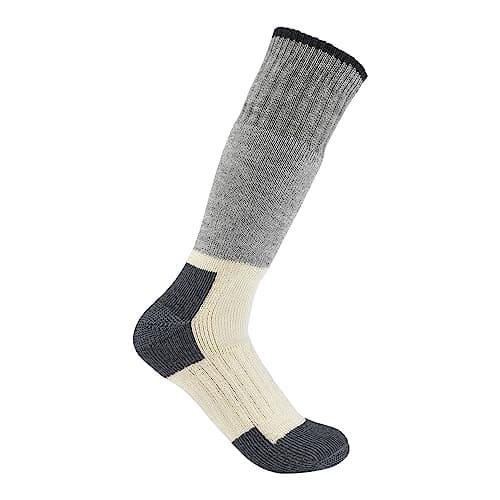 Carhartt Arctic Heavyweight Merino Blend Boot SockThe pick when the problem is temperature rather than price. Carhartt publishes this as an Arctic heavyweight merino wool blend boot sock, and heavyweight is the specification a stationary hunter actually wants - a midweight sock is the right choice for covering ground, where bulk means sweat, but a hunter sitting motionless in a stand at dawn needs thickness doing insulation work. That is a straightforwardly different product from a midweight hunting sock rather than a cheaper version of one, and for late-season sits it is the better buy at any price. The blend rather than pure merino is a sensible trade here: the synthetic content buys abrasion resistance and shape retention through repeated hot washes, and the small loss in wet-warmth matters less in a sock that is doing bulk insulation. Carhartt is also the one brand on this page almost every hunter already owns something from, which makes it the safest gift. Honest cons: heavyweight socks need boot room, and adding them to boots sized for thin socks compresses the air gap that does the insulating and makes feet colder - which is the most common cold-feet mistake there is. They are too warm for an early-season walk-in and will generate the sweat you are trying to avoid. They dry slowly once soaked. And a blend will not match pure merino for odour control across several days in the same pair.Best for: Best for cold sits - for the hunter who sits still, not the one who walks
- 3
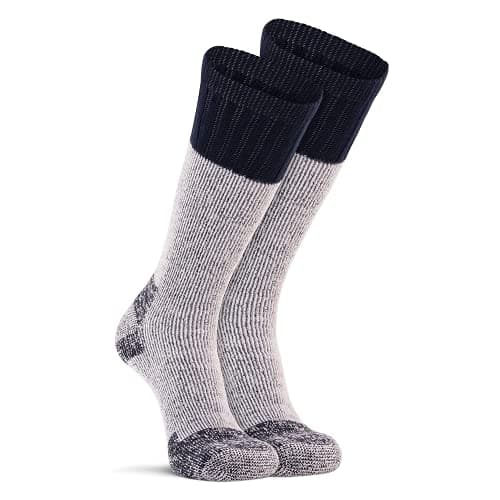 Fox River Wick Dry Outlander Boot Socks (2-Pack)The cheapest item on this page and the right answer for a hunter who wants warm socks without thinking about it. Fox River publishes the Wick Dry Outlander as a thermalined mid-calf boot sock in a two-pack, and 'thermalined' is the practical point - this is a sock built to be warm in a boot rather than a general-purpose sock that happens to be thick. Two pairs at this price means the sock becomes a consumable rather than an investment, which is a legitimate strategy: hunting socks get worn in boots full of grit and burrs, and plenty of hunters are better served by cheap socks replaced annually than by expensive socks nursed for a decade. For a first season, for a deer camp spare, or for somebody who genuinely will not notice the difference, this is the pick. Honest cons: this is a synthetic-forward construction rather than a merino one, and the difference is felt specifically when the sock is damp - it will feel colder and clammier than merino at the same thickness, and it will smell after one hard day rather than three. Durability is budget-level. Mid-calf is shorter than a dedicated tall hunting sock, so it can sit inside a tall boot cuff and rub. And there is no guarantee of any kind.Best for: Budget pick - the cheapest honest boot sock here
- 4
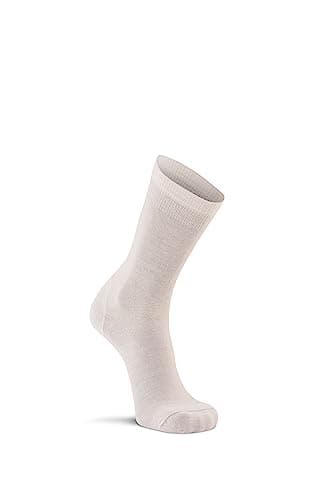 Fox River Castile Light Merino Liner SocksThe pick for a different approach entirely, and per dollar the best buy on this page. Fox River publishes the Castile Light as a lightweight merino wool crew liner sock, and a liner is not a cheaper boot sock - it is a second layer worn underneath one, doing a mechanical job rather than a thermal one. It sits between the foot and the boot sock so the two fabrics slide against each other instead of skin sliding against fabric, which moves sweat off the foot into the outer sock where it can evaporate and sharply reduces blister friction on a long walk in. The reason it belongs on an alternatives page is that for a hunter who already owns adequate boot socks, adding a merino liner costs a fraction of replacing them and delivers more of the actual benefit - because the wet-foot problem is what makes feet cold, and a liner attacks it directly. Honest cons: a liner adds volume inside a boot, and in boots that already fit snugly it can compress the insulating air gap and make things worse - size the boots up before adding one. It is thin and will wear through at the heel faster than any boot sock here. It does nothing on its own: this only works underneath a proper sock, so it is an addition rather than a replacement. And no liner fixes boots that do not fit.Best for: Best value upgrade - for the hunter who already owns boot socks
- 5
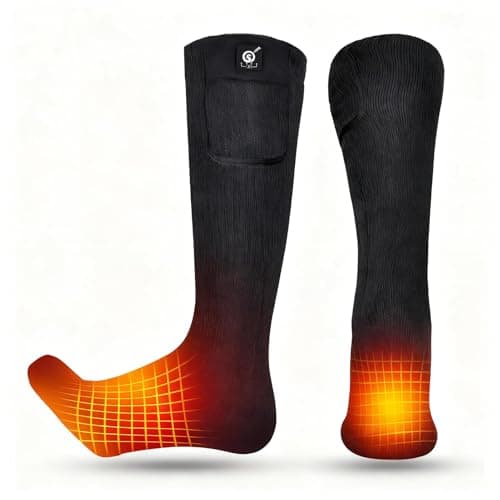 Heated Socks (Rechargeable)On this page because for some hunters the honest answer is that no wool sock is going to work. Snow Deer publishes these as rechargeable heated socks, and they belong in this comparison because people shopping for premium socks are usually trying to solve cold feet rather than trying to buy socks - and past a certain point, on a motionless hunter in genuine cold, passive insulation has reached its limit and the only thing left is added heat. Battery-heated socks are the one item here that addresses that directly, and for someone with poor circulation or a history of cold-ending hunts, this is a more useful purchase than any upgrade within the wool category. Honest cons: this is the most expensive item on the page by a wide margin, and it is many times the cost of the picks above. Batteries mean runtime, charging and a cold-weather penalty on both - and a dead battery mid-sit leaves you in a thin sock, which is worse than a good wool one. There is electronics and wiring in something you walk in, which is one more thing to fail. They add bulk inside a boot. And they are overkill and a waste of money for anyone whose cold feet are actually caused by wet socks or tight boots, which is most people - try the liner first.Best for: The different answer - for the hunter no sock has ever warmed
| # | Gift | Best for | Price |
|---|---|---|---|
| 1 | DANISH ENDURANCE Merino Hiking Socks (Multi-Pack)The pick, and the honest answer to what most people are actually asking when they look for a Darn Tough alternative. DANISH ENDURANCE publishes these as merino wool hiking socks in a multi-pack, and the multi-pack is the whole argument: the performance that matters in a hunting sock comes from merino against the skin pulling sweat off a foot that is sealed inside a waterproof boot, and that property is present here. What changes is quantity. Several pairs for roughly the price of one premium pair means a hunter can put on dry socks at midday, wash a load without running out, and keep a spare pair in the pack - all of which do more for cold feet in practice than a single better sock does. Hunting socks also live a hard life in boots full of grit, and owning enough of them is a strategy rather than a compromise. Honest cons: these are hiking socks rather than purpose-built hunting socks, and the difference shows in the cuff height and the cushioning placement - a hunting sock is usually taller, to sit above a tall boot cuff rather than inside it, and this is the one place a dedicated hunting sock is better. The wool blend content is lower than a premium pure-merino sock, which means slightly less wet-warmth and noticeably less odour resistance over multiple days. There is no lifetime guarantee, which is the point of the page. And durability per pair is lower, which is why you buy several. | Best alternative overall - for the hunter who needs several pairs | $26.31View on Amazon |
| 2 | Carhartt Arctic Heavyweight Merino Blend Boot SockThe pick when the problem is temperature rather than price. Carhartt publishes this as an Arctic heavyweight merino wool blend boot sock, and heavyweight is the specification a stationary hunter actually wants - a midweight sock is the right choice for covering ground, where bulk means sweat, but a hunter sitting motionless in a stand at dawn needs thickness doing insulation work. That is a straightforwardly different product from a midweight hunting sock rather than a cheaper version of one, and for late-season sits it is the better buy at any price. The blend rather than pure merino is a sensible trade here: the synthetic content buys abrasion resistance and shape retention through repeated hot washes, and the small loss in wet-warmth matters less in a sock that is doing bulk insulation. Carhartt is also the one brand on this page almost every hunter already owns something from, which makes it the safest gift. Honest cons: heavyweight socks need boot room, and adding them to boots sized for thin socks compresses the air gap that does the insulating and makes feet colder - which is the most common cold-feet mistake there is. They are too warm for an early-season walk-in and will generate the sweat you are trying to avoid. They dry slowly once soaked. And a blend will not match pure merino for odour control across several days in the same pair. | Best for cold sits - for the hunter who sits still, not the one who walks | $26.25View on Amazon |
| 3 | Fox River Wick Dry Outlander Boot Socks (2-Pack)The cheapest item on this page and the right answer for a hunter who wants warm socks without thinking about it. Fox River publishes the Wick Dry Outlander as a thermalined mid-calf boot sock in a two-pack, and 'thermalined' is the practical point - this is a sock built to be warm in a boot rather than a general-purpose sock that happens to be thick. Two pairs at this price means the sock becomes a consumable rather than an investment, which is a legitimate strategy: hunting socks get worn in boots full of grit and burrs, and plenty of hunters are better served by cheap socks replaced annually than by expensive socks nursed for a decade. For a first season, for a deer camp spare, or for somebody who genuinely will not notice the difference, this is the pick. Honest cons: this is a synthetic-forward construction rather than a merino one, and the difference is felt specifically when the sock is damp - it will feel colder and clammier than merino at the same thickness, and it will smell after one hard day rather than three. Durability is budget-level. Mid-calf is shorter than a dedicated tall hunting sock, so it can sit inside a tall boot cuff and rub. And there is no guarantee of any kind. | Budget pick - the cheapest honest boot sock here | $12.00View on Amazon |
| 4 | Fox River Castile Light Merino Liner SocksThe pick for a different approach entirely, and per dollar the best buy on this page. Fox River publishes the Castile Light as a lightweight merino wool crew liner sock, and a liner is not a cheaper boot sock - it is a second layer worn underneath one, doing a mechanical job rather than a thermal one. It sits between the foot and the boot sock so the two fabrics slide against each other instead of skin sliding against fabric, which moves sweat off the foot into the outer sock where it can evaporate and sharply reduces blister friction on a long walk in. The reason it belongs on an alternatives page is that for a hunter who already owns adequate boot socks, adding a merino liner costs a fraction of replacing them and delivers more of the actual benefit - because the wet-foot problem is what makes feet cold, and a liner attacks it directly. Honest cons: a liner adds volume inside a boot, and in boots that already fit snugly it can compress the insulating air gap and make things worse - size the boots up before adding one. It is thin and will wear through at the heel faster than any boot sock here. It does nothing on its own: this only works underneath a proper sock, so it is an addition rather than a replacement. And no liner fixes boots that do not fit. | Best value upgrade - for the hunter who already owns boot socks | $11.20View on Amazon |
| 5 | Heated Socks (Rechargeable)On this page because for some hunters the honest answer is that no wool sock is going to work. Snow Deer publishes these as rechargeable heated socks, and they belong in this comparison because people shopping for premium socks are usually trying to solve cold feet rather than trying to buy socks - and past a certain point, on a motionless hunter in genuine cold, passive insulation has reached its limit and the only thing left is added heat. Battery-heated socks are the one item here that addresses that directly, and for someone with poor circulation or a history of cold-ending hunts, this is a more useful purchase than any upgrade within the wool category. Honest cons: this is the most expensive item on the page by a wide margin, and it is many times the cost of the picks above. Batteries mean runtime, charging and a cold-weather penalty on both - and a dead battery mid-sit leaves you in a thin sock, which is worse than a good wool one. There is electronics and wiring in something you walk in, which is one more thing to fail. They add bulk inside a boot. And they are overkill and a waste of money for anyone whose cold feet are actually caused by wet socks or tight boots, which is most people - try the liner first. | The different answer - for the hunter no sock has ever warmed | $63.99View on Amazon |
Prices from Amazon as of November 24, 2026 and change often — the button always opens the current listing. Some links earn us a commission at no extra cost to you.
DANISH ENDURANCE Merino Hiking Socks (Multi-Pack)
The pick, and the honest answer to what most people are actually asking when they look for a Darn Tough alternative. DANISH ENDURANCE publishes these as merino wool hiking socks in a multi-pack, and the multi-pack is the whole argument: the performance that matters in a hunting sock comes from merino against the skin pulling sweat off a foot that is sealed inside a waterproof boot, and that property is present here. What changes is quantity. Several pairs for roughly the price of one premium pair means a hunter can put on dry socks at midday, wash a load without running out, and keep a spare pair in the pack - all of which do more for cold feet in practice than a single better sock does. Hunting socks also live a hard life in boots full of grit, and owning enough of them is a strategy rather than a compromise. Honest cons: these are hiking socks rather than purpose-built hunting socks, and the difference shows in the cuff height and the cushioning placement - a hunting sock is usually taller, to sit above a tall boot cuff rather than inside it, and this is the one place a dedicated hunting sock is better. The wool blend content is lower than a premium pure-merino sock, which means slightly less wet-warmth and noticeably less odour resistance over multiple days. There is no lifetime guarantee, which is the point of the page. And durability per pair is lower, which is why you buy several.
#ad · Price as of November 24, 2026. We may earn a commission.
Carhartt Arctic Heavyweight Merino Blend Boot Sock
The pick when the problem is temperature rather than price. Carhartt publishes this as an Arctic heavyweight merino wool blend boot sock, and heavyweight is the specification a stationary hunter actually wants - a midweight sock is the right choice for covering ground, where bulk means sweat, but a hunter sitting motionless in a stand at dawn needs thickness doing insulation work. That is a straightforwardly different product from a midweight hunting sock rather than a cheaper version of one, and for late-season sits it is the better buy at any price. The blend rather than pure merino is a sensible trade here: the synthetic content buys abrasion resistance and shape retention through repeated hot washes, and the small loss in wet-warmth matters less in a sock that is doing bulk insulation. Carhartt is also the one brand on this page almost every hunter already owns something from, which makes it the safest gift. Honest cons: heavyweight socks need boot room, and adding them to boots sized for thin socks compresses the air gap that does the insulating and makes feet colder - which is the most common cold-feet mistake there is. They are too warm for an early-season walk-in and will generate the sweat you are trying to avoid. They dry slowly once soaked. And a blend will not match pure merino for odour control across several days in the same pair.
#ad · Price as of November 24, 2026. We may earn a commission.
Fox River Wick Dry Outlander Boot Socks (2-Pack)
The cheapest item on this page and the right answer for a hunter who wants warm socks without thinking about it. Fox River publishes the Wick Dry Outlander as a thermalined mid-calf boot sock in a two-pack, and 'thermalined' is the practical point - this is a sock built to be warm in a boot rather than a general-purpose sock that happens to be thick. Two pairs at this price means the sock becomes a consumable rather than an investment, which is a legitimate strategy: hunting socks get worn in boots full of grit and burrs, and plenty of hunters are better served by cheap socks replaced annually than by expensive socks nursed for a decade. For a first season, for a deer camp spare, or for somebody who genuinely will not notice the difference, this is the pick. Honest cons: this is a synthetic-forward construction rather than a merino one, and the difference is felt specifically when the sock is damp - it will feel colder and clammier than merino at the same thickness, and it will smell after one hard day rather than three. Durability is budget-level. Mid-calf is shorter than a dedicated tall hunting sock, so it can sit inside a tall boot cuff and rub. And there is no guarantee of any kind.
#ad · Price as of November 24, 2026. We may earn a commission.
Fox River Castile Light Merino Liner Socks
The pick for a different approach entirely, and per dollar the best buy on this page. Fox River publishes the Castile Light as a lightweight merino wool crew liner sock, and a liner is not a cheaper boot sock - it is a second layer worn underneath one, doing a mechanical job rather than a thermal one. It sits between the foot and the boot sock so the two fabrics slide against each other instead of skin sliding against fabric, which moves sweat off the foot into the outer sock where it can evaporate and sharply reduces blister friction on a long walk in. The reason it belongs on an alternatives page is that for a hunter who already owns adequate boot socks, adding a merino liner costs a fraction of replacing them and delivers more of the actual benefit - because the wet-foot problem is what makes feet cold, and a liner attacks it directly. Honest cons: a liner adds volume inside a boot, and in boots that already fit snugly it can compress the insulating air gap and make things worse - size the boots up before adding one. It is thin and will wear through at the heel faster than any boot sock here. It does nothing on its own: this only works underneath a proper sock, so it is an addition rather than a replacement. And no liner fixes boots that do not fit.
#ad · Price as of November 24, 2026. We may earn a commission.
Heated Socks (Rechargeable)
On this page because for some hunters the honest answer is that no wool sock is going to work. Snow Deer publishes these as rechargeable heated socks, and they belong in this comparison because people shopping for premium socks are usually trying to solve cold feet rather than trying to buy socks - and past a certain point, on a motionless hunter in genuine cold, passive insulation has reached its limit and the only thing left is added heat. Battery-heated socks are the one item here that addresses that directly, and for someone with poor circulation or a history of cold-ending hunts, this is a more useful purchase than any upgrade within the wool category. Honest cons: this is the most expensive item on the page by a wide margin, and it is many times the cost of the picks above. Batteries mean runtime, charging and a cold-weather penalty on both - and a dead battery mid-sit leaves you in a thin sock, which is worse than a good wool one. There is electronics and wiring in something you walk in, which is one more thing to fail. They add bulk inside a boot. And they are overkill and a waste of money for anyone whose cold feet are actually caused by wet socks or tight boots, which is most people - try the liner first.
#ad · Price as of November 24, 2026. We may earn a commission.
What the premium actually is
We went and read what the company publishes rather than paraphrasing a reputation. Three claims, all on Darn Tough's own site and linked in the sources.
An unconditional lifetime guarantee.The site's heading is “Unconditionally Guaranteed for Life,” and the wording underneath is: “If our socks aren't the most comfortable, durable, best-fitting socks, we'll replace them.” That is a replacement policy stated in unusually plain terms — and note the word replace, not repair.
Knit in Vermont.The site says “Still Made in Vermont, USA” and links to its own mills there. It does not name a specific town or facility on the page we read, so we are not going to either.
What we could not confirm.We were not able to load the detailed guarantee page or the hunting-sock category page at the time of writing — one returned a redirect off the company's own domain and the other was rate-limited — so we have no published figures from them for exact merino percentages, cushion specifications or hunting-sock pricing. We have not invented any. If the precise terms of the guarantee matter to your purchase, read them on the company's site before you buy.
Matching the claims to the alternatives
| What the premium gives you | Which pick matches it | Honestly? |
|---|---|---|
| Merino against the skin, moving sweat | DANISH ENDURANCE, Carhartt Arctic, Fox River liner | Yes - this is reproducible at much lower cost |
| Enough pairs to always have dry socks | DANISH ENDURANCE multi-pack | Better than the premium, because of price per pair |
| Heavyweight warmth for a motionless sit | Carhartt Arctic heavyweight | Yes - a different product rather than a cheaper one |
| Durability per pair | Carhartt Arctic, partly | Closest here, but not equivalent |
| Unconditional lifetime replacement | Nothing on this page | No. This is the premium, and it is not replaceable |
| Knit in Vermont, USA | Nothing on this page | No. If origin matters to you, buy the original |
The strategy question: one great pair or five good ones?
This is the actual decision, and it is not obvious which way it goes.
The case for one premium pair. If the sock genuinely lasts for decades and gets replaced free when it does not, cost per wear is excellent, and you never think about socks again. For a hunter who hunts a lot and hates gear admin, that is a real benefit.
The case for several cheaper pairs. What makes feet cold in the field is a wet sock, and the fix for a wet sock is a dry one. A hunter with five pairs can change socks at midday, keep a spare in the pack and never run out between washes; a hunter with one pair cannot do any of that regardless of how good the pair is. In practice this wins more hunts.
Our read is that for most hunters, enough merino socks beats one excellent merino sock — which is why the multi-pack is the pick. The exception is the hunter who hunts fifty days a season and wears socks out, where durability and a replacement guarantee genuinely change the arithmetic. The full range is in best hunting socks.
Where the rest of the layering fits
Socks are one element of a system and the cheapest one to get right. The torso half is covered in best base layers for hunting, and the merino-versus-synthetic argument in general is in merino vs synthetic base layers — the same fibre logic applies to a sock as to a shirt.
Below the sock, the boot decides more than the sock does: best hunting boots and best hunting boots for cold weather. And if the socks keep ending up soaked, the fix is drying them properly overnight rather than buying more: best boot dryer for hunting boots.
Match the sock to the hunter
Wants the actual benefit for less money. The DANISH ENDURANCE multi-pack. Enough merino socks beats one perfect one.
Sits still in genuine cold.The Carhartt Arctic heavyweight — and check there is boot room for it.
Already owns boot socks and has cold, sweaty feet. The Fox River liner. It is the cheapest thing here and it attacks the real cause.
Smallest budget, needs warm socks today. The Fox River Outlander two-pack.
Has tried everything and still comes in early.The heated socks — but rule out tight boots and wet socks first.
Hunts fifty days a season and wears socks out. Buy the Darn Tough. The guarantee is the product, and nothing here replaces it.
Frequently asked questions
What is a cheaper alternative to Darn Tough socks?
The DANISH ENDURANCE merino hiking sock multi-pack is the best overall alternative, because it delivers the thing that actually matters - merino against the skin moving sweat off a foot inside a sealed boot - at a price per pair that lets you own several. For a motionless cold-weather sit, the Carhartt Arctic heavyweight merino blend is a better sock than a midweight at any price. The cheapest honest option is the Fox River Wick Dry Outlander two-pack.
What is Darn Tough's guarantee exactly?
On its own site the company states 'Unconditionally Guaranteed for Life', with the wording: 'If our socks aren't the most comfortable, durable, best-fitting socks, we'll replace them.' Note that it is a replacement policy rather than a repair one. We were not able to load the detailed guarantee page at the time of writing, so we cannot quote its finer terms - if the exact conditions matter to your purchase, read them on the company's own site rather than relying on a third-party summary, including ours.
Where are Darn Tough socks made?
The company's own site says 'Still Made in Vermont, USA' and links to its mills there. It does not name a specific town or facility on the page we read, so we are not going to state one. If US manufacturing is part of why you are considering them, that is a genuine point of difference - none of the alternatives on this page publishes an equivalent claim.
Are expensive merino socks actually worth it for hunting?
The merino is worth it; whether the premium brand is depends on how much you hunt. Merino against the skin is what keeps a foot warm while damp inside a waterproof boot, and that property is available in much cheaper socks. What the premium buys is durability per pair and a lifetime replacement policy, which genuinely changes the arithmetic for someone who hunts fifty days a season. For a hunter who gets out ten or fifteen days, owning several cheaper merino pairs usually delivers warmer feet, because the fix for a wet sock is a dry sock.
Is one great pair of socks better than several cheap pairs?
For hunting, several good pairs usually wins, and the reason is practical rather than technical. What makes feet cold in the field is moisture, and the remedy is changing into a dry pair - which a hunter with five pairs can do at midday and a hunter with one pair cannot, no matter how good that pair is. The exception is high-volume hunting where socks genuinely wear out, in which case durability and a replacement guarantee start to matter more than quantity.
Will thicker socks fix my cold feet?
Often the opposite, and this is the most common mistake in cold-weather hunting. A heavyweight sock added to a boot sized for a thin one compresses the dead air space that actually does the insulating, so feet end up colder in a thicker sock. If your boots feel snug, size the boots up rather than the socks. The other frequent cause is sweat from the walk in: a wet foot inside an insulated boot is being refrigerated, and the fix is a thin merino liner, not more bulk.
Are heated socks worth buying instead?
For a specific hunter, yes - for most, no. Past a certain point, a motionless hunter in genuine cold has reached the limit of passive insulation, and added heat is the only thing left; for someone with poor circulation or a history of hunts ending early, heated socks solve the actual problem. But they cost many times what good wool socks cost, batteries lose runtime in the cold, and a dead battery leaves you in a thin sock. If your cold feet come from wet socks or tight boots, which is most cases, they are expensive and will not help.
Sources
- Darn Tough homepage - the company's own published guarantee ("Unconditionally Guaranteed for Life"; "If our socks aren't the most comfortable, durable, best-fitting socks, we'll replace them") and manufacturing claim ("Still Made in Vermont, USA")
- Amazon listing - DANISH ENDURANCE Merino Hiking Socks: published as merino wool hiking socks in a multi-pack
- Amazon listing - Carhartt Arctic Heavyweight Merino Blend Boot Sock: published as a heavyweight merino wool blend boot sock
- Amazon listing - Fox River Wick Dry Outlander Boot Socks (2-pack): published as a thermalined mid-calf boot sock
- Amazon listing - Fox River Castile Light Merino Liner Socks: published as a lightweight merino wool crew liner sock
- Amazon listing - Snow Deer Rechargeable Heated Socks: published as rechargeable battery-heated socks