Gear Guides
The Best Hunting Rain Gear
Rain ends more hunts than cold does, and almost always from the ground up. Here is the shell to buy first, the parka for a cold all-day sit, the two boots that actually keep water out, and the one cheap layer that decides whether damp feet ruin the morning.
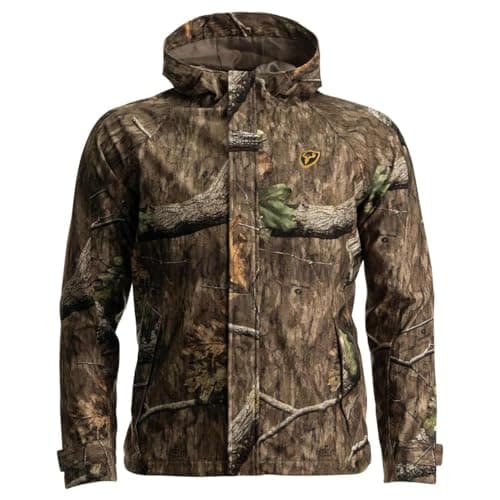
The verdict: buy the ScentBlocker Drencher waterproof rain jacketfirst. It is the pick for the hunter who mostly needs one quiet, packable shell they can pull over whatever they already own when the sky turns — the single most useful piece of rain gear most hunters do not own. If the rain comes with cold and they sit still in it for hours, the HOT SHOT 3-in-1 insulated camo parka is the better buy, because it carries its own insulation inside the waterproof shell. And the budget pick is the TIDEWE rubber hunting boot— the cheapest item on this page, and the one that fixes the part of a hunter that gets wet first and complains loudest.
Here is the thing almost every rain-gear list gets backwards. A hunter who is wet on the shoulders is uncomfortable. A hunter who is wet in the boots is finished for the day, and probably for tomorrow too, because wet boots do not dry overnight in a truck or a motel room. Water also gets in from the bottom far more often than it comes through the top: soaked brush, standing water in a field edge, a creek crossing, dew that is heavier than any shower. That is why this page is not four jackets. It is a shell, a parka, two boots and a sock, which is what a hunter actually needs to stay out in weather.
One more honest note before the picks. Treat every "waterproof" claim in hunting apparel as a claim about the fabric, not the garment: water finds the zipper, the cuff and the hood opening long before it finds the panel. None of the picks below publishes a hydrostatic-head rating, so we do not quote one. What we can judge is construction, fit and the noise the material makes — and in rain gear, noise is the specification most hunters regret ignoring. Prices are pulled live and dated; the button is always the authority.
- 1ScentBlocker Drencher Waterproof Rain JacketFor the hunter who wants one piece of rain gear that works over everything they already own. The Drencher is ScentBlocker's lightweight waterproof camo rain jacket, built to be the outer layer rather than the whole outfit - which is exactly the right shape for a gift, because you do not need to know what they wear underneath. A light shell also solves the problem heavy rain suits create: a hunter who has to decide whether it is wet enough to bother carrying it will leave the bulky one at home and get caught in the rain, while a packable one lives in the bottom of the pack all season. Honest cons: a shell has no insulation, so in a cold rain it needs layers under it or it will feel clammy; lightweight waterproof fabrics are the loudest kind in brush, so a hunter drawing a bow in it should test the sleeve on the string before opening day; and like every garment here, the waterproof claim belongs to the fabric - expect to re-treat the surface eventually.Best for: Best overall - the shell to buy first
- 2
 HOT SHOT 3-in-1 Insulated Camo Hunting ParkaThis is the pick when the rain comes at 35 degrees and they are not moving. The HOT SHOT 3-in-1 is an insulated, waterproof camo parka with a removable liner, which is the useful part: it is a rain shell in October, a warm coat in December, and both at once in the weather that actually hurts. A sitting hunter generates almost no heat, so a cold rain on a blind chair or a treestand is a different problem from a cold walk - insulation inside the waterproof layer is the answer, and a shell alone is not. Honest cons: it is the most expensive pick here and the bulkiest, which matters if they walk a long way in; the 3-in-1 design means two garments to keep track of; and a parka is harder to buy blind as a gift than a shell, because fit over a mid-layer is less forgiving.Best for: Best for cold rain and long sits
- 3
 TIDEWE Rubber Hunting BootsIf you buy one item on this page and you are watching the money, buy these. A rubber boot is the only footwear that is genuinely sealed rather than merely treated: there is no seam, no membrane and no leather to wet out, so standing water and soaked grass simply do not get in. TIDEWE's rubber hunting boots are the cheapest version of that on this list, which makes them the honest budget answer - the wettest part of a hunter, fixed for less than the price of the jacket. They are also the easiest rain gear to buy as a gift, because boot sizing in rubber is far more forgiving than a jacket's shoulders. Honest cons: rubber does not breathe, so on a warm walk-in the inside gets damp from sweat instead of rain, and a hunter who covers ground will prefer a leather boot; rubber boots are less supportive on steep or uneven ground; and insulated rubber is either too warm or not warm enough, rarely perfect - which is what the sock below is for.Best for: Budget pick - the cheapest thing here that keeps you hunting
- 4
 Muck Boot Woody Max Hunting BootThe upgrade for the hunter who is in water on purpose - a flooded field edge, a swamp crossing, a duck morning, or the kind of clay mud that pulls a lace-up boot off your foot. The Muck Boot Woody Max is the neoprene-and-rubber pull-on that made this category normal: no laces to tie in the dark, nothing to soak through, and a flexible upper that walks better than a stiff rubber boot. It suits a hunter who values getting out of the truck in thirty seconds and never thinking about water again. Honest cons: it is more than twice the price of the TIDEWE and it is still a rubber boot, with the same breathability ceiling; neoprene adds warmth you may not want in early season; and a pull-on will never give the ankle support of a lace-up for mountain walking.Best for: Best boot for mud, flooded edges and getting them on fast
- 5
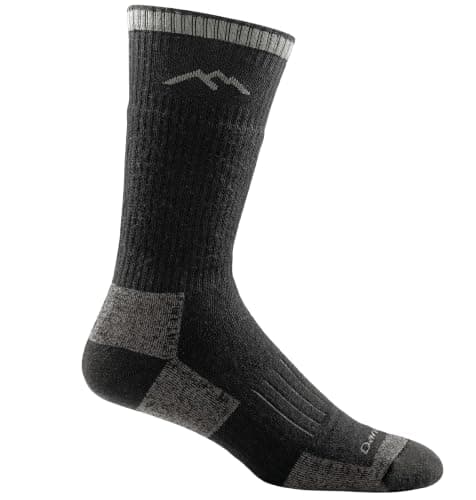 Darn Tough Hunting Boot Sock (2012)Buy this with either boot. Here is the part that catches people out: in a rubber boot, feet get damp from the inside no matter what the weather does, and whether that ruins the day depends entirely on the sock. Merino wool holds warmth when it is damp and cotton does not - that is not marketing, it is the difference between a cold afternoon and going home. Darn Tough's hunting boot sock is merino, made in Vermont, and carries the company's unconditional lifetime guarantee, which is the only guarantee in this whole guide that covers wearing something out. As a gift it is also the easy add-on: it costs a fraction of the boot and the recipient will notice it more. Honest cons: it is a sock, not rain gear, so it is an accessory rather than a present on its own; merino is slower to dry than synthetic once it is properly soaked; and one pair is never enough - two is the real answer.Best for: The cheap layer that decides whether wet feet matter
| # | Gift | Best for | Price |
|---|---|---|---|
| 1 | ScentBlocker Drencher Waterproof Rain JacketFor the hunter who wants one piece of rain gear that works over everything they already own. The Drencher is ScentBlocker's lightweight waterproof camo rain jacket, built to be the outer layer rather than the whole outfit - which is exactly the right shape for a gift, because you do not need to know what they wear underneath. A light shell also solves the problem heavy rain suits create: a hunter who has to decide whether it is wet enough to bother carrying it will leave the bulky one at home and get caught in the rain, while a packable one lives in the bottom of the pack all season. Honest cons: a shell has no insulation, so in a cold rain it needs layers under it or it will feel clammy; lightweight waterproof fabrics are the loudest kind in brush, so a hunter drawing a bow in it should test the sleeve on the string before opening day; and like every garment here, the waterproof claim belongs to the fabric - expect to re-treat the surface eventually. | Best overall - the shell to buy first | $79.99View on Amazon |
| 2 | HOT SHOT 3-in-1 Insulated Camo Hunting ParkaThis is the pick when the rain comes at 35 degrees and they are not moving. The HOT SHOT 3-in-1 is an insulated, waterproof camo parka with a removable liner, which is the useful part: it is a rain shell in October, a warm coat in December, and both at once in the weather that actually hurts. A sitting hunter generates almost no heat, so a cold rain on a blind chair or a treestand is a different problem from a cold walk - insulation inside the waterproof layer is the answer, and a shell alone is not. Honest cons: it is the most expensive pick here and the bulkiest, which matters if they walk a long way in; the 3-in-1 design means two garments to keep track of; and a parka is harder to buy blind as a gift than a shell, because fit over a mid-layer is less forgiving. | Best for cold rain and long sits | Check price on Amazon |
| 3 | TIDEWE Rubber Hunting BootsIf you buy one item on this page and you are watching the money, buy these. A rubber boot is the only footwear that is genuinely sealed rather than merely treated: there is no seam, no membrane and no leather to wet out, so standing water and soaked grass simply do not get in. TIDEWE's rubber hunting boots are the cheapest version of that on this list, which makes them the honest budget answer - the wettest part of a hunter, fixed for less than the price of the jacket. They are also the easiest rain gear to buy as a gift, because boot sizing in rubber is far more forgiving than a jacket's shoulders. Honest cons: rubber does not breathe, so on a warm walk-in the inside gets damp from sweat instead of rain, and a hunter who covers ground will prefer a leather boot; rubber boots are less supportive on steep or uneven ground; and insulated rubber is either too warm or not warm enough, rarely perfect - which is what the sock below is for. | Budget pick - the cheapest thing here that keeps you hunting | $74.99View on Amazon |
| 4 | Muck Boot Woody Max Hunting BootThe upgrade for the hunter who is in water on purpose - a flooded field edge, a swamp crossing, a duck morning, or the kind of clay mud that pulls a lace-up boot off your foot. The Muck Boot Woody Max is the neoprene-and-rubber pull-on that made this category normal: no laces to tie in the dark, nothing to soak through, and a flexible upper that walks better than a stiff rubber boot. It suits a hunter who values getting out of the truck in thirty seconds and never thinking about water again. Honest cons: it is more than twice the price of the TIDEWE and it is still a rubber boot, with the same breathability ceiling; neoprene adds warmth you may not want in early season; and a pull-on will never give the ankle support of a lace-up for mountain walking. | Best boot for mud, flooded edges and getting them on fast | $107.87View on Amazon |
| 5 | Darn Tough Hunting Boot Sock (2012)Buy this with either boot. Here is the part that catches people out: in a rubber boot, feet get damp from the inside no matter what the weather does, and whether that ruins the day depends entirely on the sock. Merino wool holds warmth when it is damp and cotton does not - that is not marketing, it is the difference between a cold afternoon and going home. Darn Tough's hunting boot sock is merino, made in Vermont, and carries the company's unconditional lifetime guarantee, which is the only guarantee in this whole guide that covers wearing something out. As a gift it is also the easy add-on: it costs a fraction of the boot and the recipient will notice it more. Honest cons: it is a sock, not rain gear, so it is an accessory rather than a present on its own; merino is slower to dry than synthetic once it is properly soaked; and one pair is never enough - two is the real answer. | The cheap layer that decides whether wet feet matter | $29.95View on Amazon |
Prices from Amazon as of November 24, 2026 and change often — the button always opens the current listing. Some links earn us a commission at no extra cost to you.
ScentBlocker Drencher Waterproof Rain Jacket
For the hunter who wants one piece of rain gear that works over everything they already own. The Drencher is ScentBlocker's lightweight waterproof camo rain jacket, built to be the outer layer rather than the whole outfit - which is exactly the right shape for a gift, because you do not need to know what they wear underneath. A light shell also solves the problem heavy rain suits create: a hunter who has to decide whether it is wet enough to bother carrying it will leave the bulky one at home and get caught in the rain, while a packable one lives in the bottom of the pack all season. Honest cons: a shell has no insulation, so in a cold rain it needs layers under it or it will feel clammy; lightweight waterproof fabrics are the loudest kind in brush, so a hunter drawing a bow in it should test the sleeve on the string before opening day; and like every garment here, the waterproof claim belongs to the fabric - expect to re-treat the surface eventually.
#ad · Price as of November 24, 2026. We may earn a commission.
HOT SHOT 3-in-1 Insulated Camo Hunting Parka
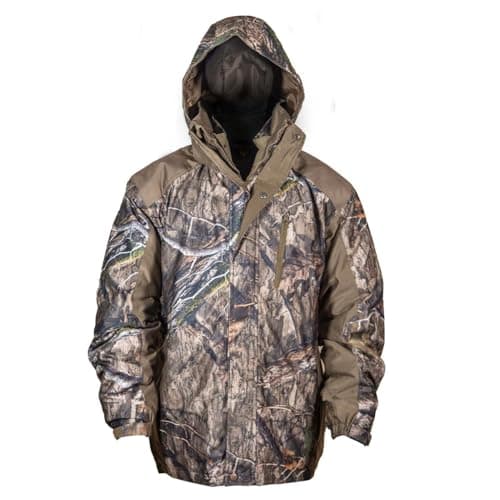
This is the pick when the rain comes at 35 degrees and they are not moving. The HOT SHOT 3-in-1 is an insulated, waterproof camo parka with a removable liner, which is the useful part: it is a rain shell in October, a warm coat in December, and both at once in the weather that actually hurts. A sitting hunter generates almost no heat, so a cold rain on a blind chair or a treestand is a different problem from a cold walk - insulation inside the waterproof layer is the answer, and a shell alone is not. Honest cons: it is the most expensive pick here and the bulkiest, which matters if they walk a long way in; the 3-in-1 design means two garments to keep track of; and a parka is harder to buy blind as a gift than a shell, because fit over a mid-layer is less forgiving.
TIDEWE Rubber Hunting Boots
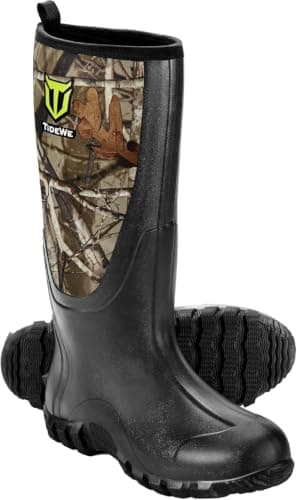
If you buy one item on this page and you are watching the money, buy these. A rubber boot is the only footwear that is genuinely sealed rather than merely treated: there is no seam, no membrane and no leather to wet out, so standing water and soaked grass simply do not get in. TIDEWE's rubber hunting boots are the cheapest version of that on this list, which makes them the honest budget answer - the wettest part of a hunter, fixed for less than the price of the jacket. They are also the easiest rain gear to buy as a gift, because boot sizing in rubber is far more forgiving than a jacket's shoulders. Honest cons: rubber does not breathe, so on a warm walk-in the inside gets damp from sweat instead of rain, and a hunter who covers ground will prefer a leather boot; rubber boots are less supportive on steep or uneven ground; and insulated rubber is either too warm or not warm enough, rarely perfect - which is what the sock below is for.
#ad · Price as of November 24, 2026. We may earn a commission.
Muck Boot Woody Max Hunting Boot
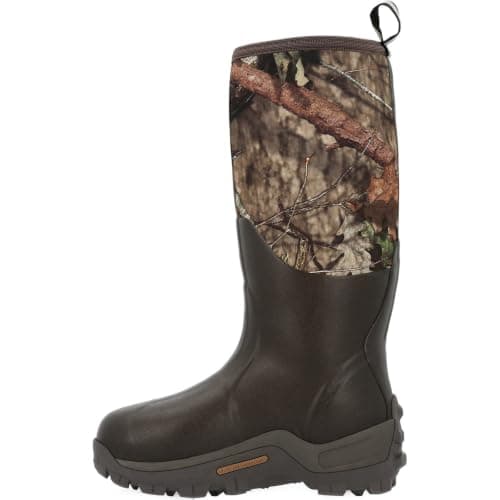
The upgrade for the hunter who is in water on purpose - a flooded field edge, a swamp crossing, a duck morning, or the kind of clay mud that pulls a lace-up boot off your foot. The Muck Boot Woody Max is the neoprene-and-rubber pull-on that made this category normal: no laces to tie in the dark, nothing to soak through, and a flexible upper that walks better than a stiff rubber boot. It suits a hunter who values getting out of the truck in thirty seconds and never thinking about water again. Honest cons: it is more than twice the price of the TIDEWE and it is still a rubber boot, with the same breathability ceiling; neoprene adds warmth you may not want in early season; and a pull-on will never give the ankle support of a lace-up for mountain walking.
#ad · Price as of November 24, 2026. We may earn a commission.
Darn Tough Hunting Boot Sock (2012)
Buy this with either boot. Here is the part that catches people out: in a rubber boot, feet get damp from the inside no matter what the weather does, and whether that ruins the day depends entirely on the sock. Merino wool holds warmth when it is damp and cotton does not - that is not marketing, it is the difference between a cold afternoon and going home. Darn Tough's hunting boot sock is merino, made in Vermont, and carries the company's unconditional lifetime guarantee, which is the only guarantee in this whole guide that covers wearing something out. As a gift it is also the easy add-on: it costs a fraction of the boot and the recipient will notice it more. Honest cons: it is a sock, not rain gear, so it is an accessory rather than a present on its own; merino is slower to dry than synthetic once it is properly soaked; and one pair is never enough - two is the real answer.
#ad · Price as of November 24, 2026. We may earn a commission.
The three places rain actually gets in
Fabric panels are rarely the problem. These three are, in this order.
The boots. First and worst. Wet grass and brush soak a boot from the outside in long before a shower does, and a leather boot that has wetted out stays wet for a day or more. This is the single reason a rubber boot earns its place in a rain kit even for a hunter who hates rubber boots the rest of the season.
The hood and collar. Water runs down a face and into a collar, and a hood that will not stay put in wind is a hood that is not doing anything. Any shell worth owning has a hood that cinches; test it with the head turned, because a hood that only works facing forward is useless to a hunter watching a field edge.
The cuffs.Reach up — to climb, to draw, to brush a branch — and water runs straight down the inside of a sleeve. This is also where a hunter gets wet while field dressing in rain, and it is why a cuff that closes matters more than an extra inch of length.
Waterproof, water-resistant, and what the words are worth
Hunting apparel uses these terms loosely, so here is the plain version. Waterproof should mean a membrane or a coating that water will not pass through under pressure, with the seams sealed. Water-resistantmeans a surface treatment that makes water bead up and run off until it wears away, which it does — usually first on the shoulders where a pack strap rubs.
Neither picks are rated with a number here, and we are not going to invent one. What you can reasonably expect: the Drencher and the HOT SHOT parka are built as waterproof outer layers, both rubber boots are genuinely sealed because there is nothing in a rubber boot for water to get through, and a merino sock is not waterproof at all and is not trying to be. If a published rating matters to you, buy from a brand that publishes one — and accept that in hunting camo, very few do.
Quiet matters more in rain, not less
This is the mistake that turns good rain gear into unused rain gear. The fabrics that shed water best are usually the crispest and loudest, and rain does not mask sound the way people assume — a steady drizzle is quiet, and a wet woods carries sound further than a dry, windy one. A bowhunter in a crinkly shell will hear their own sleeve on the string.
Two practical fixes. First, buy the shell a size up so it is not stretched tight across the back when they draw or mount a gun; a loose garment makes less noise than a taut one. Second, if they bowhunt, the quiet layer goes outside: a soft fleece over a waterproof shell is warmer, quieter and completely acceptable in light rain, which is why our jackets guide ranks fleece and waterproof shells as different tools rather than better and worse.
What to wear under a rain shell
A shell traps your own moisture as efficiently as it blocks the sky's, so the layer underneath decides whether the hunter ends up dry or clammy. Merino or synthetic next to skin, a fleece or wool mid-layer for warmth, shell on top — and no cotton anywhere in the stack, because wet cotton actively pulls heat out of a person. The full head-to-toe version of this is in what to wear deer hunting, and merino vs synthetic base layers covers the one choice people actually agonise over.
How we chose these
We do not run a test lab and we are not going to pretend to. Every construction detail above is the manufacturer's own published description, listed in the sources, and the picks are judged against what rain gear has to do for a hunter: keep water out at the three failure points, stay quiet enough to hunt in, work over gear the buyer cannot see, and not cost more than the hunt. Our full method is on the how we choose page. Prices come from a live feed and are stamped with the date they were captured.
Care, because rain gear is the gear people ruin
Two things shorten the life of a waterproof garment, and both are avoidable. Dirt is the first: a grubby surface wets out even when the coating is fine, so rain gear needs washing more often than hunters expect, not less. Heat is the second — a hot dryer can damage a coating and a membrane. Wash it clean, dry it gently, and re-treat the surface when water stops beading. The scent-free version of all of that, which matters if they hunt whitetails, is in how to wash hunting clothes.
Boots want the opposite kind of attention: dry them from the inside, gently, and never in front of a heater. A rubber boot is a sealed bag with no way for moisture to escape, which is exactly the case a boot dryer was invented for.
Match the rain gear to the hunt
They hunt whitetails from a stand or blind. The Drencher plus the TIDEWE boots, and the HOT SHOT parka instead of the shell if they sit through December.
They hunt ducks or anything in standing water. Muck Woody Max, every time. Then see what to wear duck hunting, because waders change the whole layering question.
They walk a lot of miles.The light shell, and leather boots rather than rubber — the trade-off is argued out in rubber vs leather hunting boots.
You have no idea how they hunt. Socks and the shell. Both work for everyone, neither needs a size you have to be certain about, and both are things hunters chronically under-buy for themselves.
Keep browsing
For insulated and fleece options rather than waterproof ones, start at best hunting jackets; the whole clothing picture is in best camo hunting clothes. For footwear without the rain framing, see best hunting boots and best hunting boots for cold weather, and the sock field is in best hunting socks.
Frequently asked questions
What is the most important piece of hunting rain gear?
Boots, not a jacket. Wet brush and standing water soak footwear from the outside in long before rain gets through a coat, and a leather boot that has wetted out stays wet for a day or more - which ends the next morning's hunt too. A sealed rubber boot is the cheapest complete fix, which is why the budget pick on this page is a boot rather than a shell.
Is a rain shell or an insulated parka better for hunting?
It depends entirely on whether they move. A light waterproof shell is the better first buy because it goes over whatever they already own and gets carried instead of left in the truck. An insulated waterproof parka is better for a hunter sitting still in a cold rain, because a seated hunter produces almost no heat and a shell alone will feel clammy.
Does hunting rain gear need to be quiet?
Yes, and more than people expect. The fabrics that shed water best tend to be the crispest, and a wet, still woods carries sound further than a dry, windy one. Buy the shell slightly loose rather than taut - a stretched garment is louder - and if they bowhunt, a soft fleece worn over the shell is the standard fix in light rain.
Are rubber boots better than leather for hunting in the rain?
For water, yes - a rubber boot has no seam or membrane for water to pass through, so it is genuinely sealed rather than treated. The trade is breathability and support: rubber does not breathe, so feet get damp from sweat on a long walk in, and a pull-on boot gives less ankle support on steep ground. A merino sock is what makes the damp irrelevant.
What does waterproof actually mean on hunting clothes?
Less than you would hope. Waterproof should mean a sealed membrane or coating that water will not pass under pressure; water-resistant means a surface treatment that works until it wears off, usually first where a pack strap rubs. Very few camo brands publish a hydrostatic-head rating, so we do not quote one here - treat the claim as being about the fabric, not the zipper, hood or cuff.
How do you wash waterproof hunting gear without ruining it?
Wash it more often than you would think and dry it gently. A dirty surface wets out even when the coating is intact, and a hot dryer can damage both coating and membrane. Clean it, dry it low or on a line, and re-treat the outer surface once water stops beading up. If they hunt whitetails, use a scent-free detergent with no optical brighteners.
Sources
- ScentBlocker - Drencher lightweight waterproof rain jacket, published product description
- HOT SHOT - 3-in-1 insulated waterproof camo hunting parka with removable liner, published description
- TIDEWE - rubber hunting boots, published product description
- Muck Boot Company - Woody Max neoprene and rubber pull-on hunting boot, published description
- Darn Tough - hunting boot sock, merino wool, made in Vermont, unconditional lifetime guarantee