Gear Guides
Muck Boot Alternatives for Hunters
Muck built the pull-on neoprene boot almost every hunter now owns, and it is priced accordingly. Here is what the brand actually does well, the sealed rubber boot that costs a lot less, and the two cases where a lace-up boot is simply the better purchase.
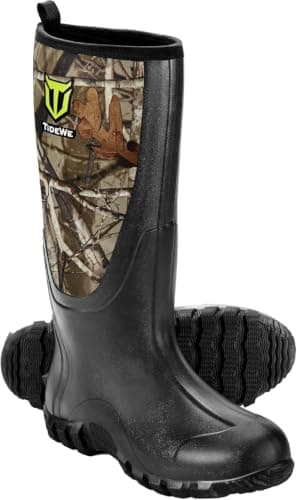
The verdict: the TIDEWE rubber hunting bootis the alternative most hunters should buy — it is the pick and the budget pick at once, because it is the cheapest genuinely sealed rubber boot in our catalogue and sealed rubber is the whole reason anyone buys a Muck. It suits the hunter who wants dry feet in wet grass, standing water and mud, who pulls boots on in the dark, and who is not walking ten miles in them. If the hunting involves distance or steep ground instead, the XPETI Thermator insulated waterproof lace-up is the better answer, and the reason is support rather than price.
Credit where it is due first. Muck Boot's hunting boots are built from neoprene bonded to rubber, which is a genuinely good combination: the rubber is impervious, the neoprene adds stretch and insulation, and the result is a boot that is fully waterproof with no laces, no seams to leak and no break-in period. The Woody Max is the hunting version of that formula and it is the reason so many duck hunters and whitetail hunters own a pair. Nothing on this page is an argument that Muck does not work.
What the page is about is which of those strengths you actually need. A sealed boot is a sealed boot: a cheaper rubber boot does not leak less than an expensive one, because neither of them leaks. What the money buys is comfort over hours, the quality of the bond between rubber and neoprene, and the fit of the ankle — and for a hunter sitting in a blind, those matter much less than they do for one walking a ridge. Each pick below is matched to a specific Muck strength. Prices are pulled live and dated; the button always opens the current listing.
- 1TIDEWE Rubber Hunting BootsThis is the direct substitution, and for most hunters it is the end of the question. TIDEWE's rubber hunting boots give you the thing a Muck is bought for - a pull-on boot with no laces, no seams and nothing water can get through - at a fraction of the price, which is why they are both the top pick and the cheapest boot here. Pull-on rubber is also by far the most forgiving footwear to buy as a gift, because rubber boot sizing is far less fussy than a lace-up leather boot's. For blind sits, field edges, flooded grass, mud and the walk from truck to stand, these do the entire job. Honest cons: rubber does not breathe, so on a warm walk in the inside gets damp from sweat instead of rain - the sock below is the fix, not a thicker boot; a pull-on gives less ankle support than a laced boot on steep or broken ground; and the finish and the rubber-to-neoprene bond are where a cheaper boot shows its price over several seasons.Best for: Best overall alternative and budget pick - the same sealed rubber, far less money
- 2
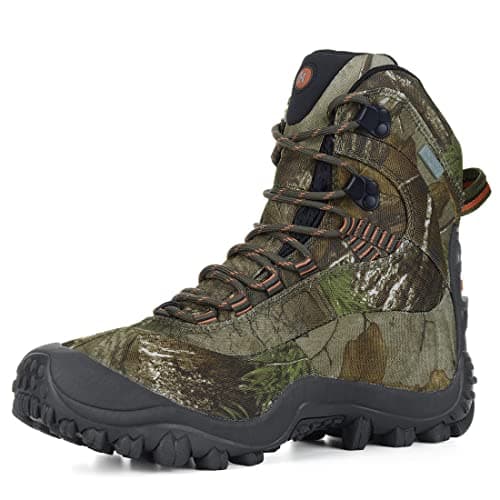 XPETI Thermator Insulated Waterproof BootThe pick for a hunter who walks. The Thermator is an insulated waterproof lace-up, which changes two things that matter more than waterproofing: it supports the ankle on uneven ground, and it breathes in a way that no rubber boot can, so a long walk in does not end with a wet sock. It is the honest answer for anyone who bought rubber boots because they thought waterproof was the only specification and then discovered that their feet were wet anyway, from the inside. For public-land whitetail hunting, hill country, or a hunter who parks a mile from the stand, this is the better boot. Honest cons: a laced boot has seams and a membrane, so it is water-resistant in a way rubber simply is not - it will wet out in standing water that a rubber boot shrugs off; laces in the dark with cold hands are a genuine annoyance; and it needs a break-in period that a rubber boot does not.Best for: Best if they cover ground - insulated, waterproof, and laced
- 3
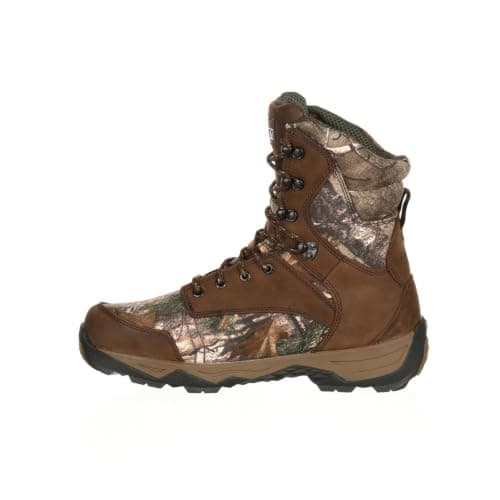 Rocky Retraction 800g Insulated Hunting BootFor the hunter who sits still in genuine cold, which is where boot choices stop being preference and start being about staying out. The Rocky Retraction is a lace-up hunting boot with 800g insulation, and the number matters here more than almost anywhere else in hunting gear: 800 grams is the standard weight for a stand hunter who is not moving enough to generate heat, which is a completely different requirement from the walking hunter the Thermator suits. Rocky is a long-established boot maker and the brand's service reputation is part of what you are buying. Honest cons: 800g insulation is too much boot for an early-season walk and will cook feet in mild weather, so this is a second pair rather than a one-boot-does-everything purchase; it is heavier than the pull-on options; and insulated leather is the slowest boot on this page to dry out if it does get soaked.Best for: Best for serious cold - 800g insulation in a lace-up
- 4
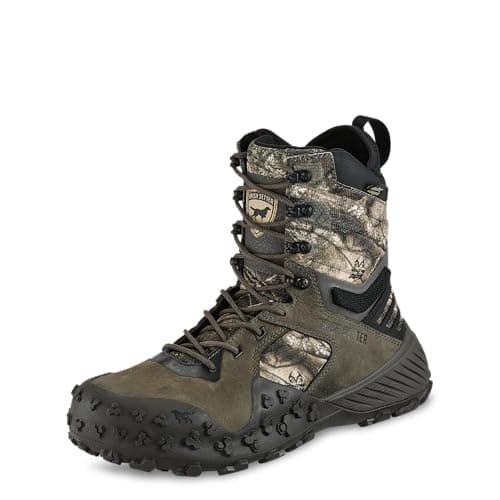 Irish Setter Men's Hunting BootsThe pick for the hunter who has decided that rubber is the wrong tool for them. Irish Setter is Red Wing's hunting line and has been making boots for this specific job for a very long time, and what a good leather hunting boot gives you is the thing no rubber boot can: a fitted, supportive, broken-in boot that you can walk all day in without thinking about your feet. It is the most expensive item here, and for a hunter who covers real distance it is also the one most likely to still be in service in five years. Honest cons: leather is water-resistant rather than sealed, so wet brush and standing water will eventually get in where rubber would not; it needs breaking in and periodic treatment, which a rubber boot does not; and it is the hardest boot on this page to buy for someone else, because leather fit is unforgiving.Best for: Best leather alternative for walking miles
- 5
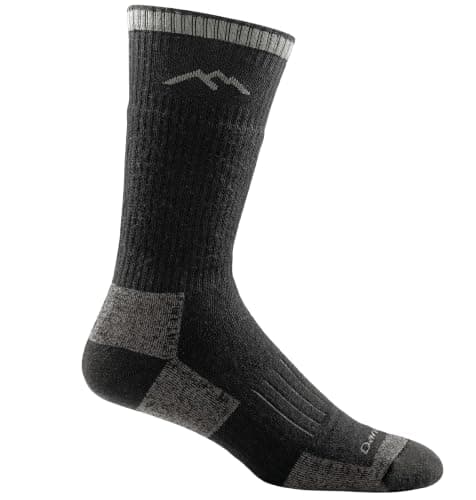 Darn Tough Hunting Boot Sock (2012)Buy this with whichever boot you choose, and especially with the rubber ones. Here is what catches hunters out: in a sealed boot, feet get damp from the inside no matter what the weather is doing, and whether that ruins the day depends entirely on the sock, because merino wool stays warm when damp and cotton actively pulls heat out of you. Darn Tough's hunting boot sock is merino, made in Vermont, and carries the company's unconditional lifetime guarantee - the only guarantee in this guide that covers simply wearing something out. It costs a small fraction of any boot here and makes a bigger difference to a cold morning than moving one step up the boot ladder. Honest cons: it is an accessory rather than a gift on its own; merino is slower to dry than synthetic once properly soaked; and one pair is never enough, so buy two.Best for: The cheap fix for the real problem with rubber boots
| # | Gift | Best for | Price |
|---|---|---|---|
| 1 | TIDEWE Rubber Hunting BootsThis is the direct substitution, and for most hunters it is the end of the question. TIDEWE's rubber hunting boots give you the thing a Muck is bought for - a pull-on boot with no laces, no seams and nothing water can get through - at a fraction of the price, which is why they are both the top pick and the cheapest boot here. Pull-on rubber is also by far the most forgiving footwear to buy as a gift, because rubber boot sizing is far less fussy than a lace-up leather boot's. For blind sits, field edges, flooded grass, mud and the walk from truck to stand, these do the entire job. Honest cons: rubber does not breathe, so on a warm walk in the inside gets damp from sweat instead of rain - the sock below is the fix, not a thicker boot; a pull-on gives less ankle support than a laced boot on steep or broken ground; and the finish and the rubber-to-neoprene bond are where a cheaper boot shows its price over several seasons. | Best overall alternative and budget pick - the same sealed rubber, far less money | $74.99View on Amazon |
| 2 | XPETI Thermator Insulated Waterproof BootThe pick for a hunter who walks. The Thermator is an insulated waterproof lace-up, which changes two things that matter more than waterproofing: it supports the ankle on uneven ground, and it breathes in a way that no rubber boot can, so a long walk in does not end with a wet sock. It is the honest answer for anyone who bought rubber boots because they thought waterproof was the only specification and then discovered that their feet were wet anyway, from the inside. For public-land whitetail hunting, hill country, or a hunter who parks a mile from the stand, this is the better boot. Honest cons: a laced boot has seams and a membrane, so it is water-resistant in a way rubber simply is not - it will wet out in standing water that a rubber boot shrugs off; laces in the dark with cold hands are a genuine annoyance; and it needs a break-in period that a rubber boot does not. | Best if they cover ground - insulated, waterproof, and laced | $50.56View on Amazon |
| 3 | Rocky Retraction 800g Insulated Hunting BootFor the hunter who sits still in genuine cold, which is where boot choices stop being preference and start being about staying out. The Rocky Retraction is a lace-up hunting boot with 800g insulation, and the number matters here more than almost anywhere else in hunting gear: 800 grams is the standard weight for a stand hunter who is not moving enough to generate heat, which is a completely different requirement from the walking hunter the Thermator suits. Rocky is a long-established boot maker and the brand's service reputation is part of what you are buying. Honest cons: 800g insulation is too much boot for an early-season walk and will cook feet in mild weather, so this is a second pair rather than a one-boot-does-everything purchase; it is heavier than the pull-on options; and insulated leather is the slowest boot on this page to dry out if it does get soaked. | Best for serious cold - 800g insulation in a lace-up | $93.47View on Amazon |
| 4 | Irish Setter Men's Hunting BootsThe pick for the hunter who has decided that rubber is the wrong tool for them. Irish Setter is Red Wing's hunting line and has been making boots for this specific job for a very long time, and what a good leather hunting boot gives you is the thing no rubber boot can: a fitted, supportive, broken-in boot that you can walk all day in without thinking about your feet. It is the most expensive item here, and for a hunter who covers real distance it is also the one most likely to still be in service in five years. Honest cons: leather is water-resistant rather than sealed, so wet brush and standing water will eventually get in where rubber would not; it needs breaking in and periodic treatment, which a rubber boot does not; and it is the hardest boot on this page to buy for someone else, because leather fit is unforgiving. | Best leather alternative for walking miles | $151.96View on Amazon |
| 5 | Darn Tough Hunting Boot Sock (2012)Buy this with whichever boot you choose, and especially with the rubber ones. Here is what catches hunters out: in a sealed boot, feet get damp from the inside no matter what the weather is doing, and whether that ruins the day depends entirely on the sock, because merino wool stays warm when damp and cotton actively pulls heat out of you. Darn Tough's hunting boot sock is merino, made in Vermont, and carries the company's unconditional lifetime guarantee - the only guarantee in this guide that covers simply wearing something out. It costs a small fraction of any boot here and makes a bigger difference to a cold morning than moving one step up the boot ladder. Honest cons: it is an accessory rather than a gift on its own; merino is slower to dry than synthetic once properly soaked; and one pair is never enough, so buy two. | The cheap fix for the real problem with rubber boots | $29.95View on Amazon |
Prices from Amazon as of November 24, 2026 and change often — the button always opens the current listing. Some links earn us a commission at no extra cost to you.
TIDEWE Rubber Hunting Boots
This is the direct substitution, and for most hunters it is the end of the question. TIDEWE's rubber hunting boots give you the thing a Muck is bought for - a pull-on boot with no laces, no seams and nothing water can get through - at a fraction of the price, which is why they are both the top pick and the cheapest boot here. Pull-on rubber is also by far the most forgiving footwear to buy as a gift, because rubber boot sizing is far less fussy than a lace-up leather boot's. For blind sits, field edges, flooded grass, mud and the walk from truck to stand, these do the entire job. Honest cons: rubber does not breathe, so on a warm walk in the inside gets damp from sweat instead of rain - the sock below is the fix, not a thicker boot; a pull-on gives less ankle support than a laced boot on steep or broken ground; and the finish and the rubber-to-neoprene bond are where a cheaper boot shows its price over several seasons.
#ad · Price as of November 24, 2026. We may earn a commission.
XPETI Thermator Insulated Waterproof Boot
The pick for a hunter who walks. The Thermator is an insulated waterproof lace-up, which changes two things that matter more than waterproofing: it supports the ankle on uneven ground, and it breathes in a way that no rubber boot can, so a long walk in does not end with a wet sock. It is the honest answer for anyone who bought rubber boots because they thought waterproof was the only specification and then discovered that their feet were wet anyway, from the inside. For public-land whitetail hunting, hill country, or a hunter who parks a mile from the stand, this is the better boot. Honest cons: a laced boot has seams and a membrane, so it is water-resistant in a way rubber simply is not - it will wet out in standing water that a rubber boot shrugs off; laces in the dark with cold hands are a genuine annoyance; and it needs a break-in period that a rubber boot does not.
#ad · Price as of November 24, 2026. We may earn a commission.
Rocky Retraction 800g Insulated Hunting Boot
For the hunter who sits still in genuine cold, which is where boot choices stop being preference and start being about staying out. The Rocky Retraction is a lace-up hunting boot with 800g insulation, and the number matters here more than almost anywhere else in hunting gear: 800 grams is the standard weight for a stand hunter who is not moving enough to generate heat, which is a completely different requirement from the walking hunter the Thermator suits. Rocky is a long-established boot maker and the brand's service reputation is part of what you are buying. Honest cons: 800g insulation is too much boot for an early-season walk and will cook feet in mild weather, so this is a second pair rather than a one-boot-does-everything purchase; it is heavier than the pull-on options; and insulated leather is the slowest boot on this page to dry out if it does get soaked.
#ad · Price as of November 24, 2026. We may earn a commission.
Irish Setter Men's Hunting Boots
The pick for the hunter who has decided that rubber is the wrong tool for them. Irish Setter is Red Wing's hunting line and has been making boots for this specific job for a very long time, and what a good leather hunting boot gives you is the thing no rubber boot can: a fitted, supportive, broken-in boot that you can walk all day in without thinking about your feet. It is the most expensive item here, and for a hunter who covers real distance it is also the one most likely to still be in service in five years. Honest cons: leather is water-resistant rather than sealed, so wet brush and standing water will eventually get in where rubber would not; it needs breaking in and periodic treatment, which a rubber boot does not; and it is the hardest boot on this page to buy for someone else, because leather fit is unforgiving.
#ad · Price as of November 24, 2026. We may earn a commission.
Darn Tough Hunting Boot Sock (2012)
Buy this with whichever boot you choose, and especially with the rubber ones. Here is what catches hunters out: in a sealed boot, feet get damp from the inside no matter what the weather is doing, and whether that ruins the day depends entirely on the sock, because merino wool stays warm when damp and cotton actively pulls heat out of you. Darn Tough's hunting boot sock is merino, made in Vermont, and carries the company's unconditional lifetime guarantee - the only guarantee in this guide that covers simply wearing something out. It costs a small fraction of any boot here and makes a bigger difference to a cold morning than moving one step up the boot ladder. Honest cons: it is an accessory rather than a gift on its own; merino is slower to dry than synthetic once properly soaked; and one pair is never enough, so buy two.
#ad · Price as of November 24, 2026. We may earn a commission.
What Muck Boot is actually known for
Three things, and separating them is how you work out whether you need the original.
Neoprene bonded to rubber. The rubber is impervious and the neoprene adds stretch and insulation, so the boot is fully waterproof without a membrane and without seams to fail. This is the core of the design and it works.
Pull-on convenience. No laces, no break-in, on and off in seconds with cold hands or in the dark. Hunters underrate this until they own a pair, and then it becomes the reason they keep buying them.
Flexibility and comfort in a rubber boot. This is where the money actually goes. Cheap rubber boots are stiffer and clumsier; the quality of the bond, the shape of the ankle and the flex of the upper are what you pay a premium for.
Note what is not on the list: being more waterproof. A sealed rubber boot either keeps water out or it does not, and all of them do. That is the single most useful thing to understand before spending money in this category.
Rubber or lace-up? The question behind the question
Most people shopping for Muck alternatives are really deciding between two completely different boots, so here it is plainly.
Buy rubber if they stay put. Blind sits, field edges, flooded timber, duck mornings, mud, short walks from a truck. Sealed construction wins and the breathability penalty never shows up because they are not working hard.
Buy a lace-up if they walk.Hill country, public land, spot-and-stalk, anything over a mile. Ankle support and breathability beat absolute waterproofing, because a hunter who walks two miles in rubber arrives with wet feet anyway — from sweat.
Buy both if they do both. Which most serious hunters eventually do, and it is why the rubber pick here being cheap is genuinely useful: two pairs for the price of one premium pair covers more hunting than one expensive compromise. The full version of this argument is in rubber vs leather hunting boots.
The insulation number, and how to not get it wrong
Hunting boots are sold with an insulation weight in grams — 400g, 800g, 1000g — and the number is per square metre of insulating material, not the weight of the boot. The rule that matters: insulation requirements are set by how much the hunter moves, not by the temperature.
A hunter walking in 20-degree weather generates plenty of heat and will cook in 1000g. A hunter sitting still in the same 20 degrees generates almost nothing and will be cold in 400g. That is why the 800g pick on this page is described as a stand-hunting boot rather than a cold-weather boot, and it is the most common sizing mistake in hunting footwear. The whole decision tree is in best hunting boots for cold weather and how to choose hunting boots.
Why your feet are wet in a waterproof boot
This is the complaint that sends people looking for alternatives in the first place, and the boot is usually not the problem.
A sealed rubber boot has no way for water vapour to escape. Feet produce a surprising amount of moisture, and a half-mile walk in insulated rubber puts enough of it inside the boot to soak a sock. The hunter then sits down, stops generating heat, and the damp sock takes heat out of them for the next three hours. Nothing about this is a defect; it is physics.
Three fixes, in order of cost. Wear merino instead of cotton, so damp does not mean cold. Carry a spare pair and change at the stand, which sounds fussy and works better than any boot upgrade. And dry the boots properly between hunts rather than leaving them in a cold garage — which is exactly the problem a boot dryer was built for, because a rubber boot is a sealed bag with nowhere for moisture to go. There is a longer version of all three in how to keep your feet warm hunting.
How we chose these
No test lab, no wear trials of our own. Every construction detail above is the manufacturer's own published description, cited in the sources below, and every pick is matched explicitly to the Muck strength it reproduces or the one it deliberately does not. We have not disparaged the original: it is a well-made boot that costs more than a lot of hunters need to spend, and in the one case where it is the right purchase — a premium flexible pull-on for someone who lives in rubber boots — we would tell you to buy it. Our method is on the how we choose page.
Match the boot to the hunter
They hunt from a blind or a stand and park close. TIDEWE rubber boots. Spend the difference on socks and a seat.
They walk a mile or more to hunt. The XPETI lace-up, or the Irish Setter if the budget allows and they cover real ground.
They sit still in hard cold. The Rocky Retraction at 800g, and treat it as a second pair rather than their only boot.
They hunt ducks, or anywhere with standing water. Rubber, and nothing else. See what to wear duck hunting, because waders change the question entirely.
You are buying for someone whose size you are unsure about. Socks. Then let them pick the boot.
Keep browsing
The whole boot field, including the Muck Woody Max itself, is ranked in best hunting boots; cold-weather options are in best hunting boots for cold weather. Before buying, read should hunting boots be tight or loose and how to break in hunting boots. The rain-gear context is in best hunting rain gear, and the hiking-boot question in hunting vs hiking boots.
Frequently asked questions
What is a good cheaper alternative to Muck Boots?
The TIDEWE rubber hunting boot. It gives you the thing a Muck is actually bought for - a pull-on boot with no laces, no seams and nothing water can get through - at a fraction of the price. Sealed rubber either keeps water out or it does not, and both of them do; what the premium buys is flexibility, the quality of the rubber-to-neoprene bond and ankle fit over long hours.
Are cheap rubber hunting boots as waterproof as Muck Boots?
Yes, and this is the most useful thing to understand before spending money here. A sealed rubber boot has no seams and no membrane for water to pass through, so a cheap one does not leak less than an expensive one - neither leaks. Price differences in this category are about comfort, flex and durability over several seasons, not about waterproofing.
Should you buy rubber boots or lace-up boots for hunting?
Rubber if they stay put - blind sits, field edges, flooded timber, mud, short walks from a truck. A lace-up if they walk, because ankle support and breathability matter more over distance and a hunter who walks two miles in rubber arrives with wet feet anyway, from sweat. Serious hunters eventually own both, which is easier when the rubber pair is inexpensive.
Why are my feet wet inside waterproof hunting boots?
Because sealed rubber has no way for water vapour to escape, and feet produce a lot of it. A half-mile walk in insulated rubber can put enough moisture inside to soak a sock, and then a hunter sits still and the damp sock pulls heat out of them. The fixes are merino socks instead of cotton, a spare pair to change into at the stand, and drying the boots properly between hunts.
How much boot insulation do you need for hunting?
It depends on how much the hunter moves, not on the temperature. A walking hunter generates plenty of heat and will cook in 1000g; a hunter sitting still in the same weather generates almost none and will be cold in 400g. That is why 800g is described here as a stand-hunting weight rather than a cold-weather one, and why one boot rarely covers a whole season well.
Is Muck Boot still worth buying?
In one clear case, yes: a hunter who essentially lives in rubber boots, walks in them, and wants the most flexible and comfortable version of that design. That is what the premium pays for, and it is a real difference over hours. For a hunter who pulls boots on to walk to a blind and sit, a cheaper sealed rubber boot does the same job for the same dry feet.
Sources
- Muck Boot Company - Woody Max hunting boot: published neoprene and rubber construction, waterproof pull-on design
- TIDEWE - rubber hunting boots, published product description
- XPETI - Thermator insulated waterproof hunting boot, published description
- Rocky Boots - Retraction insulated hunting boot, published 800g insulation
- Irish Setter (Red Wing) - men's hunting boots, published product line description
- Darn Tough - hunting boot sock, merino wool, made in Vermont, unconditional lifetime guarantee